Leaderboard



Popular Content
Showing content with the highest reputation on 09/19/2022 in all areas
-
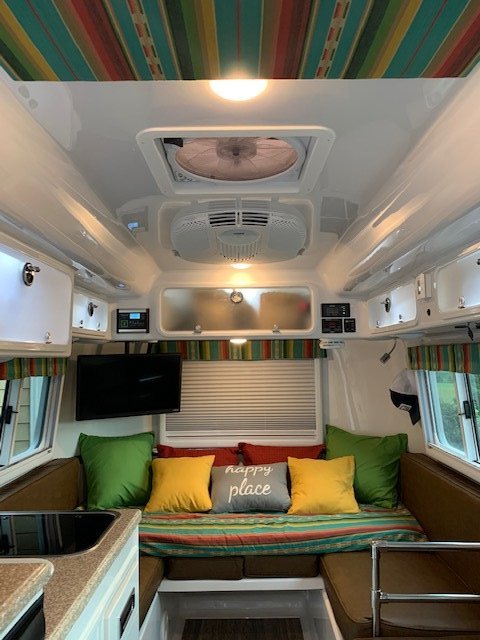
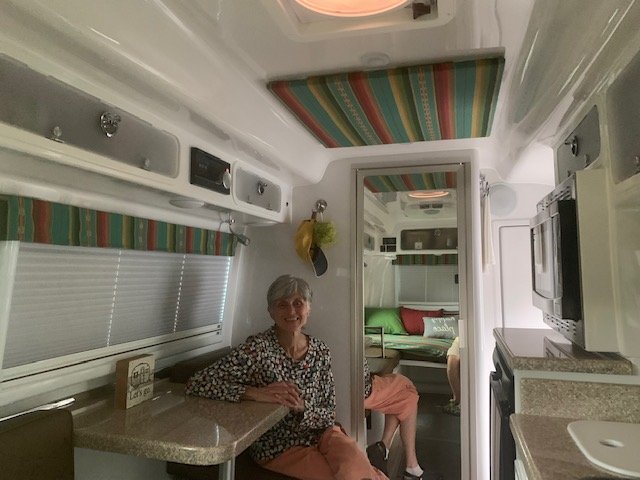
We were accustomed to separate single beds in our pop-up A-frame. Since picking up our Elite I Hull # 1209 on August 11, we are trying a single bed across the back for my wife, that we leave in place. I use the dinette bed across from the galley, putting it up each evening. This keeps us from having to crawl over each other during the night. It also creates more space by not having the large dinette and opens up a seat on each side in front of her bed. I simply made a plywood support and use the small fiberglass extension that was in the closet. The 4 small side cushions are the middle of the bed and we have a 3 inch memory foam over the cushions that extends across the back. By no means will this work for everyone, but we're not very large so it seems to be working well for now. Having lots of small pillows, that I recovered, helps for lounging around in the evening while watching a movie or reading. The valances are on 1x2 poplar with the fabric stapled to it and velcro holds them in place very well so far. I borrowed Foy's ceiling panel design. I did have him make me one of his beautiful shower mats! Ron
 9 points
 -
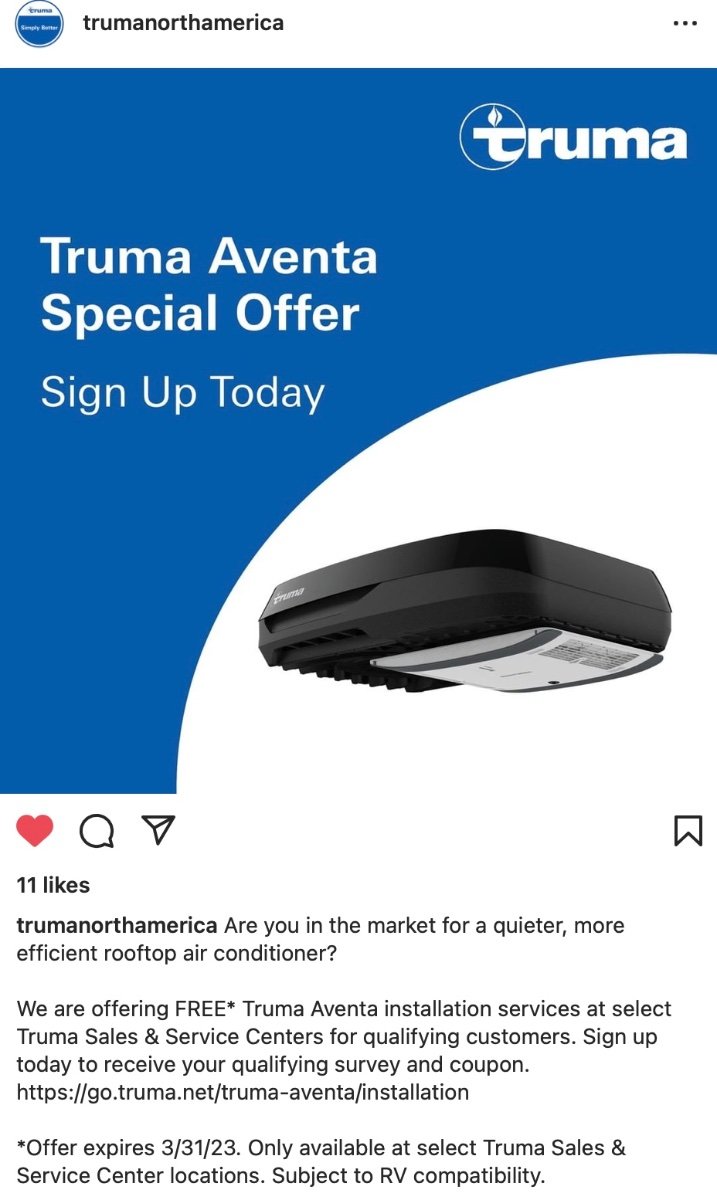
OK folks, I have heard many people asking when/if they can upgrade their current air conditioner with a Truma Aventa Eco and, until now, it hasn't been possible. I am just passing this along. I have no idea IF an Oliver is eligible but from what I can see, it seems like Truma is willing to install at one of their service centers. This is not an endorsement, just passing it along. Brian
6 points
-
Our LE2 weighs in ready to camp at 4940 pounds with empty black, grey, & fresh water tanks. This weight includes full 6 gallon hot water heater. The reason our LE2 is so light we keep Ollie's spare tire in the truck bed, replaced lead acid batteries with one 100AH (35lb) lithium battery, and replaced LP 20lb tanks with smaller tanks. Our Ollie did not come with factory installed solar. Also load more gear in the TV to keep Ollie's weight low. Some trips we take a gen-set, solar panel, and golf clubs in the TV, normally not all on the same trip. Reason I'm saying this is last year I experimented towing our Ollie with a smaller pickup that was rated to tow more than your Highlander. The test TV V6 normally aspirated engine had slightly more HP & torque than the Highlander. Emergency braking was fine with properly adjusted trailer brake controller (real experience), but because of engine performance we had to get in the slow lane with the tractor trailers going up grades. There had to be more accumulated stress on the engine due to higher RPMs constantly going up grades. The fuel economy was lower than our 1/2 ton 2022 Tundra with 3.5L twin turbo engine towing the same trailer. Our Tundra handles this trailer easily overall compared to the smaller pickup, too. Several folks here use larger trucks towing their LE2s, too. We are happy with the Tundra as a Ollie TV, but I still keep a close eye on rig weights with CAT scales. We like pickup trucks, but if we were going to buy an SUV for towing Ollie, it would be the 2023 Sequoia.3 points
-
Thank you! I just submitted my name and email. Andrew3 points
-
@bbraultyou are probably close in your weight estimate of a new Elite. As Sherry mentioned, the original 2008 era Elites usually weighed in ready to camp at around 4000 pounds. We had Hull #026 and it always weighed about that or a bit more. However, the 2023 Elite’s dry weight starts at 3700 pounds which is several hundred pounds more than the early models. Remember, this weight is based on just the base camper with no options and not a drop of water in it. Add food, clothes, water, options and all the other essentials and you’ll be close to your prediction. If you choose to use the Andersen hitch, which many pulling with lighter vehicles do, know it weighs 66 pounds. This will not add to the tongue weight of the trailer but it does have to be subtracted from the tow’s cargo capacity. You would not be able to use a single 30 pound propane tank instead of 2 x 20 pounders to lighten the tongue as the propane housing on the Elite is not tall enough for a 30 pounder. As you probably know, DO NOT try laying the tank on its side. This would deliver the propane as a liquid instead of a gas (not good). Not what you wanted to hear, but I truly believe this combination will be pushing safety to the max and I can’t recommend it. To paraphrase Chief Martin Brody “You’re gonna need a bigger truck.”2 points
-
As noted by Frank C, no, you can't add payload and towing capacity. I like to think of towing and payload capacity the way car manufacturers do. Rated towing capacity presumes there is nothing in the tow vehicle except a 150 lb. driver. This enables car companies to advertise the highest possible numbers. In the real world, few folks tow a trailer with nothing but a 150 lb. driver. Payload capacity makes the same assumption: a 150 lb. driver, nothing else. No passengers, no cargo. And, when towing, the tongue weight (usually about 10% of a properly-loaded trailer) must be included in payload calculations. So for me, the critical limitation is payload, not towing capacity. Given that about 10% of the weight in a properly-loaded trailer is tongue weight, if your goal is to stay within your tow vehicle's limited payload capacity, you are better off putting more of your gear weight in the trailer, so long as you don't exceed the tongue weight capacity of your tow vehicle. That way, only 10% of it "counts" against your payload capacity. For example, if your actual tow vehicle payload capacity is 1200 lbs. and your properly-loaded trailer weighs 4500 lbs. (so tongue weight is 450 lbs.), you have 750 lbs. of remaining safe payload capacity. With your 115-lb. wife, you are down to 635 lbs. If you weigh more than 150 lbs., you must also deduct the difference between your actual, fully-clothed weight and 150 lbs. from your payload number. If you use an Andersen weight distribution hitch (and you should with a Highlander towing a Legacy Elite), subtract another 60 lbs. The residual determines the weight of additional gear you can safely carry in the tow vehicle. I, too, will be surprised if your Highlander actually has 1600 lbs. of payload capacity. I expect it may be closer to 1200 lbs., like my hypothetical above. I second the recommendation above that you post a photo of the sticker on the driver's side of your Highlander. Only with that information can a sensible calculation be done.2 points
-
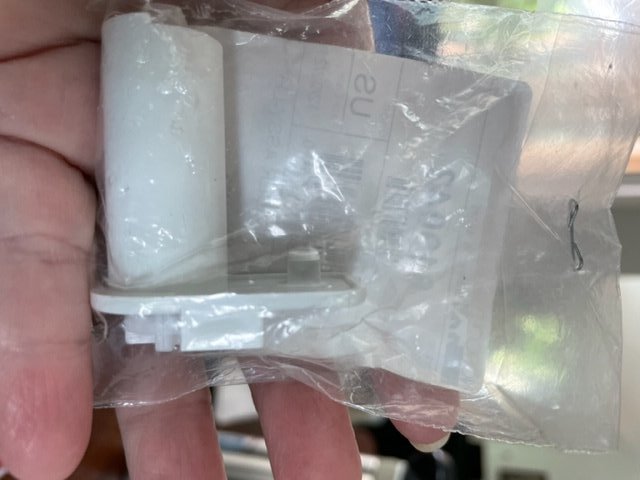
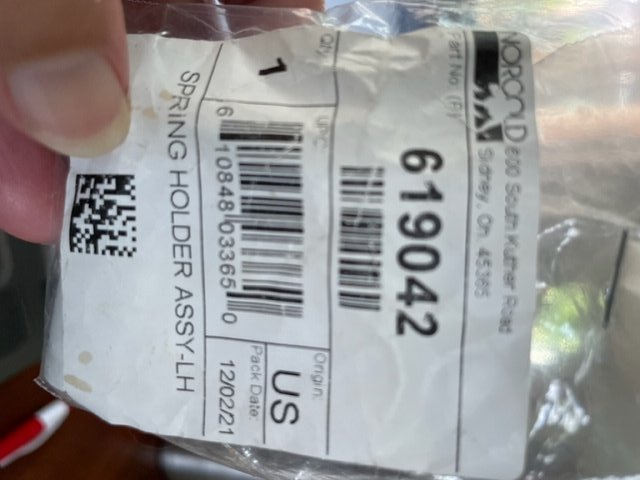
Our freezer door hinge also broke very recently-a very small plastic part broke off. Ordered a spring holder part from Amazon, it just arrived so it hasn't been installed yet. Probably should have made a ticket as the small part was about $25. Hopefully this is the correct part
2 points
-
@bbrault, I've reread your initial post a couple times now, and I'm trying to understand how you come up with 4500 to 4700 pounds loaded weight. I looked up Bugeyedriver's reported weights, (front basket, though he doesn't carry much in it) full tank fresh water, bike rack, solar, 3way fridge (heavier than the new electric) , two group 27 agm batteries (heavier than lithium), loaded for camping, and he weighed in at 3900 pounds, like us. 400 pounds tongue with bike rack and bike, 440 without the bike and rack. (I don't remember if he had his ebike then, or his mountain bike.) He has the standard 6 gallon heater, so there's an extra 48 pounds of water that he's carrying, as well, if you get the instantaneous Truma. (The water heaters are similar in weight.) He only has one solar panel, but it's older and possibly heavier than the new. You could possibly lighten the tongue weight a bit by carrying one 30 lb tank instead of two 20 lb tanks, and shifting some storage to under the bed. Are you adding the weight of the lithium, instead of subtracting? Adding the Truma water heater and ac, instead of the swap? A full water tank will add around 250 pounds to sticker weight. Solar panels and brackets may add 100 pounds. I'd ask my Oliver rep if they've built a trailer similar to the one you're considering, and see what the sticker weight really is, then add water, estimated gear weight, food, and see what you really might get for a real world weight.2 points
-
Hey trainman- with the help of Andrew k, I was able to do it in two evenings. Cost came out around $1200. I used panels of exact Oliver size from bougerv 9bb off Amazon and a Victron smart solar charger. I much prefer victron with the Bluetooth ability which works great. Also added the temp setting. The panels were much cheaper and great quality. Plus they respond to service questions within a day or two. Each panel is pulling in about 9 amps, 18amp total (give or take)in parallel. However, I recently switched to series connection so total 9 amps, but more voltage power for cloudy days in PNW. cheers mike.2 points
-
Gas prices in the NC Blue Ridge Mountains was around $3.25 last week. We enjoy seeing leaves change at different elevations on the BRP. Going to get some work done at home until the leaves start changing on the BRP, and we will be exploring again.2 points
-
$2.979 at Sam's Club - Florence, South Carolina today (September 18, 2022.. Bill2 points
-
Hi all. My name is Maleah and my husband and I just ordered our Ollie. We could not be more excited and can’t wait for our adventures to begin. We are empty nesters and are on the edge of retirement. My husband retired last year after 32 years in the Army and I will retire early next after being a nurse for 39 years with the last 20 working for the Army. We have traveled cross country several times but have always been in a hurry to get to our next duty station so now we want to see all of the beauty of this country. Look forward to learning from all of you.2 points
-
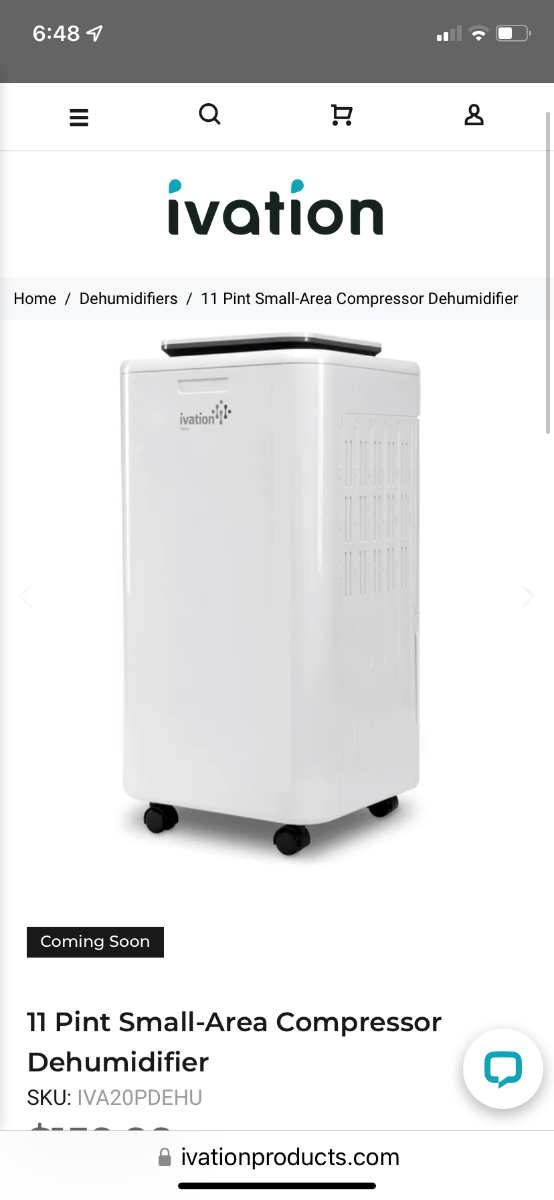
Hi all, does anyone have recommendations for a good dehumidifier and tubing to exit the trailer? John Davies recommended the night table between the twin beds as there's an outlet there. I am looking for some way to use tubing to let the condensate exit the trailer by some tubing. I will have the basement door between the beds if that helps. Thanks. John1 point
-
Wanted to provide my experiences with our first trip home from the factory with 2022 Subaru Ascent Limited “Blue Moose” and Oliver Elite I Hull #1030 “Reset.” Your mileage and experience may vary from mine. Note: I’m missing some numbers here (intended to stop at a scale and get weights) so those will either be added to the comments or edited directly into this post at a later date. The Tow Vehicle Blue Moose is a 2022 Model Year Limited trim line in the 8 seat (middle bench seat) version. We went with the Limited for the middle bench seat as we anticipated it being a cargo platform more than a seat. We opted for the factory towing package, which includes pre-wired 4 and 7 pin receivers as well as an under dash pre-wired brake controller plug in. Rated towing capacity is 5,000 lbs on the 2 inch hitch receiver. We opted not to purchase the Subaru hitch and ball, instead opting for an aftermarket hitch and ball. Brake Controller I installed a Redarc Tow Pro Elite V3 unit behind the dash secured with zip ties and automotive adhesive tape to the beam behind the steering wheel. Unfortunately, I did not take photos but I may go back and get those and add to a separate article. The Redarc unit stock cable matches up perfectly with the Subaru brake controller harness provided with the factory tow package – connect color to color. On this trip I ran the controller in proportional mode at setting 3 – will likely move to 5 on the next run. This likely deserves it’s own writeup and I would appreciate collaboration with other on the forum regarding your setup, testing and experience with the Redarc. Towing Setup After reading a large number of different opinions on hitch height, I opted for a 2-inch drop / 4-inch rise hitch and installed it in the 4-inch rise position. This was anticipating a 2-inch sink once Reset was connected. However, it turned out that even with all the items in the back of the ascent that would eventually move to the trailer, the 4-inch rise was way too high and we flipped it to the 2-inch drop side during delivery. Pulling out of the bay we were slightly nose down on the trailer, however once we moved the cold food, the trailer furnishings, and the cooking gear the weight shifted and the tow vehicle and trailer rode almost precisely level. I think that once we put our normal camping load in we may end up needing to move to an effectively “flat” hitch. I am planning to add the new Weigh-Safe Ball with an integrated scale to get more precise measurements of tongue weight. Another future edit. Towing Experience We set up our return trip using the 3 hours / 300 miles guidelines, even though we had towed our prior trailer much longer days in the past. Our goal was to be able to work through the launch and landing process carefully, and then have a shorter drive each day to learn the feel of the trailer. The first day (Hohenwald to Memphis) I limited speed to 65 mph max as that was the max on our previous setup. Stability was rock solid, engine RPM’s drifted in the high 1k to low 3k depending on the hills. We had no issues on the “back-roads” section between Hohenwald and Lexington, handling both the curves and ups and downs of the hills. We were driving in intermittent rain at slightly above freezing temperatures and had no traction or steering problems. The engine spent no significant time above 2500 RPM at the mid 40’s speeds. Once we pulled onto the highway, I brought it up to 65 mph and allowed the Eyesight driven adaptive cruse control to take over. The Ascent has a tendency to gear high in Adaptive cruse, generally adding 300 to 500 RPM onto what a careful human foot can achieve. Engine RPM settled into the 2-3k band with the instant gas milage reading settling around 14 MPG. Based on mileage calculation filling up at the fuel pump, the tank average was 12.92, however there was some significant idling time with warming up the car and also having it running while doing pre-launch activity in the morning. Second day was Memphis to Little Rock. Temperatures were cold and we spent some time during the day with a crosswind. Again, the Elite I was rock steady. At about the midway point I decided to start edging up the speed, first to 70 then to 75. Making measured steady passes of big trucks while towing was a new experience from our prior unit, which due to being light would get very tail happy above 60. Engine RPM drifted higher as I moved up to 75, settling in at 3,500 for the majority of the day and breaking the 4k line on the occasional hill pass. Even at 75 in the light crosswind Reset followed true, not giving any indication of wanting to move side to side. Display MPG dropped to the mid 13 mid, and tank fill calculation was 13.13 for the day. Final day we decided to make the Little Rock to Dallas leg a single run. The day was a repeat of the prior day – most of the day spent between 70 and 75 where permitted and display MPG in the low 13s given the longer stretches above 70. Tank fill MPG was 13.18 for the day. Observations The Ascent + Elite I combination has me impressed. If you need a “daily driver” that is a car frame and want something with a quiet comfortable ride, the Ascent made for an excellent long distance vehicle. It steers like a much smaller vehicle, and offers a solid feel both with and without a towing load. I will update this with better weight, hitch height information, and future impressions as we go forward, but my hope is this this info will help others considering this equipment combination. Safe travels all! 20220224_143014929_iOS.jpg1 point
-
Interesting. There aren’t any service centers in Texas, just a mobile service out of Austin. Looks like the only service centers are in Florida and Indiana. Mike1 point
-
Me too! September 18, 1953. Happy belated birthday! (We were camping in PA with zero cellular service (wonderful!!!) or we could have celebrated together. We use the GCI Pico chairs which are similar but without the table. The best selling point of the Pico is that is fold super compact while still having a normal seat height. Folded, in its bag it is smaller than a brief case! This is important in our 5X8 squaredrop, and I expect storage to be at a premium with the Oliver when it arrives. https://gcioutdoor.com/products/pico-arm-chair-telescoping-directors-chair The GCI Compact Camp Table 25 is just the right height to be a dining table with them, and we have a no-name lower table to use as a side table around the fire pit. https://gcioutdoor.com/collections/tables/products/compact-camp-table-251 point
-
This is what we use also, works great!👍🏼1 point
-
Just as a completely different recommendation, we have for 8 years now used an Air-Dryer 500 when our trailer (cough, Airstream, not an Oliver 🙂 ) is parked in our pole barn in Central Florida. Intended for boats, it's basically a small space heater w/no moving parts. We crack both Fantastic Fans, and this little unit keeps the interior air "dry" enough with heating and air turnover to prevent musty odors and mildew. It does of course require 120v power. For 8 or so years before that we used a large compressor unit in our motorhome, and it did a good job as well. Never did get around to plumbing it, just emptied the tank every 10 days or so. Hope this helps.1 point
-
That's a bummer. I broke my freezer door, different brand, though. I had to order a new door. I'd open a service ticket and see if you are covered under warranty.1 point
-
No, towing capacity and payload capacity do not add together. Think of it this way, PAYLOAD weight is the downward vertical load (towards the ground) on the tow vehicle, acting downward on the tow vehicle suspension. TOWING weight is the horizontal load being pulled that puts stress on the engine, transmission & brakes to go and stop. You could exceed the payload limit (and break the suspension on the tow vehicle) without even driving forward. And the tongue weight of the trailer (tongue weight is the downward weight that the trailer applies to the hitch, usually about 10% of the total trailer weight) must be included in your payload number total. And your vehicle has a tongue weight limit number as well somewhere in the vehicle manual/specs. Adding a basket and generator to the front of the trailer as you mentioned will increase the tongue weight as well as the total trailer weight going up.1 point
-
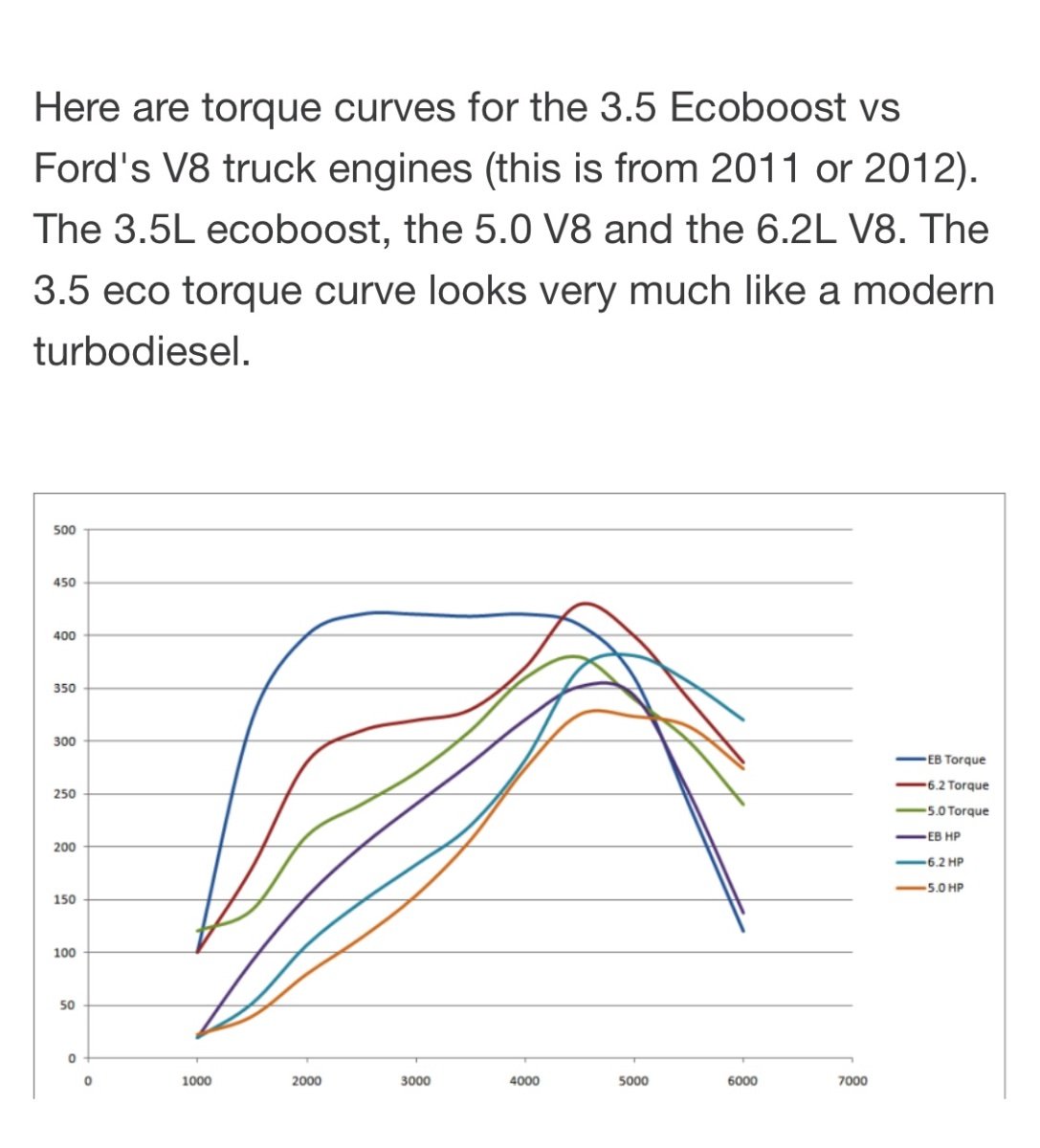
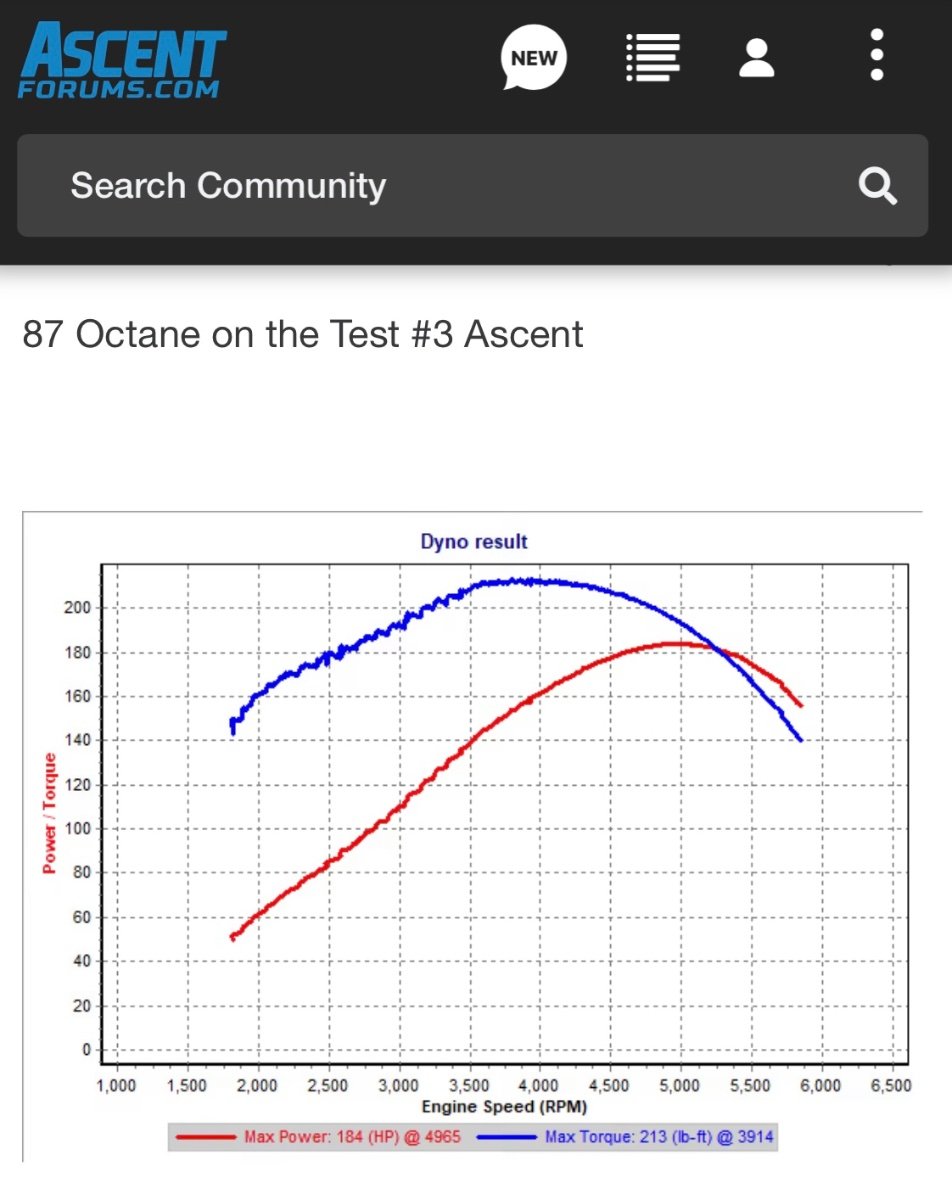
bbrault, be very careful when comparing “similar” SUVs, the Ascent has a turbo engine -it has a fairly flat torque curve at a low rpm and it does better at high altitude. Your Toyota naturally aspirated V6 is bigger, but the power is “peakier” and a lot higher in the revs. Here is the Subaru dyno chart, I could not find one for the Highlander. And one comparing the three Ford truck engines. The last one shows why the Ecoboost is such a killer engine for towing compared to the V8 engines. You mentioned in your first thread the new 2023 Sequoia, I think that too would be a killer TV, if you can afford one. John Davies Spokane WA
1 point
-
So, Elite owner here.. It depends. A lot. And, maybe you should not carry everything you "think " you need. Where do you live? Where do you want to travel? We picked up our Oliver with a Volvo xc90, tow rating 4900. It did fine in the flats. Hills, not so much. Green River gorge in nc, not great. After a few trips with the Volvo, we switched up to one of our trucks. (We have two.) The Volvo, notably, had the anemic t5, and, the Volvo weighed in excess of 6000 pounds. And, less horsepower than your highlander. I'd be concerned about tongue weight on your highlander if you add the basket plus genset, plus gas can. I think you have a 500 lb max. Our 2008 elite weighed in (loaded for camping) at around 3900. Tongue, 420. No basket. Or stuff in nonexistent basket. And, we are minimalists. Not a lot of extra cargo. Probably 1/2 grey, 1/4 fresh. With a basket, a genset, and gas can , you might very well exceed your highlander approved tongue weight. You will have to very carefully watch your loading, imo. Or, you'll be overweight. As for an 8k upgrade to store a trailer inside, not necessary, in most cases. Our trailer has been outside,,24/7/365 since launched, in Florida sun. That marine gelcoat is great. So, basically, yes, you can, with very careful minimal loading. And patience. And, maybe choosing secondary roads. A more stout vehicle will give you better comfort, and safety, beyond the flats. Personally, I'd recommend a different vehicle, or a lighter trailer, for hilly and mountain terrain. One of our friends toerd for a number of years with a Honda Ridgeline, mostly flat travel. We could have managed fine in the flats with the Volvo. Just, don't limit yourself in travel, unless it is necessary. Even the elite 1 is heavy, for its size, because of the double hull construction. I, personally, wouldn't want to tow at the upward limit. It's not as fun, and if the tow vehicle weighs less than the trailer, not as safe, imo.1 point
-
Waiting for the leaves to change. The dogwoods are changing, a few tulip trees are yellowing, the cicadas are more quiet/less numerous. If we didn't have appointments at home, in Florida, we'd be out exploring. But, it's still four to five weeks til peak, around asheville, usually. Growing up in the Midwest, I love the leaf change, and fall. It can get cool/cold, but we're always snug and warm in our Ollie .1 point
-
Yep, that's interesting about running full tank of regular when oil is changed. Never ran E85 in our 2016 Tundra and our 2022 Tundra is not flex fuel, it uses regular 87 and has 10,000 mile oil/filter change intervals except for 5,000 miles when towing. Finally achieved my 17MPG goal towing on hills and flat-lands yesterday four lanes and interstate, it's happy at 2200RPM towing Ollie around 61MPH in 7th gear with cruise on the interstate. Just washed Ollie, getting ready to put in storage until next adventure! 🙂1 point
-
Have not seen regular gas that low yet! 👍Best I've found is $3.13 for Regular 87 in NC.1 point
-
KeysConchs, We agree with you on length being a concern. We also traveled the entire east coast last summer from Gulf Shores to Maine and never had an issue with getting a site. I personally don’t see Oliver building any thing larger than the LE2 for a lot of reasons. There is still awaiting list to order and purchase LE2’s. Anything larger would be super expensive and possibly not sell as well as the existing model. Oliver has really got a great design in the LE2 and we are thrilled with ours. It’s everything we need and nothing we don’t. 👍🏻😊1 point
-
Chiming in a little late on this, but I do think it bears emphasizing that 27' is considerably larger than 23', especially in state park campgrounds. We are 4 months into a trip from our home base in the FL Keys and have been up as far as Cape Breton, PEI, and throughout New England. Many of the campgrounds we have stayed in had very few campsites that could accommodate 27'. One other consideration is that if you really intend on using both air conditioners, you will likely need 50 amp service which will further limit your options. As others have pointed out, it will be important to predefine what style of camping best suits you.1 point
-
Even though my 2 years, 1 month and 23 days seemed like 30 years in the Army 🤣, I certainly know a tad about the work you have done for this great country of ours - thank you so much! Now, its time to have some real relaxing fun seeing just what you two worked hard for - the US of A. Welcome to the Family. Bill1 point
-
My wife is 115 pounds but she has the largest suitcase.
1 point
-
We’ve gone to Quartzsite from San Antonio on I-10 in January a number of times. Never winterized. January could be cold in west Texas, but more likely well above freezing. If you go west on I-20 there’s more of a chance for colder weather. We’ve spent January in AZ the last 6 years. No need to winterize if you stay south of Flagstaff and NE AZ. Even if you venture north, the probability of really cold weather is slim. We’ve camped around Flagstaff and north, all the way up to Page, AZ and Lake Powell. Cold at night (below freezing) but nice during the day. Last year we went to Zion National Park in southern Utah on our January trip and it was perfect, high 20s at night and 50s daytime. Quartzsite is almost always pretty nice. That’s why so many folks head there in the winter. This January we’ll be camping way south at Lake Patagonia, at Kartchner Caverns near Benson, north of Tucson, several spots around Phoenix, north and about an hour east of Payson, and just south of Sedona. We’ll be visiting Flagstaff from our campsite near Sedona for a weekend hockey tournament that our grandson from Durango will be playing in. Maybe we’ll head over to Quartzsite to see who is there. There’s a certain peacefulness about picking your own spot out in the Quartzsite desert and watching traffic on I-10 from a long distance! We will not winterize for any of this trip. Actually, we’ve never winterized our Oliver. Mike1 point
-
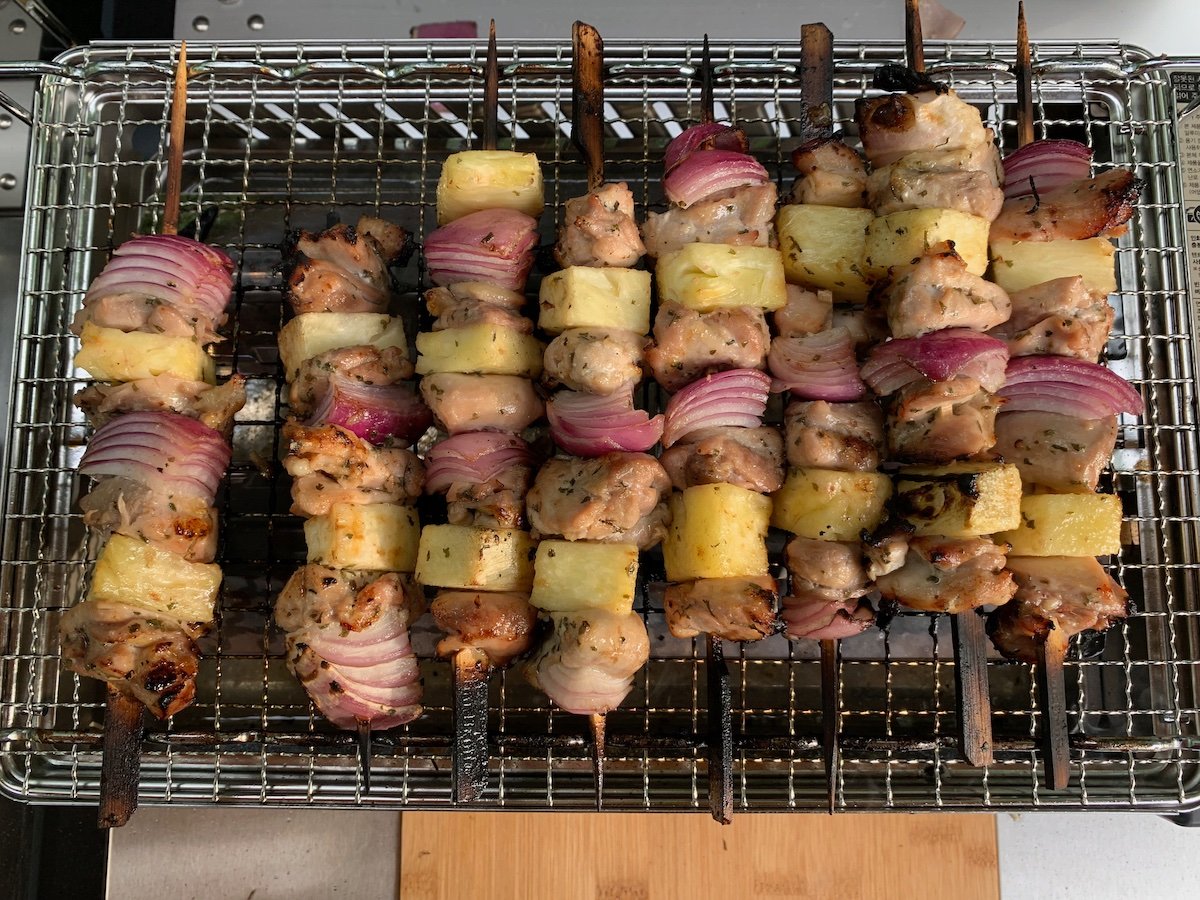
Chicken Pineapple Kabobs. Ingredients: For the marinade: ¼ cup olive oil ½ cup chopped cilantro 1 tablespoon honey 2 teaspoons minced ginger, note: Trader Joe’s carries ginger paste that’s perfect for this 1 lime, juiced 1 teaspoon salt To build the skewers: ½ lb chicken, boneless, skinless thighs work best, cut into 1-inch pieces 1 medium red onion, sliced into 1-inch pieces Pineapple wedges, cut into 1 inch cubes. Instructions: Combine the ingredients for the marinade in a large bowl or ziplock bag. Add the chicken to the marinade and stir to coat. Cover or seal the container, and let marinate for at least an hour, or up to 24 hours. In the meantime, fire up your grill or get your campfire going. Build the kabobs by threading the chicken and vegetables onto your skewers. Brush with a bit of oil. Grill the kabobs over medium-high to high heat, turning occasionally so they cook evenly until the chicken is cooked through – about 10 minutes total. Remove from the grill and enjoy!1 point
-
We had breakfast for lunch today. Our friend camping with us asked for the "recipe," and name. My husband calls it skillet breakfast, I call it "clean out the fridge mess." (We're wrapping up a 3 week trip.) Today's ingredients: About 1/4 bag of frozen hashbrowns thawed 2 slices of onion, diced 1 small (wilting) green pepper, diced 4 pieces of brown and serve breakfast sausage, cut into coins 3 pieces precooked bacon, chopped 3 eggs, whisked with a fork, and a splash of milk Olive oil (any oil... it's what I had left) Mrs Dash to taste Shredded cheddar (about 1/6 bag) In my wok skillet, I sautéed the vegetables until a bit soft. Added the meats, continued til brown. Added the egg mix, and lowered heat, stirring til done but moist. Dumped onto my plate, set aside, wiped empty pan with a paper towel, added some oil,,and cooked thawed hash browns with Mrs dash. Dumped the egg mix back on top, cooked a minute on low, topped with cheddar, turned heat off and covered to let the cheese melt. Serve with toast if you like, or not. Jalapeño if you like, or not. A squeeze of sour cream is great, too. I use any bits of veggies left in the fridge. Particularly spinach or greens (add near end of sauté ), mushrooms, asparagus, etc., none of which I had today, so I used what we had. Easy one pan meal. I made it with my left hand only, though my husband chopped the veggies. (My dominant hand is in a sling.) Everything sticks together pretty well, so I could eat it left handed, too. 😊 Prettier when it's still in the pan.
1 point
-
We use this one. Works great and is very compact for a compressor type dehumidifier.
1 point
-
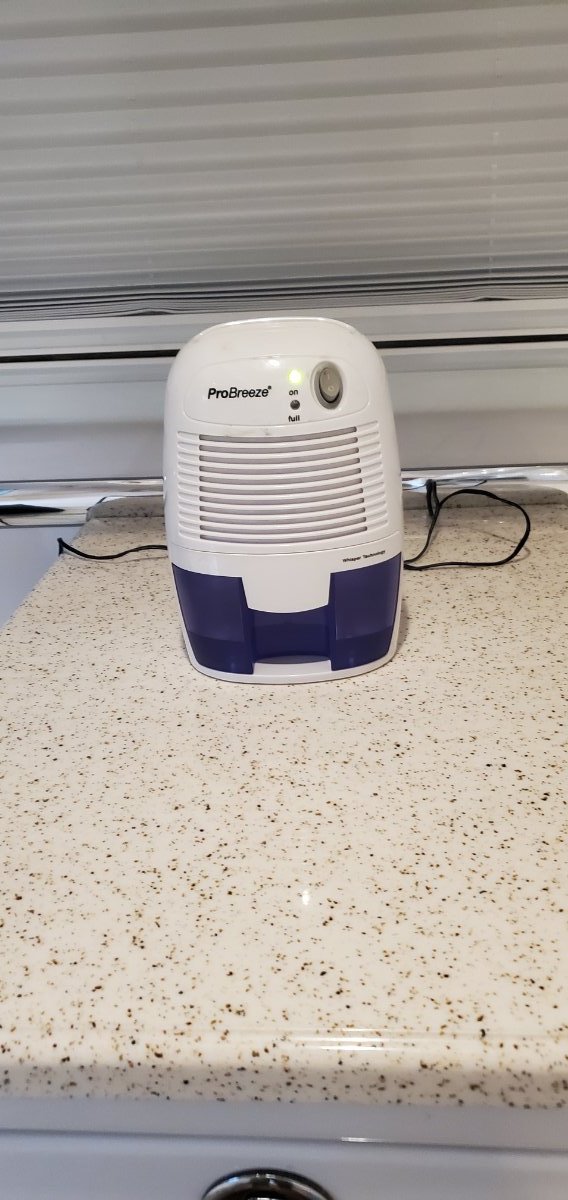
We in Maine do have hot humid weather in the summer, but not like down south. Generally we will have hot spells in the mid 90's that lasts 2 to 4 weeks straight. I live along the coast so the humidity is very high during these times, making it feel like 100. I use a small ProBreeze dehumidifier (see picture - 1200 cubic feet (205 sq ft) Electric Mini Dehumidifier). I do have to empty the water container every 3 to 4 days, but that is better than having a large dehumidifier like some others are using and it is easy to store when traveling. For the past 2 summers this dehumidifier has worked fine for me, keeping the Oliver dry and no mold has formed.
1 point
-
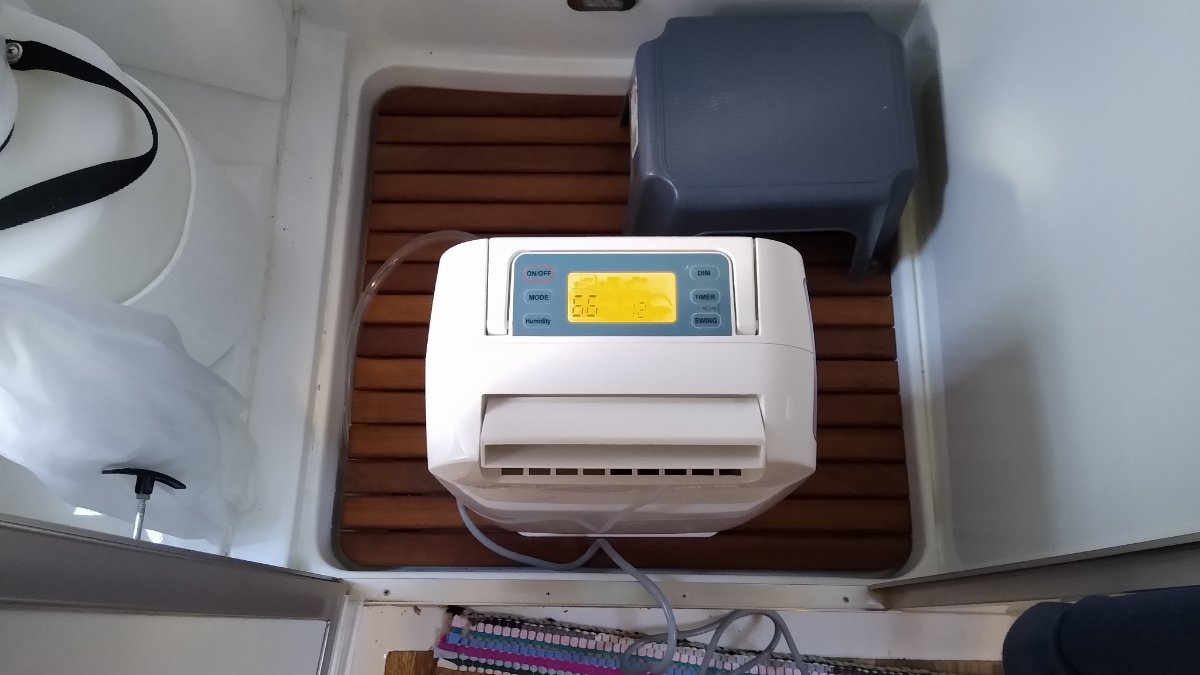
The Ivation 14.7 compressor model NCeagle linked to in his post was not available when I needed one ASAP. Here is my experience with the Ivation 13 Pint desiccant model. Although a desiccant type dehumidifier I've been using mine for up to four weeks continuously in Florida since January. The desiccant types produce more heat than the compressor types plus a significant chemical odor. The unit is only used when in storage so the amount of heat and chemical odor have not been an issue. The chemical odor has diminished but it is still noticeable. I set mine at 65% and the SensorPush placed at various locations shows it works well throughout the interior. I leave doors and drawers a jar to help. I also have a canary on the table (salt shaker) it has not caked yet. The trailer is closed all the time so the unit spends most of the time dormant or monitoring, which is a very nice feature. In monitor mode the fan will occasionally run and oscillate for a few minutes then start the dehumidifier if above the humidity level set. The unit will also restart then run the monitor routine after a power cycle. I didn't have time to route my water hose outside so I placed the unit in the bathroom and ran the supplied hose to the open drain in the shower pan. I was concerned about excessive moisture and stench escaping from the drain, but I was pressed for time. To my surprise, and great relief, that has not been the case, even during the hot summer months.
1 point
-
John, you need to decide if you are going to keep a small heater going in winter, and at what temperature. You definitely don’t want to let it freeze inside the Ollie with a dehumidifier going, and the compressor types don’t operate at all in really low temps, they ice up. I think all these dehumidifiers release some waste heat during operation, but I doubt if that alone is enough to maintain inside temps. If you plan to winterize the water system and let the trailer stay at ambient temperature, you will need to empty the tank and shut off the dehumidifier for those below freezing times. John Davies Spokane WA1 point
-
This is unverified and open for corrections: In order of production model years: Icon (2014-2016), HiSpec (2017-2018), Sendel (and/or) Tredit (2019), Lionshead (and/or) Sumec (2020-2023). Maybe OTT could provide validation and resolve by production VIN.1 point
-
An update from Jason. Apparently in 2016, OTT was instructed by the rim mfg to increase the torque from 90 to 120 ft-lbs. He is going to check back with the MFG on this. More to follow....... GJ1 point
-
Greetings. As a retired mechanical engineer who worked a bit with fasteners (although not wheel studs and lug nuts) I thought I’d offer a few points for the group to mull over. Twisting the lug nut onto the wheel stud induces a a clamping force to keep the wheel on the hub. That clamping force is controlled in part by the torque applied to the nut. But that clamping force is also affected by thread geometry, stud diameter, nut contact area and friction on the threads and the nut to wheel contact surface. Think of the difference between torquing rusty, corroded threads versus fresh, lubricated threads. The torque level should be specified as a min/max range about an optimum sweet spot for the design, not just a single value. Too little clamping force a.k.a. torque and the nuts can work loose, fretting and wear can occur, and/or the studs could be subject to metal fatigue - none of which are good as you all can imagine. Too much torque could cause the stud stress to reach or exceed the plastic limit proof load of the fastener. That’s why, Dexter stated a 120 ft-lb limit for the 1/2” high strength grade 8 stud as shown by Mike D. JD described what generally happens when folks inadvertently over torque fasteners. Excessive clamp load or torque might also distort/damage the wheel but I’m not aware of how this could result in catastrophic failure which is what I think was the concern with the 120 ft-lb specification. Moral of the story: 1. Purchase and use a good quality torque wrench. Human “feelings” are not a good, well calibrated substitute. And use the recommended torquing sequence! 2. If the lug nut is torqued to or somewhat beyond the maximum limit and the stud hasn’t twisted off, the wheel isn’t going anywhere. 3. Under torqued lug nuts can be a problem. JD discussed torque wrench calibration and the issues for the high side of torque. But a similar issue exists for an inaccurate torque wrench or “human feel” for the low end of the torque range. 4. The proper torque range is specified in SAE or ISO fastener standards for the hub and wheel configuration. (Sorry, don’t have that info available. And BTW, Oliver, Dexter or the wheel supplier need to provide the torque range for the fastener condition.) If this thread is concerned about the effects of excessive torque on the wheel, maybe we could better detail what we think those concerns are and then reach out to Oliver or the wheel supplier for more specific information.1 point
-
We have had the same generator basket on two different Olivers carrying our 165 lb Yamaha 3000 for over 60,000 miles total with no problems.1 point
-
We did similar at a TearJerkers event last month, except Deb concocted her own teriyaki-ish sauce. Mmmmm!
0 points




















-
Recent Achievements
-