Leaderboard




Popular Content
Showing content with the highest reputation on 10/25/2022 in all areas
-
I don’t use a ladder anymore. After being bitten by some weird looking spider in the Amazonian jungle several years ago, I found that I could just crawl up the side of the trailer.5 points
-
This is a interesting topic. My first trip with the new to me Oliver was in October in my home state of MN along the north shore. The temp at night was in the teens and just below freezing during the day. I was nervous about the conditions because I found my AGM batteries were in a low sate of charge just from running the furnace over night. It was decided right then that I was going to come up with some solutions so I could enjoy camping without worrying about freeze ups and low batteries. I made some modifications to the heating system simply by adding two extra runs of heat ducts. I identified the weak points in the water system and targeted those areas. I tested my modifications by spending three days in sub zero temperature with water on board. I added no extra heat sources other then the furnace and left no compartment doors open on the interior. Now I have no plans on doing sub zero camping but now I know what the Oliver can handle and can just enjoy camping without worrying. The issue with the AMG batteries was addressed by switching to lithium. Here are a couple of links that explain my modifications.3 points
-
Yeah, we were seeing a freeze/thaw cycle each day.....highs were probably in mid-30's. With the ice, I didn't bother trying to keep the solar panels clear...never built up more than a couple of inches and I didn't want to chance damaging them. I agree the the street side shower knob area is a good place to use to determine where to set the furnace thermostat. I did not monitor the trailer front temp....just kept the bathroom and closet doors open at night. I used the Lithonics app to monitor the battery internal temperatures and never saw a need to turn on the aux battery heater.3 points
-
Hello everyone! I'm really considering buying myself an Oliver. I want to travel alone with my small dog around the country. But I'm not quiet sure which one to get. Any recommendations and tips?2 points
-
All the tow descriptions say “when properly equipped” Does your Disco have the factory tow package? If so, it would be marginal for long trips with the big Ollie. For towing a boat on weekends to the lake, not a big deal. I think that if you have that package it would be a stellar match with the small trailer, for a single person and dog. Do you have any towing experience? That is the next big concern… John Davies Spokane WA2 points
-
If I were traveling alone with just a small dog, the smaller Legacy Elite I would be my choice.2 points
-
Is there hot air coming out of the exhaust port? It should be too hot to hold your hand over it for more than a second or two. Do your other propane appliances work OK now, after the repairs? If they all are still screwed up, you still have a gas supply issue, it could be the regulator has failed, the pressure adjustment is wrong, a blockage (wasp nest in the air vent opening) , all sorts of possibilities. IF the others work right, there is a problem in the furnace itself. It is 40,000 btus, it should never struggle unless you have the windows open and it is crazy cold outside. How cold are the night temperatures? Have you looked at the air ducts? Are they all attached properly, not torn, crushed, eaten by rodents? Have you tried setting the thermostat to full hot? Does that change anything? YOU need to go through some basic troubleshooting, to narrow down where the problem lies. Unfortunately the RV techs are swamped and have been for years. You may have to rely on electric heaters, if they are inadequate you need better ones. Open up cabinets and access hatches overnight. Good luck, this sucks…. I replaced my ancient box heater with this little heater, it works wonderfully well in place of the furnace. But I haven’t tried it below freezing yet. Dreo Space Heaters for Indoor Use, Atom One Portable Heater with 70°Oscillation, 1500W PTC Electric Heater with Thermostat, Fast Safety Heat, Remote, 1-12h Timer, Upgraded Small Heater for Office Home John Davies Spokane WA2 points
-
Well, any other place and conditions would not have made for as interesting a story and memory for you guys.2 points
-
Been thinking Steve about the differences in our experiences. May not be all that far apart. During my test trips, the temps never got above freezing even during the days. You mentioned lows around mid teens. What were average daily highs? Good idea on the exterior shower head. When I moved a thermometer around to test different areas in that below-the-streetside-bed, a mater of a half foot in bound would make a pretty large difference. As the exterior shower pex lines terminated by the hot/cold knobs, that is where I hung the sensor. Looking forward to comparing notes with you and others that have tried similar.2 points
-
2 points
-
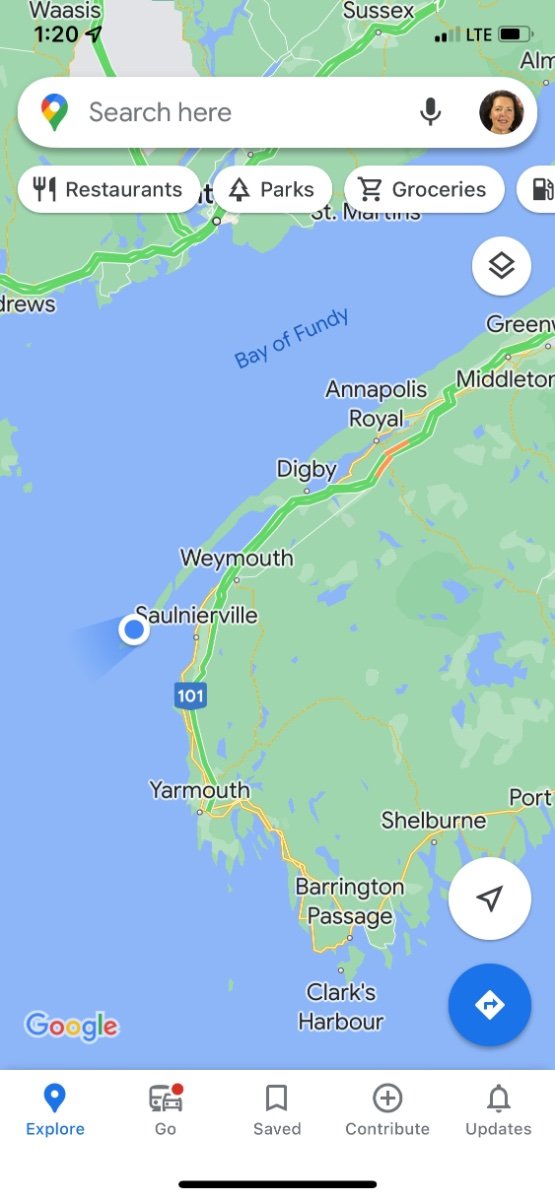
Actually I have no idea. I didn’t notice those either until I posted the pictures. At the time… I was just thrilled to get my old tire off and the spare on… because this is where we were in Nova Scotia when it went flat. And it was cold and raining!
 2 points
 -
My wife and I purchased our 2020 E2 based, to a certain degree, on our enthusiasm for cold weather adventuring. We took a number of trips over the 21/22 winter season to check out limits and capacities. All were trips between 3 and 7 days, in northern New England with night time temps in the range of roughly 30-0 degrees Fahrenheit. We would note nightly exterior temps, kept the overnight cabin interior set to 60 and rotated 3 digital temp sensors around what we found to be the most vulnerable areas to cold we found (and could get to) between the shells that housed water lines and tanks: 1) under front dinette seat, under street side bed by the exterior shower, 2) the pex lines to exterior shower passing through the faux wall at very rear of basement and 3) the battery box. We could not get to but are curious about the cabinet housing containing the bathroom sink. Playing it safe, we kept the trailer winterized for the entire time relying on containerized water and our composting toilet. All of our sites were boondocky, with no shore power hookups so we relied entirely on the LP furnace and solar/lithiums. We found that the stock trailer could manage to keep all the areas listed from dipping below freezing down to 25 (exterior temp). The lines behind the faux wall and exterior shower would hover in the low 30s at that temp. We realized those pex lines will, realistically speaking, need to be always kept winterized by adding cut offs as heating the basement area would be an inefficient waster of LP. Side note that we asked Jason if that could be done during our build and he informed us that the shop could not find anywhere with enough space to add them. We're open to suggestions. A simple set of tweaks including adding two layers of Reflectix to cover the interior of both the basement and battery compartment doors got us down to 20 with similar results. Next project was more involved. The temperature difference between the areas under and wall along side the curbside bed versus the street side bed was resulting in heavy condensation on the streetside wall and window which would soak that bed. We also found that the battery compartment was dropping down into the 30s at exterior temps in the high teens. While there is a matte heater pad below the batteries, it seemed to us that the compartment was too cold to reflect the lithiums themselves being warm enough to run efficiently and we noticed anecdotally an increased need for more charging assist - be it solar or generator. Could haver been the drain of the heat pad or the lithiums running less efficiently in the cold (as validated by the manufacturer) but which one did not matter. We felt adding heat to the box would be of benefit. Our fix was to re-route some heating vent. We capped the rearward 4" vent and re-ran that line through the gap behind the water tank from the furnace to the street side, past the inverter, under the battery box to a new vent we placed as a mirror image to the existing one below the drawers in the galley. One vent grate is pointed fore and the other aft. Here we used semi rigid vent tube specifically because it sheds so much heat, allowing the areas it runs through to warm. Where the tube ran past electronics, we would shield the hot tube in a layer of reflectix. Measuring with an infrared thermometer, the reflextix surface was cooler than the surface of the OEM flexi vent tubing and quite cool to the touch. The heat exiting the new vent would run about 10 degrees warmer than the one on the other side of the isle even though it is a further distance from the source. We expected an increase in output from the vent in the bathroom but did not notice much of a change. As the bathroom is a bit of a "dead end" with air being forced in but nowhere for it to exit, we added a 4" eyebrow vent at the floor level below the towel rack to allow for circulation and share some heat passively with another problem cold area - under the front dinette seat. While there are no pex lines run there, there are drain pipes and tanks and it would otherwise fall to freezing if outside temps were in the teens. Not very scientific but the furnace did not sound like it was under further strain or seem to run more frequently given similar temps. Our rate of LP consumption is roughly the same now as it was before alterations which, in single degree night time temps, consumes a 30lb tank in just over 2 days. Not very good. To increase efficiency, we cut two layers of "double bubble"reflectix and taped the edges with silver foil vent tape - as suggested in a previous post. They fit tightly inside all windows and are held in place by closing the shade. Bought a camco 14" soft material vent cover which bunjied over the Maxair (when not cooking) and cut a piece of 2" open cell foam to fit the window in the door. Covered it with a layer of reflectix and taped the edges. This is held firmly in place by the screen door. As all including the fan cover have refectix sides facing inward, the add ons look good enough - not jury rigged. Our takeaway is that these tweaks have bought us 20 degrees of leeway so we have squeaked by to zero. The batteries box is running much warmer but the other areas are more iffy. There is less condensation around the streetside bed but the exterior shower, for it's entire run, will need to be somehow shut off and winterizede or will be subject to freezing. Someone had suggested cutting a block of memory foam to put in the box with the exterior shower nozzle and knobs which may work but would not help with the tubing behind the faux wall. As to factory options that would have really helped: The exterior shower really needs cut offs or could have had it's lines run through a heated area of the belly and it would be super helpful to insulate the basement walls, basement door and shower door. The walls of the trailer REALLY transmit a lot of cold into the interior. A layer of spray on insulation foam would have gone a long way to help with that. I am also eyeballing the sealed belly and thinking a layer of sprayed on insulation could really help there as well. Am going to contact an HVAC place to get some feedback on options there. Also looking for doable suggestions. We love our Oliver and appreciate the incredible quality of the build. We also realize that there are very few folks looking to use theirs in frigid conditions. We're hoping that those of you that do, pipe in with further feedback and refinement to increase both capacity and efficiency in these sort of conditions.1 point
-
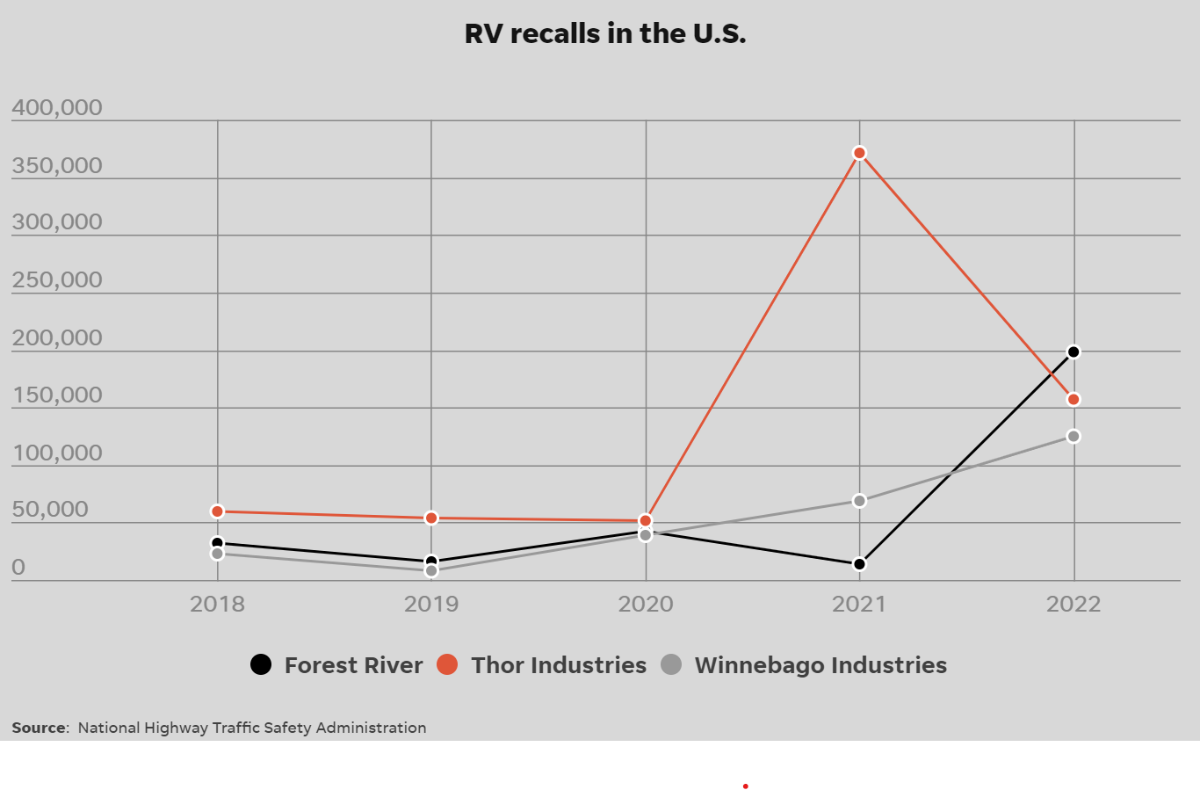
I know people have talked about this a lot on this forum, but this reporting is really eye opening. Untold stories behind Indiana's RV boom: A punishing pace, safety issues and broken bodies: A look at the grueling conditions RV workers endured as companies saw record sales and profits during the RV boom of the pandemic. It is really stunning some of the stories from this investigation. Since this 3 own a huge chunk of all the brands out there this is concerning. It is a long read but covers issues from labor environment to quality of end products. I know it is often said "everything has issues" but this stuff is crazy! Thor with almost 400k recalls in 2021! Really sad to see these companies report record profits the last few years while doing this!
1 point
-
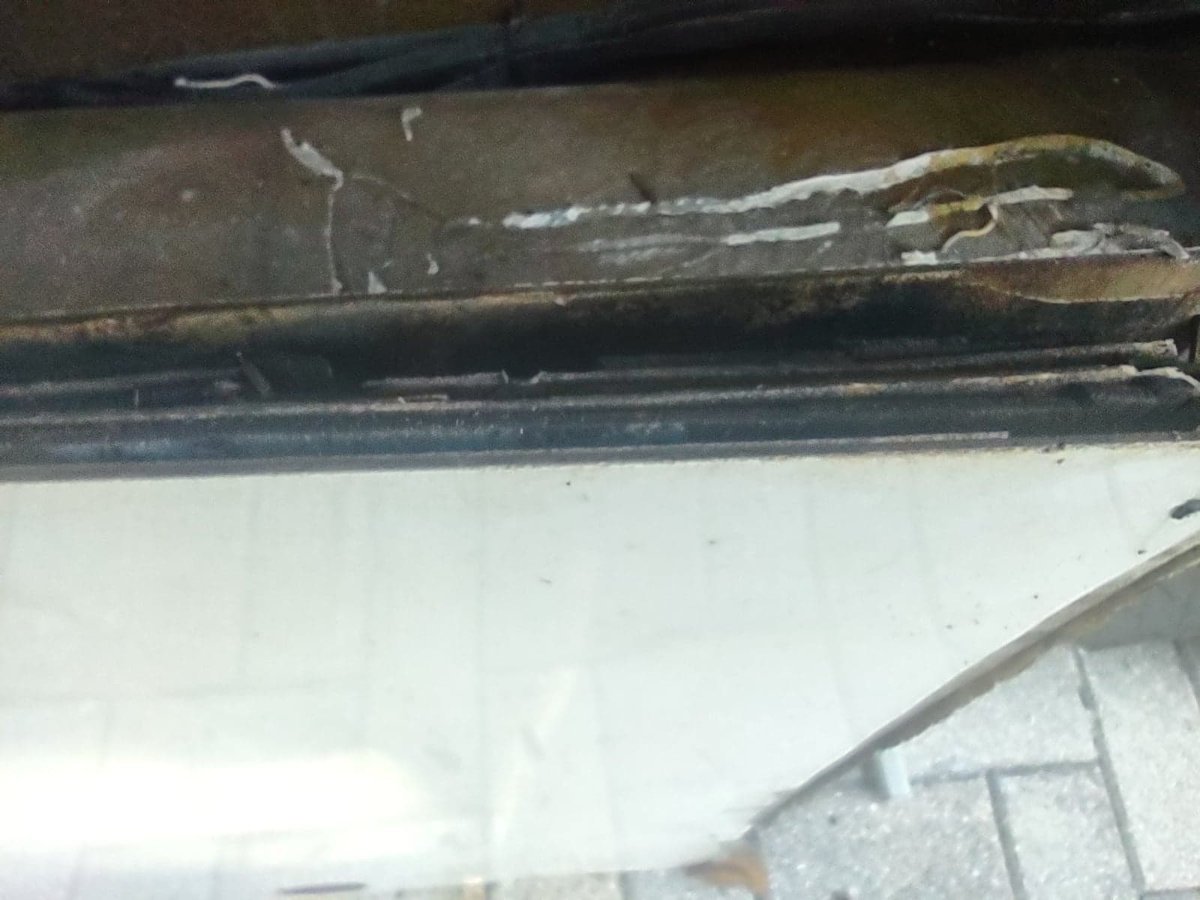
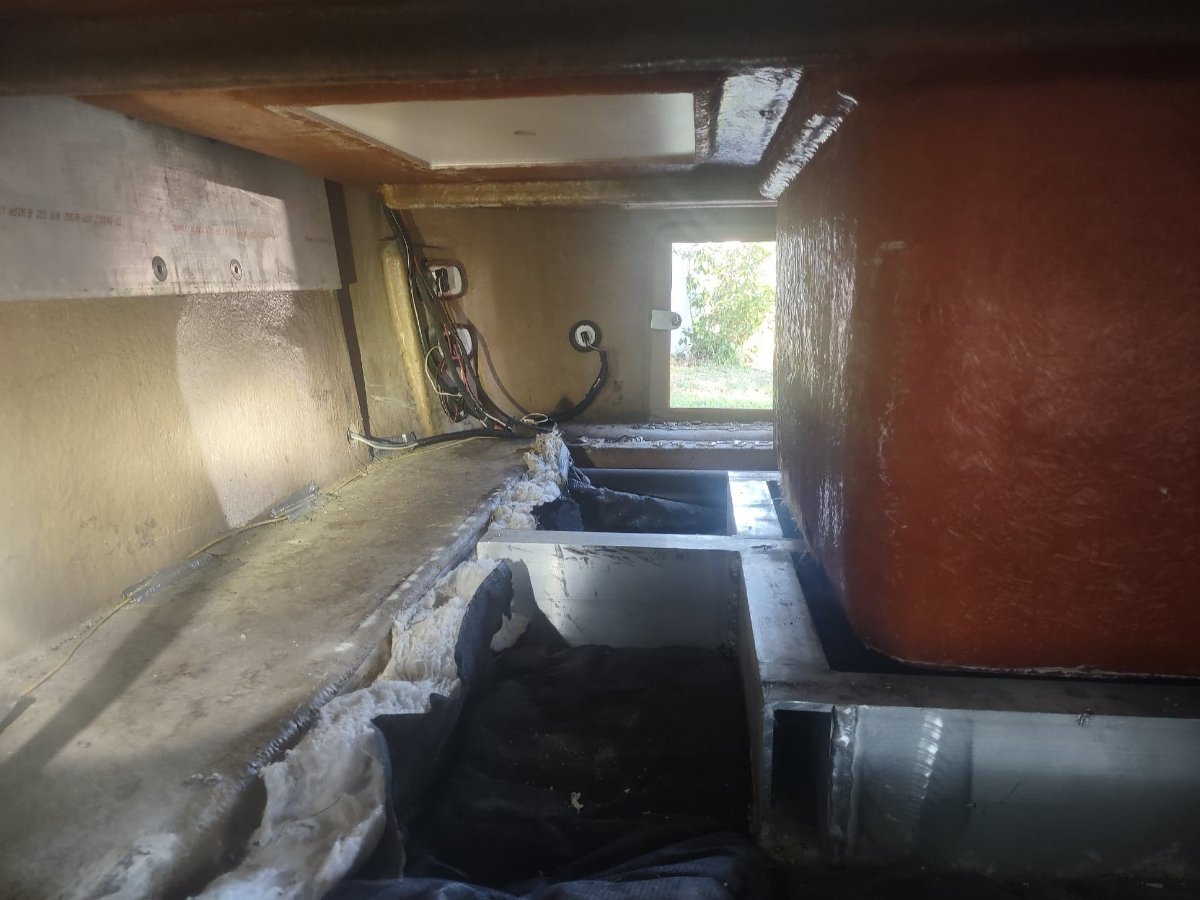
My money would be on a modification by a prior owner. The insulation is also interesting. Bill1 point
-
The longer trailer is easier to back up (believe it or not) in a straight line. The smaller unit turns quicker so you have to learn to make smaller and slower turns of the steering wheel. It becomes second nature after a trip or two. The best thing, for you, is that the smaller unit will fit in about any space. At any campground the small sites are usually the last to go. You would be able to get into sites that even some of the newer 'pop-ups' are too big for. Th smaller unit is also easier to find an easy place to pull into at a rest area. Easy to park at a shopping mall or grocery store, and you know you will have to restock the vitals...1 point
-
Old thread, but.........might help someone. We have 2. The light weight 5 step will reach most of the fiberglass top but not all of the solar panels. I use a telescoping mop to reach. You cannot use this one to get onto the roof. We use it most of the time as it's pretty light. The telescoping aluminum one comes in a bag but weighs 31 lbs. Not easy to get out but is very heavy duty and easily allows you to get up on the roof...use on the awning side as you have something to hold on to. https://www.amazon.com/dp/B09PH8ZPW1/ref=emc_b_5_t https://www.homedepot.com/p/XTEND-CLIMB-12-5-ft-Aluminum-Telescoping-Extension-Ladder-with-300-lbs-Load-Capacity-Type-1A-Duty-Rating-780P/3098970471 point
-
My last trip last winter was 5 days where daytime temps were in teens and nightime lows around 0. I attribute mad scientist mods with the level of success we had but, it felt like walking a knife's edge. Temp in battery box was solid, by the knobs to shower was in mid 30s and between the shells, under the front dinette seat dropped till freezing till I propped open the lid in the seat. Then was in high 30s. Our trailers are so well insulated that having extended daytime periods above freezing allows the inter-shell area to warm up which may have an effect that lasts well into the night. This is pure conjecture as none of the weather I saw last season got that warm. Super interesting stuff. Really helpful hear everyone's experiences. Thanks for sharing.1 point
-
That’s a nice vehicle. I would recommend that you look at the Elite I, your Land Rover would do fine with it. The larger Elite II could also be towed by your Land Rover but you would be near the safety limits and would not have an enjoyable towing experience, especially in any mountains. The payload looks pretty good, remember that what you carry in your Land Rover (including you and your dog) + trailer tongue weight should be under your vehicles payload limit. Check yours, often payload is reduced with certain options. I’m not a Land Rover expert, but there are some here who should chime in. MIke1 point
-
Yes, this is an interesting discussion. We’ve camped in mid to low 20s frequently and a few times in the teens but the daytime temps were upper 30s or higher. We did do four days in Durango once with temps in the teens and barely over freezing during the day. Kept the heat up and no issues. Some good suggestions here. Mike1 point
-
Hopefully, you don’t smell gas anymore. I can’t add anything to what John suggests above. I would be sure to check to make sure the ducting is connected and you aren’t just heating up in space between the hulls. Mike1 point
-
Welcome, Adeline! Do you already have a tow vehicle? The bigger Elite II requires a lot more towing capability than the Elite I. If you will be traveling alone with just your dog, the Elite I would be easier to tow. What kind of travel are you interested in? Mainly campgrounds or also National Parks and camping off the grid? You’ll get lots of advice and good input here. Mike1 point
-
This is really great stuff. Its one thing to deal with night time temps dropping into the 20s when day time temps recover well above freezing. Its a whole different ball of wax when those day time temps stay in the 30s or below.. Its interesting reading about how you folks are managing those conditions.1 point
-
Oooops. I got it. Camframo is a manufacturer of small heaters and the antifreeze pump is the hand pump used for winterizing. Thought it was anti freeze pump. Ha.1 point
-
I've traveled with my little CLAM for the past seven years. It is great for one or two people and can be stored in the closet of the Elite II. Bill1 point
-
JD: I agree. However, in my case, I need to add a third cause: The Adjustor needed retraining (Me). See above.1 point
-
For my first four years of Ollie ownership (21K Miles), I had the same problem. Even with my 2019 Factory F-150 brake controller set on max, performance was dismal. Ultimately, I figured out my problem was me. I was not adjusting the brakes nearly tight enough. In May I tightened them all a bunch, and we rolled over 15,000 miles this summer (Texas/Oregon/Alaska) and my trailer brake performance was just fine. I recommend setting them tight and then driving a mile or two using the brakes. Use a thermal meter to measure the drum temperatures (I have removed the drum look pretty cover as suggested by John D.) Jack up the trailer and make sure the wheels will only drag a little. If not, loosen a bit. Repeat is needed. Using a thermal tester (As suggested by John D) gives me great piece of mind. RESULT: I now can lockem-up on max setting during testing. For running, I am now using 6 with good performance vs Max before. I was considering going disk brakes due to poor performance. But am now on the fence.1 point
-
Hull 806..LE2.....a repost of our low temp camping experience. I have no problem considering the Ollie a 4 season trailer but I know I have to monitor the temps and always have to have a back up plan (or three) if "oops" happens (bold below). >>>>>>>>>>>>> We camped in Wyoming with lows around 15 degrees for a week, not winterized, with no problem. Altitude was about 7,000 feet. I have three SensorPush HT1 Wireless Thermometers to monitor the temps. Sensor # 1 was located in the cabin attached to the rear most driver side reading light. Sensor # 2 was located between hulls under the passenger side bed near the tail lights & water lines. Sensor # 3 was located between hulls under the driver side bed next to the shower outlet. On the outside of Ollie, I removed the shower head and pulled the water line inside the hull and reconnected the shower head. I set the furnace to mid/upper 50's and monitored all three temps....adjusting as desired. The driver side had the largest variance to the cabin temperature.....about 15 degrees. I have two 30 lb propane tanks. We were boondocking. After 5 or 6 days with ice/snow cloud cover....the batteries got down to about 50% SOC. At that point, I used the generator to recharge....not risking the furnace fan operation. We consumed one tank of propane and promptly got it refilled. (This was a portion of a five week western trip..we had been running the refrig on propane so we did not consume the whole tank in this one week). I also carried a Caframo heater and anti-freeze/pump ..... just in case. We operated the water system/hot water heater as normal. We did have to deal with condensation. (((BTW...I have move one of the sensors to inside of the refrigerator. We adjust the temp setting according to the readings. Early on in our experience we were having veggies and eggs freeze because we did not monitor and adjust....now, not an issue.))) Steve1 point
-
We use a light weight, 12' ladder like this Telescoping Ladder to get to the panels. If they are covered with powdery snow, we clear with a long brush attached to our truck window scraper. You can also get a rubberized "roof rake" to push the snow off. If snow is wet, dense or icy, we wait for a warm day and use our little generator to keep the batteries topped off until the panels can be cleared off. BTW, those ladders are super handy. We keep in our truck bed all the time and I can't tell you howe often we've been glad it was there.1 point
-
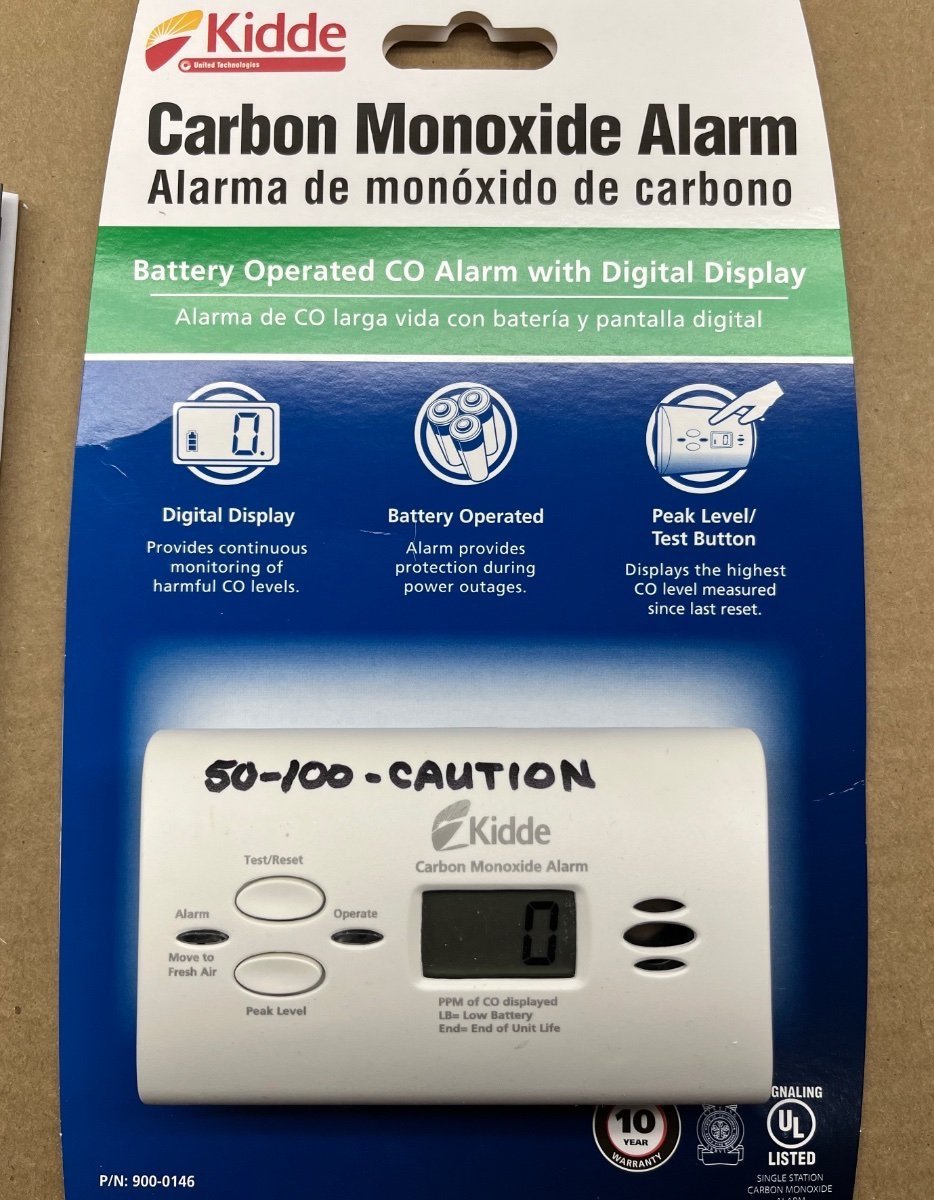
Your primary hazard when using the furnace is indeed CO poisoning (from a stress crack in the combustion chamber, which is impossible to predict). You are putting a lot of faith in the two Oliver installed “yes/ no” CO detectors. The one under the galley isn’t going to be helpful, CO is lighter than air. The combo smoke/ CO unit below the attic is good, if it works. I recommend this digital CO detector as a failsafe, it will show you trends, for example, the current level (should be very close to zero, but up to 50 is acceptable in the short term) and the highest reading since last reset. https://olivertraveltrailers.com/forums/topic/6780-how-to-replace-the-propane-co-detector-with-a-gas-only-one-and-a-digital-co-detector/ I have three of these, one in the trailer up high, one in the RV bay, one inside the house (because I have gas appliances and heating). The Rv bay unit shows elevated levels briefly when I have run a car in the attached garage, it has never actually got to an alarm level. Those who camp in milder weather should crack a rear window and open the bath vent half way and not stress too much. If you are running electric heat, there is no worry at all about carbon monoxide death…. Which I understand is quite nasty, but OTH it is quite hard on your family and friends. Symptoms of carbon monoxide poisoning may include: Breathing problems, including no breathing, shortness of breath, or rapid breathing Chest pain (may occur suddenly in people with angina) Coma Confusion Convulsions Dizziness Drowsiness Fainting Fatigue General weakness and achiness Headache Hyperactivity Impaired judgment Irritability Low blood pressure Muscle weakness Rapid or abnormal heartbeat Shock Nausea and vomiting Unconsciousness John Davies Spokane WA
1 point
-
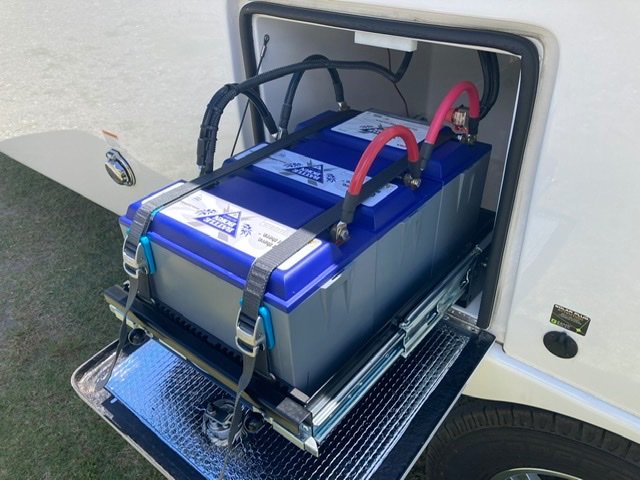
Regarding the 270A BB battery, according to Frank C. it won’t fit in the battery tray (see post link below). You might want to measure your tray to see if it’s the same. This post also gives opinions on capacitiy recommendations. It seems many folks, including me, have found that 2 BB GC3 100’s is plenty. I now have 3, which in our case, is overkill. But, we don’t have an inverter, microwave, toaster oven, hair dryer, etc, and have not used more than 50A/day. We have the standard 340W Zamp panels and the standard Zamp 30A controller, all works fine. Your power requirements requirements may be significantly different. The advantage of starting off with one or two GC3’s, is that you can easily add a 3rd if needed, unless of course you want to operate your AC off battery power. There are many posts on that topic also. Replacing the Powertron Lead Acid Wet Cell Batteries1 point
-
It’s good datas, thank you. It’s a Florida’s 4 seasons trailer! There is no rig that will stand cold weather for a long time because there are too many infiltration weak points: water inlet, back of the fridge, back of the water heater, door, windows, maxxair, roof vent , weak insulation factor (R…) etc……but Oliver is way better then other type of construction with a double haul and no slides out……it’s designed in case of a nights or two below freezing but not that much. 4 seasons in Eastern Canada need R60……!1 point
-
I used to wonder if using Teflon tape would somehow (electrically) insulate the anode from the tank thereby somewhat reducing its effectiveness. But, I used to wonder about a lot of things that don’t seem to bother me anymore. Never mind.1 point
-
Good try there, John. I found a hundred dollar bill while walking our dogs years ago. Tali demanded I give to her for safekeeping. I never saw it again.1 point
-
A magnesium anode protects better and lasts longer than Aluminum Anodes. Sacrificial Anodes are used to protect the hulls of ships, water heaters and other metals in contact with water or a dissimilar metal.1 point
-
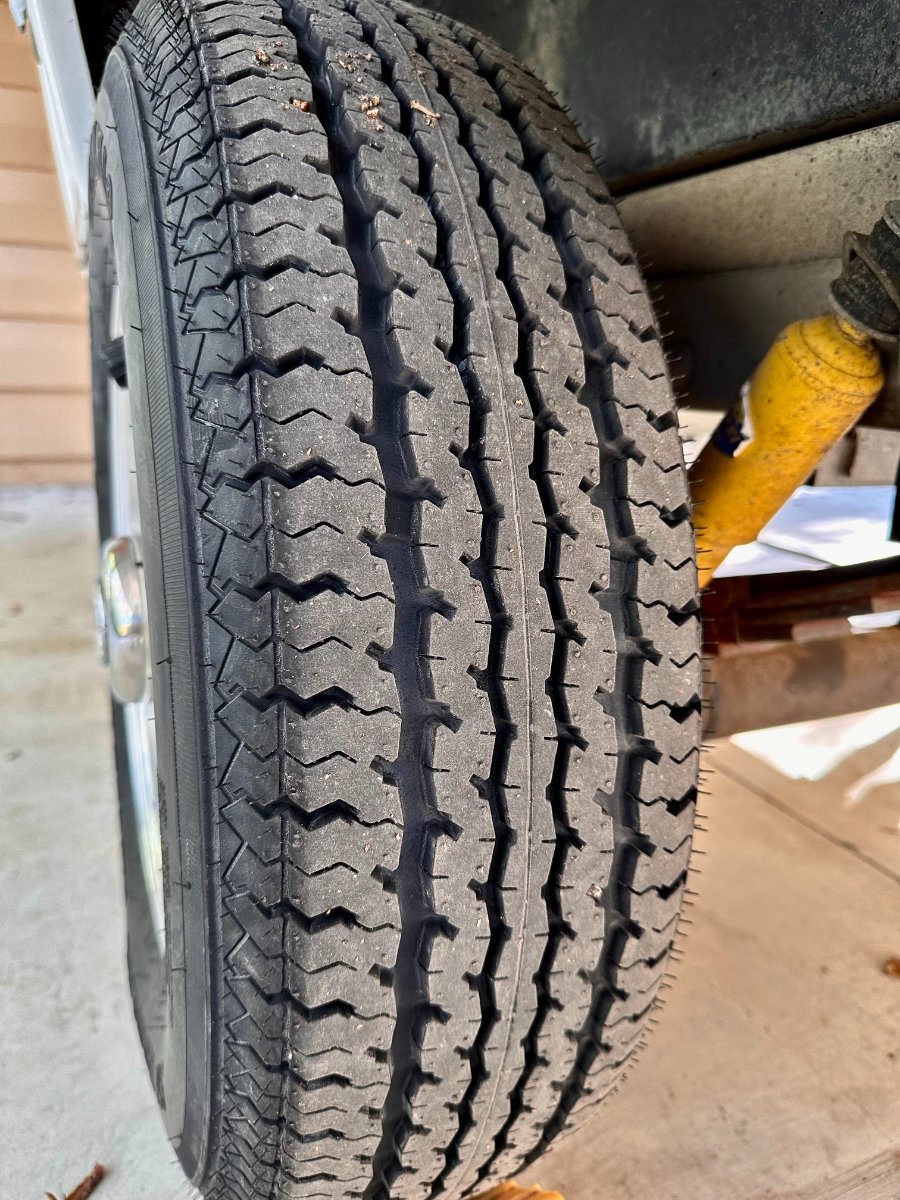
The Wonder Egg has new shoes! Tires - Maxxis 8008 Plus ST205/75R15 / Max load: 2150 LBS at 65psi, 2040 at 60psi / Tread depth 9/32" / 8 PLY Wheels - Raceline 870 Element Wheels Size: 15 X 6 bolt pattern 6 X 5.5. / Load rating: 2830 LBS
1 point
-
This is really helpful information for those of us storing our Ollies with Pro package in cold environments. I was planning to remove my batteries for winter but am relieved that with shore power and the heating pad on, they can be left in place.1 point
-
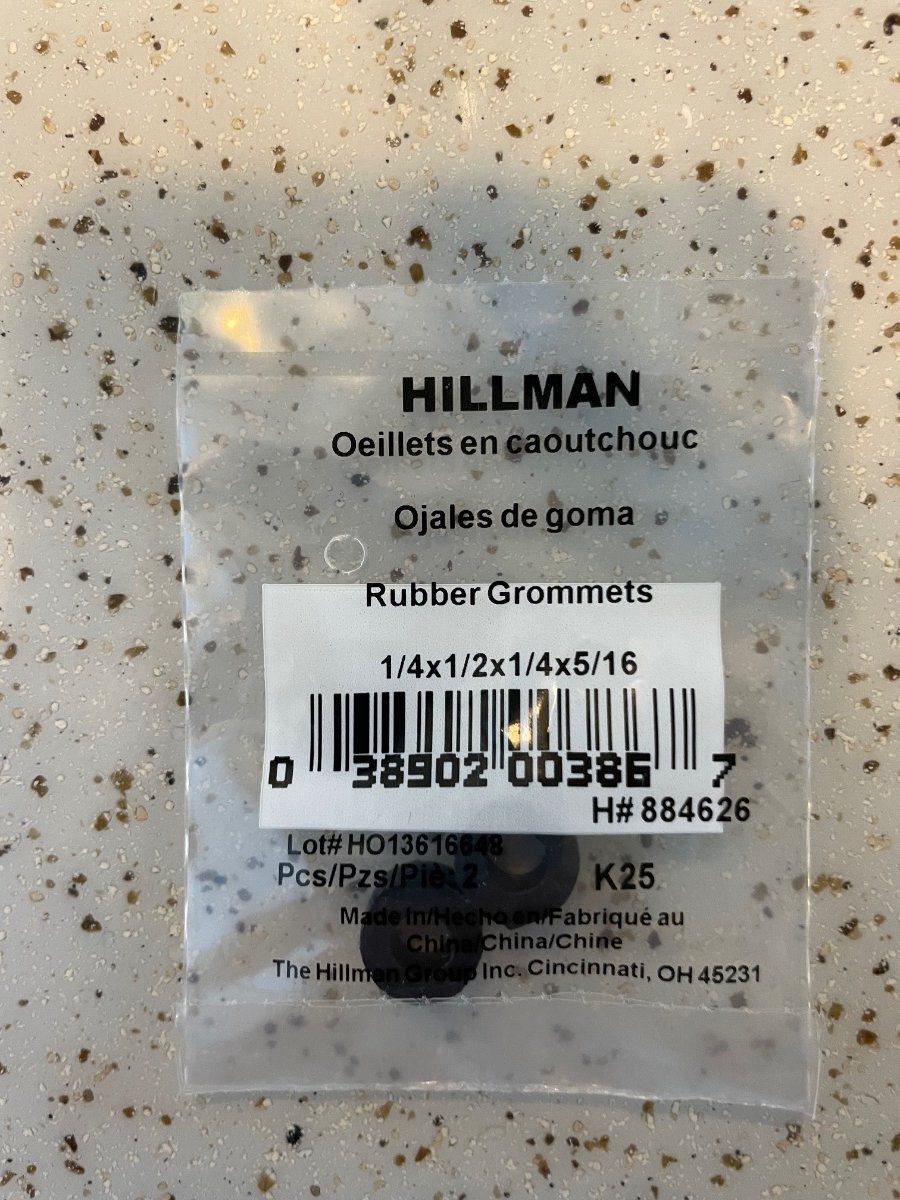
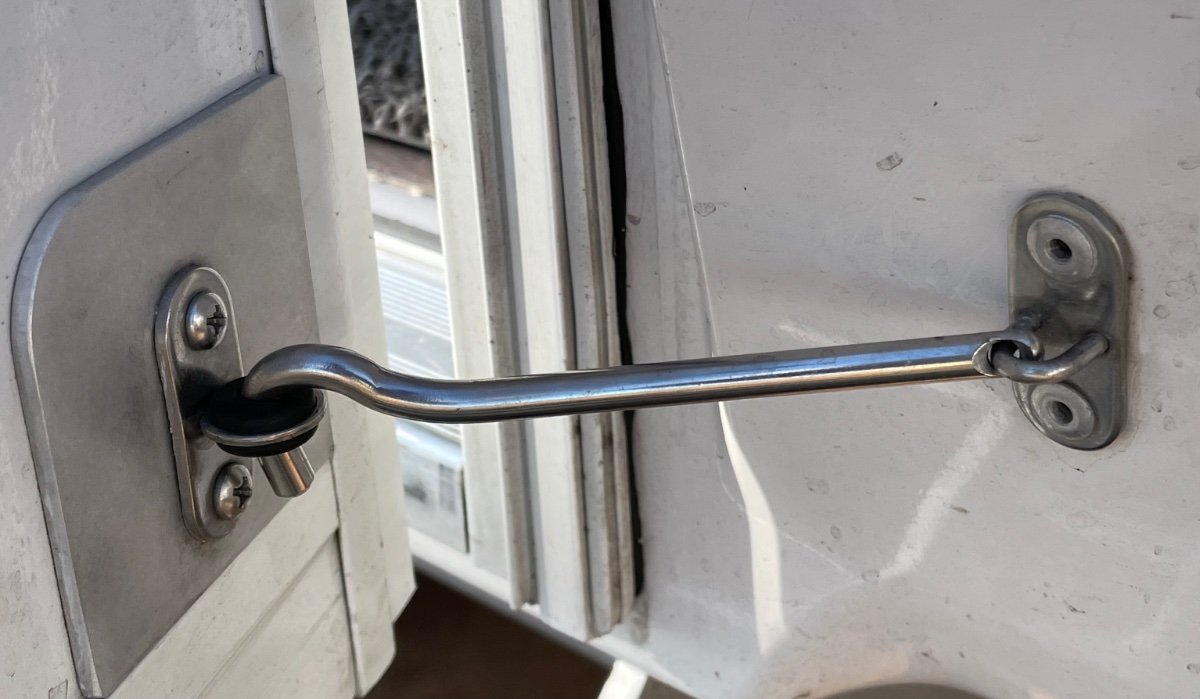
Replaced grommets in door hooks. Found at Ace HW and Lowes in the nut bins sector he store. Specs: Hook itself is 1/4” dia Bracket Hole size 1/2” Grommet hole 5/16” grommet is 1/4” thick
1 point
-
Agree with John. If you are plugged in to shore power and your inverter is on and still no 120V, you could always run an extension cord to your heater from the outlet your are using in the driveway for heat overnight. Bring the cord through a window, the small amount the window is open shouldn’t be a big deal. We got into the 20s last night with both ceiling vents open and the window next to my bed cracked. Mike1 point
-
If you are concerned about leaving it switch off the microwave circuit breaker, that will remove power from the entire 120 volt circuit. Since you have not been plugged into shore power, I have to ask this….. did you try turning on your inverter? When you are not plugged in, that is the only way to energize those outlets. Sorry if that is a silly question, but we do have a lot of first time owners here. FYI, you can run a space heater for a very short while using the inverter, but it will deplete your batteries VERY quickly. It is far better to use the propane furnace when you are boondocking. It only uses 3 amps when the fan is blowing. John Davies Spokane WA1 point
-
Well, after more investigation, I've settled on Maxxis M8008 Plus ST205/75/15 radials, with a load carrying capacity of 2150 lbs at 65psi and 2040 lbs at 60psi. They have a deep aggressive tread which, according to "Tire Hungry", will "allow sipping and gripping on all weather conditions, including icy, hot/dry, and warm". It tended to better a competitor with a shallower tread configuration. I plan to run them at 60psi, cold temp. They have a speed rating of "N" which is 87mph, although I will still plan for 65mph or less. Not meaning to hijack a thread about LT tires, but from recent extensive research, it seems that between 2005 and 2008 a lot of ST rated tires, predominantly from China, were experiencing a large number of failures. This is why I chose to go to LT tires in 2009. After 2010, "ST" tire manufacturers appeared to get their act together and current ST tires have a much better dependability from their earlier models. Having a 2008 Elite, my spare tire cover is not as spacious as the later Elites, so I chose a thinner 205mm tire to ensure fitting well under the cover without rubbing against the fiberglass.1 point
-
I originally installed 2 Battleborn 100’s, which worked great. Two or three of these 100’s fit nicely in the tray. Last year someone posted about a blemish sale on the 100’s for $699, with full 10 year warranty. I called Battleborn to ask about it, and the guy said “Nobody ever complains to us about having too much power”. Good sales pitch, I bought it. That blemished battery sale came to me in perfect condition, no blemishes. So far 300 Ah has been overkill for our needs, we were doing just fine on 200Ah. We have solar, but no inverter, microwave, cell or WiFi boosters. I haven’t really measured it, but my guess is we use less than 50 Ah/day. If I were to do it over again, I’d probably go with the 270 Gamechanger. That would be more than enough power for us, maybe ~5 days with no sun. If you carry a generator, you can always charge up. The terminals use 5/16” SS bolts, fewer cables and connectors, a clean install. I like Battleborn because they are US made, excellent reputation, a good value, and 10 year warranty. If you ever need tech or customer service, they are a pleasure to deal with.
1 point
-
Hi Owners, We are Wendy and Steven from NW Oregon. We are both recently retired, Steven from Commercial Fishing in Alaska and most of my career I was a Hotel Reservations Manager. We have had several various RV's, a Camper, an adorable Teardrop Trailer, a class B, and a small class C. The Oliver fits our needs and finally our search appears to be over. We like to Boondock, love the mountains and the variety of terrains in this country. We look forward to the trip from Oregon to Tennessee and back....sort of. I am nervous about the trip. I haven't pulled a trailer and want to learn. My husband has pulled several types of trailers but I want to help drive on the way home. Has anyone driven between the Oregon/Washington area to pick up their Oliver? Any advice? Thanks all!1 point
-
Lithionics Technical Service Bulletin Note: This only applies to campers that have a 3000w inverter AND the 130ah batteries. Information was released recently regarding potential for internal battery BMS damage. This is a rare case as certain things would have to fall in place in order for the situation to have an opportunity to potentially occur. Lithionics has found that under certain conditions if your 3000w inverter is left on, which many people do, and your batteries are turned off, by you or the BMS, and you were not connected to shore power, and you turn a single battery on by itself; the entire load from the inverter for in-rush capacitance would hit the single battery which was not designed to handle that much load. So to help ensure that you do not accidentally damage one of your Lithionics batteries we have released a technical bulletin for a restart/reboot process to eliminate this small potential for error. For more information regarding the proper Restart/Reboot sequence, please see the attached technical service bulletin. Q&A Do I have to do this every time I use my camper? - No, this is only done if the batteries have been turned off. Do I have to follow the restart process if I am aware of the situation and plan to turn on all the batteries at once? - Yes, Lithionics recommends following this procedure to ensure that the batteries are brought back online safely. Why do I have to do all the steps with the inverter? - If the inverter loses 12v power as it does when you trip the inverter breaker then it must be powered on properly to load the communication software to the remote display. Failure to do this will cause an Error 20 condition and the remote display will not function. Additional Notes: I recommend that the inverter is NEVER left on. Make sure that you understand that the Xantrex Freedom 3000 is an Inverter and a charger all-in-one. When you connect to shore power it will automatically power up as the incoming 120v power runs through it to power your microwave, receptacles and A/C. Since the power automatically runs through it there is no need to turn it on or off. However when you are not connected to shore power aka a 120v power source, then you must manually turn the inverter side on and/or off as needed. On the Xantrex Remote display there is a round button with the power symbol next to it. This button is to power the inverter side only. The only time I recommend having this power button ON is when you are NOT connected to shore power and you want to utilize the microwave, receptacles and/or A/C. The reason for this is that if it is left powered on and you are connected to shore power but the onboard surge protector sees an issue with the incoming shore power, it will shut it off. When this happens the inverter can pick up the load within seconds and you may never know that you have lost incoming shore power. This may sound great and you may think why wouldn't I want it to pick it up and keep supplying the power to my microwave, receptacles and A/C. Well, if you are unaware of this power changeover to the inverter you may keep letting the A/C run and keep working on a laptop that is plugged into the receptacle for power and a few hours later ,unbeknownst to you, your batteries shut off because they have become depleted. If on the other hand you lost the incoming shore power and were aware of the situation then you have the decision to inspect and determine the reason for the failure and/or make an informed decision to switch to inverter/battery power and manage how much you use to ensure you do not deplete your batteries. lithionics-proper-boot-sequence.pdf1 point
-
There are a number of past threads. Put “ladder” in the search window. I don't recall anyone discussing a ladder that includes a cover. I suggest one of the wonderful Werner articulated ladders if you don’t need to put it in the closet. The MT-13 is fine for an Ollie but too short for all around home use. Look for sales at the box stores. John Davies Spokane WA1 point
-
Since I purchased my Ollie about a year ago, I've had an odd odor that seemed to come and go even though she's always spotless inside and I run a large home sized dehumidifier set below 50%. Well, today I found the source... wet plywood sandwiched between sheets of fiberglass installed in the basement floor. I was under the impression that no plywood was used in construction so I was a little surprised to find this. I'm now wondering if this something from the factory, or if one of the prior owners modified the basement floor? In the end, no big deal since it's not structural, and I wanted to install new vinyl sheet flooring in the basement anyway. Will probably just lay in a 1/2 sheet of PVC now prior to the vinyl.
0 points




















.thumb.jpg.e34bf01ef7f7d5e99ad31856d45afbeb.jpg)
-
Recent Achievements
-