Leaderboard



Popular Content
Showing content with the highest reputation on 11/26/2022 in all areas
-
Rest assured Rivernerd they do fit. A beautiful sunny 60 degree Western North Carolina day had me outside laying under Hull #634 installing all four sets. I think it took me 10 minutes including me getting up and down and off the concrete slab in the Ollie Hangar. 😄 Thanks for the post and the link to the caps! Patriot 🇺🇸 Please excuse the inverted photo 😎. That’s how it landed when I uploaded it. You get the idea, they fit fine. I see a dirty wheel interior wow that won’t pass muster, I better get busy. 😄
 4 points
 -
OLIVER HULL #1291 DELIVERY, INSPECTION AND WARRANTY SERVICE EXPERIENCE This very long post details our delivery, inspection and initial warranty service experience with our new Legacy Elite II travel trailer picked up on November 10, 2022. I begin with our overall impressions, for those who want just the “bottom line.” OVERALL IMPRESSIONS The Elite II is a quality trailer worth the price paid. We are glad we waited to get the Truma upgrade package including the AC, the CP Plus Varioheat wall control and the Varioheat furnace. Oliver does not lap seal all screw holes on the roof during production, but does lap seal as part of the first year’s annual maintenance. Oliver’s production staff continues to make some mistakes, but Oliver’s Service Department promptly and effectively addresses flaws for which service tickets are submitted. If you are interested in more detail, including how our delivery process went, the specific issues with our Hull #1291, and how they were resolved, keep reading. DELIVERY Ryan from Service did a generally good job with the delivery process. But, he failed to provide instructions for running the AC on battery power, which is one of the reasons we bought the Lithium Pro package. We had to figure out on our own that the AC remote must first be electronically paired with the CP Plus Varioheat wall control, and that the inverter must be switched on, or the AC unit will not be recognized by the CP Plus Varioheat wall control. Once we completed those steps, the AC worked well on inverted battery power. Our trailer has Goodyear Wrangler Workhorse LT tires mounted on 16” wheels. I was advised by Oliver Operations Manager Rodney Lomax that the ST tires on 15” wheels will not be installed on new trailers until March, 2023. I asked Ryan if the tires contained balance beads. He replied that after the balance bead/valve stem issue, Oliver determined to remove balance beads from all tires going forward, and leave them unbalanced. He asserted that trailer tires don’t need to be balanced. Jason Essary and Oliver Operations Manager Rodney Lomax also advised they are satisfied that trailer tires do not need balancing. Note Added After Towing 2000+ Miles Back to Idaho: I do not feel the need to get the trailer tires balanced. The trailer towed smoothly. SPECIFIC OBSERVATIONS ABOUT THE TRAILER Hull #1291 is the third trailer delivered with the new Truma package including Aventa AC, Varioheat furnace and CP-Plus integrated thermostat/control for heat/AC/water heater. We deferred our delivery from September to November 10 so we could get the Truma package in our 2022. #1291 is also the third trailer to get the Victron MPPT solar charge controller, which is standard with the 2023 solar package. I mistakenly presumed that since the Victron BMV-712 Smart Battery Monitor is mounted in the same place that the Zamp monitor was that it, too, reports solar panel charging data. It does not. It reports only the battery charge status. In trailers with both the solar and lithium packages, it is one of four ways to access battery charge data: (1) by reading the Smart Battery Monitor; (2) through the Lithionics app; (3) through the Victron Connect app and (4) by pressing “Batt” on the Seelevel monitor. Those who order wet cell or AGM batteries without a solar package have one way to check battery charge level: the Seelevel monitor. To check on solar charge data, there is only one option: you must access the Victron Connect App and click not on the Smart Battery Monitor icon, but on the Solar Charge Controller icon. You can then see real time solar charge data (if it’s night the charge data will be 0), and historical data for the past 30 days. The Truma AC is quiet. Although it produces 62 dB on high, the low and night settings logged in at 48 dB. It is easy to carry on a normal conversation at those levels. The Varioheat furnace includes much more substantial ducting than what I have seen in photos of Suburban furnace installs. It is not kinked or twisted, as some have reported with previous furnaces. Hull #1291 also includes a return air vent in the bathroom, which allows cold air to be returned to the furnace through the service area in the bottom of the trailer. This results in a much better balanced forced air heat system. Previous posters with the Suburban furnace noted that the “bilge” area under the street side bed where the external faucet is located stayed about 5 degrees above the outside ambient temperature on cold nights in the teens. We found that, with the Varioheat furnace set to heat the cabin to 70 degrees F, the “bilge” area stayed at 38 degrees F with outside temps at 11 degrees F. We did not then worry that the plumbing and tanks below the floor would freeze. The CP Plus Varioheat thermostat requires a learning curve, as it is not yet covered by any Oliver videos. It controls the Varioheat Furnace and the Aventa AC, as well as the Aquago water heater. AC control appears as an option on shore power, but not on battery power until the inverter is turned on. We were shown how to use it on shore power during the delivery process, but we were grateful that Oliver also provides a notebook containing owners manuals for the Truma products, as we had to study the owner’s manual later to really learn how to operate it, including when testing the AC on inverted battery power. The fit and finish inside and outside the trailer is improved over that reported by some on this forum. The interior caulking, such as in the shower, is nicely done. As an example, the plumbing vent hole in the closet is now sealed with a gasket, rather than just caulked (sometimes incompletely) as noted by earlier posts on this forum. INSPECTION AT DAVID CROCKETT STATE PARK From review of posts on this forum, I had compiled a long list of nearly 100 production defects noted by posters over the past several years. I spent most of the next 3 days at David Crockett State Park inspecting the trailer inside and out to determine if any of those defects were present in our trailer. None of those issues, ranging from improperly installed windows, to missing caulk around stabilizer jacks, to improper grounding of the inverter, were found in our trailer, save two: (1) there were no rubber plugs in the drum brake backing plates and (2) there was a roof leak. We found 5 significant issues, for which we submitted service tickets: 1. A leak appeared onto the standard bed area below the Truma Aventa air conditioner. It rained in Hohenwald the night we took delivery, then we found the leak the next day when we arrived at David Crockett State Park. As we had not used the AC, we suspected something on the roof needed to be resealed to prevent rainwater from penetrating the hull when on the road. This issue was on my list. 2. The Truma Aquago Antifreeze unit we purchased from Oliver did not yet communicate with the Truma CP Plus Varioheat wall control unit, so it could not be used. 3. The grey tank sensor gave erratic readings that did not correlate to water usage. 4. The bath fan vent and plumbing vent screws on the roof were not sealed, providing possible leak points; and 5. The one other item that was on my checklist: The drum brake backing pads do not have rubber plugs to protect the adjustment mechanism from road grit. When dumping the black and grey tanks before heading back to Hohenwald, the grey tank cable pull handle came out in my hand, preventing me from dumping the grey tank. When speaking with Mike Sharpe from Oliver Service, I also advised him of this issue that had come up that morning. RETURN VISIT TO HOHENWALD We delivered Hull #1291 to Oliver Service the late morning of Monday November 14, 2022. Later that afternoon, Jason Essary advised that his techs had verified the water leak and believed its origin was around the ventilation fan. They resealed that area, but then also applied sealant to all of the exposed screws on the roof (at no additional charge), because I had expressed concern that they were potential leak points. Operations and Sales manager Rodney Lomax advised that those screws are not sealed during production, but that the Service Department applies lap seal to them if annual maintenance is scheduled. I suggested that, like the screws that secure metal roofing to sheathing, those screws should be either gasketed or otherwise sealed as part of the manufacturing process. We were asked to leave the trailer overnight, so the sealant could cure before leak testing the next day. Because rain was forecast for that night, and because we asked to be able to sleep in the trailer, Operations Manager Rodney Lomax arranged for the trailer to be placed under a large awning/overhang at the Sales and Service facility to keep the roof dry. We noted when we slept in the trailer that night that all of the service ticket items had already been addressed except the water leak and the plugs for the drum brake backing plate. The grey water tank sensor was now reading consistently and the CP Plus wall unit was recognizing and controlling the antifreeze kit. The grey water tank pull handle had been reattached. [My later inspection suggested that the set screw, which secures the aluminum shaft (to which the grey tank drain handle is attached) to the guillotine valve under the street side bed, had come loose. I expect the handle with shaft simply needed to be reinserted and the set screw properly torqued.] We were advised that the brakes come from Dexter without plugs for the access holes, and Oliver does not supply them. So, I determined to cover the access holes with Gorilla tape until I could buy plugs online at home and install them. We yielded the trailer to the service team the next morning, expecting that after a leak test, we could be on our way home. But, we were advised a few hours later that when leak testing, it was discovered that our windows had not been installed according to a new protocol recently implemented by Oliver, so Jason had instructed his techs to pull and properly reinstall all windows, including re-caulking exterior flanges. That took the balance of the day. Jason and some of his staff stayed until after 6:00 p.m. that evening to complete the work and return the trailer to us, so we could camp another night at the Oliver campsite rather than find a motel. The process of addressing our multiple service tickets required us to hang out in Hohenwald for another two days, and delay our plans to return to Idaho. But, we had planned extra time for this purpose knowing that such a delay was possible. In total, we spent 6 days in Tennessee receiving delivery, inspecting and testing systems, and coordinating repairs. We appreciate Oliver lap sealing all of the screw heads and holes in the roof of our trailer, at no charge to us. We believe all Oliver trailers should have all roof screw holes lap sealed as part of the production process. Had that been done to our trailer before we took delivery, it would have saved us a day in Hohenwald. We also appreciate the Oliver service team for promptly addressing our service tickets right after we arrived back at their facility, and, even though it took an extra day, for ensuring that the windows were properly resealed though we had noted no issues with the windows. It is a concern that Oliver’s production staff overlooked the items for which we submitted service tickets during construction, and failed to follow the new protocol for window installation when building our trailer. But, we left (two days later than we had originally hoped) with what we believe is a high quality trailer that is worth the premium we paid for it. And we left with great respect for the integrity and commitment to quality of the Oliver service and management team. HELPFUL THINGS LEARNED FROM FORUM POSTERS I learned many things from posters on this forum which have made using the trailer much easier and safer. These include: Inserting turnbuckles into the chains of the Andersen WD hitch, with the extra chain links required to fit the Elite II. This has made it easier to attach and detach the Andersen by turning the turnbuckles to create slack. It also makes it much easier to get the “whale tail” back on if it was detached at an angle—just loosen the turnbuckle on the long side even more, and the whale tail can be installed at an angle. Then, of course, tighten the turnbuckles to tension the WD hitch. I use Robogrips to complete the tightening process. This is much easier for an old guy than crawling under the trailer to loosen the nut with the Andersen provided socket. Using a Camco water filter and a brass hose elbow when hooking up city water Installing a dash cam Using a PUR water filter pitcher Installing a Tire Minder TPMS system Using a squeegee to wipe down shower walls Installing X-Chocks between the wheels on the two axles. If you posted about these items, THANK YOU!3 points
-
Thank you for the suggestions. Two complete flushes with fresh water and baking soda down the drains and into gray tank later. AF Oder is gone. FYI the best Oder free AF we found is Splash -75degree at Home Depot. We used it to winterize and no smell now!!😎3 points
-
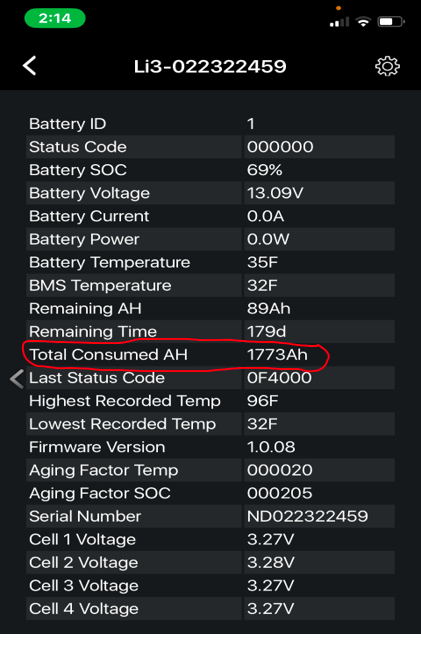
It seems that many of us (with Oliver Sales increasing) are facing our first Winter down time and after winterizing the plumbing... are now wondering about our expensive Lithionics batteries. I spoke to both Oliver and Lithionics regarding the battery storage. Lithionics is careful to say that if you want to ensure "best practice"... you need to keep your batteries between 14~86 degrees. Whatever you have to do to ensure that range is what is needed. For the larger 690AH system has it's own battery heater and should keep itself protected from the cold. The smaller 390AH batteries do not have the internal heater but do have Olivers battery heater pad. Based on Olivers recommendation I am going to keep the plug and extension cord handy and keep the batteries charged up as needed to provide that heat pad the energy it needs to protect those batteries. An interesting side note: while talking to Lithionics, I told them I was looking for something like the Odometer on a car. Something that I could gauge where in the overall life expectancy these batteries are. The batteries are expected to last a minimum of 2000 cycles (with 3,000 cycles likely).. mine are 130AH batteries which equals 260,000AH (2,000 times 130AH= 260,000AH). I have used 1773 AH to date or only .0068% of it's warranted life expectancy. In fact, this is a "value added" feature on Lithionics batteries. Their battery (thru the app) has a quantifiable number that the consumer could use to calculate the prorated value in the event of any warrantee claim. Assuming that it has been used and stored in accordance with their guidelines.
3 points
-
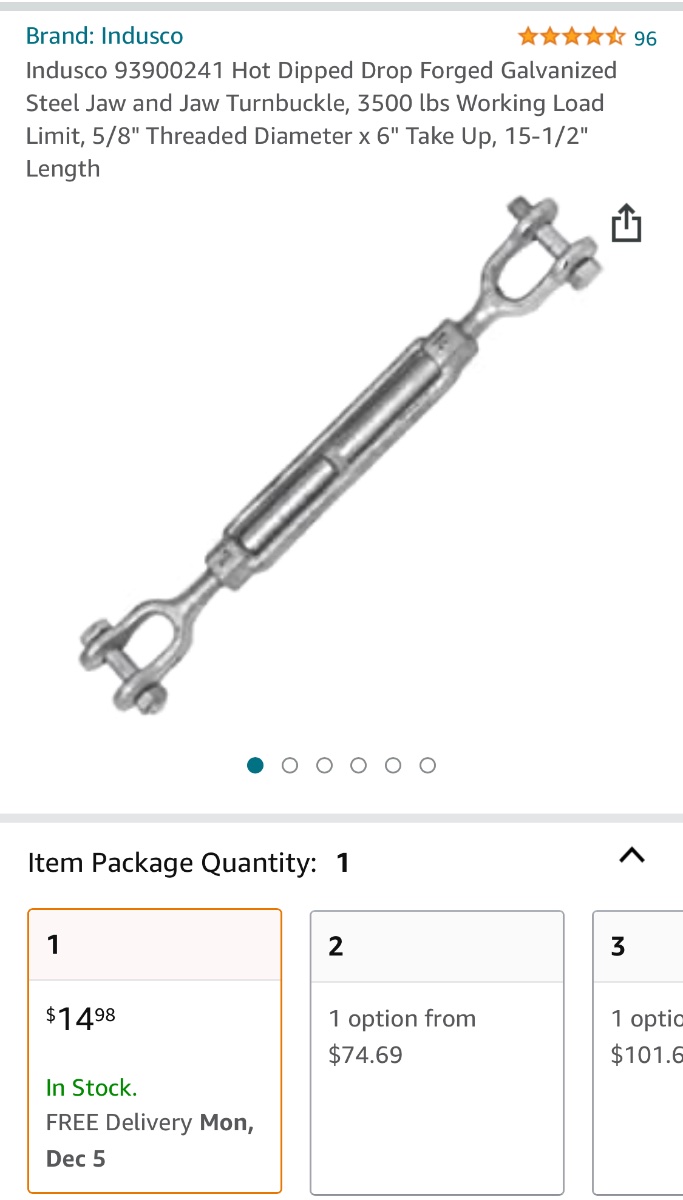
I adopted John Davies' turnbuckle approach with our new Elite II picked up on November 10, 2022. After camping 12 nights at various places in 7 states, and towing more than 2000 miles, I am pleased with the setup. At one back-in campsite, the whale tail ended up angled relative to the hitch ball. When reattaching the whale tail, I further loosened the turnbuckle on the "long" side, which enabled me to get the whale tail onto the bottom of the ball mount. Then I snugged up both turnbuckles, completing the process with Robogrips. IMHO, this is an additional benefit of the turnbuckle system. But, the turnbuckles don't fully replace the front chain extensions on our 2022 Elite II. They replace 10 of the necessary 23 additional links, so before leaving for Hohenwald, I bought two 15-link lengths of 3/8" chain to serve as chain extensions, to ensure that I had enough chain. And, yep, I now get to cut two links off of each chain, as they turned out to be surplus. Thanks, John, for the idea!3 points
-
Ran across this one. A bit in the gray zone... so to speak, but really funny. GJ VIDEO-2022-09-09-13-50-14.mp43 points
-
After one experience of having the whale tail not in line and having a hard time hooking up, because you need to be at the same angle, now I just unhook when straight and hook up when straight again. I take the rubber shock cords used to secure the top of the the storage basket bin and hold up the chains. I only need to drive without the whale tail for a very short distance until I am in line with both truck and trailer. It works for me. John2 points
-
I’m using a pair of turnbuckles with self locking stainless nuts, rather than chain binders. On my trailer they fully replace the front extension chain sections. They work MOST excellently! They are lighter but do have more failure points, OMG…..! Andersen did not approve of ANY mod, but the tech said that a 2600 lb WLL would be OK, as long as you don’t actually adjust tension with them. Just remove slack! If I bust one, I will replace them both and continue on. They greatly improve the rather poor Andersen Experience. IMHO. The reason you can’t find that thread here is that the original poster did not bother to put the subject in the title, which screws up Search. https://olivertraveltrailers.com/forums/topic/6707-andersen-hitch-hookup-mod/#comment-72082 John Davies Spokane WA
2 points
-
It sounds like you may have been running off of only one propane tank at a time since you said one was depleted and the other was full. When it is very cold outside it is best to draw propane from both of your propane tanks at the same time. It is the expanding propane gas that draws heat out of the propane tank causing it to become much colder than the outside air temperature. By splitting the total propane drawn between two tanks instead of one, each tank loses heat at half the rate of a single tank and this will make a big difference in how cold the tanks will get . I believe that pointing the lever on the propane tank regulating valve straight up will cause the valve to pass propane from both tanks at the same time (make sure both tanks are turned on). If the valve is pointing to the tank on the right, it will only draw propane from the right tank even if both tanks are turned on. Same for pointing the lever to the left tank. Point it straight up which is halfway between each tank and it should draw from both tanks simultaneously. Someone correct me if I have this wrong. It is possible that drawing propane from both tanks will reduce the heat loss from the propane tanks sufficiently to negate the need for a heated tank blanket when running the furnace in very cold weather, at least at temperatures above O degrees F.2 points
-
My understanding from two tire shops in Boise is that the ST tires are designed, in part, for the tire “scrubbing” that occurs when making tight turns with a two-axle trailer. That said, one of the shops (Les Schwab) said they sell many LT tires for trailer applications. Unless necessary, I try to avoid excessively tight turns to reduce scrubbing.2 points
-
Hi this is Bill again with an update. My wife Nancy and I have pretty much narrowed it down to the furnace and not the thermostat. Yesterday when we should have been eating turkey we spent most of the day out in the trailer. We got some smoke candles to see where the return air was coming from. The rear most air duct is situated only about 2 feet from the return air duct. With smoke candles we determined that a large amount of the heated air coming out of the duct would get sucked back into the return before it ever had a chance to warm the trailer. We theorized that this may be causing the furnace to over heat. So we decided to block the return air grill with duct tape and remove the front dinette seat to see what would happen. It greatly improved the air flow returning the air through the open front seat. But the short cycle was not improved. After playing with different return air options I believe I will make a return vent on the face of the rear dinette seat under the table. This area is a better choice than the front seat because the return air has little to no obstructions going back to the furnace. I plan to install a return about 1/4 inch off the floor so it will pull the cold air directly from the floor not 6 inches above the floor as it is designed now. Next we removed the supply grills and inspected the flex pipe and left the grills off to see if they were producing to much back pressure, nothing changed. We then replace the propane tank with a new full tank, nothing changed. Then we removed the awning side bed to let as much air into the furnace as possible, nothing changed. But we did figure out that the flame is going out about 2 seconds after it ignite's then relights 10 seconds later then goes out again and re-lights again about 6 times in 5 minutes this continues until the thermostat shuts the furnace off when the desired temperature is reached. Next I removed the sail switch and cleaned some lint off, nothing changed. I contacted Oliver and they were of no help at all they said to contact Dometic directly as it is a warrantee issue with Dometic and not an installation issue that would be covered by Oliver. So I went to a local Dometic service center and they said that they can not do any warrantee work because they do not sell Olivers. Gee thats nice seeing how no one sells Olivers. But they did tell me that they believe its the control board as it is a common problem and it should be replaced under warrantee. The other possible cause could be either the sail switch or the flame sensor. So I have a phone call into Dometic and filled out a work ticket we will have to wait until Monday to see what they will do. If Katanapilot happens to see this post, I see in your picture you have a RV7A I built a Vari Eze a Long Ez and an RV7, Ive sold them all and bought a BMW 1200GS and an Oliver, go figure! Hence the email N227EZ@gmail.com Bill2 points
-
I am sorry my report left you with that impression. I should have written it more clearly. To my recollection, none of the issues we found had been reported before except the roof leak and the absence of rubber plugs in the disk brake backing plates. As I noted, Dexter does not supply the rubber plugs, and I believe Oliver had not thought to supply them. So, the only previously reported issue that Oliver could (and should) have done better was the roof leak. The impressive point for me was that of nearly 100 previously-reported issues detailed in my list, I found only those two, and only one was a production oversight. So my "takeaway" was that Oliver has successfully addressed almost all of the "oft-reported" past problems. Please accept my apologies for any confusion.2 points
-
Just to head off a small stampede of owners that think otherwise....... the issue is not strength of any of the Anderson components. But rather wear of the ball itself. This is especially the case of those needing extra weight distribution (Ergo high chain tension) such a Sequoia's, Land Cruiser's, and some half-ton trucks. The increased size of the 2 5/16 ball provides a larger contact wear surface at the ball.2 points
-
WOW! Thanks for all the feedback, I'm loving this! I'll remove the WDH from my build order and get one later if needed. As for the brakes, I too have had mixed experience with trailer brakes. Pretty much what I've seen is (except for air brakes on a big truck) the trailer brakes are not generally worth much on the big down grades, hence the reason I went for the bigger TV so I could hold it back more with the drivetrain instead of the brakes. It's the strongest reason for getting a diesel that I know (so you can have a jake brake) but I'm not ready to spend the money on that and anyway, unless you plan on a LOT of road time, the added expense otherwise very hard to justify. Thanks everyone for the feedback, it's very helpful, I appreciate your insights and look forward to meeting you on the road a.2 points
-
Just repacked my bearings and went through this entire chain. Left me with a couple of questions. - Why don't our trailers have sealed bearings? The new model year does. I believe they basically require replacing the entire axle when in need of maintenance but can't remember the last time I heard someone had to replace a sealed bearing. - Why don't our hubs have Dexter EZ Lube fittings? Seems like you can displace old grease and replace with fresh without having to do a full on repacking job. - I understand that it is suggested that we re-pack our bearings every year or 12k miles but, keep finding suggestions that the re-packing is really only necessary/prudent at twice that. I'm sure more often certainly doesn't hurt but could it possibly be overkill? I'm sure these questions may push some buttons so please forgive my lack of experience in this department.1 point
-
We use X-chocks as well and also added them to our arrival/departure checklists. They do add noticeable stability to the Ollie. We like checklists and yes always use them thanks to my bride/copilot. Forgetting an installed X-chock would not turn out well at all.1 point
-
This is the method Andersen recommends. It is fine IF you have room to pull forward. Some really short sites don’t have that room. And if you want to hitch up the night before departure, while the truck is at an angle, it isn’t very practical. John Davies Spokane WA1 point
-
Check out www.wildbird.zenfolio.com I have a bunch of pictures of my long ez there. I got priced out of the aviation market with fuel and everything especially avionics it wasn’t fun any more. Plus up in MA a lot of little airports closed and most of my flying buddies are gone or moved on to other things. I still have access to a 182 that I fly now and then. It’s time for a new adventure.1 point
-
The propane tank heater blanket available through the link below pulls only 50 watts (2.4 amps a 120V). So, you may be able to run it from your batteries, through the inverter, for many hours at a time. You could then recharge the batteries with a generator, which might only take an hour or two. https://arcticwarmers.com/product/cylinder-heater-warming-wrap-40-high-temperature-for-lp-tanks/?gclid=EAIaIQobChMIr5rMhs7K-wIVE21vBB1uxg0PEAQYBCABEgJR-fD_BwE With our Lithium Pro Package we have 390 Ah of battery capacity. Conservatively figuring 80% usable capacity, at 24 amp draw (since the inverter requires 10X the amp draw), we could run the tank heater for 13 hours. Since we would likely only need to run the tank heater at night (say 12 hours per night in the winter), in theory we could get 1 full night (with no other amp draw) before generator recharge was required. Just a thought.1 point
-
I could run a generator, assuming it worked well in those altitudes. Question is for how long and how often i would need to run it to keep the tank at a happy temp. I've been doing some research and it seems that propane CAN work happily down to very low temperatures. Problems that come up can be caused by 1) running a tank above 80% or below 10% filled, 2) there being water in the system or 3) using a summer mix propane. winter mixes have additives meant to improve cold wether applications. It's been suggested to not buy propane in florida to use in colorado. Another potential problem is specific to altitude. Not enough air in the gas to air mixture. Some regulators have an adjustment that can be set to increase/decrease the propane. The tool to measure is an manometer (hilarious name) and here is what I've found. Scary deep rabbit hole but I'm going to pick up a manometer and aquaint myself with the adjustment on my regulator. Mid grade units are around $50. Once in altitude, sounds like the fridge is the most sensitive device. If I have an issue, the process seems to be to shut off all propane units and shut the tank top valves. Run test through the stove as shown on the video, adjust for proper settings. Once all is back together run the stove top for a couple of minutes to draw air out of system then turn other units back on. I am picking this up as I go and am NOT A KNOWLEDGABLE PROPANE TECH so play at your own risk.
1 point
-
We camped all around Colorado this past summer. In State Forest State Park we were at 9,100+ feet and all propane appliances worked fine, furnace, hot water tank and cooktop. Also my Weber Q and Blackstone griddle worked fine. That was in July and the temperature only got down in the high 30’s. Mike1 point
-
Our Elite II picked up 15 days ago came with a locking 30A, 25' power cord. But, we purchased a non-locking extension cord beforehand just in case. Since the primary cord Oliver supplies has a locking collar on only the trailer end (not the pedestal end), any extension cord does not need to have a locking collar--just a Ziploc bag to protect the connection between the primary and extension cords if it rains.1 point
-
I have the Harbor Freight solid rubber chocks as well. But, I also use X-chocks. We have found that the X-chocks add some stability to the trailer, working together with the stabilizer jacks.1 point
-
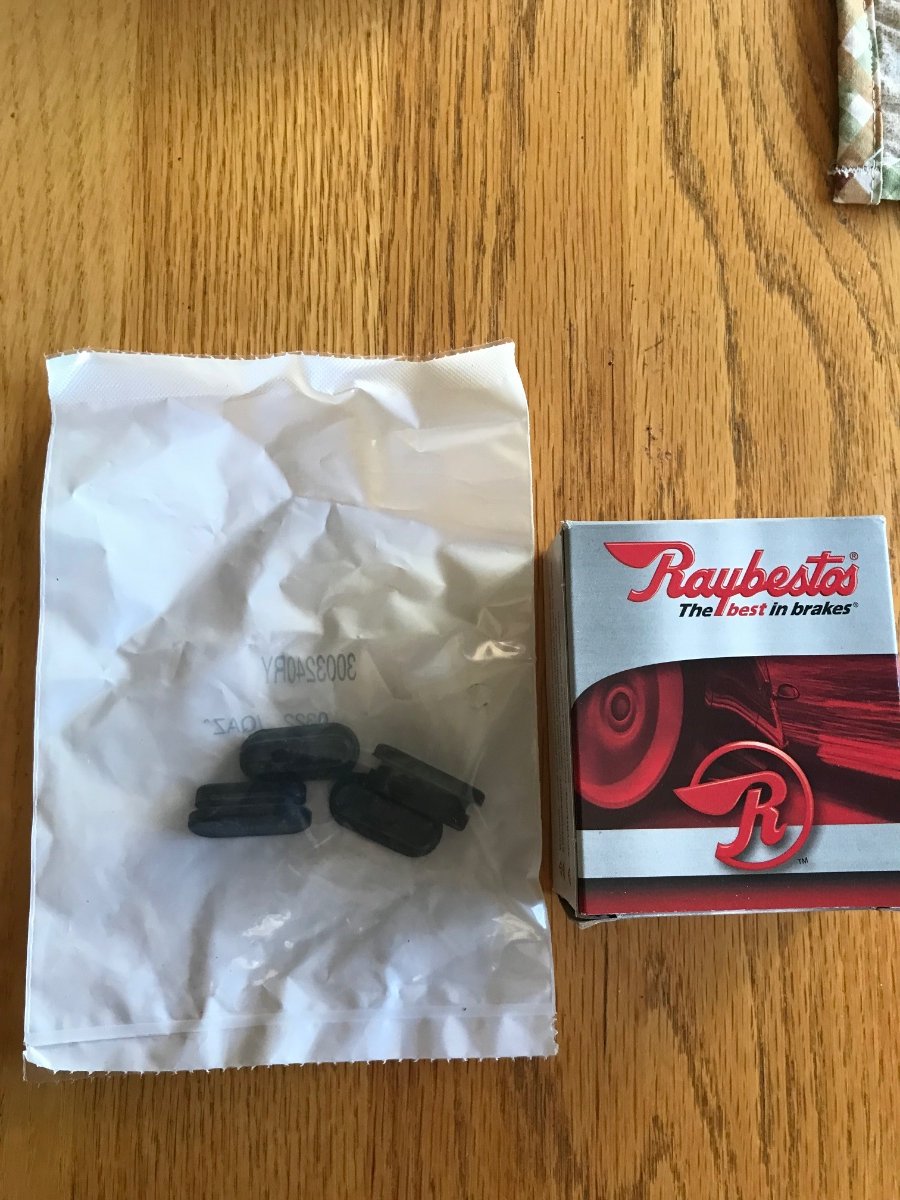
I just ordered two sets of 4 rubber brake backing plate adjuster plugs from Amazon for a total of $13.50. Link below: https://smile.amazon.com/gp/product/B002EP9U50/ref=ppx_yo_dt_b_asin_title_o00_s00?ie=UTF8&psc=1 Apparently, Oliver's choice to not provide these plugs with the Dexter drum brakes is not unique. I found reviews noting that other folks' RVs did not come with these either. It's a cheap and easy preventive measure.1 point
-
I want to thank Rivernerd for the great content and information that he has provided. I am a noobie at RV’g and this will definitely make my upcoming inspection much easier to deal with. So thank you for putting this out there for all of us.1 point
-
I have received multiple requests to post the inspection checklist I created before we took delivery on our Elite II on November 10, 2022. I have been hesitant to post it publicly, as it was not initially created with public consumption in mind, but only for my private use. My original version contains many personal notes that will not apply to others. I am also concerned that the inspection checklist may create the mis-impression that Oliver makes lots of production mistakes. Please remember that this list was compiled from hundreds of posts on this forum covering more than 5 years, and that only a few posters found multiple issues with their trailers. But, I reflected on the fact that Oliver encourages buyers to conduct careful inspections after delivery, and to bring their trailers back to the Sales and Service Center before leaving Tennessee (like we did) so any issues can be addressed. In the spirit of that commendable policy, I have created an updated and edited version of the document which does not include personal notes, but does include some additional comments in bold font based on what I learned during the delivery process. Thus, a Word version of my edited inspection checklist appears below. It now has fewer items, as I found during our delivery process that some were not relevant to the trailers being manufactured now. Please remember that my thorough inspection after delivery revealed only one production error, of the nearly 100 defects on my original list, in our trailer (a roof leak). It is my impression that Oliver is now paying much better attention to detail than at some times in the past, and that my fears that arose from compiling that long list of defects were mostly unfounded. Please keep in mind that the Oliver team, including Operations Manager Rodney Lomax and Service Manager Jason Essary, did an outstanding job of promptly and effectively responding to the issues we raised when we took delivery. They are great people with outstanding business integrity. It would hurt me deeply if my list were used to cause them grief, after they went the “extra mile” to take such good care of us. SO, PLEASE USE IT RESPECTFULLY AND WISELY. Ralph Pond a/k/a Rivernerd 1010819054_THINGSTOCHECKONOLIVERELITEIIONINITIALINSPECTION.docx1 point
-
We’ve used a key for years and it’s not really a big deal. Sometimes simplicity is good, especially in something that goes bouncing down the highway. Sometimes I marvel at all the new technology in newer Olivers, but then I also appreciate the simplicity of our older trailer. Mike1 point
-
We arrived back home in Idaho today after driving more than 2000 miles through 8 states after leaving Hohenwald. The trailer felt, and handled, fine, even at freeway speeds up to 70 MPH. I do not feel the need to have the trailer tires balanced.1 point
-
I don’t think baking soda will do anything for the smell. You are actually supposed to flush the pipes and fixtures every couple of years with a dilute acid (vinegar and water 50/50) to remove calcium deposits. If you fill the tank normally with softened water, obviously this isn’t necessary, I would do a couple of thorough water flushes and follow up with your scent free AF, or just blow the system out very well with regulated compressed air. When you are done, the p traps can be treated with common grey tank deodorant.. https://www.walmart.com/ip/Thetford-Grey-Water-Odor-Control-Rv-Camper-Holding-Tank-Treatment-24-oz-PN-15842/101776576 If that “lemony fresh” smell is also bothersome to your daughter, use a few ounces of mineral oil in each one. That won’t deodorize, but it it will act as a physical barrier to grey tank vapors, and it will also lube your dump and vent valves. John Davies Spokane WA1 point
-
As a born child of the South I found this amusing... A lawyer from the Big City comes to Mississippi to hunt ducks. One day he shoots a duck and it falls in a farmer's field. He figures no one will ever see, so he ignores the "No Trespassing" sign and sneaks over the fence to get the duck. But before he can collect it an old farmer rides up on his mule and asks him what he thinks he's doing. He says he's retrieving his duck. "Well, now," says the farmer. "This is my land and that sign plainly says you may not trespass. I think that is MY duck!" "Listen, you stupid, ugly, inbred hick" says the lawyer, "I'm a rich and famous trial lawyer from the Big City and if you don't let me have that duck I'll sue you and wind up owning everything you have!" "Whoa, now young feller," says the farmer. "We don't go bothering the courts down here over something small like that. We settle it with the Mississippi three kick rule." "What's that?" asks the lawyer. "Well, we take turns kicking each other three times. The man what don't give up, wins." The lawyer thinks the old guy looks pretty feeble and figures he can easily take him. "OK, old timer. You're on. Who gets the first three kicks?" "I do," says the farmer "'cuz it's my land." He gets down from his mule and kicks the lawyer right in the...uh...right there. The lawyer folds up on the ground and with his second kick the farmer removes the lawyer's nose and upper lip. The third kick ruins his right kidney. The lawyer struggles to his feet, barely able to move. "You ready for my turn, you old cretin?" he croaks. "Oh, no need, " says the farmer. "I give up. You can have the duck."1 point
-
I spoke with Mike from Oliver Service this morning. He advised that, "according to Lithionics," the storage procedure for Lithionics batteries warmed by the external heating pad Oliver installs with the Lithium Pro Package is the same as for Lithionics batteries with internal heaters. So, you CAN leave Lithionics G31 batteries in an Oliver connected to shore power during winter storage, so long as the red toggle switch that controls the external battery heating pad (mounted on top of one of the batteries) is left "On." I recommended that the Oliver Service Department publish a storage procedure for the Lithium Pro Package which addresses this issue. I suggested it could forestall service tickets from folks who have the Lithium Pro Package and live in colder climates. I am pleased that Lithionics has approved the simple procedure of leaving trailers with Oliver-installed external battery heaters connected to shore power during winter storage, without pulling the batteries. But, given the nearly universal recommendation from lithium battery manufacturers to conduct a discharge/recharge cycle at least every 6 months to preserve battery life, I plan to do so once mid-winter, with the batteries still in the battery box, protected by the heating pad. Per the Lithionics Rev. 7 Storage Procedure, I plan to fully discharge the batteries, then fully recharge, then discharge back down to about 50% State of Charge, then reconnect shore power, which will return the batteries to full charge for the balance of the winter. If any of you electrically-savvy engineer types out there recommend a different approach, I would love to hear it.1 point
-
We took delivery of out Elite 2 in last may and towed it back to eastern Canada with a Ford f150 2020 with v8 engine 4wd. When we got back home, we replaced the truck by a RAM 3500 Laramie 2022 diesel srw, crew cab because of the payload issue and we felt uncomfortable in the mountains of Virginia and Pensilvania with the half ton pick up. We are snowbirds and we travel 6 months in USA in winter time and feel more secure with a bigger diesel truck. The liability in case of an accident was another major factor for us. The mileage on the v8 was good, around 12 m/ g while towing. Sorry for typo, i’m french!1 point
-
I would not care to have the superfluous dicor everywhere, as I've seen on so many sob trailers and motorhomes. I think they throw all that crap up there to hide shoddy workmanship. It definitely makes tracing leaks harder, and resealing more difficult, if there are bulges of sealant, everywhere. Unlike others, I've had a couple roof leaks, in 15 seasons. The original dometic ac bolts needed to be retorqued after a year and many miles. Easy fix. Then, about a year or two ago, the bath fan leaked. Gasket failure. Needed reseating. We decided to replace it with a better fan, with a light, and no regrets, rather than reseating an old working fan. We used butyl tape to bed the new fan, and I love the overhead light in the bath. Oliver generally does an amazing job with sealing penetrations, and uses good quality, long life sealants, imo. I'm in my 15th season, and have very few complaints. Two small roof leaks, in over a decade, is pretty good, for me. We have also had a window sealant leak, and, the third tail light is the biggest culprit. Ours, I think is forever fixed, imo. BUT, hey, my trailer is in its 15th season. But, our boat is in its 44th. We're used to resealing, as necessary.1 point
-
I didn’t realize how big a difference a diesel makes on braking. With the air brake on I rarely touch the brakes on downhills and slowing. Mike1 point
-
While I very much agree with the overall sentiment of John Davies (JD) post above, I very much disagree with the quoted statement above. I'm guessing that JD has had a negative experience with drum brakes (perhaps to include those on his Oliver) but I've been towing various camping and boat trailers for over 50 years (oh my!) with only one hydraulic boat trailer brakes ever causing any problems at all. Specifically, the brakes on my Oliver have performed very well over the past six plus years and can still be made to fully stop the Ollie's tires from turning - yes, I do test them and I do inspect the components of the braking system at least once per year. Basically drum brakes were invented in 1899 and have been used on a fair number of trailers and vehicles since then. According to Haynes.com, "drum brakes provide more braking force than equal diameter disc brakes", "drum brakes last longer due to increased friction contact area versus a disc brake", "drum brakes are cheaper to manufacture", and, "drum brakes have slightly lower frequency of maintenance due to better corrosion resistance". Basically the reason we now have disc brakes on most of our vehicles is because, "disc brakes deliver better performance in both wet and dry conditions" as per napaonline.com. Certainly this is true when brakes are "heavily" used or abused. While the brakes on our Olivers are reasonably typical in that they are delivered from a respected manufacturer - Dexter - who also supplies a number of other trailer manufacturers, this does not mean that they are "junk". However, it does mean that the inherent "problems" of drum brakes still do apply to those used on Olivers and we should be aware of these potential issues. Drum brakes will experience "fade" when used heavily (i.e. long downhill runs where the brakes are heavily used or when a driver "rides" their brakes) thus causing the driver to have to apply even more force to the brake pedal to get even the same braking force. In extreme situations this fade can even cause a major loss of braking power - such as when "the pads or drums become "glazed". Drum brakes are slightly more susceptible to malfunction when used in off-road conditions versus disc brakes because debris can more easily become lodged in the parts of the drum brakes. And, drum brakes are somewhat more difficult to inspect for wear in that the drum must be pulled in order to inspect the brake linings (however, this should be done at least annually anyway when the bearings are greased). Are drum brakes the absolute best braking technology ever invented? - Obviously, the answer to that question is a resounding NO. But, are they "junk" and more specifically, are the brakes that Oliver uses "junk"? Again it would seem that the answer is a resounding NO. Bill1 point














-
Recent Achievements
-