Leaderboard




Popular Content
Showing content with the highest reputation on 02/08/2023 in all areas
-
I have been rooting around under the bath sink for the last two days. Yikes: unsecured wiring, gaffers tape, peeling aluminum tape… Disconnected the unused flush line, added a longer section where it teed into the main water line. Found somebody’s lost boa under my floor, this seems to be quite common… Added a 3 inch adjustable elbow from Home Depot, plus a whole bunch of extra insulation, bubble type up high where there was NONE installed, and a complete layer of 1” R5 pink stuff everywhere else. Cut off three feet of the snake and attached to the elbow, rotated the elbow against the waste pipe and secure it in two places, I get quite a bit more airflow now, some is due to the elimination of the extra duct, some is due to the free flowing steel elbow.Drilled return air holes in the top of the cubby nook thing. Drilled my factory installed inspection plate in the closet to turn it into an air return. Getting there….. I have lots more holes to drill because I am also going to completely eliminate the factory furnace inlet and insulate that wall completely to kill the horrible fan noise. All the return HV air will go through the wall and floor cavities and spaces. John Davies Spokane WA
 6 points
 -
5 points
-
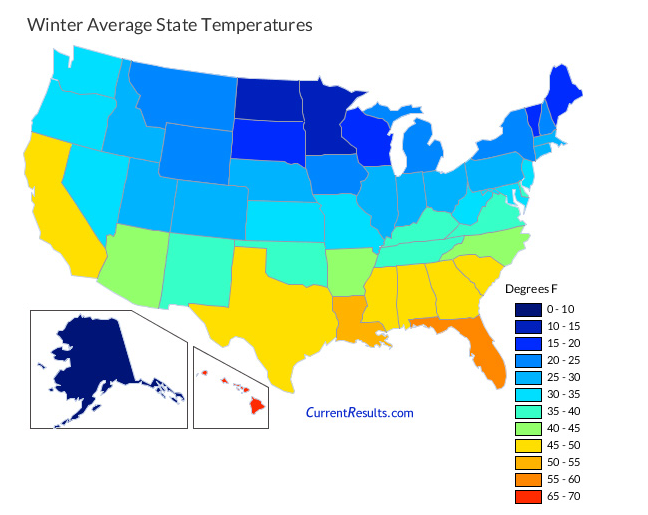
I have had a few questions regarding 4-Season camping with the Oliver and wanted to make a post so it would be available for everyone. What is 4-Season camping? It simply means that the Oliver is capable of being used through all 4-seasons. It does not mean that it will necessarily have no freeze issues in certain areas during certain climates. This is no different than a house. Here in Tennessee we recently saw sub-zero temperatures and many people had their water lines freeze and burst causing lots of damage. Does that mean that their house is not capable of being used during the winter? No, it simply means that in certain temperatures you may need to make arrangements to combat the temperature. In the past I have had my water lines freeze that were located on an exterior wall of my house so this time when they said we would see sub-zero temperatures I placed a space heater on that wall area to help keep it warmer and the next morning I had no freeze damage. Below is an average winter temperature for the United States however this is just an average and when temperatures go below the average especially when going into the low single digits or below zero, whether in a camper or a house you may have to perform steps to ensure freeze damage does not occur.
3 points
-
Thank you for the well wishes and it's good to know the "water in the shower pan" issue is likely because we ran water after closing the valve. Also nice to know that we aren't the first ones to do it! 😀 Dudley, it would be great to meet up at Hammonassett - it's an easy ride from home. The one limitation is that we will need to go when we can bring our four-legged girl Joy. As a bonus, there are large parking lots there where I can practice towing forwards and backwards! 🤞on that endeavor - 😳3 points
-
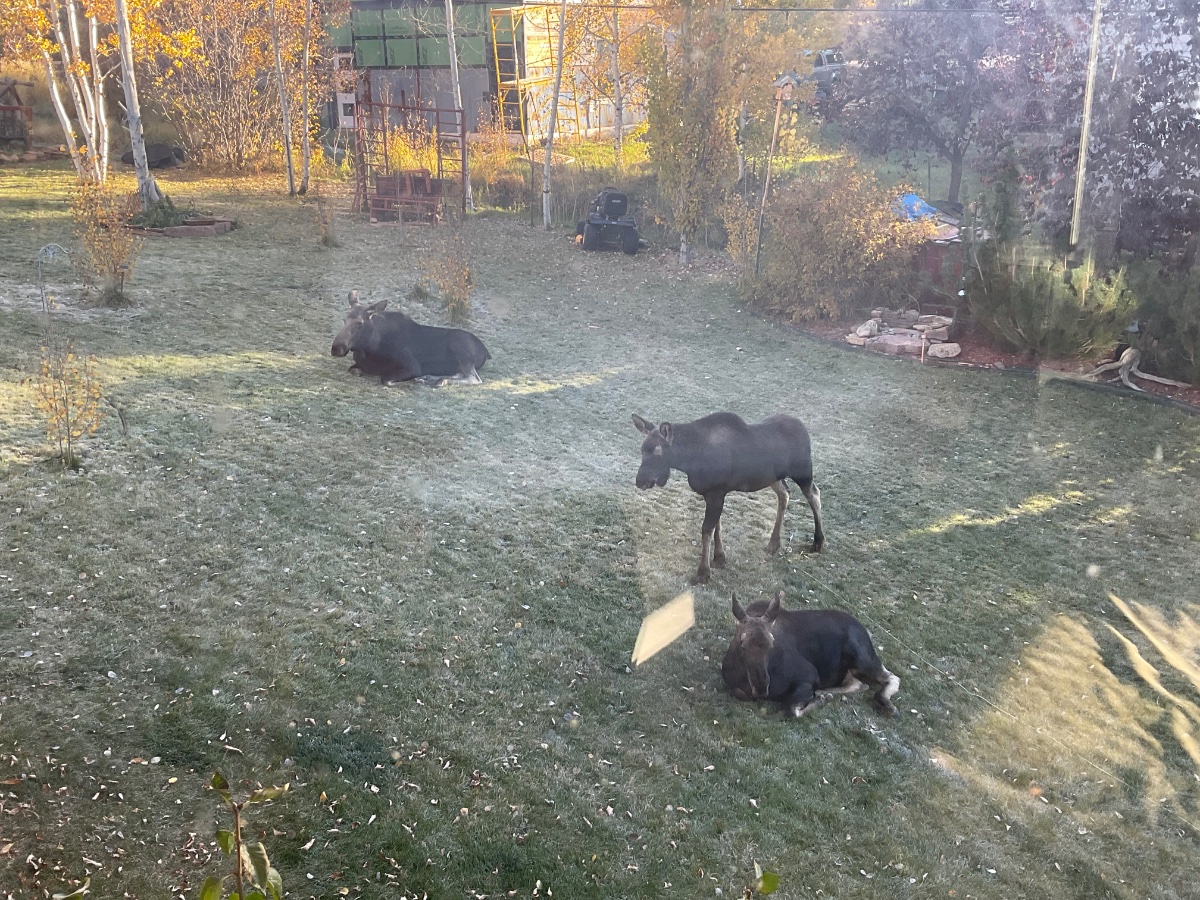
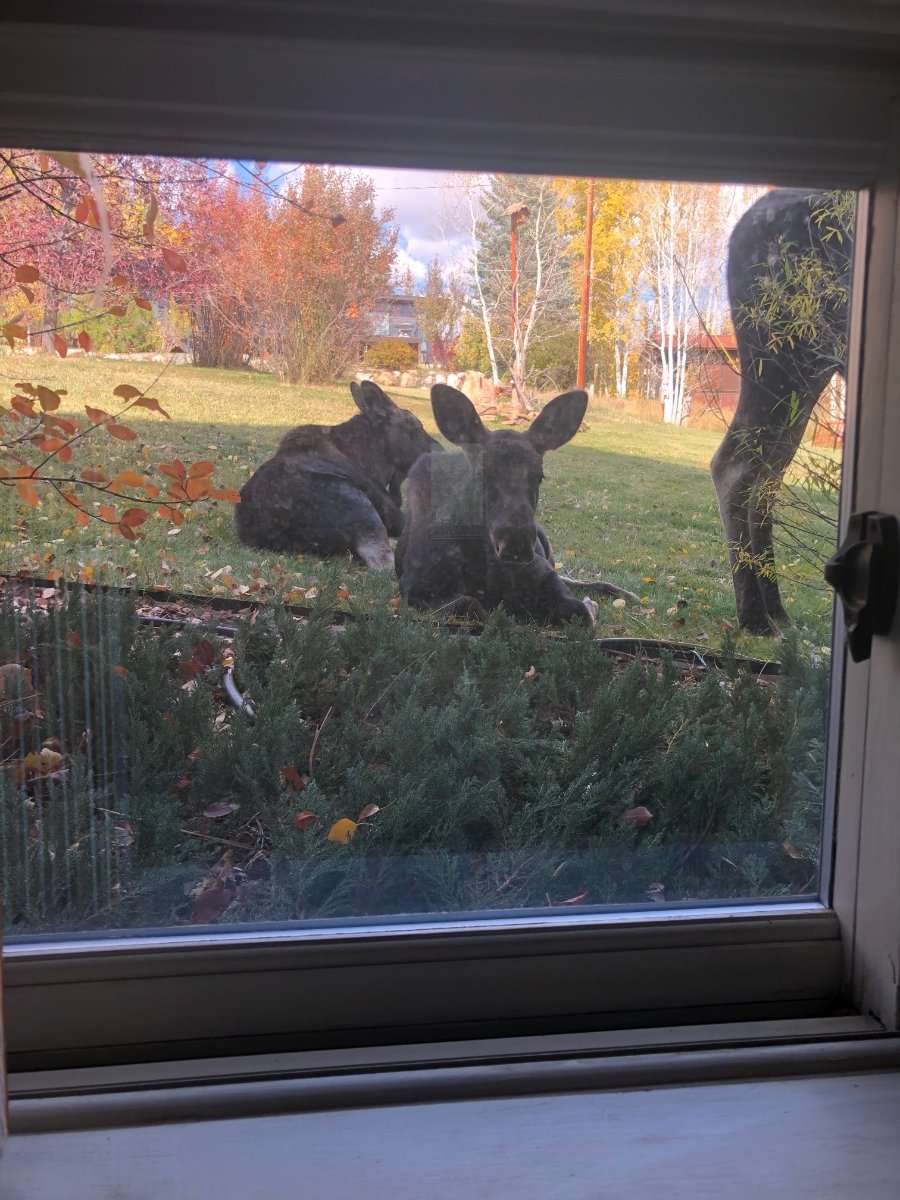
They hung around for a few days feasting on the crab apple trees and creek bed . Kinda hard on the dog walks. Last week, I opened the front door at 9PM and looked up at mama three feet way. Sorry no pics....had to do laundry.
2 points
-
We had a 2016 SR5 5.7 4X4 Tundra, fine truck & Ollie TV, but did not get as good MPG as the 2022 3.5L twin turbo Tundra we now have. Our 3rd gen Tundra gets 22 to 24MPG not towing traveling on interstates at posted speed limits. Some folks on the Tundra forum don’t get as good MPG, but throttle control, speed, tires, contribute to results. After installing running boards, hard tonneau cover, mud guards, Timbren rear axle load enhancement system, bed mat on the 22 Tundra. Actual load capacity, after a CAT scale visit, was still higher than the advertised 1400lb load capacity. Toyota was very conservative with the listed load capacity on our 2022 Tundra. There are many fine Ollie tow vehicles available with the Tundra being one of them.2 points
-
Sure enough - I got 4 of them similar to Frank C. Mine are the original Trojan T-105's that Oliver was offering 7 years ago. I purchased the optional "watering system" that makes getting water into these very easy. I've been fairly religious in checking these and giving them water at least every 60 days. I know that I'm living on borrowed time with these but as long as they continue to function properly I'll hang with them. Bill2 points
-
That is amazing! We had an outdoor cat, so all we'd find at our front door are dead birds, chipmunks, and rabbits... This Screech Owl tested out our old house, but didn't stay. At our backyard feeder We've had Green Herons nesting in a Linden tree for several years. These four fledglings were enjoying a day in the sun. One of a zillion photos from our western travels.
2 points
-
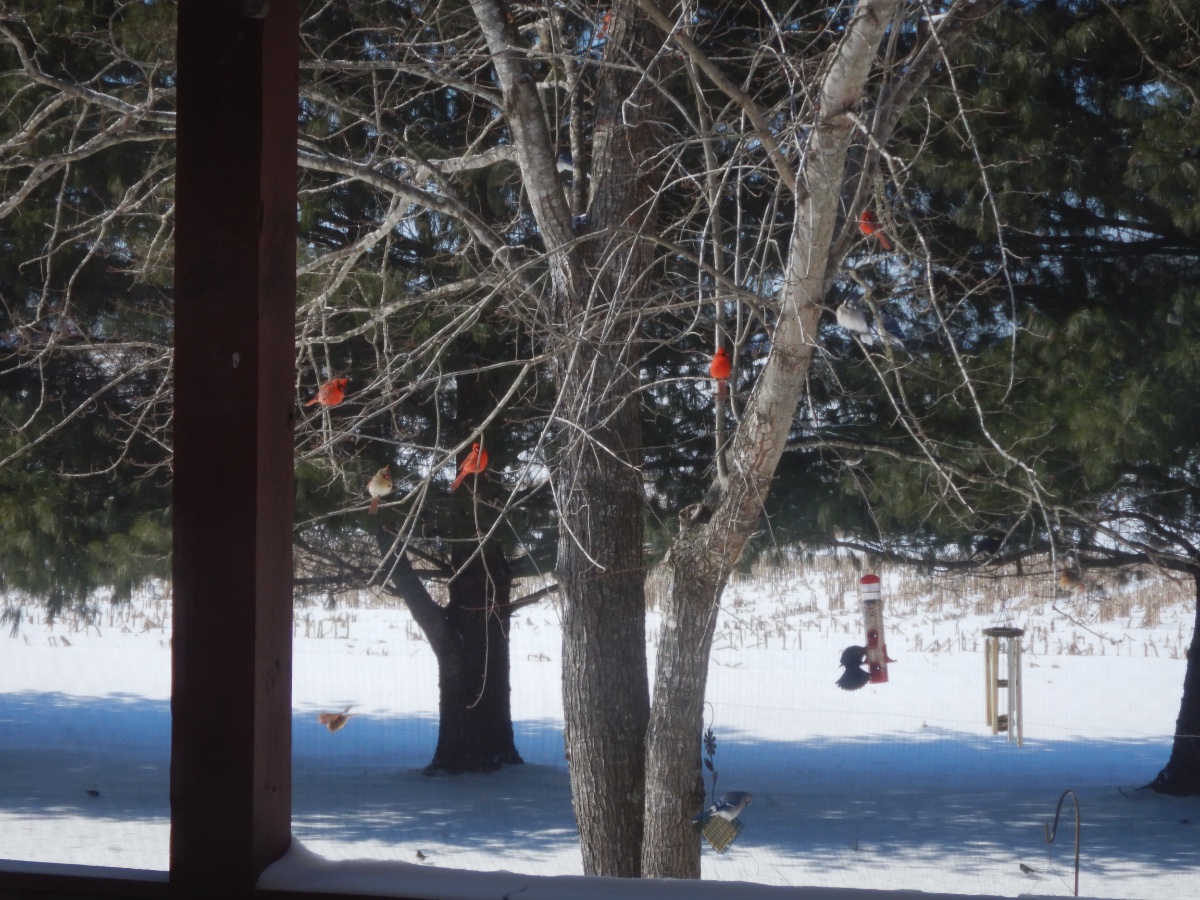
Our backyard Cardinals…
2 points
-
2 points
-
2 points
-
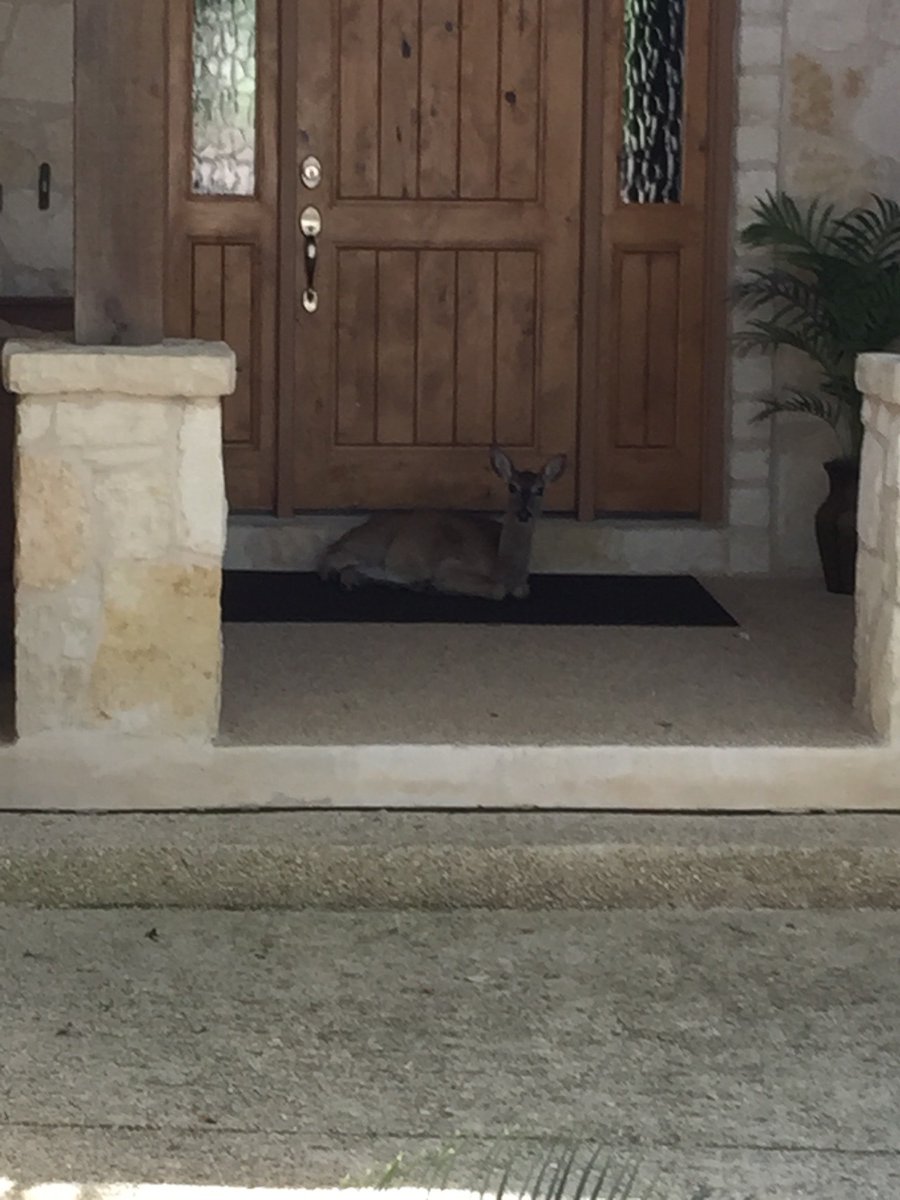
We had this guy camped out in front of our front door a while back. They basically live in our yard.
2 points
-
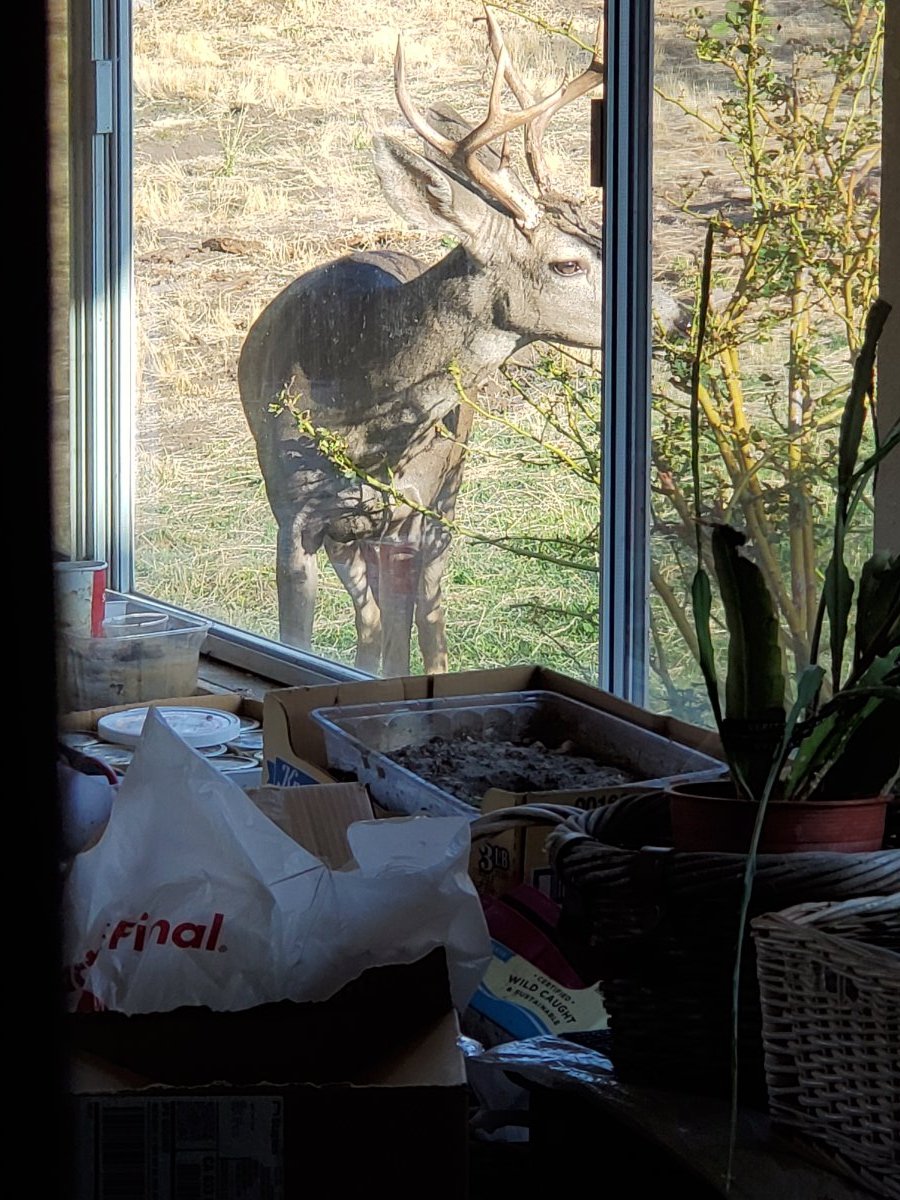
This little one was in my yard. I think he wanted to come in, it was so cold out!
2 points
-
Frank - Could you post a picture of those welds? There was a time when two steel plates were welded together forming an "L" bracket. Unfortunately, there apparently were times when only "spot welds" were performed and the full welds were never completed on those brackets. If you suspect that you have any of these brackets you should take a picture of them and send it to Service. Bill2 points
-
I agree, you should use your jacks and blocks. What I am addressing is an owner “stranded on the side of the road” because they don’t have jacks. 😳2 points
-
I don’t want to hijack this thread, but…. A flat tire can be changed using the onboard jack. I have raised my trailer several times at Discount TIre for tire changes and balancing and while on the road when a grease cap came off. Oliver doesn’t recommended it anymore, but it was a selling point when I bought and picked up my trailer. Some even use the onboard jack to level the trailer with the wheels off the ground - not something I would ever do. But, for a temporary tire change on the side of the road I certainly would. Now, back to F150s and sudden loss of power. Mike1 point
-
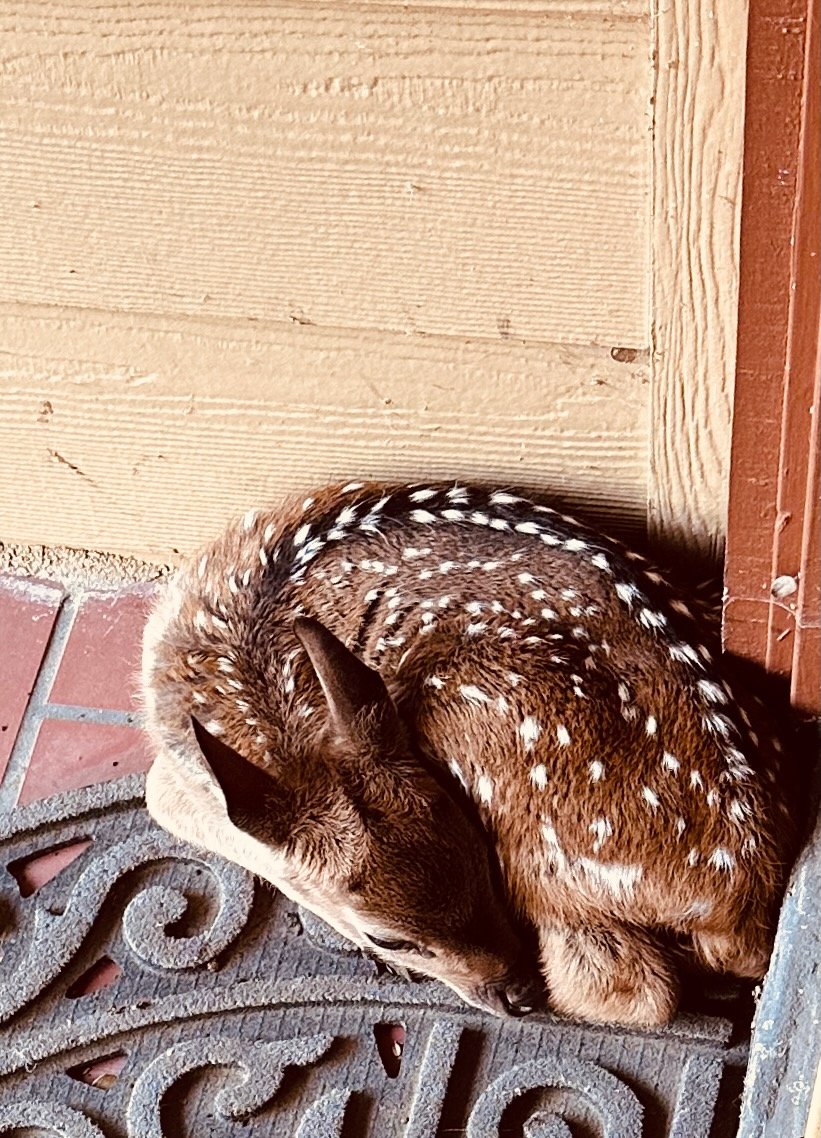
We are so fortunate the have trailers that help us get outside to see spectacular views and critters. But, occasionally, no trailer is required and nature comes to us to show its wonders. Bosker and I were inside, reading a good book when we heard a soft noise at the front door. Thinking it might have been a package drop off, I went to the door and opened the top half of my dutch door and found this newborn fawn hunkered down in the corner. Momma deer often find a safe place where their baby fawn can hide with its natural coloring or someplace hidden away from the eyes of predators, such as at Bosker's front door. Momma will sleep nearby or go out foraging until coming back to retrieve "Bambi". Nature is awesome. Show us your best wildlife photographs you've taken while traveling or at home.
1 point
-
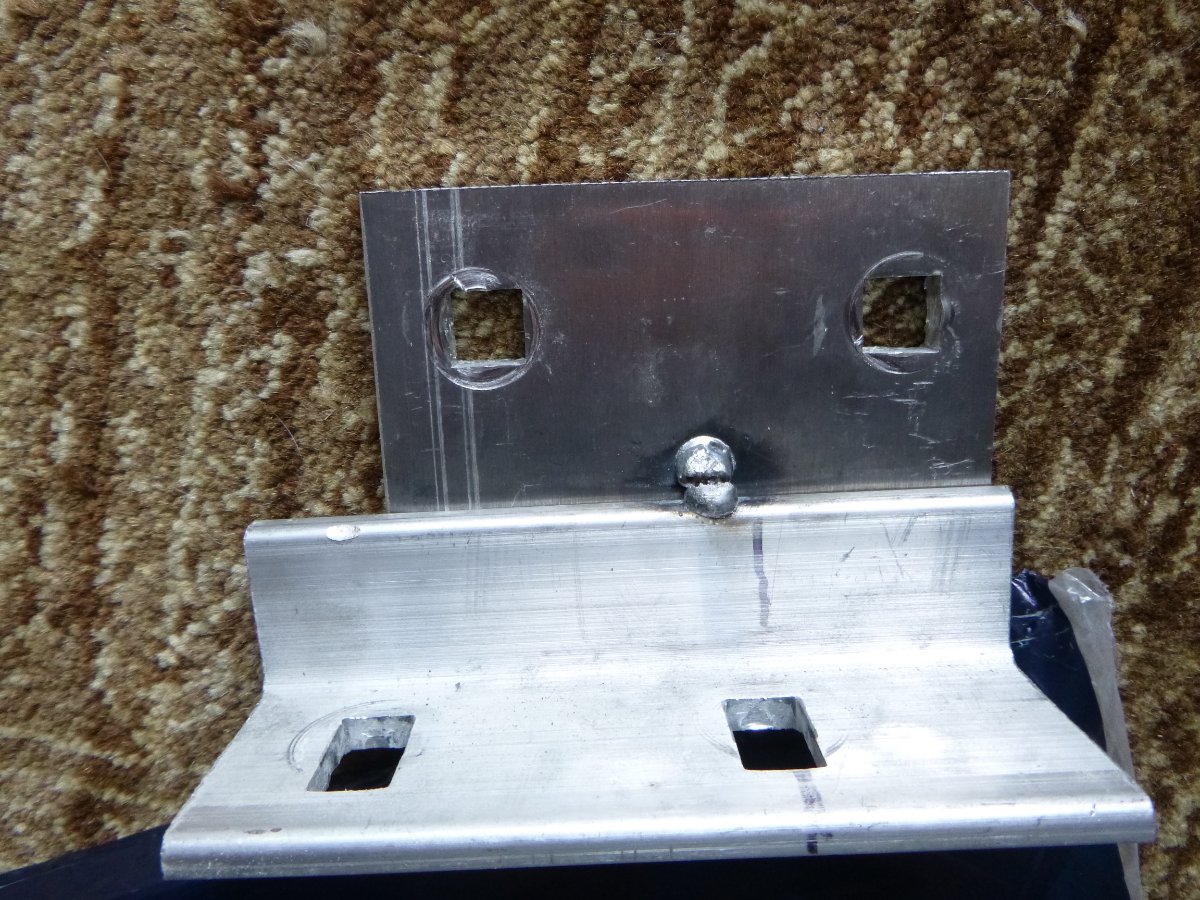
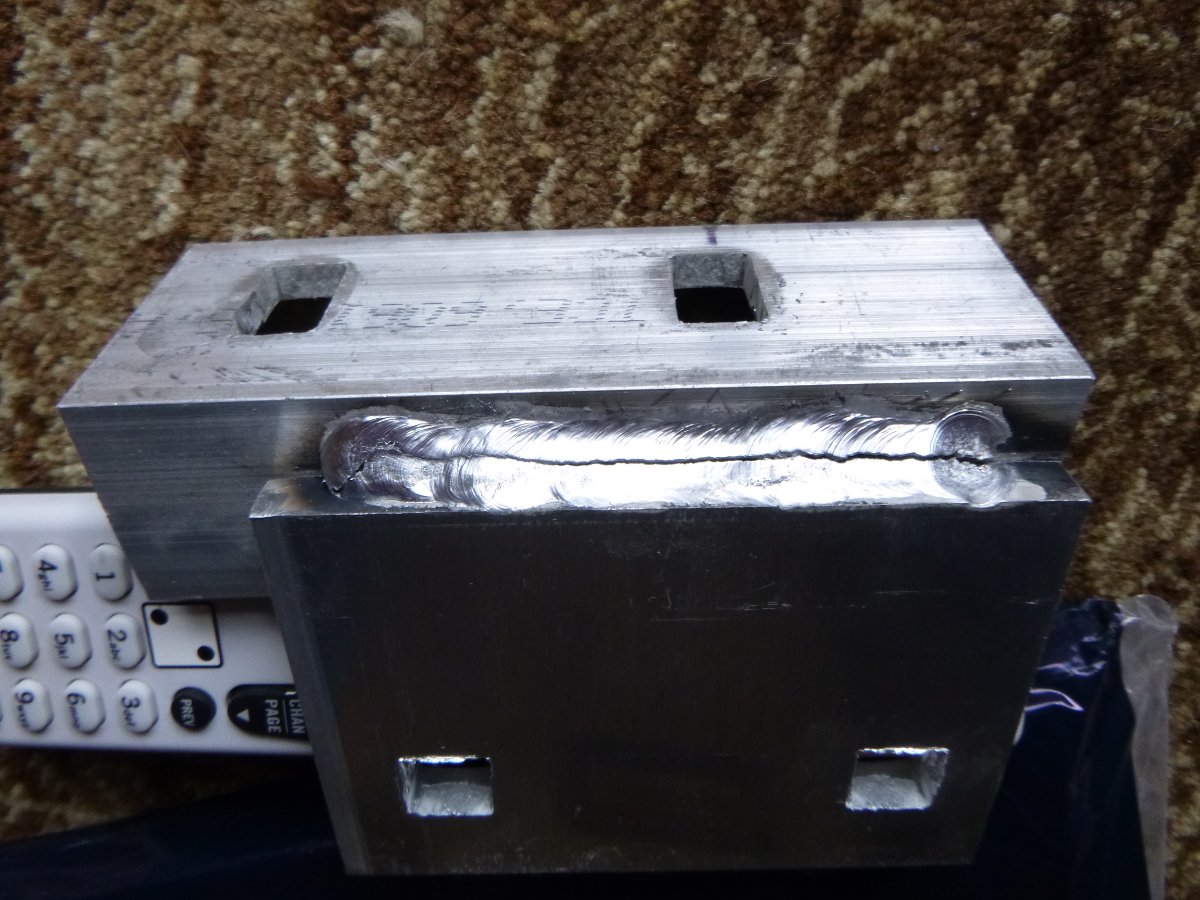
Here are a couple of pictures of the brackets in question and the "spot" welds that obviously failed. Note that I do not believe any "recent" Oliver has this type of bracket. And, I'd still like to see pictures of the one(s) mentioned above that broke. Bill p.s. sorry for the thread hijack. If this goes much further I'll split this "bracket" portion off.
1 point
-
I would just leave the battery warmer switch on for a while until you're out of the cold temperatures. It won't come on unless it's cold. Can you just keep plugged into shore power? John1 point
-
The battery blanket switch is on and it did get into the low 20's at night the past two days....so maybe it is just that blanket pulling down the batteries. Once it is above freezing or 41f should I turn off the switch then or let the thermostat turn it off?1 point
-
I would also like to see a photo of those welds, so I can compare it to what I have on our Hull #1291.1 point
-
Is the external battery heater switch on top of the batteries still in the "On" position? If so, is your Oliver still potentially exposed to below-freezing temps? The external battery heater system is thermostatically controlled to keep the temp of the batteries above 41 F, using 12V battery power. When ambient temperatures drop below 41 F, the heater turns on. That could be the source of the 12V power draw that is reducing the state of charge on your batteries. In this case, the solution is simple: plug the shore power back in, and keep it plugged in until there is zero risk ambient temps where your trailer is stored will drop below freezing. All three of your batteries should stay fully charged to 13.7V, and protected from freezing, by the constant supply of power to the batteries, and so to the external battery heater. If your external battery heater switch is "Off," (and if so, your trailer should be stored in a temperature-controlled environment), then there must be other 12V power draws on the system. If that is the case, report back so other solutions can be discussed.1 point
-
1 point
-
"After 3 months, Lithionics recommends discharging, then recharging the batteries, as described in the Long Term Storage paragraph of that Storage Procedure document. Then the batteries are o.k. for another 3 months." We both have the same battery package. As I understand it, as long as I am connected to my 30 amp outlet, there's no need to do anything. I have the battery warmer switch turned on and solar switch on also. The first paragraph of the Lithionics directions says that "doing this will eliminate the procedures below". Those procedures are the ones that says what to do for short term and long term storage and discharging and bringing it back up to 100% SOC. John1 point
-
Since this was a hijack from a thread about shower pans, I attempting to move parts of it to a new thread in an effort to keep it on track. Somehow who wrote what got all jumbled up and I ended up not making it any better. So I locked it. Anyone wanting to continue along these lines will need to start a new thread.1 point
-
This is very similar to the response I got last summer for our 3 Battleborns being on top of a mountain in OK where the deep winter potential for zero degrees for a few weeks was my concern with no shore power. They advised in my case to charge to 60% and kill ALL DC loads (Master Kill Switch yea once again!). At even 3% for 9 months it would be down to 33% SOC worst case and winter would have been in a very distant past by then. Good news.1 point
-
Here’s the BattleBorn lithium storage video: For storage I charge the BattleBorn lithium battery to over 90% and turn the 12V system off with the battery disconnect switch. We do not have any power connected to Ollie during storage.1 point
-
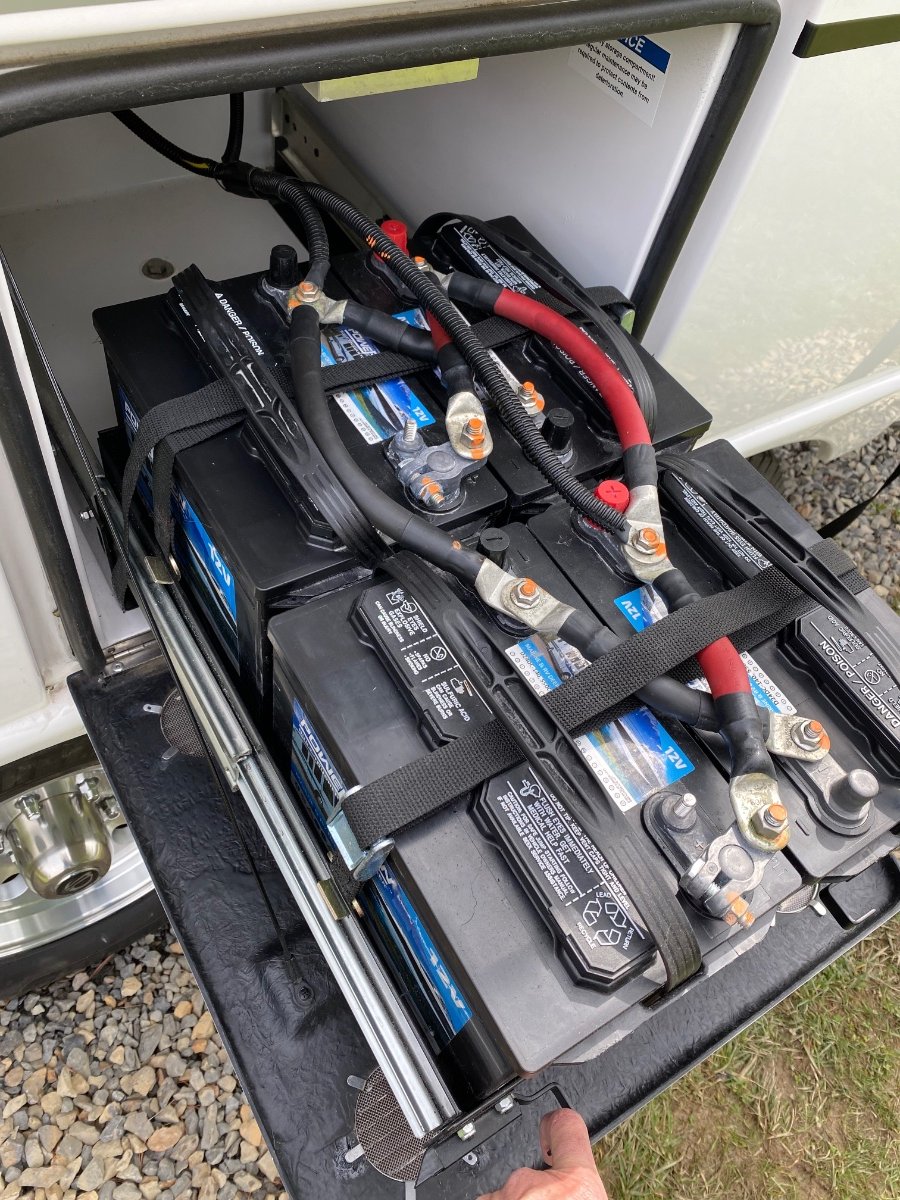
Which lithium batteries do you have? Lithionics installed by Oliver? If so, see this Storage Procedure published by Lithionics: Lithionics Storage Procedure Rev.7-1.pdf If you have the Lithium Platinum Package, this procedure applies directly to you. If you have the Lithium Pro Package, Oliver installed an external heating pad under the batteries, controlled by a red switch on top of the 3-battery bank. You can connect shore power, leave the red switch "on," and walk away for up to 3 months. The external heater will keep the batteries charged and protected from below-freezing temps, using 12V battery power. The batteries are recharged over that time by the Xantrex Inverter/Charger using shore power. After 3 months, Lithionics recommends discharging, then recharging the batteries, as described in the Long Term Storage paragraph of that Storage Procedure document. Then the batteries are o.k. for another 3 months.1 point
-
Enjoy that 15 MPG towing an LE II with your third-generation 2022 Tundra. We tow our LE II with a second-generation, 2019 Tundra. It tows smoothly, but we only get between 8 and 9 MPG on the interstate.1 point
-
The fact that AGM batteries are sealed is what sold me on them for use with my CPAP machine years ago. I now use LiFePO4 batteries because they are so much lighter, and last so much longer. I had to replace my AGM batteries every 3-4 years to be confident they would not let me down when I most needed them. Of course, flooded batteries last no longer than AGMs, because both use lead/acid chemistry. You don't have to pay $1260 for 400 Ah of AGM batteries. See: https://www.renogy.com/deep-cycle-agm-battery-12-volt-100ah/?gclid=EAIaIQobChMI1Oykr8qE_QIV7AGtBh1NkAFVEAQYASABEgIaWPD_BwE Four of these 100ah batteries would cost about $800. I don't know if these Renogy AGM batteries will fit in the Oliver battery tray, but if not, I'll bet you can find AGMs that will fit for a lot less than the amount you were quoted. And, whatever you buy, ensure they are fresh. All lead/acid batteries have a 3-5 year life from date of manufacture, whether they have sat on a shelf for 1-2 years before sale or not.1 point
-
Standard flooded batteries are cheaper than AGM's but they are definitely not lower maintenance. AGM's are sealed and require no maintenance beyond keeping them clean and appropriately charged. Flooded batteries require topping off with water (preferably distilled) on a regular basis and also present an explosion risk.1 point
-
I have the good old fashioned lead acid wet cells. Cheap proven technology, but they are heavy and bulky for the given amp-hour capacity. They’ve worked well in the 4 years since we purchased our Oliver. Minimal maintenance (I check the water level about every 6 months). The 4x12v parallel setup I have only gives about 100 amp-hours usable of capacity to a 50% to 60% state of discharge (not recommended to go lower with lead acid batteries), but it’s worked fine because we typically stay at full hookup campgrounds. No factory solar or inverter on our Ollie. HOWEVER, when they do need replaced I’ll probably upgrade to 2 x 100 amp-hour BattleBorn lithium batteries, just to gain capacity and save the weight, and the BattleBorn batteries claim up to 100% usable depth of discharge as usable capacity
1 point
-
No. The only way that clean fresh water can get into the shower pan is from above. Black water CAN find its way into the pan from below but that’s a whole ‘nother issue requiring a perfect storm of very specific circumstances.1 point
-
@Brian and Brandelyne What a great photo! I love cardinals!1 point
-
1 point
-
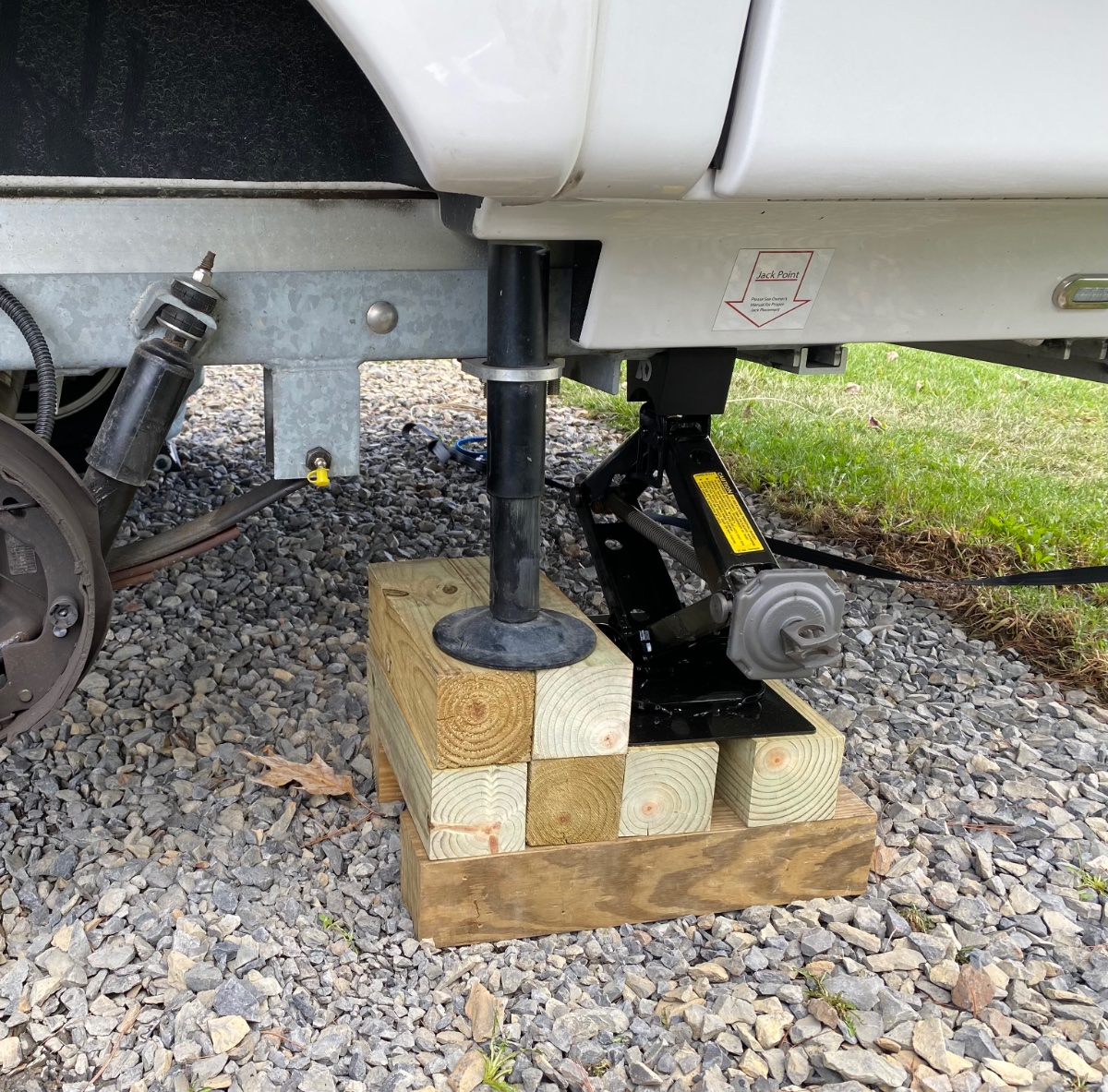
After seeing how tiny the welds are on the rear jack mounting brackets, I don’t trust them for anything other than leveling the trailer at a campsite. I know they are rated for 3,000 lbs each but I still prefer to use a very large heavy duty scissor jack (rated for 3 tons) to raise the trailer for tire and bearing work when I need the trailer completely off the ground. I do use the stabilizer as a backup. Sorry for hijacking the thread again. 🙂
1 point
-
Hey Gang.... Just wanted to put this out there. I have a 2016 F-150 as a TV for my LE2. At 50k miles I had a fault in the module that controlled the louvers for the turbo.... at 93k I had a fault in the hill control descent feature which turn out to be a bad electronic throttle body. Both times I got the flashing error with a bong bong bong warning and a complete loss of power. The power steering and brakes still worked but the only option was to coast to the side of the road and attempt a re-start. The 50k event happened when I was only about a half mile from home and was able to limp it home. The 93k event happened once then it was ok then again until a few thousand miles later... then finally it happened continually and I had it towed to a Ford dealership. Adding insult to injury, both Ford dealerships that I could get to were booked out weeks. So, I was without my truck for a solid month. Plus it was 2k the first time and 1400 just this week. Fortunately, this never happened while I was towing my Oliver. But it got me thinking.... How common is this in modern trucks? They are all controlled by computers. You never know when some module somewhere is going to go on the fritz and strand you. Hopefully never while you are on a trip, or while towing, especially up a mountain road with no shoulder. So why am I telling you all this...? Well, I would like to know if anyone has had a similar event with their TV.. or am I the only unlucky one. But also.... Not a bad idea to keep in mind that this can happen and you may have to get to the shoulder of the road on very short notice. At least if you are aware that this is a possibility, you might react quick enough to prevent getting stuck in the middle of a highway or in some other really bad place. It's fixed for now, and we are planning a spring trip to Canada.... Hopefully no more unpleasant surprises. Thanks for listening, Scotty1 point
-
You weren't the only one, Jim. Our old Ford 6.0 diesel ate turbos for breakfast. When the high pressure oil sensor popped out of the engine on I-80 in the middle of PA with our fifth wheel in tow, spewing the entire volume of engine oil all over the truck and brand-new trailer in the process, I had enough. That truck was gone a week after we got home. It was a pretty truck, though.1 point
-
I had a 2016 Ford Expedition as our original tow vehicle, with the same 3.5 liter turbo engine, and had the same problem with a failure of the electronic throttle control. Cruising at highway speed (not while towing), the engine suddenly dropped in RPM and was unresponsive to any movement of the throttle pedal. I was able to get to the shoulder of the road and the engine “rebooted” after shutting off and restarting. I had about 50 miles to home and the problem repeated twice more, but rebooted each time after restarting and I was able to make it home and then drop the vehicle off at the local ford dealer. So the problem didn’t leave me stranded but it could have been bad if it happened while towing. Problems do happen now and then. You just have to prepare for the more common problems that can be dealt with on the road like a flat tire. And hope the other rare problems like computer glitches don’t leave you stranded. We’ve seen Oliver owners stranded just from a flat tire because they didn’t have a decent jack to even handle a flat tire on their trailer while on the road. And it is a good reminder of why you should stay in the right hand lane, unless passing, so you can get to the shoulder quickly if a problem happens, especially when towing. I don’t think the problems are widespread. All my recent vehicles are far more reliable, comfortable and better equipped than anything I owned back in the ‘70s, ‘80s and ‘90s. I owned a 1975 Chevy Nova and like clockwork every 30,000 miles it needed a new water pump, starter motor and wiper motor due to failures, and was completely rusted out by 100,000 miles.1 point
-
All this is like the “rule” that you can’t utilize the rear jacks to lift the side of your trailer completely off the ground when that capability used to be a major selling point. If you knew the real reason behind their change of heart, you’d be flabbergasted. Come by at the rally in May and I’ll fill you in on the details. We’ve been sitting at Dome Rock for a week now with both port side tires a couple of inches off the ground, held up by only the jack and, as far as I know, the earth is still spinning around the sun at about 18 miles a second with no ill effects so far. I’ll update you here if anything untoward happens.1 point
-
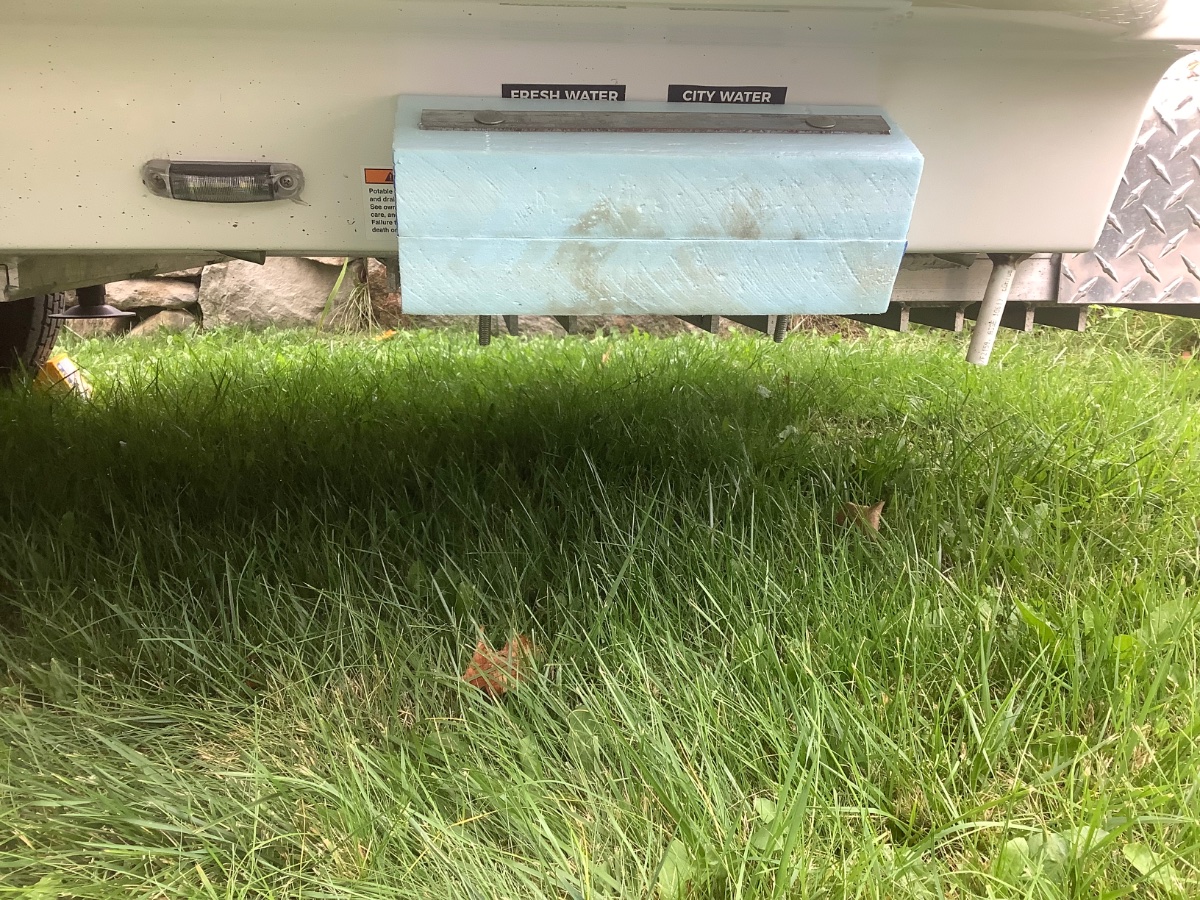
I’m not sure what I did to help deal with the potential freezing of this pipes in the garage is a good idea or not, and since I’m not out playing in the same cold temps you are it may not apply…but.. what I did was to cut a “hatch” through the floor of the garage area under the rubber mat that allows me to access the pipes and fittings. This gives me the ability to stuff “handwarmers” under the floor on top of and around the pipes. I haven’t set up sensors and have no idea as to the efficiency of such a strategy but my pipes haven’t frozen yet, and maybe it might help you out in a pinch. I also built a sort of insulation “block” which fits very tightly over the city water and fresh water intakes, as I worried about those fixtures, and figures it might help out with those pipes located just inside.
1 point
-
@John E Davies, I haven't found the easter eggs. 😐 But here's my "smile photo." I call this tree on our property in NC my t-rex tulip tree. If you squint, you can see the open jaws, and neck outline. This time of the year, the tulip poplars are in bloom, near the top, where the little blooms kind of look like tulips. In the lower branch/bottom jaw, you can see the blossoms. They look like teeth from a distance. These trees are usually kind of cone shaped. T rex is reaching for the sun, obviously.
1 point
-
I have a Champion 2500 watt dual fuel inverter/generator. It came with a 1/4" RV quick connect fitting for the generator end, and an ACME female fitting with a regulator, for connection to a bulk propane tank. To use it with an Oliver quick connect, you will need a different hose which has only the second regulator of a two-stage regulator. See Galway Girl's post dated March 27, 2023. This is because the Oliver propane tank outlets are already regulated down to about 11 inches of water column (an appropriate LP gas pressure) by the regulator on the tanks. I believe you will need a propane hose with only the second stage regulator, and 1/4" RV quick connect male fittings on both ends, since the Oliver quick connects are 1/4" female and the Champion generator connection is also 1/4" female. Again, see Galway Girl's more accurate, and precise, post dated March 27, 2023. FWIW, I considered getting the quick connects on our Elite II and doing what you plan to do, i.e., run the generator from the trailer's propane tanks. But, I finally decided to carry an extra 5-gallon propane tank in the bed of my pickup to run the generator, to preserve the fuel in the trailer's propane tanks for heating, cooking and water heating. An added benefit is that I can place the generator farther from the trailer without a long propane hose. So, I plan to use the hose with regulator that came with my Champion dual fuel inverter/generator. Hope this helps.1 point
-
This was my bathroom view last fall
0 points
-
Lucky you did not get my Dodge Ram. I have had to replace two rear ends, the transmission, shocks, front end linkage parts, wiper motor, cam sensor and numerous other deeply buried enjine parts. Finally gave up and dumped it at a bit over 110K. Even with highly regarded trucks, some of us win the lottery! Only 30K on my 2021 F150 3.5 but no issues so far ... holding my breath.0 points











































-
Recent Achievements
-