Leaderboard




Popular Content
Showing content with the highest reputation on 12/28/2023 in all areas
-
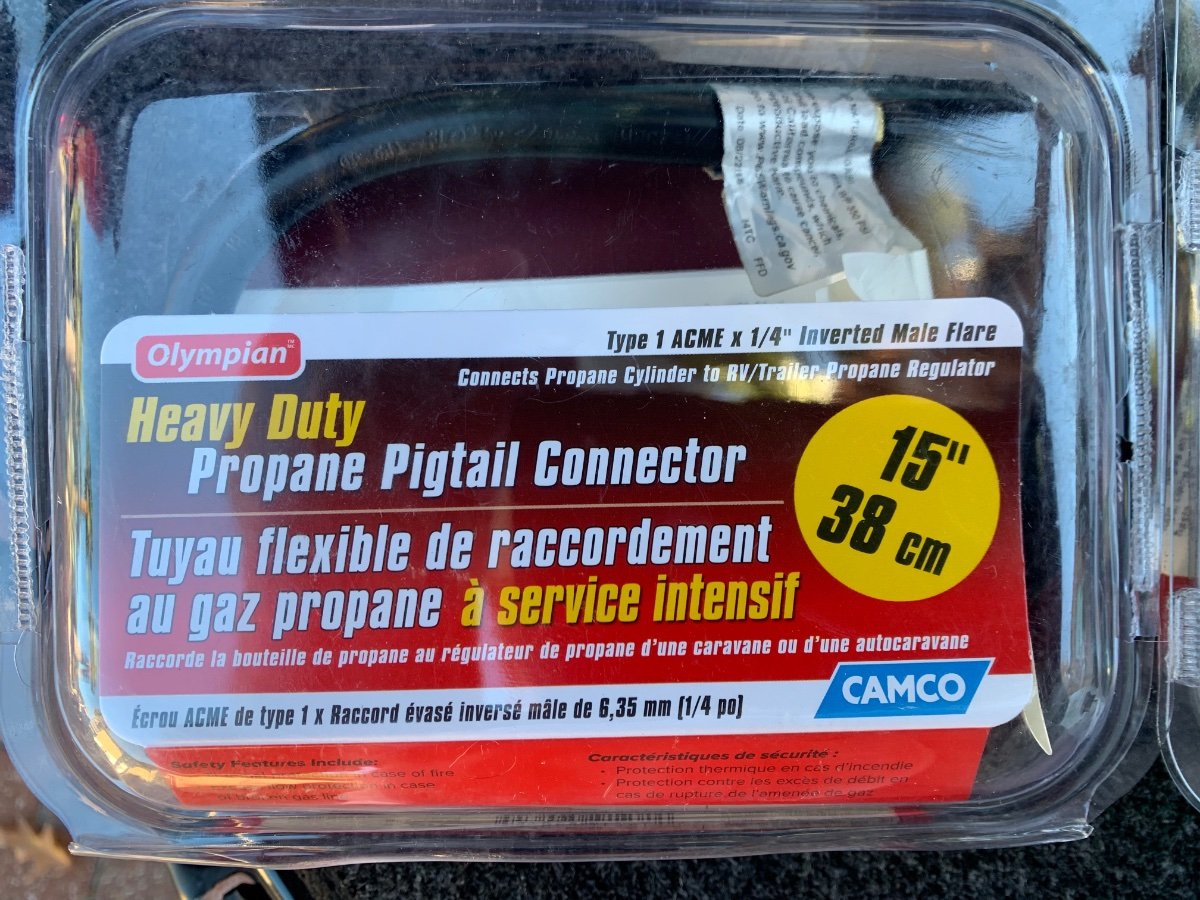
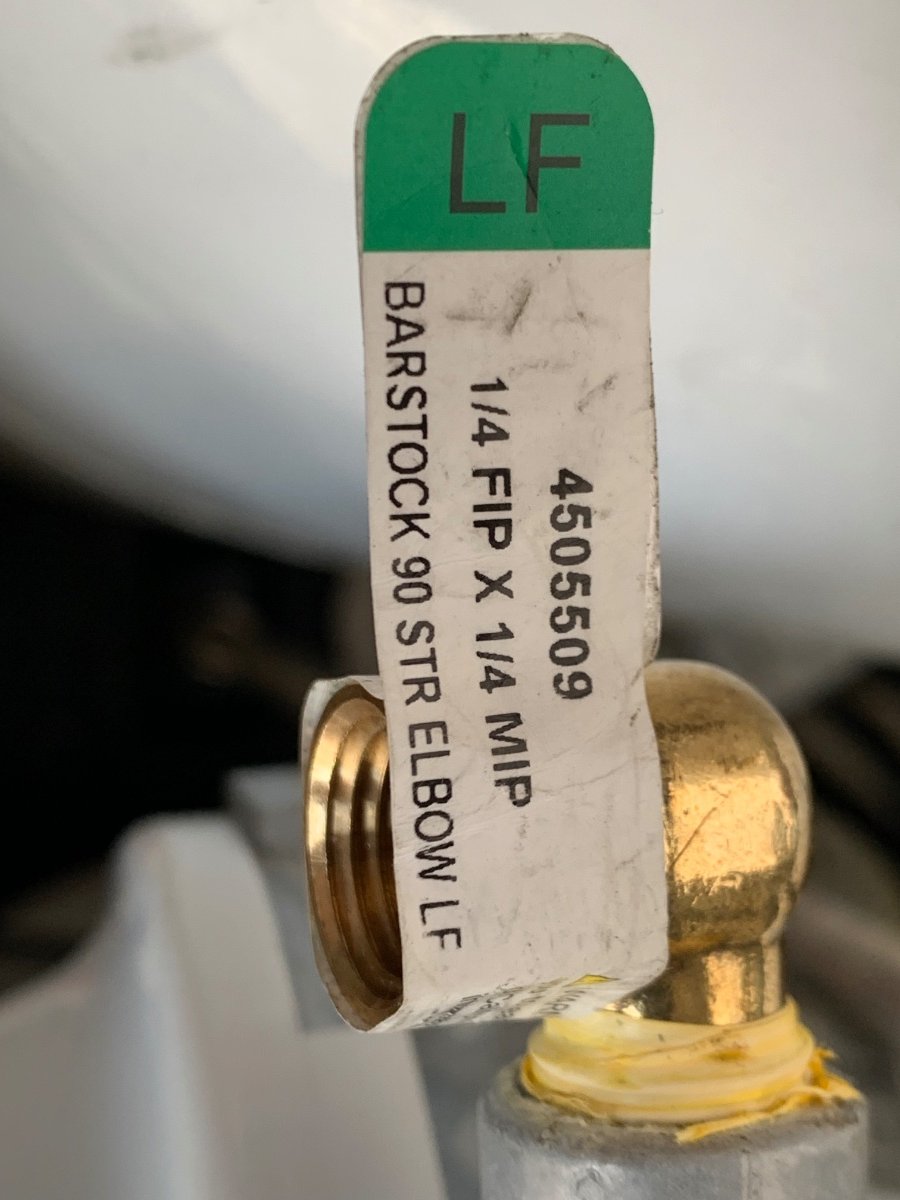
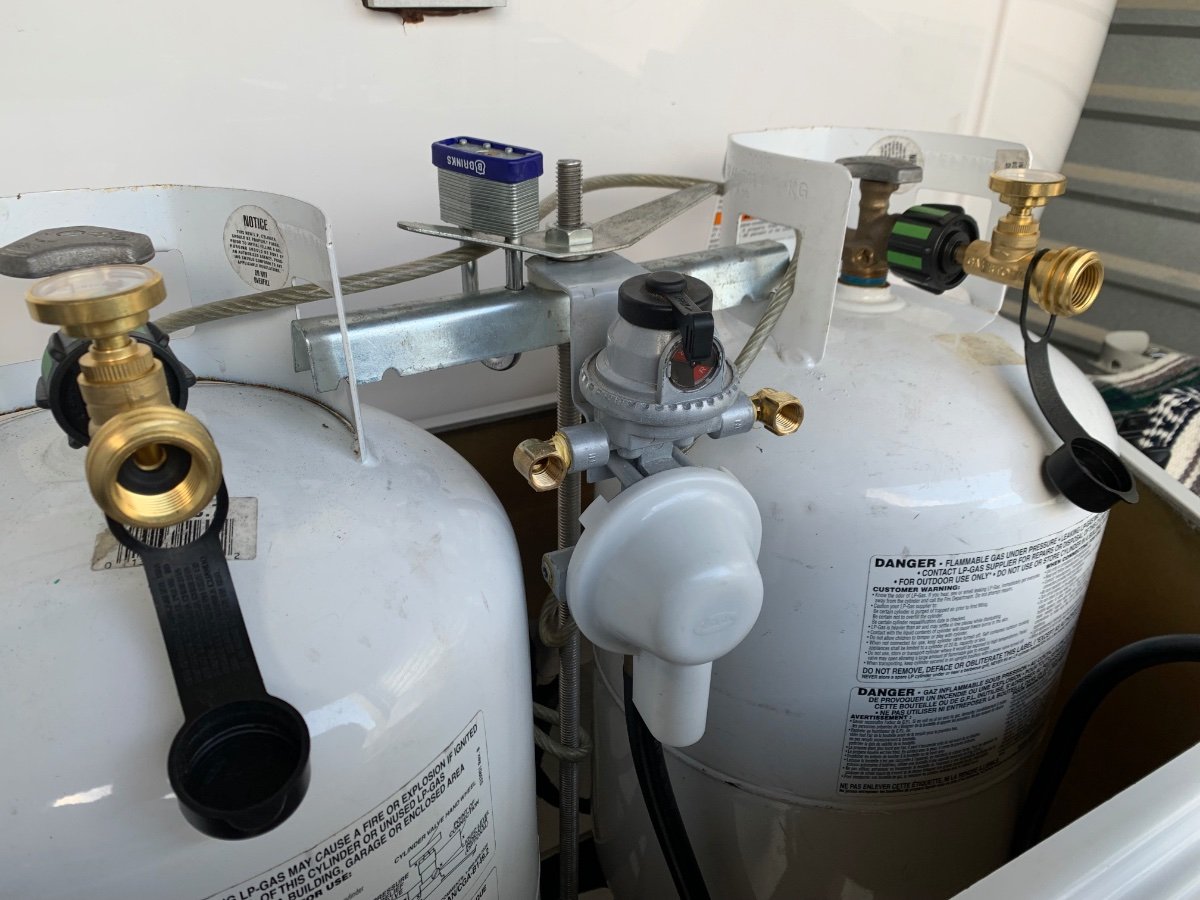
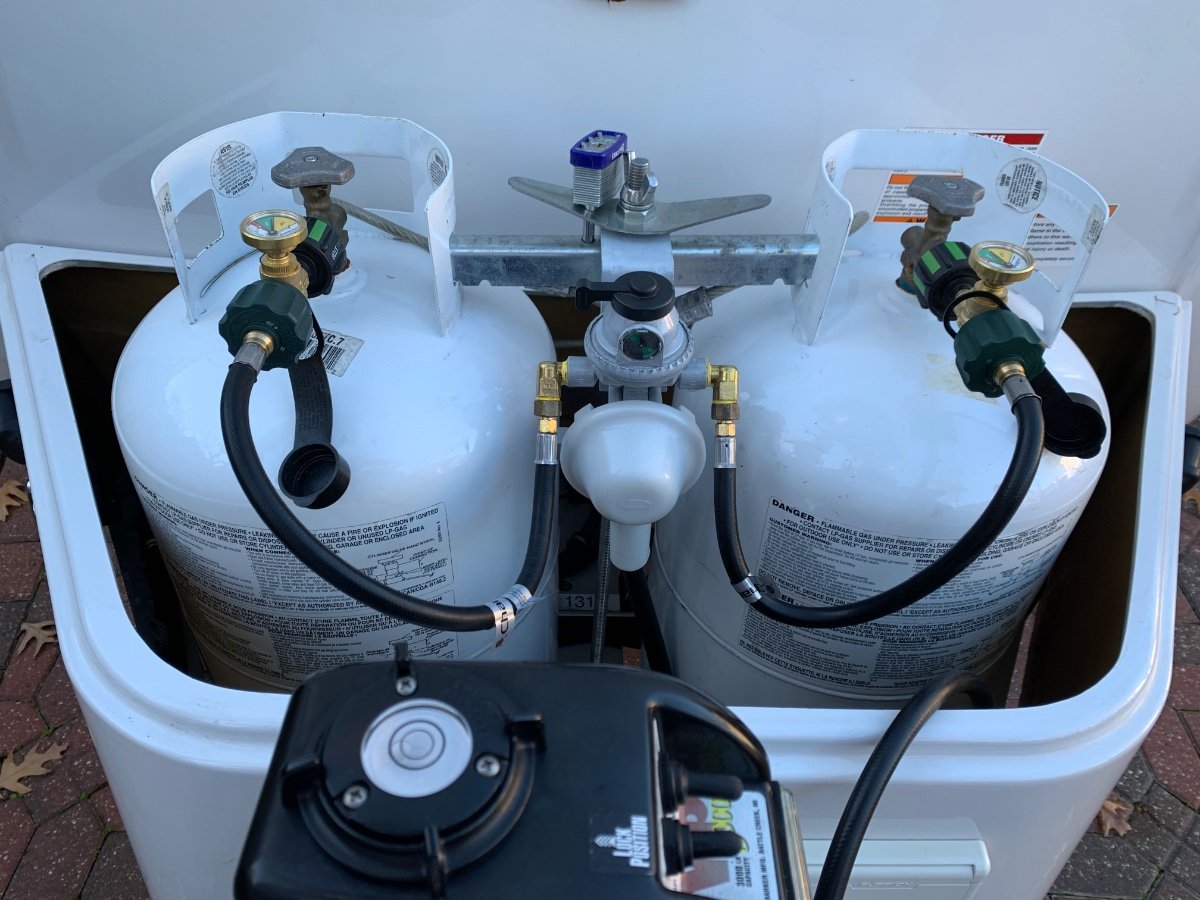
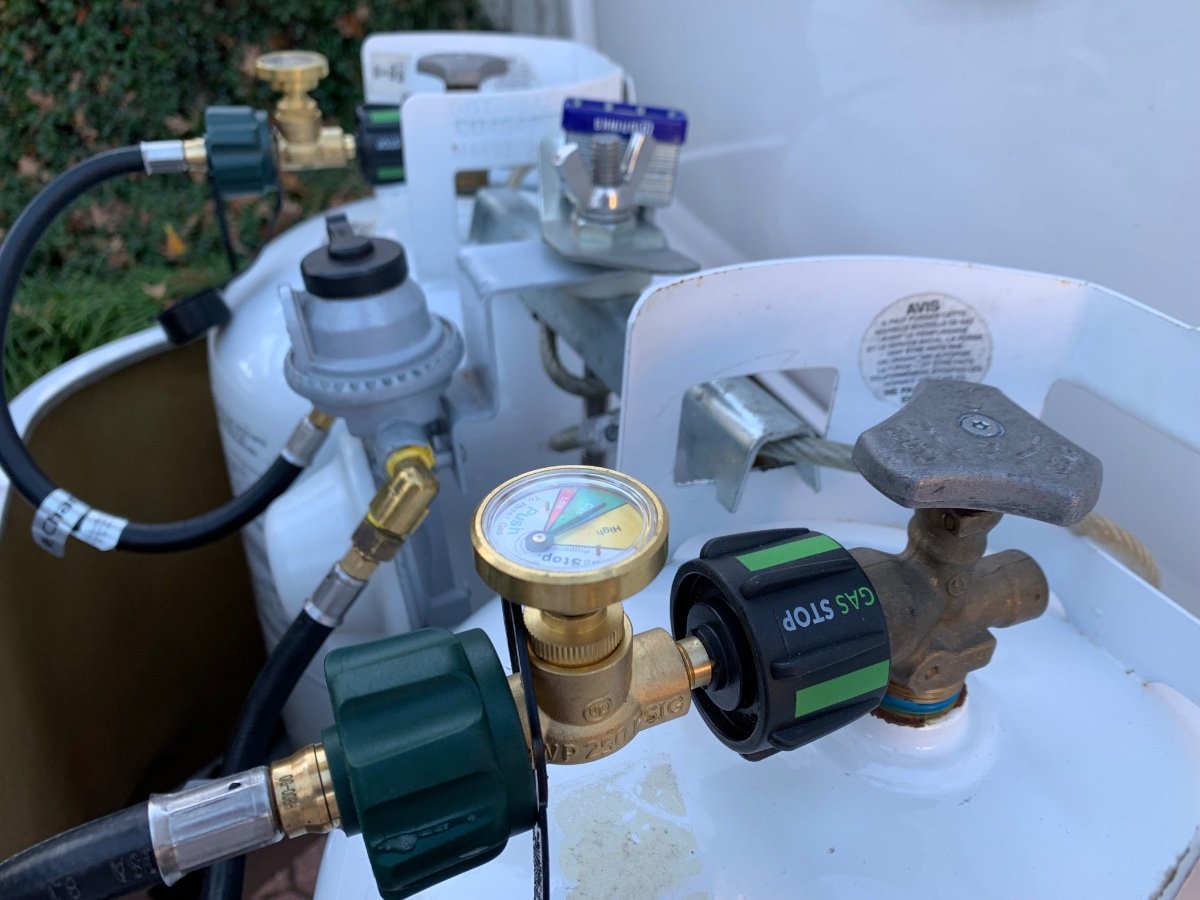
Yesterday I installed GasStop emergency shutoff devices to the Oliver’s onboard propane tanks. The process was very straightforward and relatively easy. However, did require a couple of longer pigtail propane tank connectors and additional fittings; the stock 12” pigtails were too short, given the added length to the tank valve assembly, and the ‘elbow’ fittings to lessen hose bend for improved fitment. Yellow thread sealing PTFE tape (gas-rated Teflon tape) was used, as necessary, in the installation; however, the pigtail connection is beveled and self-sealing, thus no tape necessary. The device: The pigtail: The fitting: Fittings to regulator: GasStop devices mounted: Pigtails mounted (Note the angle of the ‘elbow’ fittings were adjusted downward for best fitment): Gas level indicator/system prime: Another view (Note the cable and lock for theft deterrence): Once the installation was completed, a soapy water test was performed to check for minor leaks. With this device, the gauge also serves as a ‘primer’ by pumping it several times, as well as occasional pressure checks for leak detection. The system prime feature should benefit times when a tank is isolated for use with a generator, fire pit or grill/griddle to purge supply lines of air prior to initial use. Nuff said!
 3 points
 -
Thanks! The questions made me look at battery placement more carefully and helped me get them in correctly. The batteries - Interstate - are in and charging. So far so good! 🙂3 points
-
Looks like a nice box. Pretty expensive though. My $150 Amazon aluminum box has done well the last 5 or 6 years.3 points
-
What a terrible cluster..... A lesson I had never even contemplated before is to check with a volt meter that the + and - voltage markings are correct on a replacement battery! Likewise that the battery puts out at the proper 6, 12 or 24 volts desired. I previously got bit by buying a battery with the proper voltage and proper markings, but the posts were on the opposite side of my truck's. Hence the battery cables did not reach. Carried the battery back to auto zone and got the proper one. Was a long walk to the truck... So I have never forgotten that mistake on my learning curve. GJ2 points
-
Humor notwithstanding, I believe this is the correct answer. It is not complicated. First, lets look at what happens when you connect to shore power 30 amp receptacle. In this normal situation, the 30 amp shore power outlet will pass a maximum of 3,600 watts continuous power to your Ollie (30 amps x 120 volts = 3,600 watts). If you turn on too many appliances in the Ollie (including battery charger and air conditioner, fridge, etc.) such that you are consuming more than 3.600 watts, then the 30 amp breaker on the shore power receptacle will likely trip. It is difficult but not impossible to to draw more than 3,600 watts in the Ollie but could happen if the batteries were charging at a 150 amp rate consuming 2,100 watts (150 amps x 14 volts =2,100), and you turned on the microwave at 1,000 watt setting, and turned on the air conditioner all at the same time, you would be trying to draw more than 4,000 watts from the 30 amp shore power outlet and the 30 amp breaker in the shore power post will trip. The only thing different when you connect to a 20 amp shore power outlet is the shore power outlet will only pass a maximum of 2,400 watts before the 20 amp breaker protecting the shore power outlet will trip. In this case, you need to be diligent to keep your continuous consumption in the Ollie to less than 2,400 watts. This is easy to do if you change the charger setting to something lower than 150 amp maximum charging rate. I almost always choose to connect to the 20 amp shore power outlet when I am just stopping for the night somewhere and not unhitching. It is less work than to having to dig into the back of the basement to retrieve the heavy 30 amp cord and put it away later. Instead, I quickly plug in using a 25 foot lightweight 12 AWG extension cord with a 20 amp to 30 amp adapter. It allows me to simultaneously charge the batteries at 80 amps (1,120 watts, the maximum my 2,000 watt inverter will do) run the air conditioner or microwave at reduced power, and watch the 120 volt TV all simultaneously without drawing more than 20 amps of shore power. I can also run all 12 volt loads (e.g., furnace, lights, water pump, etc.) that I want without increasing the draw on shore power since all 12 volt loads draw their power from the batteries. The next morning, it takes me only two minutes to disconnect and stow the 12 AWG extension cord in the back of the TV. As Rolind said above, you will probably need to back down the maximum charge rate limit setting on your charger if you connect to only 20 amps, depending on what other 120 volt loads you want to run simultaneously in the Ollie.2 points
-
I’m of the opinion the picture shows a correct 4 battery parallel install. It’s a bit confusing with the red + caps on negative posts, but looks correct to me.2 points
-
Beautiful pics @Patriot! and just the original basket works for you! Our old hull will likely never see a garage or a cover anytime soon. Ours came with a nice cover, but I've been too busy working on it to cover it.2 points
-
@Cort I am so-o-o sorry to hear of your pain! 😟 The first time I broke down in a car was 1977, trying to get home for Christmas, VA to Chicago. The car broke down, had to park it in WV and rent a car! This was the last time I knew nothing about automobiles! Just searched Camping World, filtered for Mesa AZ and I see the battery you purchased (your sales rep sold you junk). Next time anybody, go to Batteries Plus first, when on the road. I buy most of my automotive batteries there, many made in PA USA (though no experience w/ house batteries from this company). Camping world sold you a China made low end battery. Just return it with your paid receipt. Walmart would be better than Camping World, for sure. You now certainly need 4 batteries. Batteries Plus may be able to help you, but don't go back to Camping World except for the return. Wish you were 2 hours NW of Mesa. You could park in my RV spot. I'd plug you in to my 30A circuit. The invitation is open, just PM. Drive up and we will get you fixed. You could stay awhile in our amazing AZ high country. I'm off for the holidays and into late January. Isn't this what the Oliver Club is about!?!2 points
-
Cort, sorry to hear that things have worsened. Like @Rivernerd said, I’d lean hard on Camping World to make things right. If needed, escalate up the chain of command, even beyond the store manager if needed. The 4 AGMs for the price of 3 seems reasonable. Good luck!2 points
-
Ah, good to know thanks, I would've "forgotten" as well! 😜1 point
-
As with most things - It Depends! If you want to store that cast iron dutch oven along with that cast iron frying pan along with that cast iron .... then you might experience an unwanted mess on the floor after a day of travel. But, if you are a light weight to normal packer then you shouldn't have any problem. If you are still "worried" then there are several solutions for securing the drawers in threads here on the Forum - anything from rods to bungies to child safety cables/locks are all mentioned. Bill1 point
-
WOW. Nice to know that for 2020 OTT upgraded the panels. Not only more breaker space, but extra breakers too, and 20 amp to boot! But for our 2018 and But for Going Costal (2019 OE2 ) and our (2018 OE2) we are stuck with no spares and some 15 amp breakers with 14 AWG. Wonder if our PD's can be upgraded to your version? Thanks for sharing. Good info to know. GJ1 point
-
The lower left battery does have a red cap on the neg terminal which is not an issue. However, the new battery was installed and either the caps were swapped (neg for pos) or the battery has the positive on the right side (they make batteries both ways). The picture does not show the terminal identification but with the weird meter readings it might make sense (trying to wire the old batteries in parallel with the new one in series - however, connecting in a loop would destroy all the batteries).1 point
-
As far as I know and have read - the current "life" of a RV tire ranges from 5 to 10 years. You should look at the date code on each tire in order to determine the exact age of those on your Ollie but it is likely that they will be in the 5 year old range. As such and if they have been taken care of - cleaned, proper inflation, sun protection etc. over their life, it is likely that you still have a couple of years left before they should be replaced. If you have ANY doubts - take them to a respected tire dealer and have them inspected. Having said all of this - I'm reminded of the advice I received way back when I was a relatively new motorcycle rider, "your tires are relatively cheap insurance and are the only thing that is connecting you to the road. Don't use worn out tires (age or tread wear) and buy good quality tires." Bill1 point
-
Pics 4 and 5 were taken at my storage facility and prior to bringing the Oliver to the house to complete the install. When checking for leaks, I put the soapy water to good use! I looked at these, but really didn’t like the way the hoses came straight out of the regulator and bent abruptly, so changing the hose angle at that point made more sense in my installation.1 point
-
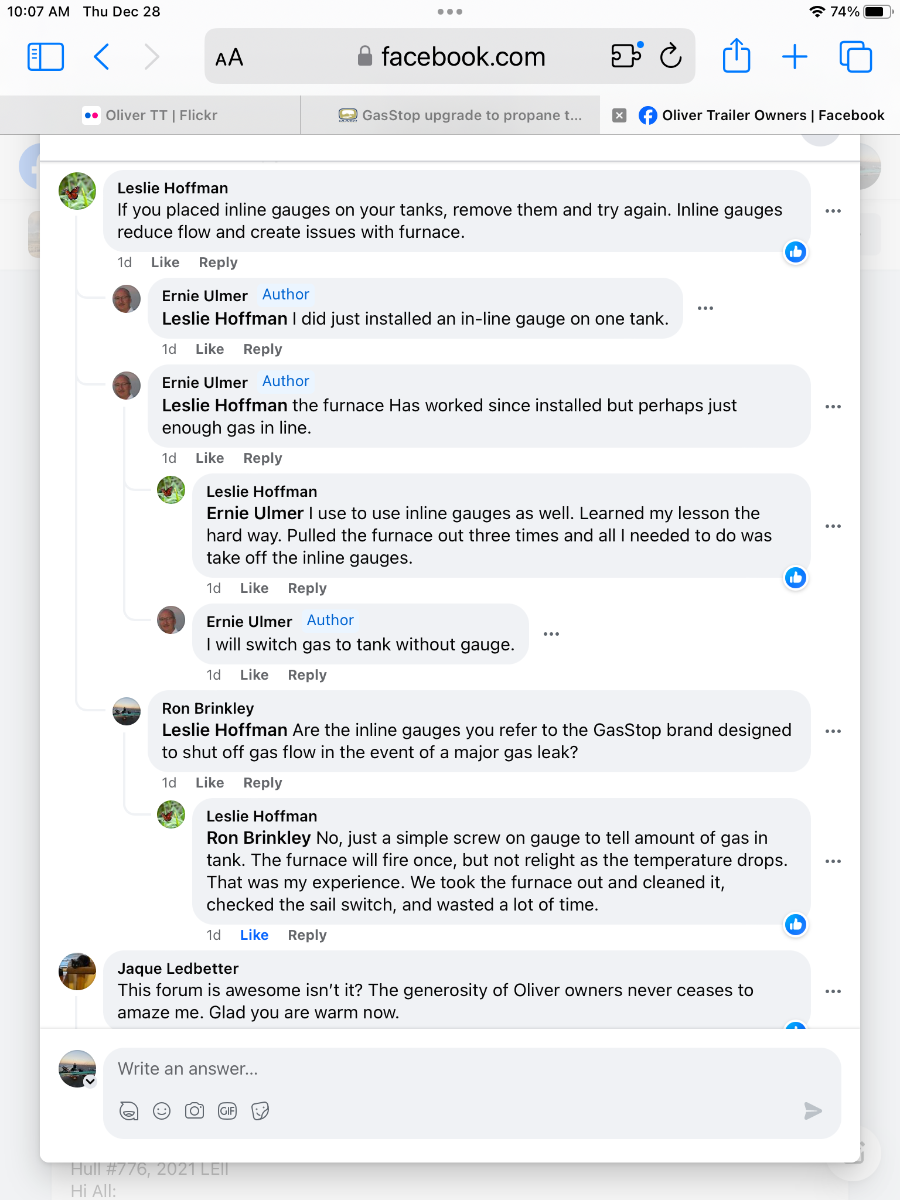
The issue was recently addressed on the Oliver FB as follow: Based on this discussion, I do not anticipate any such issue with use of the GasStop. I do have Truma AquaGo, but a Dometic furnance; test pending!
1 point
-
Yes, on the lower left Batt; Red Post Cap, but a "-" (negative) on Batt housing.1 point
-
10 less amps. 😄1 point
-
Thanks so much J! So generous of you :). I don't know if we'll make it up there. Hopefully we are ok tomorrow but I will keep your wonderful offer in mind 🙂 Good to be part of the Club!1 point
-
Pricey? -- NO, just totally ridiculous, unless you're "made of money!" It's like I'm going to spend $1250 to protect my $400 generator. Just mount it to the basket. I love my open carrier that OTT mounted, throw my tools in there and other stuff when parking. When traveling, our fire ring sits there. Not wanting one myself, but I'd certainly save the $1000 for other upgrades and buy the simple and viable product @Mike and Carol suggested.1 point
-
I’m not sure what generator he’s using. Some have a separate switch/breaker for power output even if the engine is running. Was just spitballing ideas, not really applicable now since he is getting power to the trailer. I agree that @DonnaDuane needs to plug the trailer in to shore power using the main side power cord. If everything works then plug the generator in using the same cord. If that works move to the front power input and see if that works. The transfer switch could be failing or the new wire added might have caused a problem with how it functions.1 point
-
The new Starlink Gen-3 system is out, and it works great! I got one early because Starlink did a special invitation for Gen-1 users only, but now they are available for mobile accounts too. So here are my thoughts on some of the great new features and disappointments that are important for mobile users: 1. Gen-3 uses RJ45 connectors, and it works perfect with the Oliver installation described in my “Don’t cut your Starlink Cable” post. I had previously, and incorrectly, assumed that all Starlink’s systems used RJ45 connectors because thats what my Gen-1 dishy and Gen-3 router had. But alas, the far more common Gen-2 systems did not. Hmmm… that explains why Gen-2 users can’t use the upgraded Gen-3 routers. 2. The Gen-3 dishy is bigger than Gen-2 and it has a wider sky view. I’m not going back on the roof to measure it, but the shipping box is 25 x 15.5 x 3.75 inches to give an idea of the size. I’ve heard complaints that it’s bigger and harder to stow when traveling. In my opinion it’s way easier to stow because It has a convenient fold-up kickstand that eliminates the bulky tripod that came with older dishy’s. I really hated that tripod, it took up as much room as my BBQ. 3. The Gen-3 dishy has no motors or other moving parts, which should be more robust for the rigors of mobile use. 4. The Gen-3 power consumption is 195 watts per the label. That’s higher than Gen-1 (185w) and Gen-2 (about 65w.) This is not great news for boondockers. 5. Starlink still doesn't have a DC power option as many hoped. It has a separate 110v AC power supply with a 57vdc output (3.42amp) and a standard DC power connector. I’m sure someone will soon come up with a 12 to 57vdc volt power supply that can handle that wattage. 6. The Gen-3 router has longer WiFi range and it supports Mesh Node. Of course, the farther away from the router you get, the weaker the WiFi signal gets, and slower the internet speed gets. The Gen-3 router really helps with that. I’ve had a Gen-3 router on my Gen-1 dishy for a few months now and it made a huge difference in internet speed throughout the house. The Mesh feature allows you to add Nodes, sort of like radio relays, that give even further WiFi range, which is a good way to make new friends at camp. 7. The Gen-3 dishy comes with a built-in fold down kick stand designed to sit on a level surface. A pole mount option can be bought separately. You have to use the Starlink App during set-up to get it manually pointed in the right direction. I put mine on the peak of my roof facing West, and tilted it on the sloped roof to approximately match what the kickstand tilt would be if placed on a flat surface. The Starlink App liked the direction it was pointed, but it made me adjust the tilt a few degrees upwards before it would connect to the satellites. I don’t know if there is a work-around for that, but it might be a concern for fixed flat surface mounting such as an RV roof, and for the direction the vehicle is facing. From my almost 3 years of RV experience with Starlink, a fixed dishy mounting is not ideal. You need the flexibility to move the dishy around to find a clear sky view, so its going to be sitting on the ground a lot of time if you want to get a satellite signal. In conclusion, with its wider sky view, built-in kickstand, and the ability to lengthen the cable with a store bought RJ45 cable, I like the Gen-3 despite it’s short comings.
1 point
-
I agree it is pricey even being completely custom powder coated and fabricated in Tenn. 🇺🇸1 point
-
@DonnaDuane here is a list of the EMS codes, looks like open ground! this box should be under your rear dinette. Check out this thread, sounds like (might be) your ground bonding plug is faulty, so either get a replacement neutral ground bonding plug, or turn off the EMS and trust the generator. IF it’s a faulty ground bonding plug, a replacement bonding plug is not that expensive, that would be my go to. Stupid question, did you check if the ground bonding plug is seated properly in your generator?
1 point
-
1800W / 120V = 15A this cooker can just fit a 15A outlet/breaker. Unless you want your cooker at the pedastal, get a 12GA appliance grade extension cord.1 point
-
Ouch! Are you in the middle of an extended trip in your Ollie? If so, buying 3 more AGMs may be the best way to complete your trip, presuming the one you just bought is still o.k. AGMs, although not cheap, will buy you another 4-7 years of service, during which time the price of lithiums may continue to drop. If you are at home, this is the time to "cut your losses" and make the switch to lithium. If I read your posts correctly, someone at Camping World told you it was o.k. to mix AGM with wet cell? Then, when it didn't work, they now want to sell you 3 more AGMs? If your one new AGM is fried, I would lean hard on Camping World to sell me 4 for the price of 3, as it was their advice that killed your first AGM in the first place. Good luck!1 point
-
I don't believe so.1 point
-
It sounds like a possible mis-wiring during the replacement procedure and also an incorrect interpretation of the meter reading. Could it be possible that the replacement battery was wired in series (rather than in parallel with the other batteries) by mistake and the meter reading was 24.1 volts rather that 241.0 as stated?1 point
-
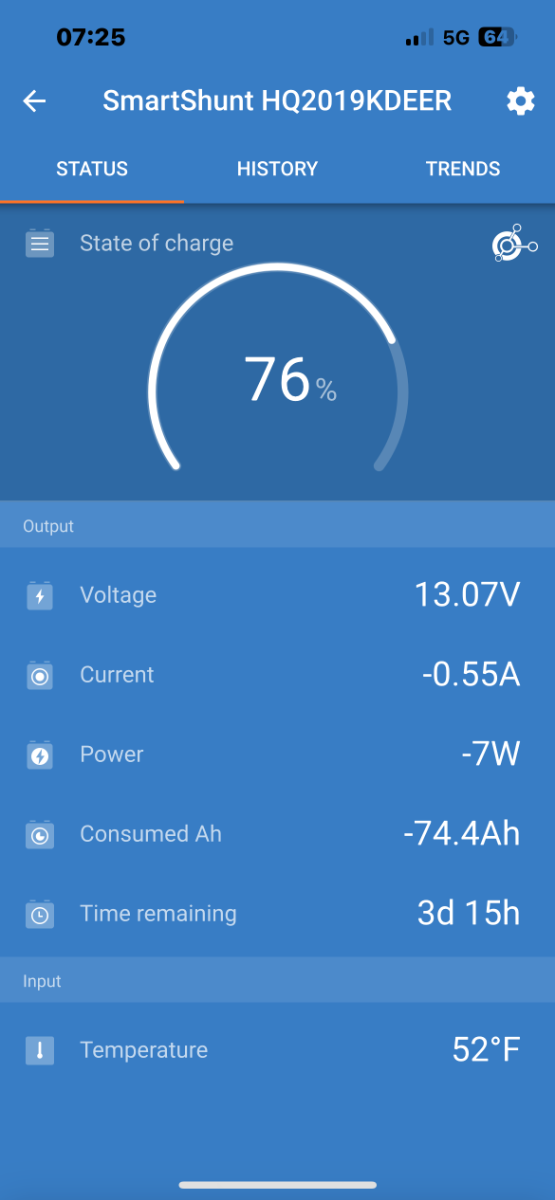
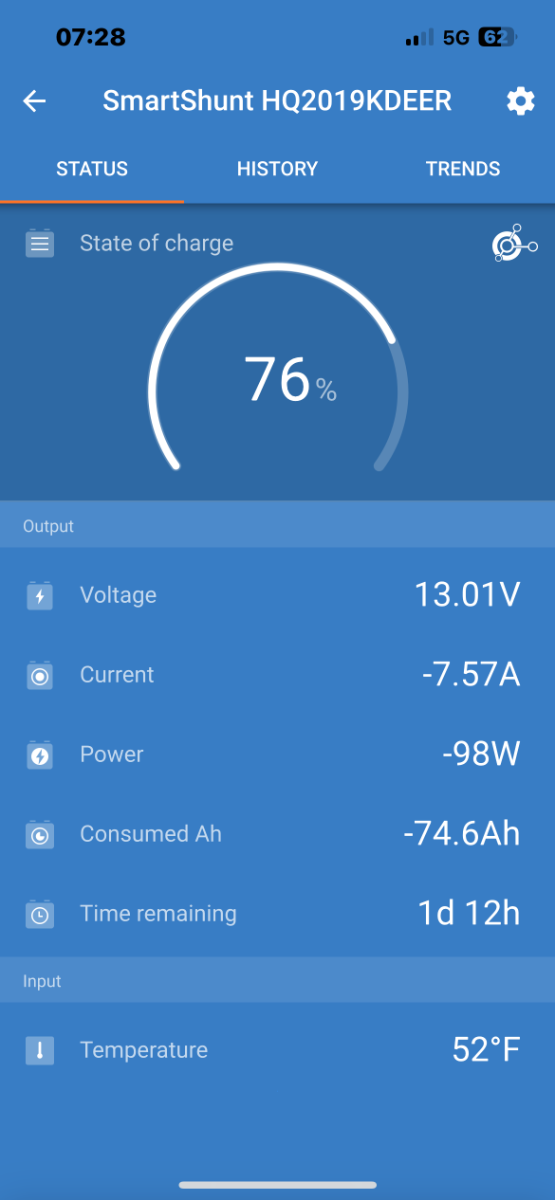
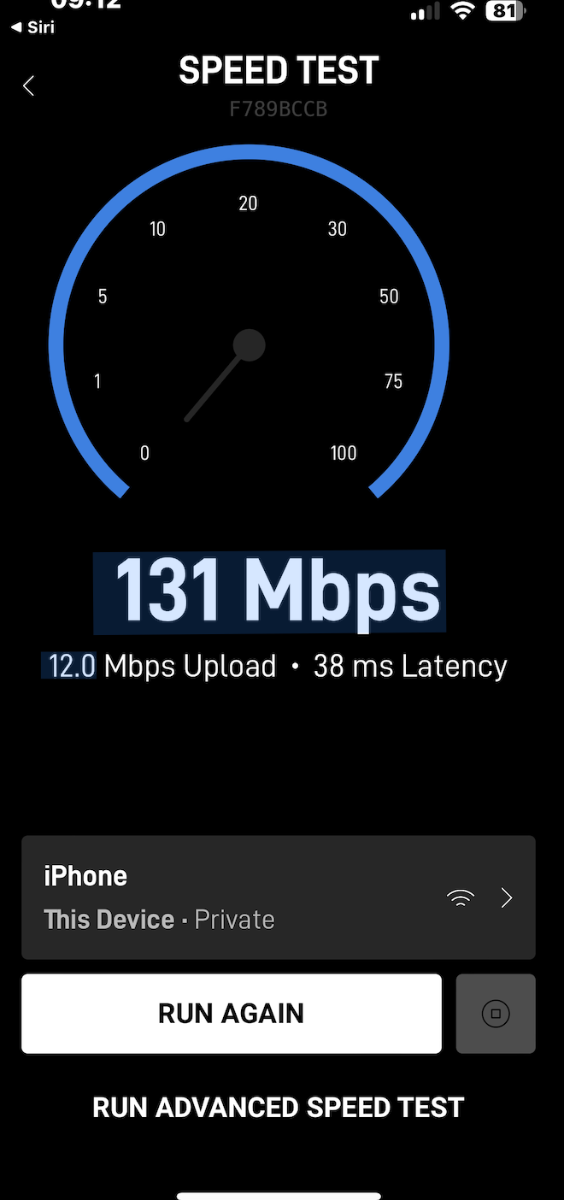
We don't have nearly the experience with Starlink as @Snackchaser, in fact we're still in our "personal beta testing mode." As I'm writing this, our SL is being powered by our 2kw inverter at our boondock location in North Texas. So let's try measuring the actual SL energy usage.... Condition 1: Our Victron SmartShunt reads our current values at 76% SOC, current draw is -0.55A, power usage -7W (with all electrical components off except for Fridge in GAS mode, Microwave LED clock on, SL off, and normal phantom draw). It's wall-to-wall sunshine now at about 0725 - solar modules are adding about 2.80A/36W into the BB's. Condition 2: Same background current draw as in Condition 1, but we energized the 2KW inverter. This bumped up the current draw to 1.08A and power usage to -14W. So, roughly, the inverter itself draws 0.53A or 12.7Amp-Hrs daily - just idling with no AC appliances being energized. Good to know number, IMO. Condition 3: All the same as above, except we energized the Starlink system. Current draw now up to -7.57A and power at -98W. The SL literature notes the unit will draw approx. 65W of power. Clearly, in our configuration, it's really more like 84W and pulling 6.5A. Without the SL energized, our phantom current draw is usually around 0.15 - 0.45A/-2 to 7W that's with the Fridge in the GAS mode and MicroWave in LED clock mode, and Smoke/LPG/CO2 detectors and various Victron components drawing a few 10ths of Ampere's. We're not that sad about the SL power consumption, however we're preparing to convert it over to a 12vDC system after this trip to save even more battery bank energy while boondocking. More on that upgrade later. Here are the screenshots of the 3 test conditions, FYI: Condition 1: Condition 2: Condition 3: If your "RV-style" of on the road needs reliable access to the internet like our's does (due to D's work requirements) the Starlink system is a viable option, IMO. It's been Uber-fast in cloudy/rainy conditions both day/night. Here's a screenshot of a speed test from this morning: More info to share later... Cheers!
1 point
-
Now that is in my ballpark. My controller with the lithium option should work. I don't know how important this is from Galway Girl as I would not be using Lithionics In my specific hull 505 I have a Progressive Dynamics 4000 load center. This houses the AC Breakers, DC Fuses and a converter section for battery charging. In my PD4000 there is a PD 4065 Converter section (65A) with Lithium Jumper for Battery Charging. In normal operation that charger is set to WIZ (or Lead Acid) position and it follows a profile that's perfect for lead acid batteries and AGM's. If I move the switch (or jumper) to the LI position, it now has a constant output at 14.6V which is OK for Lithium but not optimum for the Lithionics batteries. Lithionics prefers that I use another charger with a programmable LI profile. My Plan: I'm upgrading my current PD converter charger and separate Prosine 2000W inverter to an integrate Xantrex XC2000 Pro Charger/Inverter. Note: I don't plan on running my AC off the batteries so the 2000W inverter is plenty for my needs. In the Platinum Package Oliver installs the XC3000.1 point
-
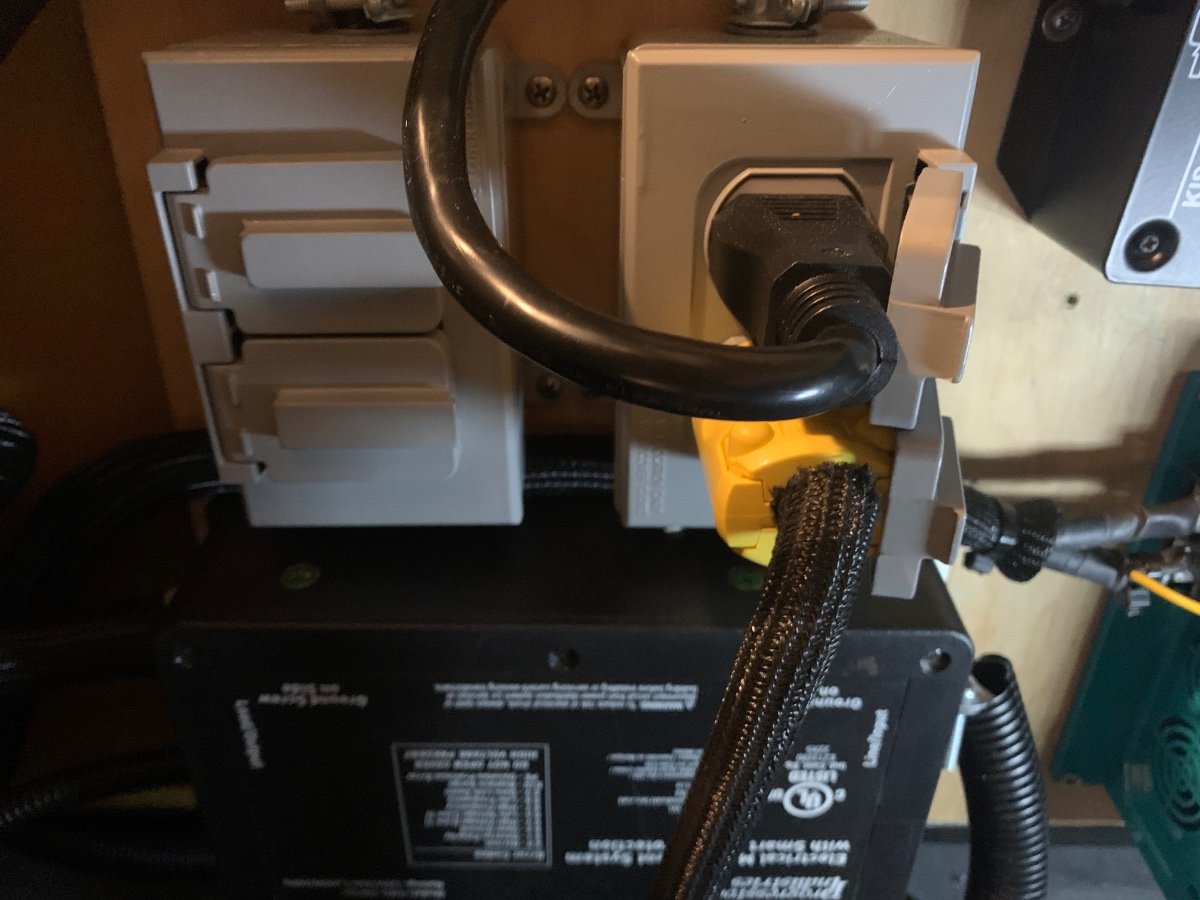
This is a view of my panel. However, I had enough room in it for two additional 20A breakers (seen unlabeled at the bottom of the row), which are pre-wired and ready for use by way of a single individual 20A outlet for each; think future electrical expansion projects! The two plugs to the right are connected to the inverter, the left two are the single 20A outlets in waiting. I needed an extra plug from the inverter for a transfer switch I installed to enable operation of the A/C on the house batteries.
1 point
-
Unfortunately the general wisdom is that all batteries should be of approximately the same age. Sorry. Bill1 point
-
Oh my goodness I needed this….love this video so much!! It’s been a rough week for John and I, we lost our sweet dog Dolly a few days ago, our hearts are broken.💔 I wish you all a very Merry Christmas. Blessings and good health in the New Year.🎄
1 point
-
I wanted to see if you are still happy with this box since install? We need one to contain set-up stuff only as we keep our larger generator in the truck bed.1 point
-
Good to know I’m not the only one. I do think moving the temperature probe helped with the cycling. Yesterday I installed a relay which shuts off the interior fan when compressor shuts off. So far in testing, it doesn’t cycle nearly as much. I’m also hoping this will address the humidity issue we have at night. The consensus on the Houghton unit regarding humidity is that the interior fan never shuts off, thus reintroducing humidity back into the cabin. Can’t wait for next trip to try it out.1 point
-
The belly in their photo is ridiculous.
1 point
-
We travel in much the same fashion. "LIGHT" has become our mantra since transitioning from the AS to the OTT and from the RAM 3500 to our TUNDRA TV. Even with the AS, however, our disposables were largely limited to PT/TP. 4 insulated stainless wine "glasses", 2 each insulated Black Rifle Coffee Co. coffee mugs, set of 4 Corell plates/bowels, like y'all, as well. 2 each YETI-type large insulated mugs for "road-water" whilst towing... We pay a bit of a weight/volume premium by hauling around a Berkey Travel filter for our water - we figure its a trade off for not carrying a couple cases of water bottles from COSTCO (less garbage footprint w/o empty plastic to deal with). But the load-out changes and is flexible depending on the "type" of camping we're planning for a given trip. Boondocking only, combo BD & improved sites, or full hook-ups... We (or at least I) like the trip planning process - keeps the mental juices "flowing."1 point
-
Of course I didn't mean that I actually burn "garbage" - I only burn the paper stuff. But, this really does greatly reduce the overall amount of "stuff", "refuse", "garbage", etc. that I need to get rid of while on the road. Bill1 point
-
We always try to recycle the red cups along with any empty 1 gallon water bottles when possible. Burning any trash is something we just try to avoid. Our thoughts are simply: If we pack it in, we pack it out. Paper cups are a good option! Patriot🇺🇸1 point
-
I too am in the "disposable" crowd - but - I prefer paper over plastic. Paper is somewhat kinder on the environment, but the real reason is that in order to reduce the amount of "garbage" I have to get rid of, I can always simply burn it. Obviously, this is not a problem for those that tend to camp where there are the appropriate facilities for disposing of garbage, but, where I tend to camp, it can be a bit of a problem getting rid of waste. Bill1 point
-
The light? Hahaha, no particular meaning to it. I found it at a campsite. The previous folks threw it away because it didn’t work. Just cleaning up the contacts fixed it. I made an adapter for it and it’s just on a strong magnet. It stays in the back of the truck while traveling.1 point
-
Yep, Chris is right on the reversed polarity. The new battery has the posts in the opposite direction, so when you installed it, in the same direction (battery posts towards the center of the four) the polarity was reversed without you thinking about it. Lucky this did not explode! Likely because the other 3 were very weak. I would want to work your upgrade now. Forget the "RV shop." Batteries plus has very good AGM batteries and they will install them for you. In Mesa and the Phoenix valley, there are several solar shops if it is time for you to go LiFePO4!0 points
-
Cort, I hate to say it but to me it looks like you reversed the polarity with the new battery you installed. I would strongly suggest having an RV shop install the new batteries. They might need to make up a new jumper cable or two depending on how the new batteries fit.0 points
-
Thanks - we learned that they did sell us a wet cell (Electric World) - the guy just neglected to tell me that. That was curious because when I gave him a wet cell battery and he gave me what looked like a dry cell battery (no water cells on top - they were hidden), I specifically asked him if it was OK to combine wet cells with AGM's - and he said yes and that was it. When we took it back today we learned it was a wet cell after all.0 points
-
Interesting - the new battery tested poorly but was accepting some charge - and we'll see if it able to charge fully. (Battery plus thinks it was probably a bad battery - we'll know by tomorrow. It's an Electric World from Camping World. Today the new battery was almost completely shot while the old batteries were down to 4.10 (by voltmeter) so it may have been dragging them down. That's our hope anyway. Since, we are burning dollars staying at a hotel we elected to buy a set of new Interstate batteries and go from there.0 points










.thumb.jpg.e34bf01ef7f7d5e99ad31856d45afbeb.jpg)














-
Recent Achievements
-