Leaderboard




Popular Content
Showing content with the highest reputation on 10/20/2025 in all areas
-
I'd be suspicious of the RV shops that did your prior lube service, too. Unless the zerks just fell out after the last service, this is something they would have noticed if they did the work and should have told you about (or offered to fix).3 points
-
Boudicca -- the name given to a beloved dog of mine, because she fiercely stood her ground as a small pup against a much larger dog of mine (he weighed 110 pounds). Boudicca (or Boadicea) was Queen of the Iceni, a Celtic tribe in eastern Britain. She led a major uprising against Roman rule around 60 AD -- this was after the Romans ignored the King's will, seized the lands of the Iceni, and enslaved the people; personally, Boudicca was flogged and her daughters were abused by the Romans, so she sought vengeance. She brought several tribes together, they numbered tens of thousands, and they waged war. Though they killed 70,000 to 80,000 Romans, Boudicca's army ultimately lost due to lack of training, tactics and the advantage of terrain. Though her name is Boudicca, I usually refer to her as "my Ollie".
 2 points
 -
https://www.greatlakesskipper.com/search/?q=7L279+compression+latch Greetings, I know your efforts were two years ago. However, could you please takea look at the Great Lakes Skipper site and share which compression latch worked on your Oliver? Thanks much.2 points
-
I removed a Zerk fitting from the Dexter EZ Flex equalizer that OTT installed in our hull during service in 2018 (they should still be the same). The four (4) grease fittings that fit the EZ Flex equalizers are 45-angle with 1/4"-28 threads. This Amazon link shows the correct size and shape (taller post style), but not sure of the quality of this product (but likely a fine replacement): https://www.amazon.com/Plews-11-105-Grease-Fitting/dp/B000SL2M0M/ I needed the same kind for the wet-bolts Alcan supplied and I ordered Dorman AutoGrade 1/4-28 Inch Grease Fitting - 852-703 from O'Reilly's. Ron is correct. The fittings for the equalizers are as spec'd above. The fittings for the wet-bolts are the smaller straight M6x1mm fittings (turn with an 8mm wrench). This would work if you have an old-school local Napa that's been around for decades with the old-timers still working! When I ordered mine from O'Reilly's the sales person wanted to show me the assortment kits. They had 10 different assortments, none of what I needed and she had no idea! This may be true! And if you must do so, after removing both wheels on one side, TV attached for safety, just remove the equalizer center bolt and drop both axles enough to clear the top of the equalizer. Do NOT remove the wet-bolts as you will have trouble re-aligning them to remount! If it was me, and you are also very good with your hands and wrenching, I would try to thread the new fittings in without disassembly! You still want the wheels off to get your body closer to the work. Using your fingers get the new fitting started. Then with the smallest open-ended 10mm wrench you have, start to tighten. You must tighten as far as the wrench can go in the small opening, then turn the wrench upside down which changes the angle of the head of the wrench. Keep flipping the wrench over and over and be patient! 😎 I believe these are prone to falling out because the installers point the fittings outward and they are not tightened down to the base. Therefore they are not torqued in place, the threads are basically lose to start! Given you job-out this kind of work... Buy your new fittings, take parts and trailer to your service shop and ask them to install them! They should offer to do this at no charge, given you have used their services regularly and yes, they should have tightened them or made you aware they were missing!2 points
-
Given your picture, if it were mine, I'd break out the Q-tips and clean those small holes really well. Then - assuming that I could see threads in there - I'd remove one of the zerks from the other EZ Flex, clean it and take it to the local NAPA store. They should be able to get you a couple of exact replacements. Then I'd drive home and using only my fingers I'd see if these new zerks would thread into the existing holes. If they do then the job is basically complete. Bill2 points
-
Lot of us in that club, I’m a regular member! 🤣 Like if our furnace went out, I’d have no backup. When we upgrade the A/C, then we’ll have a heat pump for backup. I dislike carrying stuff not used. It’s been lows high 30s here in SW CO, running the furnace overnight, thermostat at 65F, it runs every so often in the AM hours. We live by our Ruuvi sensors. One is positioned right on the incoming water lines, lower back wall of the basement, likely the coldest spot between the hulls and the first area water would freeze. Living SW we winter camp often, and I only blowout the water lines when needed, several days below freezing. We don’t winterize or do storage, but keep an eye on freezing temps.2 points
-
@Dennis and Melissa, we have carried a small 120V ceramic heater when traveling during months when below freezing is possible. I included this heater on our trailer delivery trip in February, 2022, based on recommendations I had read on this forum. When enroute back to Dallas we encountered freezing weather and stopped for the night at a convenient RV park along I40, about an hour east of Little Rock. The temperature was below freezing when we pulled in, about 10PM. I had to chip ice off the water spigot to take on some fresh water. We had the furnace running and the temperature inside the trailer was comfortable when we went to bed. Several hours later, I awoke cold and the furnace was not operating. Assuming we had exhausted the propane in one tank, I dressed and went outside to switch the regulator to draw propane from the other tank, which we knew to be full. The outside temperature was in the low to mid 20s. Long story short, we were unable to get the furnace to startup by drawing propane from the full tank. I messed with the regulator, but could not get propane to flow. I tried connecting the hose from the first (now empty) tank to the full tank, but still no flow through the regulator. Consequently, I pulled out the ceramic heater and got It running on shore power. The ceramic heater could maintain the temperature in the trailer at about 60 degrees. I had no way to measure the temperature between the hulls, but I knew very little of the heat from the ceramic heater would benefit that space. We decided to forego morning showers and prepared to get underway back to Dallas, where the temperature was likely to be above freezing. Before departing, at 8AM Eastern time, I phoned Oliver Support and described our problem. They suggested measures we had previously tried, and suggested trying to light the cooktop to determine if propane was flowing. The cooktop would also not light. Oliver Support suspected the regulator was faulty and committed to shipping out a new regulator the same day. About two days later the new regulator was delivered to our home. I installed the new regulator and the problem was solved. All gas appliances now operated normally. The lesson I took from this experience was to carry the ceramic heater as a backup to the propane furnace if traveling during months when freezing weather is likely. So long as the propane furnace is operable and there is an adequate supply of propane I would rely on the propane furnace as the better protection from freezing water lines within the trailer. I would turn to the electric heater ONLY as a backup to the propane furnace. Especially at night I feel the safer option is to run the furnace, not knowing how low the outside temperature may drop to during the night. We have had no further occasions when the furnace would not operate and have stayed in the trailer multiple nights in similar temperatures.2 points
-
There’s a wide range of “below freezing”. If it’s only down to the high 20s we still rely on our electric space heater (Vornado). I can turn it so that some of the heat is directed into the vent under the bed with the water pump, water tank, etc. We’ve never had anything freeze. I figure if the outer hull is in 27 degree weather and the inner hull is in 68 degree inside weather then between the hulls will be something in between. Below mid 20s we do use the furnace. That’s not been very often since we tend not to camp in very cold weather. Mike2 points
-
Well - As long as you're sure that you will continue to have electricity to run that electric heater AND you open all of the "hatches" to the basement and other areas between the hulls, you should be OK without the propane furnace. If you are in a situation where you need the bed areas and therefore could not open those hatches then you could always use a small fan on low speed in order to move heated air into the space under the beds. Of course, you would also leave the bath door open. Bill2 points
-
We haven’t been able to agree on a FINAL name….😜 But a commonly used one is THE OLLIE… because our daughter’s dog is already Ollie We also use MDIV because we are hull 1504 …. So close to 1500 which would have been perfect for Melissa and Dennis 😃2 points
-
We have a little DREO space heater that we use quite frequently. I love it. Works fast and extends the life of our propane. And since we are often in sites with electric hookups, it’s “free” 😜 But I’ve decided against using it when it falls below freezing. I’m worried that the design of the Ollie relies on the propane heater to keep the plumbing from freezing. What say you?1 point
-
I am pretty sure I tried both of these and ended up going metric but as described earlier neither would simply screw in despite repeated efforts. Perhaps the original zerk was the wrong size. I was amazed it simply came off in my hand and had not fallen on the highway earlier. There did not appear to be much for threads in the hole at all but of course it was very difficult to see even with my lights and mirrors. I would suggest Gliddenwoods have his tap ready if he is proceeding with the disassembly route and he may find little or no threads in those holes. Of course, he has like 6 to replace whereas I only had one problem child so his more extensive approach is understandable although I feel bad he has to go that route.1 point
-
If you cannot screw them as mounted. And if you do remove any suspension bolts, be on level ground first. If not the equalizer may not want to go back in the direction it came from. 😎1 point
-
Vortex 510 N. Santa Fe Ave. Salina, KS 67401 (785) 833-67201 point
-
Please do not do this! The better Victron Multiplus II is exactly half this cost, with better functionality and reliability! There are several threads here re failures of this brand inverter-charger.1 point
-
Neither did we. OLLIE it is.1 point
-
Yes, I did (not unhook the axles) but it was very difficult. I measured the old zerk very carefully because I still had it. But it was NOT a matter of just screwing it back in. I believe the threads were not right from the get-go. I ultimately got a 90-degree zerk in the hole and somewhat tightened - it works and at a better angle than the 45 degree zerk. Not enough clearance to retap the hole without unhooking the axles which would have put this repair into a whole different realm of time and effort. So, I will live with my likely cross-threaded zerk until I need to do something else with it. Good luck. Hard on my old body working under the trailer.1 point
-
I agree. However fate has sent me in that direction already. I decided to clean and inspect the other side. While cleaning I notice one zerk was on an odd direction. It was so loose it came off in my hand; not broken...just that loose! I tested it on the first side by hand it fit fine.So tomorrow to the parts store I go with my sample zerk. Dumb luck is important in life.1 point
-
I had a zerk come off in my hand while greasing a year or so ago. I too was just outside warranty and about to leave on a trip so I did not contact Oliver. I managed to get a new one and got it in the hole but I am pretty sure it is cross threaded. I am not sure the threads were ever right - thus it coming off in my hand. As ugly as it was there is so little clearance under there that I couldn't see how I could do any better without unhooking the axles. So I am not surprised you are finding missing zerks. You should be able to get new ones and thread them in but it is very tight quarters under there as you probably know. Very hard to get a wrench on the zerk to tighten.1 point
-
While not guaranteed, I would not sweat the being just outside the two year warranty period. If, indeed, this was Oliver's error, I be willing to bet that they will make you "good" regardless of the warranty having expired. On the other hand, if it is just a case of the zerks missing, it is certainly possible that they became dislodged or broken and, therefore, the "fault" would/should not be laid at the door of Oliver. Simply put, Oliver should/would not be held responsible for those things that are entirely out of their direct control. Unfortunately, I'm not too sure just how one might go about proving and/or disproving that the zerks were not or were in the appropriate positions at the time of delivery. My experience would suggest that if you "even handedly" made your case and could show reasonable "proof" that the zerks were not where they should have been then Oliver will most likely take care of you. Of course in this case it helps that zerks are not very expensive. On the other hand, if there is no place for the zerks that should be there, this is ,obviously, easy to prove and, again, I believe that Oliver will take care of you. Good luck! Bill p.s. In my business dealings and general discussions with the staff at Oliver, I've found that a professional even handed approach tends to be received much better than what might be considered an angry confrontational approach.1 point
-
Although fiberglass is not conductive, the frame, bumpers and hitch are! It's possible for a trained person with the right equipment to check if the neutral is bonded at the pedestal. But there is no quick test plug-in device. It has long been the case that the neutral must be bonded to ground only at the main service. However, there are probably tens of millions of sub panels that are incorrectly grounded. But there are also many other improper wiring issues that are even more significant hazards. There is an old electrician's saying about apprentices, handyman's, and DIY'ers; "They know enough to be dangerous." Just be wary of armchair advice, it's what they don't know that will get you! Cheers! Geoff1 point
-
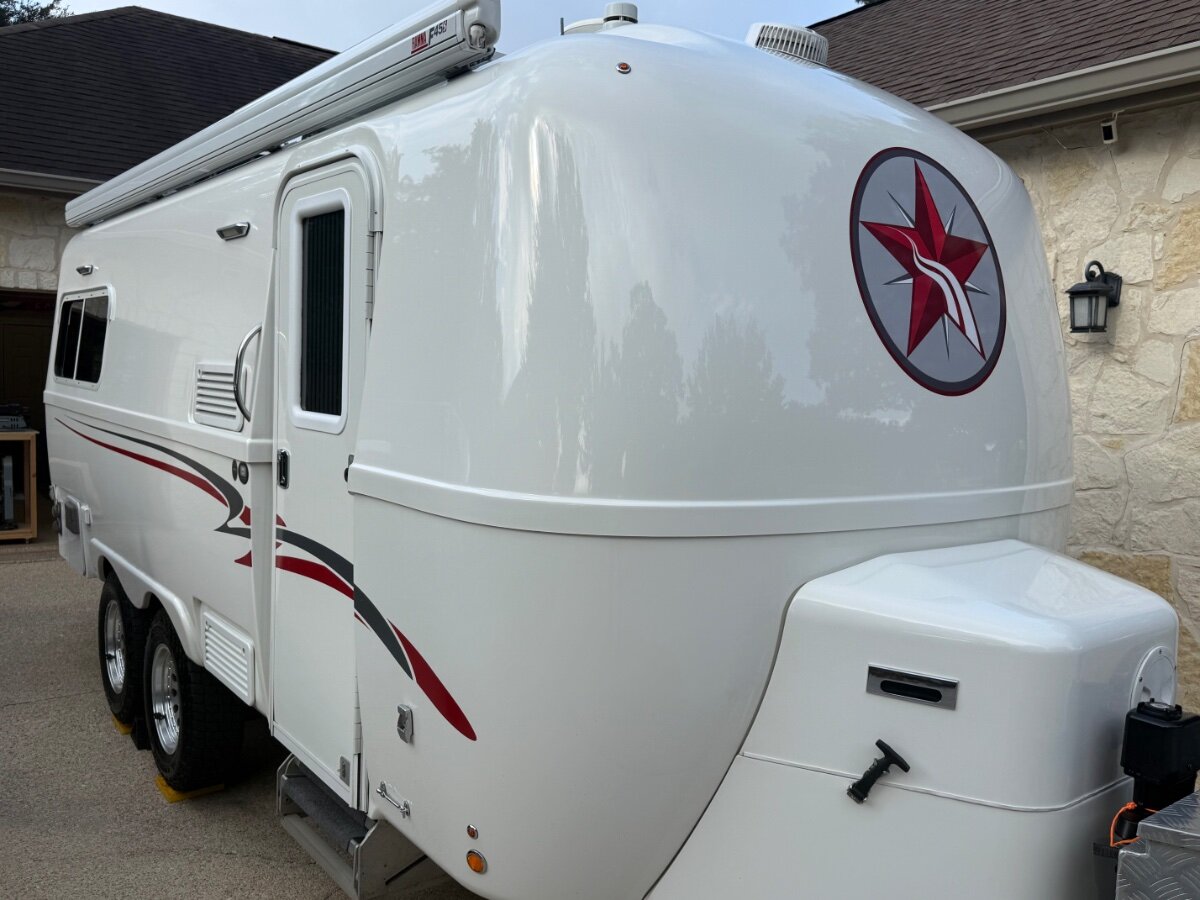
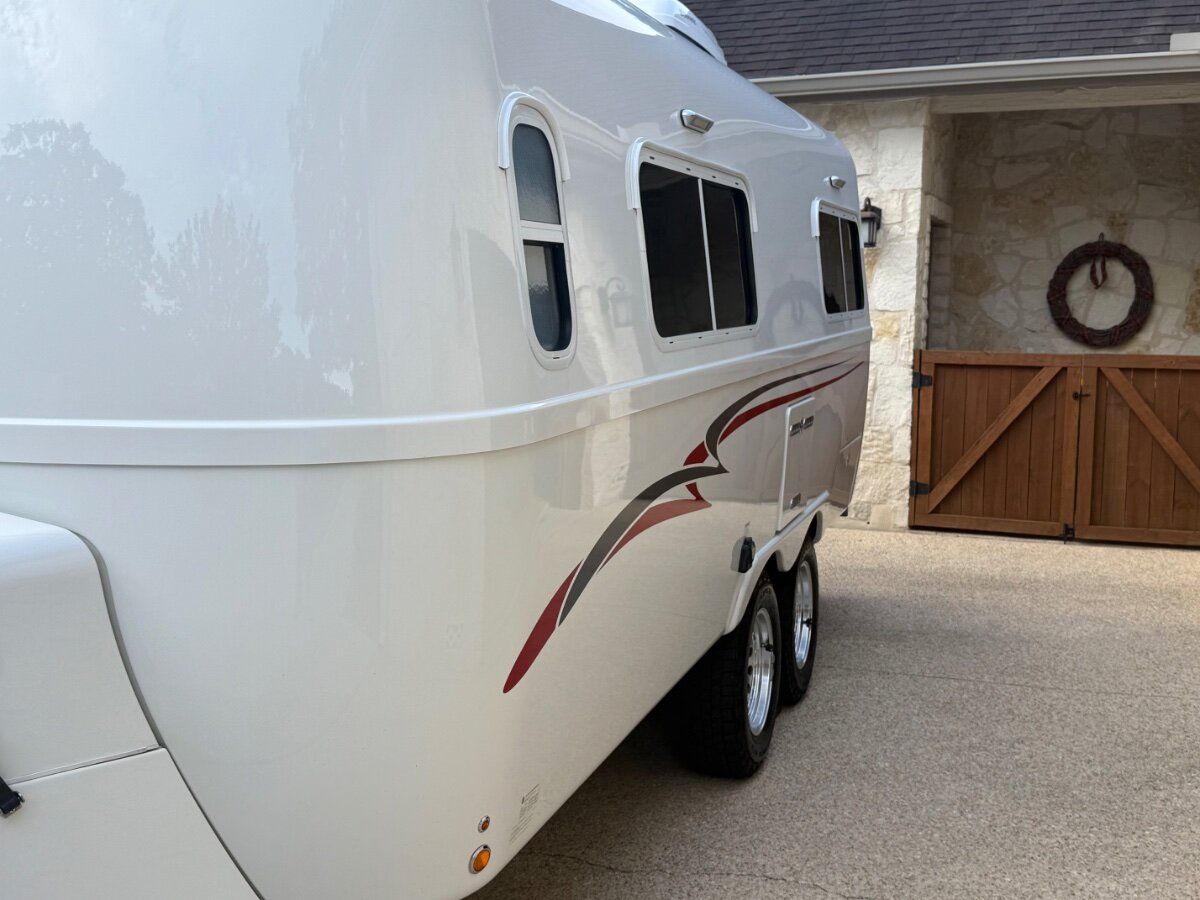
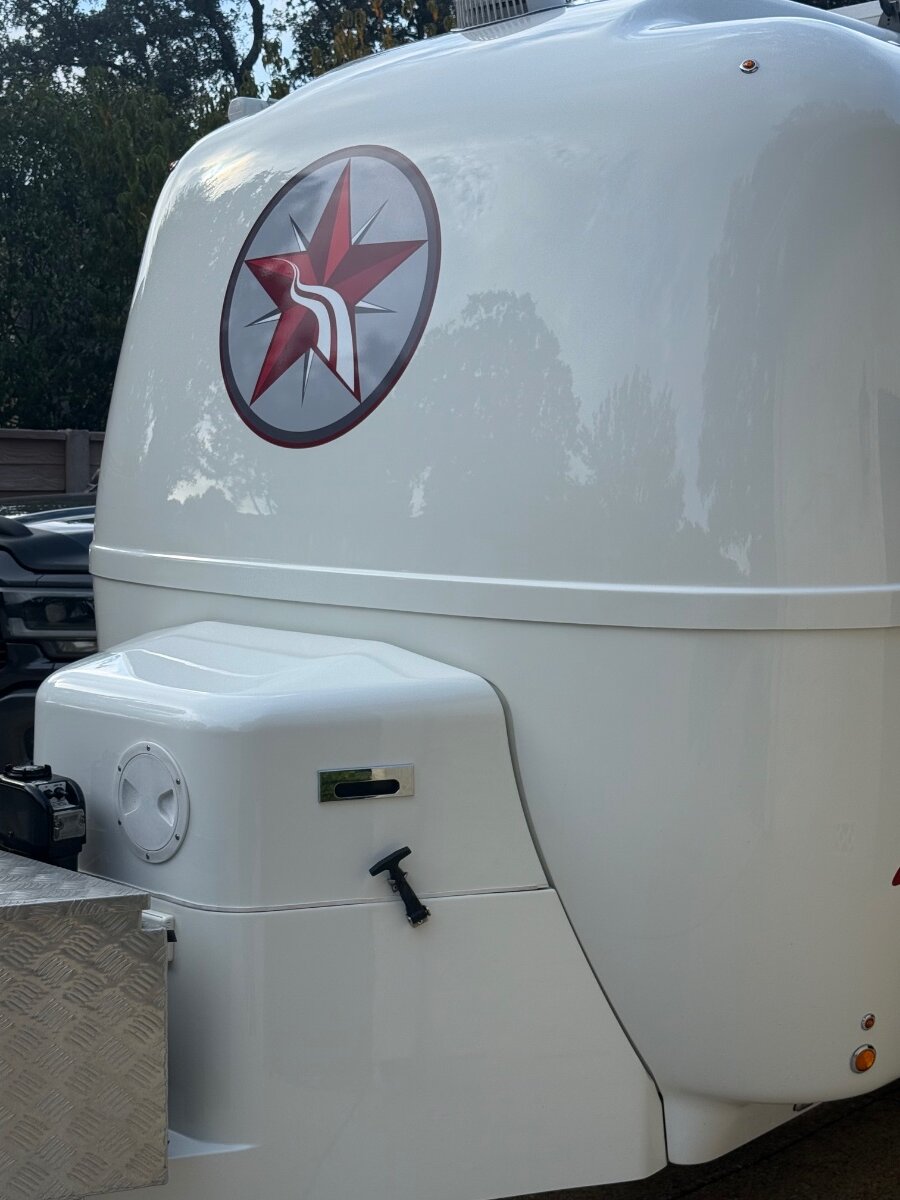
…speaking of coatings, the CGI guys (Gavin and Colin) did a renew on our ceramic coating this week. Looks better than new (except for the chips on the lower front)!
1 point
-
You really need to especially careful around a situation like this. Just putting your hand near could result in a very nasty cut.1 point
-
I think this scenario occurs when connecting to a generator without a bonding plug. Mossey1 point
-
1 point
-
Apparently I am an idiot 😱 But a lucky idiot 😂 Yesterday was travel day. Moving from one FHU campground to another, with a boondocking night in between. Everything went exactly as planned. Beautiful in fact. It has been cold so I’ve been in the daily habit of using the electric space heater during the day and saving our propane for nights below 40. I’m super happy with the results we’ve had doing this with electric hookups. But last night was just battery. And I didn’t pay attention. 😳 i used so much battery before switching over to propane at 10 pm that the batteries hit 10% sometime around 5 am. When that happened EVERYTHING shut down. Including the propane furnace 🤪 I’m extremely lucky it wasn’t just a little colder, so nothing froze. Also lucky that the sun rose brightly (despite a weather prediction of rain), so the solar recharged the batteries to a usable level by 8 am. My takeaway: Never use the electric space heater on batteries below 50%1 point
-
Yes, I prefer the propane furnace in below freezing temps because it adds heat between the shells while maintaining the double hull insulation in the upper half. Once you open all those cabinets and hatches you pretty much negate the whole double hull concept.1 point
-
@jd1923 Since our hull #'s are so close, I would doubt that there is much difference in how our water lines were treated. Given this, I have never had an issue with city water pressure. While I've never really checked to see if I have "restrictors", I'm guessing that you might find that there is something else going on. Bill1 point
-
Again - Many times it is cheaper, when buying the initial setup, to get a couple of extra sensors - one for the spare tire on the Ollie and one for the spare tire on the tow vehicle. These extra sensors will save you a bunch of time (in checking the air pressure in those spares) and provide an extra if you were to have a "problem" with one of the main sensors. Bill1 point
-
The TST system was the first purchase I made before we picked up our Elite2 in Tennessee in 2022. I wouldn't consider towing a trailer without some tpms on the wheels of the trailer. I have eight sensors and extra batteries. Four on the tv and four on the trailer. I carry a ViAir air compressor also to air up as needed. John1 point
-
Thanks for the responses, I feel better. We turned the pump on while looking for the bathroom light 😂. It is off now.1 point
-
You should be fine.1 point
-
We've used the TST system for many (10+) years. We replaced the stock rubber valve stems with steel ones first. (These fit our 2022, YMMV: https://www.oreillyauto.com/detail/c/xtra-seal/tire---wheel/tire-valves---caps/tire-valves---cores/aede909cf322/xtra-seal-bolt-in-valve-fits-rim-hole-diameter-5-8-inch/xts0/17428 ) Definitely get a TPMS, regardless of brand.1 point
-
No, but here is an AI response to your question: If you turn on the RV's water pump while connected to city water, and assuming your city water pressure is sufficient, the pump will not operate because the city water's pressure will prevent it from turning on, and you will draw only from the city supply. However, if city water pressure is too low, the pump will kick on to supplement it by drawing water from the fresh water tank. A check valve in the system prevents the city water from flowing back into the tank or pump.1 point
-
Nope - but - I wouldn't leave that pump on. In fact, I never even turn my pump on unless I'm about to actually use it. Bill1 point
-
There are a ton of different brands - just type in "TPMS" on Amazon. Also, do the same on YouTube to view many different brands as tested by "professionals". Just about all of these do the same thing while having slightly different monitors. I would tend to stay away from the "cheaper" brands and would also question what am I getting for my extra money on the more expensive brands. Simply put - this is NOT new tech anymore other than those that are starting to integrate the trailer's TPMS with that of the tow vehicle. Bill1 point
-
We have used this system for several years and are very happy with it. I cannot imagine towing our Oliver without it. https://www.amazon.com/TST-507-TPMS-Cap-Sensors1 point
-
Bessie....for our Dads...Bob and Wes...and the result is our lady Bessie :)1 point
-
Eagles Nest - Retirement gift for 30+ years in the US Navy (Kathy)1 point
-
Just “Oliver!” Sometimes we’ll say it the way Eva Gabor did in Green Acres!1 point
-
When traveling, our COW is turned out to pasture!1 point
-
I like it! Hahaha!1 point
-
"The Wonder Egg" - because 17 years ago when it was in production, an Oliver travel trailer was cutting edge manufacturing technology in the fiberglass trailer world. It was a wonder the factory was so eager to accommodate any modification I wanted them to make to hull #14. Solar power was not common way back then, I have the first 2000w inverter, they also wired it for my ham radio hobby which makes it so simple to connect my radio on the inside to a long range antenna on the outside. They placed the springs above the axle to make it easier to maneuver and park in heavily wooded areas. They added an analogue phone line connection near the dinette (hahaha). I have specialized graphics which required them to reposition the license plate. I've now gone to disk brakes - uncommon on single axle trailers, making it even more wondrous! There were perks to being an early bird.1 point
-
I read in your other post that unplugging and plugging the inverter makes a noise. This and your test shows you have power to the inverter. The noise means it’s doing something internal. Time to get in the phone with Xantrex Tech Support. You have power in but nothing out. They will have tests for you to do and next steps. Your issue must be the inverter is not powered on or something else internal to the inverter. Good work so far! Keep us posted.1 point
-
I think it is - “the trailer”. Not really a formal name. We also call the truck, “the truck”. Sometimes our imagination just runs wild.1 point
-
Is that The Trailer or the trailer. I have owned 4 Volvos over the years but my wife knows when I refer to The Volvo it is my 1975 244GL Volvo that I sold years ago.1 point
-
“The trailer”. Because it is one.1 point
-
Skip - I don't see any obvious issues other than the dust that is everywhere. That dust can get into many areas that you don't want it to - I know this because every couple of years I have to plug and unplug the remote cable (runs from the back of the remote switch inside the living area of the Ollie) to the inverter. I've never had to bother with the connection on the back of the inverter switch but it is the connection that goes into the inverter itself. However, as I think you said that you had already tried turning the inverter on/off at the inverter itself, I doubt that this is your issue. But, its worth a shot. If you decide to try this, what you are looking for is what appears to be one of those little phone jack connections. Simply press down on the little plastic tab and pull straight out and push straight back into where it came out. Do this two or three times to help "clean" the connections. Bill1 point
-
Are all your 12V circuits working? e.g. lights, stabilizer jacks, etc. Attach some pictures here, of the inverter, inverter panel or on/off switch, wiring into the inverter and devices near the inverter. Do you have a multimeter, or test light? @ADKCamper gave you a good checklist for testing. The gurus are here. Post pictures and get a meter or simple test light at an auto parts store. It is likely simple..1 point
-
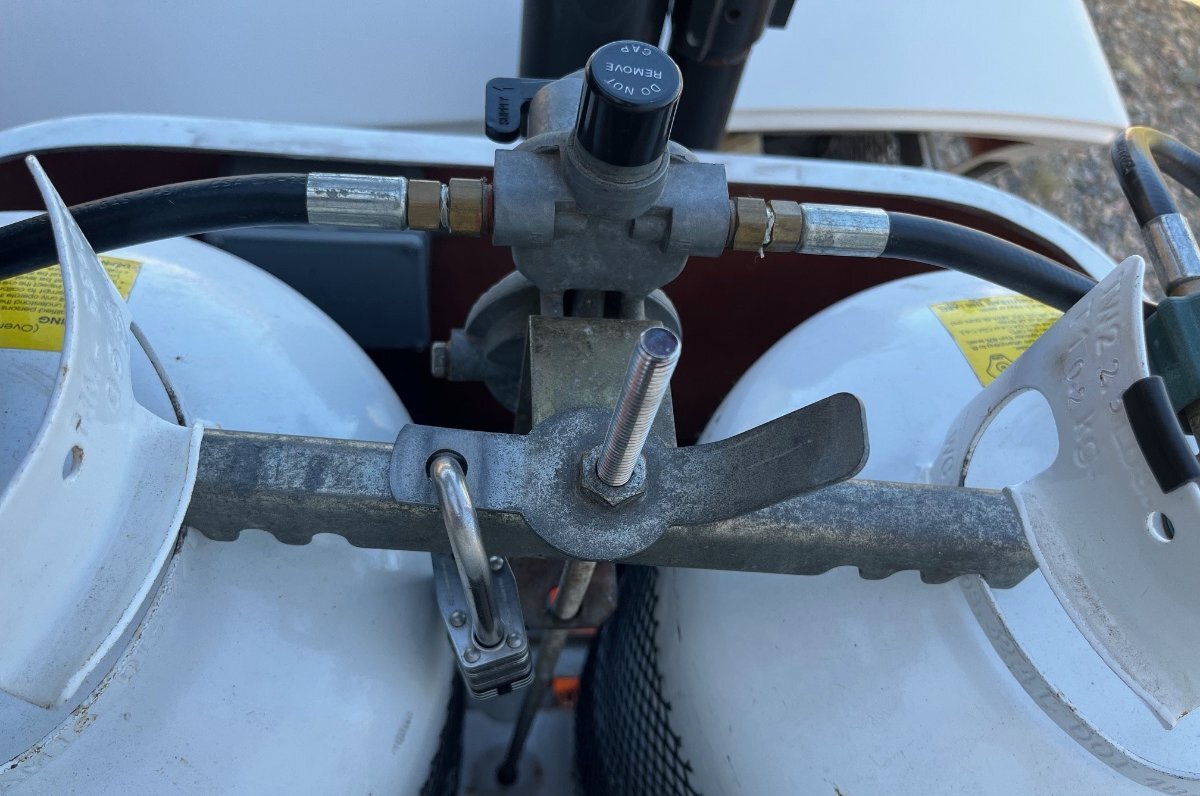
While you have drill in hand, source another padlock, a long-shackle lock for this mod! Mark one end of the paddle nut and where to drill when it's mounted and tight. Then remove both parts, hammer the one side flat and drill both on a workbench vise. These simple deterrents will chase the common thief away, thinking the can pry a battery door or merely lift the LP cover, not prepared with more sophisticated tools.
1 point















-
Recent Achievements
-