Leaderboard

Popular Content
Showing content with the highest reputation on 02/09/2021 in all areas
-
FWIW - During a meeting back in September (2020), I was advised that Oliver was doing a couple of "new" things on the quality control front. First was a "tablet" based system that required all quality control issues/items to be inspected and approved at each stage of production along with another "final" inspection being done at the end of production. This system then allowed management to focus on any repeated "fails" or "exceptions" in a virtual real-time basis and be able to identify exactly where the problem occurred. Then, partly due to a TN State requirement plus the quality control issues, Oliver was using a system where any new trailer was/is actually "sold" from the production area to the sales area. Here, the sales area takes the form of the customer and does another inspection prior to "accepting" the product from production. Then, there is the pre-delivery inspection of the trailer. While this inspection tends to focus on making sure that the product has the options the customer ordered, it is also used as another inspection. Finally, there is the inspection that is done at delivery. This process may or may not be the entire process, but, I would like to believe that even under the most harried circumstances, virtually all faults and flaws will be caught. However, I like to believe that I'm not totally ignorant and as has been said many times before, as long as humans are involved then something is bound to go wrong at some point. I know that I was not happy when a couple of quality control type items became evident on my Oliver shortly after delivery. However, one of the things that has endeared me to this product and company is the way each and every one of these issues was handled. By far the best of any company I've ever dealt with. No, this is no excuse for Oliver and the fine folks that work there (particularly for items related to safety), but, I believe that the Open Letter from Oliver (dated June 9, 2017) still stands. Bill6 points
-
Hmmm, it seems to me that somewhere in the Owners Manual it says that the husband was supposed to get up and crank up the thermostat 30 minutes before wakeup time..... at least, my wife has told me that several times. I am the one who reaches up to turn on the water heater switch, but I can reach that without getting up. Our thermostat is the old fashioned kind, where the husband IS the remote. John Davies Spokane WA6 points
-
As Mike said I-10 and pretty much all of the main roads of TX - are a cut above. There are a few spots that can get dicey - same for I-40, but most of the time - good travel. But if it was me - I would would consider I-70 - absent a big spring storm - its a decent drive. East of Missouri - I have no experience - Good travels. Then again - off the main routes- creative paths are always interesting. I have found some of the coolest places - in places I wasn't headed. Just head easterly, eventually you end up at the destination - and have more fun. RB We are not lost! How do you know? Cause Google maps says so...... Yeah right - last time we ended up in BFE. !!! Well, With Ollie - it doesn't matter. ,,,,,,,,,,,,,,!!
 3 points
 -
Note: I seem to recall discussion regarding heating the bathroom . . . . but can't find it with "Search" function. We just returned from our first real outing in our 2021 Elite II, spending three nights at a nearby park we frequently visit. When shore power is available, unless it is extremely cold, we use a small space heater to keep the cabin warm. However . . . . . our inexpensive little heater has decided to quit working. So, we resorted to using the furnace. Here are some first impressions: The furnace is amazing . . . . it's the same we had in our Leisure Travel Van, but so much quieter. Most likely because of where it is located (not right under the dinette seat, as in the LTV). There seemed to be plenty of heat/airflow coming from the vent under the bed; not so much in the galley. Then we noticed some fins behind the louvered vent (sort of like a camera shutter). They were pretty much closed on the kitchen vent. Are they supposed to automatically open as air flows through the vent? We had to manually open them; this resulted in good heat/air in the galley. The furnace did a great job of keeping the bathroom warm; not toasty warm (hey, we're camping!), but it did make a big difference. We kept the thermostat off while we were away from camp, to conserve LP. The cabin takes very little time to warm up once the furnace is turned back on. Unless it is extremely cold, we will not use the furnace at night. For one, the noise wakes me up. Two, we have down sleeping bags. We have not yet programmed the thermostat for blue-tooth operation, but it would be nice to turn on the heat before getting out of a warm sleeping bag.2 points
-
My guess is that you are not getting a good seal between your hose and the inlet. If you can, I'd try putting another or thicker washer on the hose and see what happens. Note that if you are not getting a good seal then it is easier for the water pump to be "sucking" air versus "sucking" the water that it is supposed to. Bill2 points
-
7500 pounds rated ball, at a minimum. That gives you some reserve strength. The stronger the ball, the less you will worry if you find yourself on a potholed forest or ranch road (or even some National Park “main” roads, like in Glacier NP). GVWR for an LE2 is 7000 pounds.Some owners have reported a fully loaded weight higher than that, I do not recommend it. This one works great, or pick another similar brand. The longer shank also allows you to stack 1” inside diameter HARDENED Grade 8 flat washers to raise it up in small increments if you want to fine tune the height. .... https://www.etrailer.com/Trailer-Hitch-Ball/Curt/C54CR.html John Davies Spokane WA2 points
-
Thanks for the reply - the Oliver letter is telling. I will not continue to beat a dead horse - If issues continue to make it to the customer - intentions and new systems are not working. Oliver is perhaps the best out there when it comes to service after the sale. I fully expect Oliver will continue to evolve, and as they work to improve quality and through put - customers will continue to sing their praises. Indeed Humans are not very reliable - that is why we develop systems to keep us on track.... RB Unabashed Oliver Fandude!2 points
-
If it was me - 1. Disconnect the water line/hose if connected. (Boondocking -I get it - just want to cover the subject) If you have insulation, tape, HD towels - wrap the hose connections. 2. Insulate as SeaDawg has suggested. If in a pinch - use some thick towels or similar - tucked into the area. A water heater blanket from HD will work - cut to fit. 3. Open up any of the access ports on the inside of the trailer - the aim is to give heated air a path to the areas below and in-between the hull. 4. Make sure you have enough Propane for the timeframe - run the furnace as needed to maintain appropriate temp inside the unit. 5. Optional: If you have a multi sensor temperature station - put one in the rear access hull area - and one in the front - under the front dinette seat area - would be interesting to see what the temps get to in the areas. IE: Amazon.com: Newentor Weather Station Wireless Indoor Outdoor Multiple Sensors, Digital Atomic Clock Weather Thermometer, Temperature Humidity Monitor Forecast Weather Stations with Backlight: Industrial & Scientific and then thumb your nose at mother Nature - not to much though - you don't want to really make her angry.....2 points
-
I knew the effect of leaving both valves open in summer, but I never considered how that “operator error” could be intentionally used to warm that area during a sudden cold snap, if the hot water system was still active... We really need a central resource or perhaps FAQ threads pinned in place at the top of each section of the forum, with a continually growing list of Ollie-specific tips, tricks and best practices, like this one. I think it is a gem. Thank you! John Davies Spokane WA2 points
-
I can't let this go - it's just not in me . If indeed, a supplier, and Oliver, freely admit - tires/wheel: specked and costed out to be delivered balanced, pressure set to 80psi, and filled with nitrogen (as mine were) are not 100% delivered as such - the system is broken. I mentioned a second level verification in another post - Oliver -if true- should have immediately added the check, written corrective action to the supplier, demanded IRR with breakpoint. And on... OK- this is not a safety issue - on the face of it - it is just - what it is - an error in the product. But, I don't know if the claim is accurate - so, I'm just riffing. But what I do know, because I've been there, and I've seen and read of various repeat quality problems - Oliver needs a more robust Quality reporting and problem solving process. What is somewhat startling - is that Oliver manages to deliver a fairly consistent quality product - one believed to be higher than industry norm. A miss here and there - well that happens.............. Seems second rate - just imagine if it was a plane - the supplier forgot to torque a bolt in the engine turbine - and - well you get the point. But Oliver's aren't airplanes - no - they are high priced RV's - second only to Airstream in premium pricing. Value and quality - delicate proposition's to keep alive. And still I like my Oliver EII. RB My apologies to the moderators and any Oliver fanboy's 😁😁2 points
-
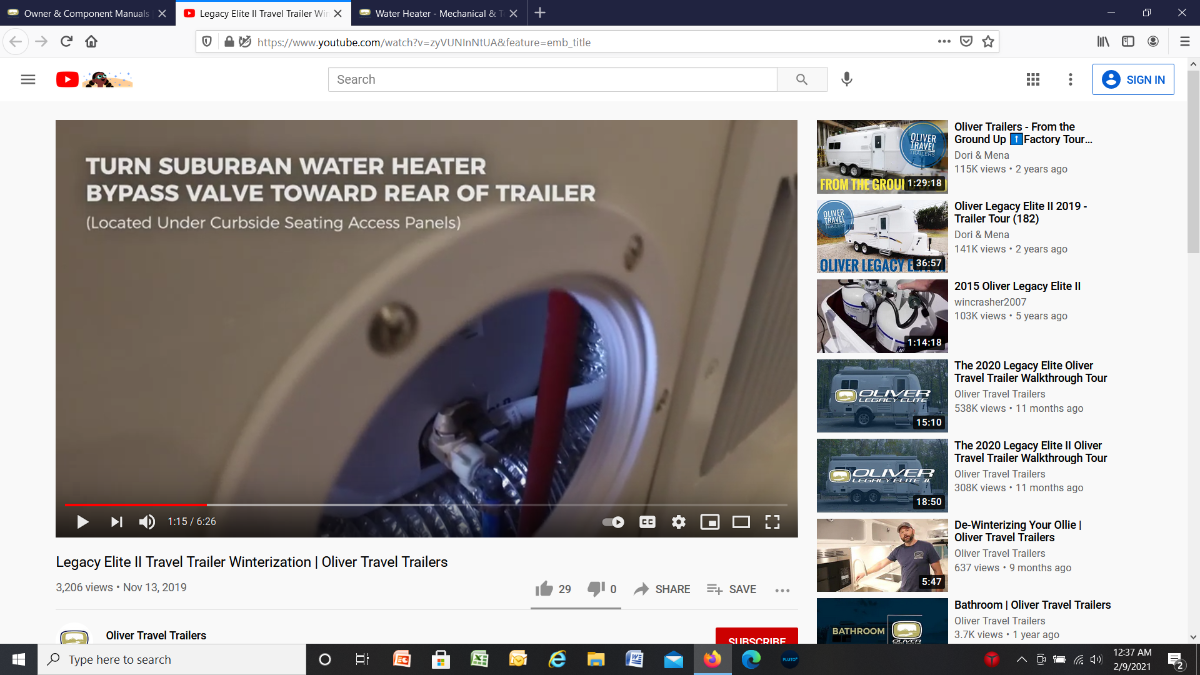
Here is the winterization link....water heater bypass valve at about 1:00. https://www.youtube.com/watch?v=zyVUNInNtUA&feature=emb_title
2 points
-
The trick to heating the bath is to make sure that the main duct is open - it’s the tall rectangular flap with a mirror on one side. We also only use the heat when it’s super cold, and even then we set it to 50 or something. And I just recently swapped out the thermostat for the Bluetooth one and being able to turn on the heat in the AM from the comfort of your sleeping bag is definitely better. It’s easy and only takes a minute to link your phone.2 points
-
I can only comment on my personal experiences. I have the keyless entry - never had an issue - the faceplate cracked, and was replaced. Later the thing had locked itself - I was like - What!!!!. So I key in code - no problem. Same thing happened on anther day - What the heck. A few months later - I was fussing about in the truck - in the glove box - where the Oliver keyless pendant is stored - along with other keys - and I hear the Oliver keyless lock engage - from 150' away... What??? So indeed - the door was locked. Now the remote is stored appropriately. I get the comments that Oliver positioning may affect the door frame positioning. And perhaps makes the latch a little sticky - but not to the point it won't open - at least from what I've seen, but then- I wasn't there. And if it initially opened and latched smoothly - and then it won't open - every time - a visual of the latch will quickly tell you the problem - but if it is itinerant - call Ghostbusters. But only after you have done your homework - or followed a few of the suggestions of the previous posters. Another Crusty Old guy in training. RB2 points
-
Patriot - That is an absolute shame and I'm sorry for all the work you went to only to find out that the door manufacturer has changed the "caulk" they use to install that frosted window. Hopefully Zarcor will come up with a solution to this issue. If they don't it will cost them a bunch of sales, not only to Oliver owners but also to all of the other camper manufacturers that use this very same door/glass combination. I've been told that Casita now offers the Zarcor blinds/tinted window combination as an option with their new campers. Perhaps an email to Oliver Service, cc to Oliver Sales might get you some help or, at least, help those that are going to purchase and Oliver in the future. Bill2 points
-
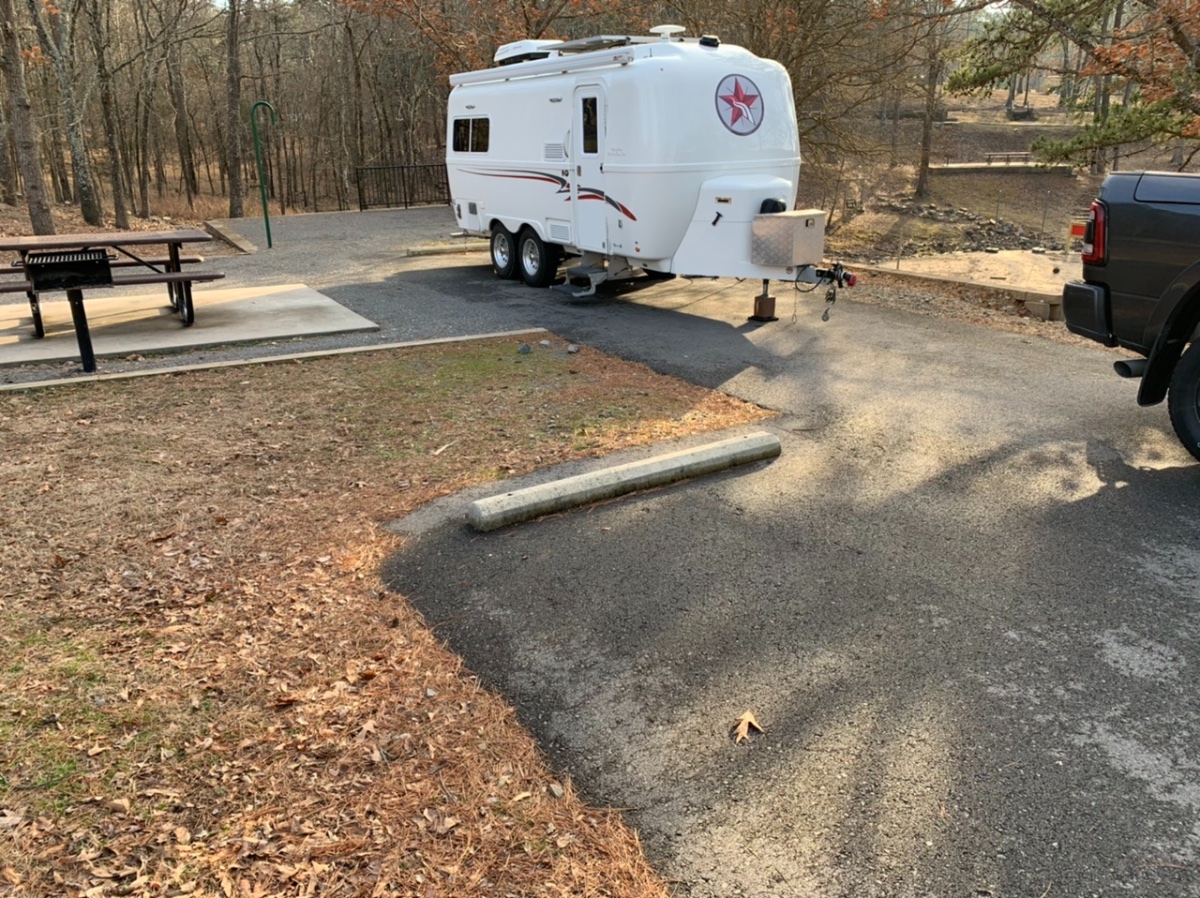
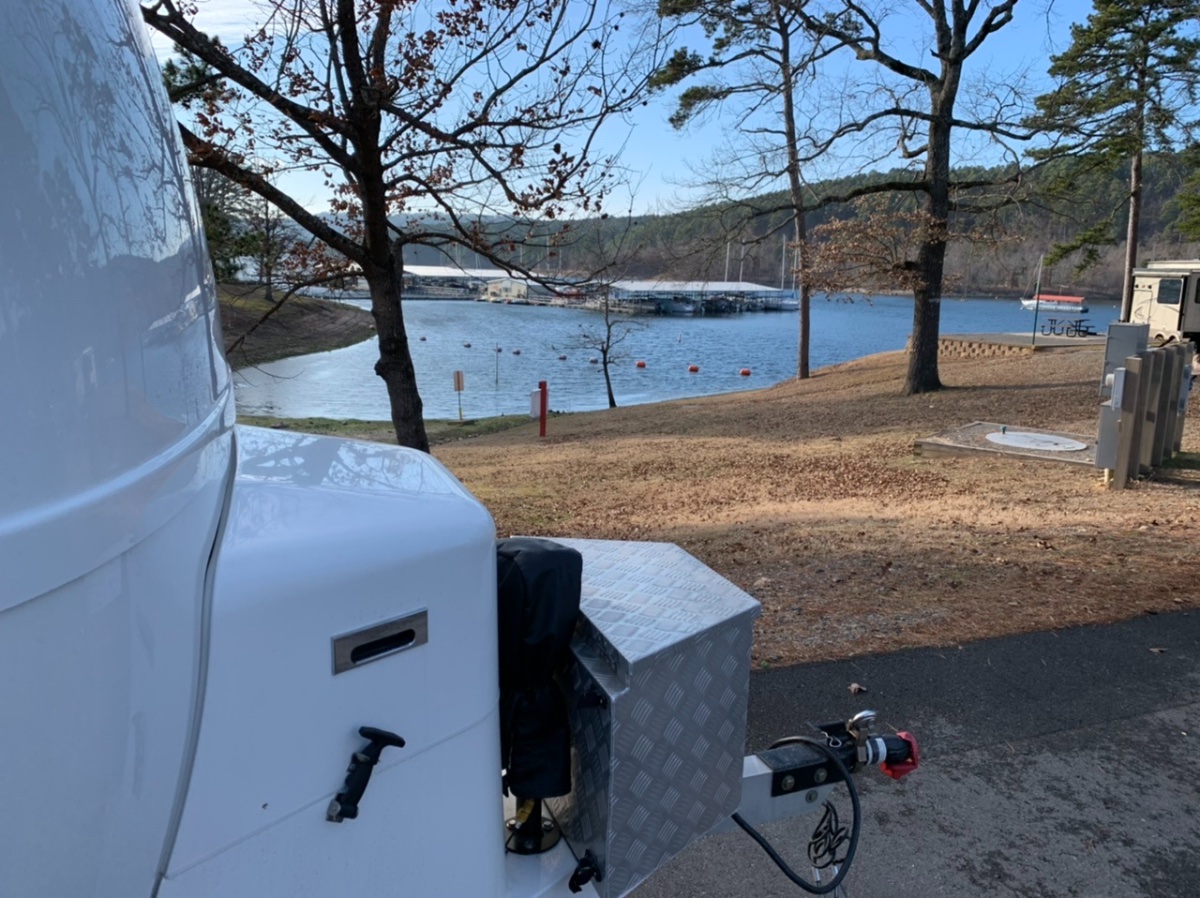
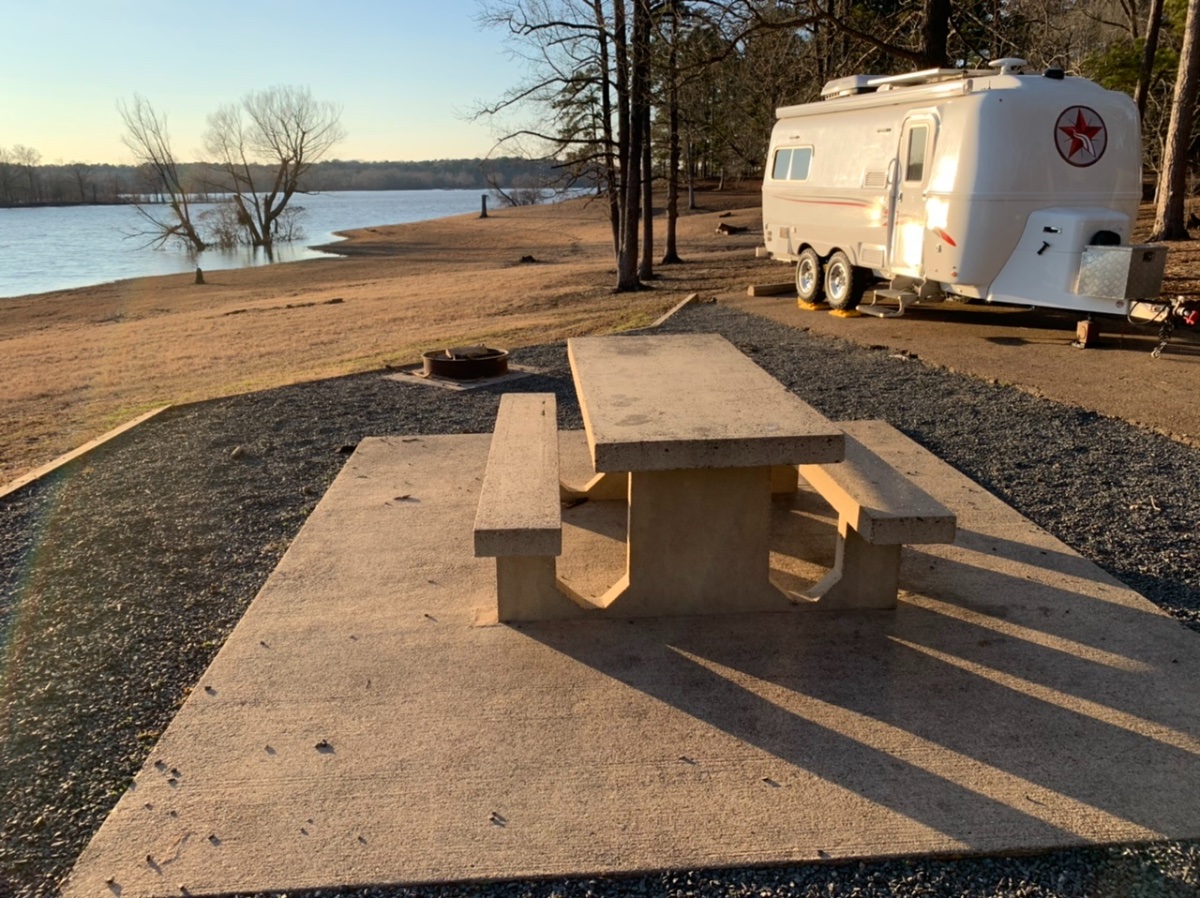
Lake Ouachita State Park near Hot Springs, Arkansas last week. This is our second time here, very nice park!
1 point
-
Those pics seem to show that, if anything, the latch is hitting slightly high (odd since you said that the door is a bit low on the latch side), and, not surprisingly it is certainly "resting" on the outside most inner surface of the plate. How about a pic or two of the latch itself? Bill1 point
-
I had an issue getting it to pull mine also when the bottle of antifreeze was sitting on the ground. I moved the bottle up on top of the bumper and it worked great.1 point
-
I am pretty, maybe, sort of sure the hose threads are like in your kitchen or shower hose at home, 1/2” pipe thread, but with a fat rubber washer to ensure no leaks and no need for pipe thread sealer. I think this would work to cap off the shower hose connection, inside the trailer. But no guarantees, you would have to test the fit. https://www.amazon.com/Joywayus-Brass-Female-Rubber-Gasket/dp/B08G8KJ641 A typical 1/2” FPT cap, for residential plumbing, is a lot longer with no gasket. It could work, or it might bottom out before the threads got tight. You would need some rubber gaskets, and might have to stack several inside the end. https://www.homedepot.com/p/Everbilt-1-2-in-FIP-Brass-Cap-Fitting-802159/300095968 You can do some testing and report back to us. 😁 You could mask up and wander down to Ace Hardware with your shower head, and see if they can tell you what works. Removing the shower hose and head entirely will give more space for some insulation inside that little cavity, to pack around the knobs.... John Davies Spokane WA1 point
-
Being without an RV is like being homeless. We endured from September to December (and a couple of months of the best camping weather in the PNW); that was long enough!1 point
-
This is a timely topic and tip for me as I am headed to Big Bend SP on Thursday through Monday. On Sunday and Monday the temperatures are going to be too cold to use the Oliver's water system (or for mountain biking) as they are expected to drop to 12F and stay below freezing for over 24 hours. The trip back from Terlingua to Austin will be chilly one too.1 point
-
That's two votes for the I-70 route - thanks BackofBeyond. East of the Mississippi you will drive through a bunch of fields until you get near the WVA/PA state lines. Then you are in the "real" east with roads that wind through the hillier areas of western and central PA along with more traffic. If you decide on the I-70 route I can give you a list of campgrounds that I've stayed at over the years but, there are enough of them east of Kansas City that it should not be an issue. Bill1 point
-
On I-10 between San Antonio and El Paso there isn’t much. In Junction just off the freeway is South Llano State Park. We stayed there a few days and it is nice. Davis Mountains State Park is also nice, very close to McDonald Observatory which is worth a visit. Drop down further past Marfa and you’ll get to Big Bend National Park. There are a couple of commercial RV parks we’ve stayed overnight at along I-10 in west Texas, nothing special but a place to stop if needed. One is Van Horn RV park which is getting a little run down and the other is Fort Stockton RV park which is nicer and a convenient stop. In New Mexico we’ve stayed at Aguirre Spring COE near Las Cruces, no hook ups but great views and close to White Sands National Park - you have to drive up the mountain on a winding road. We plan on returning there. I think most state parks in NM are still closed. In Arizona, Karchner Caverns state Park is just off I-10 on highway 90 as you head south to Sierra Vista, Tombstone and Bisbee. In west AZ, you should spend a night at Quartzsite just to say you did! Dome Rock area is where the fiberglass rally is held, just a big swatch of desert speckled with campers. Mike1 point
-
He/she who sleeps closest to the controls.... is elected 😆1 point
-
Returning the product, vs chancing a future leak, isn't a bad decision. I would say, with unknown adhesives, we've used a hair dryer or heat gun on low, to good effect. Plus mechanical, as in plastic scraper. Dealing with unknown adhesives is a big issue. Too much heat can damage surrounding material. I totally respect your decision. I wouldn't want to warp the door material. We still use a shirt or jacket over the head bump cushion, 13 years in.1 point
-
Mike, It’s a really nice shade and I really wanted to make it work. I think the adhesive keeping the window sealed to the frame is really strong material. The Zarcor folks were very understanding and great to work with. I would not hesitate to do business with them again. Patriot1 point
-
Camping, at 12 at night, 35 day, I'd add a piece of foam to the shower door. Run the furnace. If in storage, I'd do a full winterization .1 point
-
It's down by the furnace ducting... I have to move the duct to see the brass valve.1 point
-
Back when I was driving with my dad, (decades ago), if forecasts were iffy, we dropped down and went through Texas, in winer and spring. It was longer, cost more in gas, but safer. Weather forecasts are better now. March can be iffy.1 point
-
We travel I-10 west from San Antonio to AZ and southern CA all the time. Roads are good and not much traffic. I’d monitor the weather and if it looks like there might be some winter weather on the northern route I’d drop south and go I-10/I-20 or even I-40.1 point
-
We’ve had our shade and new glass for about 3 years now. No issues. It’s nice to be able to see outside without opening the door. Mike1 point
-
Time to invent a system that will lift one axle when making tight turns. Don't some semis have axles that will turn slightly when cornering? Relating this back to the pressure thread, higher pressures should limit the tire flex shown in that video and make the tires scrub more rather than flex. Something to think about.1 point
-
Sometimes I can close my door with little to no effort. Sometimes I have to lean in to it get it shut. So, what is the difference? Is it a production or safety issue when I have to lean into the door and not a production or safety issue when I don’t? Or, maybe it is an issue of leveling and the natural twist and flex depending on how the wheels are adapting to unlevel ground or if I have one side up on legos to get level? If you don’t hear the click when you shut the door and you don’t engage the deadbolt don’t jump on the freeway. Checklists are your friend. Door shut? Deadbolt engaged? Maybe I spent way to long in the Army but that is how we minimize potential safety issues. Mike1 point
-
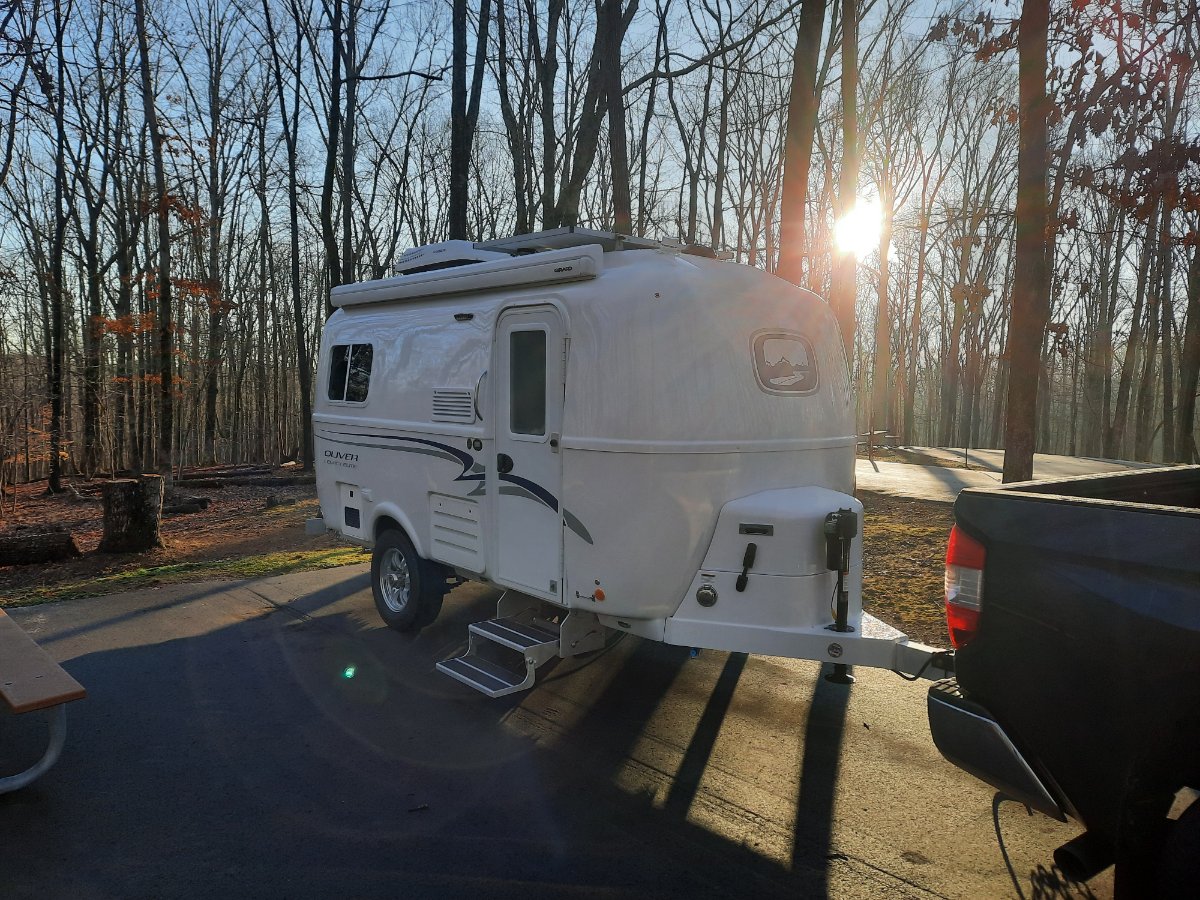
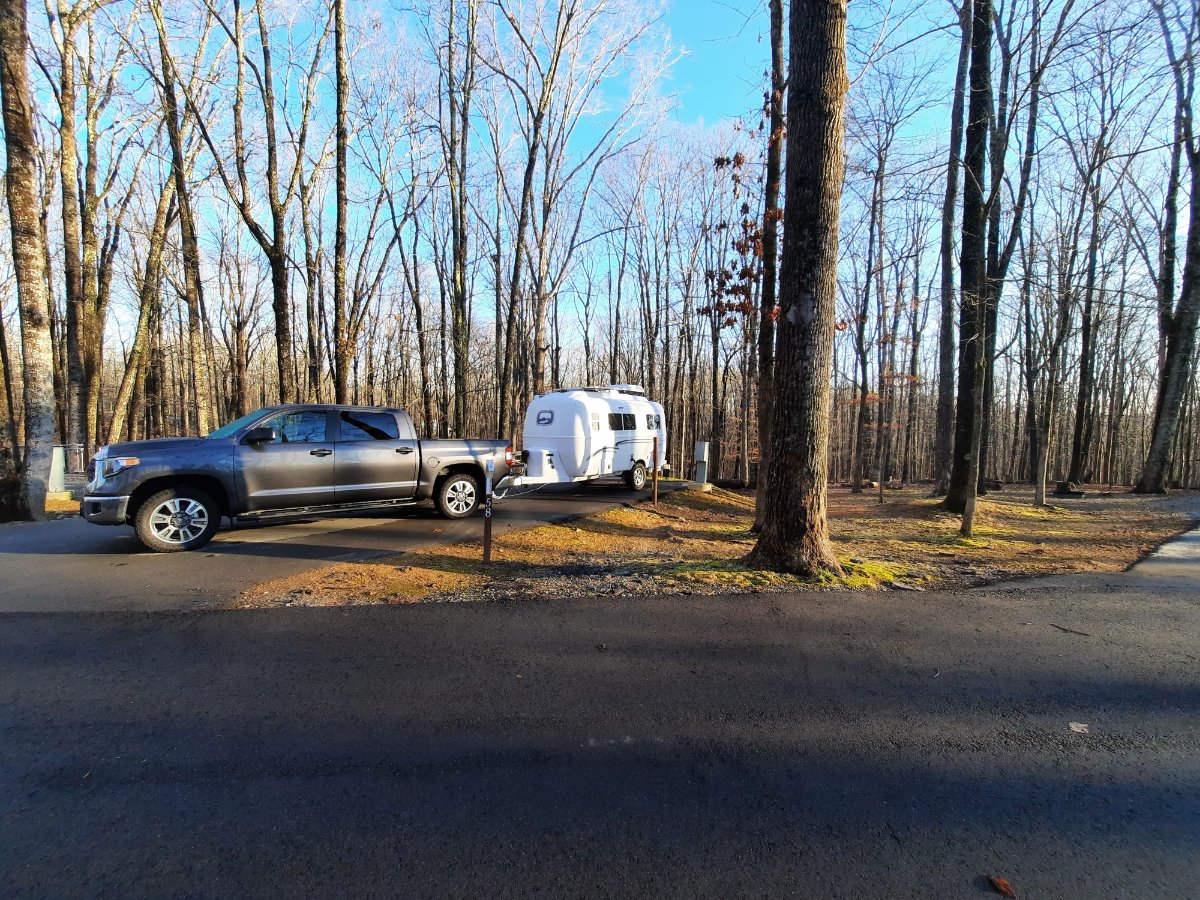
Bill, that looks like the same site we were in last week, B03. Glad your pickup and trip home went well. We’re in Lake Livingston State Park north of Houston but should be home Wednesday or Thursday. Looks like some cold weather coming in. Mike
1 point
-
Oliver may be one of the few manufacturers that actually specifies balancing. I would be more concerned about under-inflation, than balancing. I'd be careful about pressuring down, too far. Flexing is more severe when underinflated. Imo. Do I balance my trailer tires, when I replace them? Yes. Where i go, (local shop) it's included in the price of mount-- spin balance. Does it make a difference, since they're not drive tires, I don't really know. I don't pay for it at Walmart, for the boat trailer. It's extra. And, I have to carry the rims in. Those tires die by age. A tire expert, I am not. I buy the best tires I can find, and watch tread for unusual wear, keep tires inflated,, and call it done. Since 2008, I've never seen unusual wear. (Scalloping, etc.). I've missed much of this thread working on my latest project, a 1927 Singer sewing machine. Remarkably, it still gives me beautiful stitches. And, the head and cover, were built to last. I'm looking at youtube restoration videos. I think, 90 years in the future, someone will be doing youtubes on restoration of my Oliver trailer. Like my 1927 Singer, it is truly built to last. Imo. My personal opinions. Am I an Oliver fanboy/girl? Maybe. I have appreciated the camping experience I've had with my trailer. I do not hesitate to point out improvements that we've made. Or, problems we've encountered, along with solutions. It's what makes the Oliver better, imo. When we work together.1 point
-
I spoke with Jason Essary about the tire/wheel combo during my late 2018 LEII pre delivery inspection. He commented that they obtain the assemblies balanced, nitrogen filled, and inflated to 80 psi from their vendor. Further, that RVIA required them to specify 80 psi on the loading label. I suspect OTT mfg doesn't ever put a tire gauge on them.1 point
-
Bill - That 13% you cite is very indicative of your front not being raised when dumping. Unless there is a long line at the dump station, I always raise the front during this process. Not only does this help in achieving a "full" dump but it also helps increase the velocity of the liquid during the dump which helps move "things" along. Great to hear that your towing experience is going well. Olivers are certainly easy to tow. Strange that the center cap on the wheel should crack. Do you recall hitting it? A quick call to Service will have a new one on its way in no time. Bill1 point
-
My (2021 Elite 1) tires appear to be balanced. They have the weights on the inside of the rim. It appears that Oliver does recommend balancing our tires. From the Owners Manual: 1.5.6. TIRE BALANCE AND WHEEL ALIGNMENT: To avoid vibration or shaking of the vehicle when a tire rotates, the tire must be properly balanced. This balance is achieved by positioning weights on the wheel to counterbalance heavy spots on the wheel-and-tire assembly.1 point
-
I'll check around to see who can balance a trailer wheel. I agree on the $40 well spent. I'm definitely doing it to reduce vibrations and help everything around them (like hubs, bearings, nuts coming loose). Harmonics and resonance are for music, not travel trailers! 😉 Oh well, I wish Oliver had gone a step above the rest and done it (or offered to do it for $) - what a pain and additional expense having to do this after the fact.1 point
-
The sticky keyless door handle is frustrating and can certainly cause feelings of panic when you can't open the door. We encountered the same problem on the way home from Hohenwald and the issue persists. I am reasonably sure that the issue is the weatherstripping on the inside of the door is very thick (works very well) but sometimes prevents the door from shutting tightly enough for the latch to extend fully into the door frame. I expect in a year or less when the weatherstripping naturally compresses a bit, the door handle will work like a charm. The problem occurs when you close the door but the latch doesn't fully extend into the door frame. There is no way to tell by looking that the latch only partially extended into the door frame because the door looks closed and the deadbolt locks just fine. When you unlock the door however, the handle can jam and the only way to get the unlocked door to open is to first push lightly on the edge of the door to the left of the handle until you hear a "click" which is the sound of the latch extending into the door frame all the way. Then it opens just fine. If you are inside and the door handle won't open the door, pull in on the door (you may hear a click) and then the handle will open the door just fine from the inside. The unfortunate thing I have found is that if the door is otherwise closed but not locked with the deadbolt, it can open on its own when driving down the highway. This has already happened several times to me. I am now in the habit when I close the door from the outside to always push on the edge of the door after I close it to hear the "click". Then I always lock the deadbolt if I am towing so there is no chance of the door popping open on its own while traveling. I view this as a mild annoyance that will probably fix itself as the door's weatherstripping becomes a little bit compressed over time.1 point
-
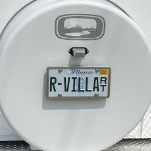
Congratulations and yippeo-kiyay! I remember that feeling back in early September. Just today we put our signatures on the final-final contract and emailed a .pdf off to our sales rep Anita down in Hohenwald. Next week we send our $½ down by check, and on March 24 "R-Villa" goes into production with a delivery date of May 17, 2021. The time has flown, what with COVID-19 and spending oodles on Amazon stocking up on stuff for the Ollie. You won't believe how much you will learn from this Forum! Don't buy anything until you've spent a month reading all the posts and searching through all the suggestions. There is a WEALTH of knowledge here! Enjoy!1 point
-
1 point
-
Fly that flag proudly on that day and enjoy the delivery. Welcome! Bill1 point
-
Share and Enjoy !0Shares0 0 As many of you know, our Service Department moved to our new building several months ago. We are excited to announce that our sales office has now moved to our new location as well. Our new location will serve as... - Sales Offices with an Indoor Showroom - Delivery Center - Service/Parts Center The new address is: 228 Industrial Avenue Hohenwald, Tennessee 38462 We don't have a sign on the building yet. It will be installed by mid-November. Look for the new building's pictures in the future newsletter announcement and on our website! Share and Enjoy !0Shares0 0 The post We Have Moved appeared first on Oliver Travel Trailers. View the Full Article1 point
-
Share and Enjoy !0Shares0 0 It's a Different World The Corona Virus has completely changed our culture, so when planning for an RV trip that is something that needs to be considered. We want to help all travel trailer owners, especially the newer ones, to make sure that their trips are a success! Here we are going to outline some things that are important for planning any mobile trip, but especially during COVID and we hope that this information helps. With all of your planning, you need to also rate your level of susceptibility to and fear of the coronavirus and add those considerations into your planning: aka checking for hotspots and avoiding them if you need to do so. Begin by Picking Your Campsite and Planning Your Route Since COVID is turning many jobs into “at home” jobs, many people can plan long trips that can include many stops, which is why this can be considered the first step. If you want to go to more than one campground, it is important to plan the route before picking the spots, though picking the spots can help plan the route. Do you want to travel Route 66, hit certain national parks, or something up and down the whole East Coast? Then you would build a route between your beginning and end destinations. If you want to make a simpler trip and hit just one destination, then those trips are significantly easier to plan, but still require planning. It is important to also make routes that are safe for towing or motorhomes and RVs. As an example, there are many ways to get to campsites in Zion, Utah, but some of the routes aren’t as safe or as friendly to towing/ RVs, so it is important to research that beforehand. When choosing routes, do you want to go the more scenic way or the way straight down the highway or through the city? When planning trips, it is important to also consider the speed limits and the capabilities of your vehicles. If Google maps say you can get somewhere in 11 hours, you need to consider that the map will be using the speed limit to calculate that time, not the speed that your vehicle can always handle. Plan to go about an average of 55 MPH. It is also important to remember that automated maps won’t include fill up or bathroom/ meal and snack times; this also needs to be added to the total time of a drive. If you want to be extra safe, having printed maps is always a great idea because technology isn’t always reliable and there may be some spots where phone service is spotty, and not having a non-digital map may be a problem. Lastly, if it’s a very long drive to your destination, try planning out places to visit in between to help break up the journey. Look online to find kitschy stops or cool meal stops or places with a unique history! For planning your campsites, the BEST thing to do is call your reservations as far in advance as possible. Sometimes, especially during these times, web information may not be updated so if you don’t book a site and you show up, they may be closed or full. When looking at campsites, it is also important to know if it is the right one for you. Check their website and their reviews online, always do your research! Do you need a full hookup for your travel trailer? Will your motorhome fit in their spots? Do their sites have room for pop-outs? Is there a sewage dump on-site? Is that even something you’re worried about? These are a small portion of the questions that you need to ask yourself when preparing and looking for campsites. Some places have full amenities with pools and games and mini-golf and full hookups whereas others are boondocking in dirt lots. Making a budget for your trip to include gas and more along your route as well as what you spend at a campsite is very important. Planning trips like these help save time and money as well as there is less of a headache and fewer mistakes to be made along the way. Some apps to help with finding campgrounds you can check these out: Allstays – Website & Mobile AppRoadtrippers – Website & Mobile AppRV Parking – Website & Mobile AppCampendium – Website onlyCamping Road Trip – Website & Mobile AppUS Campgrounds – Website & Mobile AppRV Park Reviews – Website OnlyTripadvisor – Website & Mobile AppYelp – Website & Mobile AppKOA – Website only What to Pack? Another crucial part of planning is what you are going to pack. If your trip is based on seeing the national parks and hiking, then you probably won’t need to bring a bunch of items to deter you from being idle during the day. If your whole trip is planned in warmer areas, bringing all of your snow gear and snow chains is an unnecessary weight that will slow you down and waste space on your trip. It is important, to begin with, what type and how long of a trip you are making. If you are making a trip around your state to try all the best eateries, packing a lot of cooking supplies won’t be helpful or useful. When packing it’s important to remember that this is your home on wheels for the time being, so you need bathroom and cooking supplies as well as sheets, pillows, and other typical things needed in a home. It’s truly a case by case scenario of what to pack and what not to, so if you are really worried about packing too much or too little google search what to pack for ‘your destination’ or the weather for where you are going. Important Tips Always know your electrical load. Your Travel Vehicle isn’t made to run every appliance at the same time and can get RV users into a pickle if their power source trips from being overloaded. If your power is 50 amps and your heater, fridge and phone/ computer are all 15 amps, then running anything else might cause a big issue.Make sure all of your items are secure. When driving, things in your home on wheels can get tossed around so it is best to be sure that everything is secure with bungee cords or curtain rods and even child locks can be helpful.Always look at the road and weather conditions to make sure that you have a safe journey to your destination.Insurance is always a good idea, especially if you are renting. Better safe than sorry is a good motto to standby. It is always best to coordinate the type of insurance you are looking for with your budget as well.A good idea as well as to make a checklist, especially when you are taking trips with multiple stops or destinations so that nothing gets lost or left behind.Trying to meal prep for your trip is a great way to save on cooking time and mess as well as helping you organize and minimize the space used up in your fridge.Going over your trip when you return is a stellar way to make sure that your next trip will be even better than your last. Go over the things that worked and what didn’t and what you wish to have done differently so that the next trip can be even more fun and seamless.If you are new to the Travel Trailer life, maybe starting with one destination that isn’t too far from your home is a good way to kick off your journey with the home on the road experience.If you are going on a long-haul trip, make sure that you have knowledge of how to fix minor issues with your rig. It’s best to have general knowledge in case you get to an area where there is no service or help is a long way away.Make sure you always have emergency supplies like flashlights, water, and other things to stay ready for anything! Share and Enjoy !0Shares0 0 The post Planning your Travel Trailer Trip During COVID Times appeared first on Oliver Travel Trailers. View the Full Article1 point
-
Following...please post your R&R on the new lights and gaskets.1 point
-
My trailer came with the black weatherstripping. It does not bleed. I do pull it out when I wash to clean the window tracks. I drop them in the bucket to clean then use some 303. No issues, unlike the gasket around the porch lights! BTW, after asking Jason about replacement gaskets and porch light covers I bought some new ones and a sheet of rubber. The new lights are about the same shape but with an aluminum cover, not plastic. They were half the price of what Oliver uses. I’ll do a post once I have them installed with pictures. Mike1 point
-
Share and Enjoy !0Shares0 0 Why RV Vacations Are the Best Taking a trip in the twenty-first century is relatively simple. You can quickly head on to Google and search for flights and accommodation anywhere in the country or even internationally. However, if you own an RV, you could have the same benefits of traveling in your free time, and it'd cost you a lot less. Not to mention the flexibility of locations and where you can go to. As long as there's a road headed there, you can get there with your rig. Sometimes, especially in dirt road tracks, even if the road isn't headed there, you just need to be smart with your driving. With the recent health crisis that has the entire world panicked, the price of flights to destinations and the cost of staying there have plummeted. Now you can get a leisurely vacation in any number of tropical getaways for about half the price you'd pay for one if there weren't a global pandemic happening. But here's the thing - even with the hugely discounted cost of traveling and staying somewhere else in the world, you'll still end up with a cheaper vacation with an RV. Motorhomes and campers even offer one of the most critical benefits during this particular time - the ability to stay away from large groups of people. Exploring the Road Via RV If you've ever vacationed in an RV, then you already know that there are a ton of ways for you to enjoy your time knocking about on the highways and byways. Not only is there a lot of things to explore out there, but there are always brand-new vistas to entertain you. You won't ever get bored staying at the same spot for two weeks, because if you do, you can just up your stakes and move. You're never too old to start camping. With the cities full of people, and work probably suspended for a few weeks, there's no better time to leave civilization behind and come out into the wilderness to see what the rest of the world has to offer. Aren't you tired of just sitting at home, surrounded by the fears and threats of a hugely populated city while the whole, vastness of creation sits right outside your door? The only thing you need at this point is an RV that suits your needs. RVing the Right Way - Taking Advantage of the Camping Trip There are a lot of different things that RV camping brings to the table that makes them a better option to traditional vacations. If you know anyone who RVs regularly, they'll tell you how much more cost-effective it is to use their camper to go somewhere. There's no need to plan out an AirBNB beforehand or worry about not having a place to sleep. There are no hours of layover times in airports, or TSA people searching through your bags. Camping in an RV is flexible, gives you back your privacy and freedom, and is probably one of the best things you can invest in when the world around us is coming to grips with a virus that spreads with a touch. So, what exactly does RVing offer to us that makes it better than booking a flight to anywhere? 1. Learning About the World Around You I'm sure you remember back in grade school and high school how vital field trips were to help you understand your local area. With an RV, you get the benefit of having a field trip anytime you'd like to. Since you're in control of the RV, you can plan what sites you want to visit on your journey. The entire continental United States is awash with history, culture, religion, and political figures that all come together to form a tapestry that is uniquely American. While you can comfortably sit on your couch and watch these sites on TV, don't you think it'd be a lot better to just hop in your RV and go see them yourself? National parks and forests are a perfect place to head out to see what the country can offer. Carry a pair of birding binoculars, and you can witness nature around you unfold. If you're not that much of a birdwatcher and prefer fishing or hunting, there are a lot of places that allow you to do that to your heart's content. Want to teach your kids a few necessary survival skills that could come in handy? There are tons of dispersed campsites in many states that allow you to do just that. If you're less of an outdoor person, there is a wide range of educational activities that you can access in more suburban and urban areas. Museums, libraries, and historic townships are among the best hands-on experience you can have with history and culture. Setting up a tour schedule that takes you between the points of interest on a route makes for a uniquely exotic getaway. At the end of each day, you don't even need to go back to a hotel. You can just find the best view possible, park your camper and enjoy the sunset wherever it might come. 2. Unplugging From the Connected World One of the most overwhelming things we have to face in our day-to-day lives is dealing with constant connectivity. Cell phones have taken a connection to new, unbearable heights. While they are useful tools, they can invade your personal time, and freedom like no other utility has ever done. Not to mention if you work at an office, the thousands of emails that you have to deal with daily might be enough to send you insane. Social media is the twenty-first century's version of keeping up with the Joneses. It's mentally tiring to have to deal with all of your friends and their associated drama like that. The only way to truly escape the mire is to unplug. When you're RVing across the country, you don't have to worry about connection. In fact, a lot of campsites on the road don't even have an internet connection. Some of them are also lacking in cell reception, making the unplugging more effective. Additionally, if you're traveling to a location that doesn't have an electrical hookup, your electricity is limited by what your RV or your generator can provide. Unplugging is good for your mental state, but it also helps your body. Sleeping under the stars without any artificial light to distract you is a relaxing feeling. Additionally, being able to let the stresses of the modern world go if only for a little bit, can help give you perspective and re-center you to resume reaching for your goals. Everyone needs a rest now and then, and RVing in a disconnected campsite might just be what you need. 3. Meeting New People The RVing community is pretty close-knit. Thanks to how unpredictable life on the road might be, many people who travel from town to town in campers share a sense of bonding with other trekkers on the roads. It's not uncommon to get helped out of a jam from another RV wandering by when you're at your wit's end. You'll also find that online forums that outline where to stay by RVers tend to have a lot of people commenting on each other's' posts and correcting them in a friendly way. While you'll find the odd man or woman out who's a loner and prefers to do things to his own beat, most of the folks who do RVing regularly are very friendly, and that feeling is contagious. If you set up your camper on a site, you might actually find other campers relatively nearby. Making nice with neighbors when camping can be a lot easier than trying to talk to the people you live next to. You'd be surprised at how easy it is to form a bond with someone you meet while camping. You already share an interest, and you'd be surprised how much more you have in common the more you talk to one another. A lot of strong friendships have been formed by meeting fellow RVers at campsites across the nation. If you'd like to see the kind of people that the US really has to offer, RVing is a great experience to do so. 4. Avoiding New People For each one of us who enjoys meeting others, there's at least one of us who hates anything to do with people. The camping community is made up of both introverts and extroverts. You can usually tell them apart by how they choose to set up their campsites. While extroverts are less likely to be bothered by neighbors, introverts might go to another campsite miles away just to stay away from other people. If you're the second kind of RVer, then you shouldn't worry too much about what others will think about you. Being sequestered from others is actually a serious concern these days. With infectious diseases hanging around populated areas, being out in the wide-open spaces can help you with avoiding a contagious health pandemic. There are enough campsites throughout the continental US so that you can find a spot that's far enough away from other people, so you don't have to worry about catching anything. This kind of self-quarantine is far better than being stuck at home and slowly getting cabin fever because you can't go out. 5. Increasing Family Bonds I'm sure that, if you ever went camping with your folks as a kid, you have some timeless memories of your time with them. Camping opens the door to one-on-one time with your family and helps you to increase the bonds you already have. Activities like fishing, hunting, and hiking aren't just character building. They offer you a chance to impart what you know with your kids. Not having to worry about the rest of society also makes for a great way to re-establish a connection with your significant other as well. Living in close quarters and being dependent on just that one person can make you appreciate them in a completely different light. With modern life offering us so many distractions from bonding time, there's very little chance for us to connect to the people close to us. Distractions make it difficult to find time to sit down and enjoy each other's company. We tend to miss out on the little moments that shape each other's' lives. Sometimes, because of how caught up we are in our own reality, we miss the significant changes that happen right within our own family. It's surprising how much a night in front of a campfire exchanging stories, and roasting marshmallows can accomplish. RV trips to dispersed campsites are the ideal way to re-establish this connection with your loved ones. 6. Returning to the Outdoors Humans living in houses is a relatively new concept in the grand scheme of things. Civilization is not where we evolved to be, and it shows. Hitting the road in an RV gives you a chance to experience that rough-and-tumble life of your ancestors. While we're not really hunter-gatherers anymore (unless you count shopping at Walmart "gathering"), we still retain a lot of our primal instincts. However, the longer we live in a safe, protected home surrounded by neighbors, the more we lose that competitive edge that established humans as the dominant species on this planet. Roughing it is probably the only way you can reconnect with your primal spirit as an outdoorsman. If you're less of a primal hunter and more of someone who prefers the wide sweeping vistas of pine, spruce, and birch, getting lost in national forests of wildlife preserves are just as good for your free spirit. Humans aren't meant to live in locations that take them out of nature for too long. At heart, we're still part of nature, and it calls to us, even though most of us choose to ignore it. Connecting with the outdoors revitalizes your spirit and relaxes you in a way that nothing else can. When the outdoors calls you the next time, you should probably answer. You might be surprised by how different you feel after a visit. 7. Convenient Travel Like we mentioned earlier, avoiding a health pandemic means limiting your international travel. Local travel also has its own risks, because flying from one state to another means entering an airport that has already been hit by people who are suffering from the virus. You don't have that same problem when you've got an RV. Additionally, you don't need to plan ahead, book a hotel room, worry about if you'll get transport to your destination, and worry about missing your check-in time. All you need to do is gas up the camper, get some supplies, and hit the road looking for almost anything. Naturally, one of the best things about RV camping is that you can get some of the best sights in the US for free, just by locating the best place to park your camper. These views range from majestic vistas where acres of forest roll out like a carpet between the alpine slopes of hills and mountains to uninterrupted seaside vistas with the waves rolling in to wake you up each morning. The variety of spots you can visit and the amount of time you can spend there are both crucial considerations for vacation travel. Carrying your "hotel" room with you makes it easy to change the backdrop, so you never get bored with what's around you. 8. Cost-Effective Travel to anywhere and paying for a stay can have a HUGE impact on your pocket. It doesn't even have to be an exotic international destination. Sometimes, even places in-state can cost you more than you're willing to pay. With an RV, that's not much of a concern. You can just choose a spot you want to visit, drive up there, and camp out then drive back home the next day. There's no need to pay for airfare or a hotel room. You do need to pay for gas, though, but the cost is a pittance compared to other types of vacations like cruises or all-inclusive resorts. With an RV, you can make your own meals, meaning you don't have to pay for overpriced restaurant meals. Even if you decide to take advantage of an RV park, the affordable ones don't run more than forty to fifty dollars a night. As for paying to stay, there's a load of free campgrounds we've covered previously that you can pull up and stay that doesn't cost you a cent. RV camping gives the power back to you where you want to spend your money instead of forcing you to pay for a place to stay. Simply The Best Way to Travel Anywhere the road takes you, you can get to. It's travel like this that allows you to fully appreciate the country around you and the people you meet on the way. If you're not a fan of meeting people, there's enough opportunity to avoid them as well. Never before has a vacation method been so affordable, yet so flexible. If you haven't looked into getting in RV camping as yet, then you're missing out on a great thing. Ask anyone who does it regularly, and you might be surprised at how little their long weekend getaways cost compared to yours. RV's are simply the best way to vacation. RVing is like an adventure that you're fully prepared for. Share and Enjoy !0Shares0 0 The post 8 Reasons Why RV Vacations Are the Best appeared first on Oliver Travel Trailers. View the Full Article1 point
-
Share and Enjoy !0Shares0 0 Get Started Living in Your RV Full-Time Living in your travel trailer during a road trip or short-term vacation can be an enjoyable experience when everything is done correctly, and your plans fall into place. It may even convince you that you are cut out for full-time RV living. Contrary to popular opinion, though, full-time RV living is not as easy as it may seem – especially to those with limited experience or knowledge of everything included in this hefty package. This beginner’s guide will at least help you to get started on the right foot by outlining everything you need to know to be successful. Take Multiple Test Runs of Various Lengths Take Multiple Test Runs of Various Lengths Before you dive into the wonderful world of full-time RV living, you should schedule a series of trial runs. This is not the type of lifestyle where you can go from 0-60 overnight. For instance, if your only experience with RV living is the weekend road trip that you took with your family across state lines, that is simply not enough. You should “test the waters” first by planning a series of test runs. Extend your stays gradually in length to get a more accurate demonstration of what you will experience full-time. For instance, you may start with 3-5 day test runs. However, you should also ramp up those trials to 3-5 weeks and even 3-5 months before walking away from your typical home life for good. Analyze the Size of Your RV vs. Space Requirements Analyze the Size of Your RV vs. Space Requirements Another important part of the process to prepare you for full-time RV living is to analyze the size of your RV. Size does matter when it comes to packing up and literally taking your life on the road. For instance, you may have rented a more compact RV just to get from Point A to Point B during your last vacation. However, you must remember that your space requirements will drastically change with full-time RV living. It is highly recommended to test different rig sizes when scheduling your trial runs and short-term vacations. This will get you comfortable with the various options available to you and help you to accurately determine which option is the most practical fit for your specific needs. Shop Around and Simulate RV Life Before Purchasing One Once you identify your specific RV needs for this full-time life change, it is time to go shopping! Keep in mind that this is not the same as shopping for any other vehicle. You are not buying a new car or minivan – you are essentially buying a home. Therefore, you should approach this shopping experience as you would any real estate transaction. Shop around with a few different dealerships/agencies to find the best deals available. Visit and explore the RVs in person. Online listings and photos will not tell you everything you need to know about your future home. Simulate RV life within each option that you seriously consider. For instance, lay on the bed to test its space limitations and comfort duration. Pretend to use the kitchen as if you were cooking a meal. Use the bathroom, sit in the tub, stand in the shower, etc. One part that the RV shopping experience does have in common with vehicle shopping is the test drive. In addition to sitting in the driver’s seat, you need to be able to take the RV out on the road for a test drive to ensure it is a solid match. Work Under the Hood & Become Comfortable with the Mechanics Work Under the Hood & Become Comfortable with the Mechanics When renting an RV for a short-term vacation, you do not have to worry about the maintenance side of the equation very much. Depending on the conditions of your contract, the rental company may be able to bear the bulk of this weighty burden on your behalf. When you are living in an RV full-time, though, that full burden is placed on your shoulders. Does this mean that you should be an expert mechanic (or at least have one living with you) to be successful? No! You should spend quality time with the RV, though – getting to know your future “home on wheels” a lot more than you currently do. For instance, focus on the fuse box, electrical system, and other key elements under the hood. Familiarize yourself with all aspects of maintenance and repair that your RV may need along the way. From poorly sealed windows and roof leaks to wiring issues and engine tune-ups, you must be able to identify the various telltale signs & warning signals long before they escalate into RV life-threatening disasters. Examine Your Inventory Closely & Cut the Fat You may not realize it, but the old saying that “you can’t take it with you” applies to full-time RV living as well. As you walk throughout your home, you need to accept the grim reality that you will not be able to take everything with you. You must change your perspective regarding your expanding collection of “closet clutter” and general belongings. In fact, instead of viewing them as your “personal belongings,” refer to them as part of your inventory. This will help you to remove (or at least reduce) your emotional and mental attachments, allowing you to view it more as a business owner instead of a homeowner. Determine the high-priority essential items that will require a space within your RV. More importantly, prepare yourself to “cut the fat” and sever ties with the nonessential items. Perhaps you can donate those items to charity or give them away to family & friends. You could even sell them in a yard sale or online auction. You should also consider investing in a self-storage option to store the items that you cannot get rid of completely but also cannot fit in your RV. A cornerstone of successful full-time RV living is simplicity. If you are not able to simplify your belongings, then perhaps you are not quite ready for this major lifestyle change. Budget, Budget, and Budget Some More First-time RV travelers and other novices of full-time RV living may not fully understand the vital role played by their budget. A common misconception is that you will spend a lot less money on the road than when you lived in a home that could not hit the highway. This is the type of trap that will lead you to burn a large hole in your bank account and perhaps killing your dream of full-time RV living. Create a strict budget before you hit the road. More importantly, calculate the various streams of income that you will still be able to generate behind the wheel. For instance, you should consider your: Current balance of checking & savings accountsIncome from interest-bearing financial accounts Income from remote work that you can do on the roadResidual income (perhaps from commissioned sales) Retirement/disability/Social Security income (if applicable) You must also focus on the short-term and long-term expenses you must pay at different stages of your life on the road. It is easy to think about the standard vehicle-related expenses, such as oil changes, engine tune-ups, and gasoline fill-ups. However, the broad scope of full-time RV living includes quite a few additional expenses. For instance, you must consider the: Campground expenses (if you plan to stay in RV parks and campsites each night) RV ownership expenses (i.e., monthly payments, insurance premiums) Maintenance, repairs and other unexpected/unscheduled expensesGroceries, clothing and other basic living expensesComforts and recreation (i.e., dining out, entertainment, shopping, etc.) Consider the Needs of Your Whole Family Consider the Needs of Your Whole Family You must carefully consider the short-term and long-term needs of your family before you commit to full-time RV living. Once again, it is easy to think, “My family loved the RV lifestyle during our last vacation!” However, spending a weekend, week, or even a couple of summer months in an RV does not automatically mean that your family can handle full-time RV living. Take the time to consider the needs of each family member. For instance, you should think about such areas as: Healthcare (i.e., in-network vs out-of-network medical costs, etc.) Education (i.e., homeschooling children, online college courses, etc.) Social life and personal development You should also consider the needs of your canine and/or feline family members as well. This will play a major role in your campground selections because not all campsites are pet-friendly. In addition, there are additional expenses associated with having pets on the road. Fortunately, there are veterinary providers with branches and locations throughout the country. However, you will still have to consider such factors as the temperature of your RV, microchips, vaccinations, waste disposal, and the various stops you will need to make just to cater to their needs. Therefore, an even bigger question to ask yourself is, “Will my pet(s) need to find a new home?” You may be able to answer that question with a resounding, “NO!” Nonetheless, it is still a question that you must ask and honestly answer. Prepare for Life “Off the Grid” Prepare for Life “Off the Grid” The popularity and prevalence of the Internet make it nearly impossible to imagine living life "off the grid". Fortunately, even when living in an RV full-time, you can remain connected to the outside world. However, you may need to get creative and make a few wise investments before you hit the road to prevent extended periods of downtime. For instance, you may need to use your smartphone as a Wi-Fi hotspot on the road. Therefore, you may need to reexamine your existing data plan to see if any upgrades are required. Perhaps you could also benefit from buying a cell signal booster or investing in a satellite option to keep you connected – especially if remote work will play a major role in your monthly income streams. Remember to consider the wide variety of coffee shops; rest stops, libraries and other public Wi-Fi hotspots that you will encounter on the road. A good tip is to get used to living your life detached from the Internet and “the grid” now. Regardless of the signal boosters and hotspots, you may have, you will inevitably encounter dead zones along the way where you will have no other choice but to live offline for a while. Continue to Research and Network with Other RV Owners Continue to Research and Network with Other RV Owners Once you have made the commitment and started to “live the life” of a full-time RV resident, this does not mean that your research and learning opportunities must end. You should continue to research RV life thoroughly because there will always be new aspects of this adventure for you to explore. The community of RV owners will continue to grow year-after-year, especially with the increasing numbers of home-based businesses, telecommuting workers, and retirees that want to enjoy life on the road. This means that there will always be people that can teach you new tricks & tips or that will even pick your brain to learn the rules of the road themselves. Take the time now to research and bookmark a variety of online resources, forums, groups and even social media pages that can help you along the way. As the old saying goes, “many hands will make the load light” when it comes to managing a full-time RV lifestyle. In addition to receiving a lot of help to benefit your family, think about the vast number of families that you will be able to help! Maintain Realistic Expectations It is easy to look at the overall burden associated with full-time RV living and say, “You know what? Never mind!” Realistically, though, the same could be said about any major life decision – such as buying a car, buying a home, moving to a different state/country, or even having a baby. The key is to take the necessary steps to prepare yourself and your family for the expected (and the unexpected) and maintain realistic expectations along the way. As most full-time RV residents will tell you, the benefits can far outweigh the overall burden. You just need to be honest with yourself and understand that it is not a decision that should ever be taken lightly or made on impulse. Share and Enjoy !0Shares0 0 The post The Beginner’s Guide to Full-Time RV Living appeared first on Oliver Travel Trailers. View the Full Article1 point
-
Yup. Composters need not worry. Lol.1 point
-
Share and Enjoy !0Shares0 0 The Bucket List Once you retire from punching the clock, it is time to hit the road in your RV or travel trailer. You more than likely have quite a few stops to check off your bucket list. Studies have shown that you can save a lot of money by visiting these places in an RV or travel trailer. Here are the top 50 places throughout the U.S. that you should consider adding to your bucket list of upcoming vacation stops. FLORIDA Disney World Some of the biggest names at Walt Disney World Florida include Magic Kingdom, Hollywood Studios and Epcot You may have visited Disney World with your kids or even your grandkids in the past. However, visiting Disney World as a retiree without any children is completely different. You will be able to experience the attractions, rides and other park events in a way that you never have before – especially with all the new additions and improvements that Disney continues to make year after year. Disney’s Fort Wilderness Resort in Orlando is beautifully designed to accommodate large groups and RVs. Each site includes such premium amenities as picnic tables and charcoal grills along with full hookups. This accommodation will especially come in handy when you have multi-day passes to visit the Disney parks. Plan your adventure: Disney World NEW YORK New York City Must-sees – the Empire State Building, the Statue of Liberty, Central Park, the Metropolitan Museum of Art There is no way that you can enjoy everything that New York City has to offer within a single day or even within a single trip. For instance, you can enjoy a one-day sightseeing tour of the city or participate in a group tour of the Statue of Liberty and Ellis Island. You could also visit the 9/11 Memorial Museum or take a trip to the Metropolitan Museum of the Arts. Perhaps you would like to even see a Broadway show or go to the Top of the Rock Observation Deck. Everyone should experience Times Square at least once – especially when the sun goes down, and the entire street just lights up before your very eyes. You cannot park an RV in city spaces for over 24 hours, but there are nearby RV parks that you can consider – such as the year-round RV camping at Camp Gateway in Brooklyn or Liberty Harbor RV Park in New Jersey. Plan your adventure: New York City WYOMING Yellowstone National Park The center of Yellowstone's Grand Prismatic Spring steams at 199° Fahrenheit (93° Celsius), too hot for the multicolored bacteria clustering on the cooler perimeter. You can spend countless hours traveling throughout the Yellowstone National Park – enjoying and experiencing all that this amazing vacation spot has to offer. Perhaps you want to camp in the backcountry. On the other hand, seeing the Old Faithful geyser in person may be on your bucket list. Regardless of your reason, you should add this national park to your bucket list of RV trips to take. The Yellowstone Grizzly RV Park in West Yellowstone, Montana offers a variety of full hookup options – including sewer, water, and cable – in addition to 30-50 amp electric service. Its layout also allows you to enjoy views of the wooded areas and lakefront during your stay. Plan your adventure: Yellowstone National Park WASHINGTON STATE Mount Rainier An active volcano, Mount Rainier has erupted thousands of times during its relatively young life. There are not very many peaks outside of the Rocky Mountains with such a high peak as Mount Rainier. If you want high adventures, then being 14,000 feet above sea level will fulfill that goal. For an extreme experience, you could even hike up the side of an active volcano during your stay. There are not any RV camping sites available with hookups within this park. However, you can go to White River or Cougar Rock for an RV dry camping experience. It is best to use an off-site campground for your overall accommodations and visit Mount Rainier as a trip highlight. Plan your adventure: Mount Rainier ARIZONA Grand Canyon National Park Grand Canyon National Park is as astonishing as ever Chances are that visiting the Grand Canyon is already featured on your bucket list. However, it should be featured near the top of that list! The South Rim of the Grand Canyon National Park is easier to access and is open all year long. With average elevations of 7,000 feet above sea level, it truly is an unforgettable sight and experience. Just wait until sunset to see the starry sky in a way that you may never have seen it before due to the low light pollution rate in Arizona. There are plenty of campgrounds and RV parks available – including the Mather Campground in Grand Canyon Village along with the Zion River Resort in Virgin, Utah. Plan your adventure: Grand Canyon National Park LOUISIANA New Orleans Laissez les bons temps rouler! Whether you want to have a lot of fun or learn a lot on your vacation, New Orleans is another great stop to add to your bucket list. If you want a taste of the jazz-filled nightlife, head to the French Quarter or Bourbon Street. You can also enjoy a little art and culture at Jackson Square or enjoy the first-class architecture and history of the 18th century St. Louis Cathedral. Don’t forget about Mardi Gras in late February/early March of each year. Perhaps scheduling your trip around the time when Mardi Gras starts will allow you to truly experience New Orleans at its peak. The French Quarter RV Resort is a popular choice for RV travelers, but the Pontchartrain Landing RV Park is another feasible option to consider as well. Plan your adventure: New Orleans KENTUCKY The Kentucky Derby The greatest two minutes in sports The Kentucky Derby horse race is held on the first Saturday in May each year, bringing an end to the 2-week Kentucky Derby Festival. Fancy hats and seersuckers have been worn to this race for years – turning it into a popular attraction and once-in-a-lifetime experience for many people. Perhaps you can show up to the Kentucky Derby in your own “derby outfit” to blend in and sip on a mint julep while watching the race. You could even head over to the Kentucky Bourbon Trail when the race is over to spend some time at the local distilleries. The Derby Park Expo Five, Louisville South KOA and the Trackside RV Park are just some of the available options for extended accommodations. Plan your adventure: The Kentucky Derby TENNESSEE Nashville Music City Nashville is one of the hottest cities to visit in America The city of Nashville is an attraction all by itself simply because of all the historical elements and entertaining attractions found within it. For instance, you can visit the Grand Ole Opry or Country Music Hall of Fame & Museum to get a taste of music history. You could even see the Tennessee homes of several celebrities and country music stars like Toby Keith and Martina McBride while you are there. There is even a night trolley tour that allows you to see the city illuminated after dark. The Safe Harbor RV Resort or even Two Rivers RV Park both have comfortable and spacious RV sites with first-class amenities and hook-ups. Plan your adventure: Nashville Music City NEW YORK Niagara Falls A popular spot for getting wowed or soaked amid natural splendor Have you ever seen waterfalls taller than 160 feet that flow more than 2.2 liters of water per second? If you have visited the Niagara Falls, then you can answer that question with a resounding, “YES!” If that is not your answer, then do yourself a favor and add this to your bucket list. You may need to get a passport to travel, but it will be worth it to realize that the Niagara Falls is essentially an international boundary that separates the United States from Canada. If you have seen it in the daylight, then you will love to see the Niagara Falls illuminated at night. The Niagara Falls State Park and the Branches of Niagara Campground & Resort are great choices for RV accommodations during your stay. Plan your adventure: Niagara Falls CALIFORNIA Joshua Tree National Park Desert plains dotted with the oddball trees—this is one weird place The Arch Rock Trail is still one of the most popular parts of the Joshua Tree National Park. It is only a half-mile hike, which means you can get the fresh air and exercise you need without feeling exhausted and stuck out in the wilderness. Quite a few tourists enjoy taking a picture or selfie while standing in Arch Rock. However, there are many other rock formations that you can enjoy just as much (if not more) by taking the time to enjoy the scenic route of the full trail. Both the Jumbo Rocks Campground and the Belle Campground are relatively close, so you have multiple options for RV parking accommodations. Plan your adventure: Joshua Tree National Park Share and Enjoy !0Shares0 0 The post 50 of the Best Places to Visit in the USA appeared first on Oliver Travel Trailers. View the Full Article1 point
.jpg.ddf7dccbaf109bbbabf28ea2b54a9818.jpg)













-
Recent Achievements
-