Leaderboard




Popular Content
Showing content with the highest reputation on 12/01/2023 in all areas
-
While I doubt I will ever have another Airstream, I do believe they’re far better than most American RVs. The obvious exception is the Oliver Trailer, in my opinion there is nothing that is a better made trailer.5 points
-
I like seeing those high prices, keeps our resale value up!😜5 points
-
These detector/sensor units can go bad, sometimes rather quickly. I spoke with another owner a few days ago and he stated that his CO detector had failed and he called the company that makes them for a replacement. Upon installing the new one it failed also. Another call to the company and another replacement to get it sorted out. He said the company was very easy to work with. Give them a call and I'll bet you get a new one right away.4 points
-
Never in 24 years of winterizing various trailers. That's a combination CO and propane detector. Make sure your propane tanks are off.4 points
-
I just got off the phone with Oliver. I have confirmed that the first dealer is on board and now has the ability to start selling the Oliver Travel Trailers. They have two locations in Georgia. There are more dealers in the pipeline that will be located in other parts of the country.3 points
-
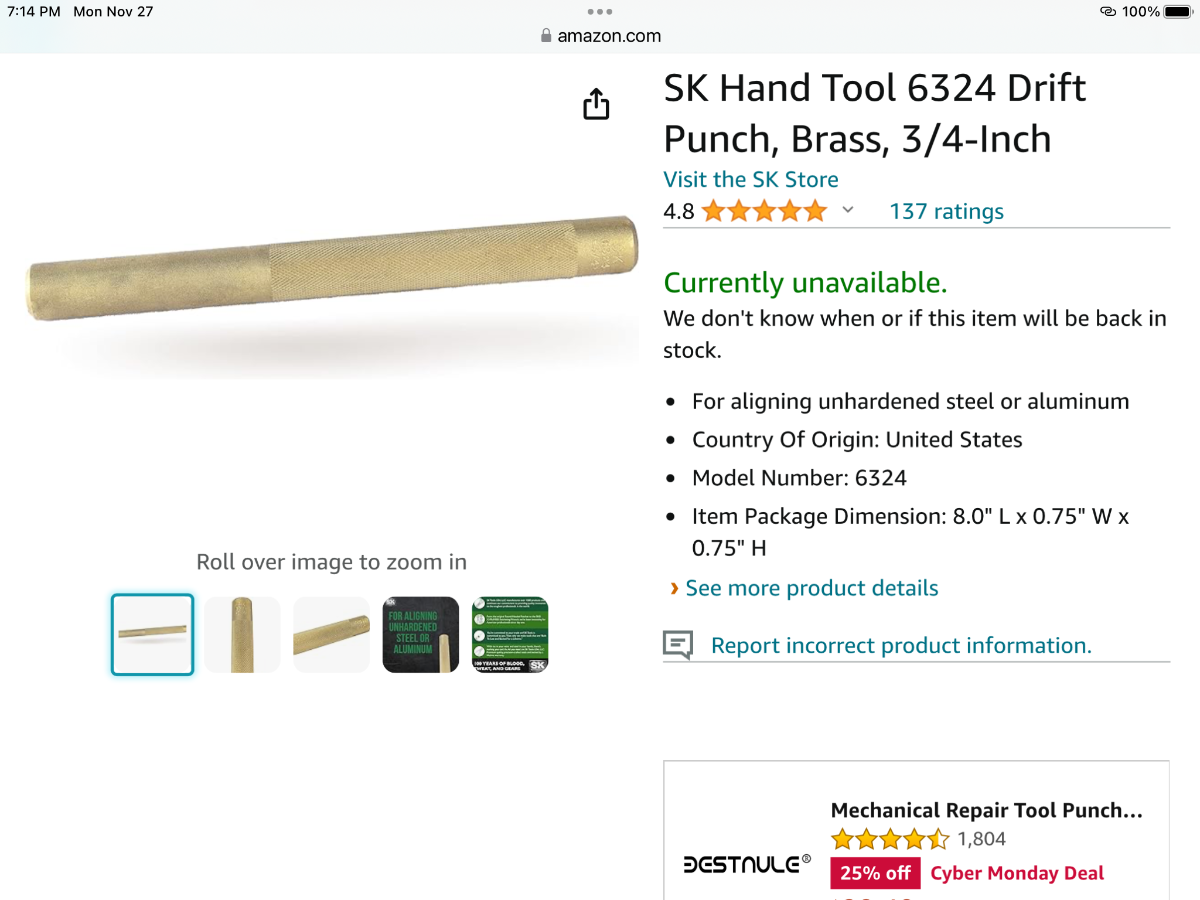
Also, a standard 6 point socket will not work. You will need either a 8 point or a 12 point socket of the correct size. You can use your impact driver rather than doing it manually.3 points
-
Thanks to all, somehow I feel a bit ‘smarter’ by way of your responses!3 points
-
Nan - There are many YouTube videos on this subject. Simply go to YouTube and type boondocking in the search box. HERE is a start for you. A simple and safe way for you to "test" your boondocking "skills" would be for you to simply unplug your Ollie from both water and electricity while you are still a commercial campground. That way, if you don't feel comfortable and/or something goes wrong, you can simply plug yourself back into the pedestal without fear. Good luck. Bill3 points
-
You bet Chris! I also hope this works out for Oliver. 👍🏻3 points
-
So glad we never owned an “Air SCREAM”. Suffice to say we will never purchase or own anything made by Thor. Patriot🇺🇸3 points
-
And, on December 11th each year a special lady has a birthday.2 points
-
As far as I know - there isn't a specific place where Oliver has designed clips, or other device to store this "manual wrench". I store mine in the area under the street side bed, but, I know that other owners store it in a variety of places. However, do not fret. Look at the top of either of your rear jacks. On the top of these jacks you should see a square metal "stud". I don't remember the dimensions of that stud but all you need to operate it is a wrench or socket that can be used to turn it. Be forewarned that I believe the gear ratio is something like 50 to 1. This means that if you have to use this manual method of raising and/or lowering your jacks, you will be turning that square stud a bunch of times. Bill2 points
-
I think of the Victron Smart Shunt or any of the Victron 700 series battery monitors as smart gas gauges. They can give you an idea of your battery system SOC as well as the rate of charge or discharge that is occurring at the time of viewing. They can provide information to other pieces of Victron equipment that can control the rate of charge, but as a standalone piece of equipment they do not have the ability to control the amount of charging from any source. Please correct any part of my thinking you don’t agree with, Mossey2 points
-
Love it! Thanks for sharing.👍2 points
-
Welcome! There is an option on the Xantrex app under "Settings" that allows you to change the input Amp draw. When plugged in here at home, I set mine to 15 Amps, and have never tripped a circuit breaker. I'd tell you the exact steps, but mine is not plugged in, so the Xantrex app can't currently see the settings. But the name of the setting is something like "Grid Load" or similar. It is likely set at 30 Amps. Just remember to change it back when you go to a campground with 30 Amp supply.2 points
-
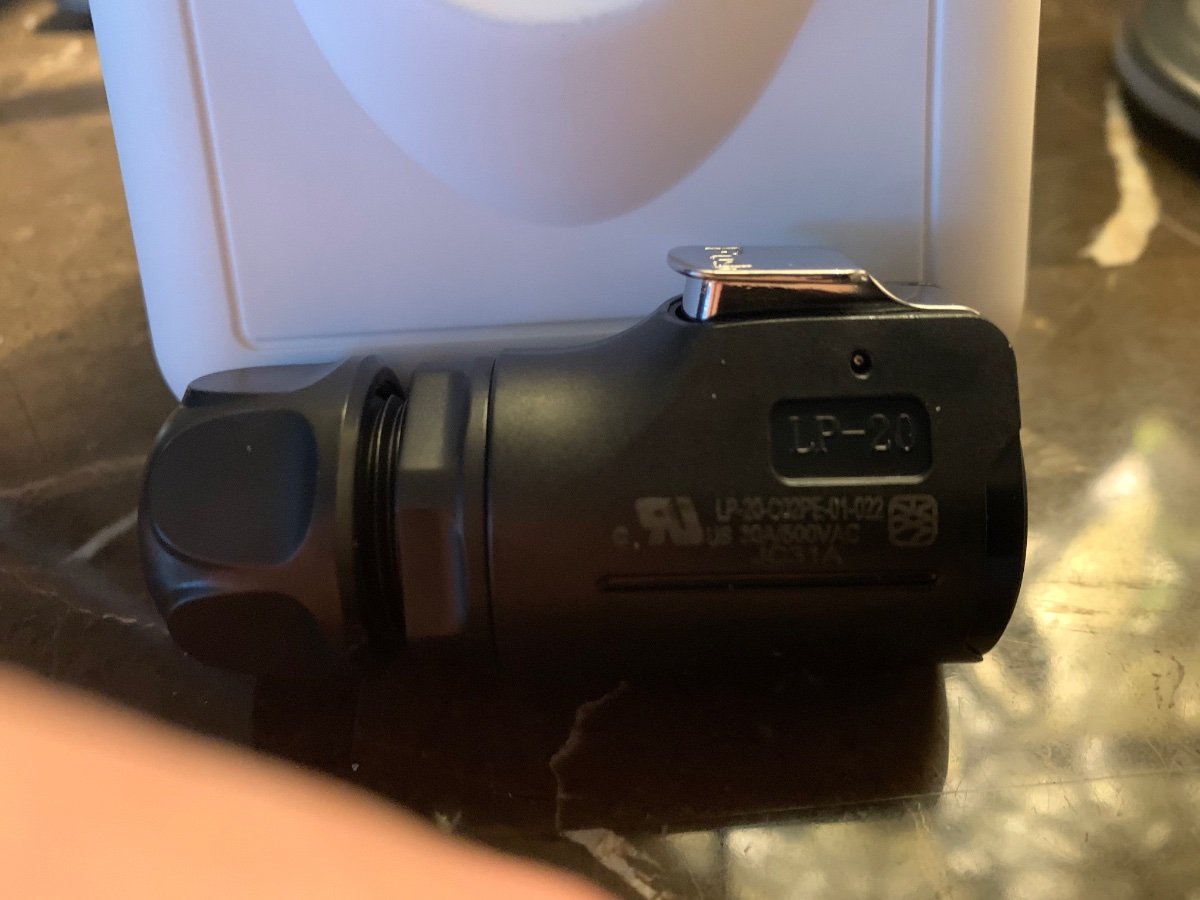
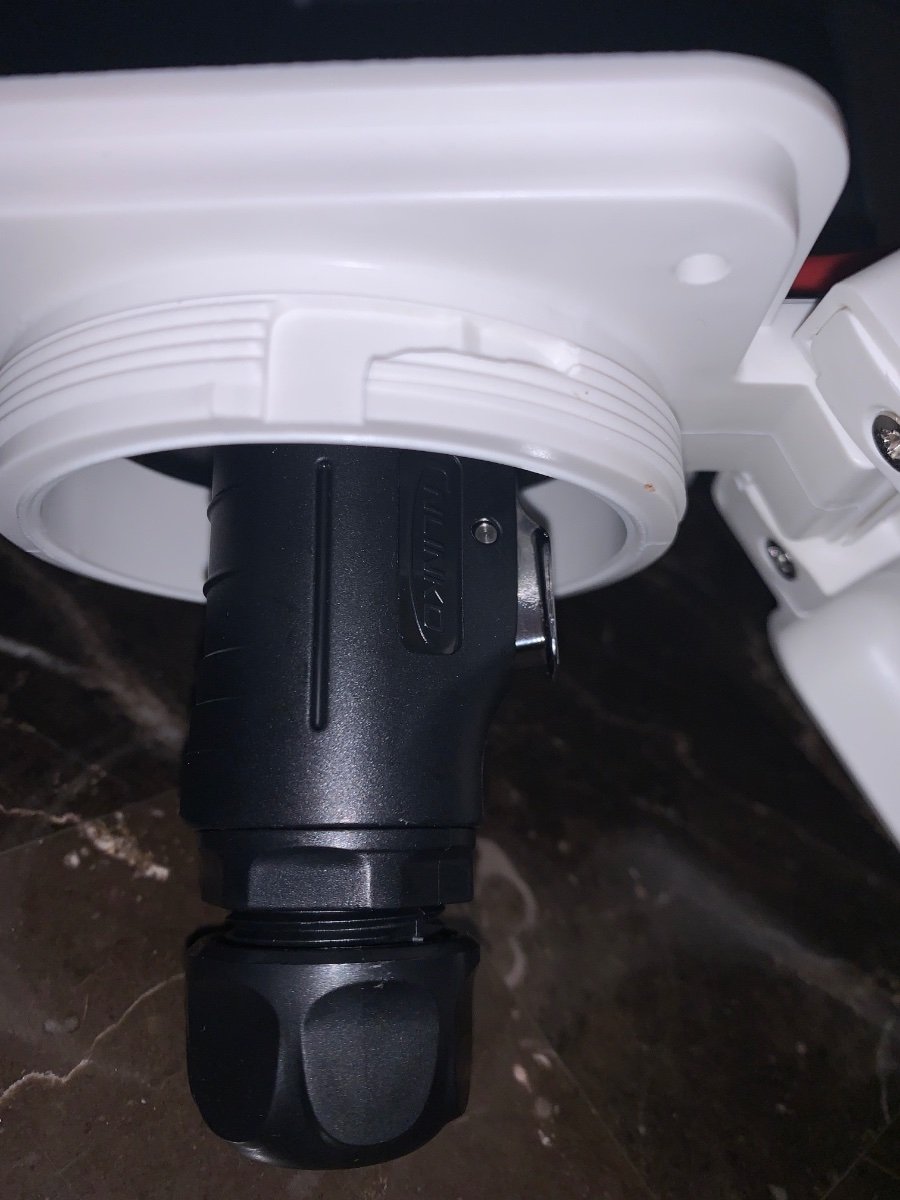
I found the SAE connections in my initial install to be unsatisfactory. Either the wires were too stiff, there was too much vibration or a combination thereof, but the plug components would loosen, heat up and disconnect; very frustrating. Since changing to bayonet coupling components, problem solved. This is the set used with my homemade 100ah LFP portable power station for both input and output connections. These, as well as the solar connectors shown below, are also waterproof! Given the success of this style connector, I purchased a like product to use in my pending exterior solar plug installs, one forward at the propane tank housing and one aft at the basement hatch. Although the solar port shows 10A, I believe that to be a misnomer. The lead wires on the reverse side appear to be substantial enough to support a 20A system, and thus fine for use with a 200W solar panel.
 2 points
 -
I absolutely agree - at least at a price that is anywhere near that of the Oliver. Bill2 points
-
Our understanding of the SmartShunt's contribution to the overall charging/discharging system is to measure and report via the Victron Connect App or the Victron GSX what EMF (maybe not the correct technical term) or power is either being consumed or charged into the BBs. Don't think the SS regulates various incoming amperages... Pls correct if wrong. Just a dump fighter pilot as described above by @Geronimo John2 points
-
@MSURRATT @ScubaRx 👍🏻 Mark, Our original CO/LP detector in our 2020 LE2 gave up the ghost during our recent trip to CO. I called Oliver and asked what they were now installing and was told they now install the RV Safe CO/LP detector. Rather than wait on shipping from Oliver, I contacted a local RV dealer in Montrose who had plenty of these in stock. So I drove over and picked one up and installed it. All was 💯 fine during the rest of our trip. Two weeks later after arriving home we winterized our Ollie. Right after winterizing our new LP/CO alarm began chirping indicating CO. It would not reset after multiple try’s. So I disconnected it from power supply, reconnected it and it briefly went back to green and normal operation. We left the windows and screen door open to allow fresh air into the cabin area all day. I thought this would help clear the RV antifreeze odor from the cabin. The detector functioned perfectly fine no chirps. We decided ok, we are good. So we closed the windows and the door and within an hour the CO alarm went off again. Note: No low voltage, no odd cleaning chemicals used, LP turned off. So I decided it was time to call RV Safe (located in CA) and spoke with a very nice rep named Andrea. She listened to what I had experienced, and I told her that we had just winterized. I asked if these detectors were sensitive to RV Antifreeze? She said that she had recently had one other fiberglass trailer owner experience the same thing with the CO alarm chirping and not resetting. She promptly sent me a new replacement with a return paid shipping envelope for the one I had installed. The new detector is working fine so far. And I returned the one I purchased in Montrose, CO. As @ScubaRx mentioned these detectors even the new ones can just fail. I agree. Could a chemical used in RV antifreeze set the CO alarm off? I am not a chemist and won’t pretend to be one. I will defer this question to the experts and let them decide. It sure seems odd that we both have had a very similar experience after winterizing. The new detector is now working fine and have not had any CO alerts. It’s interesting to note the odor level presently of the RV antifreeze is not nearly as strong as when we first winterized and the new replacement is operating as it should. I suggest giving RV Safe customer service rep Andrea a call. Again, she was great to work with and made getting my replacement very seamless. I recieved my replacement in 3 days from CA and we live in Western NC. Please post up and let us know how everything works out. Patriot🇺🇸2 points
-
Thanks for the heads up. I lived in NW Arkansas for 27 years, worked in Missouri for 2 before moving to Ohio then to Iowa, so I'm not unfamiliar with cold. Fortunately for me when I say Missouri, I am talking about Pineville which is just north of the Arkansas border. They get a little snow there but rarely get too far below freezing. Regardless, I will be bringing a few space heaters, a fan and will be hooked up to 30 amps the entire time.2 points
-
My method too.2 points
-
Is propane supply off at the tanks? (As @Steph and Dud B asked) Dust on sensors isn't dangerous, but a propane leak is. Winterizing doesn't set off our co/propane alarm. Something else is going on.2 points
-
GJ - I have little knowledge of what your talking about - but - I really do like the WAY you think. Bill p.s. Actually, I wasn't trying to be funny here nor insulting about either my knowledge of the subject nor GJ's way of thinking.2 points
-
I would think (meaning I don’t really know in fact) the Victron SmartShunt would have something to do with the balance of varied incoming currents, as each charging source independently completes their respective charge cycles to float, thus allowing them to “play together” to reach full battery bank SOC.2 points
-
I have a permanent search set up on RV Trader and just now I got a notice via email that my search has 4 new Oliver adds. Turns out they are all for the same dealership in Georgia and they are for 2024 LE2s that they are selling. Thoughts, comments. The pricing looks to be very much in line with factory pricing. Here's a screenshot of the email I got.
2 points
-
Yes, 💯 agree. 😊2 points
-
This has been my method for the last 8 years. No issues. Mike2 points
-
Thanks Dave, that's what I was trying to accomplish. 👍 Is anyone familiar with this dealership and what they are like to work with? I really want this to work for Oliver and the customers just the same. I'm sure that's the plan.2 points
-
If noticed some members on the forum have colored maps in their signatures. You may be asking yourself "How do you do that?". Start by visiting this website: http://visitedstatesmap.com Select the states you have visited and choose the size you wish and click DRAW MAP. *Please be considerate to others views on the forums by keeping the image around medium size* Next you will be taken to a new page and underneath the map where it says "Copy and Paste Image URL:" Copy the url, for example mine is: http://visitedstatesmap.com/image/xlg.jpg - this is not your map unless you have been to zero states. This is an example. Now go to your forum Signature to edit and put in the url: It should now look like: If you need help please discuss below. Credits: @SeaDawg, @KarenLukens
1 point
-
The software that runs the Rewards Program has developed an issue and it has been temporarily shut down. Jason and Matt are working to get it back online as soon as possible. Sorry for the complications. Also, there are hundreds of people that think they are part of the program that have never registered with Oliver. You must register to be a part of the program. Procedure is as follows. From the Oliver Forum Page... On the selection line at the top of the page -----> Select HOME On the selection line at the top of the page -----> Select RESOURCES OF the selections on the right ------------------------> Select REWARDS PROGRAM From the left Center of the page --------------------> Select JOIN REWARDS PROGRAM From https://olivertraveltrailers.com/ On the selection line at the top of the page -----> Select RESOURCES OF the selections on the right ------------------------> Select REWARDS PROGRAM From the left Center of the page --------------------> Select JOIN REWARDS PROGRAM1 point
-
My husband Scott & I picked up our Ollie this past Monday. We decided to name her Pearl. She is now part of a growing family…. We have “Dug” (our Kioti tractor) and “Moe” (our John Deere rider) 😉 We’ve never owned a travel trailer before so there is a TON to learn. I love the resources that are on this site and really appreciate the advice that all of you give on a regular basis. We will hopefully feel more confident as time goes by. The only question that I have so far is an electrical one. We are storing Pearl at a storage facility that only offers a 110v outlet. They had an adaptor that they said would work, but it tripped the GFI on their outlet pole within seconds each time we tried to plug in. I”m guessing that maybe we just need a different type of adaptor? Have a great day! Scott & Cindy1 point
-
It's a very slow operation indeed. Another good reason to use planks or blocks under the jacks. If you ever have a switch or motor failure (as I have over the 15 years), it's really nice to know you've shortened the throw. Even so, nice to know it's possible. I'm a 5' 4" woman, and I can still get the jack up in a breakdown. Ours is stored in plastic pocket, in a small dinette seat storage area, which newer trailers won't have. Check there, too. Unfortunately for you, everyone moves everything around. Steve's suggestion is a good one, as well. Never bothered, as we've only had to use the wrench a few times since 2008.1 point
-
@Cindy TownsendThis is most likely your solution. I've made this system change back and forth a few times. With the Xantrex app on your phone it only takes a few seconds. You have to be in the camper and connected via bluetooth. The change is made in the settings menu. You can change that setting pretty low as you are only float charging the batteries all winter. Sometimes a shore power GFI doesn't like what it sees when plugged into an Oliver charging system. I've not experienced this personally though.1 point
-
No specs. The most expensive LE2 is $106k. Single awning, 30# tanks, standard toilet, no bike rack. I'm assuming one of the Lithium packages? The others are around $97k. I assume OTT will have a couple of standard option lists they offer at dealers?1 point
-
We camp amoung lots of trees and kind of like the idea of the rain guard as a small bit of protection as well. GJ
1 point
-
Thanks for all the fantastic responses. More than one might normally expect in a Welcome thread! I appreciate the pointers to threads in other sections, as that gets me out of the Newbie corner and into the Business End of the forums. See you all there... Steve1 point
-
Well fortunately for me Oliver did most of the thinking. My DC-DC will simply allow direct charging of my factory lithium batteries while the truck is running. It does require a heavy gauge Anderson connection be added from the trailer to the truck, but that been a planned addition to the truck from the time I ordered it. The charger install and connection to the batteries is pretty straight forward. The solar panel connection from the truck to the camper would be another connection at the bumper to the camper, probably just a simple SAE plug on each end with a 4' tether that would make the connection if and when I need to use that capacity. Obviously while at the camp site a longer tether would allow parking the truck in the sun and connecting to the trailer for a boost in solar output. The trailer side of this would be connected to the batteries the same as the factory supplied aux charge port, with the solar charge controller mounted in the truck side of the system. The portable panel connects through the aux port Oliver provided, which also is a simple SAE plug. It's a direct connection to the batteries and requires a charge controller on the portable panels. The Zamp suitcase panel we got with the trailer has the charge controller built in. To answer your question, all this sounds like a lot of stuff, but it's really very plug and play and each part of the system has it's own charge control that monitors battery condition, preventing any part of the system from overcharging the house batteries. Each part you connect and or turn on just adds to the influx of charge until the bats are topped off and the control meters back to a float output. The internal Victron monitor just indicates battery status without seeing the other sources of charge input, but that has little effect on daily system usage. As mentioned above I have yet to install much of this so there's no pics for the stuff listed out yet. As for the truck solar charging the lithium pack in the back of the truck that runs the cooler in the back of the truck, and has a direct connection from the solar panel to the battery pack. I use a Jackery and it like most off the shelf lithium battery packs has the charge control built in. BTW if the Jackery is plugged into the truck for charging while running the truck, the Jackery receives charge from both the truck and the solar simultaneously. I love the Jackery in the truck because in addition to the cooler, we can use it to power almost anything from the back of the truck while out remotely away from the camp site. You just have to decide how big of a lithium pack you need. We went with the middle of the road 1000w Jackery. It's enough to power the cooler for more than a day without taking up too much space in the back of the truck, about the size of a small drink cooler. The Truma fridge is on 24/7 with little attention required. I do monitor it if there's perishables inside and that's through a bluetooth app connection. All in all its a lot of stuff and Money spent, but like you I want multiple options when we are out camping, most of all in anticipation of remote dry camping, "glamping" in the case of an LE2 fitted with all the tech you can get. 😉🍻1 point
-
My first job out of college was in St Charles, MO. It gets single digits cold there, be prepared.1 point
-
It was an Amazon purchase, however………
1 point
-
Tough life - but - someone's just got to do it!1 point
-
Back when we had our Class-C, and before we added solar, we would run a built-in Cummins Onan 4000 generator. The PD51 transfer switch automatically connected generator power to house "shore power." We would run ours only during the afternoons. I would start it when we were leaving on a hike. This way you don't have to hear it (even though it wasn't too loud), and neighbors are also usually gone for the day. After I added a small 400W Solar, 315 AH AGM, 1800W inverter system, we rarely ever used the generator. I would start it every month or so to let it run, keep the carb in fresh gas. We had a neighbor in Texas, who mowed his lawn 2-3 times a week, always about 6 PM, when we wanted to sit by the pool with a drink. Not nice, same goes for generators! Plan on enough available battery AH to last 24 hours for your needs. Your generator choice should be capable of recharging your batteries from 60 to 90 percent in a couple of hours, a couple more to 100%. For our Oliver, with solar onboard and ample battery bank, traveling mainly in the great southwestern US, I have no plan to carry a generator. We camp some in the fall, and mostly from Jan through April. We don't want to be out where we need the A/C running overnight.1 point
-
Even more than most people know! 😍 Bill1 point
-
Shooting in the dark here but if your microwave is working your inverter is working. Possibly your GFCI outlet is at fault, hard to say. Oliver service will definitely help you, they're some of the best in the industry, try them again.1 point
-
Annually I buff my camper with Meguiar's Cleaner Wax then use thier Flagship Premium Marine wax; I wash it frequently with Woody Ultra-Pine wash-n-wax boat soap (the best) Good Luck1 point
-
@abcsfam That Westinghouse 4500 will likely serve you well. I considered a number of different generators when looking a few months ago. I agree with you. The Westinghouse 4500 dry weight at 104 lbs caused me to pause and take a step backward. I have had several Hondas over the years which have always started and served me well. I can honestly say a future upgrade to a 40# lighter “suitcase” Honda 3200i will be so appreciated by your back as the years go by. As an fyi, there is a company called https://genconnexdirect.net/eu3200i. that sells the 3200i with an LP conversion. Pricey at $3200 plus shipping. With a Veterans discount, I paid $2500 at Northern Tool for our gas only 3200i OTD. There are always trade offs. Patriot🇺🇸
1 point
-
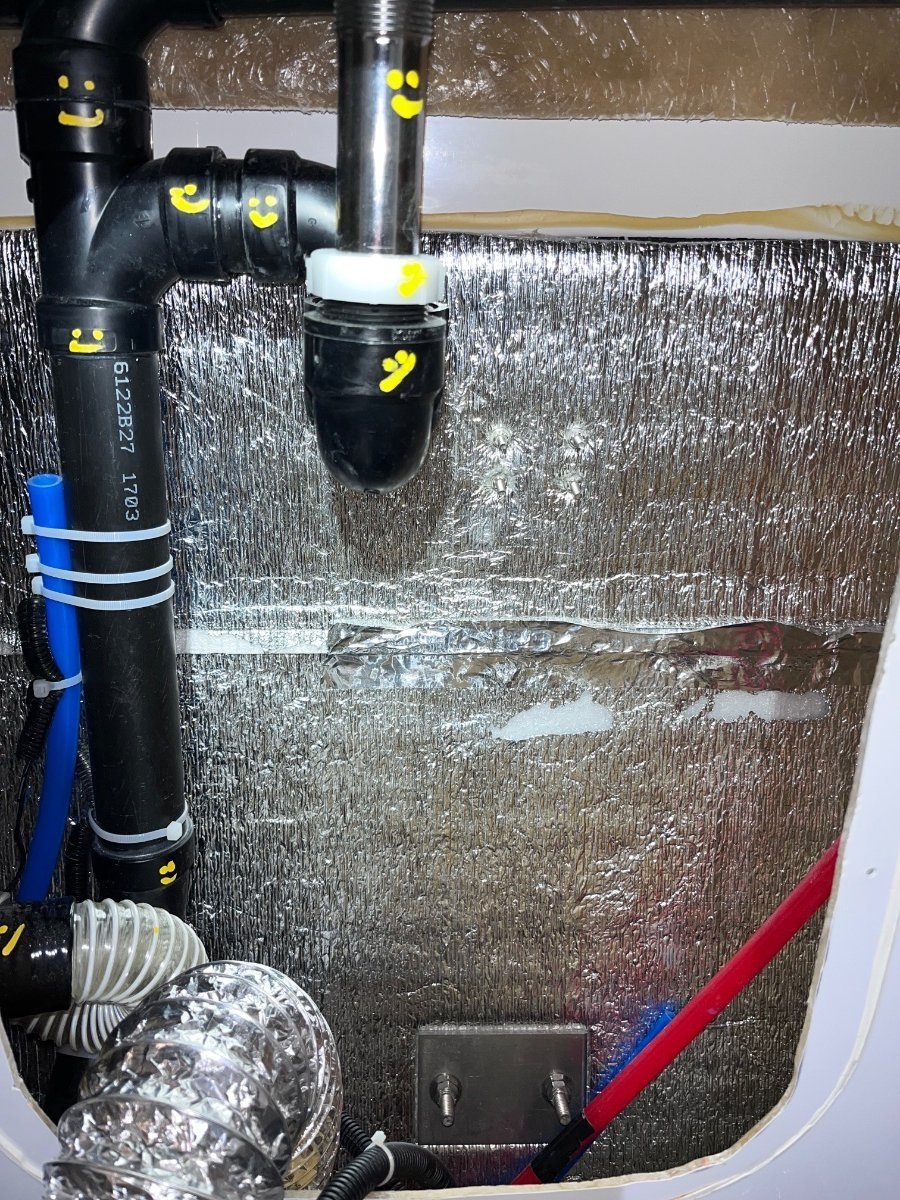
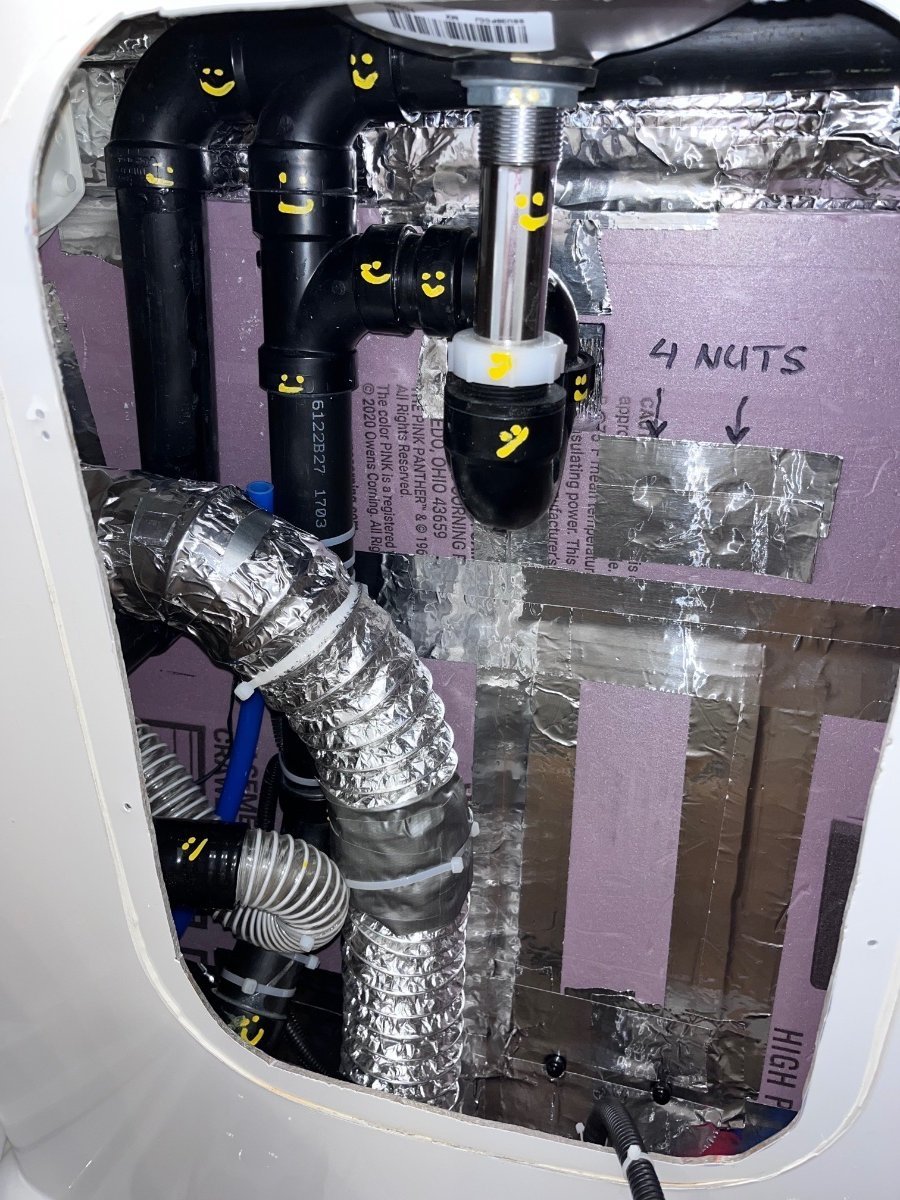
It is a bad sign that the factory continues to use a plain nut and lock washer in this location. It is a sign of corporate penny pinching, because those two parts are marginally cheaper than one self locking nut. A plain nut that is not fully tightened WILL loosen. An improperly torqued nylock nut may not be ideal, but it will never loosen further. Are the later hulls still lacking adequate insulation under the sink? If you camp in chilly conditions, you should add some there to protect the fresh water lines and sink trap. https://olivertraveltrailers.com/forums/topic/9039-how-to-bath-sink-compartment-mods-duct-rework-insulation-disconnect-flush-line/ John Davies Spokane WA
1 point
-
I have no idea what, if anything, is growing in your water system but I seriously doubt it's slime mold. Slime mold is commonly found in the forest on hardwood mulch, especially in shaded locations. However, it can also appear on grass or other plants in a yard. In addition to the more common yellow and orange colors, slime mold may also be gray or black. While slime mold is pretty harmless, it still is unsightly and likely not something you want to keep around. Despite its unpleasant appearance, and equally unpleasant name, slime mold isn’t anything to be too concerned about. There are more than 700 different varieties of slime mold that are most commonly found in warm and moist climates. Slime mold, such as the aptly named dog vomit slime mold (Fuligo septica), doesn’t harm plants or the environment. It’s also not actually mold; nor is it a fungus. Rather, slime mold is a primitive type of organism that survives by feeding on decaying or dead organic matter. My guess is you're probably seeing some strain of algae. Algae can grow in stagnant water inside your RV tanks. RV drinking water tastes bad as a result. Expect to clean and sanitize RV water tanks regularly if you don’t empty them after each trip. 1 - Add 3/4 cup of bleach for every 15 gallons of water. Dilute the bleach with water, first. 2 - Allow bleach water to soak for at least two hours. Then flush water lines to the shower and sinks. 3 - Fill with clean water. Flush again to remove the bleach. Repeat until bleach smell is gone. 4 - Routinely clean and sanitize RV water tanks to prevent algae regrowth. Some people believe that vinegar is great for cleaning bacteria from water tanks. But vinegar is not for cleaning and sanitizing RV water tanks. And it won’t remove algae in RV water tanks either. As for apple cider vinegar, it’s recently gained a lot of publicity for losing weight, reducing diabetes, and lowering cholesterol. But it will not kill bacteria or algae in RV water tanks either.1 point
-
Well, that's another "potential " problem, not one anyone is likely to face with quality lifepo4 batteries, but it could happen. Fighting a lifepo4 fire is different from a traditional fire, from what I have read. Not unique to Olivers. Many manufacturers now offer a lithium upgrade. And, many owners have done their own upgrade, hopefully to a reliable source. Someday, near in the future, we'll likely see a requirement for a lithium hazard symbol. Everywhere. For now, my home is powered by solar and lithium, and one car. Tesla markings on the outside of our home, at the transfer switch, should help firefighters, hopefully, if ever needed.1 point
-
Now that I have inadvertently 'outed' the owners of this LE2 with this post, in the hopes of learning whether they live in the Pacific Northwest, I suspect they might want to remain anonymous because of our discussion of their choice of tow vehicle. If they do see this post, let's hope they search the Forum for the many discussions about this subject and reconsider their choice of tow vehicle before they find themselves in a bad situation.1 point
-
This is a little late but I want to comment on Steve's extensive tool box and what he said about helping others. While camping with Steve and Tali last October I mentioned that I had bought some extra coat hooks from Oliver but had not installed them because I was uncertain about the thickness of the wall. Next thing I know here comes Steve with drill and tool kits. Ten minutes later my hooks were ready to use and they are quite handy. Friends of mine poke fun because I carry a ready pack full of emergency supplies at all times. Yeah I am a prepper...not doomsday though. While hiking near the Blue Ridge Parkway last August we came across a downed man suffering from a Diabetic episode with no help anywhere. I carry Cliff bars and after a few bites he was good to go...and so grateful. Scouts motto...be prepared. It may be someone else who needs help.1 point
























-
Recent Achievements
-