Leaderboard


Popular Content
Showing content with the highest reputation on 08/29/2022 in all areas
-
This also may be obvious to more experienced owners, but why would you want to take 12 VDC power out of your batteries, run it through a 90-95% efficient inverter that converts it into 120 VAC (thereby wasting 5-10% of your stored battery power) and then use that AC to run the refrigerator instead of just using the 12 VDC straight from the batteries? That is the real reason the fridge is not on an inverted outlet.4 points
-
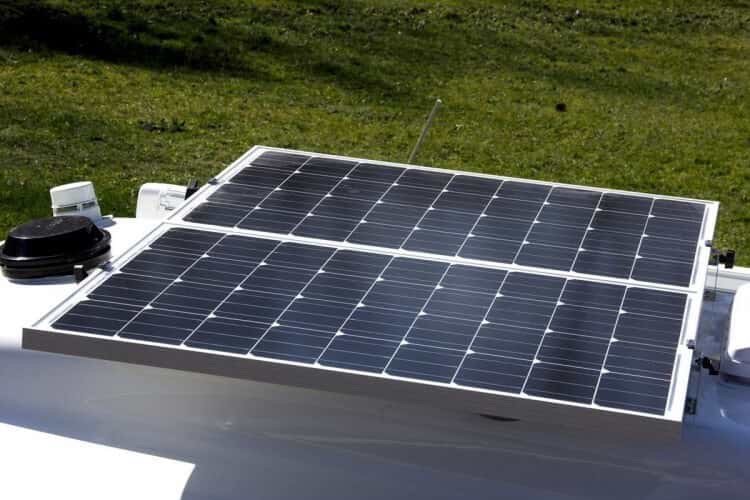
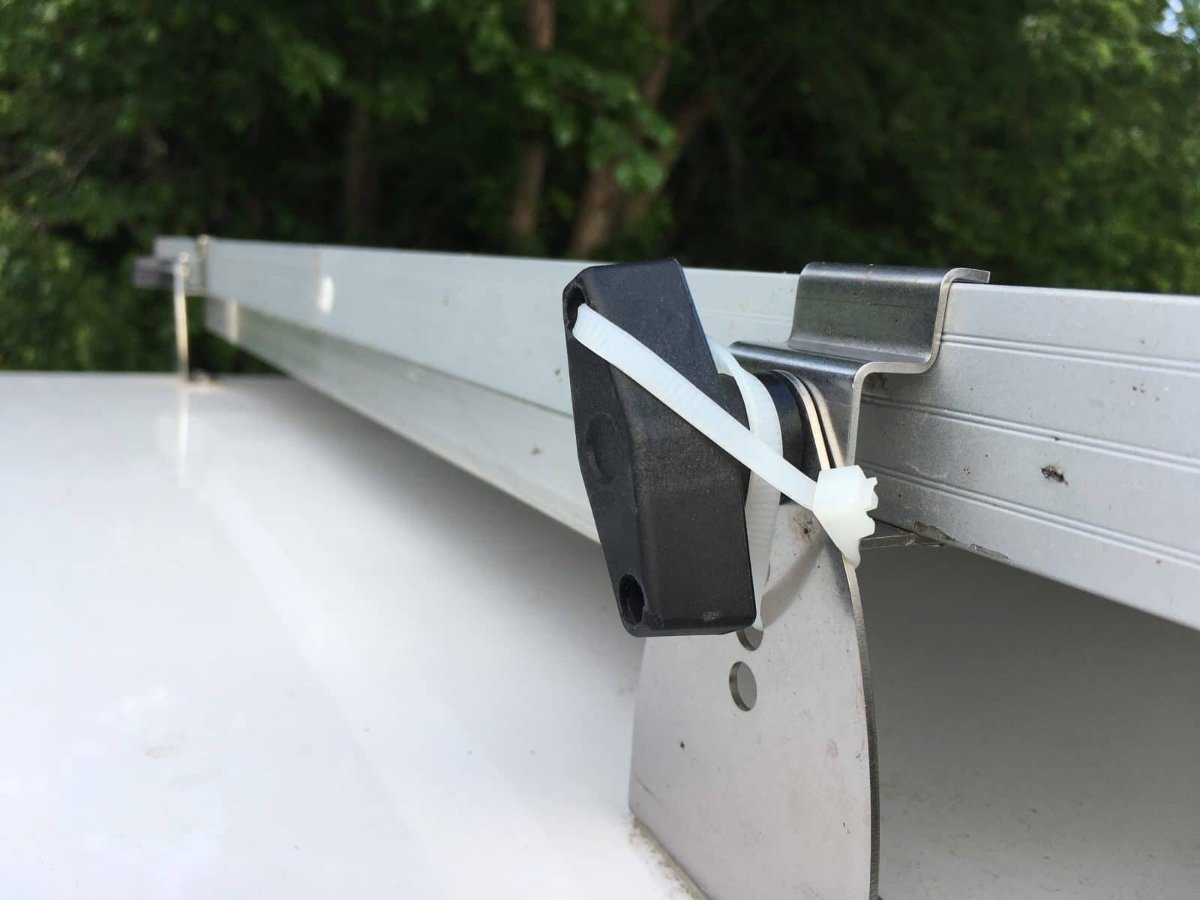
I tilt mine one hole lower to the left (street side) so water will tend to run off instead of pooling. The other side is in the top holes. No worries at all doing this. But you do need to drill the knobs and install “safety” ties. https://olivertraveltrailers.com/forums/topic/2066-how-to-install-safeties-on-the-solar-panel-mount-knobs-important/ Nobody tilts their panels toward the sun, unless perhaps you are at one spot for a month. And that would require long extension arms. And that only works if you do not have two awnings. https://olivertraveltrailers.com/forums/topic/2791-how-to-solar-panel-extension-arms/ John Davies Spokane WA4 points
-
Yep, you’re overthinking it. When you have your trailer hooked up set you brake controller somewhere in the middle. While going at idle speed, say 5mph or less activate your trailer brakes but not your truck. If your trailer skids and you are on pavement, adjust down until you don’t. If you are on gravel and skid, adjust down until you don’t, then up to the first setting where you do skid. After a while you’ll be able to feel where the setting should be by activating the trailer brakes and feeling how much drag you get from the trailer. It’s not rocket science and there is no exact setting. Others may have different methods and thoughts but this has worked for us. Mike4 points
-
Hi All, we are Bob and Francine (aka Frankie). We are retired and happy to be part of the Oliver family. We recently ordered our Oliver LE ll to be picked up next April (2023). After researching for quite a while, we kept coming back to Oliver. We live in Southern California and after contacting Oliver about their RV, we were referred to an owner not far from us who was kind enough to let us come visit and see their Oliver and answered a ton of questions we had. Shortly after, we made the trip to TN to tour the facility and instantly saw the quality and workmanship that is put into Oliver. Our sales representative, Jason, is great! He took his time with us and has kept in touch with us throughout the entire process. We’ve been shopping for a while and appreciated Jason’s excellent customer service. He’s been amazing and has answered all questions and concerns. We also like all the great reviews about their service department. We’ve heard nightmare stories with other RV brands and doesn’t seem to be the case with Oliver. We went on forums for other RV brands and there seems to be more complaining about quality and service than there are compliments. Oliver forum is amazing. Everyone seems so passionate about Oliver and will be so nice to be able to get advice and ask questions, as I know we will have some once we start RV’ing. Look forward to informative conversations with some of you. Happy camping!3 points
-
Edgar or Johnny?3 points
-
I was always curious as to why this was not done early in the release but am VERY happy they are incorporating it now. Brian2 points
-
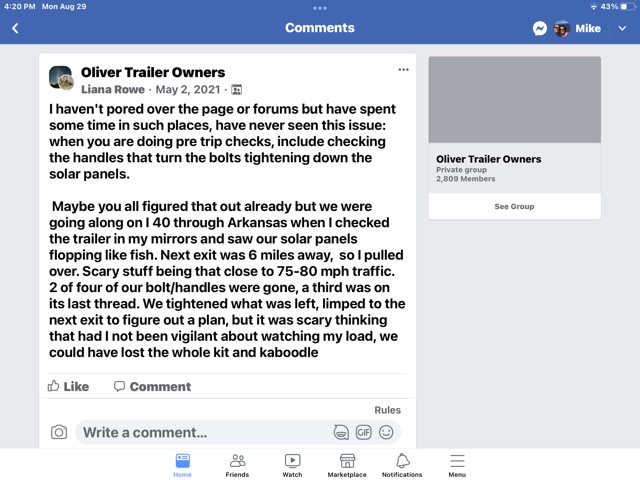
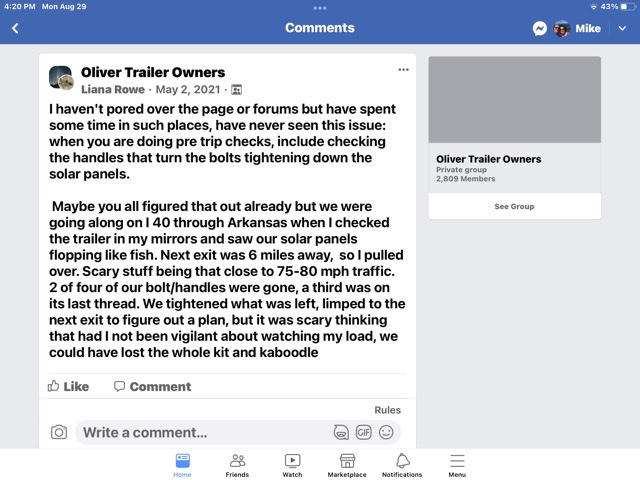
I found the reference, it was on Facebook Oliver Trailer Owners. Apologies are needed however, my memory failed me. The Oliver owners panels did not come off, they said they were just “flopping like fish”. My assumption when I read that in May 2021 was that major damage was imminent, so the knobs needed to be secured. I’ve attached the screenshot from Facebook here, and also on your other thread.
 2 points
 -
Both, on the live version of Tobacco Road! 🤘🤘🤘2 points
-
Yesterday, I retrieved our 2022 LEII from storage to prepare for a trip. When I placed the trailer in storage, two months ago, I turned OFF the three Lithium batteries, but neglected to turn OFF the Zamp Charge Controller. With the batteries OFF, the charge controller flashes code 601, indicating battery disconnected or less than 3.0V. I reviewed the 2022 Oliver Optional Features Manual, Abnormal Operation Mode table, page 402. Page 399 of the same manual shows the wiring connection, with two large gauge wires connecting to the batteries. The trailer was in a fully enclosed storage unit with no windows, during which time the Zamp Charge Controller display apparently flashed the code "601" the entire time. I completed the Proper Lithionics Restart/Reboot sequence specified in a Technical Service Bulletin issued 3/3/22 by Oliver, which does not involve any changes to the charge controller. Once the three Lithionics batteries were ON, the charge controller displayed the battery condition as nearly fully charged, essentially at the same level as when placed into storage. Cabin lights, brake and signal lights, stabilizer jacks and electric brakes all appeared to be operating normally, so I proceeded home with the trailer in tow. From this experience I conclude the Lithionics batteries must not fully turn OFF when their ON/OFF buttons are pressed, even though the indicators show the batteries to be OFF. The charge controller does not appear to have any other source of power, nor do I see any mention of an internal battery. Also, the solar panels were receiving no sun light and could not produce voltage to power the charge controller. I had not disconnected the solar panels from the charge controller. Thus, I assume the battery management system must continue to supply power to the charge controller, but NOT provide any charge to the batteries when they are in the OFF state. The charge controller also must have very low power consumption to display the "601" error code, with no significant consumption of power from the batteries over two months. Has anyone else made a similar observation? Can anyone provide details on how the charge controller and the Lithionics batteries interact when the batteries are OFF? I am still learning the characteristics of the Lithium Pro solar power system in our trailer. Thanks, Don2 points
-
Steve and Deb, last year the campground had me booked into two different sites...stay fro 2 days in one and then move to the other for the duration. When I arrived they said they had a site open up for the entire time I would be there..so no moving! Worked out great as I was right next two Steve and Sylvia Cobb!! Don't know anything about the B section, but just call them occasionally and they will try to find you a good site.2 points
-
I might get two of these and make a table that would attach to the side of the Ollie, using a telescoping leg to support the outer edge. I camp in a lot of windy places and have yet to find. table that doesn't need to be taken down each night and put away so it doesn't blow over. I might even get a third to mount a wireless backup camera. https://www.seasucker.com/collections/marine/products/4-1-2-seasucker-black The bike racks are interesting but I am not sure I am ready to trust suction cups to hold bikes to the rear of a travel trailer. Same with the solar panel mounts, however if I didn't already have solar the suction mounts might be cool to use for a panel or two when in camp and not wanting to place the panels on the ground.2 points
-
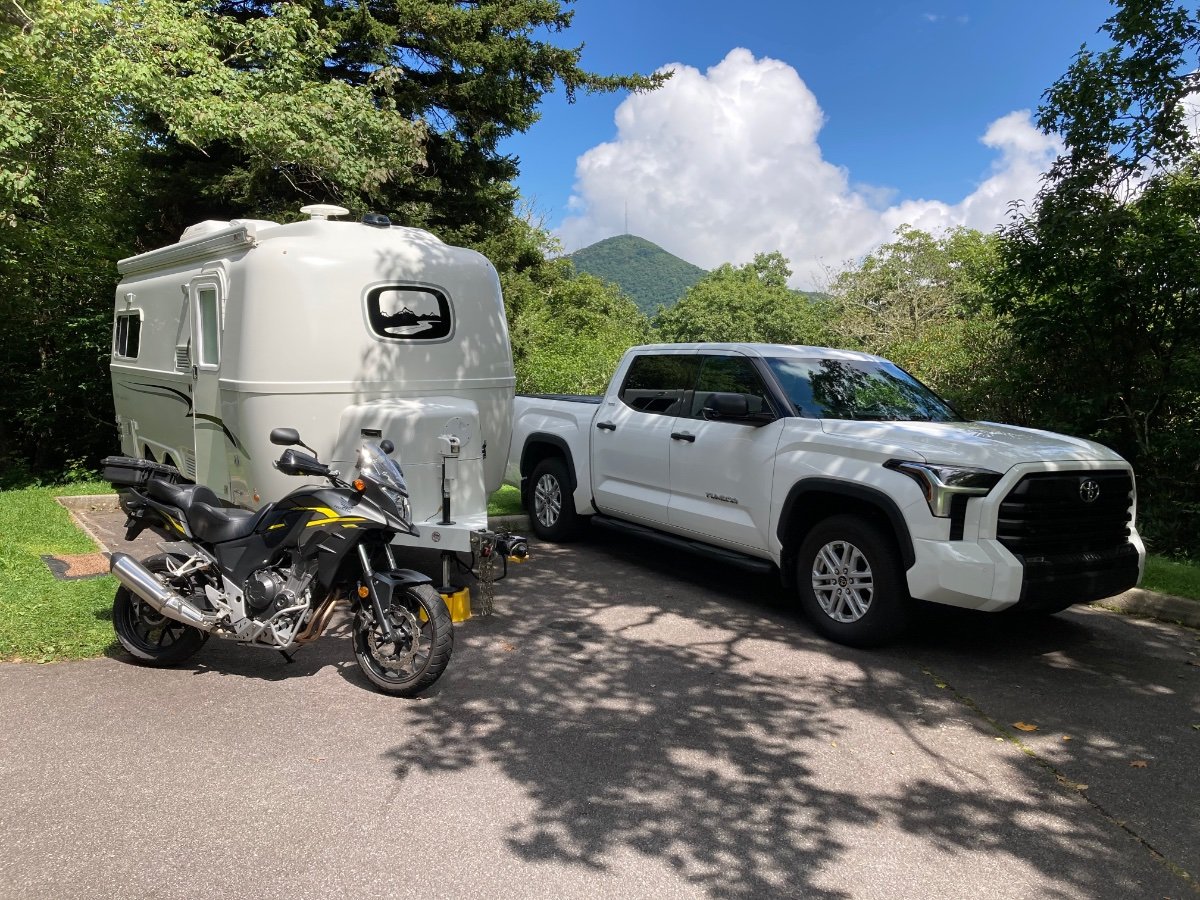
We just returned from camping at Mt. Pisgah NC on the Blue Ridge Parkway. Another Ollie was there, too. Met Lee, owner of #82 LE2, very fine person. We had some great conversations, too! We trailered our motorcycle with the Tacoma and had some fine two-up BRP rides. Also had breakfast one morning at the Mt. Pisgah restaurant. 👍 Already planning another trip to the BRP at one of the lower elevation campgrounds for next month! Great Trip!!!!! 🙂
2 points
-
Thanks, John, for the info and the links. John2 points
-
My 2021 model brackets are the same. Before I picked it up from factory, I read a post on this forum, or perhaps Facebook, from an owner that had a panel come off due to the fastener knob working loose, did some expensive damage. Then I read about JDs mod. This was the first mod I did, first afternoon after picking up at the campground. It’s quick, easy & cheap insurance. Thanks JD!2 points
-
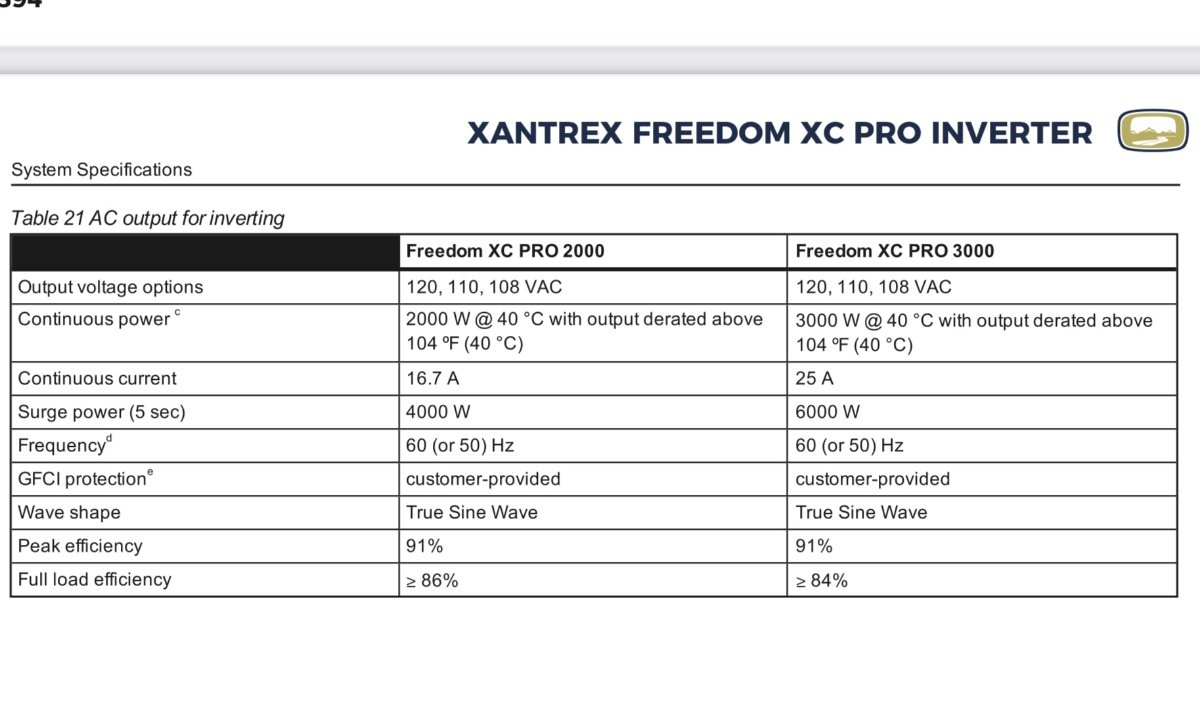
Unfortunately very few people really understand their equipment…. The specifications data is usually way at the end of the owners manual. If somebody was going to install it themselves, they would most likely see it shown on the product brochure. PEAK efficiency is 91%. Full load (AKA running the air conditioner) is 86% or higher. That wasted energy is discharged as heat by the inverter. It ends up under the bed and unless Oliver has changed their method, there is no way for that heat to be dissipated. In summer that means the inverter runs less efficiently because it requires adequate airflow for proper cooling. It is really educational, and more than a little sobering, to watch the remote display of my Victron battery monitor, which shows the DC amps being used while inverting. My older 2000w unit draws close to 120 amps when operating the microwave. I refer to that appliance as the “Battery Killer” 😬, which irritates my wife because she loves it. But as the one who has to watch the battery condition (State of Charge) and drag out the generator if needed, it matters a lot more to me. John Davies Spokane WA
2 points
-
That process is called "burnishing." It entails making multiple long (non-emergency) stops at moderate to low speeds (say from 35 mph to about 0) on deserted sections of road. We plan to burnish the brakes on our new Elite II as we drive from the Oliver campsite to David Crockett State Park, for our post-delivery Days 2-4 full shakedown. Hopefully no emergency stops will be required before long after we have left DCSP!2 points
-
The setting will vary based on road and trailer conditions (paved roads vs. dirt/gravel, dry vs. wet roads, trailer tanks empty or full). I’m towing our Elite II with an F-250 with the trailer brake controller gain typically set anywhere from 4.0 to 6.0 depending on road conditions and trailer loading. If it’s wet roads and the trailer tanks are empty, I’ll use a lower gain setting to prevent the trailer brakes from locking up when braking hard. If it’s dry paved roads and the trailer tanks are near full (that’s another 500 lbs. of weight) I’ll set the gain higher. There are plenty of videos on YouTube about how to adjust the trailer brake gain setting for your specific towing situation. You’ll have to experiment a bit for your truck/trailer combination, and also get comfortable using the little finger paddles on the trailer brake controller so you know how to use them when needed.2 points
-
This is what we do now as well. We took a chance and purchased a knock-off from Aldi (Gardenline brand for around $125) and have been completely pleased but it is a seasonal item for them and they seem to sell out quickly so you have to pay attention to be able to get one. Another favorite would be our Luci solar string lights. They store nicely and can go anywhere without needing an extension cord.
2 points
-
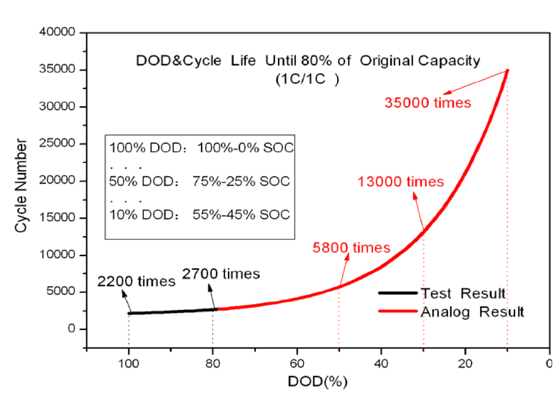
There have been numerous posts in this forum about Oliver’s lithium battery systems—about their usefulness, limitations, and value with respect to cost. Despite reasonable arguments against it, a number of us have purchased the lithium package. Reasons for purchasing the option have included the ability to run the air conditioner (A/C) for short durations (like at highway rest stops), greater usable energy (more boondocking in cloudy weather without needing a generator), faster charging, and longer battery life. This post summarizes things I’ve learned over the last 6 months about the Xantrex/Lithium/Zamp system. This post might also be titled “Things I Wish I’d Known from the Start.” This summary is a work in progress. Hopefully, with your corrections and additions, this thread will be of use to others that have purchased the Lithionics option or are considering doing so. At the time of this writing, manuals and other information for the Lithionics batteries are in the Service Center Knowledge Base — see links at the end of this post. I assume at some point Lithionics information will be compiled with all of the other trailer manuals in Oliver University. Battery State of Charge A key component of the Lithionics system is the app that lets users monitor State of Charge (SOC) and voltage (see links below). The reliability of the SOC values (which describes the amount of energy remaining in the battery) depends on (1) maintaining SOC calibration and having (2) up-to-date Lithionics firmware. The SOC should be near 100% at 13.6 volts, and about 50% (+/- about 10%) at 13.2 volts. If this is not what you’re seeing on the Zamp controller, Xantrex remote, or Lithionics battery app, then something’s wrong. By way of example, a couple times we’ve experienced the SOC readings of 60% when the batteries were dead -- not good. Note that the voltage reading on the app while there is a load on the system (e.g., electric heater) is different than when there is no load; the “resting” voltage may be higher. SOC Calibration The SOC requires periodic calibration. According to the manual for the 130 Ah batteries, the SOC can be calibrated simply by charging the batteries to 14.4 volts. The manual also states that fully charging the batteries to 14.4 volts should be done at least once every two weeks for battery life. Get the 130-Ah battery manual from Lithionics using the links below; at the time of this writing, Oliver has the incorrect manual posted in the Knowledge Base). When charging with shore power, it is not always apparent that the batteries have reached 14.4 volts, because when charging, the batteries only stay at ~14.4 volts for a short while before dropping back to about 13.6 volts. You can verify that batteries have reached 14.4 volts by monitoring battery voltage using the Lithionics app during a charging event. If you are unsure that the batteries are reaching 14.4 volts, you can at least confirm that the Xantrex charger/inverter is set to charge to at least 14.4 volts in the Xantrex app (https://support.olivertraveltrailers.com/portal/en/kb/articles/xantrex-remote-bluetooth-pair-operation) and, under Settings, check the custom absorption voltage. Ours came from the factory set at 14.6 volts, which is sufficiently high to get the batteries to 14.4 volts. Lithionics Firmware At least some of us that picked up our trailers in spring or early summer have batteries with outdated firmware. As I understand from Lithionics, more recent firmware versions have an improved SOC algorithm (our initial SOC readings were unreliable). You can check firmware version with the Lithionics app by clicking on a battery, then clicking on the settings “sprocket” in the upper right side, and then clicking on firmware. Our battery came with firmware version 1.0.05; I’ve recently updated to 1.0.07 by clicking on flash firmware. This has to be done with your phone in close proximity to the battery, and has to be done separately for each battery. Updating firmware comes with a “…this is a critical operation…” warning; you might want to check with Oliver or Lithionics if you have any questions about doing this. Has updating firmware improved our SOC readings? I’m not sure yet, but I think so. So far, the readings seem more reliable, but I’m still testing. SOC Calibration by Cycling A Lithionics rep told me that the SOC can be calibrated by “cycling” the batteries, and that this should be done every two months. Cycling consists of discharging the batteries to reserve voltage (e.g., ~12.1 volts) and then charging to 14.4 volts. However, the rep could not point to written documentation supporting this form of calibration. As the batteries support more partial cycles than full cycles (see graph below), calibrating by simply charging to 14.4 volts (assuming this effectively calibrates the SOC) seems better for battery life. Lithionics batteries will not charge from tow vehicle The standard 7-pin connection from tow vehicle to trailer cannot be used for charging the Lithionics batteries. Charging the batteries from the TV requires a DC to DC charger, which is an aftermarket installation. For more discussion on this, search for John Davies’ Redarc DC-to-DC charger installation description. Batteries Turn Off Twice now one or two of the three 130-Ah batteries have turned off when reaching low voltage (which happened because we were relying on incorrect SOC values). The SOC readings themselves looked OK, but the voltage did not correspond with SOC. The battery State in the Lithionics app reads “Off” for each battery when it is off. There is no flag on the Zamp or Xantrex control panel that alert the user to one or two batteries being off. The lesson (at least for me): monitor all three batteries, not just one, and note the Current, Power, State, and Status Code settings. If one or more batteries are off, turn the battery(ies) back on, and fully charge to 14.4 volts. Inverter Noise The Xantrex charger/inverter can be noisy charging the batteries with shore power (I’ve measured 60-64 decibels in the cabin when batteries are charging, and about 72 decibels adjacent to the inverter). The noise comes from (1) the charger/inverter fan and (2) the way in which the inverter is mounted (the fiberglass wall to which the inverter is mounted propagates noise into the cabin). The noise can be masked by turning on the A/C. Alternatively, the noise level can be reduced somewhat by lowering the charger current. In the Xantrex app, go to settings, and change the Charger Current from, for example, 100 amps to 30 amps. This will reduce fan noise. It will obviously take longer to charge the batteries with lower current. If you would like to be connected to shore power (to run an electric heater or the A/C, for example), but not charge the batteries (to avoid keeping them fully charged for long periods of time, or to reduce inverter noise) you can set the charger ignition control in the Xantrex app settings to “auto-on” (thanks to NCEagle for figuring this one out). In this mode shore power energizes the 110 outlets, the A/C, and the fridge, but does not charge the batteries. Turn the charger ignition control “off” to resume charging batteries with shore power. There are likely ways of re-mounting the inverter so that noise does not propagate into the cabin, with either a different mounting location or perhaps mounts using rubber bushings. Has anyone tried this yet? Xantrex Communication Errors Too often, I’ve gotten “Code 20” communication errors on the Xantrex remote panel. This can be resolved by pushing the red button on the 300A breaker under the streetside bed, waiting for at least 30 minutes, and then pressing in the little red flag on the breaker. Yes, this is a pain (I wish this breaker were more accessible), but it usually resolves the issue. Leaving the Xantrex inverter on battery mode for 25 hours or more will result in the Code 20 communication error. The time limit can be changed in the Xantrex app, but cannot be lengthened to more than 25 hours. As long as the inverter has not timed out, turning the inverter off and then on again at the remote panel resets the 25-hour time-limit clock. Battery Storage Lithionics provides guidance for storing the lithium batteries (see link below). Long term storage can include lowering the SOC to about 50%. Discharging to the appropriate SOC can be accomplished by turning on an electrical load (e.g., A/C or space heater) while in battery mode and monitoring frequently. Theoretically one could set the inverter cutoff voltage (in the inverter app, under settings), to something like 13.2 volts, but the highest cutoff-voltage option is 12.8 volts. Lithionics recommends keeping a log of SOC and voltage readings prior to and after storage for warranty purposes. ------------------------ Hope this helps. Again, please correct any errors that you see, and please add your observations and tips. Fritz ------------------------------------------ Relevant Links Lithionics battery app: https://support.olivertraveltrailers.com/portal/api/kbArticles/386680000012415191/locale/en/attachments/lpqvx861bbc9c842d48f7995281b07d0a193d/content?portalId=edbsnfe5dceb1ade7571879ff200cb63e14a94b62f48e3338c31a6401acd00130b0bc&inline=true). Lithionics battery manual: At the time of this writing, the Oliver Knowledge Base has links to Lithionics manuals for 125 Ah and 320 Ah batteries. However, our LE2 has three 130 Ah batteries as part of the 390-Ah package, and the manuals for the 125-AH batteries and the 130-Ah batteries are not the same. A manual for the 130 Ah battery can be found on the Lithionics website: https://lithionicsbattery.com/wp-content/uploads/2018/12/12V130-G31LRBM8-Battery-User-Guide-R1.pdf. Lithionics Storage Procedure https://support.olivertraveltrailers.com/portal/api/kbArticles/386680000012415191/locale/en/attachments/lrotz3ebee5a7020f42a58eb0d4db18a41356/content?portalId=edbsnfe5dceb1ade7571879ff200cb63e14a94b62f48e3338c31a6401acd00130b0bc&inline=true Lithionics FAQs https://support.olivertraveltrailers.com/portal/api/kbArticles/386680000012415191/locale/en/attachments/lrotz0edc34bc92ef4dce941bbb7f3f2d89db/content?portalId=edbsnfe5dceb1ade7571879ff200cb63e14a94b62f48e3338c31a6401acd00130b0bc&inline=true Xantrex Remote Bluetooth Pairing and Operation https://support.olivertraveltrailers.com/portal/en/kb/articles/xantrex-remote-bluetooth-pair-operation
1 point
-
I can't seem to find any info in the Oliver manuals regarding physical adjustment of the optional solar package we had installed on our Oliver. We have the 320W panel on the roof and I see 4 wingnuts that allow repositioning one side or the other to favor the sunlight. Can I travel with one side high and the other, low? Or does the panel need to travel level, as was installed? Thanks, John1 point
-
Has anyone used any of Seasucker's items on their Ollie or on a fiberglass boat? I am intrigued by several of their items and was hoping for a Ollie testimonial before pulling the trigger. https://www.seasucker.com Their lineup appears appealing as it includes everything from paper towel holders, safety handles, solar mounts, bike rack and bare suction mounts which can be customized to whatever utility is desired. Very pricey but I am intrigued.1 point
-
Sure will, if I can find it. I think it was on Oliver Owners Facebook page. My wife uses Facebook, I do not. I’ll ask her to do a search for me to find that post, which must have been a year ago give or take.1 point
-
My fave1 point
-
I think your plan of action worked to revive your agms. Slow charging from low charge is best, anyway. Your electrician will find the source of interruption, I'm sure. Fingers crossed for you.1 point
-
The controller reads 11.1 which is below the 11.5 it says is the marker for the 601 reading. I no longer have the 601 code but we’ll see in the morning if it comes back.1 point
-
I do not know what a multimeter is but I’ll bet I don’t have one. Sure hope my electrician shows up tomorrow. I did a hard reset a few minutes ago so we’ll see if that helps. It might be those 40 amp fuses if I can find them.1 point
-
We had this conversation about a few years ago, on our back porch. My marine industry friend and I have the victron connect app on our phones. Since we had not reset the code from all 0,yet, he and i could both see all the same info about our sailboat,, and make any changes. He laughed, and said it was surprising how many boats in a marina (victron is very popular in the marine world) had not reset the 6 digit pass code from all 0. Bluetooth doesn't work very far, but a curmudgeon with the victron app could , potentially, create a bit of havoc. His customers are password protected from the get go. Hint: don't use your hull # , if it's displayed on your trailer, for lithionocs, since it's only 4 digits. Use a different 4 digits unique to you.1 point
-
Hello Richard We have the same issue with our Ranger. This weekend we camped in Acton, ME and everyone around us was able to get a dozen or more over the air channels, we had zero. No one had a Ranger the common device was King. Still working on the internet. We had it working once last year. Brenda1 point
-
I remember that review on TFL truck and that was why in my grey matter, when I saw this question come up (again) I immediately gave a thumbs down. Regardless of what the specs say it CAN tow, it's just too little vehicle (mass) to be pulling and stopping an Elite II (IMHO) safely. It would be running on the edge of safe even in ideal conditions.1 point
-
I almost never get bit, and if I do, I, the bites only itch overnight. If Deb gets bit, hers lasts days or even a week. We use citronella candles, and Cutters or Off pump spray. But on the last two outings, we both got clobbered! I must have had 20-30 bites on each leg, and I had what looked like a rash for at least a week. So when we got home, I ordered a slew of things, including the Thermacell linked above, along with the three refill pack, a pack of 100 cheap citronella sticks, and a pack of 36 better rated citronella sticks that last 2.5 hours each. And, two tubes of After-Bite, as ours must be 20 years old. If that doesn't work, I'm staying inside! 🙂1 point
-
John, All good questions. First and foremost, this will not open your phone up to hackers if you do not do this. That said, it can open you up to your neighbor exploring your Victron and making changes, even shutting it down. I just want to lock down anything that has settings that can be changed via remote app. I work in IT so that might just be me saying don't look at my stuff and don't change my stuff. Has this ever happened? My guess would be yes but I don't know of any cases where batteries or solar have been hacked and manipulated. I can say, when I first saw the Lithionics app demonstrated and it showed all the batteries within BT range it concerned me. The guy doing the demonstration said, you might have to know your battery's serial number if there are a lot of them around. Yikes. (being the paranoid IT guy). Just passing a new feature along for the consideration of others. Brian1 point
-
Since we will be picking up our Oliver in March, we would like to attend the 2023 rally. You all took most of the spots already, and there's only a few available in section B. Is this more or less a parking lot? Can't seem to find any photos of the area, and any drone video I find online looks like its over the ridge from the rest of the campground. What's the best area in section B if we end up there? For some reason, site A01 has been open for a long time. Something wrong with it? It is the closest site to the entrance, but is it worse than section B? We can always wait until closer and hope to snag a cancellation, but that might not happen, and we'd be out of luck. Thanks for any input, Steve1 point
-
The picture that they currently use for the solar option shows no safeties that I can see. Do the newest brackets still look like this? Maybe a brand new owner with the new panels could take and post a pic on that thread to bring it up to date. John Davies Spokane WA
1 point
-
"According to our legal department, it was to prevent the liability of an untrained owner working on their coach and having an accident. I did not believe that, but thought that it was a way to protect the dealer relationship and get people to go to the dealer. I’m not sure what year it started; however, all Winnebago documentation is available on line going back to mid-1990 models. They also have detailed lists of parts and part numbers that are also accessible through the website." https://www.rvtravel.com/ask-dave-schematics-for-rig-rvdt-1734/ There are endless discussions about this on RV forums, like this one: https://www.forestriverforums.com/forums/f218/are-there-wiring-diagrams-available-200273.html Oliver has used the 'liability" excuse more than once, along with a host of others such as "there are not any diagrams." So far there has never been an official reason given, meaning put in words on their website. John Davies Spokane WA1 point
-
I note this thread is now four years old, with no recent entries. Has Oliver improved the solar panel attachment design so this is no longer an issue? https://olivertraveltrailers.com/forums/topic/2066-how-to-install-safeties-on-the-solar-panel-mount-knobs-important/1 point
-
This is great, thank you!!1 point
-
I did the same. I went to the Jeep Gladiator and looked up the specs which showed a towing weight capacity of 4000 lbs. The listing provided didn't show any version having a rating of over 4000 lbs. If the numbers are in error, then my assessment was made with inaccurate data.1 point
-
Thank you.1 point
-
I really strive to keep my posts positive and I LOVE my Ollie, but continuing to see posts like this still stirs up negative feelings for me. This was also my very first problem to solve on our first camping trip after picking up our Ollie in 2020. It was aggravating that I ended up having to call Oliver Service after more than an hour of fiddling around with the fridge. Even more aggravating that Oliver told me that all is normal due to how things are electrically connected to the inverter. Embarrassed that it was such a simple issue, it was the first time I realized and mentioned to Oliver that the electrical diagrams for my trailer were MISSING from my owners manual! I was told then they were no longer being made available. Many owners of 2020+ Ollies have asked for electrical diagrams and the answers given by Oliver always vary and never make much sense. I love my Ollie and I think Oliver is an outstanding company all around, but I have already spent WAY too much time tracing wires and trying to figure out what is connected to what. Another silly example is the time I wasted trying to figure out why my TV wasn't charging my batteries while driving. Another call to Oliver resulted in a simple answer that it wasn't connected when you order the Lithium package. I have several others and I'm sure I will have several more. I've spent WAY too much time making tweaks to the 2019 electrical diagrams so I actually have a partial one. I dread having any type of electrical issue that I can't fix and have to take to a specialist. Guess what they are going to ask for first? I wish I didn't keep get these feelings of anger whenever I have any type of electrical issue or feelings of fear that I'll get one I can't figure out. Ok, I've vented on this topic again. Unfortunately I don't think this is going to go away. Guess I'll try not to read posts that have silly electrical issues new owners are trying to figure out without a diagram. 🙂1 point
-
POTA or Parks on the Air, in my opinion, is one of the greatest things to happen to HAM radio in 50 years. You can be either an "Activator" where you go out to a Park and set up a radio and call CQ POTA and log as many contacts as you can (make the call and they will come!) or you can be a "Hunter" and look on the POTA.app website and "Hunt" parks. I just earned my Worked All States (WAS) for POTA - NOT an easy thing to do. HI was really tough because when they are in the parks, they are portable and low power but I have a good antenna at home! We should have a meet up at the Rally in May to see what kind of activity there is out there. I plan to bring radios to show off to anyone who will listen LOL. 73 de AF1US (Best Regards from AF1US) Brian1 point
-
My favorite campground accessory, (partner per se,) is my husband. Next, my friends that we camp with. We don't carry a lot of stuff, but travel a lot of miles. 2nd most important is my tea kettle. Not for nothing, but if you're new to camping, please don't buy a truckbed full of stuff for your new trailer. What you need depends on your camping style. If you don't even know what that is, wait. And buy it later. My rule has been not to buy it, unless we needed it at least twice or three times. Our 2008 came with many things that we never, or rarely used. We bought some things that we never, or rarely use. I carry three good knives, a sharpener, 2 cutting boards,, a wok pan, a skillet. And a small pot, with a lid. I know that sounds spare, but I'm a previous restaurant owner, and I can do most things without anything else, and we don't have a microwave. Trust me, you don't have to carry the contents of a home kitchen to enjoy good healthy meals. I could see a clam, if you have electric awning. We like sitting out in the rain, if it's not too heavy. Life is good, camping. Just, don't get carried away. Too complicated =less fun.1 point
-
I have been running my stock Michelin LT tires at about 50 lbs. I will add that at 60-65 mph my pressure does increase 3-5 lbs. after 10 minutes of drive time. The thing I would like to mention, especially for new TPMS users is the effect of sunshine on tire temperatures. For example, yesterday while driving north out of Florida, the curbside tires were running about 4 degrees warmer than the street side. And of course that changes in the afternoon when the sun shines on the street side. Mossey1 point
-
I keep the tires on the Outlaw Oliver, Hull #050 set between 60-65 psi. I formerly ran them all at 80 psi. I think that is too high. As for running them at 55 psi, I think that is fine for most owners. The reason I run more is our trailer is heavier than most all the others (raised bed option, twin 5200 pound axles, 10 ply all steel tires, disc brakes). As has been said MANY times in the past, everyone should buy and install a tire pressure monitoring system (TPMS). There are many brands available, Do your own research and select one based on your personal needs and wants.1 point
-
LITHIONICS BATTERY NOTE: Attached documents are current to the date of this posting. Revisions are done periodically, you will need to visit https://lithionicsbattery.com/support/ to download the latest version in order to have the most up-to-date information. Understanding Battery State of Charge (SOC) State of Charge is a metered reading from a Hall Effect Shunt and is a count-down meter that is most accurate on its first cycle after calibration but becomes less accurate over time. What this means is that once the batteries are fully charged the SOC reading will be more accurate but as you use the batteries thru *micro cycles and do not fully charge them the SOC will no longer be accurate. You may see a 80% SOC but the batteries might actually be at a 20% rate. Lithionics recommends performing a full charge on the batteries every 2 weeks to recalibrate the internal Hall Effect Sensor shunt. *Please see attached document: "Lithionics - Understanding SOC" for more information. *A micro cycle is considered a discharge/recharge where the batteries are used but not fully charged. Voltage vs SOC Lithium batteries maintain a higher voltage throughout the state of charge compared to sealed lead acid (SLA) batteries. Voltage is not a good indicator to determine the state of charge for a Lithium battery as the charge/discharge curve is not linear. The battery management system counts AMPs going in and out to determine SOC, however, as stated above a full charge cycle on the batteries must occur every 2 weeks to keep it calibrated for proper readings. With this being said there is a chart to display ROUGH assimilation between SOC and open circuit voltage. Please see the attached document: "Lithionics Voltage vs SOC" for more information as well as graphs & charts regarding voltage and state of charge. Lithium Battery Storage Procedures Proper storage of your Lithium batteries is very important in order to keep the battery healthy and give it the most life. Proper storage is determined by the length of storage as well as the temperature and humidity at which they will be stored. Please see the attached document: "Lithionics Storage Procedure Rev. 7" for more information. Note: Lithionics has updated the storage procedure to include storing the batteries with a constant charge if you are storing in winter conidtions. Lithionics Battery Bluetooth App The Lithionics batteries can be monitored via a bluetooth connection with your smart device. You will need to download the Lithionics app and connect to the battery. NOTE: You can only connect to a single battery at a time. Please see attached document: "Lithionics Battery App" for more information. If you already have the app but are having trouble connecting to your battery, please see attached document: Lithionics Bluetooth Connectivity Support". Lithionics Voltage vs SOC.pdf Lithionics - Understanding SOC.pdf Lithionics Storage Procedure Rev.7.pdf Lithionics 130A Battery - User Guide.pdf Lithionics 315A Battery - User Manual.pdf Lithionics Battery App.pdf Lithionics Bluetooth Connectivity Support.pdf Lithionics - FAQs - Battery Life.pdf1 point
-
See this Facebook post from May 2021 for supporting evidence for this mod. If you haven’t already done so, please check and modify the mounting knobs on your solar panels. Having a panel fly off at speed could not only be expensive, it could be a major liability if any following vehicles sustain damage or injuries.
0 points























-
Recent Achievements
-