Leaderboard




Popular Content
Showing content with the highest reputation on 11/25/2022 in all areas
-
The Harbor Freight rubber chocks are presently on sale at $4.99 each for Black Friday. Bill3 points
-
I'd like to add that this moisture problem is not unique to Oliver, it can simply be more apparent for a few reasons. First, the Ollie is built very tight , like our home. Second, the built in furniture, no wood, allows more evidence of moisture, in my experience. That's not necessarily a bad thing. You can actually see what you're dealing with, instead of moisture collecting in cabinetry and walls. Using methods to evacuate moisture is important. Even something as simple as wiping walls with a microfiber towel, and drying it outside. Moistute mitigation is important. Think about why you have a shower fan at home.3 points
-
Great, so more rubber and same ground clearance! 😊3 points
-
OLIVER HULL #1291 DELIVERY, INSPECTION AND WARRANTY SERVICE EXPERIENCE This very long post details our delivery, inspection and initial warranty service experience with our new Legacy Elite II travel trailer picked up on November 10, 2022. I begin with our overall impressions, for those who want just the “bottom line.” OVERALL IMPRESSIONS The Elite II is a quality trailer worth the price paid. We are glad we waited to get the Truma upgrade package including the AC, the CP Plus Varioheat wall control and the Varioheat furnace. Oliver does not lap seal all screw holes on the roof during production, but does lap seal as part of the first year’s annual maintenance. Oliver’s production staff continues to make some mistakes, but Oliver’s Service Department promptly and effectively addresses flaws for which service tickets are submitted. If you are interested in more detail, including how our delivery process went, the specific issues with our Hull #1291, and how they were resolved, keep reading. DELIVERY Ryan from Service did a generally good job with the delivery process. But, he failed to provide instructions for running the AC on battery power, which is one of the reasons we bought the Lithium Pro package. We had to figure out on our own that the AC remote must first be electronically paired with the CP Plus Varioheat wall control, and that the inverter must be switched on, or the AC unit will not be recognized by the CP Plus Varioheat wall control. Once we completed those steps, the AC worked well on inverted battery power. Our trailer has Goodyear Wrangler Workhorse LT tires mounted on 16” wheels. I was advised by Oliver Operations Manager Rodney Lomax that the ST tires on 15” wheels will not be installed on new trailers until March, 2023. I asked Ryan if the tires contained balance beads. He replied that after the balance bead/valve stem issue, Oliver determined to remove balance beads from all tires going forward, and leave them unbalanced. He asserted that trailer tires don’t need to be balanced. Jason Essary and Oliver Operations Manager Rodney Lomax also advised they are satisfied that trailer tires do not need balancing. Note Added After Towing 2000+ Miles Back to Idaho: I do not feel the need to get the trailer tires balanced. The trailer towed smoothly. SPECIFIC OBSERVATIONS ABOUT THE TRAILER Hull #1291 is the third trailer delivered with the new Truma package including Aventa AC, Varioheat furnace and CP-Plus integrated thermostat/control for heat/AC/water heater. We deferred our delivery from September to November 10 so we could get the Truma package in our 2022. #1291 is also the third trailer to get the Victron MPPT solar charge controller, which is standard with the 2023 solar package. I mistakenly presumed that since the Victron BMV-712 Smart Battery Monitor is mounted in the same place that the Zamp monitor was that it, too, reports solar panel charging data. It does not. It reports only the battery charge status. In trailers with both the solar and lithium packages, it is one of four ways to access battery charge data: (1) by reading the Smart Battery Monitor; (2) through the Lithionics app; (3) through the Victron Connect app and (4) by pressing “Batt” on the Seelevel monitor. Those who order wet cell or AGM batteries without a solar package have one way to check battery charge level: the Seelevel monitor. To check on solar charge data, there is only one option: you must access the Victron Connect App and click not on the Smart Battery Monitor icon, but on the Solar Charge Controller icon. You can then see real time solar charge data (if it’s night the charge data will be 0), and historical data for the past 30 days. The Truma AC is quiet. Although it produces 62 dB on high, the low and night settings logged in at 48 dB. It is easy to carry on a normal conversation at those levels. The Varioheat furnace includes much more substantial ducting than what I have seen in photos of Suburban furnace installs. It is not kinked or twisted, as some have reported with previous furnaces. Hull #1291 also includes a return air vent in the bathroom, which allows cold air to be returned to the furnace through the service area in the bottom of the trailer. This results in a much better balanced forced air heat system. Previous posters with the Suburban furnace noted that the “bilge” area under the street side bed where the external faucet is located stayed about 5 degrees above the outside ambient temperature on cold nights in the teens. We found that, with the Varioheat furnace set to heat the cabin to 70 degrees F, the “bilge” area stayed at 38 degrees F with outside temps at 11 degrees F. We did not then worry that the plumbing and tanks below the floor would freeze. The CP Plus Varioheat thermostat requires a learning curve, as it is not yet covered by any Oliver videos. It controls the Varioheat Furnace and the Aventa AC, as well as the Aquago water heater. AC control appears as an option on shore power, but not on battery power until the inverter is turned on. We were shown how to use it on shore power during the delivery process, but we were grateful that Oliver also provides a notebook containing owners manuals for the Truma products, as we had to study the owner’s manual later to really learn how to operate it, including when testing the AC on inverted battery power. The fit and finish inside and outside the trailer is improved over that reported by some on this forum. The interior caulking, such as in the shower, is nicely done. As an example, the plumbing vent hole in the closet is now sealed with a gasket, rather than just caulked (sometimes incompletely) as noted by earlier posts on this forum. INSPECTION AT DAVID CROCKETT STATE PARK From review of posts on this forum, I had compiled a long list of nearly 100 production defects noted by posters over the past several years. I spent most of the next 3 days at David Crockett State Park inspecting the trailer inside and out to determine if any of those defects were present in our trailer. None of those issues, ranging from improperly installed windows, to missing caulk around stabilizer jacks, to improper grounding of the inverter, were found in our trailer, save two: (1) there were no rubber plugs in the drum brake backing plates and (2) there was a roof leak. We found 5 significant issues, for which we submitted service tickets: 1. A leak appeared onto the standard bed area below the Truma Aventa air conditioner. It rained in Hohenwald the night we took delivery, then we found the leak the next day when we arrived at David Crockett State Park. As we had not used the AC, we suspected something on the roof needed to be resealed to prevent rainwater from penetrating the hull when on the road. This issue was on my list. 2. The Truma Aquago Antifreeze unit we purchased from Oliver did not yet communicate with the Truma CP Plus Varioheat wall control unit, so it could not be used. 3. The grey tank sensor gave erratic readings that did not correlate to water usage. 4. The bath fan vent and plumbing vent screws on the roof were not sealed, providing possible leak points; and 5. The one other item that was on my checklist: The drum brake backing pads do not have rubber plugs to protect the adjustment mechanism from road grit. When dumping the black and grey tanks before heading back to Hohenwald, the grey tank cable pull handle came out in my hand, preventing me from dumping the grey tank. When speaking with Mike Sharpe from Oliver Service, I also advised him of this issue that had come up that morning. RETURN VISIT TO HOHENWALD We delivered Hull #1291 to Oliver Service the late morning of Monday November 14, 2022. Later that afternoon, Jason Essary advised that his techs had verified the water leak and believed its origin was around the ventilation fan. They resealed that area, but then also applied sealant to all of the exposed screws on the roof (at no additional charge), because I had expressed concern that they were potential leak points. Operations and Sales manager Rodney Lomax advised that those screws are not sealed during production, but that the Service Department applies lap seal to them if annual maintenance is scheduled. I suggested that, like the screws that secure metal roofing to sheathing, those screws should be either gasketed or otherwise sealed as part of the manufacturing process. We were asked to leave the trailer overnight, so the sealant could cure before leak testing the next day. Because rain was forecast for that night, and because we asked to be able to sleep in the trailer, Operations Manager Rodney Lomax arranged for the trailer to be placed under a large awning/overhang at the Sales and Service facility to keep the roof dry. We noted when we slept in the trailer that night that all of the service ticket items had already been addressed except the water leak and the plugs for the drum brake backing plate. The grey water tank sensor was now reading consistently and the CP Plus wall unit was recognizing and controlling the antifreeze kit. The grey water tank pull handle had been reattached. [My later inspection suggested that the set screw, which secures the aluminum shaft (to which the grey tank drain handle is attached) to the guillotine valve under the street side bed, had come loose. I expect the handle with shaft simply needed to be reinserted and the set screw properly torqued.] We were advised that the brakes come from Dexter without plugs for the access holes, and Oliver does not supply them. So, I determined to cover the access holes with Gorilla tape until I could buy plugs online at home and install them. We yielded the trailer to the service team the next morning, expecting that after a leak test, we could be on our way home. But, we were advised a few hours later that when leak testing, it was discovered that our windows had not been installed according to a new protocol recently implemented by Oliver, so Jason had instructed his techs to pull and properly reinstall all windows, including re-caulking exterior flanges. That took the balance of the day. Jason and some of his staff stayed until after 6:00 p.m. that evening to complete the work and return the trailer to us, so we could camp another night at the Oliver campsite rather than find a motel. The process of addressing our multiple service tickets required us to hang out in Hohenwald for another two days, and delay our plans to return to Idaho. But, we had planned extra time for this purpose knowing that such a delay was possible. In total, we spent 6 days in Tennessee receiving delivery, inspecting and testing systems, and coordinating repairs. We appreciate Oliver lap sealing all of the screw heads and holes in the roof of our trailer, at no charge to us. We believe all Oliver trailers should have all roof screw holes lap sealed as part of the production process. Had that been done to our trailer before we took delivery, it would have saved us a day in Hohenwald. We also appreciate the Oliver service team for promptly addressing our service tickets right after we arrived back at their facility, and, even though it took an extra day, for ensuring that the windows were properly resealed though we had noted no issues with the windows. It is a concern that Oliver’s production staff overlooked the items for which we submitted service tickets during construction, and failed to follow the new protocol for window installation when building our trailer. But, we left (two days later than we had originally hoped) with what we believe is a high quality trailer that is worth the premium we paid for it. And we left with great respect for the integrity and commitment to quality of the Oliver service and management team. HELPFUL THINGS LEARNED FROM FORUM POSTERS I learned many things from posters on this forum which have made using the trailer much easier and safer. These include: Inserting turnbuckles into the chains of the Andersen WD hitch, with the extra chain links required to fit the Elite II. This has made it easier to attach and detach the Andersen by turning the turnbuckles to create slack. It also makes it much easier to get the “whale tail” back on if it was detached at an angle—just loosen the turnbuckle on the long side even more, and the whale tail can be installed at an angle. Then, of course, tighten the turnbuckles to tension the WD hitch. I use Robogrips to complete the tightening process. This is much easier for an old guy than crawling under the trailer to loosen the nut with the Andersen provided socket. Using a Camco water filter and a brass hose elbow when hooking up city water Installing a dash cam Using a PUR water filter pitcher Installing a Tire Minder TPMS system Using a squeegee to wipe down shower walls Installing X-Chocks between the wheels on the two axles. If you posted about these items, THANK YOU!2 points
-
Hi Y'all. Got a little Tennessee in me. #1290 towed great. Semis give a little nudge first to the trailer that is felt in the tv steering, but it's not a problem. I just give them more room. Winterization was done in Denver and was easy to do. I boondocked in Evanston, Wyoming in 5° and was comfortable. The furnace did run all night, but I had it set for 68°. I turned it down to 64° and the Truma furnace went into maintenance fan speed so it was able to handle a 60° difference. No condensation!! That surprised me. The walls were cool and windows dry. I didn't open any windows or vents. I assume there's some way for the air being pushed into the trailer to escape. Manual reading is next. My grade so far on Oliver trailers is A+. It has exceeded my expectations. John2 points
-
I think that Rivernerd was talking about the plugs for the drum brakes.😇2 points
-
Our Elite II picked up 15 days ago came with a locking 30A, 25' power cord. But, we purchased a non-locking extension cord beforehand just in case. Since the primary cord Oliver supplies has a locking collar on only the trailer end (not the pedestal end), any extension cord does not need to have a locking collar--just a Ziploc bag to protect the connection between the primary and extension cords if it rains.2 points
-
I have camped above 10,000 dozens of times without any propane issues. However, all of this camping has been at temps generally above freezing and certainly nothing below 20 degrees. At very cold temps propane has difficulty "gasifying". Good luck! Bill p.s. I recently saw something about propane tank heating blankets to warm them in colder weather. You might try a Google search.2 points
-
Our first night out from the factory we ran into a winter storm. The heavy rain turned to snow over night and the temps went down to 15. As it warmed the next day, some snow on the roof melted and as the weep holes filled, they froze up overnight. The next day as it warmed enough for the snow to melt again the weep holes were still frozen and so the water leaked in through a window. Maybe a possibility to explore. Good luck :) John2 points
-
I have the Harbor Freight solid rubber chocks as well. But, I also use X-chocks. We have found that the X-chocks add some stability to the trailer, working together with the stabilizer jacks.2 points
-
Well - All of the brake drums that I've ever dealt with are not "sealed" by any stretch of the imagination. Therefore, water, dirt, etc. can fairly easily enter into virtually any of the working parts of these brakes - with or without the plugs. Having said this - I think that keeping as much of this out of the inner workings as possible can only help make the performance and longevity better. Yes, these holes were originally designed as a port to be used to manually adjust the brakes. And, some engineer (hopefully with a much better understanding of all the details surrounding these brakes) also designed a plug to cover that hole. Without any firm evidence to the contrary it seems prudent to plug the holes. Bill2 points
-
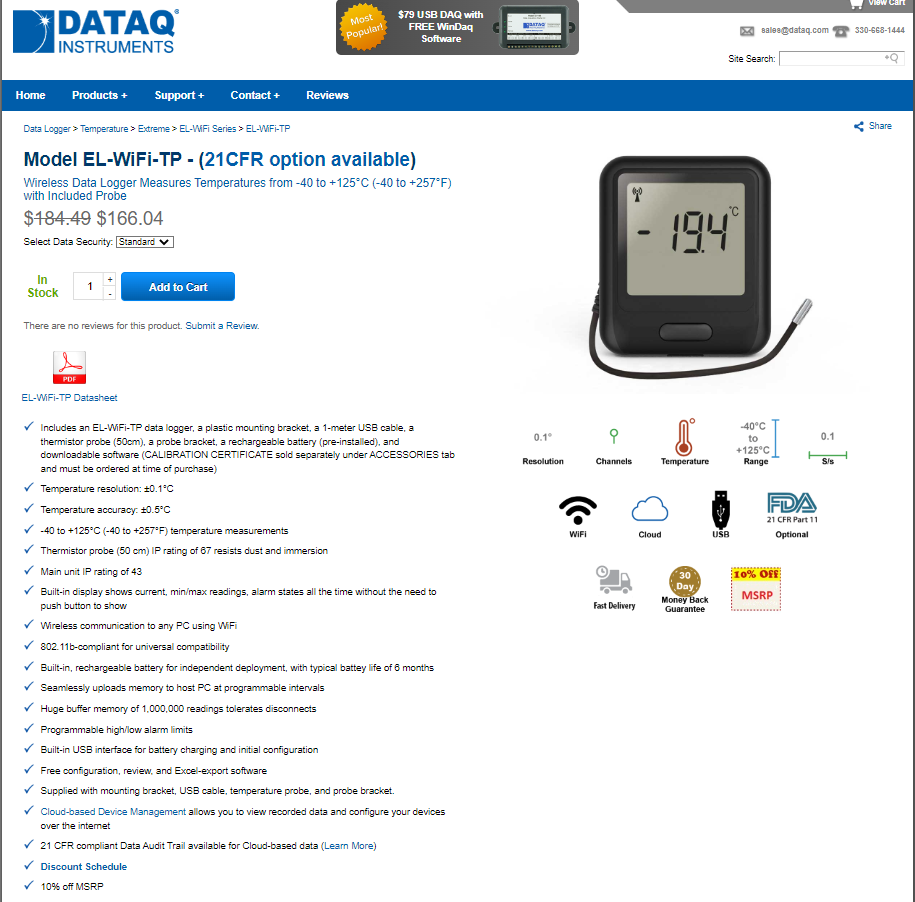
In the process of educating myself on the topic of maintaining our future lithium battery system, it became quickly obvious that temperature control is a key to longevity of lithium batteries. We have another system in our world that requires constant temperature monitoring in the winter to not shorten its life and that's a hot tub. If the circuit trips or a cord is unplugged by chance the tub and its pump would become an ice block in a couple days in sub freezing temps. In my place of work we monitor temps in many applications 24/7/365. Once I recognized the need for our hot tub I simply went on line to an instrument company and found a recording temperature data logger that was reasonably priced that would fulfill my needs. Well my and our needs to monitor the temps of our Oliver lithium battery system during winter storage is another perfect application of a recording temp monitor. The one in the link I'm providing is relatively inexpensive in the world of recording data logging devices and really easy to install and use. The beauty of this one is it can either be battery powered (rechargeable) or plugged into 110v with an adaptor (think shore power) and the device connects via wifi to the web for continuous cloud storage of regular temperature readings. That data is always accessible via the cloud storage site and can email temp deviations below or above chosen set points. Definitely not a requirement for a lithium battery system but very helpful, especially in a warranty situation because you own a verifiable temperature record of your stored battery system. See what you think if it sounds useful to you. Edit: Of course you could also use the same device to monitor temps in the bilge area for preventing frozen water systems. https://www.dataq.com/products/lascar/el-wifi/el-wifi-tp-data-logger.html
 2 points
 -
The site referenced by JWalmsley didn't work for me either. But this site did: https://www.epgsoft.com/visited-states-map/app/visited-united-states-map.php Good luck! With regard to management of LiFePO4 batteries during storage, if you have either the Lithium Pro or Platinum package and shore power where you store your Ollie, Mike Sharpe with Oliver Service has advised that you can leave the batteries in the trailer, with the trailer plugged into shore power, for the winter. Doing so relies on the internal heaters in the 315 Ah batteries and the external heater installed by Oliver under the 130 Ah batteries to keep them above freezing. That is my plan, although I also plan to do the discharge/recharge cycle specified by Lithionics once after 3 months of storage, out of an abundance of caution. I will then reconnect to shore power for the balance of the winter. But, there are different opinions on this topic, as highlighted by this thread. Read it and draw your own conclusions:2 points
-
No reason I can think of, except maybe to save a few $. All cars and trucks with drum brakes had them from the factory.2 points
-
Wishing everyone a very happy Thanksgiving filled with many blessings, love and gratitude.2 points
-
Perhaps for a better understanding or at least a more complete background knowledge on this topic everyone should review THIS thread. Bill2 points
-
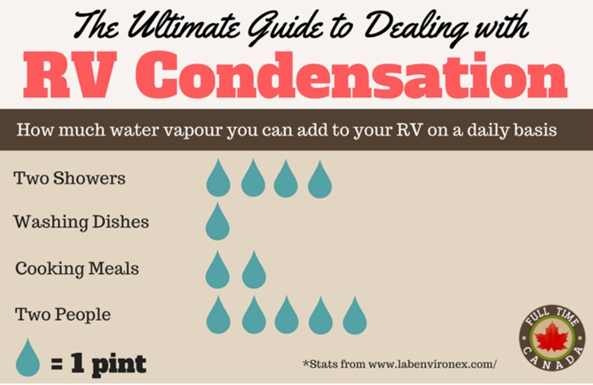
Frank: Thanks for sharing the graphic. One and a half gallons of RV Condensation for two while cold camping. That is huge. Sure explains the wet beds we at first experienced. To keep beds dry and CINC-HOUSE happy, I had to make a hard decision. Either: I had to shower & do dishes outside, and also sleep under the awning. OR Or open up the trailer. I think CINC-HOUSE was thinking hard about the first option. We found it best to open the Bathroom window. The reason for this choice is to draw cooler air in low and as far from the sleeping area as possible. As suggested above we also crack open the MaxFan just a little. Being high it will exhaust humid warm air quite well. An important benefit of this approach is that the make-up air has a chance to mix and warm up before it reaches our sleeping area. To facilitate this pre-warming benefit, I close the heater vents at the rear of the trailer, and keep the kitchen and bath vents wide open. GJ
2 points
-
Amen to that! I pray that all our Oliver Families are able to enjoy this special day of thanks. John and June2 points
-
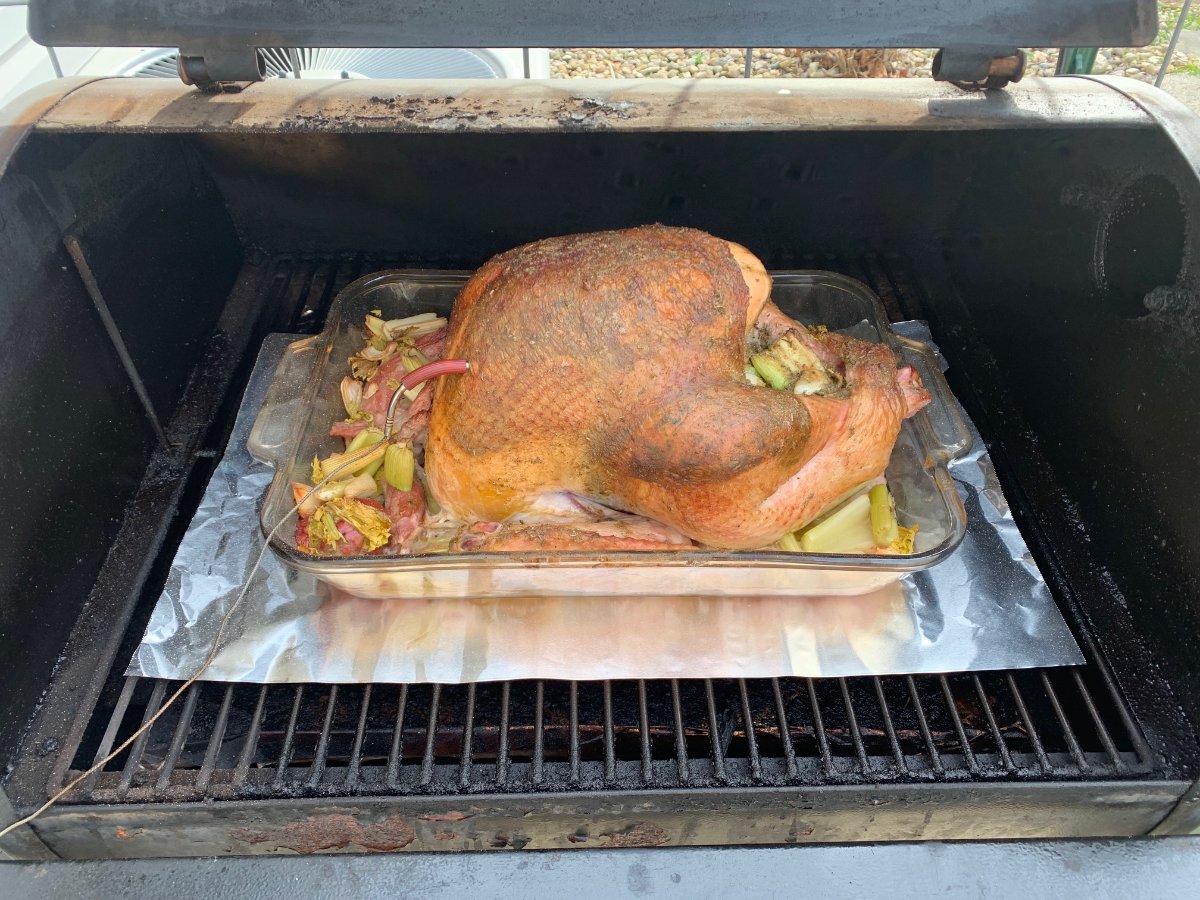
Just the two of us this year. The food coma will soon commence! 😵😆
2 points
-
Hi this is Bill again with an update. My wife Nancy and I have pretty much narrowed it down to the furnace and not the thermostat. Yesterday when we should have been eating turkey we spent most of the day out in the trailer. We got some smoke candles to see where the return air was coming from. The rear most air duct is situated only about 2 feet from the return air duct. With smoke candles we determined that a large amount of the heated air coming out of the duct would get sucked back into the return before it ever had a chance to warm the trailer. We theorized that this may be causing the furnace to over heat. So we decided to block the return air grill with duct tape and remove the front dinette seat to see what would happen. It greatly improved the air flow returning the air through the open front seat. But the short cycle was not improved. After playing with different return air options I believe I will make a return vent on the face of the rear dinette seat under the table. This area is a better choice than the front seat because the return air has little to no obstructions going back to the furnace. I plan to install a return about 1/4 inch off the floor so it will pull the cold air directly from the floor not 6 inches above the floor as it is designed now. Next we removed the supply grills and inspected the flex pipe and left the grills off to see if they were producing to much back pressure, nothing changed. We then replace the propane tank with a new full tank, nothing changed. Then we removed the awning side bed to let as much air into the furnace as possible, nothing changed. But we did figure out that the flame is going out about 2 seconds after it ignite's then relights 10 seconds later then goes out again and re-lights again about 6 times in 5 minutes this continues until the thermostat shuts the furnace off when the desired temperature is reached. Next I removed the sail switch and cleaned some lint off, nothing changed. I contacted Oliver and they were of no help at all they said to contact Dometic directly as it is a warrantee issue with Dometic and not an installation issue that would be covered by Oliver. So I went to a local Dometic service center and they said that they can not do any warrantee work because they do not sell Olivers. Gee thats nice seeing how no one sells Olivers. But they did tell me that they believe its the control board as it is a common problem and it should be replaced under warrantee. The other possible cause could be either the sail switch or the flame sensor. So I have a phone call into Dometic and filled out a work ticket we will have to wait until Monday to see what they will do. If Katanapilot happens to see this post, I see in your picture you have a RV7A I built a Vari Eze a Long Ez and an RV7, Ive sold them all and bought a BMW 1200GS and an Oliver, go figure! Hence the email N227EZ@gmail.com Bill1 point
-
John, i have managed to find a product called a sync lockpick or something along those lines that will allow for using the camera while driving. however im having trouble finding any information on using it on 2017-2020 trucks. It says it works with all ford 8 inch screens however their vehicle compatibility list only goes up to 2015 and the website i found it on doesnt seem very well organized. Ive contacted their support email to see if it will work but waiting on a response.1 point
-
I could run a generator, assuming it worked well in those altitudes. Question is for how long and how often i would need to run it to keep the tank at a happy temp. I've been doing some research and it seems that propane CAN work happily down to very low temperatures. Problems that come up can be caused by 1) running a tank above 80% or below 10% filled, 2) there being water in the system or 3) using a summer mix propane. winter mixes have additives meant to improve cold wether applications. It's been suggested to not buy propane in florida to use in colorado. Another potential problem is specific to altitude. Not enough air in the gas to air mixture. Some regulators have an adjustment that can be set to increase/decrease the propane. The tool to measure is an manometer (hilarious name) and here is what I've found. Scary deep rabbit hole but I'm going to pick up a manometer and aquaint myself with the adjustment on my regulator. Mid grade units are around $50. Once in altitude, sounds like the fridge is the most sensitive device. If I have an issue, the process seems to be to shut off all propane units and shut the tank top valves. Run test through the stove as shown on the video, adjust for proper settings. Once all is back together run the stove top for a couple of minutes to draw air out of system then turn other units back on. I am picking this up as I go and am NOT A KNOWLEDGABLE PROPANE TECH so play at your own risk.
1 point
-
I do love those cheap, but very heavy, harbor freight chocks. My typical "camper warmimg" gift to friends and family as new trailer owners.1 point
-
OH: Thanks for the reference to the Camera Source system. I noted the 64' of cable run. Would work nicely. Except for the "only in reverse" issue. So, for grins I called the Camera Source and asked about the "In Reverse Only". Their Technician, who installed this unit in his Ford 150, indicated that because of Ford programming, it has to be controlled by the Ford computer. This requirement came about as a result of the Ford Programmers. I asked about picking up another power source, such as I use on my Furrion (see above). He indicated "Sadly, that will not work due to the Ford Programmers". So basically, nice try... but no go.1 point
-
Interesting stuff for sure. It is a bit hard to tell from your experience whether it was the altitude or the cold that cause the difficulty in firing. Also our 2021 E2 has the older style furnace and not the Vario unit so may react to situation differently. As I'll be staying primarily at ski resort parking lots, I won't have access to AC power and would bet that even if a DC blanket existed, it would draw plenty of juice to operate.1 point
-
I saw a number of responses concerning the rear view camera but nothing specific to the TPMS. I'd love to have a system that speaks to the truck instead of adding another device to the dash or trying to sync with my phone.1 point
-
Bakflip - the maker of tonneau covers for pickup trucks - is having a Black Friday sale. If you contact them - DO NOT simply buy anything at the posted prices on the website. If you either call them or "chat" with them you can get an additional discount. Bill1 point
-
25 feet is what you get from Oliver. In seven years I've only needed an extension one time and I used a 10 gauged regular extension cord for that. Assuming that Oliver still uses the same type plug as always then - a regular (non-locking) plug. Hopefully a 2022 owner will confirm that. Bill1 point
-
Note that there are some things that can trigger a false alarm on the propane monitor. A lot of aerosol sprays like air fresheners, hair spray, etc. will trigger it. Our propane alarm will trigger anytime I use Lysol spray anywhere in the camper. Did your alarm trigger shortly after you used any type of cleaner or spray in the camper?1 point
-
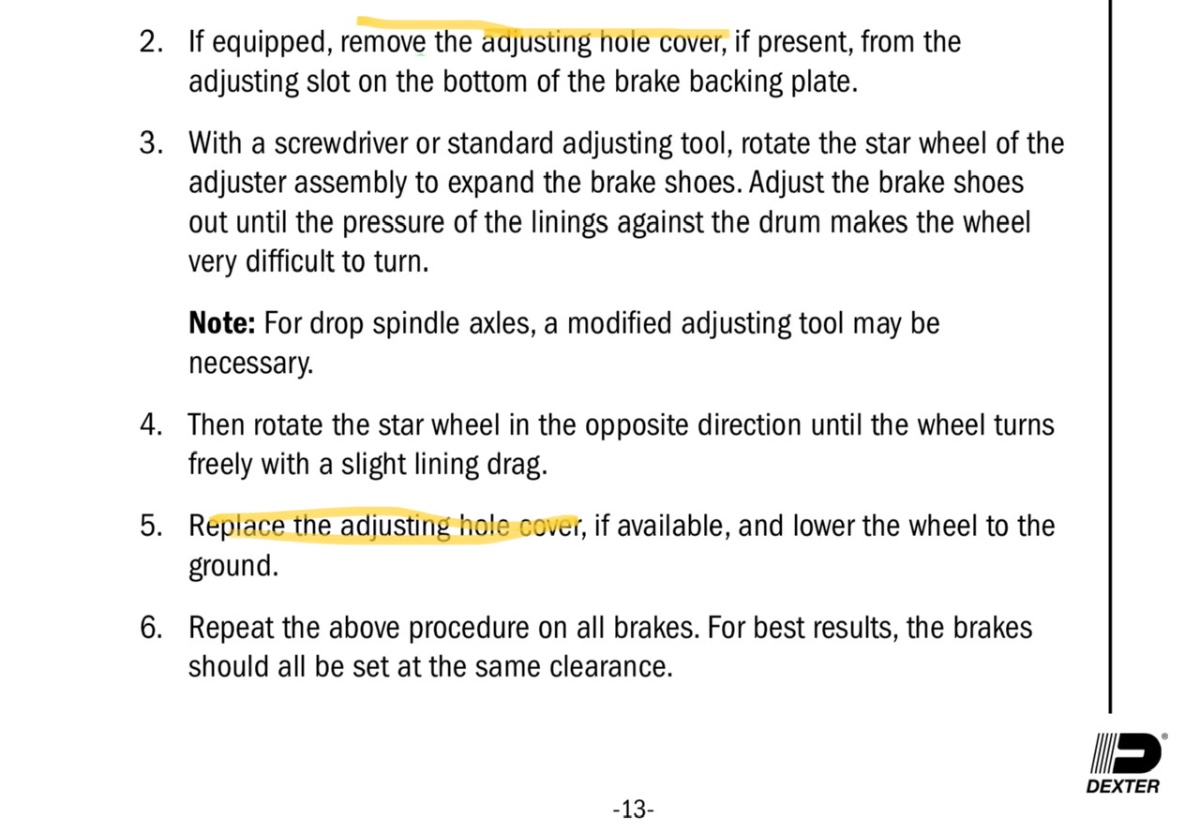
There are access holes on the backside of the brakes that allow you to adjust the brake shoes. Inserting rubber plugs in the holes help prevent water and dirt from getting in. See snip from Dexter Manual. I haven’t had a chance to crawl under mine to look to see if I have them or not. If not, I’m going to order some.
1 point
-
Goodyear Wrangler LT225/75R16. E-rated. Max load=2680 lbs. per tire. They are 28.3" in diameter. According to this Tire Rack web page for the Goodyear Endurance ST225/75R15 tire, it is also 28.3" in diameter. https://www.tirerack.com/tires/tires.jsp?gclid=EAIaIQobChMIwvbOyIXI-wIVsWpvBB2d9QcjEAQYASABEgL6CfD_BwE&tireMake=Goodyear&tireModel=Endurance&partnum=275NR5END&GCID=C13674x012-tire&KEYWORD=tires.jsp_Goodyear_Endurance_Tire&code=yes&ef_id=EAIaIQobChMIwvbOyIXI-wIVsWpvBB2d9QcjEAQYASABEgL6CfD_BwE:G:s&s_kwcid=AL!3756!3!537118804928!!!u!293946777986!&gclsrc=aw.ds1 point
-
I mounted my Furrion TrailerCam high and tied it into the running lights circuit in the Attic. I often cover 500 miles solo, but after a long day, I really try to avoid trailering at night. As such, I don't generally put many excess miles on the TrailerCam. When backing, or if I want to see what's going on back there, I simply turn on the running lights. Works well for our situation. More germane to this thread though is that I contacted Furrion an Ford to see if there was any way their camera could display on our F-150 center 8" screen. Nope.1 point
-
Whether it is a downgrade is a matter of opinion. I would have preferred the 15" wheels with ST tires. Too bad we can't swap! ST ("Special Trailer") tires are designed for trailer use, and have thicker, stronger sidewalls than LT ("light truck") tires, which are designed for "Light Truck" use. ST tires have higher load ratings because of the thicker sidewalls. And, with 15" wheels, you have more rubber and less metal, which provides a softer ride. I believe a softer ride is better for a "tiny house" on wheels, with all of the plumbing, electrical, refrigerator, TV on a hinged bracket, etc.1 point
-
A reminder to all, from the Forum Guidelines: "Welcome to the Oliver Forum, a great place for Oliver Travel Trailer owners and future owners to interact, share knowledge, solve problems, and most importantly, to develop friendships. Respectful and considerate responses help build this community." This forum exists to help current owners and future owners understand all the intricacies of an Oliver travel trailer and to get the most pleasure from it while exploring this wonderful land we all give thanks for. Please keep all comments aligned with this purpose in mind. Thank you, and Happy Thanksgiving!1 point
-
Not specifically listed as Black Friday sale, but Amazon has a 20% off coupon on the Grohe thermostatic shower valve that some folks have installed. That's $58 off of the $291 Amazon price. I haven't compared this to elsewhere, because I'm not at a point where I know for sure I'll be adding an alternate shower valve. https://www.amazon.com/dp/B00ROB2O0C/?coliid=I3IYPGNV73LDXJ&colid=R9JV77V82AV9&psc=1&ref_=lv_ov_lig_dp_it1 point
-
I have received multiple requests to post the inspection checklist I created before we took delivery on our Elite II on November 10, 2022. I have been hesitant to post it publicly, as it was not initially created with public consumption in mind, but only for my private use. My original version contains many personal notes that will not apply to others. I am also concerned that the inspection checklist may create the mis-impression that Oliver makes lots of production mistakes. Please remember that this list was compiled from hundreds of posts on this forum covering more than 5 years, and that only a few posters found multiple issues with their trailers. But, I reflected on the fact that Oliver encourages buyers to conduct careful inspections after delivery, and to bring their trailers back to the Sales and Service Center before leaving Tennessee (like we did) so any issues can be addressed. In the spirit of that commendable policy, I have created an updated and edited version of the document which does not include personal notes, but does include some additional comments in bold font based on what I learned during the delivery process. Thus, a Word version of my edited inspection checklist appears below. It now has fewer items, as I found during our delivery process that some were not relevant to the trailers being manufactured now. Please remember that my thorough inspection after delivery revealed only one production error, of the nearly 100 defects on my original list, in our trailer (a roof leak). It is my impression that Oliver is now paying much better attention to detail than at some times in the past, and that my fears that arose from compiling that long list of defects were mostly unfounded. Please keep in mind that the Oliver team, including Operations Manager Rodney Lomax and Service Manager Jason Essary, did an outstanding job of promptly and effectively responding to the issues we raised when we took delivery. They are great people with outstanding business integrity. It would hurt me deeply if my list were used to cause them grief, after they went the “extra mile” to take such good care of us. SO, PLEASE USE IT RESPECTFULLY AND WISELY. Ralph Pond a/k/a Rivernerd 1010819054_THINGSTOCHECKONOLIVERELITEIIONINITIALINSPECTION.docx1 point
-
I don't know. I inspected the windows after delivery, and found no issues. They all appeared flush to the outer shell, and properly caulked. What Jason reported to us after we took the trailer back is that when leak testing, he noted that a "new" protocol for window installation had not been followed. I don't know what that "new" protocol entails, or whether it would have been in effect in September. In your shoes, I would shower the trailer with a garden hose, then check for window leaks. If you find none, I would resort to the old maxim: "If it ain't broke, don't fix it."1 point
-
I am sorry my report left you with that impression. I should have written it more clearly. To my recollection, none of the issues we found had been reported before except the roof leak and the absence of rubber plugs in the disk brake backing plates. As I noted, Dexter does not supply the rubber plugs, and I believe Oliver had not thought to supply them. So, the only previously reported issue that Oliver could (and should) have done better was the roof leak. The impressive point for me was that of nearly 100 previously-reported issues detailed in my list, I found only those two, and only one was a production oversight. So my "takeaway" was that Oliver has successfully addressed almost all of the "oft-reported" past problems. Please accept my apologies for any confusion.1 point
-
Not looking to confuse things here but I called Lithionics about proper winter storage and, based on where I live (central Maine), it was suggested to me to remove my 3 batteries and store them inside which I did last year and plan to do again this year. I don't love removing them mostly because I don't like messing with the installer's work (Oliver installer) and getting the wiring to look exactly the same as it did from the factory when I reinstall them is impossible. That said, I had no issues this past year when I reinstalled them. As soon as I take the bolts out of the battery I immediately put a tie wrap (zip tie) through the wire terminal openings to keep everything "together" and the terminals in the same order from top to bottom. We can have many months of brutally cold temps where I live especially at night so removing them makes me feel better. I don't have shore power at my house but even if I did, I'd still remove the batteries. I have the heating pad with the red switch that others have mentioned. For what it's worth, I also don't like having anything "on" when my trailer is stored for the season. My storage period can be 5 months long.1 point
-
My wife hums in her sleep. I want to say that is really annoying, but I know better..1 point
-
I can tell you that they certainly do understand your point. There are a reasonable number of other things that tend to gum up the works and that is why this process has taken sooooo long. Bill1 point
-
There is no need to spend $300 (!!!) on a Lithionics charger, any name brand lithium capable one will do, I personally would steer well clear of any $50 no-name Chinese clone. I would pick this Guide: …. Blue Smart Charger John Davies Spokane WA
1 point
-
The Goodyear Endurance tires are well regarded in the towable RV field. I'd be ok with them on my Oliver. ST tires have strengthened sidewalls to handle the sideways scrubbing trailer tires endure in tight turns. @bugeyedriver We've had Maxxis on our previous 3 trailers with absolutely no issues at all. Very nice tires, too.1 point
-
John, the new wheels will still be 6 bolt on 5.5”.1 point
-
I took this photo this morning of one of the Elite II’s on the showroom floor. Rodney says this is the tires and wheel’s they will be using on the 2023 models. He did say that their existing stock of 16” wheels and tires will be used first. So, it may be as late as March of ‘23 before the new models will start to be delivered with the new sets.
1 point
-
Fifteen years ago, 16” wheels were used extensively by the automotive industry. Now it’s an oddball size. All the heavy duty trucks are using 18” or 20”. Also at that time you could not buy a heavy duty tire in a 15” size and the ST tire’s being made were all Chinese maypops.1 point
-
Same size wheel and tire that came on my 2010 Elite II and I've had no issues with them.1 point
-
Michelin stopped making the tire. Papa Bean counter had nothing to do with it. Bill1 point
-
I’m interested in this as well, we too would prefer not to remove the batteries and just stay connected to shore power with the battery heater on. I don’t understand why you would need an external charger if you can connect to shore power. Why is staying connected to shore power not recommended? If you can plug into shore power you don’t need an external charger. Last winter the previous owner had the Oliver stored outside not connected to shore power with battery heater on, I’m guessing the solar kept the battery heater charged? There has been so many different answers about this including from lithionics I’m not sure what to do. It’s unsettling that the person from lithionics you spoke to didn’t know if keeping it plugged into shore power was ok but then tried to sell you a portable lithium charger! Wouldn’t shore power charge it just the same?1 point
-
Since you apparently have an external heating pad, I infer that you have the Lithium Pro Package in your Elite II with three Lithionics 130Ah G31 batteries. If you had the Platinum package (with internal battery heaters), you could leave the batteries on if connected to shore power. See the Lithionics Storage Procedure document attached below: But, according to that Storage Procedure, the only "safe harbor" for Lithionics batteries without the internal heater is to remove the batteries from the trailer so you can place them in a temperature-controlled environment, and follow the protocols for charge/discharge cycles, per the Storage Procedure. Edit added on November 25, 2022: But, Oliver is installing external battery heaters with the Lithium Pro package; it was included with ours. And, Mike Sharpe from Oliver service has advised that "per Lithionics", where the external battery heater is installed, and turned on, you can leave the batteries in the trailer, connected to shore power, just like the batteries with internal heaters covered by the Rev. 7 storage procedure attached below. Lithionics Storage Procedure Rev.7.pdf1 point

















.thumb.jpg.e34bf01ef7f7d5e99ad31856d45afbeb.jpg)
-
Recent Achievements
-