Leaderboard



Popular Content
Showing content with the highest reputation on 10/27/2023 in all areas
-
Thanks for the info Steve. Hopefully Oliver management will reconsider at some point in the future. The one unique advantage of used Olivers posted for sale here is that a potential buyer had a very direct channel of communication to a seller, including being able to see the history of that trailer through the previous owner’s posts. And in the case of John Davies recent sale, a LOT of history and background of the many great modifications that John did to show his incredible level of care taken with his trailer.5 points
-
I purchased one of THESE from Harbor Freight to carry around in my truck. I have better quality torque wrenches in my workshop but this one is good enough and accurate enough for the main purpose of torqueing the wheels. Also, if I drop it I will not feel bad given the price. Bill4 points
-
Our reasons for purchasing an Elite II are similar. In our first year of ownership, we have yet to get to a national park with it, but have enjoyed some pleasant stays at state parks in Idaho and Oregon, along with some lovely days boondocking at Harvest Host locations, Forest Service campgrounds, and elsewhere. We opted for the Lithium Pro package, with 390 Ah of capacity. It has been more than adequate for us. We have found that even when boondocking for a few nights, the thing that has pushed us to pack up and find hookups or a dump station has not been battery life, but the size of the gray water tank. After 2+ days, it is nearly full, just from 2 short showers per day and dish washing. So, for us, the extra expense for the Platinum package did not make sense. Had a larger gray water tank been an upgrade option, we would have gladly paid for that! Given your plans, I recommend you save the difference between the Lithium Pro and Platinum packages, and opt to spend that savings staying one out of every 3 nights or so at an RV park close to the national park you are visiting, so you can dump your gray tank (and black tank, if you don't have the composting toilet), recharge your batteries, if needed, from shore power, and refill your fresh water tank. Then go back to the park, if desired, for another visit. That was our choice last year, and given our use of the trailer, our initial year of ownership has left us quite comfortable with that decision.3 points
-
Yes — you will want to check the torque after your initial 50 miles, and then at regular intervals. And more frequently whenever the wheels have been off. EXAMPLE: after leaving my service at OTT this morning, I checked dutifully at 50 miles and found several were just a wee bit loose. That’s normal. I think of my torque wrench as a necessary tool. Mine is a long handled hand wrench. Sorry I’m in transit and can’t give you an Amazon link for an example; maybe another member can give you options.3 points
-
We once had an organic obstruction to our black tank, AKA a plugged toilet. I used the black tank flush valve to clean it from down below (black tank drain valve closed). When I flushed the toilet there was an air pressure explosion of the obstructing material over pretty much the entire bathroom. Oh my! We spent a while cleaning the mess. Two conclusions: #1-know that it’s a straight shot to the black tank from the toilet. Just take a stick and push the obstruction into the black tank #2-do not flush the black tank with the drain valve closed without being keenly aware of the pressure you are creating in the tank and its associated connections. (I will NEVER flush the black tank with the drain valve closed 🤠.3 points
-
To topgun2’s point, I make use of a digital water flow meter connected directly to the dump station’s water spigot, next a hose valve to control flow, then a dedicated 25’ Zero-G hose with a quick disconnect to the black tank rinse-out port inlet. This assembly is rolled up and stowed within the rear bumper compartment when not in use. Prior to dumping the black tank, I setup this rinse hose assembly; the dump station hose is removed from the spigot regardless of condition. Once the black tank is initially dumped, the black tank valve is closed. I then zero out the meter, open the hose valve, then measure 10-12 gallons before dumping the rinse water; the hose valve remains open during this rinse dump process. When complete, the black tank dump valve is again closed, the meter is zeroed out and water allowed to fill to the measured amount. This rinse cycle is repeated up to three times. The use of the meter does not require having to go in and out of the OTT to monitor the tank level, which is not accurate, especially with the tongue raised to better hasten the dump.3 points
-
That is how we do it. Then we add a little Calgon and Pine-Sol to the toilet and flush a couple of times to let that work on the tank using the bumpy road travel to loosen anything and everything. I have found the roads around Lafayette Louisiana very good for this process. 🤣3 points
-
What info? I don't see a post from Steve in this thread. Regardless of the reason, closing out the Oliver Classifieds is bad for customer relations. My opinion of Oliver Management just took a steep nosedive.2 points
-
Just make sure you time it! 🤣🤷🤣2 points
-
Completely unscientific but I've done it for years: fill tank with flusher for 45 seconds, pull valve and rinse for 30, repeat for 3 cycles.2 points
-
Choosing platinum vs pro depends so much on how, where, and when you intend to use the trailer, which I realize may be difficult to know before you set out on your first trips. Things to keep in mind include the following (1) the batteries like to be drawn down from time to time (they don't like staying at full charge); (2) solar produces about 20 amps in full summer sun, but the sun isn't overhead all day (therefore, by example, 8 hrs at an average of 15 amps yields 120 amp-hours), and substantially less when cloudy (e.g., 5 amps for 6 hours yields 30 amp-hours), in shade, or in shoulder season months; (3) A/C draws about 100 amps from the batteries, so 1 hour of A/C use draws the batteries down 100 amp-hours; and (4) your compressor fridge (based on our experience with a smaller compressor fridge in a Sprinter van) might use between about 40 and 60 Amp-hours per day (perhaps someone with a newer trailer will verify this). So the "practical" differences depend on you you use the trailer. If you plan on using lots of A/C without shore power, or lots of microwave and TV, go big. If you plan on having shore power every 3-4 days, or camped without shore power in the sun, and can get by with modest electrical use, then platinum will likely suffice. We've used our 2021 trailer (with 390 Ah lithium) over 12 months in the last 3 years, covering about 20,000 miles. Our electrical demand from the batteries is primarily for lights and CPAP, with occasional A/C use at rest areas when it's hot. Our state of charge (SOC) typically remains above 70%. During shoulder seasons or with lots of rain, we might hook up to shore power every 4-5 days to recharge the batteries, but could usually go longer if we wanted. One benefit of hooking up to shore power is that we can also use our electric heater, which is quieter than the propane furnace. Another benefit of hookups (some very nice state and provincial parks have hookups) is that we don't have to listen to other people's generators. I try to top off the batteries (i.e., charge them to 14.4V) with shore power every 2 weeks, at a minimum. Not infrequently, we hook up to shore power to run the refrigerator on AC, but don't charge the batteries (because charging is noisy). I cycle the batteries periodically (draw them down to the cut-off voltage and then charge them to 14.4V); this would take longer with the larger batteries. We do not carry a generator (which avoids the extra weight, fuel, and noise), and, with a bit of battery management, have not needed one. We do carry an extra solar panel for when the trailer is in the shade. So, our example is but one of many scenarios, and practical differences between batteries will, in my opinion, depend on how, when, and where you hope to use your trailer. Hope this helps.2 points
-
Interesting hitches…1 point
-
Dates for 2024 as posted to the Casita forum on the fiberglassrv.com site: 2024, Feb 5-11: 2024 Quartzsite Gathering The annual Quartzsite Gathering will be February 5th thru 11th, 2024 at Dome Rock! Once again this will be a "No Host" get together and everyone can do as they please, visit with friends, make new friends, ask questions, see mods, sit around a campfire, tell jokes, sing whatever you want to do! The town of Quartzsite is only 3 miles away and has pretty much all you need, gas, food, places to eat, dump facility, trash dump station, and lots of RV vendors. Come when you want and leave when you want, find a spot you like and set up camp. This is a total dry camping get together so come test out your boon docking skills! Best of all it is on BLM land and totally FREE and the most gorgeous sunrises and sunsets you will see anywhere! The 2023 Gathering was a great success after the pandemic with about 125 trailers attending so 2024 should be even better. See you all there! Location-- GPS: 33.643617,-114.304752 Last year was my first year and I met and camped with several other great Oliver Owners as well as many Casita, Scamp, Escape and Bigfoot owners, I am hoping to attend again. Anyone else planning to be there this year?1 point
-
Yes - just the trailer (RV). Even some take this to mean just the "box" and NOT from hitch to bumper as we Oliver people measure it. However, the term "always" bothers me in that I'm guessing somewhere out there in the universe there just might be someone that considers the TV into the equation. I've stayed at the Pole Flat campground and there is absolutely no issue with getting in or out with your Ollie. The best campsite is located at the top left of the "circle" in the campground. Since you do not fish then you would also enjoy the ghost town that is located further up the road past the dredge. Some of the repair work on the scar that the dredge left that Trout Unlimited has done in that area is impressive.. Bill1 point
-
I just started using the Pine-Sol/Calgon solution that @HDRider suggested. I learned this from the Kleen tank guy: Kleen Tank, the nationally-recognized, independent RV tank cleaning service Not enough experience with it yet, but the idea is the Pine-Sol keeps tank surfaces clean and the Calgon Beads will keep tank bottoms and drainpipes slippery and lubricate the valves. Not just used for occasional cleaning. These are flush tanks and NOT septic tanks. Given this works, the idea is to have this in your tanks only and stay away from other cleaners and septic tank additives (which I never use, even in 3 homes where we've had with septic systems). Since having this in the Black and Gray tanks, I have not once smelled the strong smell of Pine-Sol in the Oliver. This means all inside is sealed well, venting off the roof as designed.1 point
-
I haven't read through the entire thread, so I'm posting this risking it's already been mentioned. In a comment above you mentioned risking running out of water in exchange for longer stays in beautiful places. One thing I strongly encourage is considering a composting toilet based on your travel plans. 1. You will in effect double your fresh water capacity in a way because you will no longer be sending half your fresh water down the toilet. And if you can transition to sponge bathing you will use very little for that chore as well. We can easily go more than a week using most of our fresh water at the kitchen sink. 2. The whole drama of dump stations sort of fades into the background. We have yet to get in line at the dump station. You have many more options for dumping gray only, including that in most states you are allowed to dump gray water on the ground. You won't be able to at a park, but elsewhere it's fine. Some states encourage this practice to increase ground water around plants, etc. 3. The solids side of the composting toilet can last several weeks or months depending on your usage. We set up our composting toilet when we got the Oliver in May this year and just changed out the media for the first time this week while winterizing. We only use the camper toilet about half the time when at campgrounds so our usage is relatively low, but the system works perfectly and the whole waste disposal thing is very no drama for us. And we don't even own a so called stinky slinky. Our gray water is drained through a 3/4" garden hose dedicated for this purpose. The composting toilet just makes dry/extended camping a lot easier. BTW you can quickly switch to a standard toilet in the future with very little effort if you decide you want to go that route.1 point
-
I use a number of forums and ad block works on them all. https://getadblock.com/en/1 point
-
That seems to contradict the signal we get by disallowing sales of used Oliver's on the forum.1 point
-
Torque Wrenches......absolutely needed - BUT - make sure you check its calibration! Lots of videos on how to do this at home (ex. below). Mine (USA made) was way under (reporting 90 ft-lbs at 65) 😮1 point
-
Superb point! I had not taken that into consideration and now retract my musings.1 point
-
One of the great joys of using this forum is the absence of pop-up ads. Anyone operating a forum has to pay for server time and storage space, and the usual way that is accomplished is by selling ads. I, for one, will be sorry to see that happen.1 point
-
Then plan to spend a few days during July or August in the Stanley Basin near Stanley, Idaho camping at Redfish Lake, or along the Main Salmon River in a Forest Service campground. The views of the Sawtooths are truly "breathtaking".1 point
-
I truly love this forum, but have to ask the question, is it time for a non Oliver controlled forum? Example gratis, Air Forums…1 point
-
Good for Oliver. Bad for Oliver customers. The Thor model.1 point
-
If you already had a big truck you could skip the powered axle and all that battery capacity is for camping. $105k isn't that much more than an Ollie L2.1 point
-
This is precisely the conversation my wife and I were having. Water and personal ruggedness will probably limit us more than electricity. And your proposed solution is very much in our plans. Thank you for sharing your experience. P.S. I can't wait to spend a few weeks in Idaho running out of water somewhere breathtaking. 🙂1 point
-
Not a lot of plumbers in rural Central Idaho use Uponor/Wirsbo Pex-A either. I also designed and built the manifolds, and did all of the plumbing in our home. After 4 years, no leaks in the Pex.1 point
-
Quartzsite is not at all our idea of boondocking in the wonderful state of Arizona. However, it is an RVing Snowbird paradise, yes! 🙂 Before or after Quartzsite, if any of you, who want to venture just 3 hours north to visit Prescott AZ (5400 FT elevation during winter, with a low very probability of snow) are welcome here! We can park and hookup water/power to 1 or 2 of you at a time, with a dump station down the road at the local RV dealer. There are FS campsites and secluded 'dispersed' camping EVERYWHERE (no fees anywhere), with amazing views in all directions! Prescott is real Arizona, as it was founded by the Union Army in 1862, an amazing oasis in the dry SW. Just let me know! (PM) I have 3 gigs scheduled early 2024 and nicely this week is free for us, so timing is excellent. Chris and I, being new to OTT ownership and this forum, would love to meet all of you! Hopefully, we get critical mass of Oliver owners at this 2024 Quartzsite meet!1 point
-
Primarily the torque wrench is used to check the torque on the lug nuts of your wheels. I check mine prior to leaving on each trip regardless of whether or not the wheels have been off the Ollie for any reason. I'll also check this torque once or twice during a 5,000 mile trip. If the wheels have been off the trailer - annual wheel bearing service or if they are removed for greasing the zerks on the suspension - I will re-check the torque before traveling and then again between 50 and 100 miles and then again that night (or the next morning prior to departing for the day. There are other things that should be checked/torqued (at least annually) such as the jack/stabilizer bolts, the bulldog hitch bolts, the axle bolts, etc. Bill1 point
-
It's a great help. TYVM. As you and others have requested, I'm gonna take a swipe at pigeon-holing our "camping style". We are basically doing this to go to national parks. Or things that look like and feel like national parks. The plan is to visit in seasons when tent-camping would be pleasant (not too hot, not too cold). But we want to do it with a bit more comfort and safety than car-camping has provided us. Once there, we want to day-hike until our feet give out, then have an inviting base camp for recharging. We realize we have to accept certain limitations (65 ain't 35 and money don't grow on trees, etc.). But, for the first time in our lives, time is not one of them. So, long road trips with many (interesting) stops can replace fly-overs with quick turnarounds. And when we get to the places we love, we want to stay until we are sated. Instead of a couple of days at 1 park, more like a couple of weeks. I fully expect to be in the Ollie 100+ days per year. I'm OK with having to find facilities (electric, dump station...) more or less on a weekly basis. In fact, when it's not too limiting, even more frequently. Many of the campgrounds we've loved over the years have electricity & water at least. But we would also like the ability to unhook for at least several days at a time (we would NOT be running the AC for long during such periods). I do NOT want to stay in a paved parking lot, bumper to bumper with a million other trucks and RVs. But I will, if it's a pit stop on the way to the next beautiful place or it happens to be across the street from a hike I want to take.1 point
-
One "final" thing to check - though unlikely: The plumbing valve under the kitchen sink area could be stuck thus letting grey tank "fumes" into the cabin. Take the kitchen drawers out and tap on the valve to make sure that it isn't stuck. Bill p.s. let us know the outcome.1 point
-
Unfortunately, not everyone has the skills and tools to do that. Glad for you that you can.1 point
-
UPDATE: Three cheers to Oliver’s Service Department! My propane leak was a loose connection at the propane stove. They detected the leak, there was no debris or issues with flare, they simply had to tighten the connection. (That Riverside RV Service Center in Bismarck should be ashamed. I went all summer without using my propane because they didn’t detect the leak that I suggested was coming from the stove.) OTT also fixed damage I had, resulting from the handling at Riverside Service Center. And OTT also managed to squeeze me into their schedule for an annual maintenance. So hats off to Jason and the team!1 point
-
Welcome to the family! I’m answering from the road, on my phone, so pardon my brevity: I own the 2022 Elite II, twin bed, upgraded mattress, solar (3 lithium batteries), composting toilet, convection microwave, the convenience power connection up front, and a front basket. I tow with a 2500 HD truck and a 2-5/16” hitch ball, so I didn’t need the Anderson hitch. I chose 20# propane tanks, after I learned what they weigh when full. I love everything about my Oliver; no regrets on any of my choices. If there’s an option for backup camera size, I’d recommend larger. TOYS & OTHER EQUIPMENT: I am shopping generators. During my first OTT plant tour yesterday, Josh mentioned a newer model Honda 3200i that is smaller (fits in basket) and DUEL FUEL. It sounds pretty decent. I haven’t researched it yet. I bought the “Sand Mat” and love how it lets dirt and sand pass through. Look for sales, or used on REI. It’s not light weight, but comes with a storage bag. I have several electric adapters: 50 to 30, 15 to 30, and I’ve needed both for various purposes. Torque Wrench is a must (mine is hand powered, easy to use and lives under my back seat in the truck.) You might need to buy the right size fitting. This summer I’ve added: COOKING: a Blackstone 17” propane griddle (great thread on this forum will give you lots of options and ideas); a third 20# propane tank in the back of my truck; a Duxtop electric Induction cooktop (has two model numbers on the box! BT-200DZ and 9610LS). COMFORT: a DREO space heater model DR-HSH004-G that can run at eco setting using the battery (I never leave it on, as I didn’t need it running all night, including during 20+ degree temps, as I had winterized my trailer.) MAINTENANCE: a grease gun with extra fittings (see Jason’s excellent service video on Oliver Travel Trailer YouTube channel plus forum threads on greasing Zerks); a small mirror on a handle, to see some of the zerks, and other equipment in small spaces; a Combustible Gas Detector. EDIT: I almost forgot to mention, I’m from SW Florida and I cannot store my trailer at home. I opted not to buy the cover, and I rent a covered space in a secure storage facility. It’s north and inland from where I live, and it was worth the expense, as my Oliver didn’t suffer from Hurricane Ian last year, and was protected from UV. I’ve been on the road since early July (and I’m not home yet). I’ve only needed to empty my compost solids twice.1 point
-
The larger batteries 2 instead of 3) are also within a UL Approved aluminum case.1 point
-
Same roughly ten year battery life. (That's not what you meant, but just added for clarity.) Think of it as a bigger tank: You can go 640 Amps on a fill-up vs 390 Amps. The 640 A/Hr batteries are also automatically self-heating, where the others have a heating mat under the batteries that you turn on.1 point
-
Agreed. But, for a travel trailer subjected to bumps on the road, the issue is not brass vs. plastic, it is the strength and durability of the pipe-to-fitting connection. Oliver uses some brass crimp-ring style and some plastic compression-style Pex fittings. Crimp-style fittings depend on the diligence of the person doing the crimping to ensure a secure connection when subjected to the bumps on the road. I suspect the person doing the crimping in your Oliver let you down. The most secure method for Pex connections, which has been on the market more for a decade, is the expansion ring type. Instead of crimping a brass ring around the pipe, a special tool temporarily expands a plastic ring that is then quickly slipped over the pipe and fitting before it shrinks back to its original size. Where the brass crimp ring is applying outward force, always trying to enlarge back to its pre-crimped size, the plastic expansion ring is applying inward force, trying to shrink back to its pre-expanded size. It is this outward vs. inward force of the clamping ring over time, and particularly when bumped around, that makes the plastic expansion ring type much stronger and more durable. I plumbed our entire home with the expansion ring Pex-A system. That is what I wish Oliver had used on our trailer. It is the system that, in my judgment, Oliver would be well-advised to use going forward. It produces plumbing joints that are even more resistant to the abuse delivered by bad roads than the much more expensive brass Sharkbite fittings.1 point
-
I've never heard of any problems with them. However, its been awhile since I've actually had one myself. Bill1 point
-
I stand outside beside the trailer while filling the black tank through the flush valve. You can hear the water spraying inside the black tank. When I hear the water level in the black tank rise above the flush valve I leave the water running and just pull the black tank dump valve. I do this 2,3,4 times or as many times as it takes until I see clear water and no floaters in a clear fitting at the terminal end of the sewer hose. Only then do I turn off and disconnect the flush hose. Never had a problem doing it this way. Sometimes I delay pulling the dump valve a little just to make my wife hollar at me “Ok OK OK DUMP DUMP DUMP!!”1 point
-
Today I learned that some people have "liked" some of my posts. (OK, I'm not the sharpest knife in the drawer, I guess. 🙂 ) So, I went back and mindlessly, belatedly clicked TY for each of the replies I've received. Believe me, every word is very much appreciated as we prepare to take this leap.1 point
-
Not only are lithiums a perfect match for solar - they're also a perfect match for a DC/DC charger... Your TV's alternator generates a goodly amount of current (probably north of 180Amps) which cannot make it to the lithium bank via the standard 7-pin connection. The DC/DC charger allows the lithiums to charge with that current produced by your TV while traveling in addition to the solar (if you're pulling during sunny times of the day).1 point
-
Wonder if you could ride inside it? Wife took the truck into town and you want something from the camp store? No problem! Just drive your trailer down to the store! LOL! I'd do it just for the reactions. Drive it down your row of campsites and watch the look on your neighbors' faces as the random trailer rolls past. Probably best that I don't buy one......1 point
-
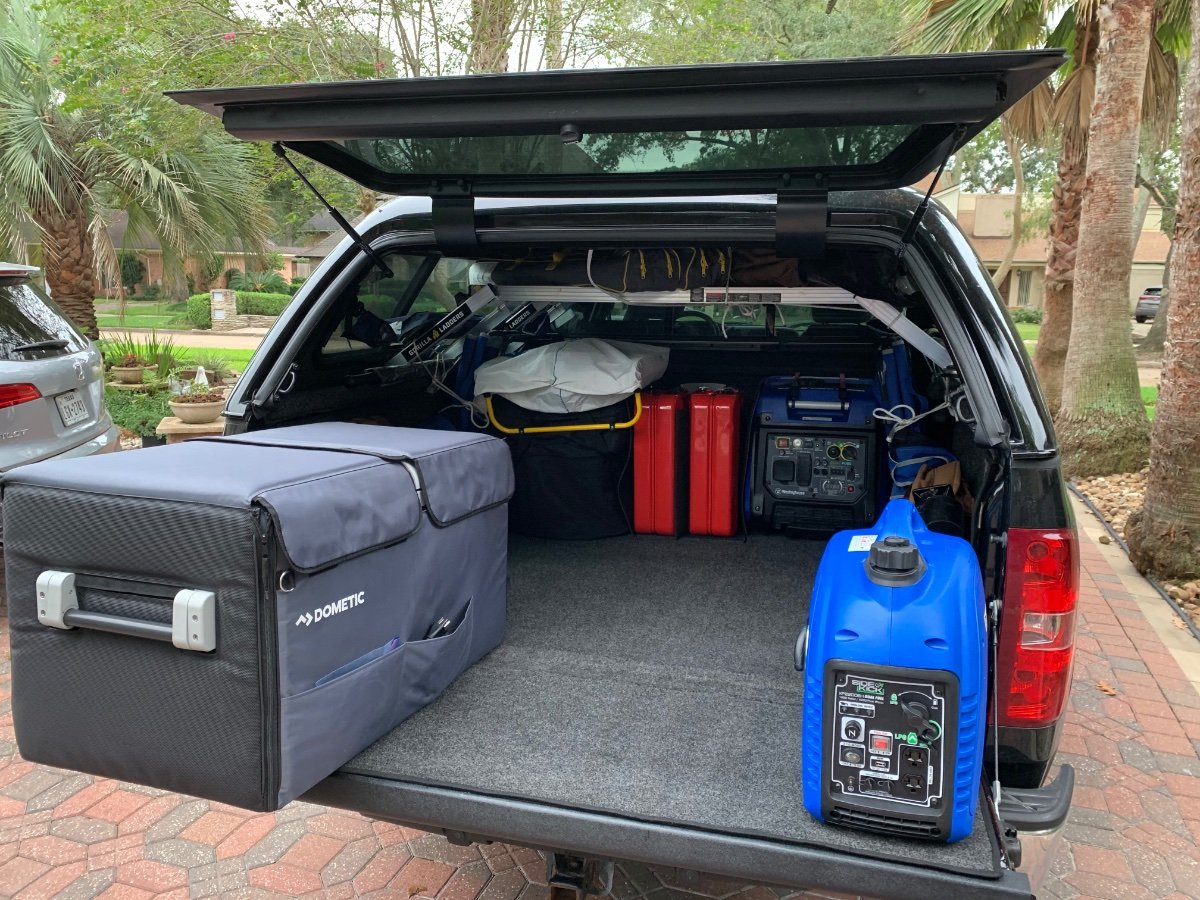
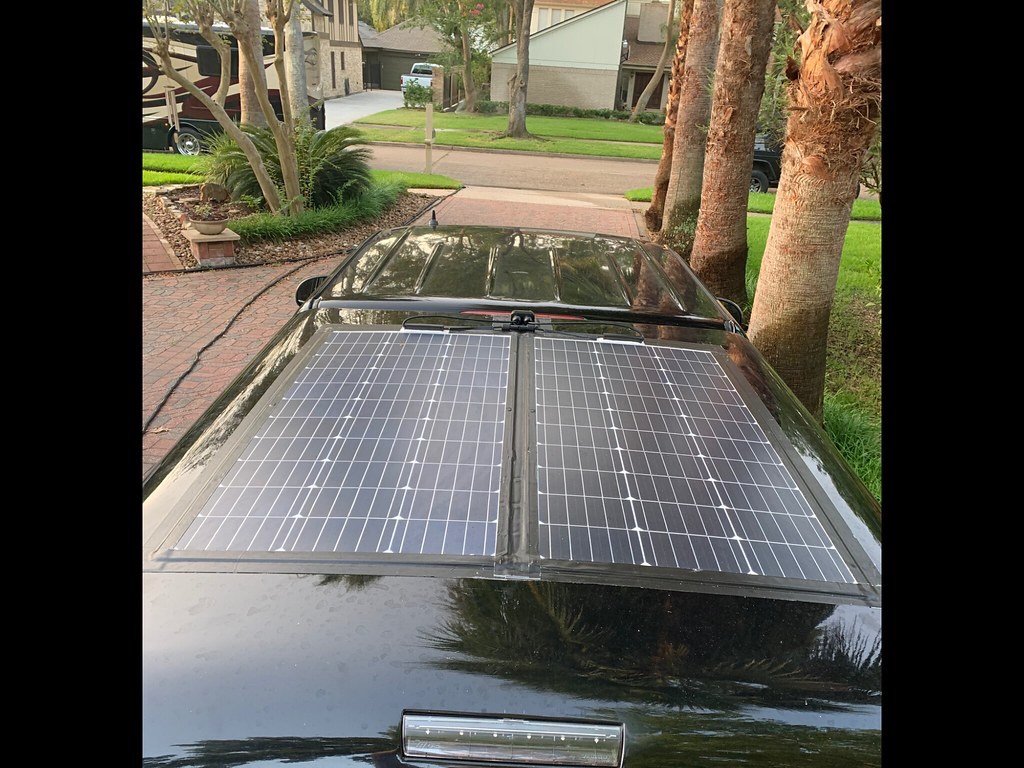
I too have the BedRug with bottom, sides and tailgate coverage in my 2012 short bed TV, as well as an A.R.E. cap lined with the same carpet material. As some mentioned, easy on the knees, as well as an insulating factor and sound reduction. 11 years and counting with little signs of wear or staining. I have furniture carpet slides on the bottom of a large frig/freezer that work great in handling it. Although a cap will add significant weight, it provides protection and security, as well as added space, especially for bikes and even a loft. I also installed a 200W solar array atop the cap.
 1 point
 -
For future reference, when you have 12VDC+ (nominal 12V, not 3-4V) at the pump (red wire) and ground (black), two things are true: 1) Any and all relevant fuses must be good, and 2) therefore the pump must be bad. RV pumps and most any electric pump do not need water to start! Just power. I'm installing an upgraded water pump in ours. It's on my workbench not connected to plumbing at all. I connect it to my shop marine 12V battery and it runs immediately. It's loud to start-off without water. Put my thumb over the inlet with a little pressure and now new pump runs quietly. Push hard with my thumb to shut off the air and the pump stops as it achieves cut-off pressure. You can always bench test 12V appliances. I do it upon receipt, so I do not go beyond the Amazon 30-day return window. It might be too late for you, though Amazon is great on returns! Now is a good time to upgrade your water system. My OEM pump was 3 GPM at 55 PSI and my upgraded Seaflo pump will produce 5 GPM at 60 PSI. I am also adding two .75L accumulators in series on the output side of the pump to reduce water pump cycling (can flush the toilet at night, and the pump under wife's bed doesn't run). I can't stand a weak shower and we carry 35-gal extra water tank in the TV! Amazon.com: SEAFLO 55-Series Diaphragm Pump - 12V DC, 5.5 GPM, 60 PSI : Industrial & Scientific1 point
-
Yes, it has to sense a change in the water pressure to turn on and off.1 point
-
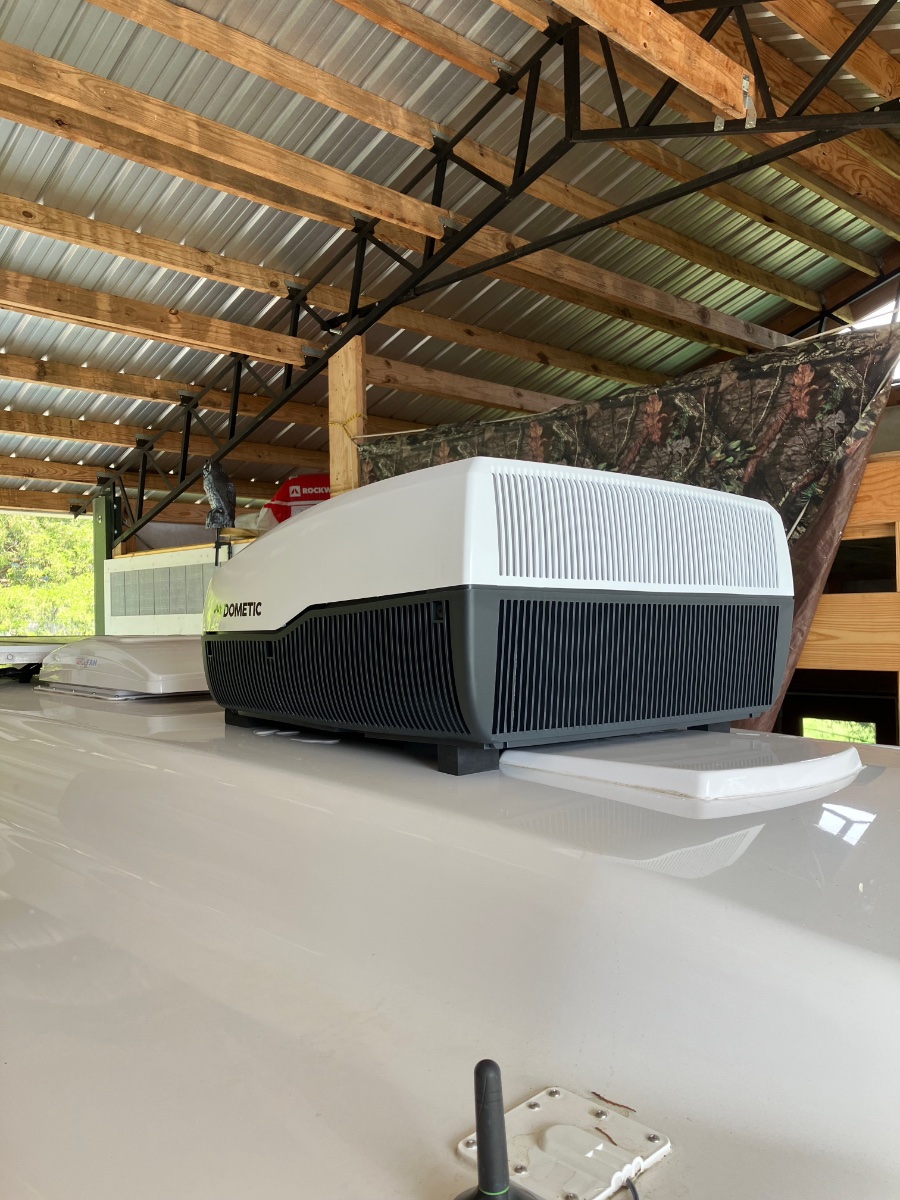
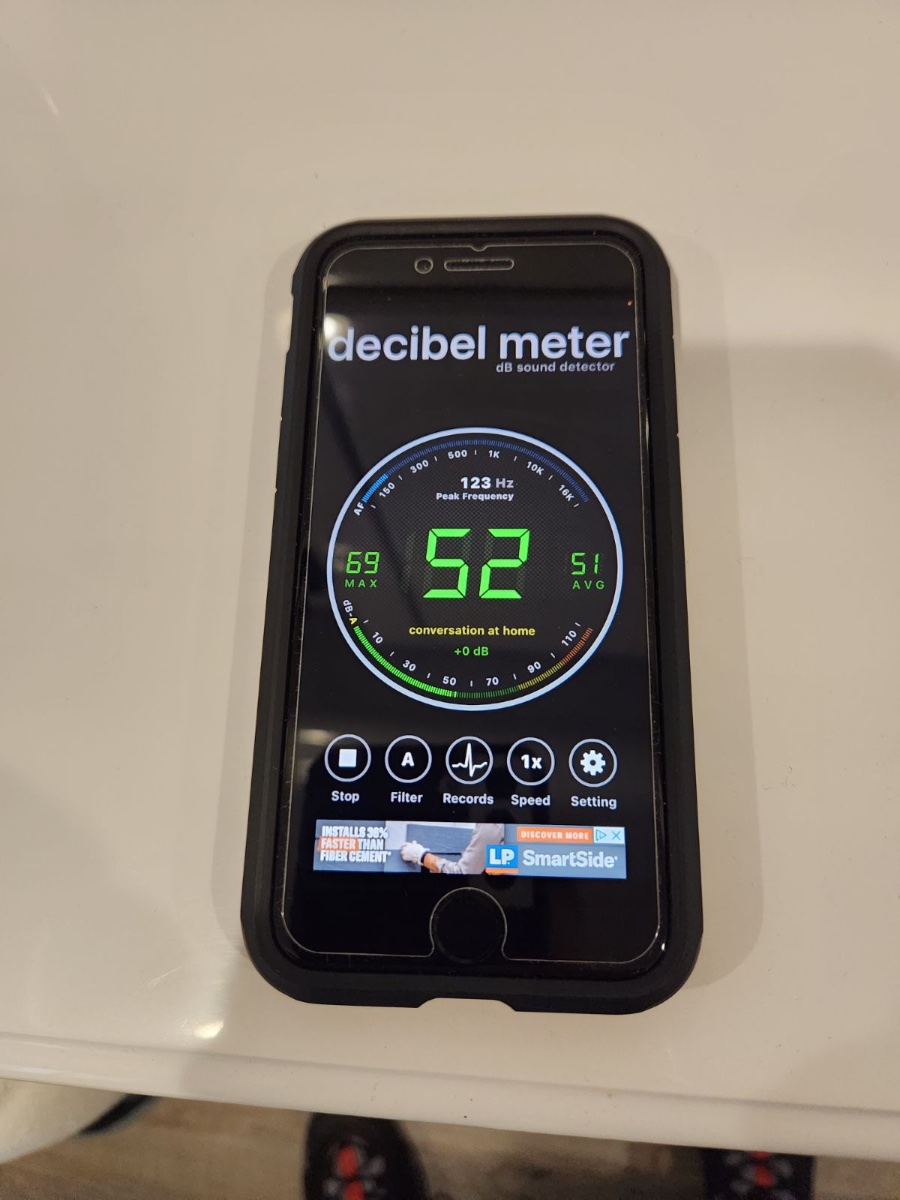
Happy to report that I have installed the Dometic FreshJet air conditioner on my Oliver this week. The install was fairly easy only taking a couple hours for two of us to complete. I rigged up a 3 to 1 pulley system in my workshop to lift up and remove the old noisey Penguin model. The new FreshJet is significantly lighter than the old unit, and a friend and I were able to stand on some scaffolding and lift it up and onto the Oliver. The wiring connections were easy to complete using the existing thermostat control box. I purchased the FreshJet 3 Series from RV Parts Country; $896.00 plus $124.00 shipping. So far my wife and I are happy with the performance of the FreshJet, it quickly brought down the indoor temperature and humidity on a hot Tennessee summer day. Best of all is the difference in the sound levels between the old and new units (69db versus 52db). Many thanks to @RoadLotus for researching the FreshJet and making everyone aware of this quiet AC option for the Oliver.
1 point
-
Hi everyone, I just got the fresh jet installed at an RV place. Total cost was $1600. It is indeed very quiet and uses the existing ADC and thermostat and they are going to sell the old penguin for me. They take 10% which is totally reasonable and means I don’t have to haul it back home. It was 108 here and I’ve been outside all afternoon so I won’t do a decibel check just yet but I will at some point. But it works fine and it is indeed very quiet.1 point
-
I think if you were to pull from the breakaway chains, then you'd be O.K. as far as applying any weird torque to the tongue - they're pretty much dead center and if you're pulling from the cables you aren't going to apply any twisting forces. I don't know what the cables and those two shackles are rated for, though. I don't think it would take much to collapse the factory tongue jack. I'd be more inclined to just drag the tongue on the ground if that's your only choice. Better would be the XO Jack like I mentioned above. It's stout, and mounted directly to the tongue. I'd have no problem at all pulling that through sand or mud. In fact if you go to their website, they have a few videos of doing just that. Personally, I think it's one of the best improvements I've made to the trailer.
1 point
-
The Oliver Elite II trailer was not designed or ever intended to be any kind of serious off road trailer. If that's what you wanted, perhaps you should have chosen one of these or maybe some of these. Just sayin'...1 point
-
Seems the reasons for buying an Oliver and joining the forum are getting less and less. What's next. Sad.0 points




















-
Recent Achievements
-