Leaderboard



Popular Content
Showing content with the highest reputation on 02/07/2025 in all areas
-
Hey, Bill @topgun2 - but what about this "Sparky Spot" in Hatch, NM? Arguably one of the best places for an authentic green chili cheeseburger on the planet.... HA!
 4 points
 -
Update on the AGMs. I had them load tested at an automotive shop and was told one battery was good and one was bad: no details or readouts were provided. i called Lifeline battery and explained the history to a representative, who initially was skeptical about the readings done at the shop (he wanted more details that I didn’t have) and whether I had correctly attempted to recharge the batteries. Eventually though, he agreed to send me two new AGMs at no charge and with free shipping! I was astonished, especially because he told me the batteries were manufactured 13 months before I purchased the trailer, and technically no longer under warranty. I still don’t show any deep discharge on the Victron history in the 60 days before we noted the poor battery function last week. So I don’t know when the battery was damaged or if it was defective from the start. At any rate, I’ve learned a lot and appreciate all the help on the forums. I will be watching for lithium batteries on sale, and maybe my wife will get some for her next birthday!4 points
-
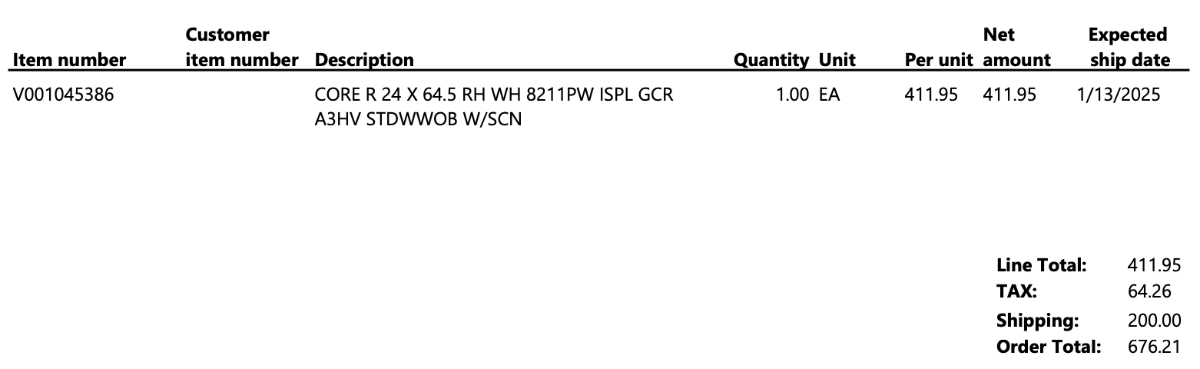
Topgun2: About $672.00 for the DOOR CORE, (not the frame and hinges). Read on for more details of part number, price etc. Our door failure...as reported elsewhere and here for convenience. Note - we added the friction hinges (not shown) before the failure happened...but i bet the door frame was already weakened due a wind event and flexed enough that the door inner panel slid out of the narrow track and then cracked and buckled. Temporary fix with white Gorilla Tape after massaging the inner lining back into the frame slot. I was told by Mike at Service that a new door cost is $1600.00 installed at the Service Center. (NOTE: Mike was including the whole FRAME and Door replacement as that's what they have on hand.) I checked with Lippert and they said you can just replace the door CORE which includes the window and standard manual handle. So I went with that and ordered the door, which by the way is custom order, non-returnable, non refundable. Here is a PDF of the specific door core replacement instructions. Requires 2 people for for best install, and about 45 Min including swapping out handle for keypad lock. Door Core Replacment Instr.pdf HOW TO Order a Door thru Lippert: Contact at Lippert: Alicia N. Care Center Customer Service Representative P: 432-LIPPERT | f: 537.534.7161 E: customerservice@lci1.com Lippert Alicia has configured a special part number for the Oliver EII door core only, this does not include any hardware for the door. Once you contact Lippert they set pricing and provide you with a quote, this usually takes around 48 hours. The door arrived in about 4-6 weeks ARO. V001045386 - CORE R 24 X 64.5 RH WH 8211PW ISPL GCR A3HV STDWWOB W/SCN [Core Only - Does not include any hardware for the door] ccd-0006252.pdf They also can provide a quote for the complete door replacement which includes removing the frame and threshold. V000629008 - 8070R 24 X 64.5 RH FW WH 8211PW ISPL GCR A3HV STDWWOB WSCD WKP NT OPSLD [Complete Door Replacement] After the snow melts here and the sun is out and warm, I will do the replacement project and post an update. Craig Short (Galway Girl) Hull 505
4 points
-
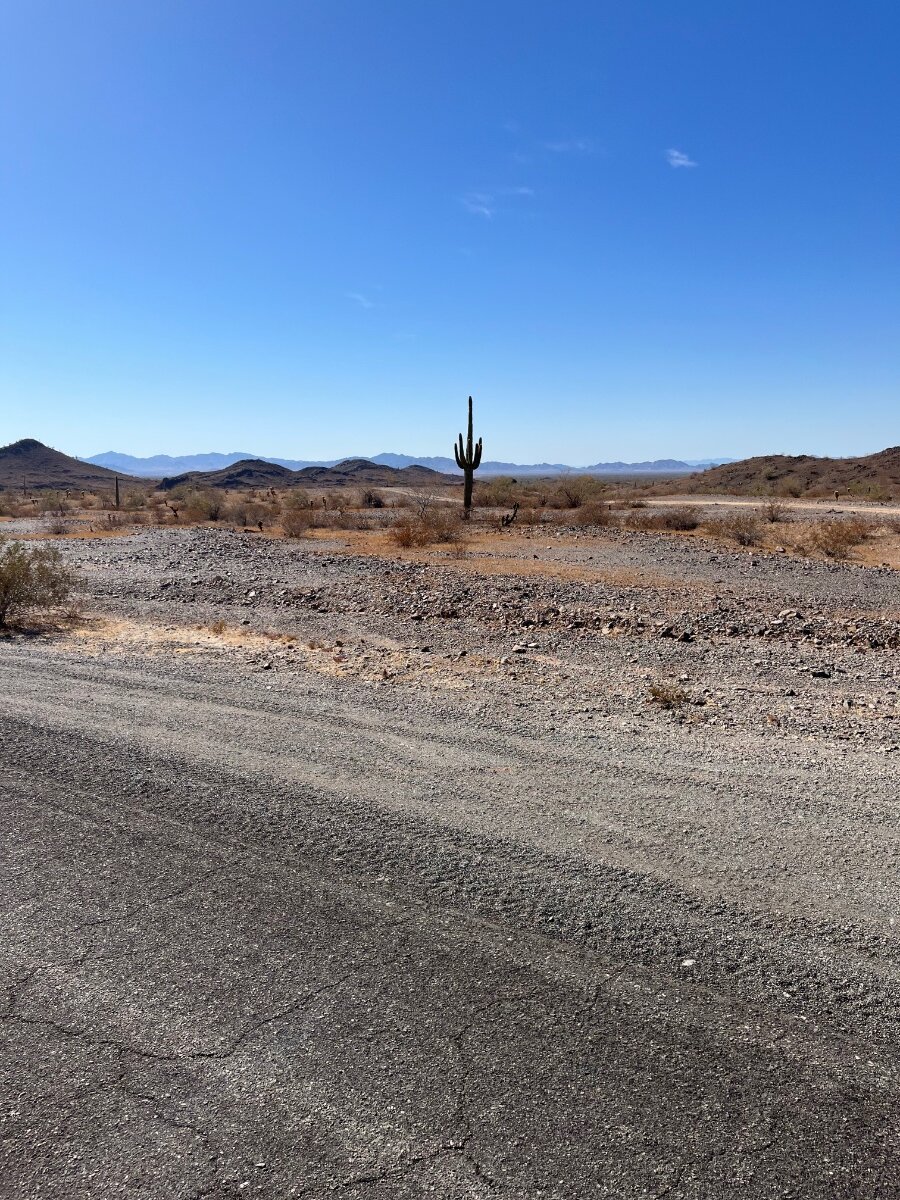
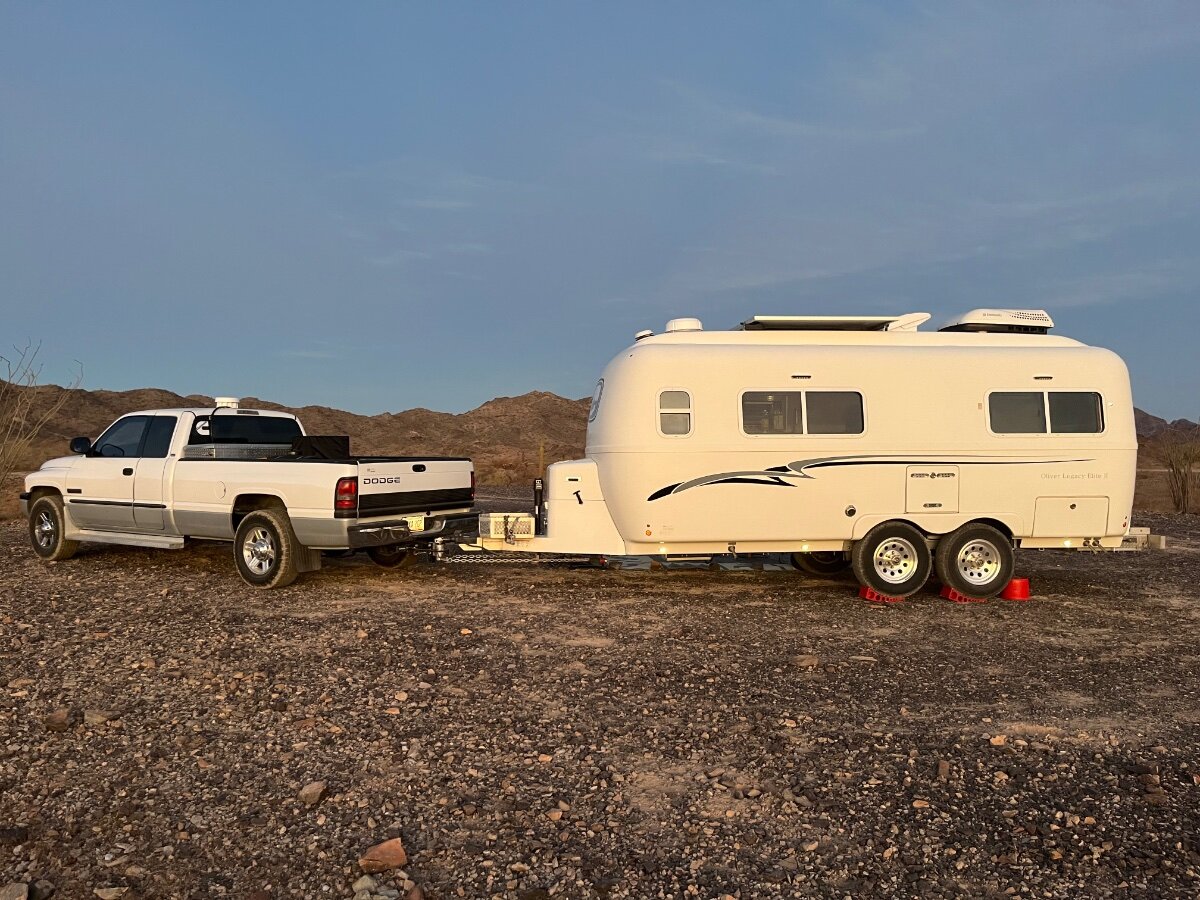
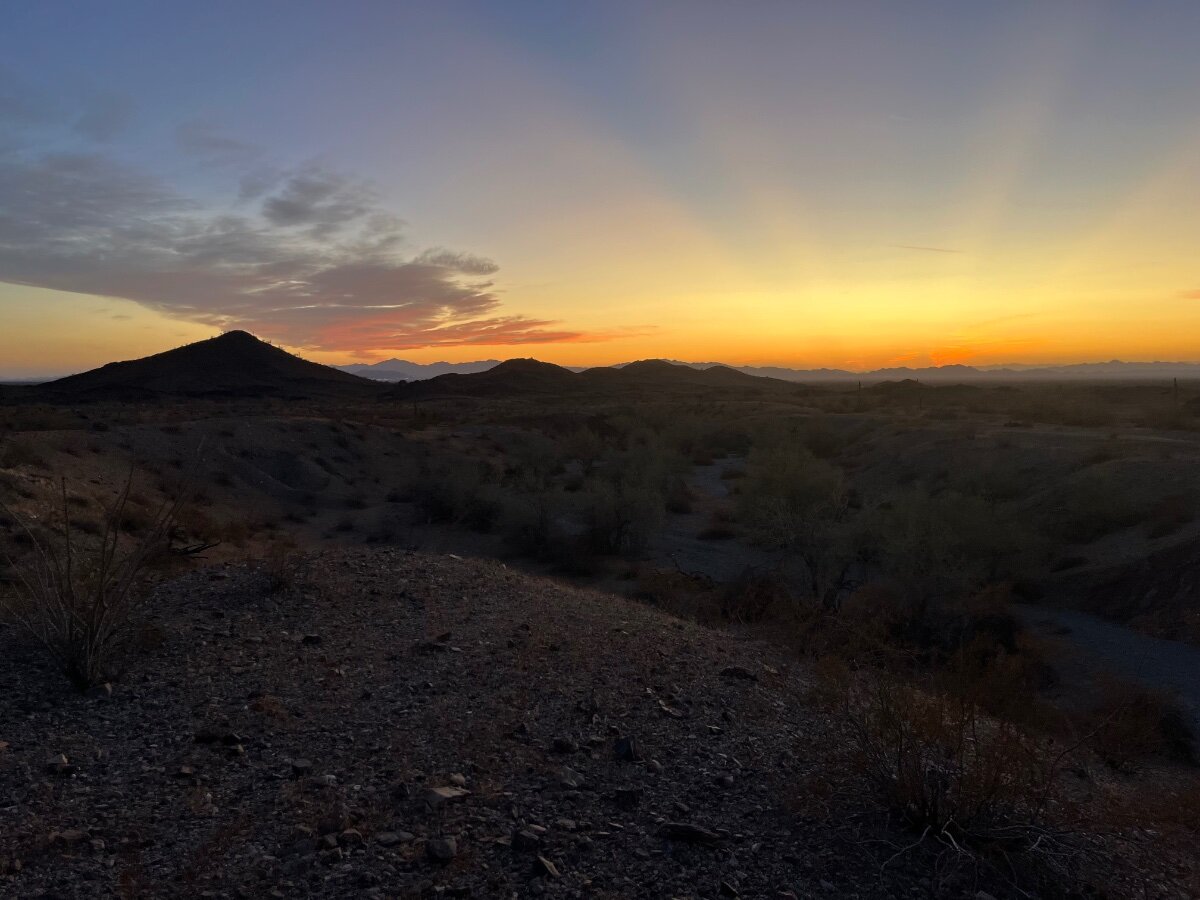
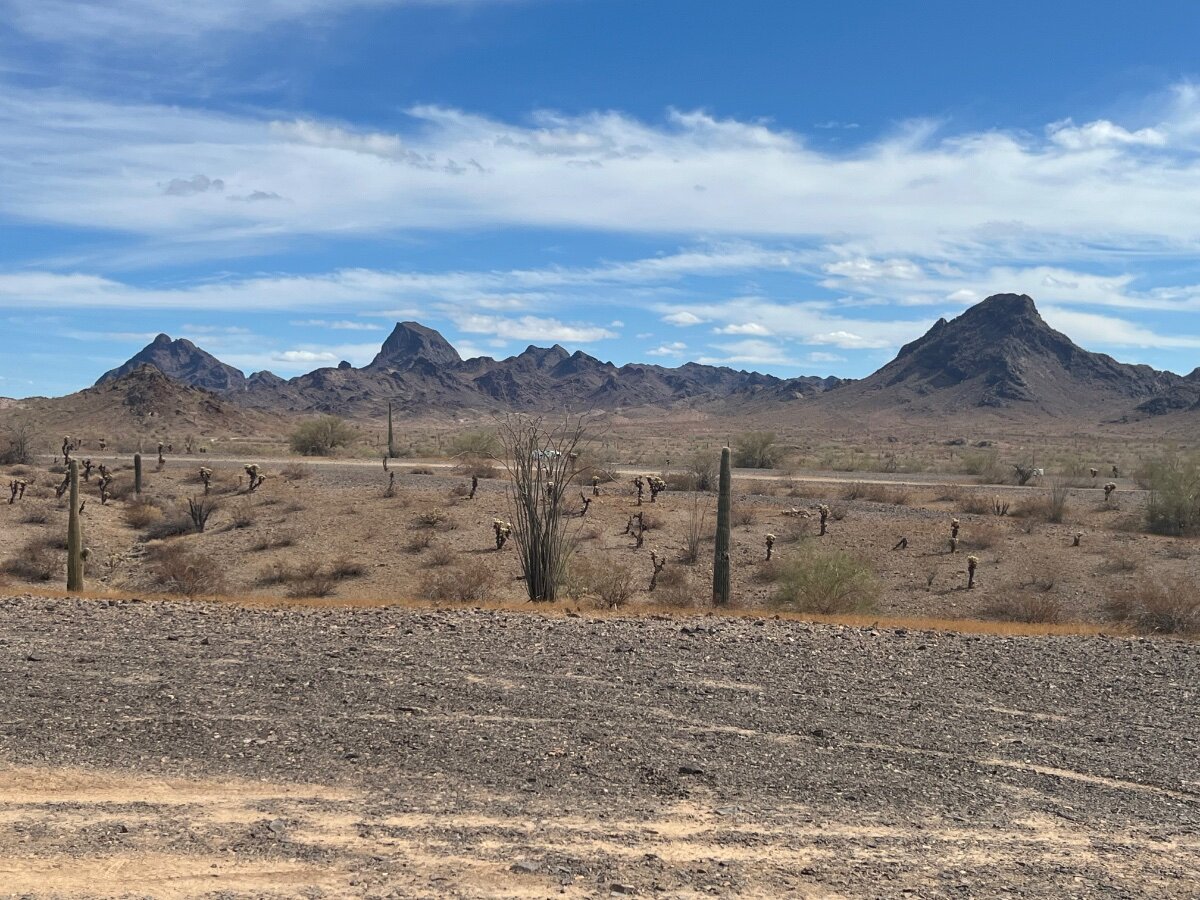
Spent our last two days up Plomosa Road a ways. Maybe next year we can start our own Oliver Rally out here! Quiet and beautiful up here, 14 day BLM, great views and sunset. Richard and Thea came up for an afternoon visit! We hit it off and didn’t stop talking for a couple hours!
3 points
-
Agree, who knows what technology is going to be available in the future and Lithiums should come down in price, too. Purchased our Ollie from the original owner during 2016 that had let the two original 12V batteries run down very low when stored, our Ollie did not originally have a battery master disconnect switch. Replaced them with two 12V AGM group 27 batteries that worked great. I had a good application for two 12V AGM group 27 batteries, so I replaced both AGMs with one BattleBorn 100AH Lithium. We don't have an inverter and can easily operate three days in the summer (furnace not needed) with the single 100AH Lithium starting at 100% SOC with refrigerator running on LP gas before a battery charge is needed.3 points
-
By using the AGMs to their end-life, you'll enjoy even more savings because lithiums will certainly be less expensive 5 - 7+ years from now. In fact, there may likely be a new battery technology by then that's even more efficient than Li.... just say'n3 points
-
Truma - are you reading this? Good for Lifeline! I agree with SeaDawg - unless you have some compelling reason for switching to Li, simply keep those new AGM's for a few years and enjoy the savings. Bill3 points
-
Truma seems to be buttheads about not allowing anyone other than qualified Truma service centers to work on their units. Apparently, you can't buy any parts for them and they won't return calls. Good product, bad service.3 points
-
@TxMN2020, I have just sent you a personal message which includes my phone number. I am offering my assistance to help work through the battery charging issues you have described. I have a 2022 Oliver Legacy Elite II, Hull 990, which is equipped with Lithionics lithium batteries. I live in North Dallas. Please give me a call. Don3 points
-
Probably sometime in late March as we're not traveling right now (at least with the trailer) and I want a bit warmer weather before I tackle the project.I've already ordered the tracing paper, and the Oracal Vinyl in our trailers colors to cut out the stripes to match our existing door and I'm just waiting on weather. After I tear out the old door, I'm going to try disassembling it to see if it would be possible to simply 're-skin" the inner door lining as someone has suggested. If that's possible I may very well re-skin it and keep it as a backup door. Craig2 points
-
Hi Bill. Thank you for the recommendation. Part of my due diligence prior to pulling the trigger on Zuni was practically wearing out the Oliver University site, along with YouTube, and watching video after video. There are tremendous resources available in both places, and I'm sure I'll continue to visit them frequently. Cheers!2 points
-
@TxMN2020: "Low Voltage Cutoff (LVC) – During discharge, the BMS will disable discharge current when any cell reaches the 2.6V (approximately 10.4V total voltage). Charging current is allowed, so that the battery can still be charged by a charging source. Some charging sources require to “see” the battery voltage before allowing charging, in which case LVC lockout can be temporarily overridden by short-pressing the Power button. This will allow the charger to sense the battery voltage, so charging can begin." - from my Lithionics manual. Based on this, start and connect the generator first. The blue battery button lights should start blinking slowly, indicating they are charging. If the batteries are not taking a charge, short-press the battery power buttons once to trigger a charge. The only real ways to know the batteries are actually taking a charge are the blue button lights on the batteries and the Lithionics app. Once the batteries are powered up I strongly advise you install the app on your phone and connect it to your batteries. It gives you very good information on each individual battery's status. You also should get the manual for your specific batteries. This is what I have: https://search.app/Sri9bZ77WSrryceG9 Yours may be different. P.S. If your batteries are that low, it will take a while to get them charged back up, even with the dual generators. If you see that they're charging, sit back and give them time.2 points
-
That is my dive plan Art. I plan to squeeze everything I can out of my present AGMs. We shall see.2 points
-
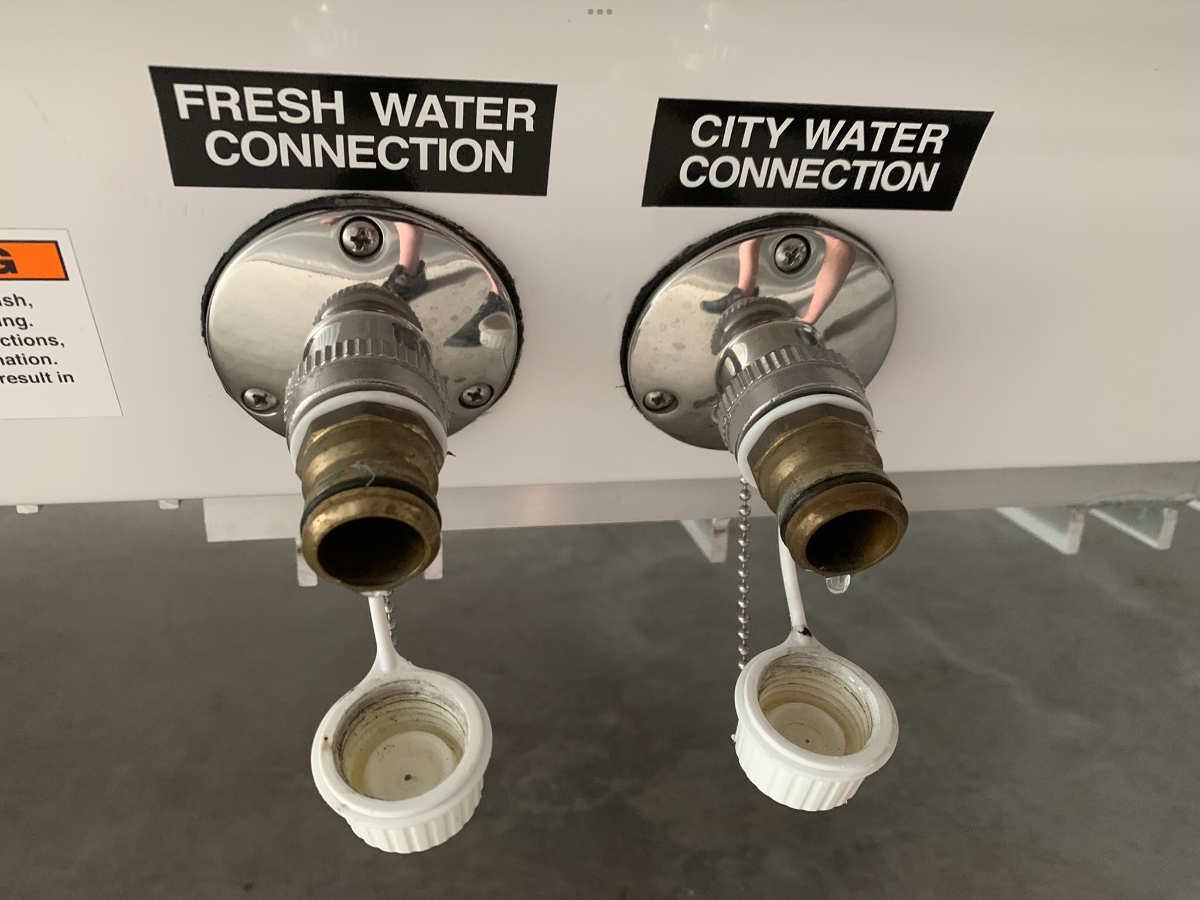
Like @mossemi has noted above, the freshwater inlet has fewer "restrictions" than the City Water side (I believe is true in all OTT models) for this, and other boondocking reasons, we've adopted the practice of only using water from our FW tank -- regardless if staying at an established CG with city water hose bibs. As @Geronimo John has noted in other similar threads, static and dynamic pressures are NOT the same animals even at the same pressure! One can really "hammer" the OTT system with a dynamic pressure at 40psi ultimately causing leaks or other damage, IMO. Always SLOWLY crack open the city water valve when using either the FW fill or CW side of the OTT water inlet system, this practice will "soften" the blow of dynamic water pressure on your plumbing system. FYI, we haul around a "Travel Berkey" water filter system (it lives under the forward dinette seat) and never yet had a problem consuming filtered fresh water from our tank. We keep the FW Tank sanitized regularly throughout our travels as a standard practice. Monitoring the CG water pressure going into the City Water inlet with our in-line pressure gauge is another SOP for us which indicates when we need to "throttle-back" the flow via the hose bib valve due to high CG water pressure. Casablanca has 40psi pressure regulators, but peace of mind is achieved by monitoring the in-line pressure gauge. For our style of OTT camping, we only connect to the City Water inlet when sanitizing the plumbing system.... my $0.02. Safe travels, ALL!2 points
-
I find myself stepping up on the top of the rear wheels to grab stuff from the front of the truck bed -- I'm getting a wee bit "long in the tooth" for those operations, and may need to get a hoe, I'll check with D and see what she thinks.... HA!2 points
-
I would not pay $1600 for that. I would find a much cheaper alternative to replacing it. Something like this:2 points
-
We are in year 7 or 8 with our agm batteries. Don't rush the change up to lithium, especially if you rarely boondock. When you do boondock, keep the batteries atv70 per centbor better, imo. Great customer service from lifeline. You probably had a bad cell in one battery. Best to replace both, at the same time.2 points
-
We have a set of brand new still in the plastic mattresses for the twin bed side by side floor plan. When we purchased our trailer we purchased two of the thicker mattresses from southern mattress and installed them before we took delivery of our trailer. So they have been sitting in our spare room ever since and its time to do something with them. We plan to be at the rally in April and we will haul them down with us if someone is interested. I would like to get $100.00 for the two of them, but feel free to make me an offer. They are doing no one any good sitting in my spare room. Bill2 points
-
Just spent half an hour looking for "Rally Registration". Here is a shortcut: https://olivertraveltrailers.com/events/oliver-owners-rally/ GJ2 points
-
🙂 Steph and Dud, Rivernerd, dhig: Thanks for filling in the details for the gizology of the new "Wonder Eggs". Way out of my wheel house. GJ2 points
-
We've been using the Lippert friction hinges for a couple years now. We love them - it actually makes the lower "hook hasp" unnecessary. Some folks may say you don't need two - but we like the 2 hinge option especially in some of the winds we've experienced in the Rockies. The downside is some visitors to your rig may question why your door is so "stiff".... Oh, well.2 points
-
Hulls # 1016 and 1045, no offense please, but y’all are pretty much kissin’ cousins! Your systems both 2022s, the installations should be very close, and Jay, John D can be a great resource for you. Welcome!2 points
-
Relying on campground supplied water pressure regulation alone has risk to the care free enjoyment of our wonderful Ollie's. But WHY? It comes down to physics. The CG water system typically are sized to accommodate the anticipated max load when built. Rarely do the owners of the CG plan for much future expansion, pipe scaling, or future site space density of users increase. So over time the site's water pressure delta between high flow and low flow periods increases. But WHY? Increased demands over time, the flow efficiency of the system decreases due to due to flow friction. More friction begets lower flow, and increased static and dynamic pressure differences. The problems start cropping up at those customers at the furthest site from their water main connection. Low flow complaints lead to the owner reducing the pressure modulation on their end to increase pressure to serve the end of line flow requirements during peak times. The Delta Pressure between low and high flows can easily be 25 PSI. So effectively to be conservative with what pressure you want your Ollie to see is your own water pressure regulator. Hence, for all of the above reasons, we do not leave city water pressure "on" to Ollie unless we are filling the fresh water tank or using the dedicated black water flush system. GJ2 points
-
Registration is now open. However there is a glitch that Oliver has to fix The arrival calendar is locked in on May 2024 and will not allow you to manually enter 04/29/2025. When you manually enter your arrival date the system rejects your registration. I spoke to Josh a few minutes ago and he said Matt would fix it when he gets in In the meantime I would sit tight and check back later today.1 point
-
Only two weeks of “normal” then a week in the Santa Catalina Mountains with some pickleball at Saddlebrook Ranch. We’ll just keep the Oliver on standby!1 point
-
Maybe we should start a thread on managing resources while boondocking. When we had AGM’s we did a lot of no hook up camping, mostly at National Parks, COE and FS areas, Harvest Hosts and of course Quartzsite. No 30a hookup meant fridge on propane, hot water on propane, boil water on propane stovetop for pour over coffee, etc. The only electrical load on the batteries was the furnace fan, lights and water pump. We seldom use the inverter, an occasional minute or two of microwave and maybe a blow dry after a shower. Keeping an eye on where the battery charge was happened frequently. If we weren’t back to near 100% by mid-afternoon the generator came out (happened at Glacier and Grand Teton, some dark cold days!). Our AGM’s lasted 5 years and got replaced because two were starting to leak. Now with Lithiums (just 300ah) we still camp the same when boondocking and rarely get down to 80% charge by morning. It’s a mistake to think that solar allows the same kind of camping off grid as with FHU. Mike1 point
-
I threw a fireplace tool with a 90 degree bend on the end in the basement years ago. Hooks the milk crates I store stuff in pretty good and use it for the campfires too. Won't go without it and am paranoid about leaving it at a campsite.1 point
-
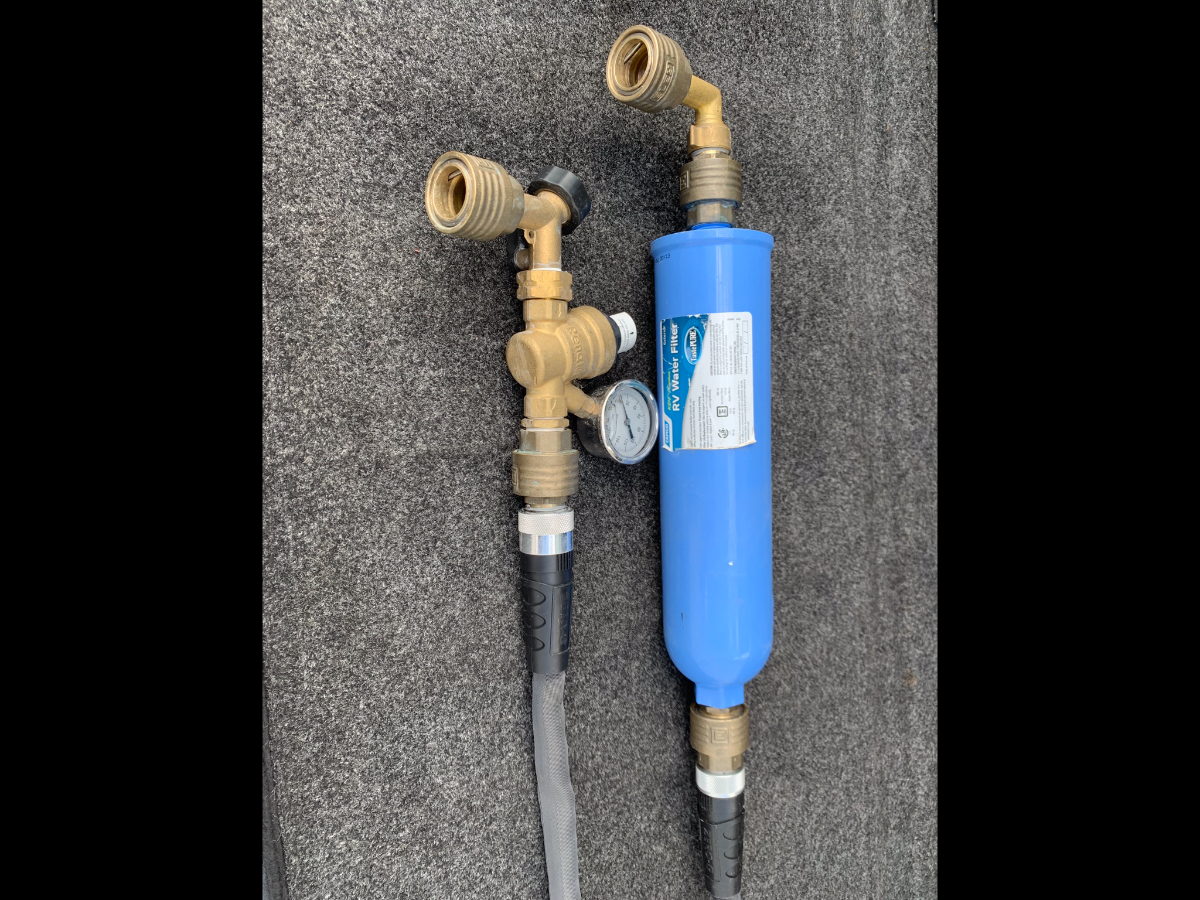
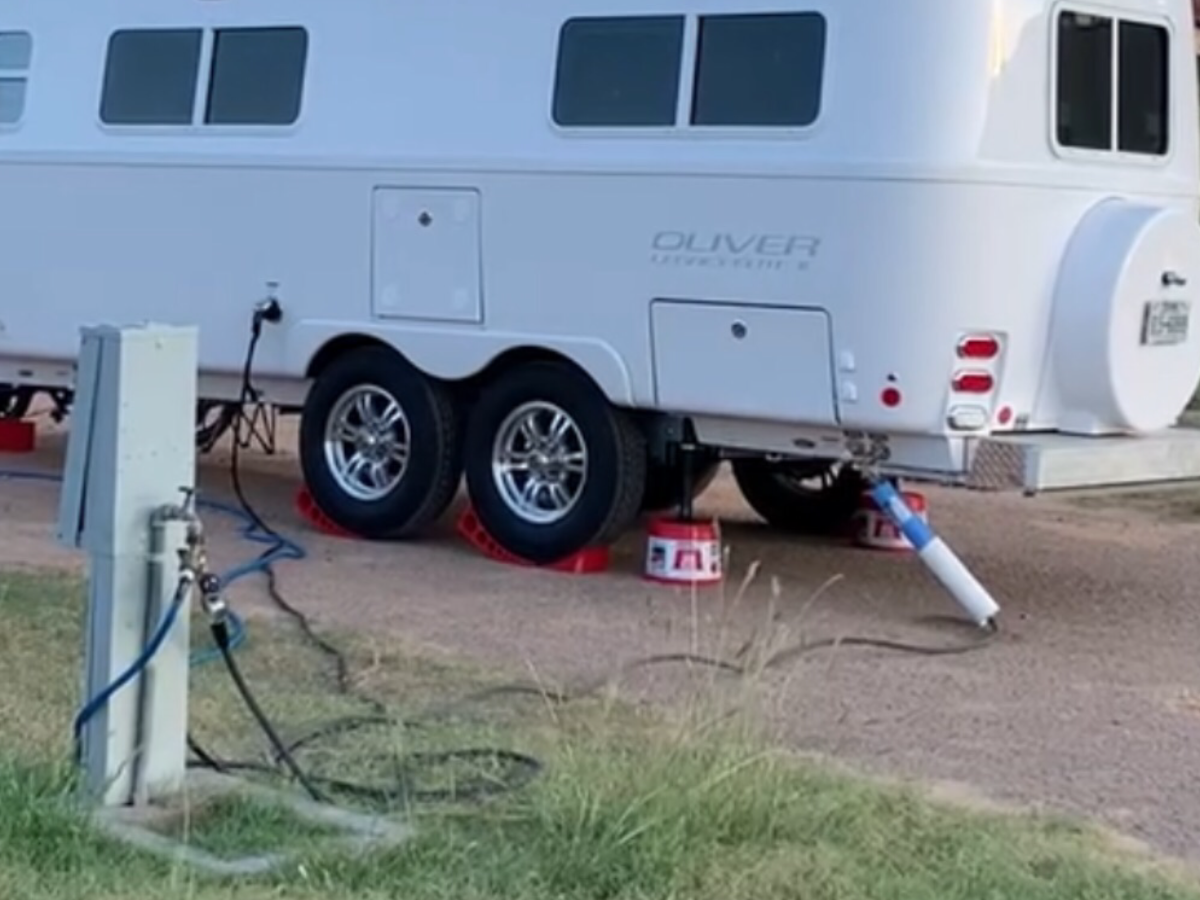
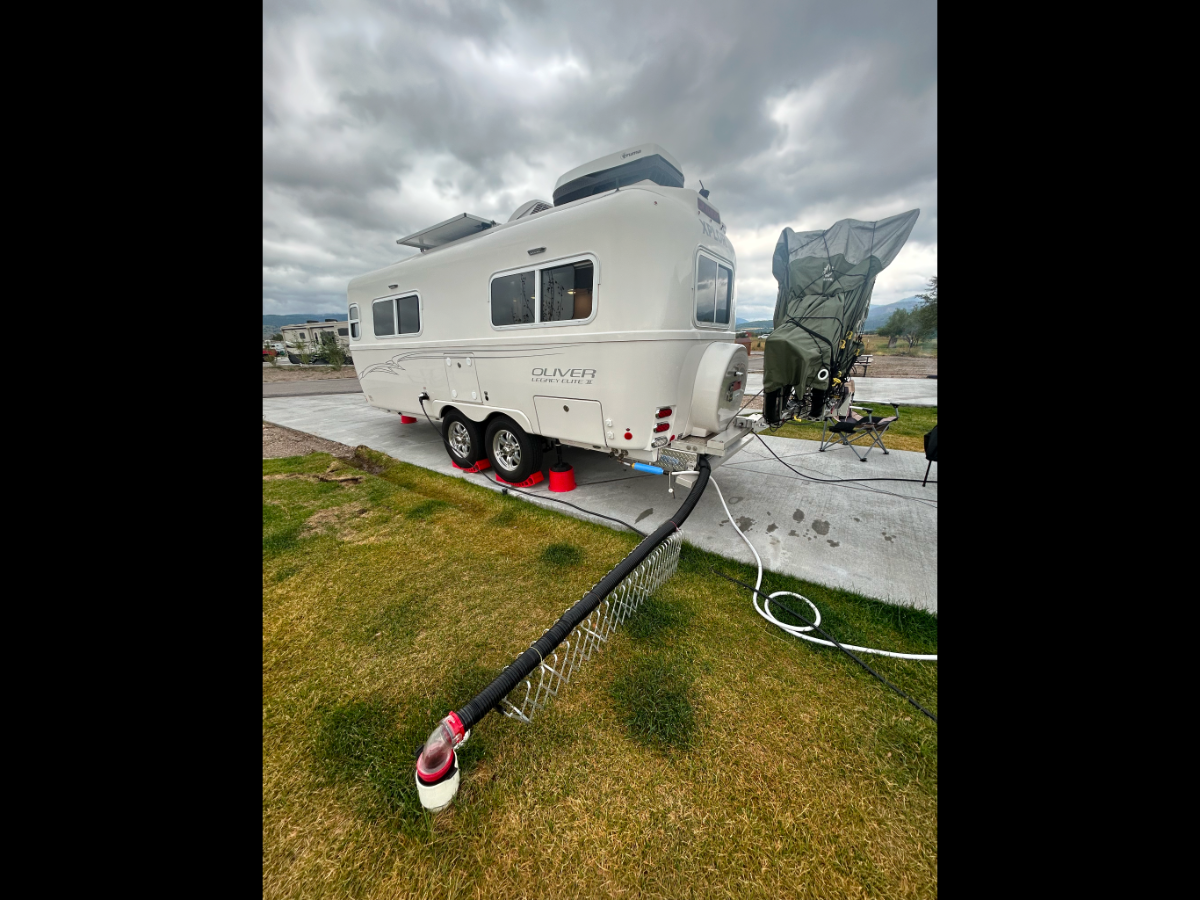
Same here, the Y valve with Eleys for an extra ‘camp hose’ is a very handy addition with many uses. There are times when I prefer not to use the rear bumper as a support for the blue water filter, so I carry a short section of PVC pipe as a ground standoff, works great. Also, the bumper protrusion on either side can be used to hang coiled excess water hose and even propane hose at the rear port, if equipped. Some pics for you and others:
1 point
-
I use a Y valve on the CG shore fresh water source for my extra hose “camp hose”. The rear bumper makes a nice shelf to support my water hose. My Andersen levelers came in handy as the slab had a slight fall to the street side to allow water to run off. This was at Teton Valley Resort in Victor, Idaho last fall, we love the Tetons. And this was a really nice base camp.
1 point
-
First - Welcome and glad that you are here. Thanks for the kind words! Second - Obviously, if you purchase a used Oliver, the price will be based on what you and the owner negotiate. The price as posted by Oliver might have a little bit of "wiggle" room in it but not much - here I'm talking about 1 to 2 thousand dollars - and even this is generally found by getting a discount on an option or a "floor" model type of thing. I've not dealt with any of the dealers but I'd guess that the bottom line price from them will be very much in line with the price from the factory. Speaking of the factory - don't be reluctant to give them a call. They will NOT harass you, sell your info, etc. However, they are a great source for information relative to options on models and what just might be available at various dealers (to include anything that might be at the factory). Good luck! Bill1 point
-
Thanks for the tips and questions. Here's a good overview video on the topic.1 point
-
It’s interesting to me that hull 1108 and hull 1111 both experienced the same issue. Having a source for owners to share their knowledge and experiences rocks!1 point
-
That said, I'm sort of thinking that the Calgon beads and Pinesol is a great way to keep the tank clean on a regular basis. But I still recommend using the Thetford lubricant as many of our owners use and cleaning/lubricating the cables every four years or so. So, my inclination is to use both, but not at the same time. Certainly open to the thoughts of our members on this. GJ1 point
-
Absolutely. Water pressure is regulated going in to your home by whatever municipality is providing water service. Or, if like me you are on a private system, installation of a pressure regulator is "imperative" to prevent over pressure. Too high pressure can destroy the pipe and fittings in your home water system. As Dewdev and Topgun2 have explained, "don't leave home" without a pressure regulator for your Oliver, because too many RV campgrounds have poorly designed or installed water (and electrical) systems. You might also consider a water filter. Many campgrounds have water with high mineral content, which can clog your plumbing system. I have a water filter+pressure regulator assembly that I attach to the City Water inlet before connecting a hose to the campground water supply wherever we park.1 point
-
Many camping spots have water that is delivered to the spigot at pressures that are higher than you should - safely - use in your Oliver - as @dewdev mentions above. Another thing you could try would be to "open" that pressure regulator - simply lift the grey tab on the top of the regulator. This relives the pressure in the "tank and water lines" inside your Oliver. It also can serve to clear any deposit or debris that may have caused the leak. Then close the grey back to its original position - note that this relief valve tab is most likely "spring loaded". Therefore, it should simply "snap" back into place. Bill1 point
-
Blade valve lube works - I've use THIS and another brand or two over the years just following directions on the bottle and the blade operates much easier. I suspect that dumping a small amount of vegetable oil, mineral oil or the like would serve the same purpose but I've never tried that. Bill1 point
-
Great info from JD and Mosseim!. I believe you have 4 or 5 years on your OTT. A good reason to lube the cables to the valves before starting the below. Having a flow control valve on your gray water hose discharge end would work if a helper is not available. Also a head lamp to see down the toilet tank or bathroom sink drain line is helpful in not over filling and causing a flood in the bathroom. First dump and rinse the tank at a dump station. Adding a bit of food grade dye in one tank will quickly help you figure out which tank is the problem. Most likely it will be the black tank so I would start there. Would not suggest using blood red as if it gets away from you, it could traumatized the neighbors. 🙂 Blue frosting dye would be a better choice. Full Hookup and a clear fitting at the end of the dump hose is also useful. Once you know which tank is of concern, you could use your gray water hose to fill your tank. Black tank is easy just open the toilet valve. If it is the gray tank, then modulate the flow down the bathroom sink to hyper flow the gray tank. Start with the blade valve closed and fill the tank with close coordination with your partner on the hose bib valve. In an emergency situation kink the hose twice and you'll slow down the flow a lot. With a full tank, then open the valve and keep the gray water hose wide open filling while the tank is draining. Likely anything bad will find itself down the sanitary line to the treatment plant. If this does not work, then go aggressive with harsh chemicals. When done, lubricate the drain valves. Hope this works for you. GJ1 point
-
Never did like old "Sparky Spots". He tends to jump up and bite you when you least expect it. Bill1 point
-
Inquiring minds want to know! It’s true that inverters are complex devices because they can invert, convert, charge and switch large currents, and they have notable efficiency losses when doing so. However, with the inverter turned OFF, the only “parasite” load I can think of might be the Bluetooth or a memory function. Thats why I conservatively guessed an estimated ballpark value of approximately under 20 milliamps (+/- 20.) 😁 The inverter OFF load was too small to register on my shunt and therefore I consider it inconsequential. . . like years to discharge the battery. But, if I ever disconnect the battery, I'll let you know exactly what the load is and let's not be surprised if it's zero! Also consider this: Even with the inverter “inadvertently” left ON, with no AC devices turned on, the “parasite” load is only 0.2 amps per my shunt as I previously mentioned. That’s because it’s actually operating to power the microwave clock . . . speaking of inefficiency. But that's also a small current that would take months to run down the 390 amp battery. Good discussion! Cheers! Geoff1 point
-
Absent kinked or crushed hoses, Jason is spot on with "more clogs". Annual sanitization, vinegar de-scaling every three years, with full flushing the system of antifreeze has been the norm for many years. Frequencies may vary due to water sources, but the idea is proven to pretty well keep biological "clogs" at bay. That said, we often see pipe and tank plastic caused clog problems. they are a result of OTT not fully flushing out the new tanks and other items of the thread cuttings and other items before installation. Those plastic clogs have to manually be removed as no non-destructive service procedure that I know of will do so. In your case it would require you to incrementally disassemble water fittings and flow test your way down stream of your kitchen sink. One question that I did not see asked is the low flow in both the hot and cold side of the bathroom only?1 point
-
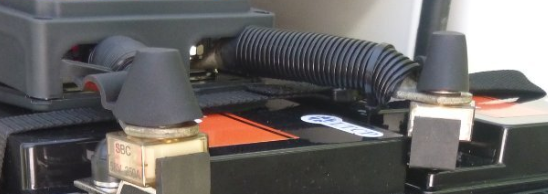
Nice install. Great safety touch too with the split loom over Sparky Spots. GJ
1 point
-
Welcome to the group! Glad you’re able to get on the road so fast, you’ll find it so easy to tow with your “Beast”! Mike1 point
-
Congrats. You will have big shoes to fill. Jason & Kelly's trips were epic.1 point
-
I don't think you can have over 225 of usable amp hours in a lead acid battery setup in an Elite II. It's usually about 200ah. Do you have 6v or 12v batteries.1 point
-
Hi JD, just orderd the pendant,Thank you! Looking at Lithium Batteries, If I have over 300ah on lead acid should I get the same out of a Lithium Battery.1 point
-
John, I still have my old Pickett 1010 Power Trig, that I could loan you. I keep it behind glass with a sign that says “Break glass in case of emergency.” for those times my computer is down1 point
-
I'm not familiar with the wiring on your trailer, but for many years YES, there is a fuse panel in the Attic, right side.1 point
-
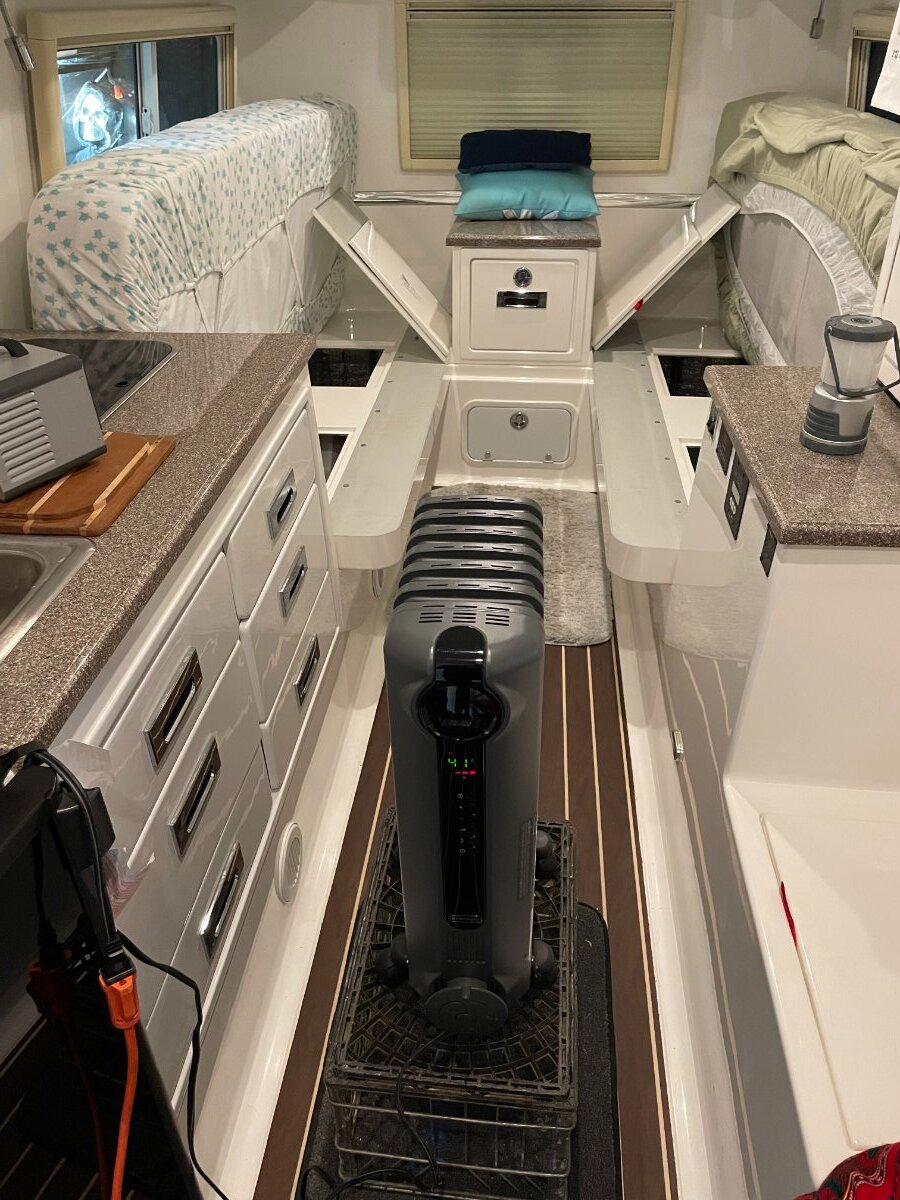
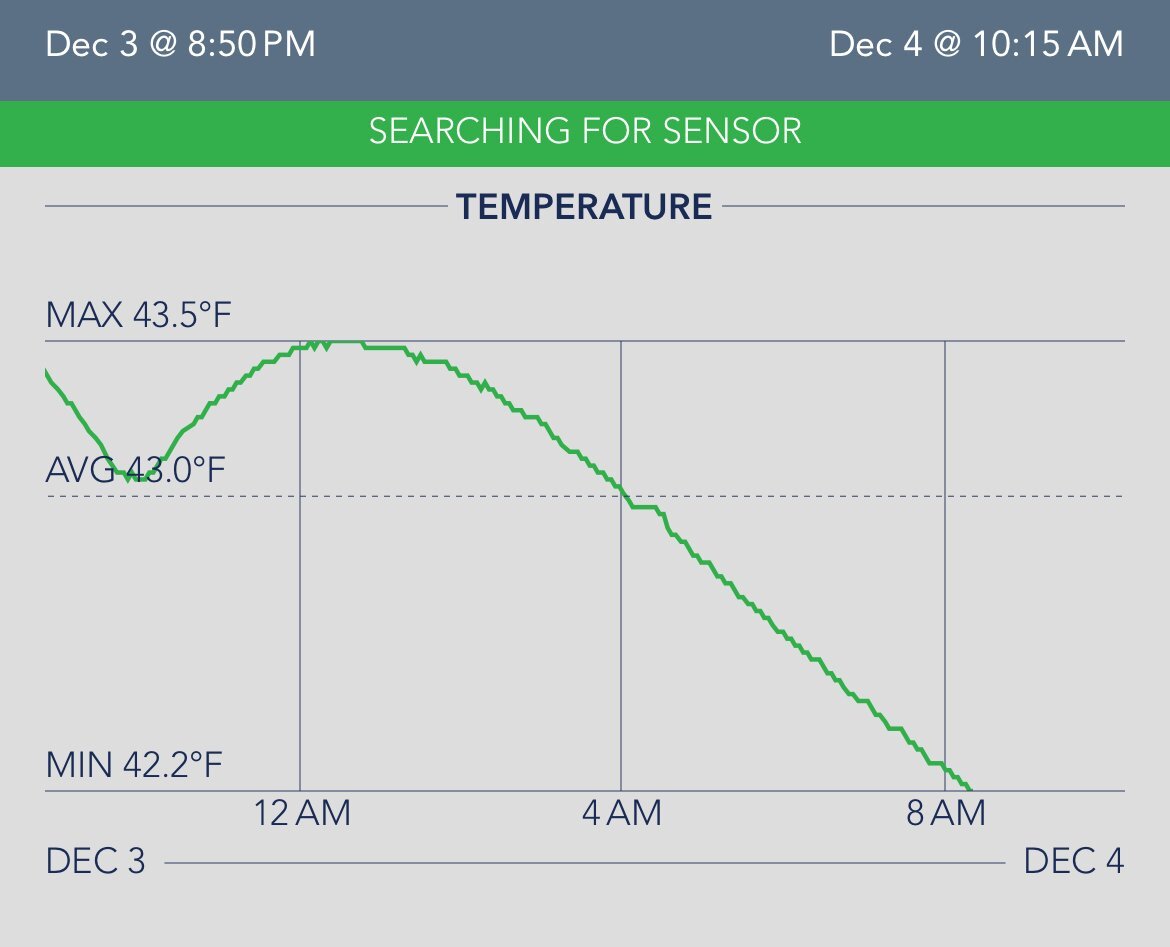
We have a large unheated garage that we store our trailer in. We are in the WNC mountains about 2200 feet asl. It can get cold here in the winter and we have had a week of night time temps ranging from 13 to 35 degrees. Previously I have winterized and that was fine. But.. we are planning a late December into January trip so I did not winterize. So, here is my strategy for your consideration if you find yourself in similar circumstances. Outside temps dropped to 13 degrees by morning. The garage temps are usually 15-20 degrees warmer. A Sensor Push was placed close to the pipes that go to the outside faucet. All hatches were open and a Delonghi oil filled heater, set to 50 degrees was placed in the camper. See photos. In the morning this was the result. Outside Air Temp = 13 degrees. Inside Garage Temp = 33 degrees. Inside camper = 55 degrees. In the hatch where the outside faucets are = about 42 degrees. So, I am thinking this is a pretty good plan going forward and may not winterize again ... Unless I have to be away from home. If the trailer was stored outside and the inside temp was still holding 42 degrees vs. 13 outside... hmmm... don't know if that would work. It's going to be about the same temp tonight so I've already set the heater temp up. BTW... the Sensor Push is pretty awesome. Provides a lot of comfort knowing what happened temp wise inside the trailer. Happy Camping, Scotty
1 point
-
The RUUVI tags work very well. I got four after reading about them on this forum. I have one in the fridge, one in the cabin next to the thermostat, one in the battery compartment and one in the basement. They seem to be very accurate and allow me to know what's going when I'm in the TV or walking around outside.1 point
-
Here in the NC in the foothills of the Blue Ridge Mtns, we are risk adverse and just spend 15 minutes to winterize. If nothing else, we sure sleep better. The Truma AquaGo makes winterizing a breeze. 😄🥶
1 point
























-
Recent Achievements
-