Leaderboard


Popular Content
Showing content with the highest reputation on 10/19/2023 in all areas
-
I got a kick out of the little witch's hat on the Ollie logo at the top of the page. Made me smile. Guessing thanks should go to @JWalmsley for this.
 4 points
 -
The blue light is purely an indicator that the switch is "on". This known as a SPST illuminated rocker switch. It will have three terminals on the back side. They should be labeled as 1-2-3 or A-B-C. In this illustration just imagine the fan as the camera. # 1 is power from the battery, # 2 is power to the camera, # 3 is ground to the blue led so that it lights up when you turn on the switch. Your deduction is correct. The ground for the camera is NOT coming from the switch. In our Oliver's, a yellow wire means it is a ground. To install your booster, splice into the power wire on the # 2 terminal and run it to the positive side of the booster, you can also pull a ground from the yellow wire to go to the negative side of the booster.
4 points
-
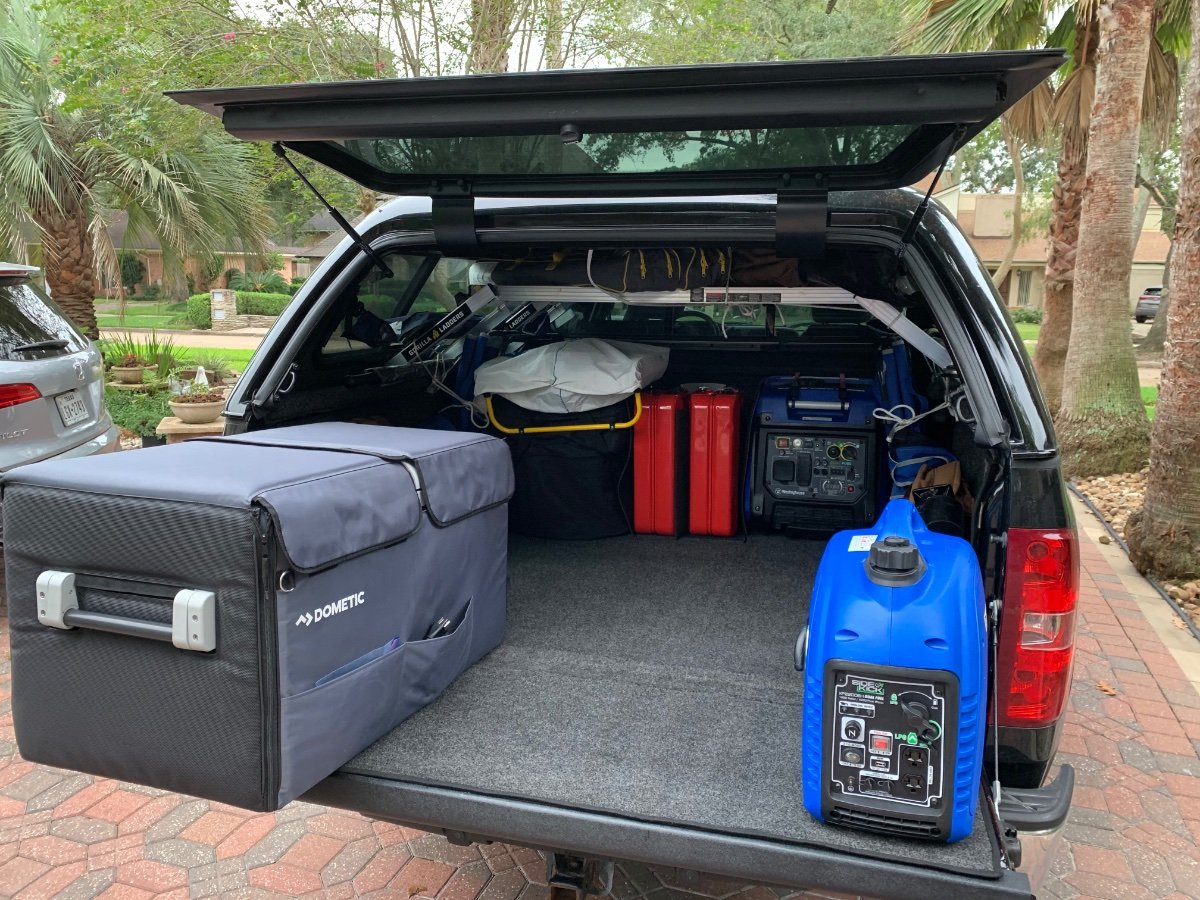
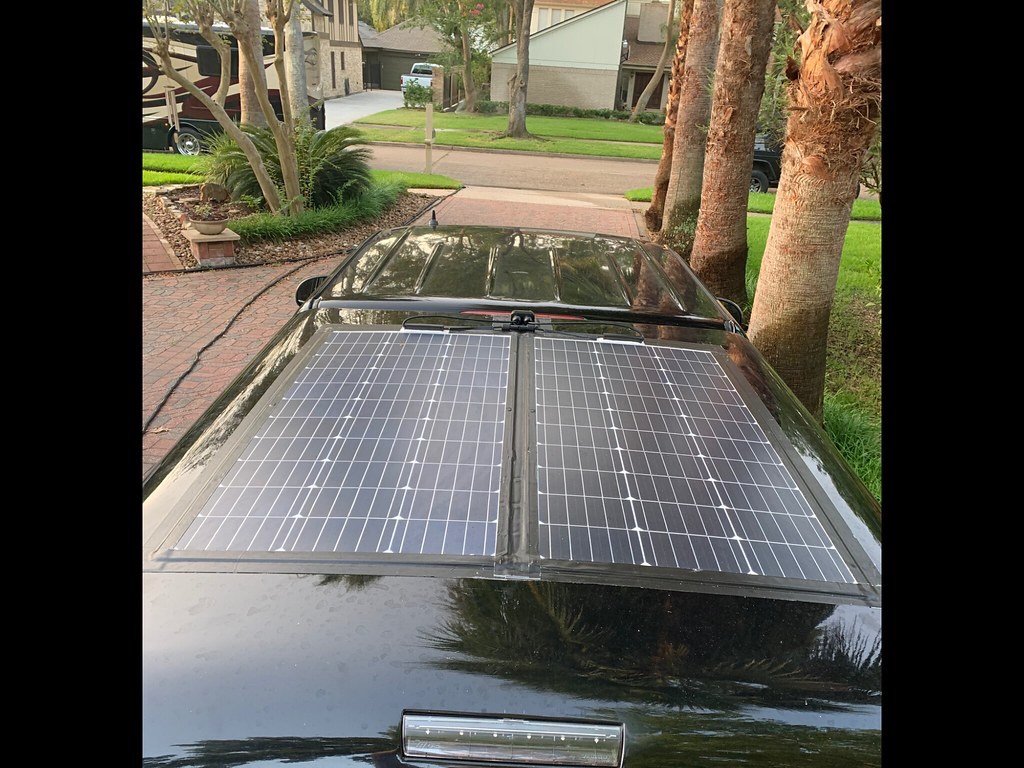
I too have the BedRug with bottom, sides and tailgate coverage in my 2012 short bed TV, as well as an A.R.E. cap lined with the same carpet material. As some mentioned, easy on the knees, as well as an insulating factor and sound reduction. 11 years and counting with little signs of wear or staining. I have furniture carpet slides on the bottom of a large frig/freezer that work great in handling it. Although a cap will add significant weight, it provides protection and security, as well as added space, especially for bikes and even a loft. I also installed a 200W solar array atop the cap.
3 points
-
You do know that your question(s) just might start a "storm" of comments here on the Forum? Yes, I do travel with propane on. In order to amplify the safety measures that are already built into these tanks, I installed "GasStop" propane shutoff valves (like THESE). However, I should note that if I had the battery bank that you do - I have 4 six volt lead acid batteries - I just might run the fridge on d/c while towing. No, I do not turn off my propane while getting fuel. However, my filler port on my F-150 is on the opposite of the rig versus where the fridge is located. Hopefully, I'm smart enough to not drive into a "pool" of fuel that is laying on the ground and/or move if I can smell a strong odor of fuel. Bill3 points
-
In order to "balance" the equation - I've never carried a spare water pump in over 20 years of RV camping and have never had a problem with any of the water pumps. Having said this - I do always carry at least two gallons of water (stored in plastic milk jugs) in order to flush the toilet, wash my hands, etc. in the event I'm without water for ANY reason. Bill3 points
-
Don't run the fridge at that angle in any mode. Propane, 120 volt, and 12 volt modes all work the same way, just with electric heating elements instead of the propane burner.3 points
-
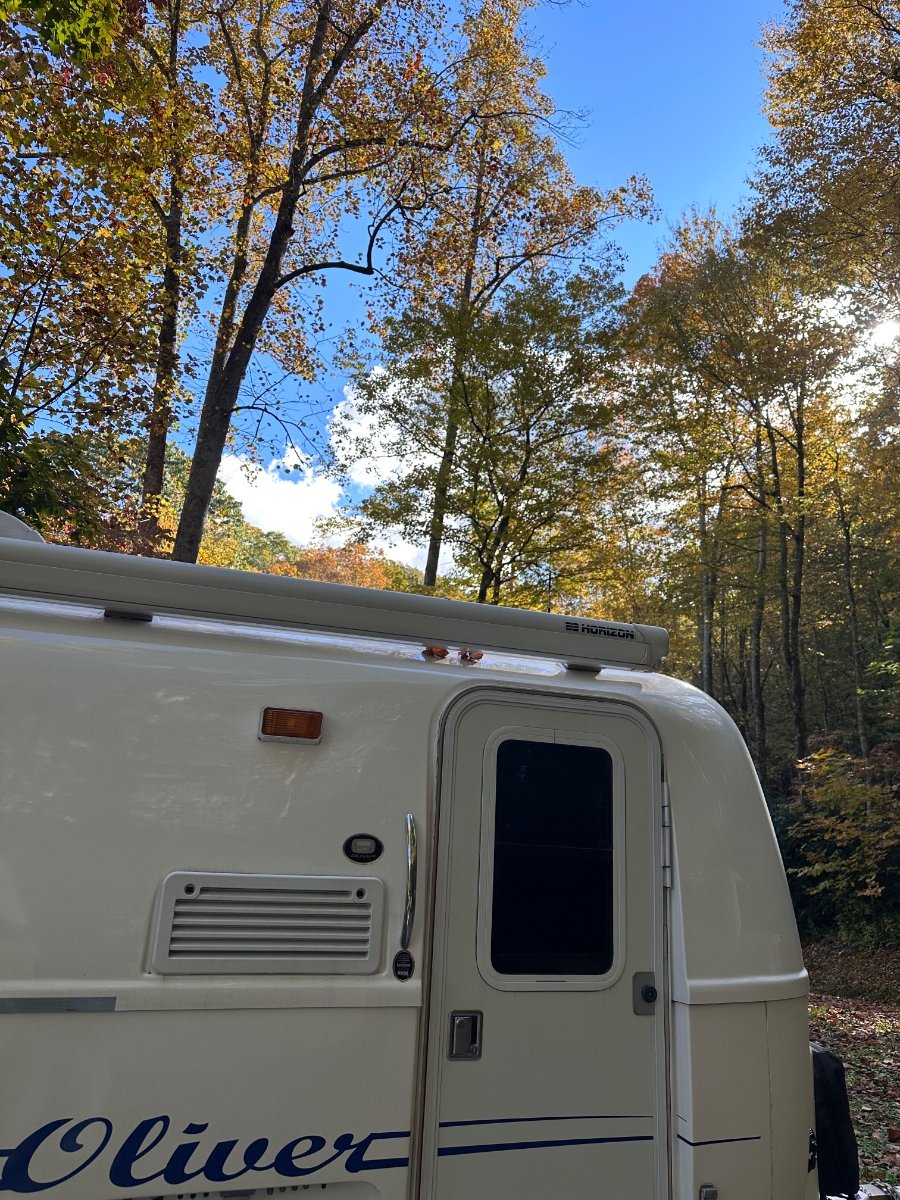
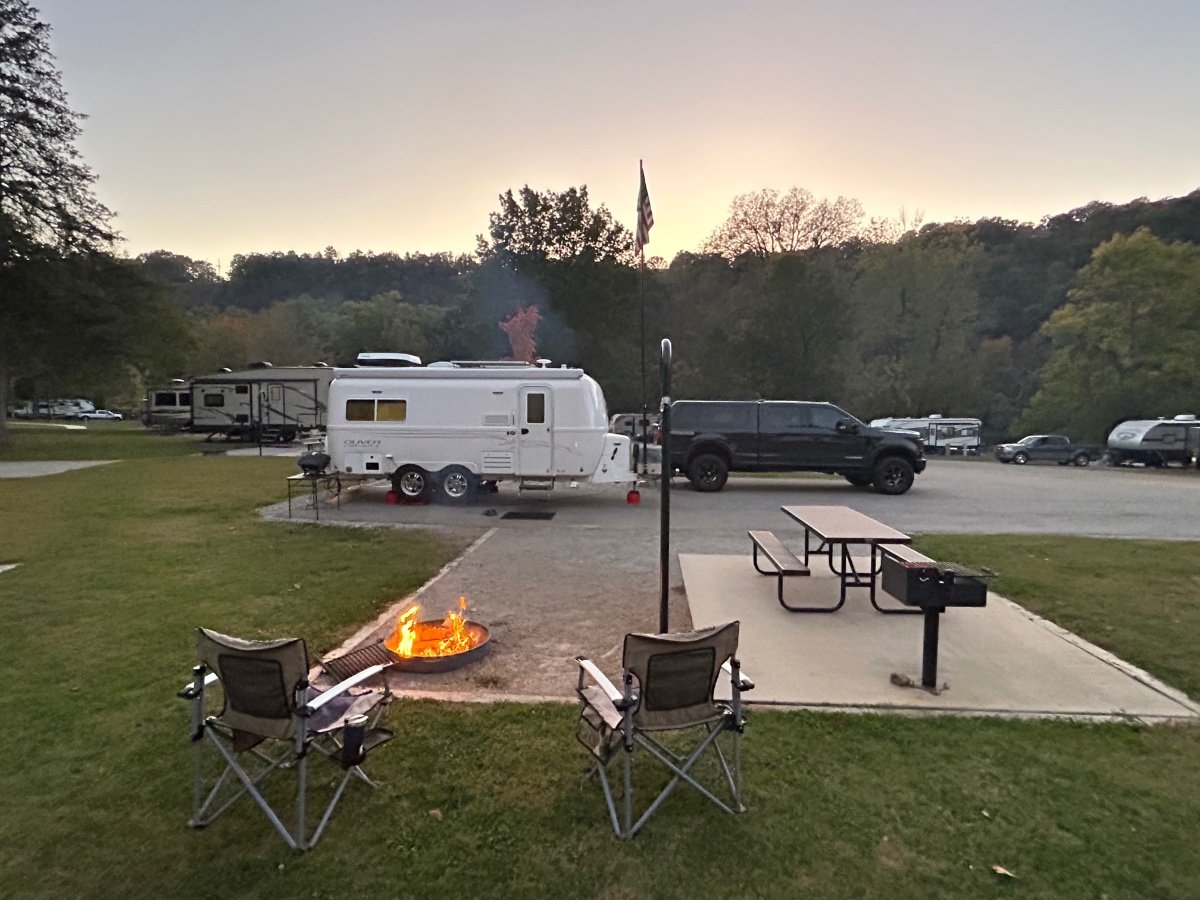
The Wonder Egg is enjoying a week camping at Seadawg’s secret mountainside retreat in the Appalachians of North Carolina. Scrumptious breakfast, lunch and dinners prepared with panache over the open campfire. Life is goood on the mountain.
2 points
-
I take full blame for this. We have some more coming next ^^.2 points
-
I'd bet that Jason Walmsley had something to do with that.🤗2 points
-
We ran our fifth wheel's fridge on propane for long drives. Now, with the 3-way fridge, lithium, and solar we always run on DC while driving. While the fire risk on propane may be minimal, with lithium there's no reason to take the chance.2 points
-
I have much the same situation - if I attach my Oliver while still in the driveway the nose of the Ollie is way too high. Therefore, a couple of days before departing on a trip I will turn on the fridge (not hooked to the TV of course) and let it get cold. This way I can monitor the fridge and have time to correct a problem should one develop. On the day of departure I will turn the fridge off, hook the Ollie to my TV and depart. As soon as I'm on fairly level ground I'll stop, check the rig over and turn on the fridge. This process only takes a couple of minutes. Bill2 points
-
I carry a spare pump as they do sometimes fail. I have it stored in a case and setup so it can be used to fill fresh water through the fill port. (An alternative to using the house pump.) Project here: https://4-ever-hitched.com/ggs-blog/f/transfer-pump-project Craig - Hull 5052 points
-
John is right on the money here. The YouTube videos don't give you the whole story and those people aren't you. We rented before we bought our first trailer and it was very instructive as to what we needed and wanted. RVing has as many problems and frustrations as regular house living (maybe more) and those problems are different than the ones you're used to.2 points
-
I know that THIS article will surprise some and hurt others feelings, but, I thought that it was interesting. Bill1 point
-
Kinda, removed the original Lagun plate that Oliver installed on the nightstand, and used it with a dynamic system I designed and built. I field tested an initial prototype with much success a few months ago. However, further iterations needed to address some inherent design flaws have taken the months since. I am now ready to perform a stress test on the system, followed by more field tests for functionally and safe usage. The only other information willing to share at this time is that the nightstand drawer is no longer obstructed.1 point
-
I added the TST transmitter to the power head of the front jack. I leave mine on all the time as the draw is very low. ( Others may choose to add a switch to the back side of the case. For the + power to the transmitter it’s easy to tap a fuse line into the black + wire between the raise/lower toggle switch and light switch. Negative connects to any of the the metal case hex head screws. We use a cover on the jack head so I don’t worry about water incursion. Just for good measure I sealed the wire going through the case with 3m 4200 black sealant.
1 point
-
We've never carried a spare pump, either, as they are so commonly available. But, if you are planning to be "way out there" for long stretches, by all means, carry a spare. They're not all that big or heavy-- probably 6 or 7 pounds. We did use the pump for boondocking water a lot in the first few years. First pump lasted 7 or 8 years.1 point
-
USB-C is the way to go. Apple has finally switched to USB-C for its new iPhone 15 lineup. https://www.cnet.com/videos/how-apples-switch-to-usb-c-will-change-the-iphone/1 point
-
Note that there is now a newer display available. I got it in a bundle with six sensors. Key for me is that it charges using USB-C, which is what I'm trying to convert all my stuff to. No more USB-A, micro-USB, mini-USB, Lightning, etc. https://technorv.com/products/tst-770-touch-screen-color-monitor
1 point
-
We have a Diamondback cover on our truck. It's secure and you can strap things on top of it (you can walk around up there). We added racks to carry our bikes or whatever (tank tote, firewood, etc.).
1 point
-
"However, my filler port on my F-150 is on the opposite of the rig versus where the fridge is located." Bill, my filler is on driver's side like yours also. I may try doing what you do. I do have two gas stop devices. John1 point
-
We started with the Bakflip @topgun2 mentioned...also got a spray in liner. The bed-rug is also a great ideas (ask my knees!). We ended up with an ARE truck topper which we prefer - but there are loads of pros and cons between toppers and tonneau covers. We were happy with the quality of the Bakflip, Need to consider all uses of your two vechicle for a decision that works best for you all.1 point
-
I have had a Bakflip MX4 tonneau cover on each of the Ford F-150's I've owned. Assuming that your tailgate can be locked then these covers offer a bit of lockable security and can be closed with the tailgate either open or shut. The cover also folds towards the cab such that basically the entire bed is available for things like carrying motorcycles, mulch or high items without the need to remove the cover entirely. I've also always had a spray-in bedliner in my trucks. This helps with grip, rust and cleaning (simply power wash it). However, I have also always then purchased a "bed-rug" for at least the floor and tailgate. These items reduce noise from the bed but more importantly make kneeling in the bed of the truck much easier on your knees. Bill1 point
-
Same here.1 point
-
Thanks for the offer! I think I've got some more thinking to do though. I guess my first question is "do you use it"? So you use the Lagun table from midway. Does that bring any advantage that you were looking for? Doesn't it get in the way of your (or someone else's) legs?1 point
-
Doesn’t answer your question, but I use the TST 507 TPMS and no need for the booster.1 point
-
You can hard freeze a gallon milk jug with water in your home freezer (put it in a few days before) and add it to the turned OFF trailer fridge the night before as you load food, then remove the ice as you are ready to depart the next day when you turn on the fridge. Or if you have the room, leave it in there and drink the water later. It won’t keep stuff in the trailer freezer frozen, but it is fine for everything else. You should try to keep it as full as possible at ALL times, the extra “thermal mass” reduces temp fluctuations and conserves propane too. John Davies Spokane WA1 point
-
And, don't make the same mistake I did when sanitizing: don't drain the bleach water onto concrete, if you can avoid it! I did this earlier this year, thinking that it would do no harm to the concrete pad in front our our garage. The error in that thinking became apparent the next time it rained. Six months later, whenever it rains, you can still see a light-colored pattern where the bleach water drained onto the concrete and then flowed off of it. Fortunately, once the concrete pad dries up the splotches disappear. But, the next time I sanitize my tank, I will take the extra effort to move the Oliver and drain the bleach water onto our gravel parking area beyond the concrete pad!1 point
-
Art, very nice! 😊 Our previous owner did something similar with two pieces of ply to fill the gap. Their wirehaired griffon slept under it, and they had a king size bed. We haven’t used that feature yet, but another benefit is with the cushions stacked next to the galley counter, and one of the ply segments on top, it makes a great extension to the counter top. Our Lagun table attaches mid way down the street side bunk (we have basement access), and stores out of the way in the closet.1 point
-
You did not say which camera is installed on your trailer. IF there is a fuse it will be an inline one in the power cord hidden behind the white reflectix insulation glued inside the attic cabinet. You'll have to pull it all down to find it. Put it back into place using spray contact cement. Use of this will probably set off your propane detector.1 point
-
Thanks, we caught plenty..😊 it’s been an absolutely amazing stay and visit here at Bull Shoals white water SP to say the least. The visitors center is top shelf. Onward!! Patriot🇺🇸1 point
-
Beautiful fish! Congrats to the Bride. Many people who fish never catch a trout of that size.🤗 Bill1 point
-
Interesting you should ask. We each caught our limit today on trout here today and we completely filled our Truma freezer. My Bride landed her first big 19” Rainbow, she is a great student and a quick learner! 😊. A gorgeous day fishing here on the Bull Shoals White River! It’s a destination CG for sure! A blessed day for sure! Onward!!!🇺🇸🇺🇸
1 point
-
I will add a couple points: - When you turn on the cell phone booster, I am told that you need to restart your cell phone so it connects to the booster. - My Tireminder booster came with alligator clips on the two power wires. I cut them off and bought a USB connector which I connected to the end of the wires. Now I just plug into one of the Ollie USB connections when I want to power up the booster. I added velcro to the back of the booster and hung it above the dinnette table and plug into the USB connector under the dinnette table when the Ollie is mobile.1 point
-
Assuming that your storage facility does not provide you with any protection from the weather then I'd suggest a CalMark cover for your Oliver. These covers are not cheap, but I've had mine for 8 years and it is still going strong. If you do this - be sure to pad (pool noodles are good for this) the bumper and the solar panels such that they don't abrade the cover. The only time I use my A/C is when I travel from Western NC to the Rockies each year to fish. If the temps are hot (above 90) I'll simply plan on staying in a commercial campground for the night where I can use shore power. Yes, the A/C is a bit noisy but it doesn't keep me awake and I can't hear it when I'm sleeping 😁. Perhaps a relatively small set in the direction of more power while staying relatively cheap could be had from a portable panel. This way you could charge those relatively new AGM's a bit quicker. This might give you time to really assess just how much power you are looking for while not wasting the batteries you have now. And, you can always use that additional solar panel if you later decide you want to go with the lithium route. Bill1 point
-
Try this - turn the power off for both the monitor and the camera. Assuming that you have verified that the camera is receiving power - turn it back on while looking at the monitor, turn it back on - does it give instructions as to "re-pairing" it with the camera? If yes, then do what it says. Good luck! Bill1 point
-
Actually I used something more like THIS but the stuff I used had Foil on one side. I think that the "rubber" stuff would be a little better but since I already had what I used in my "junk" pile - I used it. No problem with the stuff I used though other than the fact that it did not have glue on it and I had to use the spray glue stuff and used the foil tape on the edges. The noise reduction is good. Bill1 point
-
Its easy: 1 - click on your avatar - the big "D" 2 - left click mon "account settings" 3 - left click on "signature" (its on the left side of the page) 4 - fill out what you want it to say - see mine for what most Owners put there 5 - be sure to left click on the blue "Save" button at the bottom and you're done. Bill1 point
-
We had an electronic lock on our last trailer and really liked it, so we ordered the RVLock Oliver installs. Don't like it as much as the one we had, which seemed to be better quality. It was made by LatchIt. It's an easy self-install. Same here. Great on the highway and I also use it if I have to back into a site solo. I put an orange leveling block on the ground as a target where I want the back of the trailer to end up. I'm going to use it backing into the garage, too. (Always better to have a human spotter when you can, though!) We like our upgraded non-KTT mattresses, so that's a matter of taste. You should go to the factory and try them out if you can.1 point
-
Aluminum tape is amazing. I used lots of it on the furnace and ducts when after delivery I discovered some problems. Sticks great. Haven't tested any noise- dampening qualities yet, but I have to imagine it will help, especially after I'm able to crawl into the basement area (claustrophobia?) and put reflectix on the ceiling and other walls of the basement.1 point
-
A potential source is that one or more of your ducts have come apart. This happens often in flex duct applications. GJ1 point
-
My adventures in reflectix have begun. The first photo shows one single layer cut to fit the basement door. No glue or tape, just cut to fit and pressed in. We'll see if it stays in place when on the road, otherwise I'll use some double sided tape. The second photo shows the two hatch lids under the street side bed. The fourth shows how I used some foam strips to keep about 3/4 of an inch space between the two layers for increased R value. Per advice above, I used the spray adhesive only to stick the foam pieces on the reflectix, then used aluminum tape around the edges. Next week I'll continue working on the basement area.
1 point
-
1 point
-
Iphone owners can use the built-in app that measures slope in all directions and reads out the degrees of slope. It is accurate.1 point
-
@John Welte, that's not great. These fridges work by boiling an ammonia solution in a tank at the bottom. The vapor rises up a set of sloped tubing, condenses back into a liquid up top, then flows by gravity back down the tubes to repeat the cycle. When you are more than 3 degrees off level front to back, you exceed the slope of the tubes, so the fluid pools in the tubing instead of returning to the tank. The fluid left in the tank continues to boil, getting more trapped in the tubes. Potentially, the tank runs dry and the remaining solution crystallizes in the tank. This could potentially lead to a fire. The Norcold manual specifies a max incline of 3 degrees front to back of the trailer and 6 degrees side to side. In your situation, sometimes I put the trailer on the ball and do the rest of the hitch up, but I don't close the Bulldog. I raise the trailer nose back to level. Then, in the morning, I just lower onto the ball, close the Bulldog, and drive off.1 point
-
When we ordered last August, not getting solar was not an option with lithium. They came as a package. As noted previously, changing to lithium/solar later is a very expensive proposition. Much more than getting it from the get go. Almost all of the wiring needs to be replaced with the heavier wire that lithium needs, along with the different controllers, and other components. I'm probably misremembering, but I thought someone checked with Oliver, and it was going to be about $10k more than having it done when built. For us, the choice to add the Platinum Pro package was the most expensive option, and the easiest to swallow. On some of your other questions, here's my response as first time trailer owners (we had a square-back teardrop prior, so basically dry tent camping.) Auto Drain: We opted not to get this for two reasons. Keeping things simple (it relies on an electrical switch and a motor), but more importantly, it is out of sight, so something you might forget. With the manual handle, when closing up the trailer, I always fold the steps and look inside to make sure the handle is pressed in. Doing those routinely together ensures I'll never forget (yea, right...) And if like me, you didn't pay attention during the walkthrough, simply remember Drive-In, CampOut. Handle is in when driving, and out while camping (or dumping) We opted not to get the electric door lock. Just something else to go wrong. The key is smaller than the fob when carrying in a pocket. The backup camera was the last thing we decided on when ordering. (Actually, much later, because you can change your order up to the point where you pay off the first 50%) I had considered adding my own, but having the wiring and witch already in place saved a lot of headaches. I expected to only use it while backing into a site, but in actuality, I never do. I use it a *lot* on the highway when watching traffic behind me, and especially when changing lanes. Upgraded mattresses: When we ordered was when Oliver was changing from KTT to whoever makes the current mattresses. When visiting other owners with the KTT mattress, we loved the firmness, and had decided to go that route. When we got to the factory for our tour and to order, they'd switched vendors. Some people love them, but we found them much too soft and flimsy, almost like a cheap motel mattress. So we ordered without the upgrade option, and then ordered a pair of Oliver specific mattresses direct from KTT. Shipped to our home, they were almost the same cost as the Oliver upgrade. A few other owners have done the same. Here's what we ordered: - Oliver Legacy Elite II Twin Bed - Standard Mattresses (KTT mattresses after receipt) - Standard Fabric - Midnight - Hypervent - Omnidirectional Antenna (local weather etc. if we don't have cell service) - Street Side Awning - Frosted Cabinet Doors - Convection Microwave - 20 Gallon Propane (to keep tongue weight down) - Front/Rear Propane Quick-Connects - Standard Toilet (with possible AirHead composting replacement) - Full Truma Package AC, Furnace, Water Heater and Antifreeze kit - Lithium Platinum Package - Backup Camera - Rear Bumper Receiver (converted to 2" after receipt) - Anderson Hitch - Aluminum Storage Basket - Basement Door - No Graphics Over six months after our pickup date and 44 nights of use, there's nothing we'd have changed.1 point
-
I haven't ever seen anything like that in our 2020 Oliver and I have always had 9 temp sensors located throughout the trailer. I took some "baseline" temps all around the trailer in 2020 before I made some HVAC changes and I was seeing temps under the curbside bed in the low 60's when it was in the 20's outside and the inside temp was set at 70. I still have the data / graphs. It seems to me like something "abnormal" is causing an excessive heat buildup under your curbside bed when your heat is running. Maybe one of your ducts has a hole in it and it's pushing the hot air right at your temp sensor?1 point
-
You still need to do a LOT of research before you start checking options in the order form. This is a good start: https://olivertraveltrailers.com/forums/topic/6629-how-to-find-happiness-with-lifepo4-lithium-ion-batteries-solacity-article/ I **** STRONGLY ***** recommend that you delay your order and rent a small travel trailer for a few weeks. You will learn more in a single day than you will thru months of videos. You may even decide that you do not like the whole concept, or that you are uncomfortable with towing. You might prefer a Class B or even a truck camper, neither of which will work with your new truck. The basic rule is to buy the camper first, then the truck that works best for it! Doing it the other way causes lots of heartache. And it is so very common. There have been several excited Oliver newbies that discovered that they just could not adapt to the lifestyle and the many technical challenges, and they sold their trailers shortly afterwards. This is very preventable. Take it very slowly and be sure you know enough to make educated decisions. John Davies Spokane WA1 point
-
The answer to this question has a bunch of variables - the time the pump is run, how many times is the pump run, what is the pump being expected to "pull" and from how far, etc. I've never had a water pump fail under virtually any circumstances while others have had them fail after only a short period of time for a myriad of reasons. Having said all this - under the circumstances you describe, I think that you should do fine and that the standard water pump should serve you well for a number of years. But, if you are planning to really be way out in the boonies and/or don't want to take the chance on the pump failing, then simply by a "spare" to cover that base. I've virtually always used a 25 foot hose for the purpose you describe and the draw has usually been from the back of my tow vehicle or from a container located right at the inlet port. However, on two occasions I did draw from approximately 50 feet without difficulty. And, I've drawn from the back of my tow vehicle through a 25 foot hose while using a Camco water filter. If I understand your question correctly - the standard procedure is that the port draws water into your fresh water tank and you must configure the water valves in order to do this. Then you must reconfigure those water valves in order to pressurize the water lines inside the Oliver. I've never actually tried to draw directly from my tow vehicle and use that water inside the Oliver at the same time. My guess is that you can't do that. Bill1 point






















-
Recent Achievements
-