Leaderboard


Popular Content
Showing content with the highest reputation on 03/02/2024 in all areas
-
Concur, 100%. The only time we select the 12v mode on the fridge is when towing. As we're setting up at the end of a haul, a key element of the checklist is to set the fridge into the gas mode - and it stays there until the next departure.4 points
-
I assume you mean running the 3-way fridge on 12 volts, and you have the 390Ah lithium package? You can't use the last 10% (39 Ah) from your batteries due to the low voltage shutdown, so you have 351 Ah available. We have the larger 640 Ah package. When traveling in rainy weather (no solar charging) with the 3-way Norcold fridge running on 12v, we consume approx. 4% of our state of charge per hour on warm days. Based on that, I'd assume you'd use about 7% of your SOC power per hour in the same circumstances (because of your smaller battery bank). Mid-summer SoCal gets about 14 hours of daylight, so that leaves 8 hours of minimal or no charging. 8x7 would guestimate a SOC loss of 56%/day (assuming perfect sunny weather). That's about 219 of your 351 Ah. Your solar panels theoretically generate 340 watts, or about 24 amps, but that's only in a lab environment. Let's say you can actually get about half that real-world. 12 amps averaged over the 14 hours of daylight. That would replace 168 of the 219 used. So, best case, you're losing over 51 amps a day. Too much. I don't think you'll make it, and you could permanently damage your lithium batteries. (Maybe someone with better solar knowledge can jump in here.) OTOH, 2 full propane tanks will easily run your fridge for weeks with the small amount of electricity used for the fridge control board easily replaced by solar. I'd fill my propane tanks, put the regulator on auto switchover, and leave it be.4 points
-
If you are looking to buy a new Oliver Travel Trailer here are some things to consider. With the implementation of the new dealer network you now have several new options available to you that previously did not exist when you could only go to Hohenwald to buy a trailer. There are two ways to approach the first step. If you live a long way from Hohenwald and don’t want to have to drive that far to see the trailers you should check the Link on the Oliver page that will show you where all the current dealers that will be selling Oliver’s are located. There are currently 18 different locations spread across the United States. There are future plans to add new dealers here and in Canada. With the information on the locations of the dealers, if one is close to you and you want to do business with them that is perfectly fine. If one is no closer to you than Hohenwald you may choose to contact the sales team there. When contacting Hohenwald a member of the sales team will take your personal information and work with you to get you the exact trailer you want in the shortest time possible. They can take an order from you and get you into a queue to have the trailer of your dreams built for you. The current wait time after ordering is around four months. If you live in a state that does not have any dealers, they will see if there is a trailer already built and available at one of their dealers. If so, you could have your new trailer in a matter of days rather than months. Even if there is not one that is just like you desire, if a dealer has a trailer on order that is still early in its build, Oliver will work with that dealer to attempt to have the build altered to be what you want. Doing it this way will still get you a trailer much quicker than starting your build from scratch. If you live in a state that has dealers, Oliver’s agreement with those dealers is that you will be referred to them. Another option that was not previously available to you is that if you already own an RV of some sort and want to trade it in, many of the dealers might be able to do that whereas in Hohenwald, that was not and will not ever be an option. You can also buy a trailer through a dealer, do all the paperwork there and still pick it up in Hohenwald if you want to. And, as always, you are free to buy a trailer and take delivery in Hohenwald if you so choose. Both of these options are a good choice if you want to do a plant tour prior to pickup. At some relatively near future point (certainly this year) their plan is to have all sales conducted through the dealer network. The rumor that they will stop working on trailers older than two years or out of warranty is patently false. Service will continue to be done in Hohenwald. The rumor was started by a fired service employee. He and his wife propagated this rumor as well as other false information about the Oliver TT after he was terminated. It was posted both here and on the various FB pages. He has been terminated there as well and the false statements have been removed. As always, the Oliver sales staff will still be available to assist you and the dealers with any questions and issues. If none of this works for you, my suggestion is to take the list of dealers from the website and call each of them and tell them what you are looking for to see if they have one is stock that would suit your needs.3 points
-
I used my $27 Smart Sensor combustible gas sensor to locate a propane leak at a fitting on an outdoor propane tank at our church last year. Our noses smelled the mercaptan odorant in the propane to alert us to the presence of the leak. The sensor then isolated the source to that fitting, which was repaired. It works outside, as well as inside. I now carry a Smart Sensor detector in our Hull #1291. Then I don't have to worry about whether the stoichiometric air/fuel ratio inside the trailer is within a dangerous range when searching for the location of a propane leak. https://www.amazon.com/Detector-Portable-Combustible-Adjustable-Sensitivity/dp/B07H671NJ3?source=ps-sl-shoppingads-lpcontext&ref_=fplfs&psc=1&smid=A2PG0JPHUSQSX83 points
-
See photo below, showing both the bottom and top vents I installed. As you can see, they are cut into the wall above and below the closet door, allowing air from the main cabin to flow into and then out of the closet. I am advised that Oliver is now installing such vents in new trailers being manufactured.
 3 points
 -
🤣I have done this for years! Caveat - NEVER, never try this in an enclosed space where gas can accumulate! The first time I worked with LP, we lived in Northern VA. I installed 80+ feet of threaded black pipe to go from a newly leased propane tank to heat the lower level of a 4K SF home to supply 2 ventless wall-mounted space heaters. When I completed the install, the LP company agent came to fill the tank and test the installation. Now this was western Loudoun County, VA and the good 'ol boy that arrived, with decades of experience, used a long-stem butane lighter to test each and EVERY joint. He found a small flame at one connection, and we corrected that joint. Been doing it ever since. If fact I was under the Oliver with a lighter to test the rear leak we had (mentioned recently in another post). LP is pressurized, while the compressed liquid is released as a gas. The flame can only go out of the system. No way can it go in! You cannot cause the tank to explode. Again, when escaping flammable gas can fill a room or other container, it is in this state explosive. But if you have a minor leak in a line OUTSIDE of your home or TT, it will just light a flame, revealing the leak. Recently, I found the leak in the rear of our Oliver, while lying on the gravel driveway, lighter in hand! Prior to this, I had already smelled the gas. The nose knows! The gas sensors are OK if you trust the Chinese manufacturer. But my nose will now immediately, in seconds, and those sensors only work in closed spaces. Indoors yes, and don't try a flame indoors. If you smell gas indoors open up the entrance door immediately, followed by opening windows. In fact, outside if there is any wind, the sensor will likely not read any gas. I can get a joint to burn in the wind though. I don't believe I have convinced anybody here, but I will continue using my tools, in my way, and haven't blown up anything that I did not intend to! Back to the subject... I have the Mopeka sensors on my wishlist! They look great. Until then, I turn the LP switch one direction, so I know when one tank is empty.3 points
-
THIS is the Garmin 2023 SOS Year In Review link. While I firmly believe in satellite SOS devices for those of us that often travel in places that do not have cell phone coverage, and I personally have a Garmin InReach device, the purpose of the link is to gain knowledge as to the kinds of activities and places where these activities take place such that we can be better prepared in the event we need help. There is some really interesting data contained in this fairly brief report. Bill2 points
-
Finally did this and I see on the newer Elite1, it looks like the return air grille was moved to the rear curbside bench seat, so that is much better! Can't tell if a vent was also placed in the bathroom, but that would also be a good idea. E2 still has it's main return right next to the furnace.... Rivernerd also mentioned that Oliver has also added one in the bathroom and that is great. Personally, I would still think about closing the main return vent next to the furnace and add other returns strategically placed (like where Routlaw mentioned earlier) to create better below deck ventilation/heating. Remember to maintain the proper cu.in. return air requirement for your particular furnace if you do this. Finally, and just to be clear, those vents at the top and bottom of the closet door are not return air vents. They probably have good use keeping the closet ventilated and warmer to keep clothes from getting damp or whatever, but they are not part of the return air system and would do nothing to keep the below deck area warmer. If there was, or is a third vent between the closet wall and the bathroom sink vanity, then that would connect the closet to the return air system. Carry on. Dave2 points
-
That's a very helpful report, @MobileJoy - thanks for sharing that data. It matches very closely to our DC consumption profile. We're currently staying in northern NM near Taos where "after sunset temps" dip to mid-20's overnight. Not using available shore shorepower, we're running the furnace, fridge, and WH continuously at night off our BB battery bank. Checking street side compartment temp (our coldest, excluding the "Garage") read 52F at 0330. Daytime temps are in the balmy mid-50's. This is what we call, "3rd Season Camping" - cold but not in the single digit realm. FYI: Our SOC last night before hitting the rack was 92% after a full day of rather low sun angle shine and wall-to-wall sun (no clouds) - pulling a MAX of 185w from the 340w available modules mounted flat up top. This morning, at coffee/Kahlua time, our SOC started at 62% - not bad considering 3 major systems running all night. It's 0740 now (an hour later), and with early sun - the SOC is now 68%. With these conditions, I expect to return to Casablanca this PM and discover very close to 100% SOC. More backcountry skiing with the 2 Knuckleheads - will provide SITREP afterwards... Cheers, ALL!2 points
-
I also have the 390Ah Lithionics and 340w solar system. This week I took Mojo out of storage. Batteries were at 100% because I keep them charged. Since it was time to do a full discharge cycle, I turned on the Norcold fridge on DC mode. The fridge was not pre-cooled, and the temperature inside Mojo was 60 degrees. Solar conditions were not good. The batteries entered LBCO in just under 1 day. In addition, I had the heater running (set at 65 degrees) so the blower was also operating, as was the Xantrex inverter. Not an apples-to-apples comparison with your situation. Usually, I use DC mode only when traveling, and I observe 5-10% drain from fully charged batteries depending on trip duration, outside temperature, and sun exposure. I haven't tried to gauge this accurately. Regarding low battery cutoff, this is done individually as each battery reaches 12.1V. When there is power draw, voltage tends to be lower, so the batteries can cut off before they get down to 10% of charge. In this case, the batteries did cut off at about 13% of charge.2 points
-
Now you've gone and done it. You have just made all the snowflakes and liberals heads explode. Do you have any idea how much paperwork this will create? And the Darwin awards are just going to build up. It just means there will be more warning labels. How are we ever going to drain the gene pool swamp if you keep warning them? Actually, that's the way I've always done it, outside. As you (plainly) said, "NEVER, never try this in an enclosed space where gas can accumulate!" If that's not warning enough for someone, they deserve what they get. 😃2 points
-
OK, so one of your return grilles is under the closet door? That would make sense. I was imagining both return grilles inside the closet somehow which wasn't computing. Dave2 points
-
Trust me, they do. Think of it this way: the furnace blower creates positive air pressure in the trailer's main cabin. If you left the closet door open all the time, this positive air pressure would push warmed air into the closet. The two vents work in a similar way: the positive air pressure pushes the cold air near the floor level of the main cabin through the lower vent (i.e., a hole with louvers) into the closet. As the warmed air rises, it exits the top vent (hole), creating a convection current in the closet.2 points
-
We installed a smart plug on our old Oliver when I noticed elevated heat around the plug. It turns out the interior lugs weren’t tight. I don’t think the smart plug solves this, but I did like what it did outside of that: we carried a “smart plug extension cord” and then had dog bones for various connectors that felt more secure and water tight than using adapters on the RV style 30a. So we could plug into 15, 20, 30, and 50a receptacles in a way that felt better than using the various adapters on a 30a cord set. I did carry a spare “RV end” of the cord, so if I had to make a new cord it would be a 5 minute procedure. For us - we did a lot of winter camping in the PNW, and the solar did not produce enough for us to do what we needed.2 points
-
Keep us posted if you do go back to Taos - we've got a remote cabin in CO about an hour north of here which is usually part of our Taos run... Durango is awesome this time of year - another one of our favs!2 points
-
No Art, our front receptacle appears just dusty inside, nice straight contacts, hardly used at all. We've never used it and I'm not lugging a generator, don't want to hear one and we keep our fire ring in the front bin. The front seal looks like it needs replacing since it is somewhat dissolving from weather, causing a black streak to run below it. Thanks for asking. I should replace (make) that seal. Was merely mentioning, to do a full SmartPlug conversion you would need to replace both receptacles and the cord to do it right. For $158, we will have a brand-new twist-lock receptacle, everything OEM like new!1 point
-
Ron - I don't consider the "total" costs associated with the Garmin to be inexpensive - $300 plus for the unit, $35 or so per year and then another $35 or so per month for the months you use it. However, given the places I tend to travel (i.e. the further out you go, generally the less people you'll encounter) and the fact that I usually do this travel alone, there are not too many ways to call for help and/or let family know where you are located. Also, there are features that come with the Garmin that let friends follow along on the adventure, allow me to keep track of "special" spots and hikes and fishing places. I can also plan trips, mark gas stations, possible boondocking spots, attractions, etc. I can also get up to date weather reports and even send/receive messages. The more I've used it the better I like it and feel that the price is certainly worth the features and the knowledge that the family can contact me or vise versa no matter where I'm located. Bill1 point
-
Received the new Furrion outlet yesterday. It will soon be the shiniest part on our old hull. 😊 I hope the wiring connected to this is good. Minimum is 10 AWG for a 30A circuit which is likely what they used for such a short run. I'll take another pic when I have it open. Would have liked to convert to SmartPlug, but it would be a lot of $$$ to upgrade (replace two outlets and the cord or cord end). How about that, another warning label! Love a warning label that can hardly be seen in use.
1 point
-
We received ours on Wednesday - concur with the above assessments, well worth the price point... IMO Cheers!1 point
-
Last summer I traveled to West Texas on my first ‘solo’ Oliver adventure, Davis Mountains SP to be exact. I purchased an inReach to carry with to lessen my wife’s concern of my personal safety in the event of an accident or other event, and ability to communicate due to weak cell service. The plan I choose can be suspended to lessen the cost; the SAR insurance was purchased, as well. Prior to our next adventure, I will purchase the insurance coverage for my wife. Here’s a couple pics of me hiking on and off the trail in 110° heat, note the inReach on my right hip.
1 point
-
@The Loonies, I would not expect a 3way, on dc, to keep up, for a week. I think your batteries could deplete by day 5 or 6. 340 watts of solar doesn't "cover" the use of dc on a 3way. Much higher than a dc compressor fridge. If I were you, I'd clean out the fridge, turn it off, and sleep easy.1 point
-
Yes, indeed! We spent five days there and need to go back. The Taos Big Barn Dance music festival (lots of Bluegrass) is in September, might be a possibility. Plus it’s close to Durango where our son and family live. Mike1 point
-
Thank you for posting this. I received my Faraday Mission Darkness Key fob Shields today. They work perfectly. Could not unlock the car. Could not start the car with the Fob in the pouch. I was able to fit my Rav4 Fob and 2 keys in the pouch.1 point
-
That's one heck of a foot warmer! Looks a bit like the "donut" but maybe more like a "long John". 🤪 Bill1 point
-
Yes 3M thinsulate 600L. The reflectix on the inside of the bottom outside hull is pretty much useless as far as I’m concerned. Reflectix is a radiant barrier and an air gap is required to allow the reflective surface to reflect radiant heat, like between the 2 top hulls, ie. top outside hull, gap, then reflectix on outside of top inside hull. However, with the huge open spaces between the 2 bottom hulls and the reflectix on the inside of the bottom outer hull the R value of the reflectix is approx. 1 maybe 1.5. I have added Thinsulate everywhere within reach on the inside of the bottom outside hull, including the battery and garage doors.1 point
-
@John Welte I am very jealous, some of the most beautiful beaches around Esperance, absolutely breathtaking, crystal clear water, and snowy white beaches! Being from Canada that’s about the only thing I can relate to…the “snowy white”!😜1 point
-
Yes, and they fit a lot of stuff in a small camper, even a dry bath.1 point
-
Did the same thing too @SeaDawg thats a heck of a lot of trailer, camper for 90K. That much solar and LI-i0n batteries really stands out as a bargain.1 point
-
I was curious, too, @routlaw. I looked up the 19' zone Peregrine (first one.) It listed at $139k AUD, which at today's rate is around $90k USD. Pretty good price, imo, for all they got. We've had two wonderful camping trips in Australia. The variety of outstanding campers and features available there are amazing. But, they also have some run of the mill stickies available for those who don't or can't spend up. The base price includes solar and lithium, but other options can drive it up. Wait list (looks like sold only in Australia) is around 10 months. https://www.zonerv.com.au/off-road-caravans/peregrine/?hsCtaTracking=55468c5f-b426-4ed6-bad7-449500fda63d|2569a05d-413c-4476-b34e-6c897aded12e1 point
-
ABSOLUTELY!!!!! In fact - if you even think that you smell propane (rotten eggs) don't even switch on a light or strike a match or light the furnace or light the fridge (assuming propane fired fridge) or anything that could cause a spark or open flame. Bill1 point
-
We've passed that place dozens of times over the past 50 or so years. We've stopped there a time or two but never actually ventured into the back to see "The Thing". For all those folks that say they hate the desert and rarely travel West of the Mississippi River, you're never even gonna have the chance to know...1 point
-
I do the same with my 1 pound tanks! 😂 I use the Mopeka tank monitors on the 30 pounders. Mossey1 point
-
FYI- the rubber “Halo Rings” allow the bottles to sit a bit higher in the rack giving the sensors a bit more space. Makes a tight fit - and keeps the rust from taking over on the bottom of the tank rack.1 point
-
I could be wrong but I don't beieve Oliver sells the Mopeka.1 point
-
Good to hear in that mine are scheduled to arrive tomorrow.👍1 point
-
When out in the wild, if you need to run your batteries less than 50% (lead-acid, AGM or whatever), just use the power you need for the night. An occasional down to 40% or less will not kill your batteries. Please just ENJOY your travels! I have an old 1992 Lexus SC400, an amazing rear wheel drive luxury sports car, a DR HT, with a brand new battery. It is an old car, and sometimes if I or Chris do not close the doors completely, an interior light will be on overnight. I have often found this car, 2-3 days later, with the battery discharged down to 3V, DEAD! Then I charge it slowly over the next 1-2 days, and all is good! Drove it again today, even though this has occurred 4 times. We all get hung up on what is BEST, but your batteries will be fine! Just try to enjoy your outing, without the anxiety.1 point
-
Agm, and fla batteries really do best when not fully discharged to 50 per cent limits, and fully charged daily. I think that's why our solar has given us "extra life" on both the boat and trailer batteries. Lithium is much more forgiving on deep discharge, and only occasionally brought back to 100 per cent. Lithium, in my experience, actually likes hanging out somewhere in the 75 to 80 per cent zone, which is a slow death for lead acid batteries. Different chemistry, different quirks.1 point
-
I have also just let the solar panels maintain the Lifelines and on the average they show about 13.8-13.6 Volts. Going strong after 6.5 years now.1 point
-
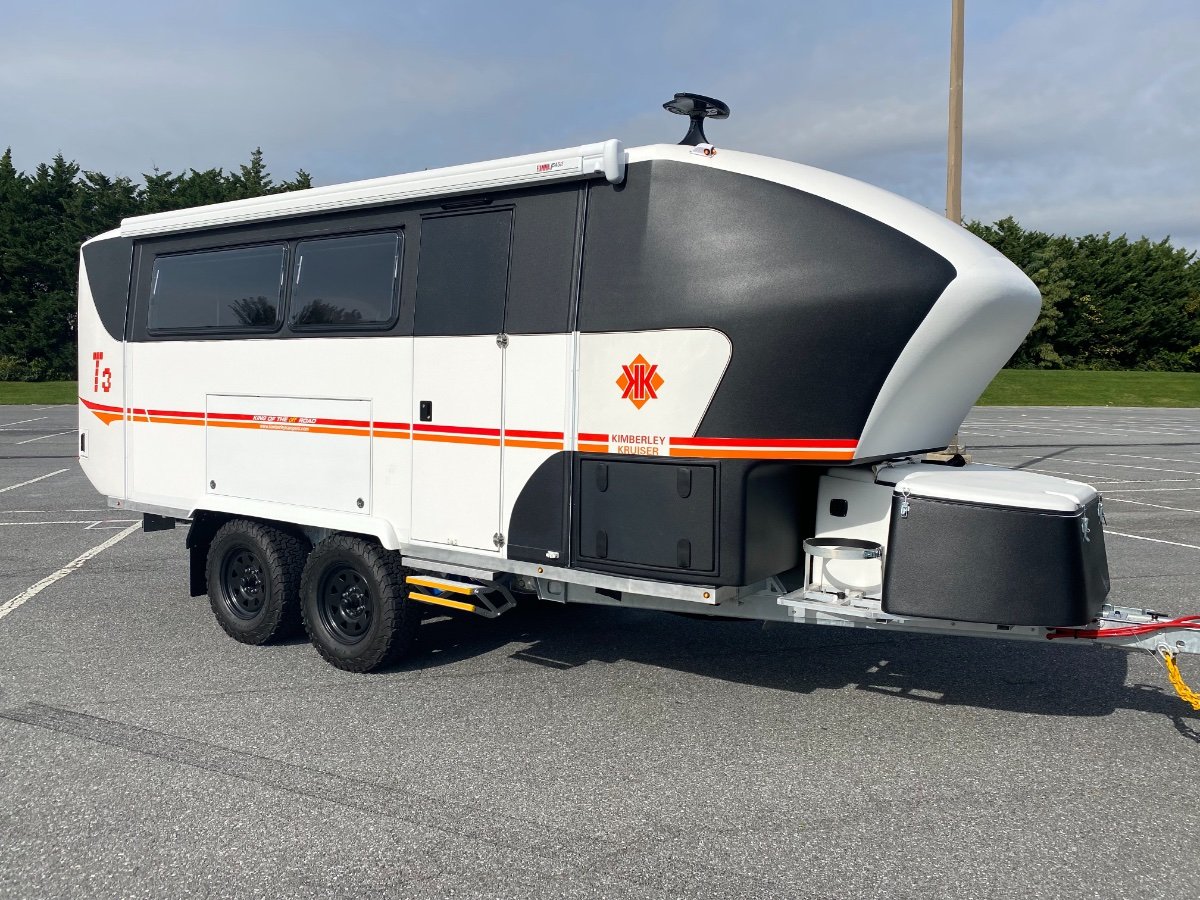
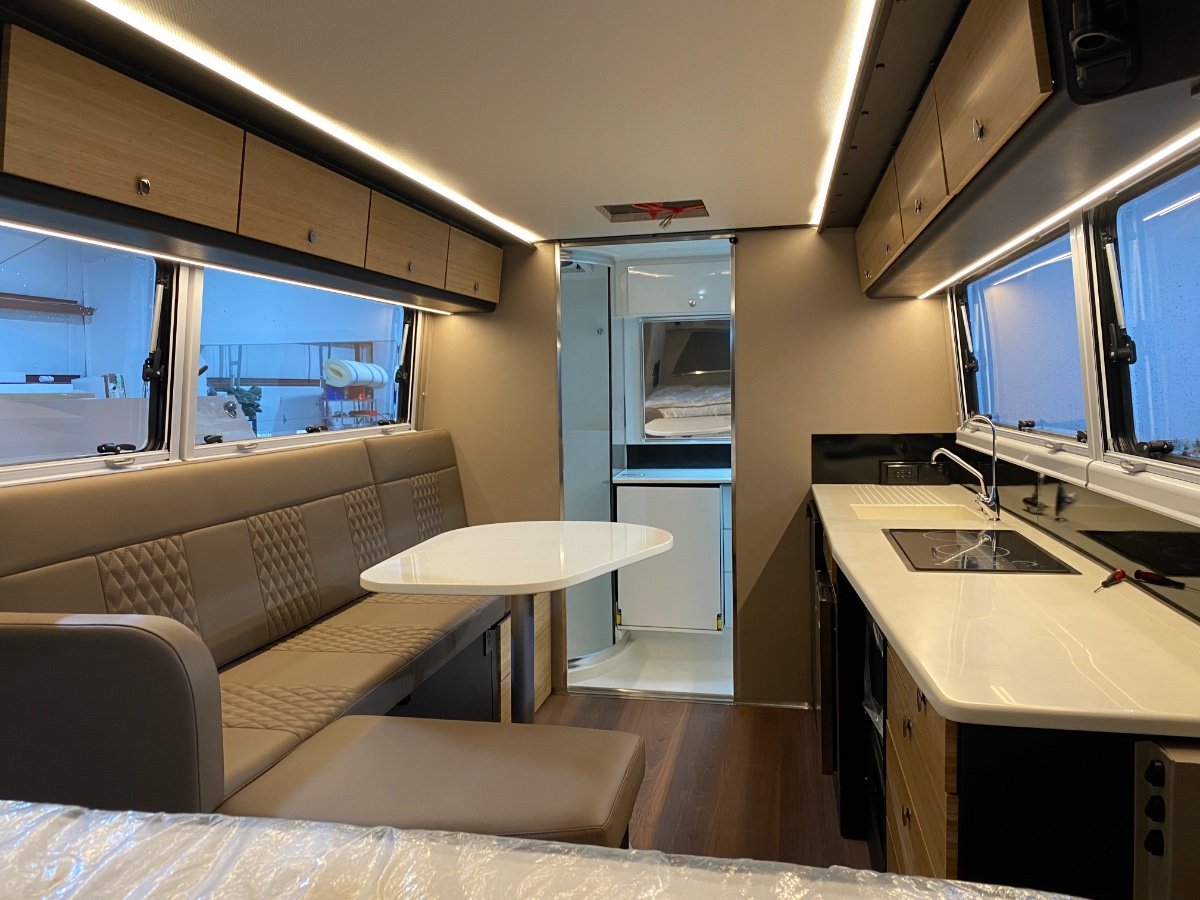
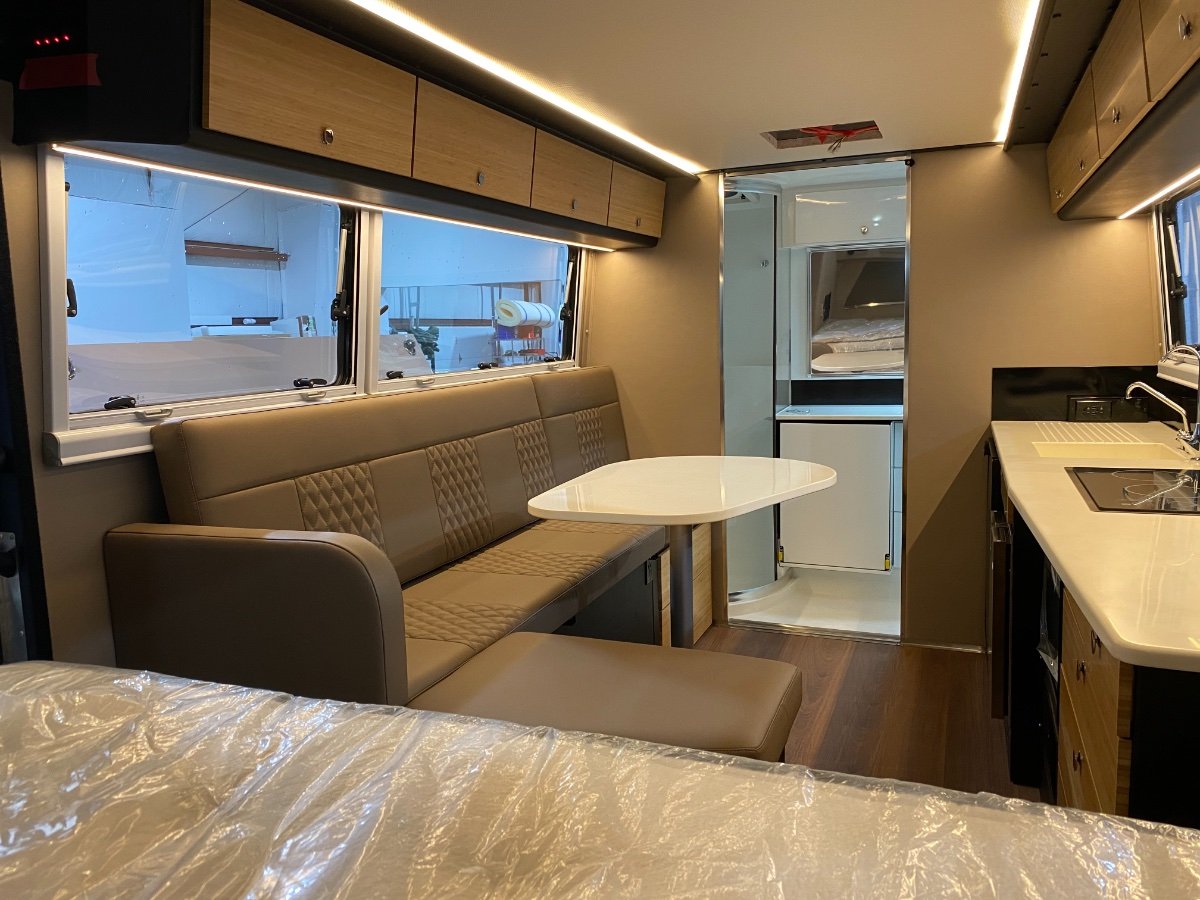
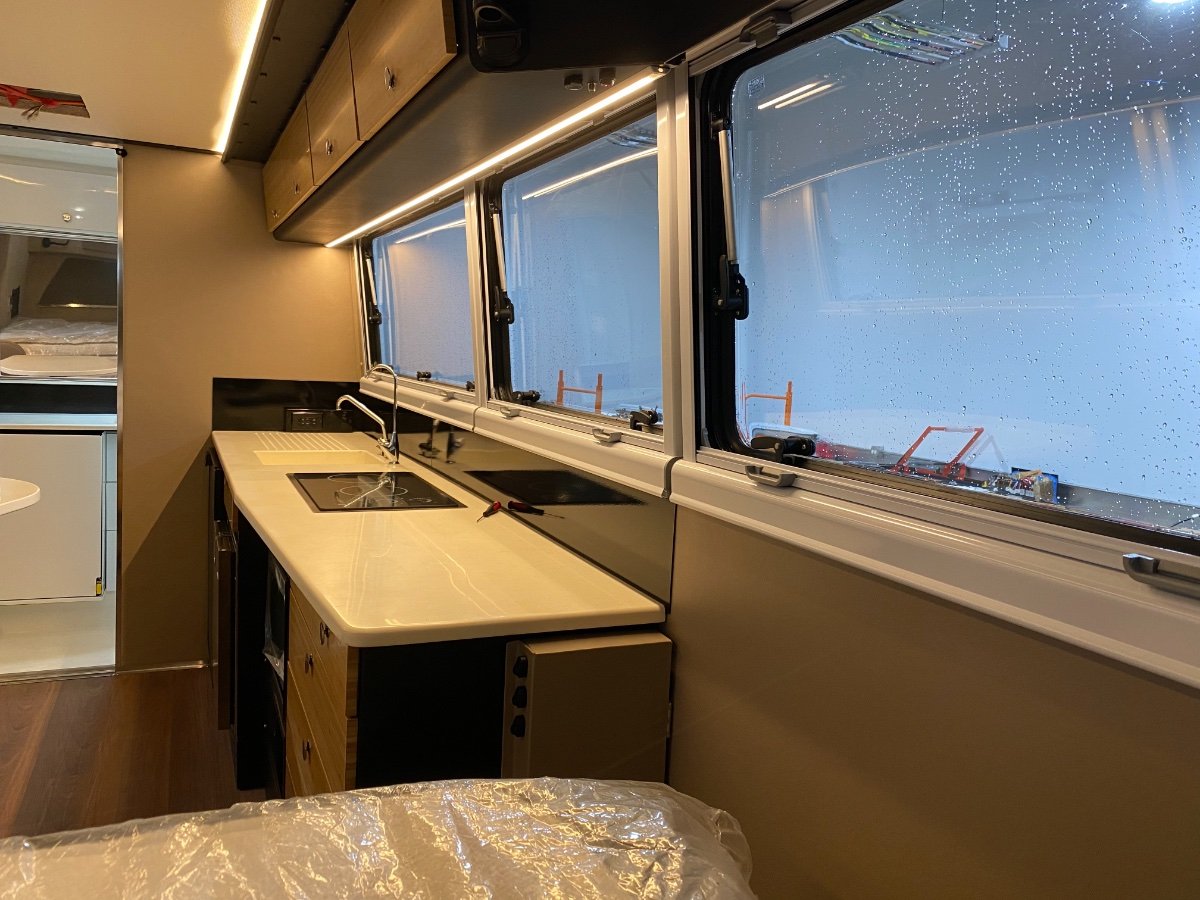
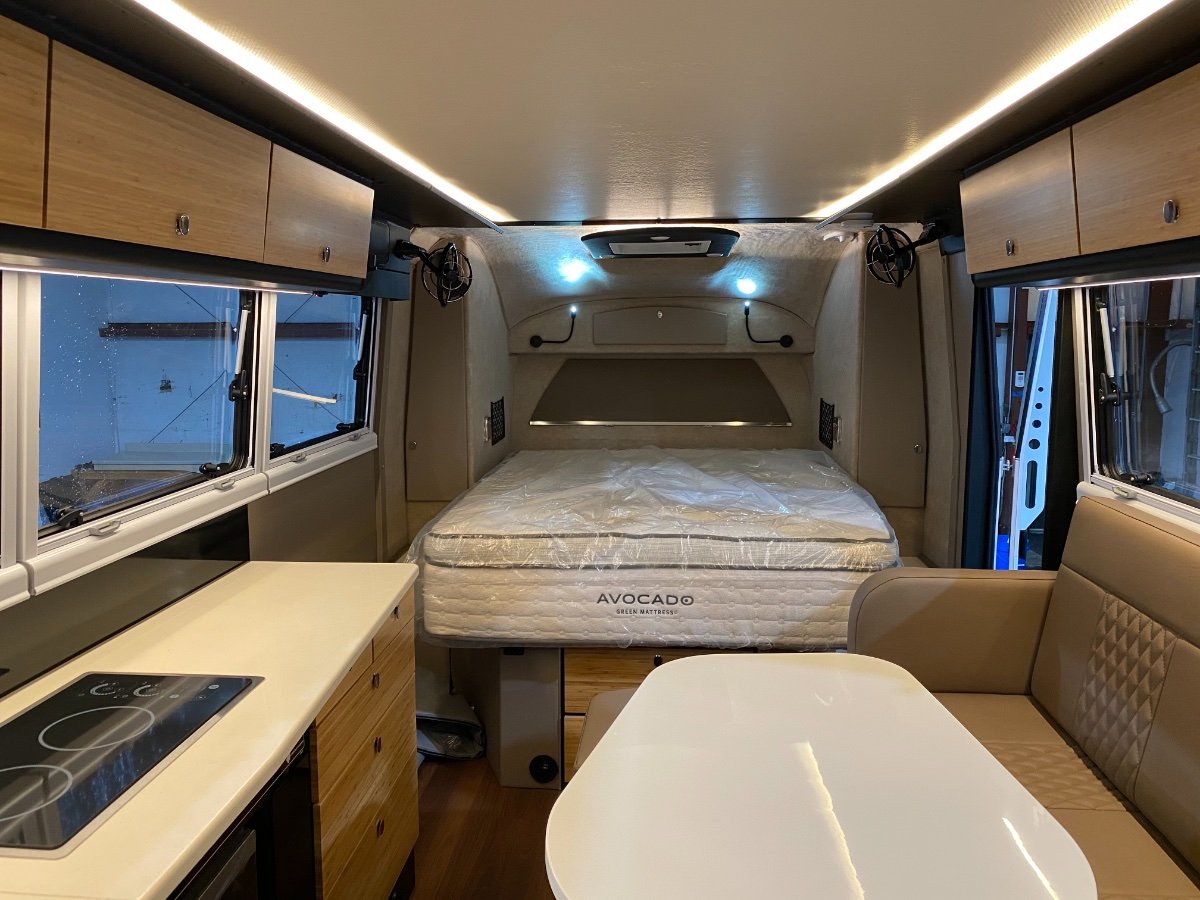
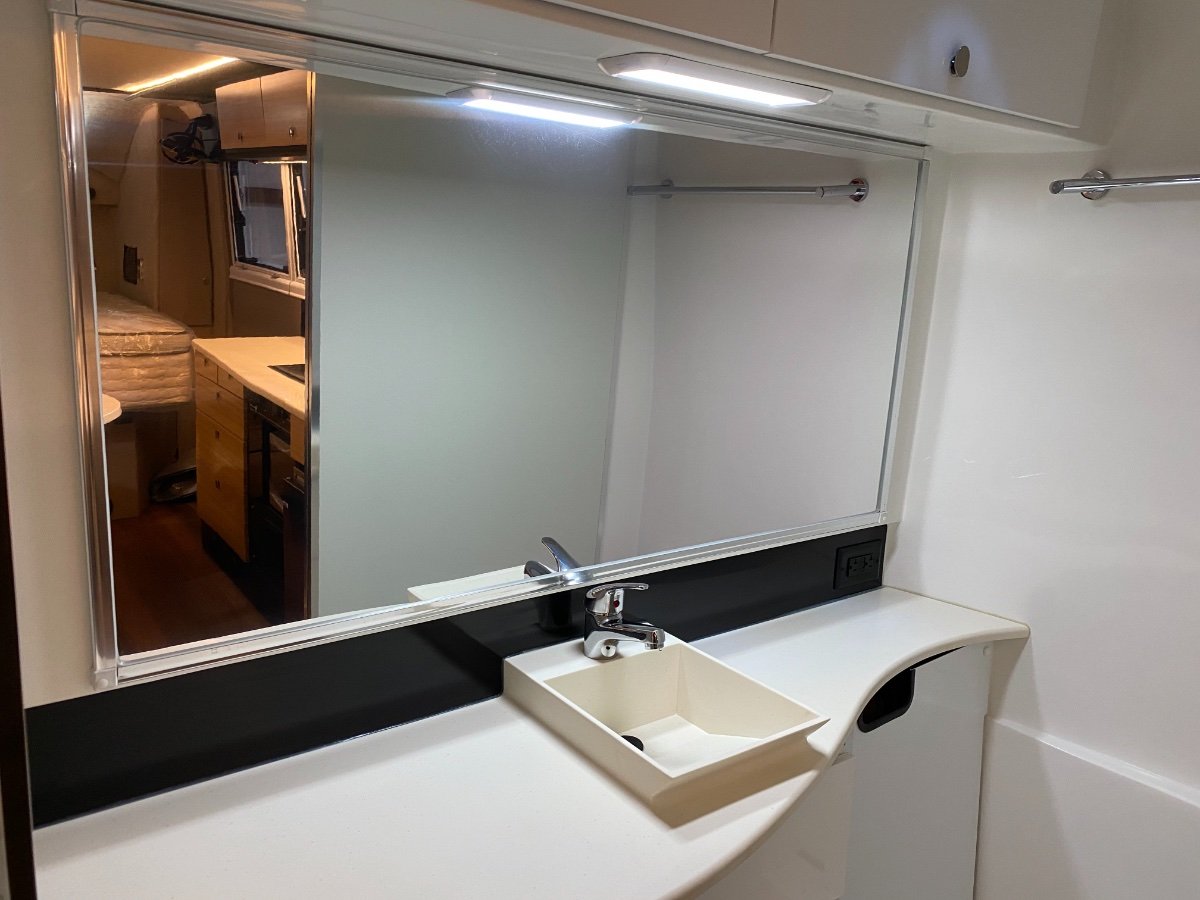
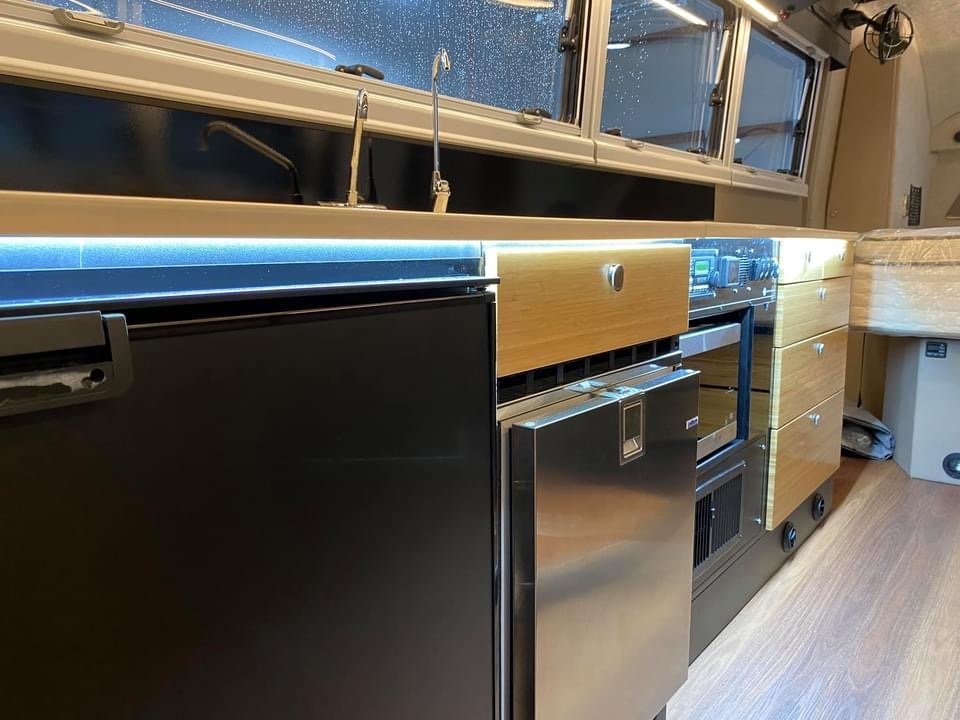
Those of you who have owned an Oliver for many years may remember me. I owned an Elite II for 4 years. Replaced it with a Conqueror which was a big mistake. Sold the Conqueror after owning it for less than a year and ordered a Kimberley from Australia. Covid-19, supply chain issues and shipping delays caused me to be without a camper for almost a year and a half. Finally, the T3 arrived and is being checked out and made ready for me by the distributor in Ohio. Here are some photos. It’s a rugged off-road camper with lots of luxury. Technology is amazing: over 900 watts of solar, 600 amp hours of lithium batteries, four wheel disk brakes, indoor and outdoor kitchen, tons of storage inside and out, etc. I plan to pick it up in a couple of weeks and will do a short trip to North Carolina as a shakedown cruise. Leaving mid-January for a lengthy trip West.
1 point
-
I just registered for the Rally at Lake Guntersville State Park. I plan to camp at site G21 in my Kimberley T3. Arriving on 5/18 and departing on 5/22.1 point
-
Paul, I don't consider this to be a true 4-season camper. Kimberley winterizes all plumbing and water tanks for Kruisers shipped to the U.S. and includes tank heaters. They also have a new composite wall material and roof material that adds to the insulation rating. Based on my discussions with David Bates, I don't think I'd tow the T3 that isn't winterized at temperatures below 28 degrees. He suggested that the diesel heater will keep the cabin comfortable for sleeping in the mid-teens, but again, I wouldn't want to try to camp with water on board at these temps. Because I typically leave Iowa in January or February to go south, I'll do what I did in the Oliver. I'll leave with a winterized trailer and wait to add water until I get to a warmer climate.1 point
-
1 point
-
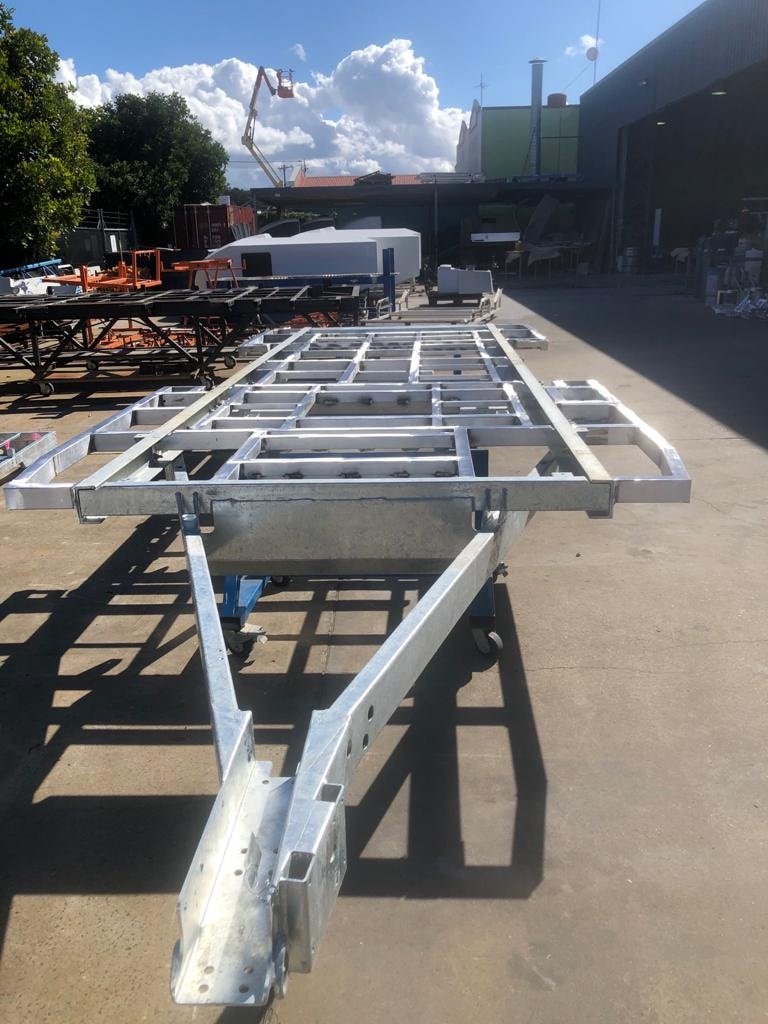
In response to your questions, John, I chose the McHitch on the Kimberley and a Rhino hitch on the tow vehicle. I’ll tow it with a Ram 2500 diesel. Because of the passage of time, I’m sure the price for mine is not the price you’d pay today if you ordered a T3. I paid Kimberley $9500 for shipping from Australia and I think their cost to ship was around $17,000. All in, mine was around $155,000 plus the $9500 shipping charge. A lot of money, but it’s worth that amount of money to me. I think I have some chassis photos—I’ll see if I can dig them up and post them. Thanks for the tip on the Stone Stomper. Warranty claims will be handled by Kimberley USA—David Bates’ company in Ohio. He’s building a dealer network too. The company in Utah that was a big Black Series dealer dropped the Black Series and is all in with Kimberley. I’ve dealt with David Bates before—he sold my Conqueror to me. He is absolutely committed to supporting those of us who purchase Kimberleys. He’s an automotive engineer and a very skilled technician.1 point
-
NC Eagle, I also ordered the Oliver because I wanted to be able to do the same thing you're planning to do in terms of skiing out west. I live in Maine not far from Sugarloaf and Sunday River but I still want to ski out west. I've only skied Steamboat and the conditions weren't great when I was there. I also like to fish and plan to do some of that out there too. I'll be following this thread and if I find anything that might be of interest regarding the skirts or other ways to keep the cold out and things working I'll post it. Hope everything goes well with your upcoming delivery.1 point
-
Hi SeaDawg, if I were going to name my Ollie, it would probably be "Powder Hound". I love skiing, especially in the deepest powder I can find. 🙂 For the past 3 seasons, I've been driving my truck (from NC) to CO, UT, WY, etc., and bouncing around for 3-4 weeks at various ski resorts. I love having the mobility and flexibility to pack up quickly and go wherever the best conditions are. I have gotten so many more quality days in the past 3 years doing this than I had in the past flying in for a week and hoping it snowed where I was staying. Anyway, I can't live in my truck so I use expensive hotels and my dream is to try and do this in the Ollie. I specifically picked the Oliver because I feel it's the best true 4 season TT in the industry. Conditions in the Rockies in the winter can vary from sunny and 40 degrees to storming and below zero - not to mention high altitudes where propane and other things also don't work as well if at all. The more prepared I am for cold, windy conditions for days at a time, the higher my chances are of not having to pack up and leave. My ultimate winter camping trip would be to get to a ski resort and set up camp in nice, 30 degree sunny weather just before the big storm. I would need to hunker down and ride out the storm. These storms often include huge wind, thus I am thinking about the skirts as something that would help in those situations. I would dig out after the storm and have several epic days of powder skiing. I'd find out where the next storm was going to be and go do it again. This is truly possible: https://rvacrossamerica.net/winter-rv-camping-ski-resorts/ The plan was to have most of this year to get to know the Ollie and prepare a bit for the much more difficult winter camping adventures, but having to wait 6 months for the Ollie put a damper on that. The pandemic also may force me to try it this winter as a rookie. I've PM'd with DonnaDuane, who has experience skiing with the Oliver and offered some very good tips. They have not considered a skirt where they ski (Cascades), but said that if in the Rockies at higher altitudes they would. It's rare to see a camper without skirts in a ski camp area. I can't find any data/proof that they actually work, but common sense dictates that they most likely help and certainly don't hurt. I don't want to be the only travel trailer to have to pack up and leave for some reason - that would be embarrassing. If I decide to try skirting, I would want something that doesn't take up much space, is lightweight/portable, doesn't require drilling and is fast to set up and take down. The air tubes seem to meet these criteria but I'm still researching. I don't think they look cool (I'm laughing at the hovercraft vision 🤣) but I'm glad someone does! By the way, my expectations of pulling this off this winter are low - but if I don't it won't be because I didn't try. Here's a great video about challenges RVs, TTs and MH's have in the Rocky Mt. winters: I think the weakest link in the Oliver is going to be the refrigerator. Unless the model has changed, I don't think a heat kit can be added to the one we have in the Oliver. I will prepare to live without a fridge on my first ski trips, but that will be one of the first things I "upgrade" (there are models that supports heat kits, etc. - very similar to the low temp lithium batteries Oliver chose) I'm going to at least practice and test around here on some cold nights. 90% of the time my wife and I will be leaving winter gear behind and camping in tropical sunshine and fair weather and loving every minute of it!1 point
-
Air skirts...like in a hovercraft?.. Interesting concept. A steering wheel by the rear window?where do air keep th life jackets? Where do I hang the numbers? So many questions...1 point
-
I don't see anything out there yet as far as reviews, etc., as I think they may be too new. I suspect they would work as well as any other skirt if it fits - I was interested due to it's simplicity and portability (cost aside). Skirts can be made for free using snow if one so desires, but I'm willing to pay for something if it's innovative and works. So skirts.... no I don't plan to live full time or camp through and arctic winter in my Oliver. But... I want to insure that if I'm on a winter camping trip and it gets pretty cold (Rocky mountain cold) for a few weeks or even a few days in a row, I won't have to pack up and leave because my plumbing may freeze. I actually prefer to chase storms in the winter as opposed to run from them. I'd love to hear from other owners about this if they have cold weather experience in their Ollies. There really isn't a ton of information to go on in this forum as far as owners sharing cold weather camping experiences, but I've read the few posts I could find and there are definitely comments and common problem areas in and around the basement and/or plumbing called out. Everyone has tried various things to move warm air around better from the living area to the basement, etc. I'd rather use skirts if they would accomplish the same or make the best in the industry even better? In the end, it's $$ for skirts or $ + time for electric heaters and fans and heat tape and insulation, etc. Have any owners tried or run some tests in the cold and found skirts to be a waste of money on an Oliver? If not, I'll be running some tests with makeshift skirts and a bunch of temperature sensors at home before I splurge on anything. If it saves money (less propane/elec in the Winter and Summer), headaches and potential damage, then it pays for itself pretty fast.1 point
-
No, that is not part of the bumper. We discussed frame rollers a while back, in a bike rack thread.....I think a rubber bumper would last approximately 0.1 second before getting peeled off. 😀 A steel skidplate would work. John Davies Spokane WA1 point
-
Hi John, I'm interested in the clearance around the perimeter of the body to see if https://www.airskirts.com/ would work on the Oliver. I spoke to the owner of the company this morning (super nice, responsive guy) and he thinks a small RV kit with a few modifications to the sizes of the tubes would work. I'm going to ask him what the diameter of those tubes are to make sure the Oliver doesn't sit too high off the ground for them. Thanks.1 point
-
Do you mean hull clearance or frame/ suspension clearance? The hull itself is fairly level - it is dead flat across the bottom, but the frame varies. It is quite a bit lower in the back because of the sewer compartment support (cross) braces. It is the rearmost one of those that will drag. See pic. The suspension is marginal in a few places, like the low hanging shackles and axle ubolts. Why do you ask? John Davies Spokane WA
1 point



















-
Recent Achievements
-