Leaderboard




Popular Content
Showing content with the highest reputation on 11/15/2022 in all areas
-
We also ordered the Truma antifreeze kit. It was installed by our delivery person from the Service Department. But, be sure to check before leaving Hohenwald that the "ANTIFR" option appears on the CP Plus wall remote control (along with the ECO and COMFORT options) indicating that the antifreeze kit is communicating with, and can be controlled by, the CP Plus. As the CP Plus wall controls are new to Oliver as of last week, our installer neglected to do a RESET on the CP Plus after installing the antifreeze kit, so it did not work. But, during our return trip to the Oliver facility today, that issue was promptly corrected. Mistakes happen, but we are impressed with the prompt and effective response from the Oliver Service Department. They really do care.4 points
-
My furnace short cycled. The furnace blinked out a trouble code that said something like 'blocked discharge vent'. I popped all the grills off of the heat registers and ran the furnace again. No more codes and no more short cycling. I then put the grills back on while being very sure the adjustable dampeners were in the wide open position. Again no codes and no short cycling. Mine doesn’t click from the air conditioner, so yours is probably something else. It doesn’t cost anything to pull the heat register covers and give it a try though. BTW-The outside cover to my furnace is translucent white plastic. If it’s dark out you can see the red LED on the control board blink out its trouble code through the white plastic without oven taking the outside cover off. I caught the blinking codes by accident while walking around the camper in the dark. Good Luck.4 points
-
Share and Enjoy !Shares View the 2023 Legacy Elite II Oliver Legacy Elite II Owner's Manual by clicking the button below. View Share and Enjoy !Shares The post 2023 Oliver Legacy Elite II Owner's Manual appeared first on Oliver Travel Trailers. Read the Full Article3 points
-
This is just one reason why we chose to order an Oliver Elite ll over other brands, as the technology improves they are pretty quick to improve their product; they really do keep an eye on changes in the industry.3 points
-
Also, when you arrive at your campground, after traveling in very cold conditions, give the trailer time to thaw out before using any of the plumbing; especially the toilet. We were caught by a quick moving cold front which resulted in traveling in temps in the teens. When we arrived at camp, I made the mistake of using the toilet before the trailer had properly warmed up. The flush valve was frozen and the give point was the plastic pedal when I stepped on it to flush. By the way, Dometic does not sell the pedal as an individual part. Instead I had to purchase one of their cheaper all plastic models to cannibalize the foot pedal. An expensive lesson. "Run your furnace while traveling" - brilliant! Best piece of advice. I would have never thought of that. (insert sound of hand slapping forehead)3 points
-
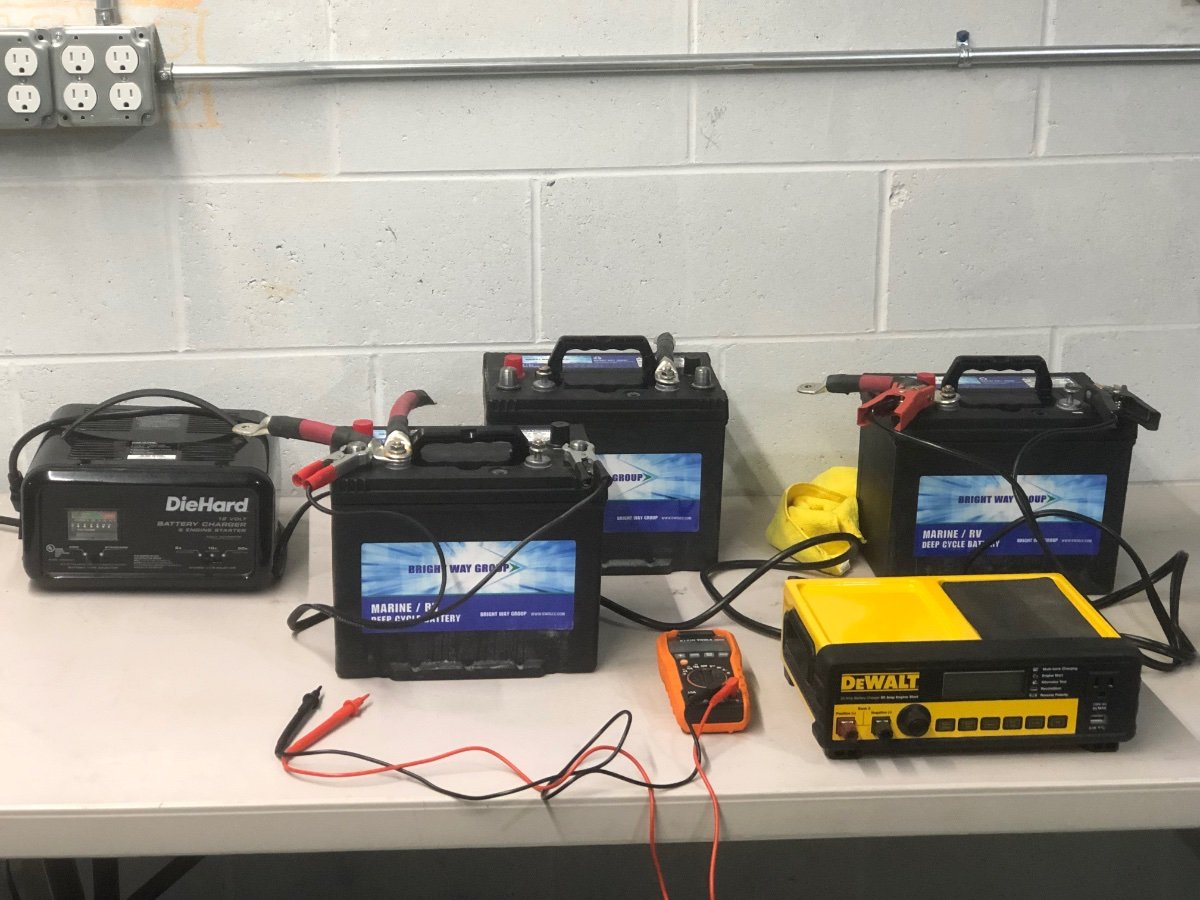
All taken care of …. all four batteries are in excellent condition at 12.70 And stable.There was no damage to the batteries. Now if I could just get my OLIVER in the heated garage.
 3 points
 -
In our 2019 foray to Alaska, we found a campground that had a wash bay that you could use for free. In Mississippi the mosquitoes will eat me alive every evening. During our four month trip to Alaska, I didn't get bitten a single time. They were everywhere and lit on me often but apparently out of respect or perhaps fear of catching something from me they just moved on.3 points
-
Another observation: I just toured the 2023 Oliver Elite II demo trailers while waiting for service at the OTT Sales and Service facility. One of the Elite II demos has the full Truma upgrade package including AC, water heater and Varioheat furnace. The other has the standard Dometic AC and the standard Suburban water heater, but the Truma Varioheat furnace. This suggests that the Varioheat furnace is now the "standard" on all 2023 Elite II trailers, even without the Truma AC/water heater upgrade. If so, our experience so far supports this product decision by Oliver.2 points
-
The Varioheat furnace is included when you order the Truma package. We were surprised, and pleased, when we received an updated Deposit Receipt from OTT a couple of months ago which listed the Varioheat furnace as part of the Truma upgrade package. As I advised OTT Sales and Operations manager Rodney Lomax yesterday, it would be to Oliver's advantage to better market the fact that the Varioheat furnace is included with the Truma upgrade package. After using the trailer for 5 days now, we believe it adds at least as much value as the AC and the water heater, making the upcharge much more worthwhile.2 points
-
Here on the Forum, there are many reports similar to yours. It is an unfortunate fact of life (at least my life) that there are precious few companies that treat their customers in the fashion that Oliver does. I think that this is one of the main reasons that it is so hard for people to believe the glowing reports that we often hear about the Ollie and the company that produces it. We are simply labeled as "Fan Boys" or dismissed because we are so proud of spending our money we are unwilling to or unable to see the faults. It is natural to be a bit of a skeptic prior to experiencing such a refreshing change to the norm. Congratulations for giving yourself the chance to be "impressed". Bill2 points
-
WiFiranger, a Winegard company, has just released the newest firmware and I have successfully installed it on my 2019 iteration of the product. The release, 7.1.0b13 supports the Ethernet tethering to Starlink as its major new feature and various bug fixes. The upgrade was announced on November 10th, 2022 and I did the upgrade on November 14th while sitting in my house with our Oliver gear on and connected to our Comcast Wi-Fi cable modem. The install did the SkyPro first and then the Core. Both are required to be at the same version and the entire install took over an hour and I had no anomalies.2 points
-
As someone picking up an Ollie in Early FEB, I appreciate both the question from RustyMD and the answers from the Pros! Also have the anti-freeze kit on my build and certainly expect it may be needed for our FEB delivery. Thanks again to both the OP and the answers!2 points
-
SeaDawg: Excellent advice! Beaver Pilot: Please post your TV and OTT info in your signature line. I have three close friends, all life-long residents of AK, who basically advised us the same concerns posted by SeaDawg. This past summer, we spent 45 days in Alaska with our OEII, most of it boondocking. However we did not venture very far north of Fairbanks. Over 15K from TX out and back. You'll need to be prepared for a lot of flying missiles and very rough slow slogging roads heading your way, especially if you venture more than very far from Fairbanks. As an Alaska Bush pilot, you likely have all of the below. But for new owners who have not DRIVEN to AK, here is a list of items that I found appropriate: Searching "mud flaps" and "stone stompers" postings at our forum. Start by looking at the bottom of all of John Davies post where he has a link to several of them. He, and other owners have well documented DYI solutions that such a trip would warrant. One suggestion that I did not take, that I wish I had done, was padding the front edges of my OEII and rear mud flaps on Ollie. Got battle scars as a result. Bringing a full compliment of tire maintenance tools (TPMS, Air Gauge, Air Compressor, jack, and a tire plug kit is the minimum. Bring an RV satellite based navigation system/ I have, and recommend, a Garmin InReach Mini II. If you don't have Ford's 36 gallon fuel tank (or equivalent), then having extra fuel cans. If your TV is older, then consider rubber hoses and belts. Handy to have a spare engine oil filter and oil. Near perfect full size spares for both TV and Ollie. Vehicle recovery gear. Good set of tools. First aid kit and extra meds for the duration of your trip (No Resupply). Update your Ollie with outdoor bug lights (courtesy (puddle) lights and porch lights). Finally if going way north of Fairbanks, plan on replacing your windshield and likely your Oliver front logo when you get back. Please keep us posted, and when you get back, kindly update the above list with your thoughts and experience. Good luck and safe travels! Geronimo John2 points
-
I too have a 2020 LE II and I definitely bought mine new as a 4 season trailer and as I use it extensively through the winter in Oregon, I do not winterize it. I am extremely pleased with the LE II overall, but OTT completely failed when they engineered the forced air heating system. A forced air heating system does not distribute hot air throughout the living space, it has return ducts that pull hot air from the supply ducts across the living space to a one or more return ducts and back to the furnace. Oliver only put in one return duct and they located it immediately in front of the furnace itself. This means that there is no circulation of heated cabin air through the basement. It is dead air space. Even more inexcusable, OTT didn't put any return vent in the bathroom so when the bathroom door is closed, the supply vent in the bathroom pressurizes the bathroom space and warm air doesn't flow into the bathroom. Given the primary problem is a lack of properly sized and located return air vents, adding or relocating supply vents will not be very effective at warming the basement. I too spent did lots of testing with thermostats to get a good understanding of basement temperatures at various cabin temperatures. Like you, I found that no matter how hot I heated the cabin, the area around the outside shower would inevitably fall to around 5 degrees above the outside temperature. I determined the main reason was the lack of heated air circulating through the basement due to the lack of appropriately located return vents in the cabin. I also found that the tiny vents in the bottom of the trailer designed to drain any water that finds its way to the basement are a problem in cold weather given the flaws in the heating system. There are enough tiny air leaks in the cabin to create a slow convection effect which draws cold outside air slowly through the basement vents. Since there is no warm air circulating through the basement even when the furnace is running given the flawed design, this slow intrusion of outside air pools in the basement creating the dramatic temperature differentials between the cabin and the basement. I have not permanently fixed the problem yet, but found a temporary workaround that I am confident is good down to 15 degrees or so. If you have the inverter like I do, there is a large street side hole just behind the battery box (to access the inverter GFCI). When it gets cold, I just unscrew and remove the cover and create a second temporary street side return vent. Now more than 50% of the hot cabin air flows into the street side of the basement and across the water tanks and rear area stirring up the air. The area by the outside shower now varies less than 10 degrees from cabin temperature and the battery box stays within 5 degrees of cabin temperature (I have lithiums and have sealed and insulated the battery door). The furnace seems to run quieter and the cabin heat is more evenly distributed. The walls don't get quite as cold either. This winter if it gets real cold, I will also temporarily tape over the vents under the trailer to stop the convection currents from pulling cold outside air directly into the basement. For me, I think the permanent fix is to add a few return vents to the trailer. I will probably put one under the front dinette next to the CO detector and another smaller one in the bathroom. This should ensure that the entire basement enjoys adequate circulation of warm air when the furnace is running and that the bathroom is warm even with the door closed. You may want to try unscrewing the cover from the street side hole in front of the inverter and see if you experience the same improvements in basement temperatures that I did.2 points
-
Hull 806..LE2.....a repost of our low temp camping experience. I have no problem considering the Ollie a 4 season trailer but I know I have to monitor the temps and always have to have a back up plan (or three) if "oops" happens (bold below). >>>>>>>>>>>>> We camped in Wyoming with lows around 15 degrees for a week, not winterized, with no problem. Altitude was about 7,000 feet. I have three SensorPush HT1 Wireless Thermometers to monitor the temps. Sensor # 1 was located in the cabin attached to the rear most driver side reading light. Sensor # 2 was located between hulls under the passenger side bed near the tail lights & water lines. Sensor # 3 was located between hulls under the driver side bed next to the shower outlet. On the outside of Ollie, I removed the shower head and pulled the water line inside the hull and reconnected the shower head. I set the furnace to mid/upper 50's and monitored all three temps....adjusting as desired. The driver side had the largest variance to the cabin temperature.....about 15 degrees. I have two 30 lb propane tanks. We were boondocking. After 5 or 6 days with ice/snow cloud cover....the batteries got down to about 50% SOC. At that point, I used the generator to recharge....not risking the furnace fan operation. We consumed one tank of propane and promptly got it refilled. (This was a portion of a five week western trip..we had been running the refrig on propane so we did not consume the whole tank in this one week). I also carried a Caframo heater and anti-freeze/pump ..... just in case. We operated the water system/hot water heater as normal. We did have to deal with condensation. (((BTW...I have move one of the sensors to inside of the refrigerator. We adjust the temp setting according to the readings. Early on in our experience we were having veggies and eggs freeze because we did not monitor and adjust....now, not an issue.))) Steve2 points
-
This is an update containing some new information about the AGM battery issues that we experienced this fall. Most of the background is in a T105 post by another Oliver owner. It is my host that an admin may be able to advise on how I might migrate some of the info contained into this new entry, but until then, I will briefly summarize concentrating on the new information. This fall we were boondocking in Maine and were using the furnace overnight, we had a low battery alarm that surprised us, but we had notice the furnace was cycling a bit more than we had experienced on the previous nights. Overnight temps weren't approaching freezing and we only set the temp to 58 overnight so we really didn't understand why it was cycling so much. When we had the alarm, the batteries were below 12V. We did some testing in our driveway when we returned from camping on several cold nights after insuring the batteries were completely charged by the solar panels. After some alarming test voltages on both strings of batteries that showed the first 6V battery in each string had very low voltage while just running the furnace, cell booster, and Wi-Fi extender for several hours after the sun had set. It was suggested that we have the batteries tested and I took the two suspect batteries, one was 3 years old and the other 2 years old, to Batteries-Plus for a load test after both batteries had been charged and sat for a day and both passed. I reinstalled all the batteries again and monitored for a few weeks during the warm fall weather with the intent of testing under colder temperatures. I completed my first major overnight test attempt with temperatures in the 20's last night. I had disconnected the shore power yesterday morning before the solar kicked in and it was a very sunny day so I ran the furnace, cell booster and Wi-Fi extender for the duration. The solar stopped charging at about 2pm, but everything else continued to use about 11Ah during the latter part of the day into the early evening. I went to bed in the LEII at about 10pm EST. We were at 12.7V on both strings when I went to bed and at 12.4V when the furnace and blower were cycling. When I woke up at 12AM, I discovered the voltage at 11.4V when the furnace blower was on and decided to shut off the furnace and move back to the house. The voltage was 12.3V when the furnace was shutdown. When I got up this morning at 6AM well before the sun has risen and started charging the batteries the battery voltage was at 12.7V. I was flabbergasted. I suspected that it would be about the same voltage. My Victron SmartShunt confirmed that we were at 94 percent SOC and had a very modest .37 amp parasitic draw. I am completely baffled by all this and still suspect that we have a battery issue or a furnace issue due to excessive cycling. We had a 34Ah draw down at 6am this AM since the last complete charge.1 point
-
Correct. Per the new 2023 EII Manual:1 point
-
https://www.instragram.com/gastateparks/ My camper has now made it to the Ga state parks website on Instagram My son took this shot this past summer. Oliver may get some free advertisement from this photo! It is amazing that I was told when I start camping with my Ollie people would ask about it and want to see it. We have camped about 6 times in 6 months and I have been stopped every time as people love the look and quality.1 point
-
At the beginning of each travel season I contact the Sales area at Oliver and ask them to send me several copies of that current year's sales brochure. This way I can simply hand one of these to people that seem to have a genuine interest in the Oliver and/or to people that approach me but I don't have the time or place to actually give them a tour. Bill1 point
-
The Ollie definitely grabs attention! I love when people ask about it which happens every time we take it out! I’m always proud and enjoy giving a tour and answering questions about the Oliver.1 point
-
Rodney Lomax confirmed to me yesterday that the vent in the bath below the toilet is a return air vent that is included with the Truma upgrade.1 point
-
I don’t remember being offered the Truma Varioheat option on the build list. I did get the Truma AC and water heater and antifreeze kit. I ordered my trailer around May. Just interested in the Varioheat option question. Is it included or was it something I missed?1 point
-
OMG... Don't know how many of you have had extended trips on our highways lately...but it looks like a "war zone" in some places... Cannot believe the bumps, holes, patches, dipsey-doos and just downright poor condition... If we didn't have an Oliver I think I would have left several hundred parts and pieces on the roads ! Hohenwald to Bellingham WA...I don't think we will ever take a trip that long again- maybe on the "back roads"... Just be careful out there !1 point
-
The loop Interstate 459 around Birmingham Al is to be avoided completely if you can. It’s the worst interstate we have ever been on. Interstate 88 in upstate NY is another stretch of highway we will never travel on again…awful. We try and plan our trips on the roads less traveled.1 point
-
We took delivery of our 2022 Elite II last Thursday. Low temps dropped into the mid-20s over the weekend, while we were at David Crockett State Park. We have the Truma AC/Furnace/Aquago package. Concerned about freezing, we placed digital thermometers in the bottom of the service access portals under the front dinette seat and the street side rear compartment near the external faucet. We set the Truma Varioheat furnace at 68 F. When the outside low dropped to 26 F, those thermometers read in the mid- 40's. This suggests that the vulnerable areas on the bottom and outside of the trailer are staying warmer, with the furnace on, than has been previously reported. I believe it is because Oliver now includes a return air vent in the aft wall of the bathroom, with the Truma Varioheat installation, which improves air flow back to the furnace. See page 2 of this thread: The Truma furnace package also includes smaller, but more robust, and better sealed, supply air ductwork. So far, we are quite pleased with the quality and performance of the Truma Varioheat furnace installation, and with our ability to use the trailer in below-freezing temps. But, we must drive home to Idaho over the next week. That process may require us to camp overnight with low temps in the teens. We plan to continue to monitor temps. If the sensitive areas of the bottom of the trailer get below 32 F with the Varioheat set at 68 F, I will update on this thread.1 point
-
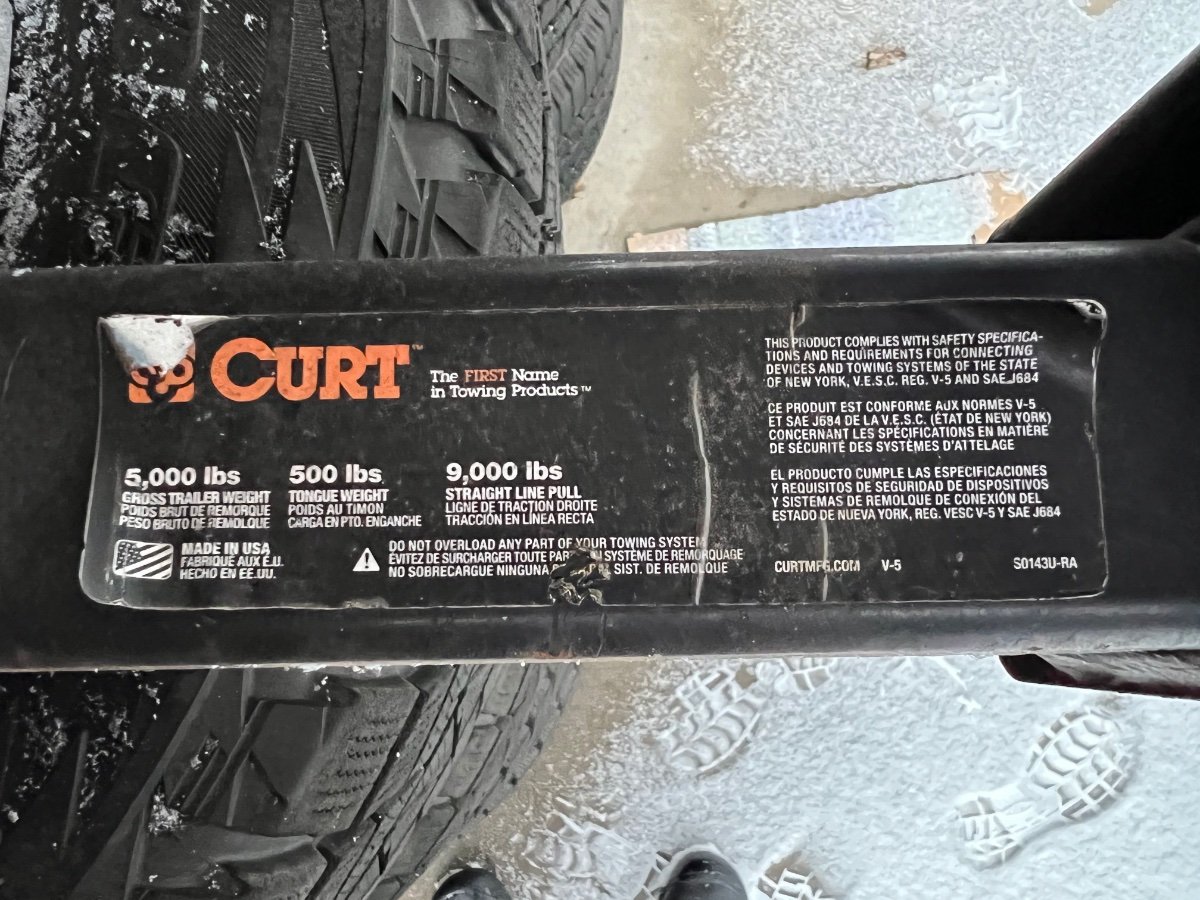
The attached photo is the only markings on the hitch. In order to make it fit, you’ll need to trim a little of the plastic around the front recovery points. DON'T drive off-road with this particular hitch in place. It rides too low. On pavement it’d barely be okay. I forgot it was there when going down a logging road once while bird hunting. I came over a rise that quickly dropped down into a deep hole on the other side. The front hitch caught the far edge of the hole and face planted the whole rig. The guns, gear, and hot coffee from friends in the backseat all ended up in the front seat. A couple of dollars at the car wash and a high pressure hose wasn’t enough to clean up the muddy mess under the truck. I had to put it on a lift at work and remove all the front skid plates to clean out all of the impacted mud. Fortunately nothing was bent or broke. This past year I came into a small three cylinder diesel tractor with a front end loader. It’s got a spot for a hitch ball on the edge of the bucket. I’m going to use the tractor, bucket, and ball to place the trailer in its tight winter resting spot under the back garage car port once I quit ruffed grouse hunting in a few weeks. With the super short wheelbase, it should make it even easier than the front hitch on the Land Cruiser.
1 point
-
I have spent 14 Summers flying Beavers and Turbine Otters on floats in Alaska. Now I would like to see the rest of the state. Has anyone one the forum taken an Elite II to AlasKa for the entire Summer and gone as far as Prudhoe Bay? If so, how did the trailer survive, did you add a lift kit, and did you change the tires that came on the trailer? Thanks1 point
-
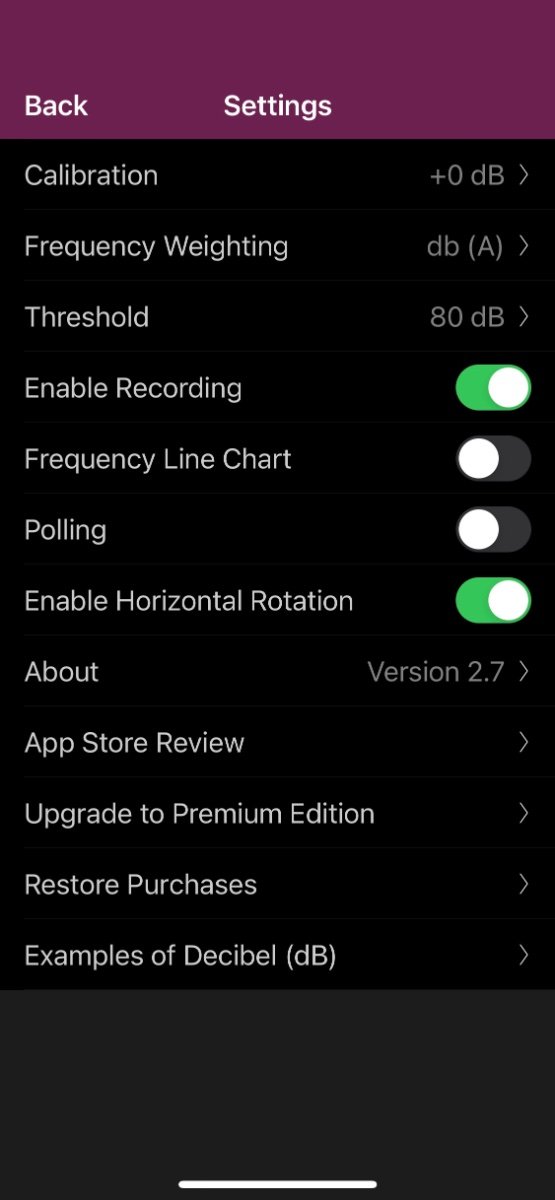
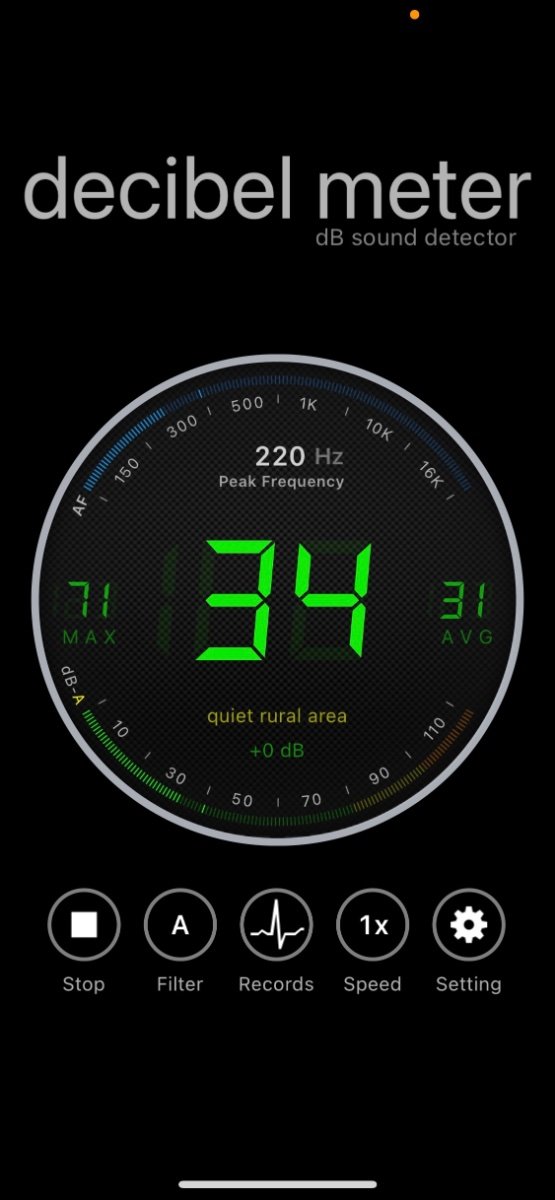
Would you please take some pictures of the installation and control unit? Did Oliver retain that enormous air intake grill under the curb side bed (which allows you to hear all the RACKET from the old style furnace fan.) If you have an iPhone, can you please download this app and do some noise testing? If you have Twin, lie on the curb side one with your head facing the galley, and the phone over your chest. Make sure the trailer is dead quiet other than the furnace. https://apps.apple.com/us/app/decibel-db-sound-level-meter/id1227650795 I have some numbers from my furnace, it would be interesting to compare them, please start a new thread! The numbers below are NOT from my furnace. Thanks. John Davies Spokane WA
1 point
-
Don't forget about the Truma water heater if you will have one. Running the furnace while traveling will not protect the Truma in sub-freezing temperatures. Make sure the Truma is set to Eco when traveling in below freezing temps (propane) or alternatively, activate the electric antifreeze heating element in the Truma (preferred) if you ordered the option. Make sure OTT has actually installed the antifreeze kit when you pick up the trailer and make sure they explain how to insert the exhaust plug and set the control to electric antifreeze when you travel in sub-freezing weather. (And don't forget to remove the Truma exhaust plug before switching the Truma back to propane when you arrive at your destination.)1 point
-
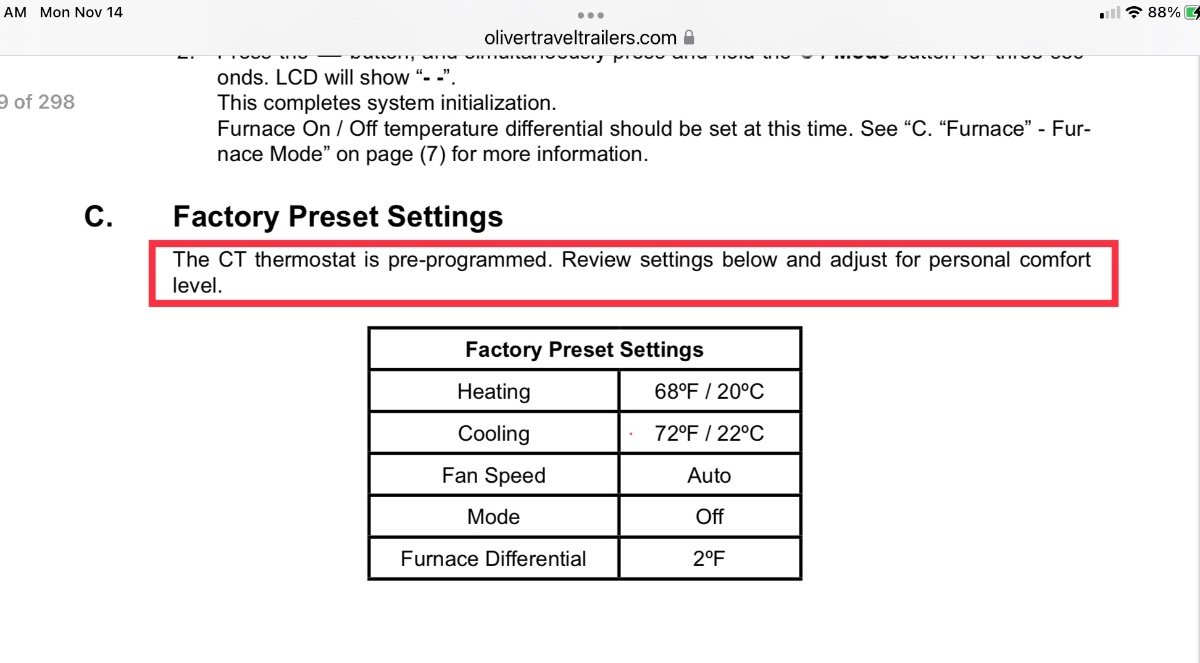
If it operates normally up to the time it starts short cycling, it is most certainly a control problem. Does it do the same thing when cooling? I guess you will have to wait until June to try that….. 😳 An RV tech should be able to diagnose it very easily by installing a temporary test thermostat. This would be covered by your warranty, so don’t worry too much. Old mechanical thermostats have an adjustable “dead zone”. I think that the digital types do have some sort of selectable value for this, to reduce short cycling under certain situations.. EDIT, your Dometic manual shows the default settings, it may be that something was not programmed right. That would be very easy to check. “Furnace Differential” refers to the dead band, in other words, the temp has to drop 2 degrees before the stat will send an “On” request to the furnace. If it were set to 1 or 0 (if that is even possible) it would short cycle. If it is set to 2 degrees, try changing it to a higher number. John Davies Spokane WA
1 point
-
Will the temperatures be below freezing during the day? If not, you can move about without worry. If they are below freezing while traveling you can run your furnace while traveling. If you are camping at campgrounds with electricity, a small space heater is a good investment that will save you propane. We’ve camped with night time temperatures in the twenty’s many times without issues. Mike1 point
-
For our 2018 version I have found: It takes a full 24 hours to precool. Also it does so faster on propane. We travel using propane 98% of the time. Not if using tunnels in some areas. Works best on propane Once cooled down, it works fine even in 105 degree F IF I park our trailer with the curb side facing Northish. This pretty much keeps the sun off the refrigerator area. If I can't get it sort of facing that direction, some awning shade is advantageous. Direct sun on the refrigerator area with temperatures over 100 is problematic. GJ1 point
-
There's nothing wrong going the heavy-duty route. This way, if you ever buy a HD truck, you're all set.1 point
-
No ball wear issues here. Then again I don’t have an Andersen hitch.1 point
-
It should be noted here that the source of JD's ball wear issues was never identified (to my knowledge) and a number of owner's (me included) have never had a single issue with this kind of wear while using the 2 inch Andersen ball. Bill1 point
-
We took delivery on an Elite II yesterday, with the 2-5/16" coupler upgrade, towed by a 2019 Tundra. I installed a 2-5/16" Andersen hitch today. Why? We figured the $250 for the 2-5/16" coupler upgrade, combined with $0 more for the 2-5/16" Andersen WD hitch vs. the 2" (which was purchased online and installed by me to save some $$$$), were sensible insurance against the ball wear issues John Davies reported on this forum some years ago.1 point
-
Granted this post is not about our "Wonder Egg's". However more than a few of us are towing our OTT's with late model Fords with the very capable 3.5L EcoBoost engines. This post BRIEFLY addresses those engines and their faults. ENGINE GENERATIONS: · Gen 1: 2011 – 2016: (Have problems with: Phaser Rattle, Turbo’s, Timing Set, Others) · Gen 2: 2016 – 2017: (Fixed about all the Gen 1 issues except the Phaser Rattle issue) · Gen 2: 2021+ (No new problems Identified that I am aware of, but they now have an again redesigned phasers. UPDATED PHASERS: Old part numbers start with a HC3S. The new phaser stock numbers start with ML3Z. New ones have a semi-enclosed face (Can’t see sprocket). This semi-enclosed face I suspect captures oil to lube the cam sprocket while system oil pressure builds and stabilizes. With oil, the phaser rattle is reported to be solved. Stock numbers for the new design are: · ML3Z – 6256A Cam Intake Phaser · ML3Z – 6C525A Cam Exhaust Phaser Any owner of Ecoboost engines model year 2020 and older: Make sure you get the new Phasers for your engine, not old stock as Ford is currently (as of this date) still selling and using. For more info about this topic, kindly review this video:1 point
-
I also have a bit over 40K miles on our 2019. Guessing that 75% of those miles have been pulling hard with our OE2 in tow. Vast majority at interstate speed (plus) from TX to mountain sites out west. Because of the phaser rattle history on these engines, I purchased the FORD extended warranty. Like you, we have had no issues at all and also are consistently amazed with this engine. 🙂 For every dry start (Not having been run for a few days or longer), I use what I call the F-150 EcoBoost Forum "Full Throttle No Start" procedure to pressurize the oil system without the engine getting fuel. I believe that using this process has and will greatly extend the life of the old style phasers: Hold the gas pedal to the floor. This action tells the computer to not allow the fuel injectors to send fuel into the combustion chambers. No fuel and your motor will not start. Crank your engine for 10 to 15 secs at a time. Wait a bit in-between spins so the starter can cool a bit. While spinning the engine, watch your oil pressure gauge. It will climb as the oil pump pressurizes the oil galleries, turbos, timing chains and most importantly your phasers. When the oil pressure reaches "normal", take your foot off the gas peddle and your engine will fire off and run. I won a beer off my brother who said the above would not work. It does on all the Ford EcoBoost engines we have tried it on. GJ1 point
-
GJ - Thanks for posting this. I have never had any issues to include "rattles" with either of the two 3.5 Ford's I've owned. I presently have my third 3.5 on order and will be shortly selling my 2017 that only has 44,000 miles on the clock. I am consistently amazed with this engine. Bill1 point
-
Congratulations on the new Ollie. Wow that's a pretty gutsy shakedown trip. Obviously you guys are seasoned and quite confident in your travel abilities. Your Ollie looks like a perfect fit in parking spot. Our waiting game has just begun we'll be there before we know it. Love your story and look forward to meeting down the road.1 point
-
Congrats on your new Oliver and successful trip, I’m sure there will be many more! Mike1 point
-
Great looking Ollie resting comfortably in its very own bedroom. Nice trip too - glad to hear that there were no major issues. Welcome to the Family! Hope to meet you at the annual owner's rally in May. Bill1 point
-
I love your story!!❤️1 point
-
Try THIS for the heater and THIS for the anti-freeze pump - used to pump anti-freeze into the black tank flush, city water and fresh water external ports. Bill1 point
-
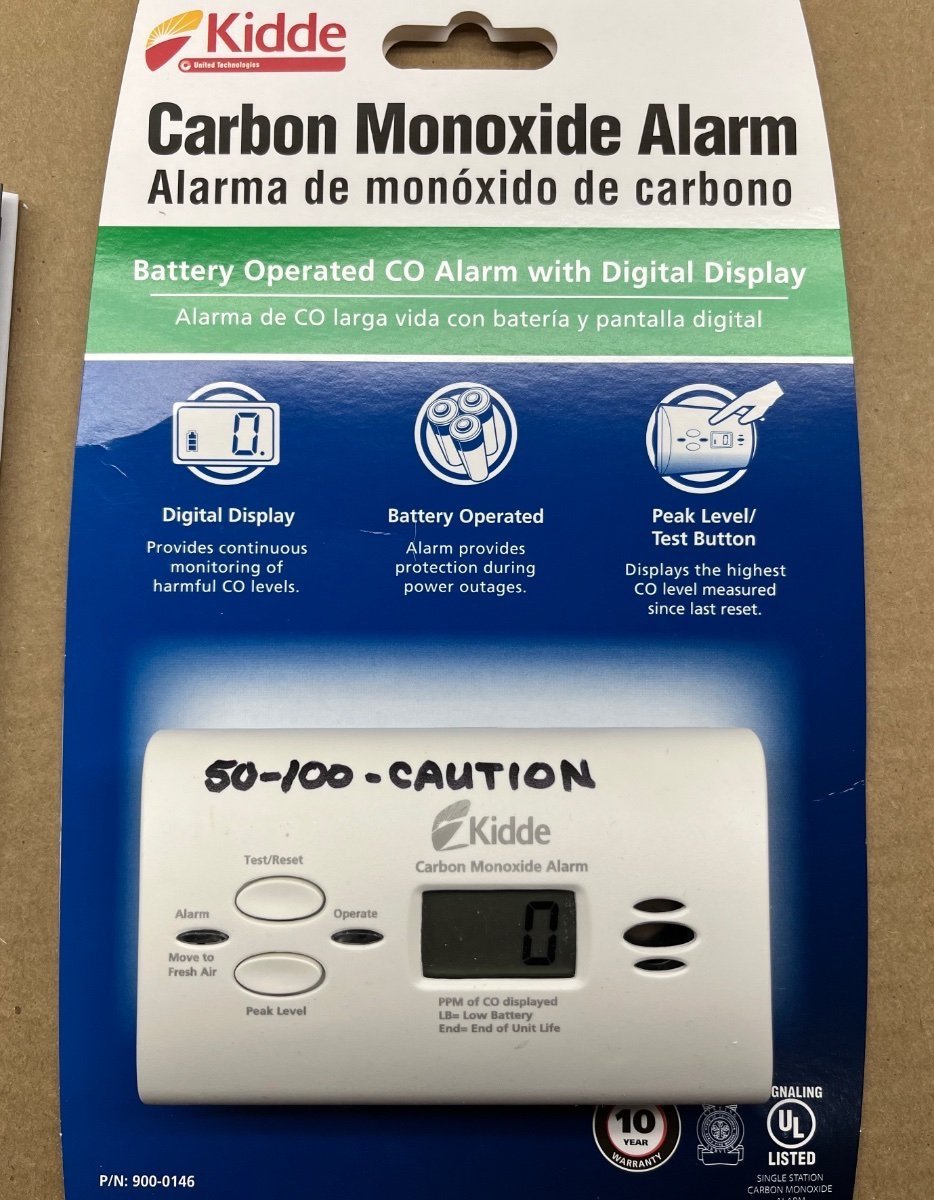
Your primary hazard when using the furnace is indeed CO poisoning (from a stress crack in the combustion chamber, which is impossible to predict). You are putting a lot of faith in the two Oliver installed “yes/ no” CO detectors. The one under the galley isn’t going to be helpful, CO is lighter than air. The combo smoke/ CO unit below the attic is good, if it works. I recommend this digital CO detector as a failsafe, it will show you trends, for example, the current level (should be very close to zero, but up to 50 is acceptable in the short term) and the highest reading since last reset. https://olivertraveltrailers.com/forums/topic/6780-how-to-replace-the-propane-co-detector-with-a-gas-only-one-and-a-digital-co-detector/ I have three of these, one in the trailer up high, one in the RV bay, one inside the house (because I have gas appliances and heating). The Rv bay unit shows elevated levels briefly when I have run a car in the attached garage, it has never actually got to an alarm level. Those who camp in milder weather should crack a rear window and open the bath vent half way and not stress too much. If you are running electric heat, there is no worry at all about carbon monoxide death…. Which I understand is quite nasty, but OTH it is quite hard on your family and friends. Symptoms of carbon monoxide poisoning may include: Breathing problems, including no breathing, shortness of breath, or rapid breathing Chest pain (may occur suddenly in people with angina) Coma Confusion Convulsions Dizziness Drowsiness Fainting Fatigue General weakness and achiness Headache Hyperactivity Impaired judgment Irritability Low blood pressure Muscle weakness Rapid or abnormal heartbeat Shock Nausea and vomiting Unconsciousness John Davies Spokane WA
1 point
-
The cost to clean our rig, going only to the arctic circle and back, was more like 30 bucks. Still, priceless . The mosquitoes were awful. As was the drive. No kidding.1 point
-
That the best answer I've seen not to pull my Oliver to Alaska, muddy mess, plus mosquitoes. trainman1 point
-
After reading Mr Truck's WDH preferences, I also wondered how he distinguished a light or heavy trailer. But that really doesn’t matter as long as I know the GVWR/TWR. My SUV has a 14400 GCWR and a 8100 lb. GVWR/TWR and it requires trailer brakes if the GVWR/TWR is more than 1000 lbs., a sway control device if the GVWR/TWR is over 2000 lbs. and a WDH if the GVWR/TWR is over 5000 lbs. My utility has a TWR of 3500 lbs. and no brake's, so I break rule #1 and #2 every time I use it. Ollie left the factory at a slim 5180 lbs. and a GVWR/TWR of 7000 lbs., so I can add 1820 lbs. of cargo to the trailer. And following the 80/20 rule, that's 80% for her and 20% for me. So I think the difference between a light and heavy trailer depends on your tow vehicle. And in my case, both of my trailers are heavy. Mossey1 point
-
GJ- The Rock Tamers have a couple of "bolts" that are supposed to be used to both "lock" the Tamers in place and to help "level" everything. In my case, I had to install a couple of small shims in order to get it looking level with the rear bumper. There is absolutely no problem with the backup camera and the "zoom" feature still works great when hitching. However, the bars at the top of the Rock Tamers do interfere with the sensors in the bumper. This causes them to "sense" that I'm too close to something and they sound an "alert" whenever I put the truck into reverse. I could adjust these so that they would sit below the level of these sensors but I don't like the looks of them that way. So, I simply put up with the warning.1 point
-
Overland, I think that there just might be a bit of confusion going on in this discussion, or at least a bit of "apples and oranges". On my 4x4 2011 F-150 Ecoboost there is about a 3 inch compression at the rear if I do not use my Andersen WDH. This amount of compression is nothing different than what I would expect if I were to put 450 to 500 pounds in the rear of the bed of the truck. However, the very nature of WDH is to distribute the weight more evenly between the truck's two axles. Therefore, when using a WDH the rear comes up a bit and the front of the truck goes down a bit. Hope this helps. Bill1 point
















-
Recent Achievements
-