Leaderboard




Popular Content
Showing content with the highest reputation on 04/21/2023 in all areas
-
We just returned from a week on the Oregon Coast. During our return trip to Idaho, we encountered several miles of freshly sanded snow/slush as we drove across Tombstone Pass. It coated the back end of our Ollie with fine grit. We also found that sand-laden water had worked its way through the rear window and left a trail of grit from the bottom of the window downward across the belly band. When I asked Oliver Service how to reseal the rear window to prevent this from happening again, Jason Essary advised me to check if the weep holes were clogged. Sure enough, the weep holes had gotten packed with fine road sand, which apparently allowed the sand/water mix to get inside. Cleaning the weep holes out with a jet of water was the solution, not re-sealing the window. Lesson learned: If you find a leak around a window, the first thing to check is the weep holes!7 points
-
Try THIS5 points
-
This is a regular fairly well known inspection point whenever we clean and detail our Ollie after a trip. The window tracks can at times get a dirt and grim build up depending where you travel and camp. Keeping a small can of compressed air is really helpful if you discover an issue during a trip. We also use a damp paper towel dampened with a little alcohol which fits into the window track to remove any of the grime. Directly spraying water into this track area filling the track could cause water to drip inside. Compressed air can be found in most Lowe’s and Walmarts. Patriot🇺🇸5 points
-
Anybody that has been considering a portable cooler to carry in your tow vehicle, Amazon has the Truma C73 marked down 35% currently. They are pretty expensive regular price but this discount makes that model about the same price as the Trumas half that size. It's a very high quality unit, made in Germany, not china, and has real nice features just like the Truma appliances Oliver is putting on the new campers. Bluetooth control, auto voltage monitoring and shutdown, low current draw, temps adjust down to -6f. If you like Truma and have been considering a cooler this price is as good as you will ever find. Link3 points
-
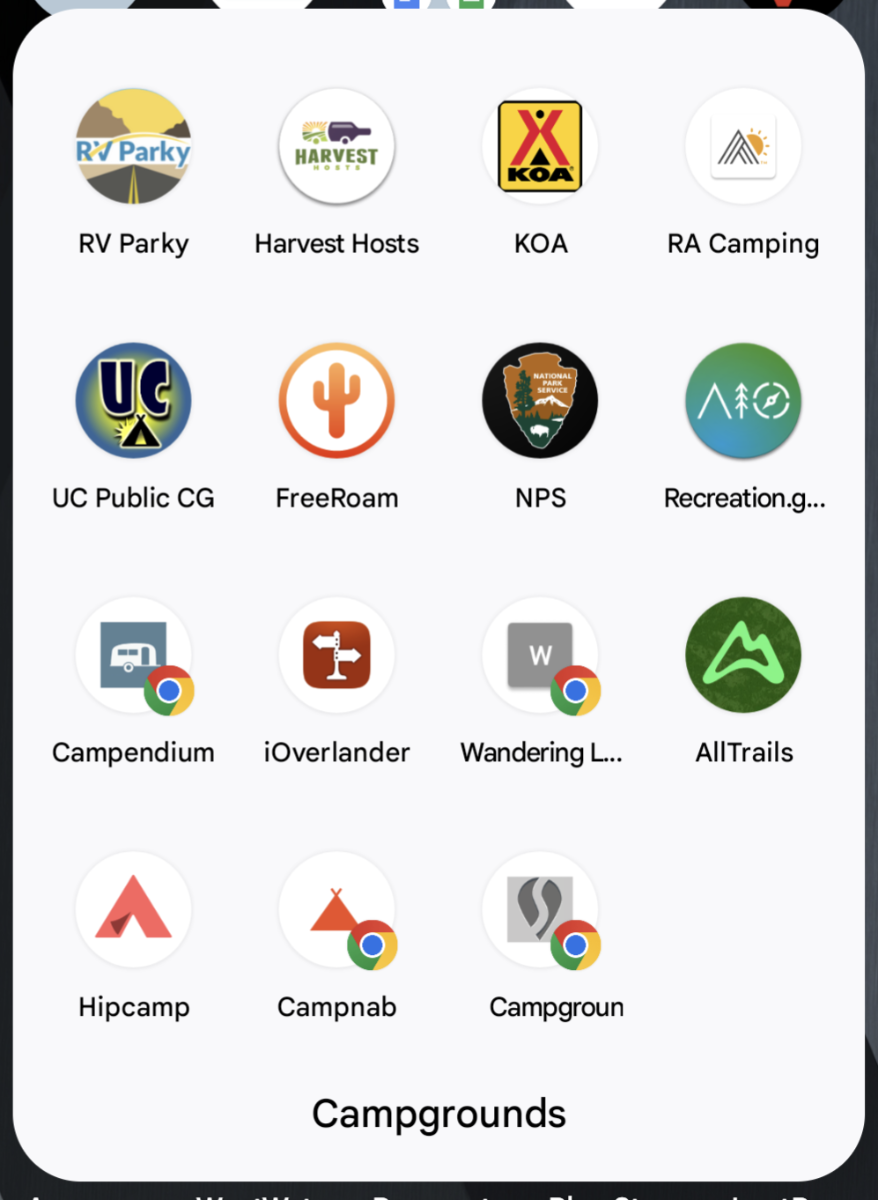
Here are my usuals. The ones you can't read are Wandering Labs and All stays.
 3 points
 -
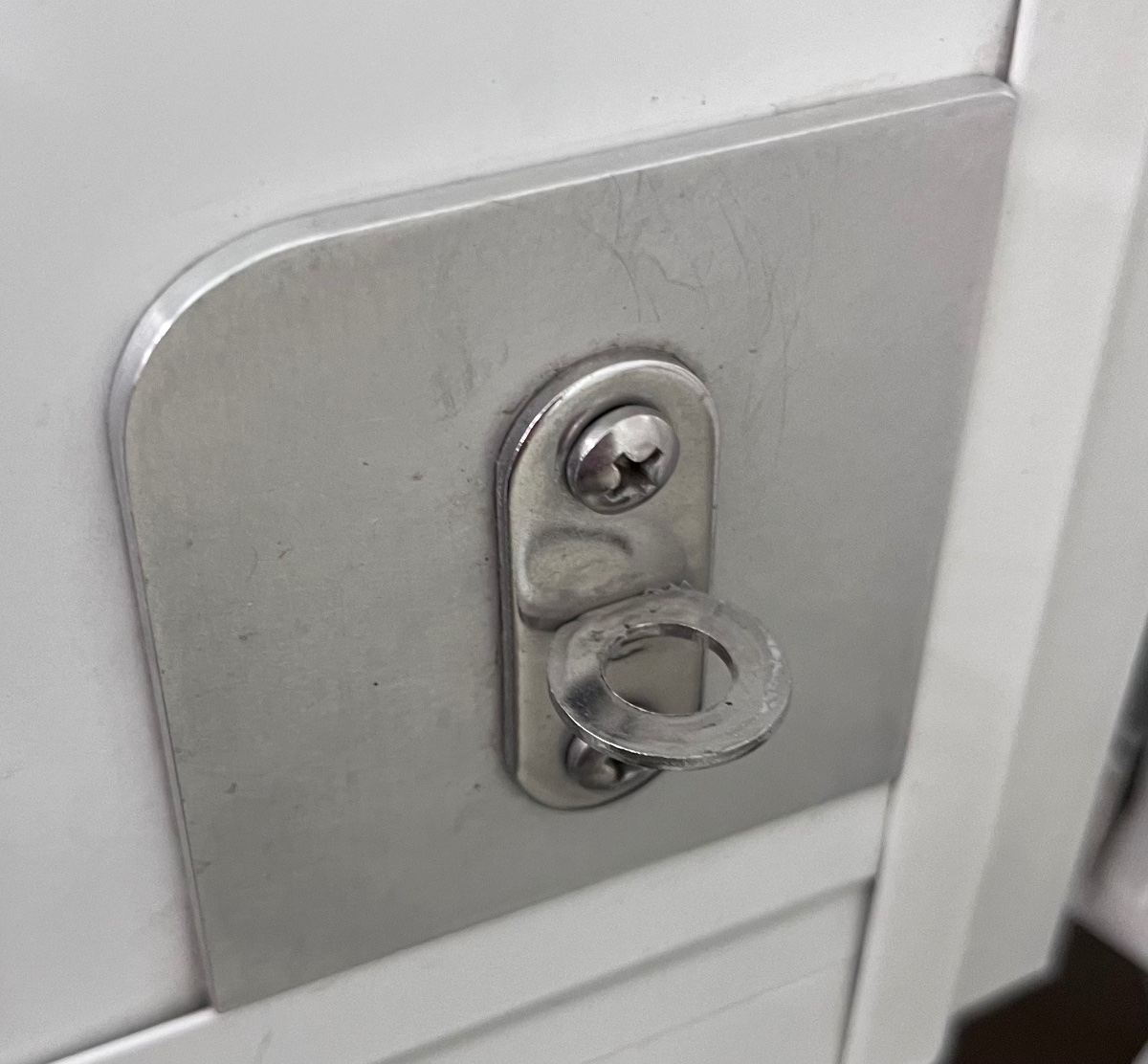
Found this particular 5/16" ID grommet fit perfectly in my bracket. It's designed for a 7/16" holder hole. (Groove) You can buy this at most ACE HW and also from Zoro online. The grommet hole of 5/16" is big enough to securely hold the latch but not so hard to push the latch into the hole. When I tried the earlier listed 1/4" ID grommet it was simply too tight. The latch would try to push the grommet out when inserting. Again...your holder may be different. Anyone want 99 , 1/4" grommets ...let me know. Craig - Hull 505
3 points
-
To be honest half that space is designated for our dogs' food. They are fed a raw meat diet that has to be frozen. I only got that size because at the time I was shopping the price for the C73 was about the same as the C30, which it is right now again. If we do extended boondocking as we are planning, it should come in very handy.2 points
-
Wow, that's silly.2 points
-
RVIA will not allow that.2 points
-
I do love me some stewed beaver nuggets. Pair that with some sweet taters and hit don't get no better.2 points
-
Any idea about the cost for the optional insulating cover? ARB offers one for around $200 for this size unit. Are Trumas as ruggedly constructed as ARB? Thanks, John Davies Spokane WA2 points
-
It's a confusing world these days with mergers, buy-outs and contract manufacturing. I'll muddy the water a little more with my first hand knowledge. My wife used to work for Federal Mogul as a buyer. Federal Mogul used to be National Seal. Even though Federal Mogul manufactures seals today, they can have several names on the packaging. They may be labeled National Seal, or Timken. Federal Mogul was acquired by Tenneco a few years ago and I believe changed the name of the Federal Mogul division to DRiV. For that reason their seals may also have this new name on them. To add to the confusion, Timken also contracts with other manufacturers to produce their products. The point of this is that you likely do have in your possession actual Timken parts. The problem is that it's well documented that Amazon is very unreliable in their sourcing and for that reason everyone has learned to be very cautious when there are discrepancies in packaging. If in doubt you can easily return. The problem is, unlike OEM manufacturers and OEM suppliers, Amazon has zero quality assurance process or supplier verification. Their buyers simply shop price and supply.2 points
-
We have had good success with this site https://www.campendium.com It gives pretty timely reviews/feedback about what others have experienced. Patriot🇺🇸2 points
-
Yep! At my estate sale and my wife will be cussing about “all my crap”. Mossey2 points
-
Be careful not to confuse the input voltage capacity to the regulated output of the solar controller. The OP’s controller can handle up to 100 volts coming in but always outputs 12ish (vs 24) to match the wiring of the batteries. The 12 volt panels have a peak voltage output of 18 and could be wired in parallel or series. The 24 volt panels could also be used (wired series or parallel) although in series they’d be pushing close to 75 volts at peak output. Returning to the OP’s question…if you wanted to add the portable panels to your installed mppt controller you need to find out what the exact peak voltage is on your portable panel (probably 20.5v) and compare it to the Oliver units (probably 18.6 and wired in parallel). If you combine the two sets via parallel wiring the voltage will be reduced to the lowest set (probably 18.6) so the efficiency of your portable is reduced slightly. However, the wiring is much easier because you’re not breaking the (series) circuit when you disconnect the portable panel. *If* Oliver wired the main panels in series or if they’re using the 24v models (in parallel) you would greatly reduce the efficiency of those units by plugging in your portable set wired in parallel. The peak 37v output would be reduced to 20.5 without gaining any extra amps in return. If you had two portable panels I would absolutely buy a separate controller and wire those units in series. The higher voltage would allow longer extensions with less line loss (or smaller wires). Even with your current setup I would probably recommend an additional cheap (smaller) victron mppt controller to keep the factory wiring original and keep things simple…2 points
-
Too late. It's chronic.2 points
-
A. The PD4060 charger is a smart sensing charger it will know when the battery is full and shut off charging and stay in storage mode. "The built-in Charge Wizard automatically selects one of four operating modes: BOOST, NORMAL, STORAGE, DESULFATION." It's likely your solar suitcase charge controller also is smart and senses when to stop or turn into trickle charge mode. Given those two constraints you're OK running both together. In our Hull 505 we don't have a solar cutoff switch so we always are having solar and shore power at the same time and have never had a overcharging issue. (We have changed Hull 505 from the PD4XXX series charge/converter to the Xantrex 2000W inverter.) B. I think the only way you'll do all 3 charging sources is if your truck is hooked up to your trailer and running, at the same time you're hooked up to either a generator / or / shore power...and of course solar. If you did that all at the same time and each leg is fused properly and each leg has a SMART charger that sense the battery level and shut down charging to trickle only once charged you'll be ok. Craig2 points
-
I pray for you, Anita, in the name of Jesus, that your pain would diminish, your procedures be guided by the hand of God, that your recovery is swift, and that you are restored to even an improved and stronger physical condition than before. Amen.2 points
-
All good advice but it's all about getting the planets to line-up and your jaw and tongue in the right place when doing this task.2 points
-
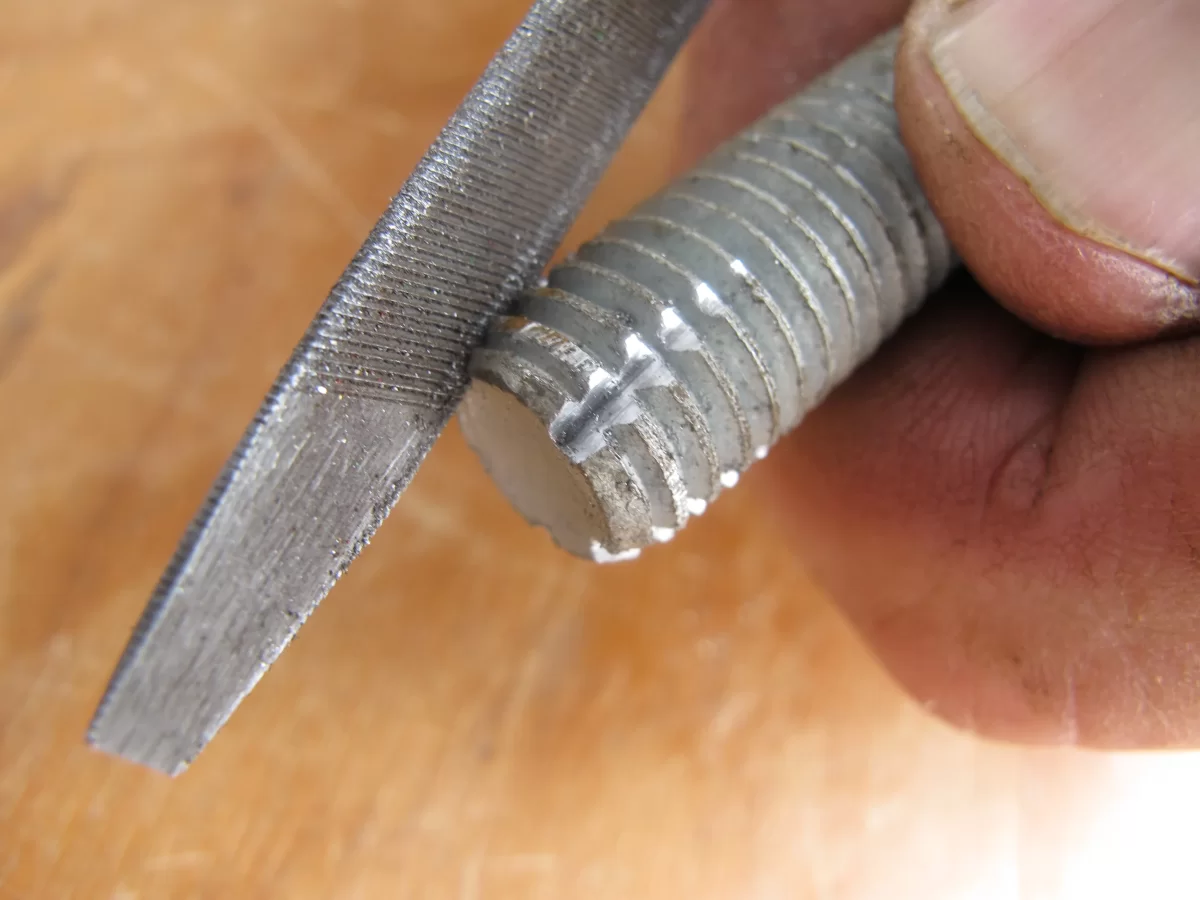
Take the old rod and cut off the nut portion. Put it in a vice and cut half a dozen deep slots at 90 degrees to the threads. Clean the part with a wire brush or wire wheel. Now you have a 3/4” MPT thread chaser. Run that in and out repeatedly until all the crusty white deposits are gone. Now you will be able to screw the replacement rod win all the way! Flush thoroughly with water or compressed air (watch your eyes). Keep it with your spares kit so you can do it routinely. Sort of like this pic, but a hack saw is quicker and makes much better grooves. This method fixes the root problem, obstructions in the water heater threads, not the symptom, water leakage and difficulty installing it!. …. https://www.automation.com/en-us/articles/2012-1/root-cause-analysis-treat-the-problem-not-the-symp If you have soft water in your house, use that as much as possible to fill your Ollie tank, especially long term. It won’t make those nasty deposits in your water system, and you won’t need to perform the vinegar treatment. John Davies Spokane WA
2 points
-
I bought the big super sized Amazon package, now I have 39 extra spares, plus lots of different sizes. InstallGear 180pc Assorted Rubber Grommet Kit - 8 Sizes (1/4", 5/16", 3/8", 7/16", 1/2", 5/8", 7/8", 1") | Car Grommet Kit Assortment Rubber Wire Grommets for Wiring Automotive | Rubber Grommet Kits It's hard to beat $9 for 180 grommets.... delivered 😉 These seem like good quality. John Davies Spokane WA
2 points
-
I wanted to let everybody know that Anita has had an accident inside her home. She fell while descending a flight of stairs to her basement and has sustained a hip fracture. She endured a 10 hour procedure to remove hardware placed during a (years ago) surgery after car accident before her hip could be repaired. She states she is currently in a lot of pain. I know she is facing months of rehab and recovery. She is hopeful she will be well enough and her doctors will allow her to come to Guntersville in May. Please keep Anita in your thoughts and prayers as she works her way through this difficult time.1 point
-
Has anyone towed their Elite II with a Mitsubishi Mighty Max? Thinking it might get some high m.p.g. going downhill (so long as I can keep the rig straight). For uphills I am hoping for a miracle. 🤪
1 point
-
It was just a few years ago that a couple of sage wise Oliver owners dipped their toes into the Lithium world. Since then, following their foot steps, now many of us have DYIed the conversion to Lithium. Fortunately many of us RoF's (Retired Ole Farts) are now sporting the "Lithium Grin" and have survived the conversion process mostly intact. Those of us in the Boomer Generation that grew up with slide rules as our favorite calculating device, often were able to figure out the conversion process. Having mechanical and electrical power wiring skills made it possible. But, like myself, we lack the fundamental understanding of how the underlying technologies play or don't play together well. I hope that this thread can be used to help owners better understand how THEIR systems can, or should not "Play Well Together". So I ask forgiveness of the super tech savvy younger owners as what may happen is a series of "How will my system Play Together" questions. Likely mine, and a bunch more down the line, will remind you of the dumb questions we see their customers asking at the bottom of Amazon.com products..... This starter post is for Hull 342, our "Ollie". We purchased our 2018 OE2 with Lead Acid batteries and have a Honda EU2200 inverter generator.. This past summer, we successfully made these upgrades: PD 4045 to PD 4060 2000W Inverter to Renogy 3000 watt Three 100 AH Battleborns Victron 12/12-30 DC to DC charger (#4 AWG Cabling) Victron 712 Smart Renogy 200 Watt Solar Suit Case. I use the DC to DC charger when on the highway only. I use solar when camping. Significantly less frequently we use Shore/Gen power to charge. Questions: A. When on Shore Power OR running our Honda, is it advisable to use the Progressive Dynamics 4060 converter and solar suit cases at the same time? B. The Battleborns collectively can charge at up to 300 amps. Our total max possible charge capability is 102 amps (PD 4060 = 60 amps, DC to DC 30 Amps and Solar Suit Case effectively 12 Amps). There have been a time or two when we were in a jamb for time and I really wanted to maximize charging our batteries: Is it advisable to fire off all of the systems simultaneously? If not, which should I safely only use? Thanks, GJ1 point
-
It is a PORTABLE panel, I did not want to restrict its use to just the trailer. For example I could power my truck battery or help some other person in need. With an automatic transmission, you can’t bump start the truck with a failed battery, I am pretty paranoid about shutting it off in the back of nowhere and then finding that it won’t turn over. I do carry a portable jump start box (Viking from Harbor Freight - most excellent). The solar gives me the opportunity to keep the truck battery topped up when, for example, I am operating my portable PCP (airgun) air compressor off its terminal. Portable means portable. I do some strange things sometimes, contrary to mainstream ideas, but usually there is some sort of valid reasoning behind it. John Davies Spokane WA1 point
-
I looked at the full bed slides when we got our truck and decided against. I know it would be really handy in a lot of situations but just felt I didn't want to lose any vertical space. Now having got the cooler it's obvious that we at least need a slide for it. They aren't cheap either but I will bight the bullet and get one. I hadn't thought of the grocery store application so that will be a bonus. I know we will make good use of it. I'm looking forward to getting my solar and lithium battery set up in the truck as the cooler will just stay on 24/7 mostly running off solar.1 point
-
First of all, a big thanks to everyone who contributed to this thread. I've learned a *lot* reading these posts and the linked information. Thank you! Chris nailed it. Today I took a photo of the panels label, and sure enough, they are 24 volt, and are wired in parallel. Here's the label: And here is the web page for this model: https://www.newpowa.com/200w-24v-monocrystalline-solar-panel/?sscid=41k7_u6vc6&#label1 Interesting that they rate them at 1000 W/m2. I'm assuming that's an industry standard, but even here at 42°N we regularly have 1200-1300 W/m2 in the summer. My 12 year max in my backyard is 1332. In the sunny southwest, does more W/m2 result in higher output? Or is the 1000 W/m2 spec the theoretical Max? For reference, here's the web page for my Bluetti panel and specs:https://www.bluettipower.com/products/bluetti-pv200-200w-solar-panel So, hooking my 12V panel in parallel to the 24V panel isn't going to work. Or, it would, but it would be less efficient that it is now, not additive. I will be hooking my remote panel directly to the batteries using an MPPT charge controller. I currently have an Epever 3210 AN, but I found that it got quite hot when using it in my old 4Runner with a roof mounted 100W panel and 10Ah AGM battery. Maybe I'll replace it with the small Victron, so at least it will show up on the app I'm already using. Thank again for all of the shared knowledge!
1 point
-
That is one big cooler for the back of your truck. I kept measuring and evaluating what we really need and the space I need/want in the truck. After visiting Truma at the Overland Expo in VA I chose the C36. Nowhere near as big as yours but it does the trick for us. We also found the Isotherm in the Oliver to be very roomy so we won't need a larger fridge. Our fridge in the Airstream was slightly larger that the one in the Oliver (5.0 cu ft versus 4.5 cu ft in the Oliver) and we never had an external fridge. Occasionally, I would take my 50 QT YETI along to keep the barley pops cold but that was the exception, not the rule. Cheers, Brian1 point
-
Thanks for that, I saw it once long ago in the past and could never figure out how to do it again. Yea....1 point
-
Including sales tax the cover directly from Truma was $195 with free shipping.1 point
-
I just started with this forum, and am trying to be patient as I wait for my Ollie. I think I saw these apps on this forum. I thought if I stated a thread others could add apps they like, or comment on the apps that are listed. Feel free to add any tricks you use to find a spot. Everything I read talks about how hard it is to find a spot.1 point
-
Our rear escape window is stiff to slide. Not 2 hands, but close. We've used an ear wax bulb syringe for this. Allows you to really control the water.1 point
-
RVParky auto renews too1 point
-
The only caution flag I will give Harvest Host new subscribers is be sure you uncheck ✅ the box stating you don’t want the auto renewal fine print. If you miss this in the new member registration process they will auto charge what ever card you paid the initial fee when you’re up for renewal. Don’t ask me how I know. Patriot🇺🇸1 point
-
Another "trick" that you can use is to put a dab of paint or one of those "smiley faces" on the front of the anode rod BEFORE you take it out of the heater. Then when you replace the rod you simply tighten it back up such that the "smiley face" or dab of paint is at the same orientation as it was before you took it out.🙂1 point
-
https://harvesthosts.com/ Harvest Hosts is an RV membership program that allows self-contained travelers to overnight at unique locations around the country including farms, wineries, museums, breweries, and more! With 4820+ of host locations inside of our ever-expanding network, there’s an amazing experience waiting for everyone. A Harvest Hosts Membership includes – Unlimited stays with 4389+ Hosts in North America with no camping fees. Stay at farms, wineries, attractions, breweries, and more Over $1500 in exclusive Member discounts to companies such as GoodYear, Jackery, Thousand Trails, etc. Photos and reviews from fellow RVers so you know exactly what to expect Access our free mobile app (iOS and Android) Check Host availability and easily book your stay on our website or app Plan stays along your route with our trip routing feature1 point
-
i pulled this of the internet.. Can't always trust what on the net but this is good advice.. How tight do you tighten an anode rod? Once you get the anode rod inside, tighten it by hand until you cannot anymore. Then, use the socket wrench to tighten it a bit more, about 1/2 turn, 180 degrees. Do not tighten so hard that the water heater begins to move or twist.Jun 5, 20181 point
-
What happened? I would "think" the only result would be minimal or no charge, due to resistance loss?1 point
-
You should probably consult with your doctor as soon as possible. You are exhibiting the early symptoms of Ollie fever 🙂.1 point
-
If you hover over the activity button in the nav bar at the top, you will have a row pop up that has "unread content" in it.1 point
-
I am new at this Oliver thing! I got too excited.1 point
-
Oliver offers a yearly maintenance package for our customers. The maintenance items included in this package are things that need to be performed for typical camper use at least once per year. This does not mean that this is the only time of the year that you will need or have to perform some of the these maintenance items. Some customers may be able to go longer than one year for some of the items as maintenance is based on usage & environment. Many of the items have been added to our yearly maintenance list because so many people do not perform them and we felt it was best to perform it once per year rather than never. A/C Filter Cleaning: We perform this in the yearly maintenance but in dry environments it should be done weekly. A/C Condenser Coil: Recommended with Dometic A/C at least once per year however depending on the environment of use it could need to be cleaned as often as 2-4 times per year. Birds can also make nests inside when left unused for a period which would also require cleaning. Exterior Caulking: We recommend doing this at least once per year. Depending on the use and environment it may need to be done sooner or if you keep the camper stored half of the year inside then you may be able to go two years. If you do not caulk every year, we recommend that you at least inspect the caulk. Furnace Cleaning: Basic cleaning should be done once per year however insects can invade and build nests that would require cleaning as needed. Plumbing Decalcification: We recommend at least once per year but depending on hard water use & gallons used you may find that it is necessary to perform this 3-6 times per year. Some areas are known for extremely hard water content and you may have to decalcify once per month or use a water softener. Water Filtration systems do not soften water. Water Heater Decalcification: We recommend at least once per year but again depending on use you may have to perform this 2-4 times per year. The Truma water heater will flash when decalcification is necessary however once the unit needs to be decalcified you must stop use and perform the steps. The Suburban water heater does not provide a warning and you will need to periodically drain & inspect. Blade Valve Lubrication: We would recommend lubricating valves about every 2-3 months to ensure best results. Repack Bearings: Dexter recommends every 12 months or 12,000 Miles, whichever comes first. If you drive more than 12,000 miles per year we would highly recommend having the bearings repacked by the 12,000 mile point. Failure to repack the bearings in time can result in failure & breakdown. Grease EZ Flex: This should be done every 3 months or 3,000 miles whichever comes first. 7-Pin: The 7-Pin should be inspected every time you connect it. Water intrusion can cause corrosion which will lead to issues. A freshly cleaned 7-Pin that has water intrusion can corrode as quickly as just a few days. Coupler: Lubricating the coupler should be done as often as needed. Lubrication on an exposed part does not last. The coupler does not have to be greased but a good lubricant should be used to ensure the spring & lever operation works smoothly. Some rust buildup is normal on a steel coupler. Bulldog recommends greasing the ball pocket however Andersen does not recommend greasing for the ball. Grease will not prevent wear but it will help with rust. Tire Pressure: This should be checked every time you pull the camper. Air, over time, can escape thru the sidewall of the tires. Improper tire pressure can cause the tires to wear sooner. Window Tracks: Depending on where you camp you may need to clean the window tracks out as often as every week. Tree debris & sap can start to buildup in the tracks on day one. Once the white window glazing is left uncleaned for a period of time it will remain stained with mildew. The design of the window track makes it near impossible to completely clean the entire track as part of it is hidden under the stationary window. Air helps to free any debris on that side of the track & running water through it with the glazing removed. You can take a rag and clean as much of the track as you can but don't fret if some staining is left. The primary objective is to remove as much debris as possible that will block the weep holes. If the weep holes get blocked then water will backup and overflow to the interior. Sanitize Fresh Water System: If you leave the camper sitting for a period of time it is a good idea to sanitize before hand. This will keep algae from growing in your tank when water is left sitting for too long. You should also sanitize before using the camper after it has set for a long period of time (2-3 months). Deodorize/Clean Black & Grey Tanks: This should be done with every fill (Complete tank fill, not a single use). When setting up camp & using the tanks it is best practice to add treatment to the tanks. Black tank treatment helps breakdown waste during use but once the tank is flushed the treatment is gone. The black tank should be allowed to fill up with waste during use and a single waste dump once the tank is near full. This allows time for the waste to breakdown and a better waste dump. *Never connect to a dump station with your black tank valve open as to dump while in use. This will cause the water to flow quicker than the solids leaving the solids behind in the tank. As is with all maintenance, the better you maintain your camper the better performance you will receive. Failure to properly maintain will result in more issues. All the listed items above are recommended maintenance for the best camping experience. The yearly maintenance package is to complete required and recommended maintenances at least once per year but should not be considered the only time you maintain your camper. There are other items that should be done regularly that we do not perform in the yearly maintenance. Some of these items are: Fan Cleaning: Dust & grease from cooking inside the camper can accumulate on the fans. You should clean the fans periodically as needed. Failure to clean the fans can cause unwanted noise & performance issues. Wash & Wax: This is NOT performed during our yearly maintenance package but we do recommend that you wash your camper frequently & wax it at least once per year. Again, waxing once per year is the minimum and it is better to wax twice per year. If you really want to keep the exterior looking its best than it is recommended to wash frequently & use a good spray on wax such as Duragloss Aquawax every time you wash. The spray on wax does not however take place of the old fashioned wax that should be done once or twice per year unless you are washing & spray waxing the camper every week. Black Tank Flush: There is a water inlet dedicated just for flushing the black tank. This is something that is best done every time you drain the tank. Water Pump Filter Check: Inspect the water pump filter before or after every camping trip. The filter's purpose is to catch unwanted debris that may be in the tank from entering the fresh water pipes.1 point
-
When we bought our fridge/freezer in 2016, there were very few choices, and all of them expensive. The "in" fridge was the ARB50 at $850 plus $150 shipping. We were visiting the Conqueror trailer importer in our home town of Bellefontaine, Ohio, and he was swapping out the National Luna 90 Twin fridge that came in the trailer for another combination fridge/freezer. At the time, the NL 90T retailed for $2700, and we got one from him for $1000. That's a lot today, but a steal six years ago. National Luna is what is in UN vehicles, and what the Red Cross uses to transport organs in Africa and other remote areas. They have since designed their own more efficient version of the previously used Danfoss compressor, and reduced the price by about $1000. If you want the best available, check them out at the sole US importer, Equipt1.com Their custom service is second to none, and owner Paul May goes out of his way to accommodate your needs, often at his own expense. Mine has been running in the back of my black Toyota 4Runner and now black Toyota Land Cruiser for 24 hours a day, March through Christmas since early 2016. We've not had a single regret. https://www.equipt1.com/collections/fridges
1 point
-
2003 2.4L Tacoma. Full disclosure, no sag with 30PSI in the air bags and it's a confidence builder for the Tacoma moving Ollie around the house!1 point
-
We have found the coolest new tow vehicle. A restored 1968 Oliver 1250 tractor. We can also use it to clear an area to camp in.
1 point
-
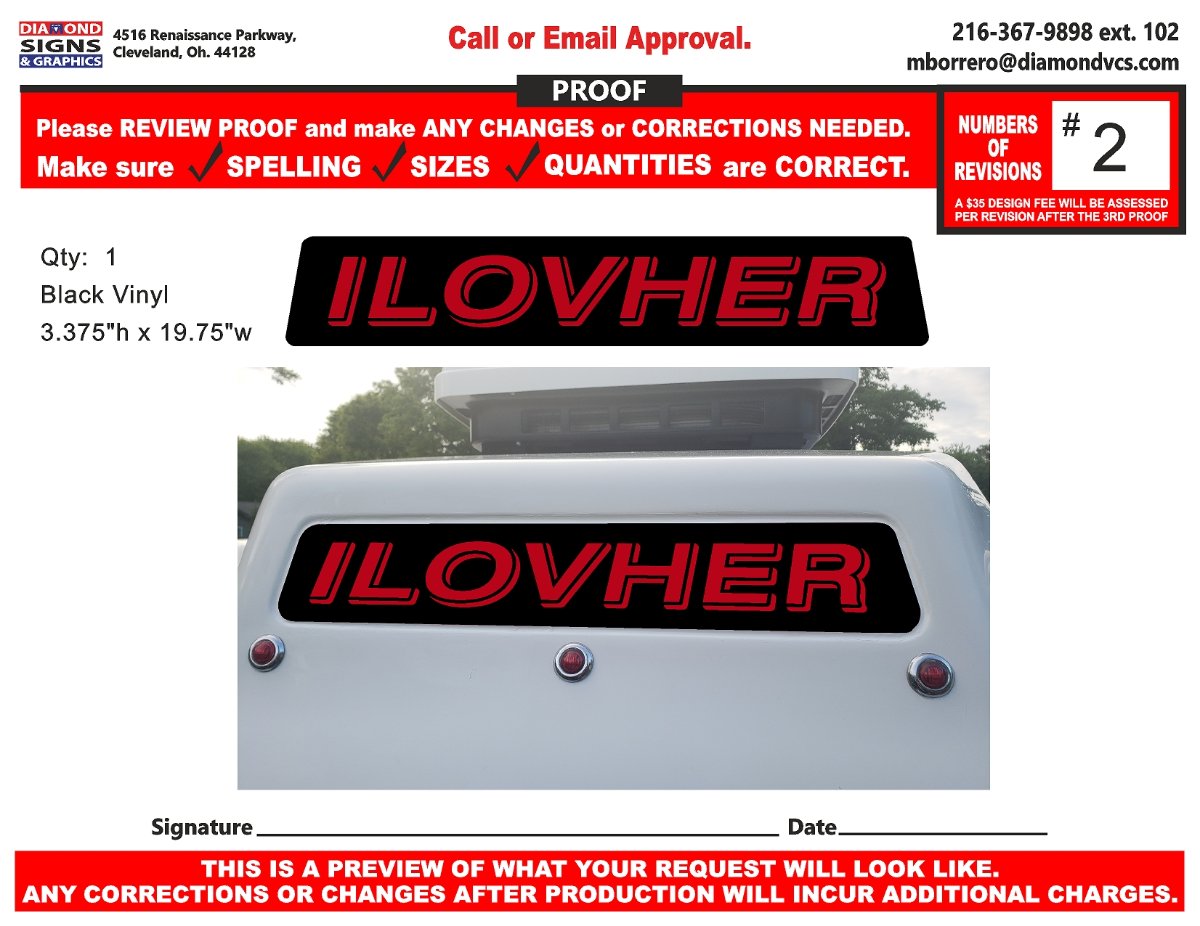
Its now the ILOVHER sign!
1 point
-
The Oliver sign.1 point
-
Thinking the same thing. Guessing your light will not work with running lights on. Edit: Running lights on our LE2:1 point
-
Sorry but I have to ask. You do realize this is not a brake light don't you?1 point
-
No matter what power source you use, 30a shore power, generator or inverter/battery power, you should better understand power management. Your Oliver camper was designed with the 30amp power in mind so your factory installed components are designed to work within the constraints of 30 amps. The inverter option that we currently offer can provide about 15 amps of power to the 120v receptacles before it will max out and shut down. Generators can vary based on their rating but they will be constrained to the 30 amp max that the camper is designed for. How does this impact you or your style of camping? Campground Camping with 30a Shore Power What happens if you go over the 30 amps? The breaker will kick just like at home if you turn to many appliances on in a single room. This situation typically will only occur when you are plugging in high power demanding appliances or devices in the camper. Every appliance that you want to add to your camper should first be checked to see how many amps are required to power it. Many hair dryers can pull 1800 watts of power which will immediately take up about half of your available power. Add in a space heater and it may just put you over the limit. What this means is that you must be conscientious of what is plugged in and pulling power. The worst thing that could happen is it would kick the breaker and you would simply reset it and turn some things off that aren’t being used at the moment. Boondocking with Generator Power When you are connected to a generator power source you are limited within the 30 amps but also the max amp that the generator will put out. A typical 2000-watt generator will only supply 15-16 amps of power so this means the max power is limited to the generator and if you are demanding more than the generator can supply it will kick the breaker on the generator. The generator may continue to run but will not be supplying power into the camper. Some of the components in the camper like the Dometic Penguin II A/C will demand much of this power especially when the compressor engages (Start Phase). The optional MicroAir Easy Start does help to contain this short fast burst of power to about 11 amps but that is about 75% of what the 2000-watt generator supplies. Once the compressor moves into the run phase it requires less power and drops to about 9 amps. The compressor will continue to run until the cabin temperature reaches the requested temperature on the thermostat. The compressor will then disengage or shut down. Once the cabin temperature drops below a certain threshold the compressor will once again enter the starting phase which requires 11 amps of power. This is where you may run into an issue that is normal. You may have a coffee maker running or a laptop plugged in or a combination of any other type of added appliance that under the compressor running stage falls just under the max 15-16 amps provided by the generator but when the compressor re-enters the starting phase it can cause it to jump over the max long enough to kick the breaker on the generator. No worries, all you need to do is practice power management and unplug something temporarily and reset the breaker. TIP: When using a generator, the surge protector may see it as an ungrounded power supply and stop all power from entering the camper. The best resolution for this is to plug in a neutral ground plug into the 120v receptacle on the generator. Boondocking with the Inverter The optional inverter is a 2000-watt Xantrex inverter but it actually only supplies about 1800 watts of power. If you remember from earlier, we mentioned that many hair dryers require 1800 watts of power. Power hungry appliances they are! This means you are even more limited to what you can use at the same time or even by itself. The inverter is connected to the 120v receptacles and also the microwave. The microwave by itself will pull most of the power supplied by the inverter so when running the microwave on inverter power be sure not to have other things plugged in and running. Also keep in mind that the inverter is dependent on battery power. The inverter pulls battery power and converts it into 120v power. So, with this option you must manage both the available battery power and inverter power. For instance, the microwave under 120v power uses 12 amps but the converted rate from 12v battery to 120v through the inverter actually means you are using about 135 amps. Has this gotten a bit confusing yet? Putting it simply, you manage the 12 amps required by the microwave from 120v to the available amps of 15 amps provided by the inverter. With the 135 amps you simply need to know that this is draining the batteries at a much faster rate as they cannot sustain that rate of power consumption for too long before loss of 12v power would occur. However, the inverter will shut down before total power loss from the 12v battery system will occur as it requires at least 10.5v for it to operate. The good news is that the microwave is usually only used for short periods of time. You would however want to apply this way of thinking to other appliances that you may want to use while on inverter power so that you better manage the available power.1 point























-
Recent Achievements
-