Leaderboard



Popular Content
Showing content with the highest reputation on 11/28/2023 in all areas
-
Liana, you REALLY need to add some additional insulation under the bath vanity to reduce the intense cold for your plumbing there. Your flush toilet water line originates there! My hull 218 had no insulation whatsoever at much of the upper front wall, which is directly exposed to the outside by way of the propane compartment... This kind of mod is not at all difficult, if you aren’t modifying the lines themselves. The standard bubble foil insulation has a very small R Value of 1, compared to R5 for the 1” foamboard, a big, big difference! The board is $20 for a 4’x8’ sheet at the box store. https://olivertraveltrailers.com/forums/topic/9039-how-to-bath-sink-compartment-mods-duct-rework-insulation-disconnect-flush-line/ Modifying the heat duct there under the bath sink for some extra airflow is also fairly simply, add an adjustable steel elbow after removing all the excess flex ducting (mine had an additional 48”!) and remove the plastic diffuser plate at the opening. Voila, a much toastier toilet seat and also a warmer wall near that pesky water flush valve… the air flows around the back of the toilet. You HAVE to get extra warm airflow through all the dead end compartments, this means opening existing hatches or doors, or adding more fixed ones (such as inexpensive round 4” heater vents) . The standard Ollie design is very marginal, and a little disappointing for a trailer advertised as “Four Season”. FYI the PEX plastic lines will tolerate freezing to a degree, but the brass fittings and the steel valve may split wide open. If you can’t correct this issue, you must winterize the system. John Davies Spokane WA
 4 points
 -
I believe so. He doesn't ask about my past, so I don't ask him about his. We have a mutual agreement, and it usually involves food.4 points
-
Bump, just in time for Winter. John Davies Spokane WA3 points
-
This is Nip. He got his name because he likes to bite. Not hard, though. My wife calls him the Doods. Not sure why.
3 points
-
Fiona in Tupelo, Mississippi about a month ago. Paula
3 points
-
One of our own has a WeBoost mast mounted on suction cup kayak rollers on the back of his Oliver. You can see Steve's description about 16+ minutes into this video:2 points
-
One area in ours that appears to need extra "R" value is behind the fridge. With the new Isotherm 2 way fridge, there's no need for ventilation to the outside, and yet the '23s just have a thin plastic cover behind the upper vent on the outside. Depending on outside temps, the fridge can have some pretty big temperature swings because of the fact this space behind the fridge is pretty much subject to outside temps. This morning the fridge was off and yet the sensor inside read 20 degrees. This was with a cabin temp of 63. I know it would be different if the furnace was running, but in the summer this space gets quite warm and on some days the fridge struggles to get below 40 deg, and that's with the AC keeping the cabin at around 72. It wouldn't take too much to bring that space under a better level of control.2 points
-
The Turkey's not even cold yet. Patience will yield you untold rewards (maybe).🤔2 points
-
It’s not cold, it’s not winter, it’s only down to 12° F here at the house. 😂2 points
-
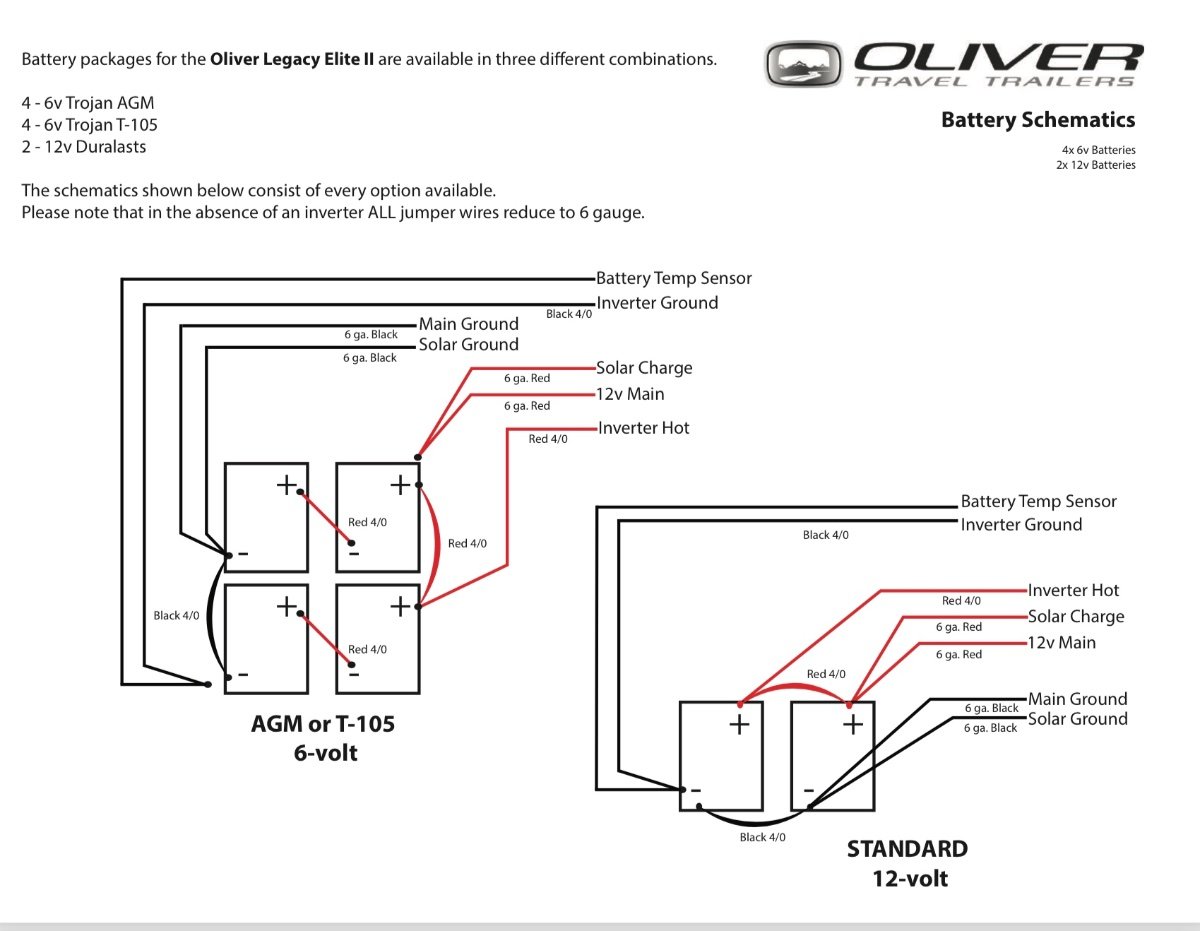
@Nan You might not understand this wiring schematic, but the battery people you get you batteries from should understand it. Mossey
2 points
-
Looks like a Terrier/Papillon mix.?? Cool little guy! Thanks for sharing.2 points
-
As permanent protection for you calmaek cover, I totally see the value. Eliminate all the sharp edges.2 points
-
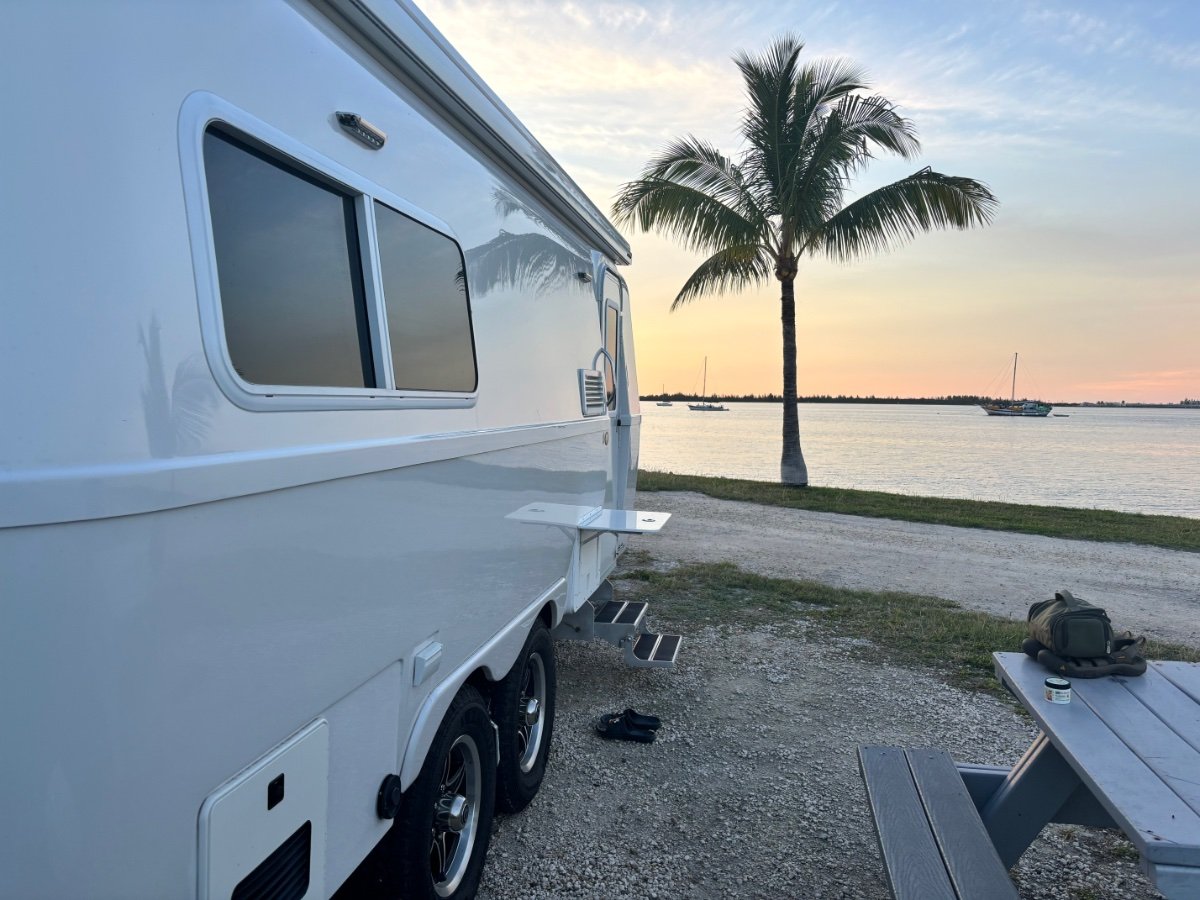
Our spot on Sigsbee Island (Naval Air Station Key West). Not a bad place to hang out for a few months. BL
2 points
-
Totally get y'all's concerns. The key requirement for us was to get the Dishy off the ground and still be able to use it without the OTT. The EZ Pole and mount is robust - 4 nested aluminum tubes. High wind conditions would require striking the colors, lowering the dish to the 6.5-foot position and thus keeping it off the ground. FYI, in snowy conditions, the user can select the snow melt mode (more energy) via the SL app to keep accumulation at check and maintain high signal strength. There are flat mounts available for SL that we've studied - but once its flat-mounted on the roof, you're committed to that application - we wanted flexibility to use SL if we were tent camping, for example. As noted, we're also interested in a 12vDC conversion and shortening the proprietary CAT6 SL cable to save a bit of energy - but that's down the line. We want to log some more trips in the current mode first so we're better able to make an informed decision on what best meets our needs. Guys.... Beware, there are some scary rabbit holes one could fall into when researching the RV-applicable mods for SL kits... Many hours spent crawling through these tunnels. HA!2 points
-
If I recall, it was John Davies that first posted the idea. A primary purpose was to facilitate the use of an IR temperature sensor at rest stops to periodically check the hub temperature directly. This I do as well.2 points
-
I have a corollary question: We've had several nites of single digit temps, I've done no mods other than empty the outdoor shower hose and add a layer of foam inside the door over the valve handles (further, would not have the capacity or wherewithal to do some of the amazing stuff above). I've left the lav door open because I know that space gets SUPER cold if you don't. The (standard) toilet supply line seems like it might be frozen, no water refills it when opening the valve to empty the bowl. The sink valve works fine. I've never had that happen before, anyone else (with standard toilets, obv the composters need not reply)? So, now I have the access hatch on the forward street side cabinet propped open hoping to warm that side of the trailer. Forward street side corner of the lav is most definitely the weakest part of this system! I have an electric heater (am hooked to shore power) so thinking I will put it in the lav and shut the door. OTOH, my brother is trying to be in his 3 season trailer in these temps and is having NOTHING but trouble, so I remain appreciative of the *relatively* headache free winter camping2 points
-
Here's what they look like - in case you are having trouble remembering. 😁 Great looking pie!
2 points
-
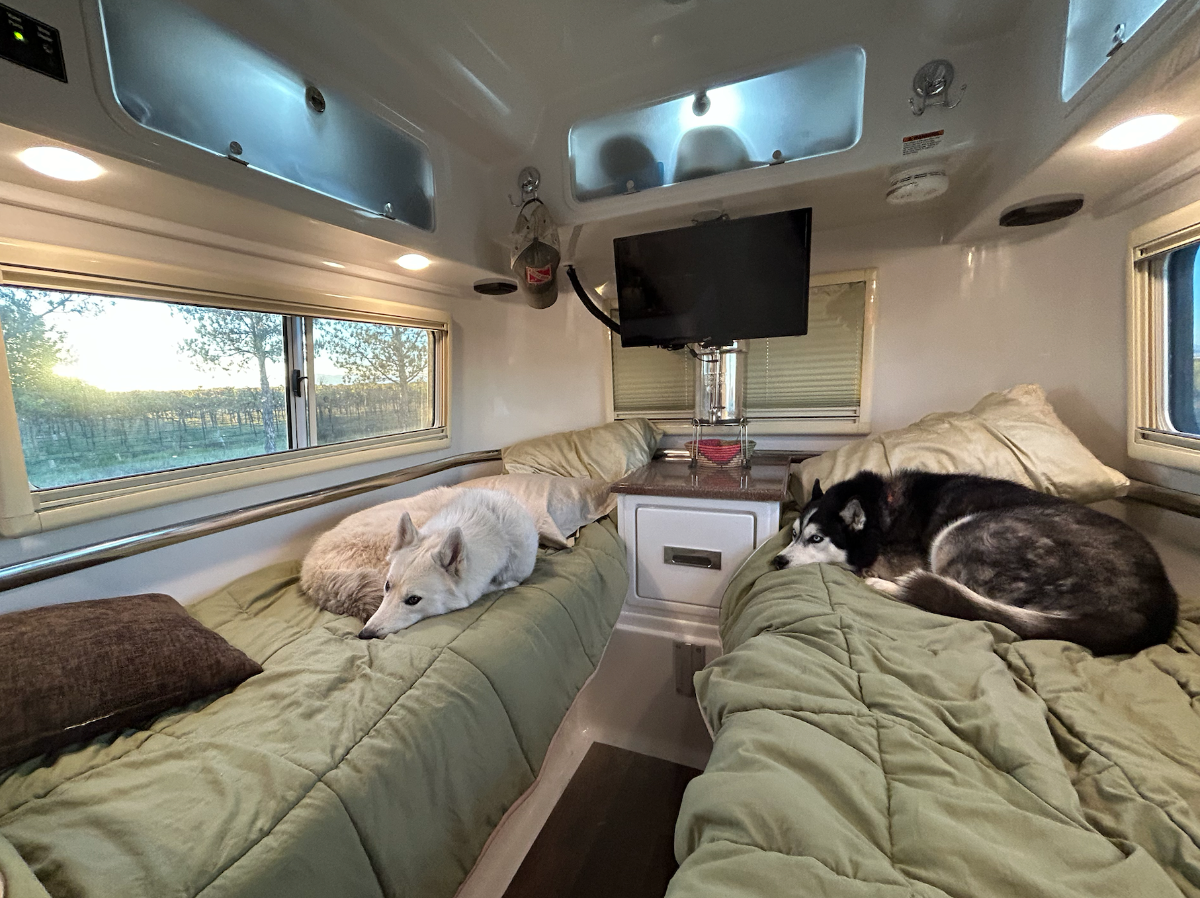
I did some searching for a thread of this type and didn't really find anything, so I thought I would start one. The idea is just a place to share photos and stories of your favorite traveling companions, Dogs, and stories that tell about your traveling pet experiences and methods. There's a thread like this on another forum I've been a member of for a few years and it's been continuously popular over the years. So, post up your pooch pics and tell us what you love about them, how you acquired them and what it's like traveling with them. We currently have two registered Border Terriers. The each weigh between 15 and 20 pounds and pretty much go everywhere with us. Cohen is a six year old male and Hallie is a seven year old female. Each came to us as nearly grown pups and have been through the whole obedience training thing. They're great travelers, and know no strangers. They love kids and love to explore. Unlike many terriers, they really don't bark very much and are quite pleasant to be around for most people. Cohen on the left, Hallie right. Independence Day attire Come on dad let's hit the road
1 point
-
Greetings! I didn’t find any existing posts about this minor issue, so it’s probably worth mentioning how I addressed the rattle-fit (optional) rear bumper. This issue first became noticeable after mounting our Swagman bike rack to the bumper. With 2 bikes and the single 1-1/4” mounting point, there was a lot movement in the bike rack when going down the road. Most of this was attributable to flex in the 1-1/4” bike rack mounting tube which I addressed separately. However there was also appreciable play in the bumper mounting design because of Oliver’s quick release pin design. Those pins look cool and everything, but I don’t think I’ll be removing the bumper too often and removing 4 bolts is pretty quick too. I tried replacing the pins with pass through nuts and bolts, and I noticed others have done that too. But no amount of tightening stopped the square bumper tube from rattling inside of the square receiver tube. This was like a sloppy receiver hitch, and the solution is similar to those after market threaded hitch pins (a great modification BTW). I used short 3/8” SS bolts that don’t pass all the way through both tubes. Rather they go from one side of the outer tube and they thread into Spring-Nuts that are nested inside of the inner tube. This effectively pulls the tubes together on each side for a tight and movement free fit. I used lock washers to assure the bolts wouldn't loosen and come out, but proper torquing and a longer fully threaded pass though bolt drilled for a pin would work too. I got the 3/8’ Unistrute spring nuts from my local ACE’s electrical department. Just push them inside the bumper tube with a stick, and line up the holes. Although these replaced 1/2" pins, I'm not concerned about decreased size for this type of load. After-all, the entire trailer load depends on a single 5/8" hitch pin used in a similar load configuration. Cheers, Geoff and Tanya
1 point
-
Yes - Its all relative. By this I mean if you check both the hubs (covered or uncovered) and the rims near the hubs on a regular basis with a TPMS or a hand held temperature sensor, you will soon "learn" what your "normal" readings are for your rig. Deviations from these "normal" readings should send you on a mission to find the cause of the difference in temperature. The answer may be simple - the sun is shining on that side of the camper or your tire pressure is too low or the road you're traveling is severely "crowned" in the center or you've been "riding" your brakes in traffic or going down a long hill. Or, it could be the first signs of bearing failure or a "dragging/sticking" brake. I've never had an unexplained "problem" with my Ollie (yet), but, on a couple of RV's previous to the Ollie both the TPMS and checking at each stop really saved my bacon. Bill1 point
-
It was an Amazon purchase, however………
1 point
-
Then increase the furnace temperature set point, i.e., if you usually set it at 70 degrees F, increase that temp setting to 75 degrees F. Keep changing, if necessary, until the cabin is comfortable and the toilet supply line remains unfrozen.1 point
-
Sounds like a great approach but I think you are being conservative on the 18% figure, if you don't turn on the inverter (very inefficient) and just use battery, you will save much more. The inverter uses about 1.5 to 2x what you would calculate for the normal ac load so there is a significant savings there. BL1 point
-
We did a flip up door when we got rid of our microwave, and used ikea hinges. I was tempted to by the little Blum hinges, but ikea hinges are made by Blum. And, easily available, for us. That was several years ago, and no issues. (2018)
1 point
-
Good idea. Not good to leave the toilet supply line frozen; even though Pex is quite flexible, it can still break when stressed too much. And, you might consider leaving the bath door open with the space heater on the floor pointing toward the toilet supply line. That reduces the risk of overheating that small bath area, and also allows cabin air warmed by you furnace to help with defrost the toilet supply line.1 point
-
Then, as John Davies suggests, invest in a high-quality (ergo more expensive) lead acid battery charger that has a "repair" or "desulfate" feature. I have had good luck with NOCO Genius chargers. They are small but effective. Below is a link to a 10A version for $79.96 that includes a Repair feature for deeply discharged lead/acid or AGM batteries. If your AGMs are 6V, it can be set to 6V as well as 12V. https://www.amazon.com/NOCO-GENIUS10-Fully-Automatic-Temperature-Compensation/dp/B07W3QT226 In your shoes, I would invest the $80 to see if the batteries can be salvaged. Your 400+Ah battery bank will take several days to recharge with this charger, even if it can be saved. After the charger has done its job, verify voltage of each battery with a multimeter, at least twice, before concluding that you have "dodged a bullet." Even if you can't save the batteries, a NOCO Genius charger is handy to have around just for maintaining automotive lead/acid batteries. Good luck! And, please report your results.1 point
-
GJ, They sure look like the same item. I got mine at Costco. Periodically they go on special for $7. David1 point
-
This is an update containing some new information about the AGM battery issues that we experienced this fall. Most of the background is in a T105 post by another Oliver owner. It is my host that an admin may be able to advise on how I might migrate some of the info contained into this new entry, but until then, I will briefly summarize concentrating on the new information. This fall we were boondocking in Maine and were using the furnace overnight, we had a low battery alarm that surprised us, but we had notice the furnace was cycling a bit more than we had experienced on the previous nights. Overnight temps weren't approaching freezing and we only set the temp to 58 overnight so we really didn't understand why it was cycling so much. When we had the alarm, the batteries were below 12V. We did some testing in our driveway when we returned from camping on several cold nights after insuring the batteries were completely charged by the solar panels. After some alarming test voltages on both strings of batteries that showed the first 6V battery in each string had very low voltage while just running the furnace, cell booster, and Wi-Fi extender for several hours after the sun had set. It was suggested that we have the batteries tested and I took the two suspect batteries, one was 3 years old and the other 2 years old, to Batteries-Plus for a load test after both batteries had been charged and sat for a day and both passed. I reinstalled all the batteries again and monitored for a few weeks during the warm fall weather with the intent of testing under colder temperatures. I completed my first major overnight test attempt with temperatures in the 20's last night. I had disconnected the shore power yesterday morning before the solar kicked in and it was a very sunny day so I ran the furnace, cell booster and Wi-Fi extender for the duration. The solar stopped charging at about 2pm, but everything else continued to use about 11Ah during the latter part of the day into the early evening. I went to bed in the LEII at about 10pm EST. We were at 12.7V on both strings when I went to bed and at 12.4V when the furnace and blower were cycling. When I woke up at 12AM, I discovered the voltage at 11.4V when the furnace blower was on and decided to shut off the furnace and move back to the house. The voltage was 12.3V when the furnace was shutdown. When I got up this morning at 6AM well before the sun has risen and started charging the batteries the battery voltage was at 12.7V. I was flabbergasted. I suspected that it would be about the same voltage. My Victron SmartShunt confirmed that we were at 94 percent SOC and had a very modest .37 amp parasitic draw. I am completely baffled by all this and still suspect that we have a battery issue or a furnace issue due to excessive cycling. We had a 34Ah draw down at 6am this AM since the last complete charge.1 point
-
All it takes is one time to damage them. You need to get them charged and have a battery place do a load test. How old are they? IMO I would be surprised if they aren't toast. Hope that isn't the case. I have seen many cases were AGM's were run down to 11.8 and damaged.1 point
-
To do so, you would also have to have the gray line valve (next to the toilet) in the travel (closed) position. Or, you could drop a lit M-80 in the toilet... that for sure would do the trick. Not recommended.1 point
-
Yes, descale HWH with vinegar. But dump it. Keep it isolated from any bleach. Use the hot water isolation valve to do so. When done, then button up the HWH open the isolation valve and flow fresh water through it to purge all vinegar and scale out of the HWH. I have attached my water systems checklists. It has several processes with detailed steps that a new owner could follow easily. Once you have done them a few times, it will come natural. But I do understand not knowing for sure what you think you may not. Each use I find ways to improve them. So If you or others see errors or ways to improve them, please PM me and I'll update. Mahalo, GJ 2024 WATER SYSTEMS SERVICE AND SANITIZATION (Updated 2024 Version).docx1 point
-
I used a ratchet strap to minimize the slop between the bike rack and the bumper mount, and between the bumper mount and the trailer. I put just enough tension on it to pull both joints "up", and then a click more. This allows a little bit of bounce to absorb road irregularities, but eliminates almost all of the movement I had before adding the strap. (Yes, I later replaced the hook with a clevis. 😉 )
1 point
-
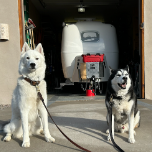
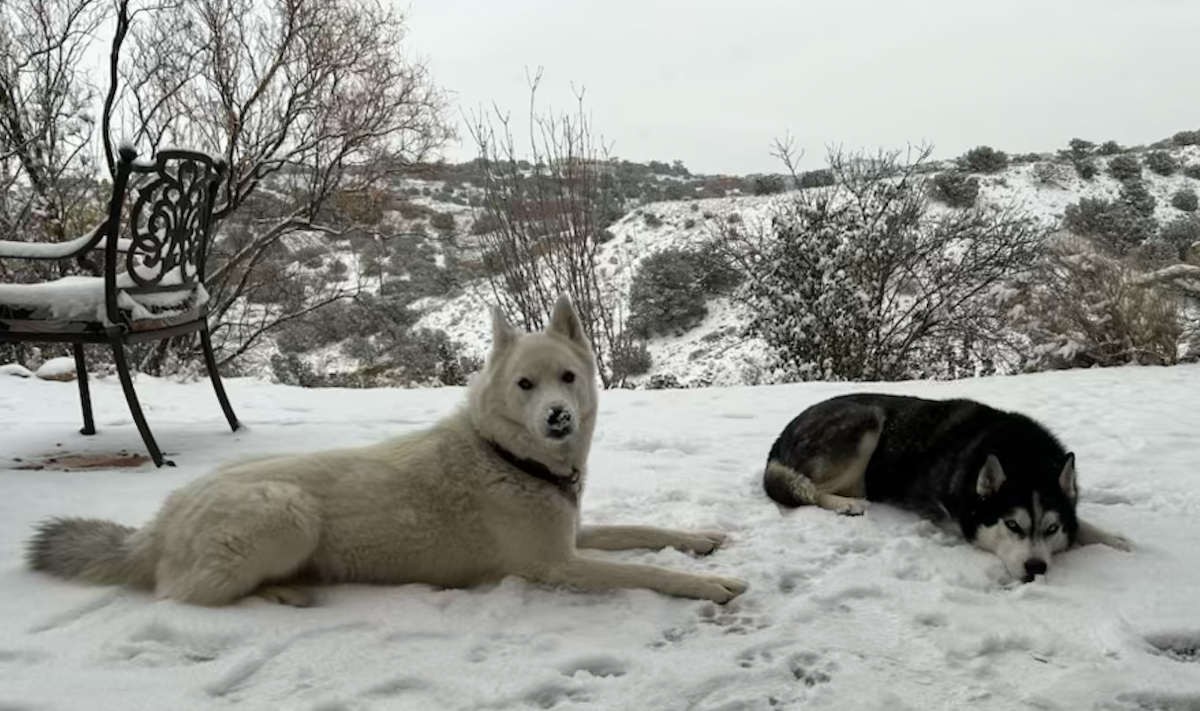
Happy Huskies: Magnus and Oscar are absolutely beside themselves with the light dusting and our first winter wonderland this morning....
1 point
-
These are bottom tier cheap products. I doubt that they were ever intended to go in an RV where airborne dirt particles and condensation are major factors. This is a fail on Oliver’s part, unintentional though it may be. Does anybody actually get 20,000 hours of use out of their home LED light bulbs??? These life ratings are pure scam. The LED element itself may in theory last forever, but the board it is attached to can last just a few hours. RVs need marine grade (co$tly) components. John Davies Spokane WA
1 point
-
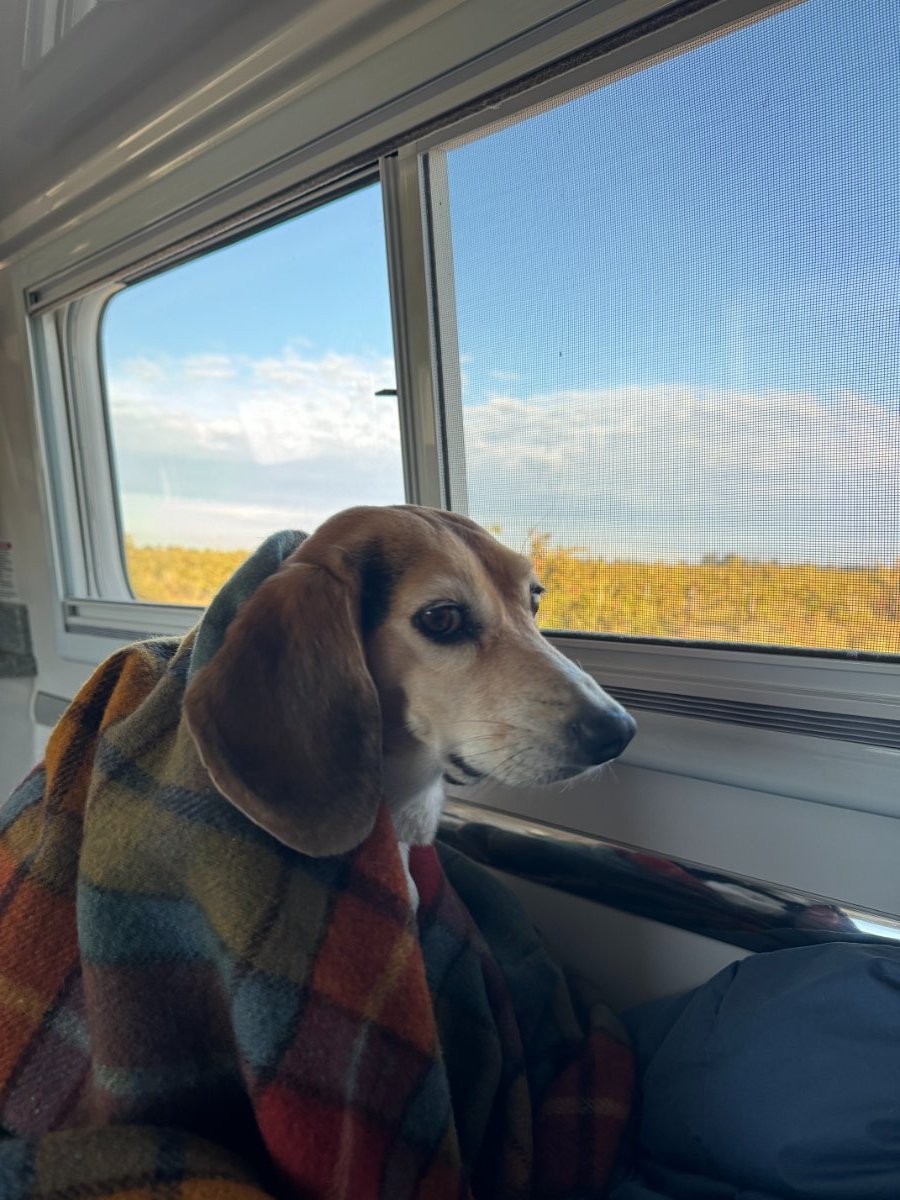
Trixie the Adventure Beagle
1 point
-
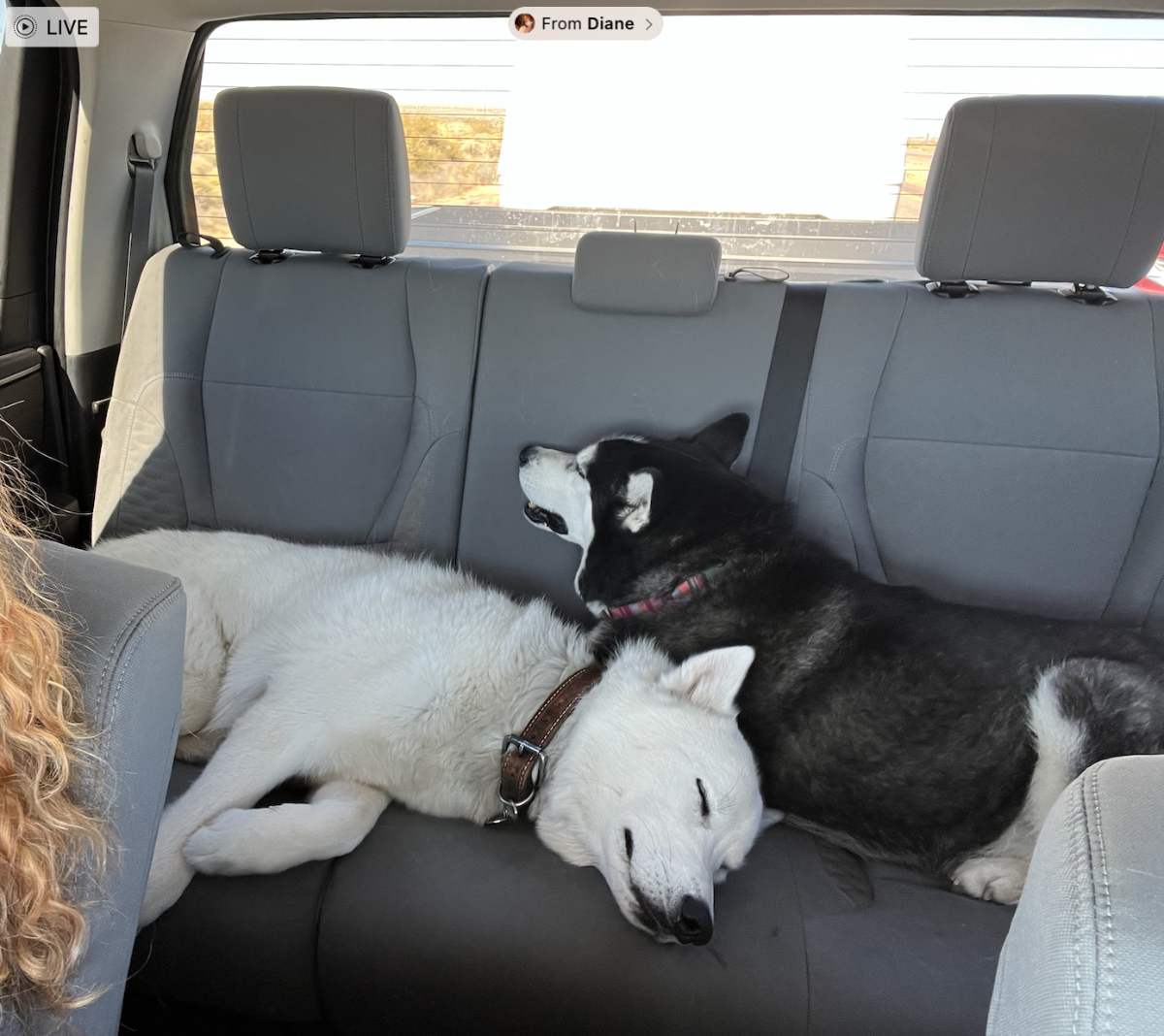
110# of Huskies in the back coming home from our first 2-dog adventure - they pretty much take up the entire back seat...
1 point
-
I couldn’t resist, one more…
1 point
-
The boys are ready to rock a 5-mile hike this morning in the Chiricahua mountains just east of our boon dock location near Willcox, AZ...
1 point
-
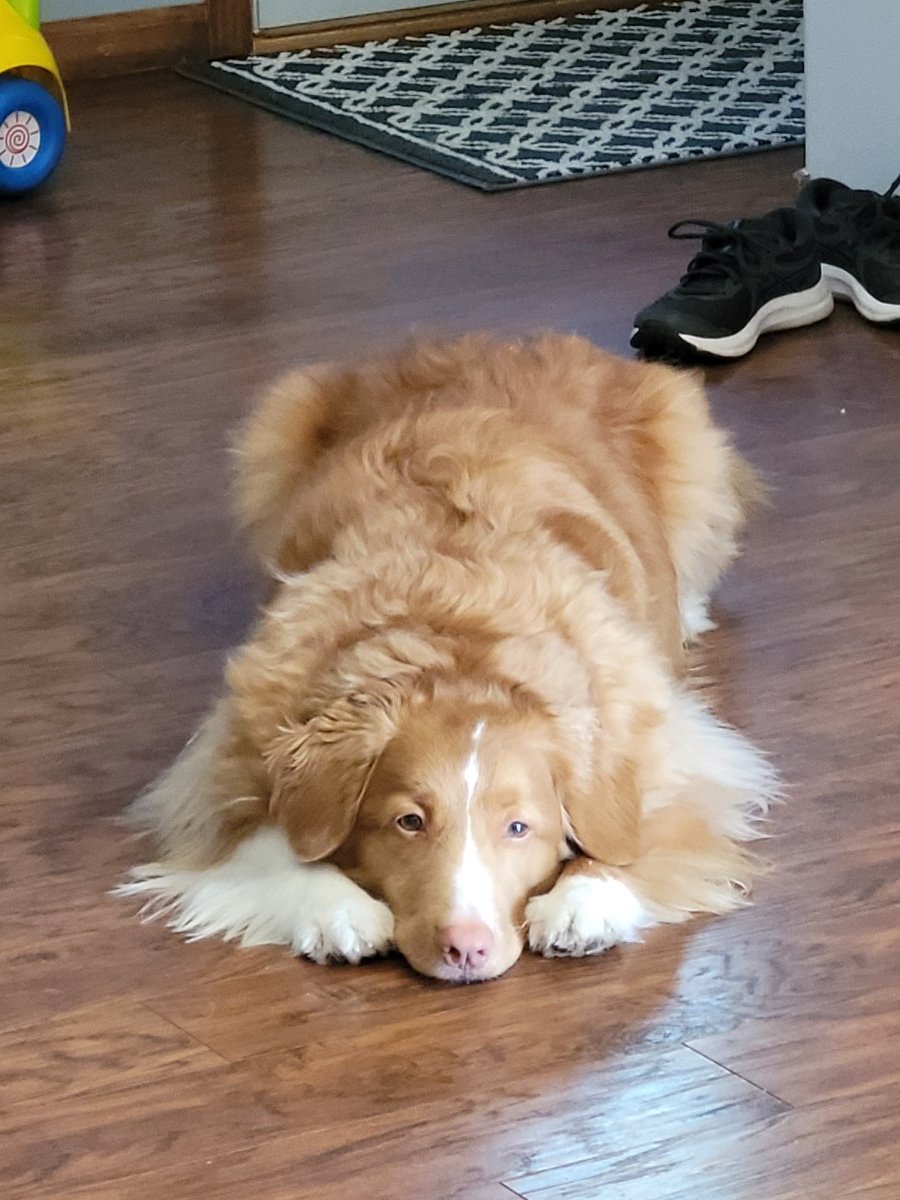
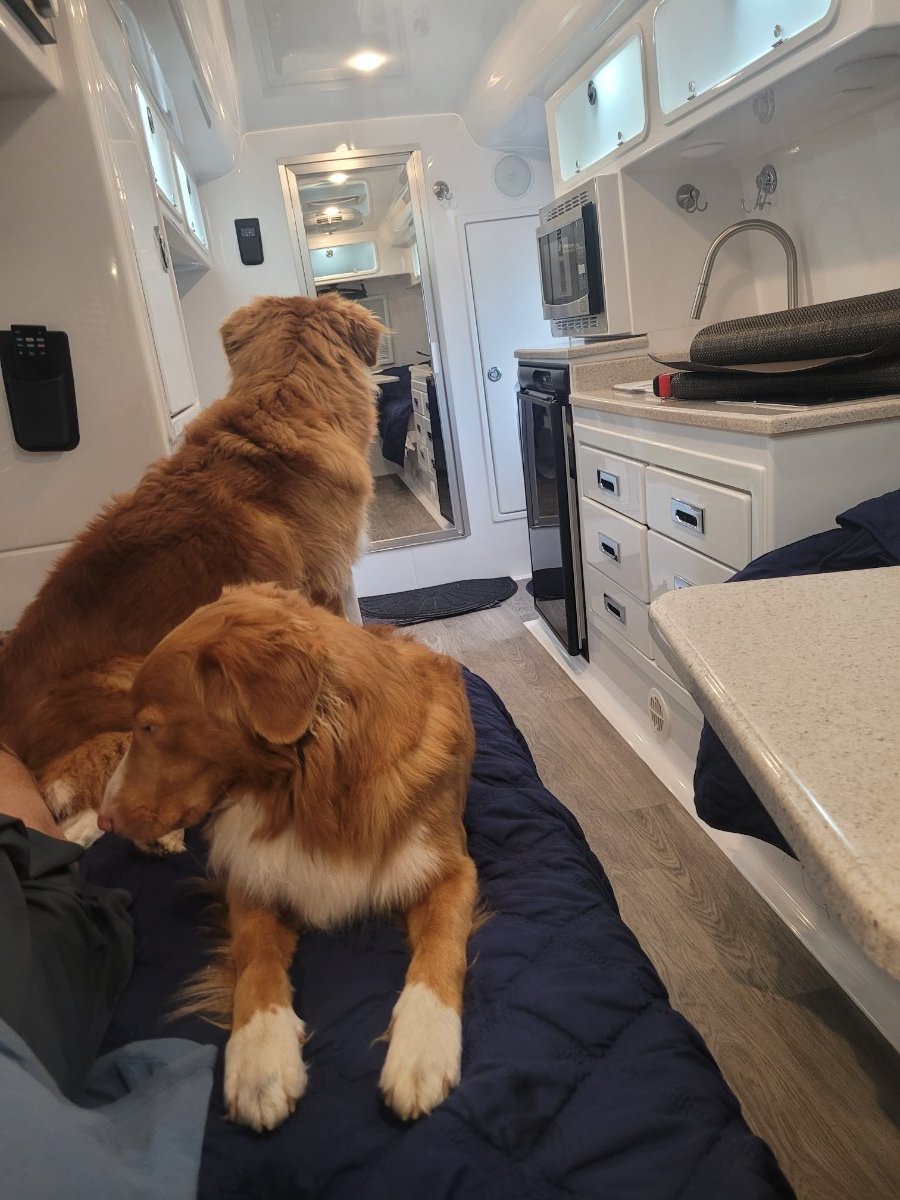
Our two Tollers (Nova Scotia Duck Tolling Retrievers), Bob and Cash, are always ready and waiting to go camping or to the brewery. They definitely make us laugh every day and are great travelers once they settle in after the first 20 miles and know it's a longer trip.
1 point
-
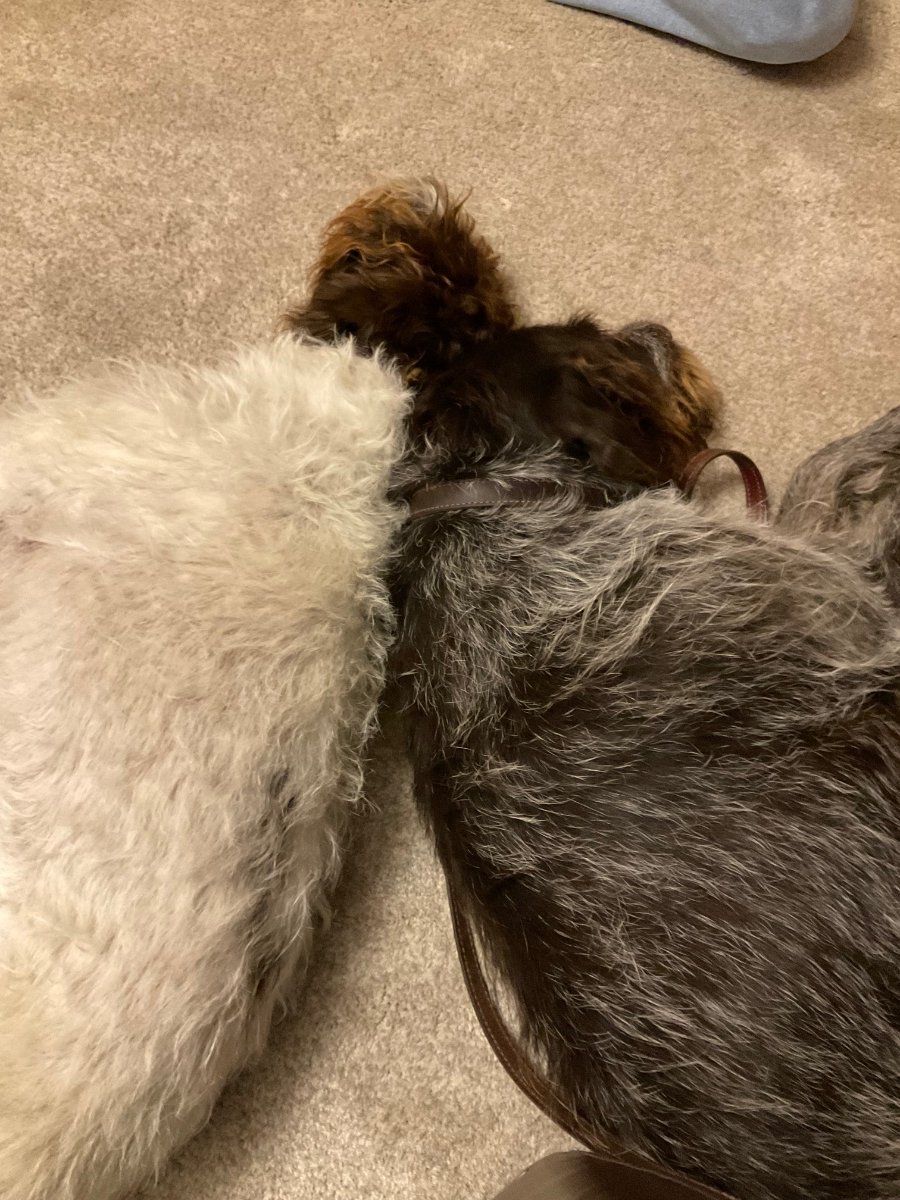
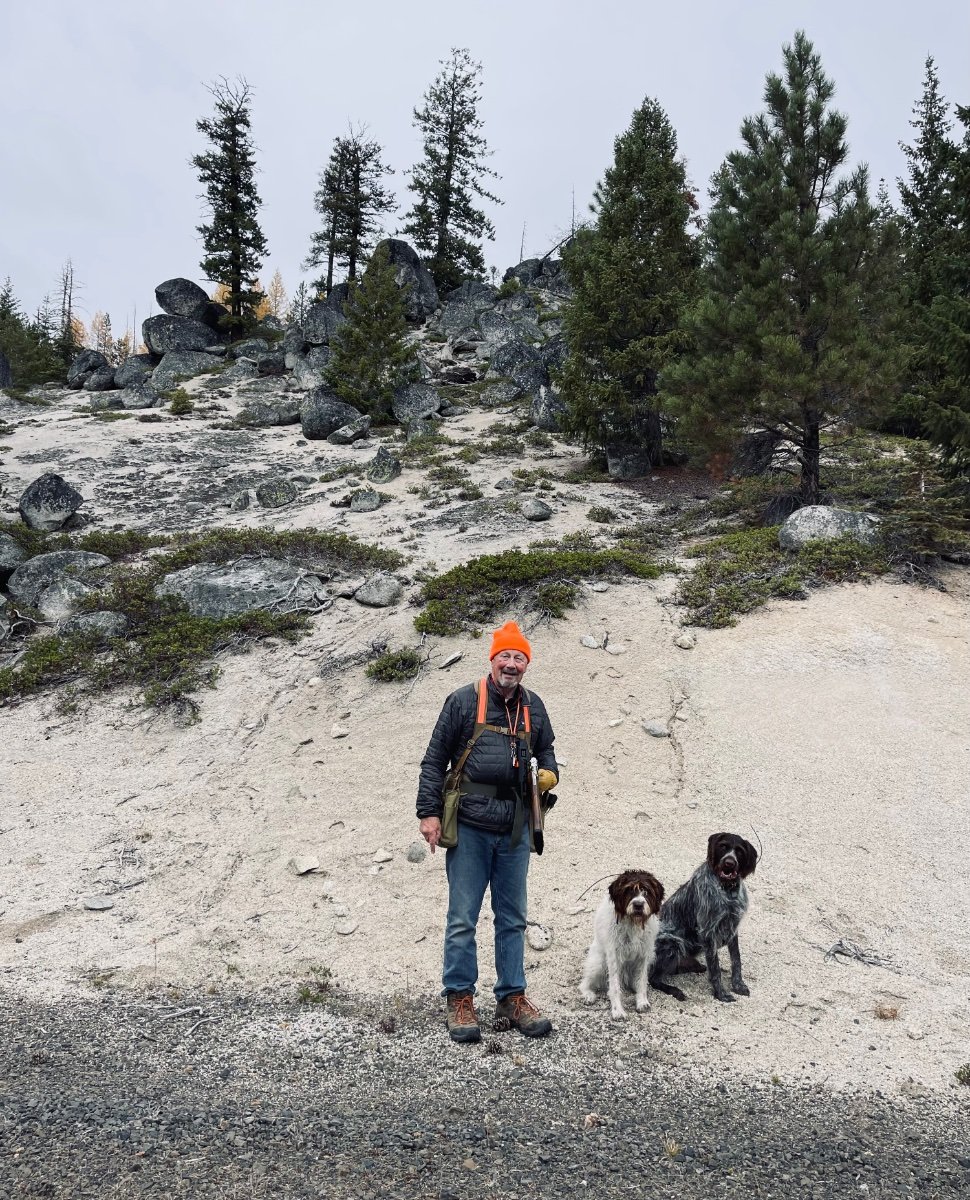
Fritz, Ketzel, and their personal Sherpa who carries their water, treats, and the shotgun in the event we stumble on a Dusky (Blue) grouse. Both dogs are German Wirehair pointers.
1 point
-
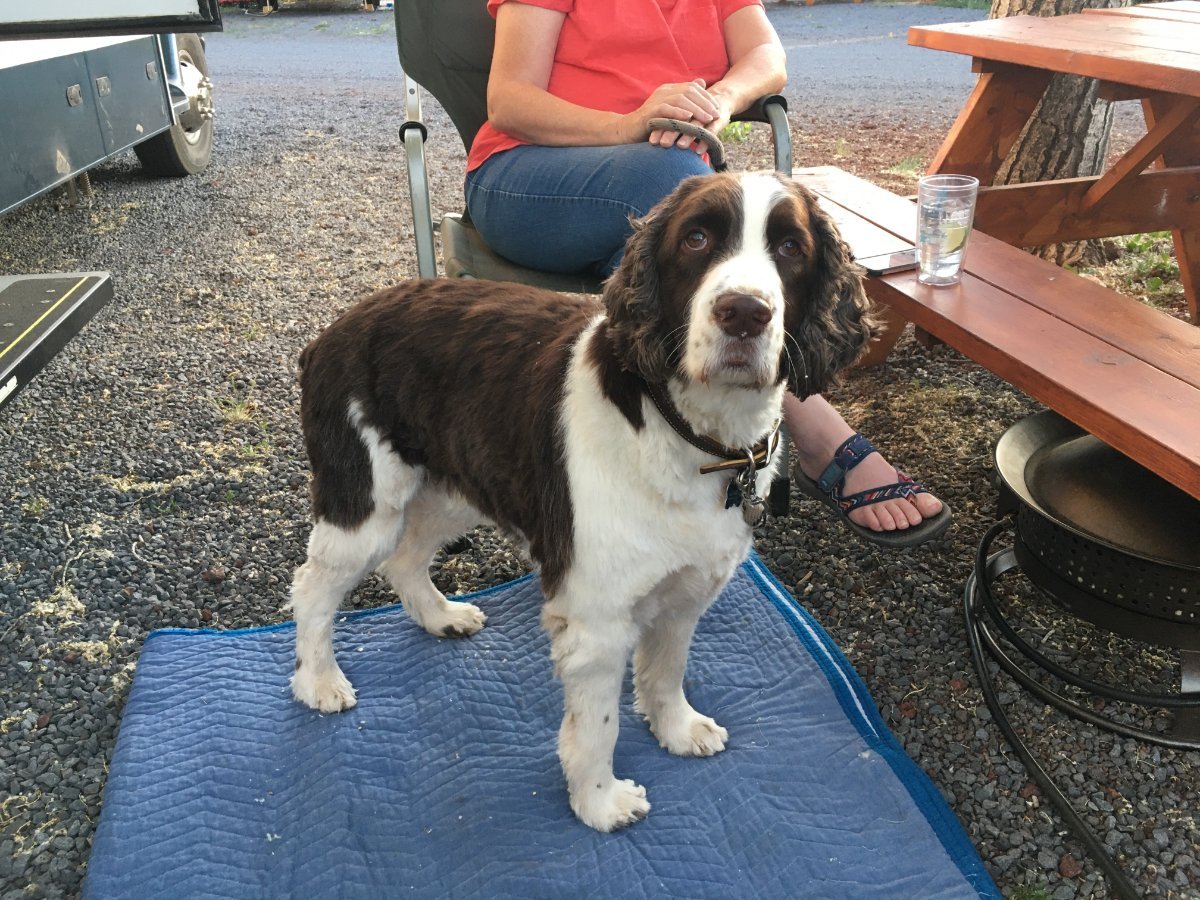
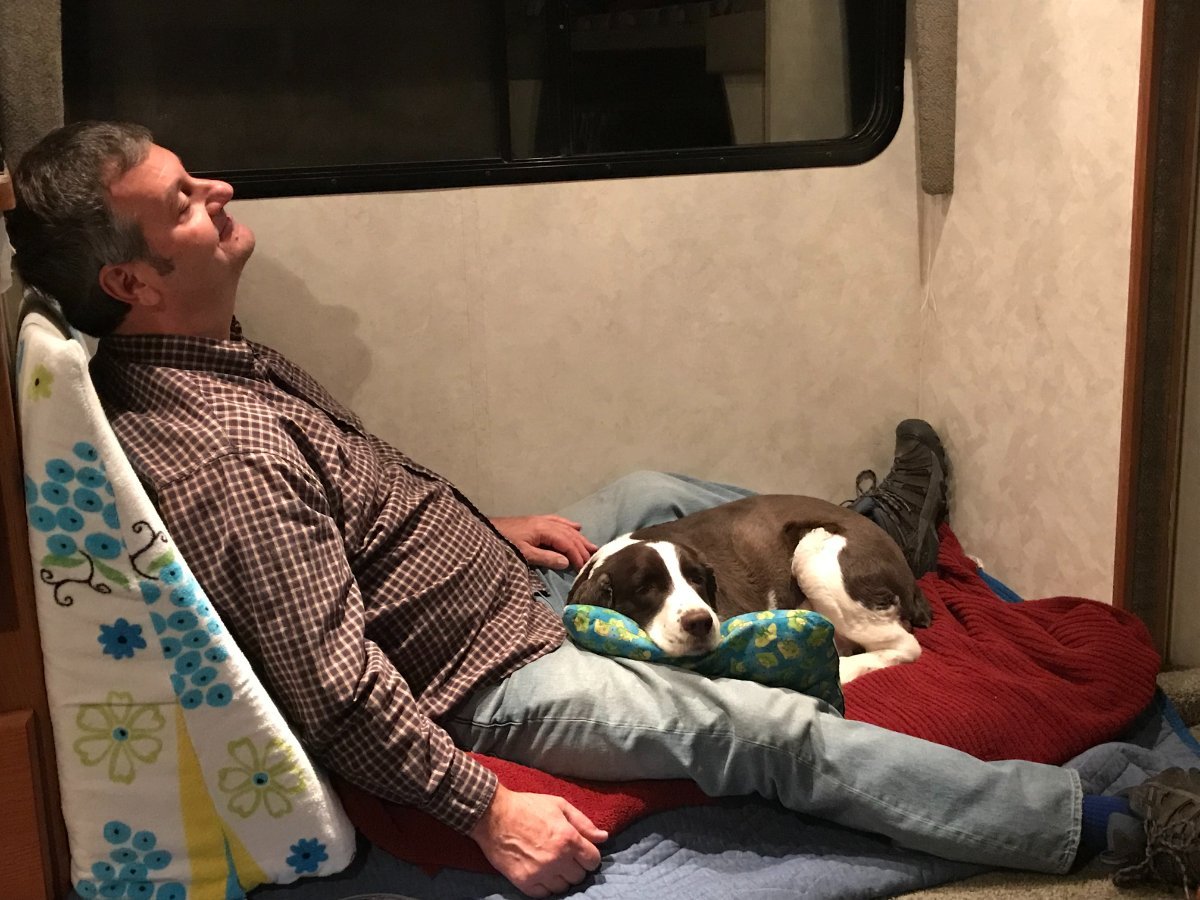
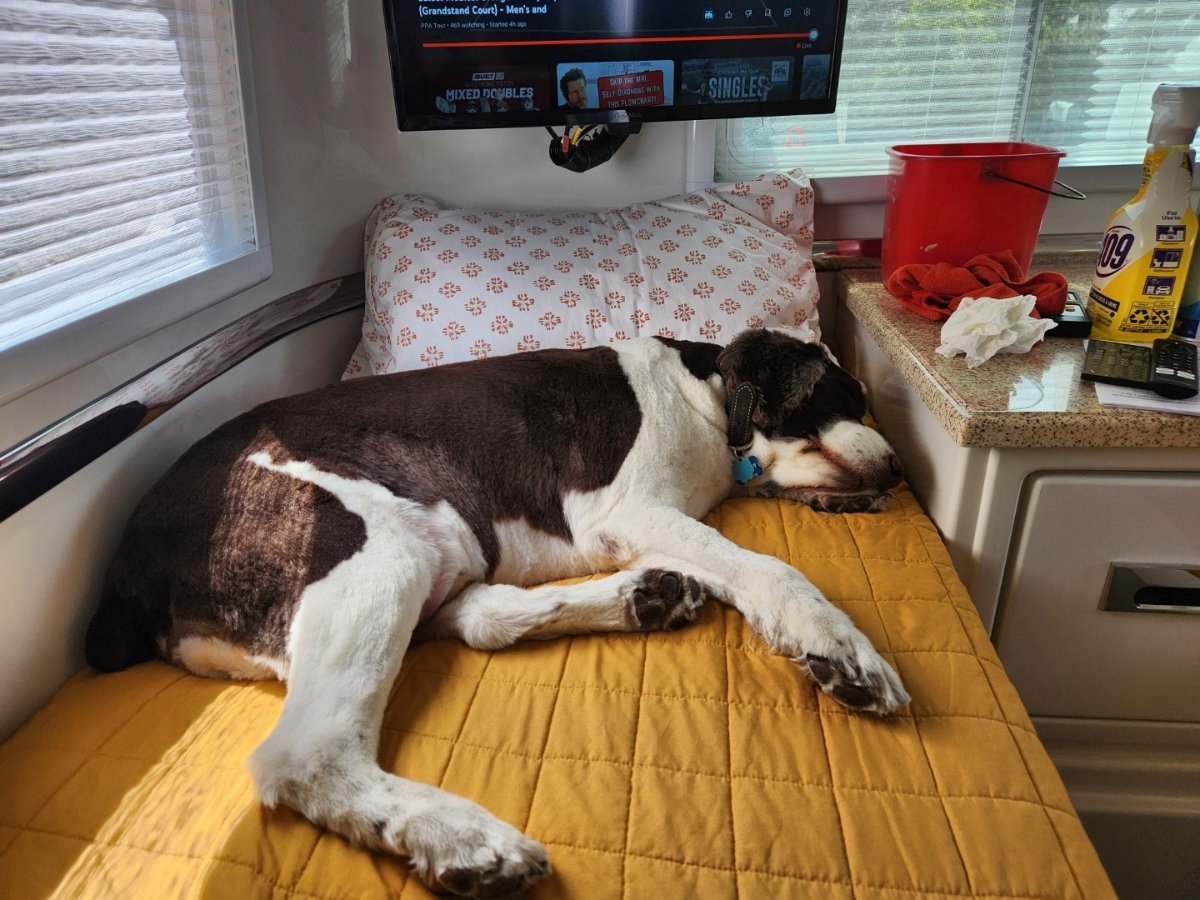
Cool thread, we all love "men's best friend!" We haven't traveled much yet in our Oliver. So, the first two pics are when we had the Bigfoot Class-C, a fall trip to Williams and Sycamore Canyon, Arizona (2nd largest canyon in AZ). Meet our 9-year-old English Springer Spaniel named Charley! Chris caught me napping, something I literally never do! So, it was picture-worthy. In the spot where I removed the uncomfortable loveseat for other seating and more room. The third pic is when we first purchased our Oliver in June. Charley made himself right at home while we were removing the 'stink' of past owners.
1 point
-
Indeed, it is the upward travel that is lacking. Do you plan to carry an air pump? Run your trailer tires at 42-45 psi all the time and lower that number if you have more than say five miles of washboard. Rock hard tires and crappy suspension kill parts and belongings. John Davies Spokane WA1 point
-
Does Dolly know Liv and Bosker?1 point
-
This is Dolly. She loves camping and knows how to relax after a day of camping!😂
1 point
-
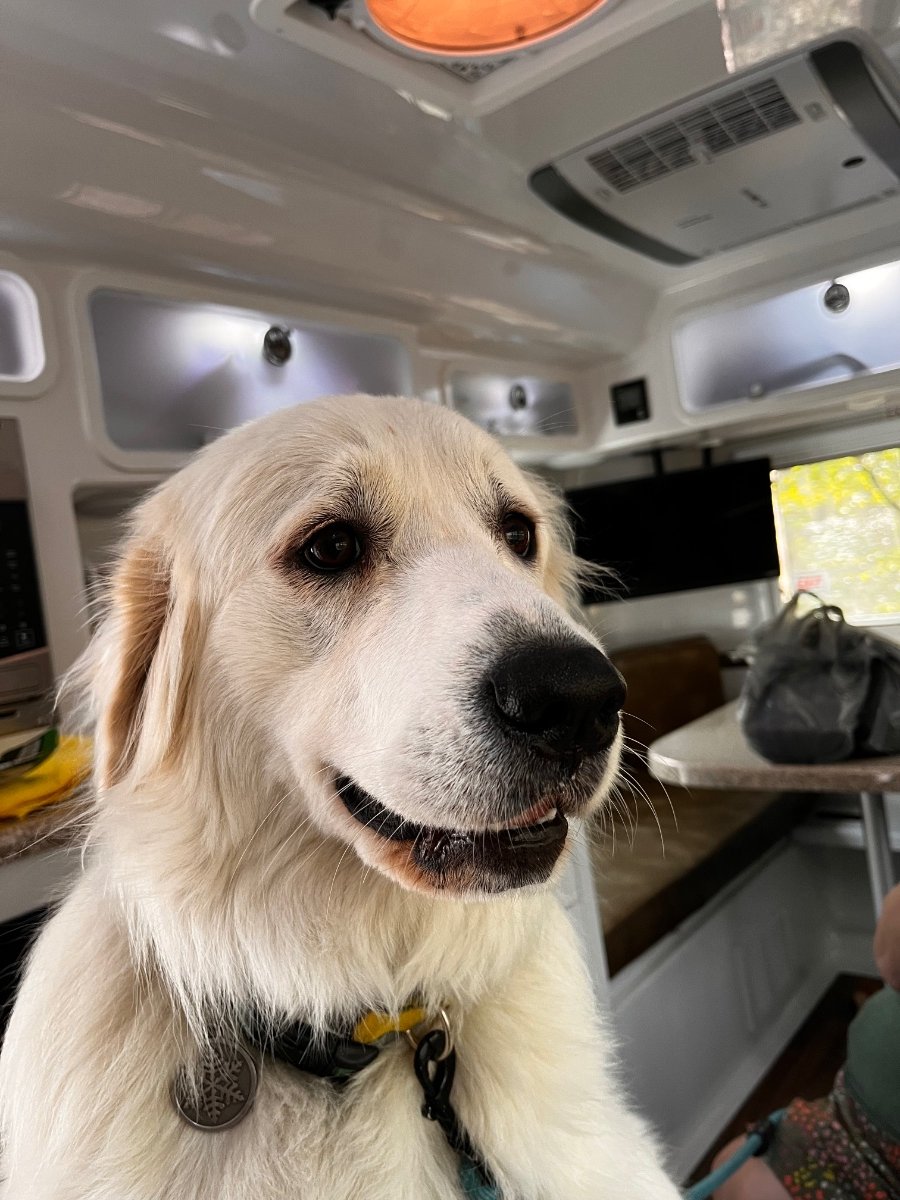
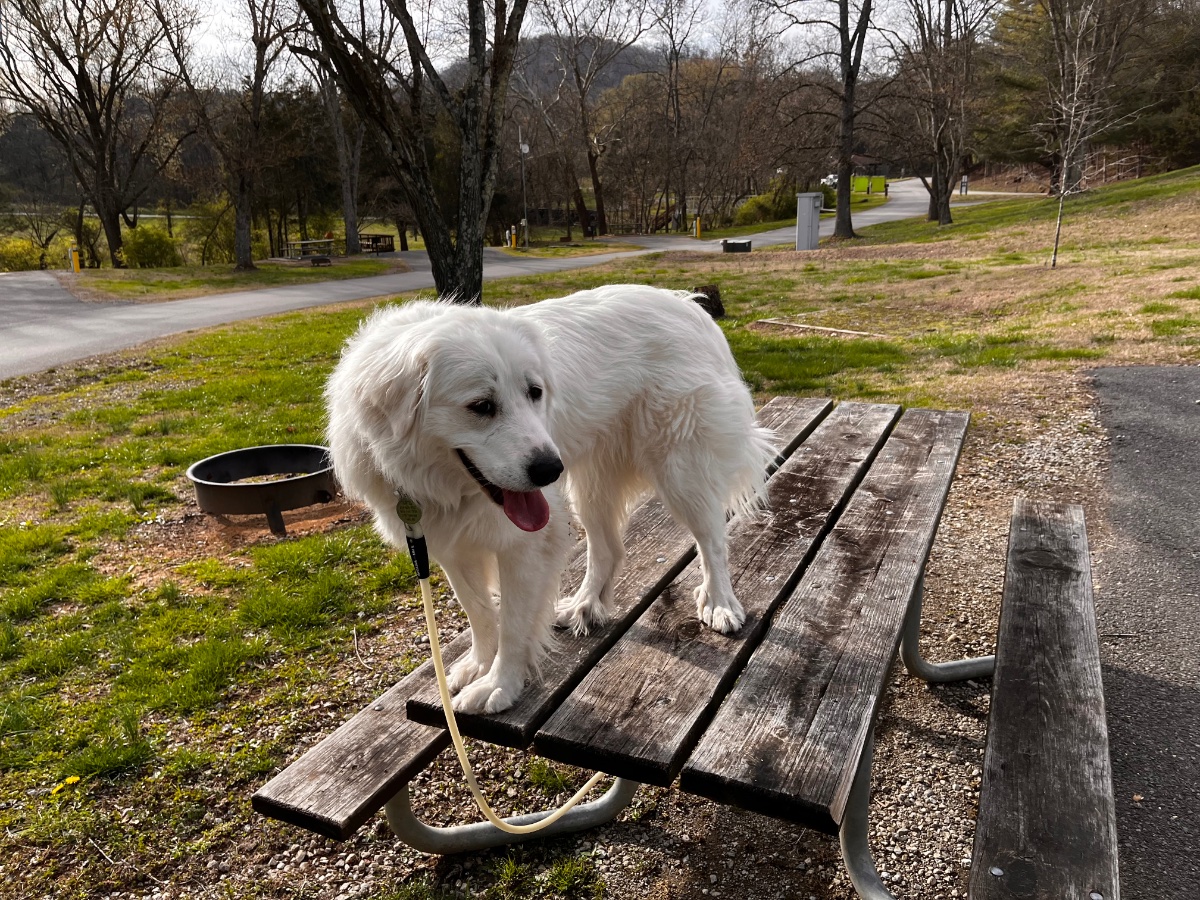
Meet Tilly! Our Great Pyrenees. She loves going places, and is becoming a real good camper. She loves walking on footpaths in the woods. We’re teaching her to not bark at everything that moves, and she’s getting better every trip. At night she curls up by the door, out of the way in our Oliver. In the car, she has the back seat area all to herself (we took out the rear seats). 22 months old, and is pretty good girl' but sometimes behaving like a moody teenager. She never goes off leash outside, and wears a “FI” tracking collar. She thinks everyone is here to give affection and belly-rubs. Pretty chill dog overall.
1 point
-
Our dog Liv (means life, in Norwegian) and Bosker are good camping buddies. She's looking forward to camping with Bosker again. (As are we.)
1 point
-
Bosker is a rare breed MIKI, and at 9.5 Lbs, he is a perfect fit inside my 2008 Elite. I often tell fellow travelers that for me, "It's all about the dog". Just ask him and Bosker will proudly tell you he's the center of the universe. His picture adorns the front of The Wonder Egg. We'll be at the rally this year, Stop by and meet Bosker, but look out, you may sucked into his orbit!
1 point
-
My wife wanted pup to be able to travel up front with us. Built a platform between the truck's front seats that wraps behind the driver's seat (L shaped). Covered the platform with a custom shaped dog bed. This makes my wife happy, pup would be fine hanging in the back.
1 point
-
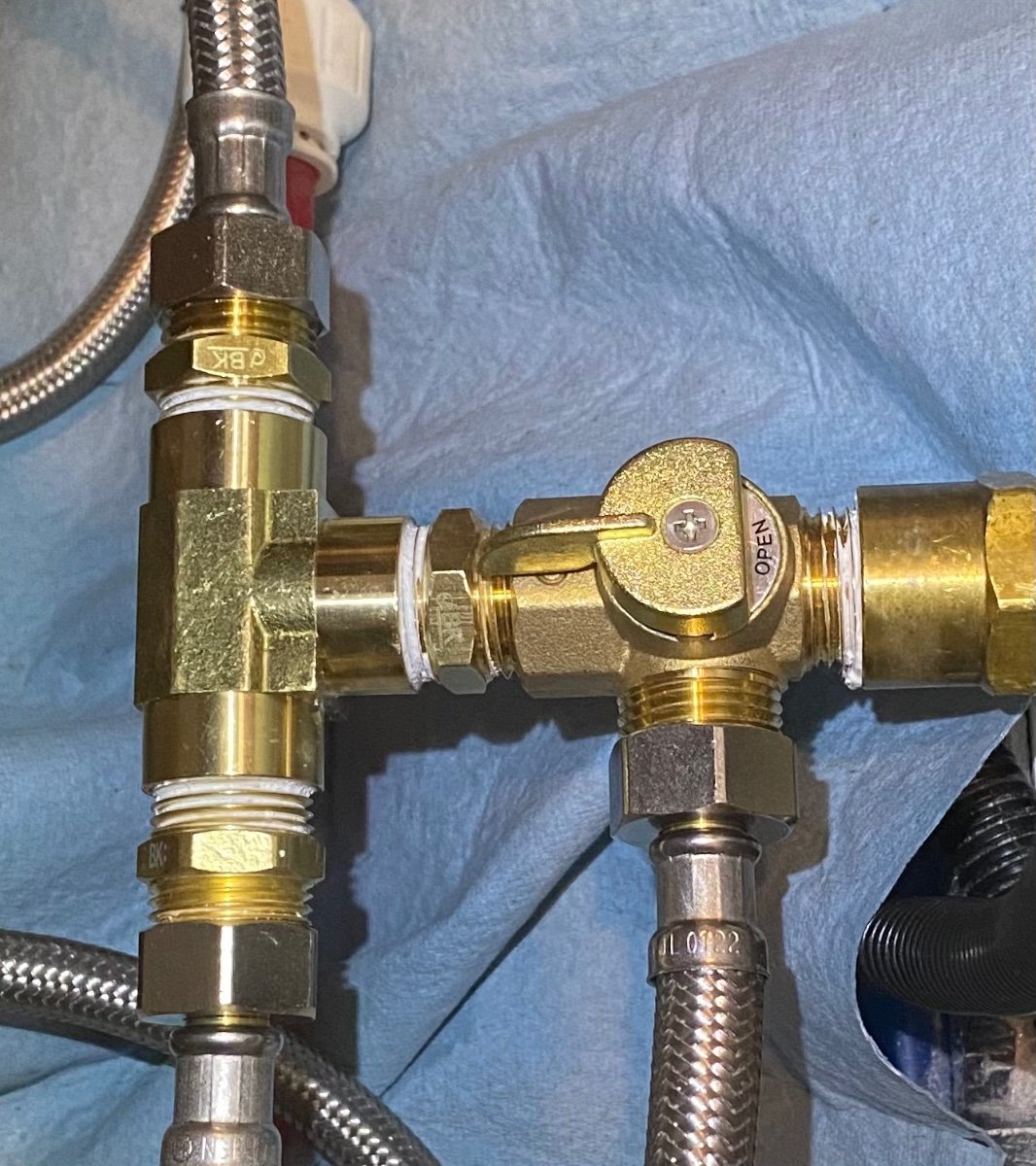
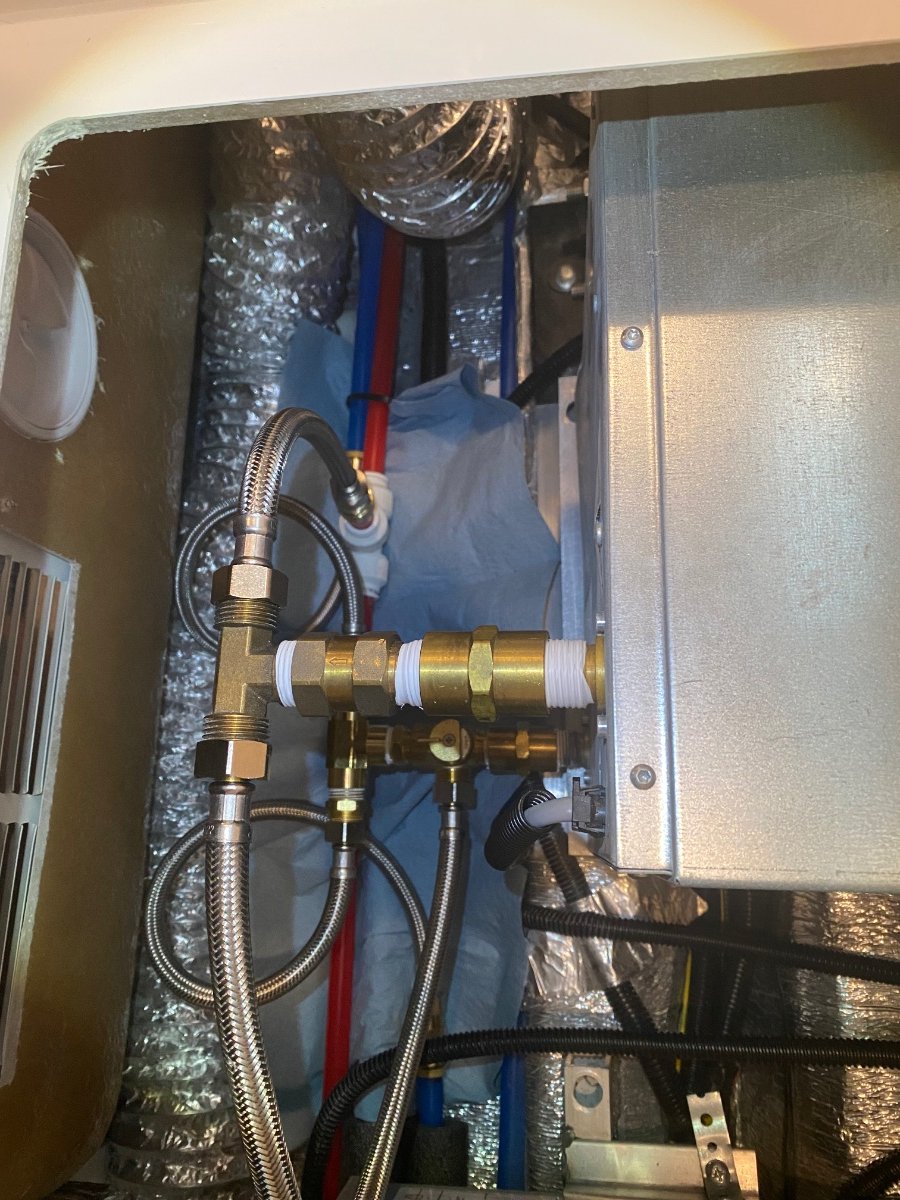
No, the bad bypass valve still felt normal when opening and closing it. The faulty seal inside the bypass valve wasn’t noticeable until I removed the valve. The new CAMCO bypass valve is installed and works well so far. One nice little detail of this CAMCO valve is that the positions are labeled (open or bypass). And I changed all water lines into and out of the Truma to braided flexible supply lines and brass fittings to eliminate the issue of breakage of the rigid plastic connections that some owners have had. Camco 37463 3-Way By-Pass Valve Replacement - Brass https://a.co/d/8qur0uz
1 point






































-
Recent Achievements
-