Leaderboard


Popular Content
Showing content with the highest reputation on 04/15/2022 in all areas
-
Kirk - Does THIS exterior measurement sketch help you at all? Bill4 points
-
Share and Enjoy !Shares Trailside Bites are good meals, snacks, or drinks that are easily made while camping. The limited storage and smaller cooking space should not mean that you sacrifice excellent tasting cuisine. With fresh ingredients for this meal, you will feel refreshed and ready for the next adventure after this warm meal. On the menu today is a hardy chicken Black Bean Chili that will hit the spot on the coldest days. All of the ingredients for this recipe can be found at almost every grocery store. So did we go a little over the top to make this meal? Sure, but it was a lot of fun adding all the little touches. For this recipe you will need: Cooking Oil2 tbspGarlic, chopped1 cloveYellow Onion, diced1 largeBell Peppers, diced2Jalapeno Pepper, diced1Black Beans, rinsed2, 15oz. canDiced Tomatoes2, 15oz. canChicken Breast, diced2 largeCorn, drained1, 15oz. canChicken Broth, or water2 cupsChili Powder3 tbspCumin2 tbspBlack Pepper1 tbspTomato Paste1, 6oz. canSaltTo taste Let’s start with prep work! Begin by dicing and cutting all the vegetables and meat before cooking. It will add a subtle smokey flavor if you have extra time to roast the peppers and corn over an open flame. In a large pot, add the oil, chopped garlic, diced onion, bell peppers, and jalapeno pepper to start cooking on medium heat and sauté for 2-3 minutes, stirring occasionally. In a separate pan, begin to cook the diced chicken with another touch of cooking oil to help to prevent sticking and encourage even cooking. While cooking, add 1 tbsp chili powder, 1 tbsp cumin, and a pinch of black pepper. On medium heat, thoroughly cook the chicken, stirring to cook evenly. Next, add the chicken to the large pot. This is where everything else finds its way into the pot. The beans, corn, tomatoes, broth, tomato paste, and remaining seasoning will cook and meld. Bring to a boil, then reduce heat to simmer for 10 minutes., occasionally stirring to prevent sticking. Salt to taste and serve, share, and enjoy. This warm hardy chicken chili made around the campsite can be great for the cooler days. This recipe makes five servings. If you are like us, you will have someone to share in your masterpiece. Let the savory aroma of this meal fill your camper trailer and create memories you can enjoy for years to come. Some meals become a crowd favorite; this is sure to be on our list. Share and Enjoy !Shares The post Chicken Black Bean Chili appeared first on Oliver Travel Trailers. Read the Full Article3 points
-
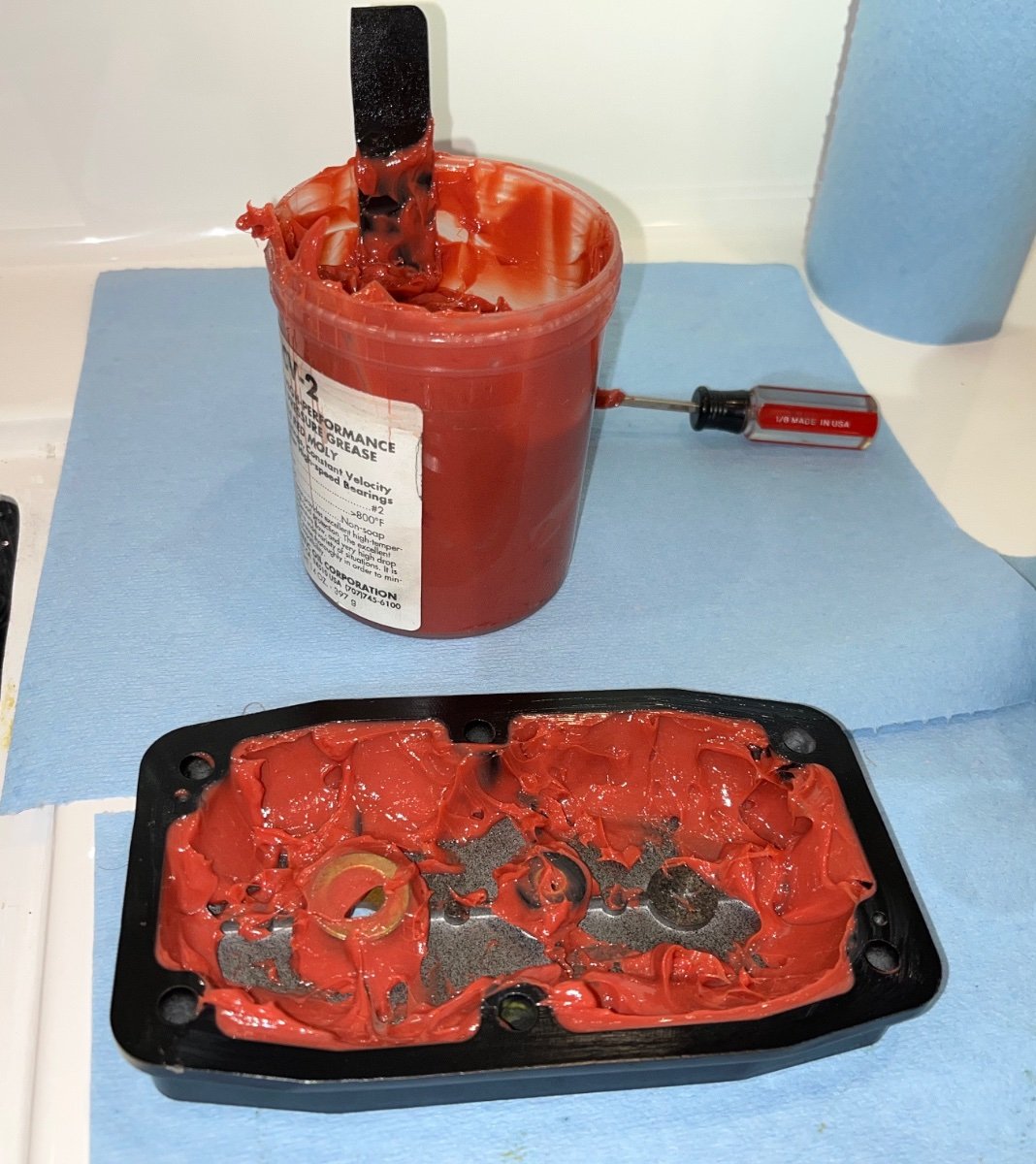
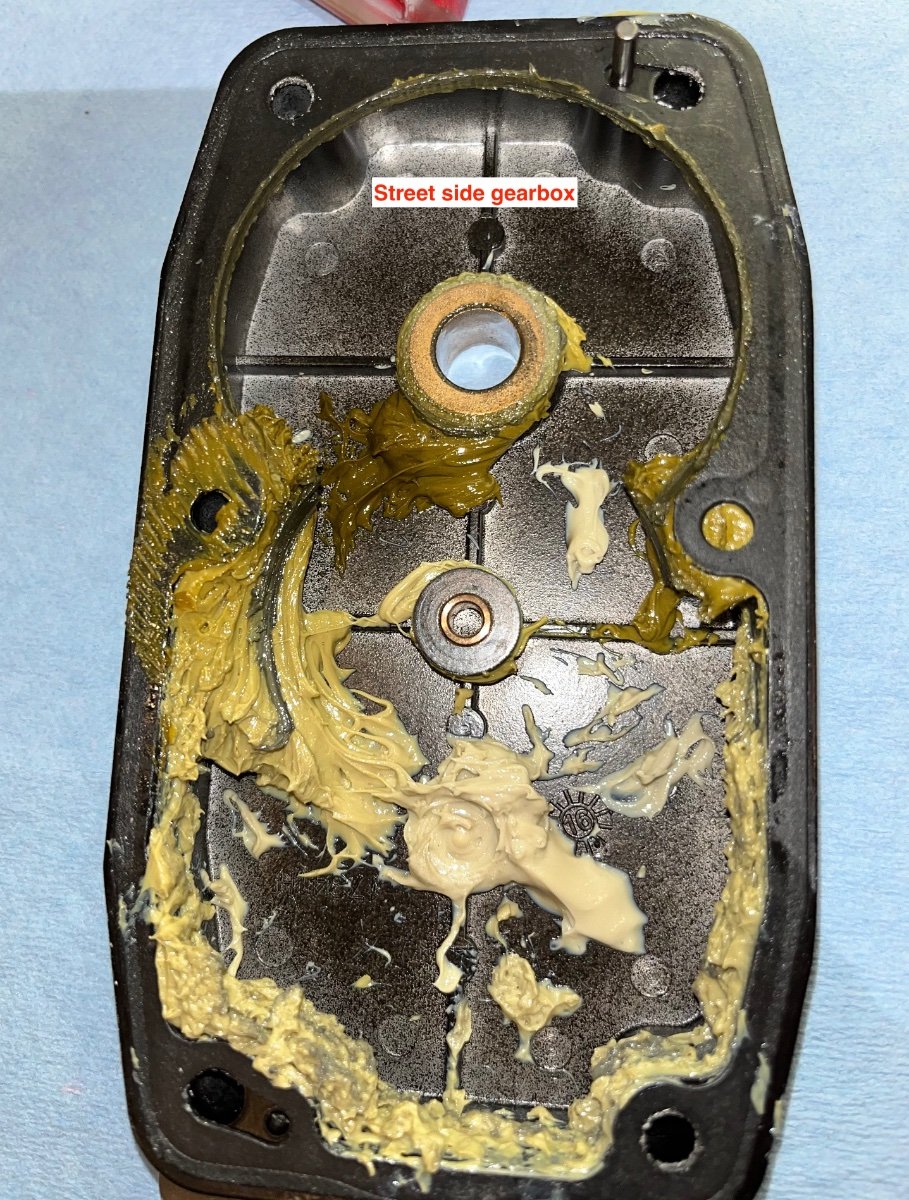
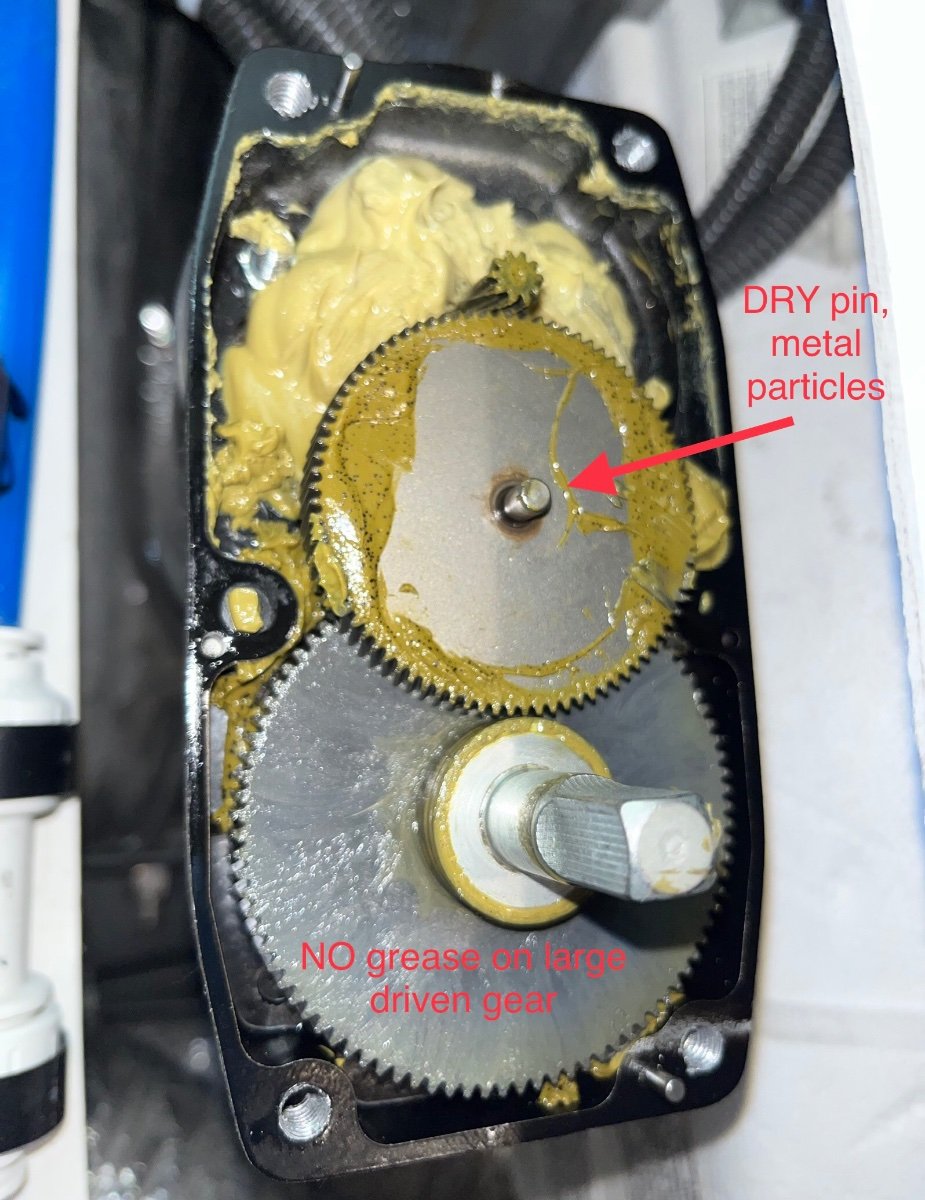
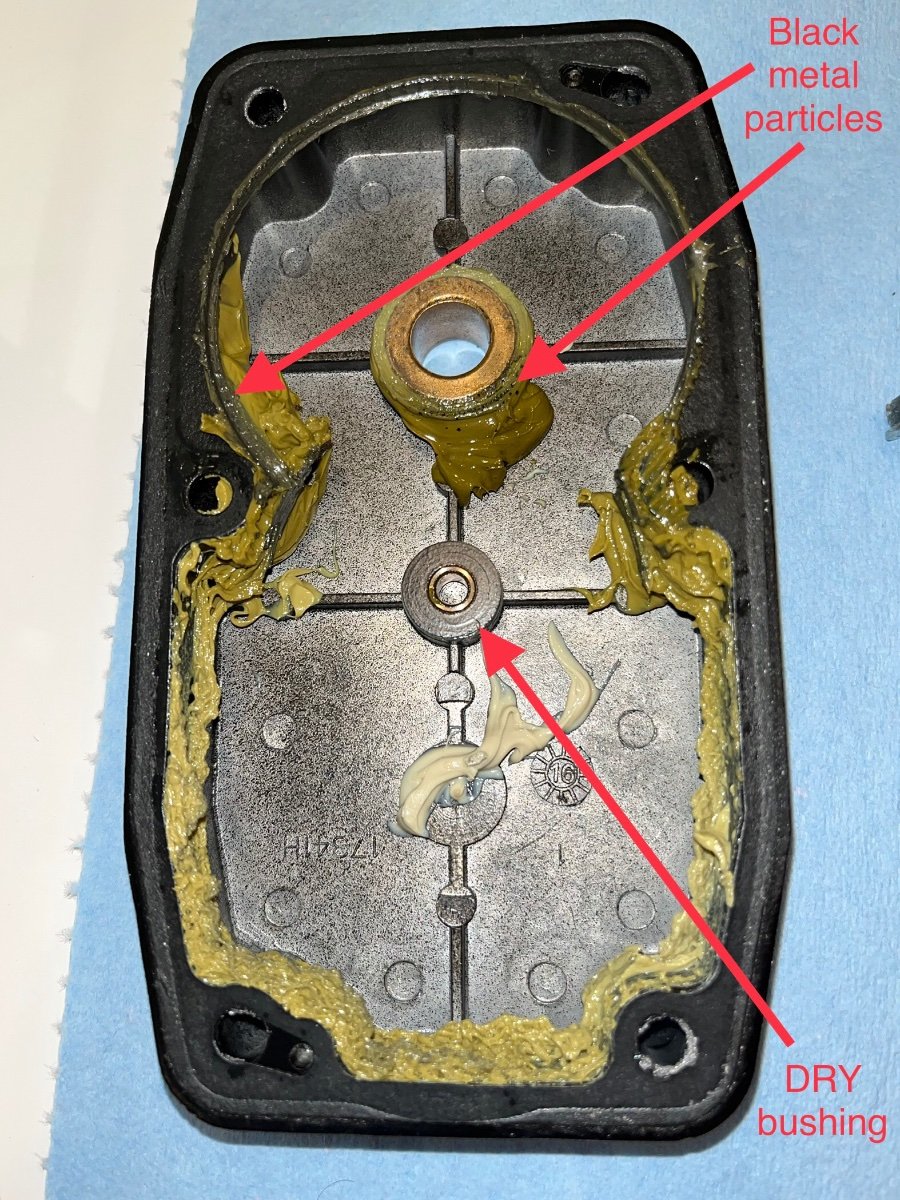
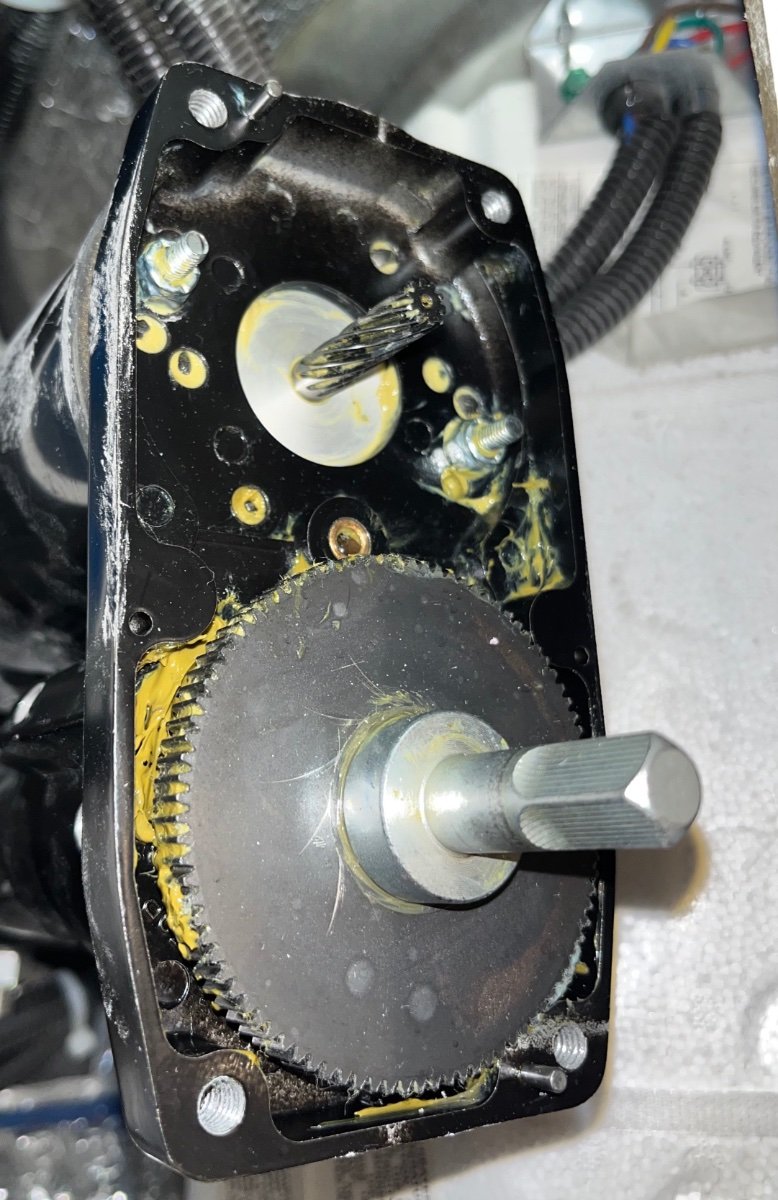
Grease the upper cover: Set the gear and shim down over the lower part, align the gasket and install the cover and the four bolts. Tighten the three set screws firmly, be careful they are steel in aluminum. Clean off the top and make a record of the service: Test the jack for proper operation and shift all your tools and stuff to the other side. My street side gearbox looked very similar - too little lube, some gear wear: Each jack took a couple of hours, most of that time was cleaning out the old contaminated grease. A future service might be a whole lot faster, you could just take a look and add some more CV-2 if needed. I do NOT recommend leaving the old white lithium grease in place, it will not mix well with the full synthetic, and you should get all those black metal particles out!. John Davies Spokane WA
 3 points
 -
I thought this group might enjoy these videos. I had been wondering how these new EV trucks handle towing larger payload. Minus the range (which is a big issue) they seem very capable. If you are only a weekend warrior staying close to home and able to charge at home the Rivian seems pretty great. If you have ever been in Colorado and driven the IKE you will understand how serious of a towing test that is. The actual cost comparison video I found very interesting as I have been wondering what a break down like that would come out at. Results surprised me as well. Finally: The All-Electric Rivian R1T Takes On The World's Toughest Towing Test! Towing With An Electric Truck - Is It Cheaper Than Gas? Rivian R1T vs Ford F-150 PowerBoost2 points
-
These questions about what charges/discharges during various conditions can be answered by simply installing a smart shunt. Then you can "see" the changes when things turn on/off - start/stop - connect/disconnect. It's the best money you'll ever spend on your electrical system. I use the Victron Smart Shunt with the bluetooth app to monitor ALL energy flows via the negative buss. Charlie.2 points
-
All credit for the drawing should go to GalwayGirl. All I did was remember his work and find it.🙂 Bill2 points
-
On the older trailers the Dometic is the high point. 9’ 7” I believe. I use 10’ as my safe number. Our cell booster antenna is well below the top of the AC. I can’t speak to the Cradlepoint. Mike2 points
-
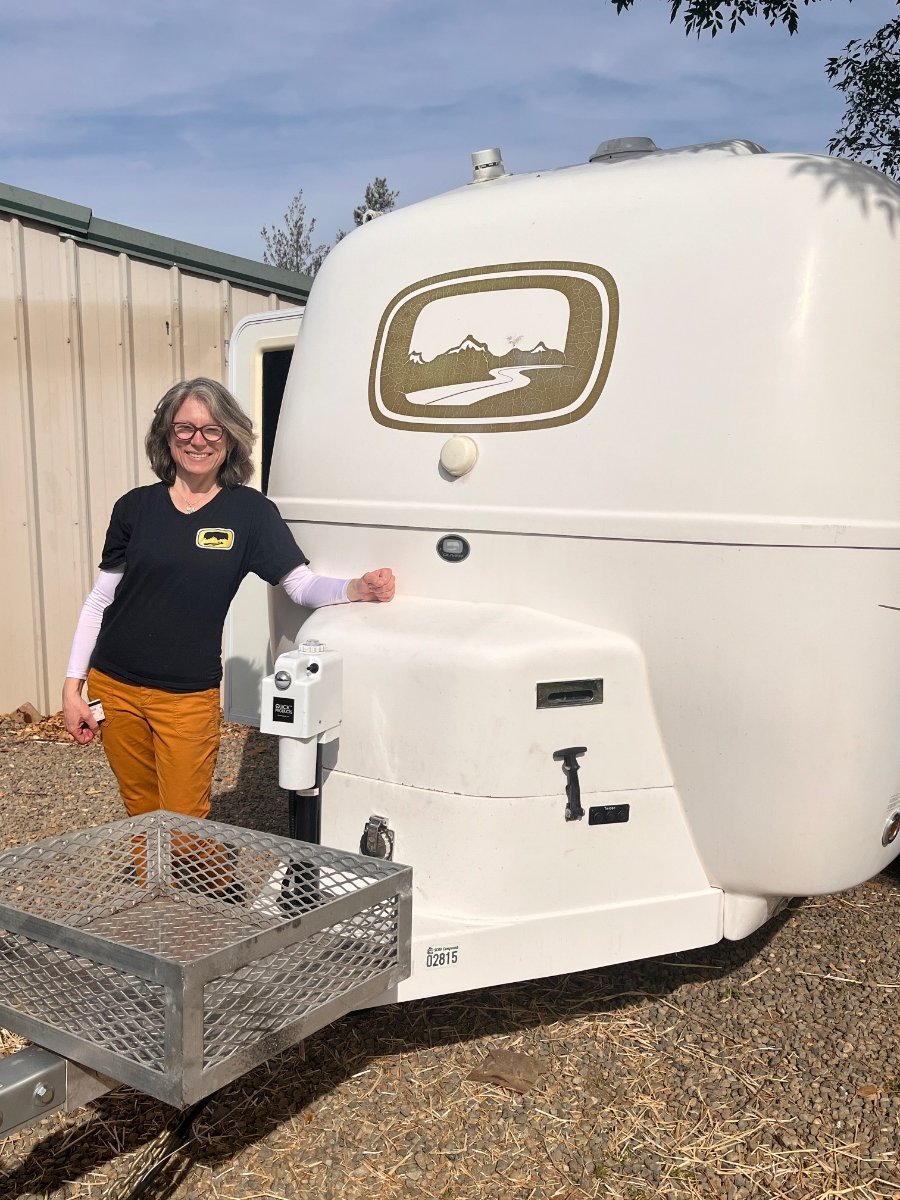
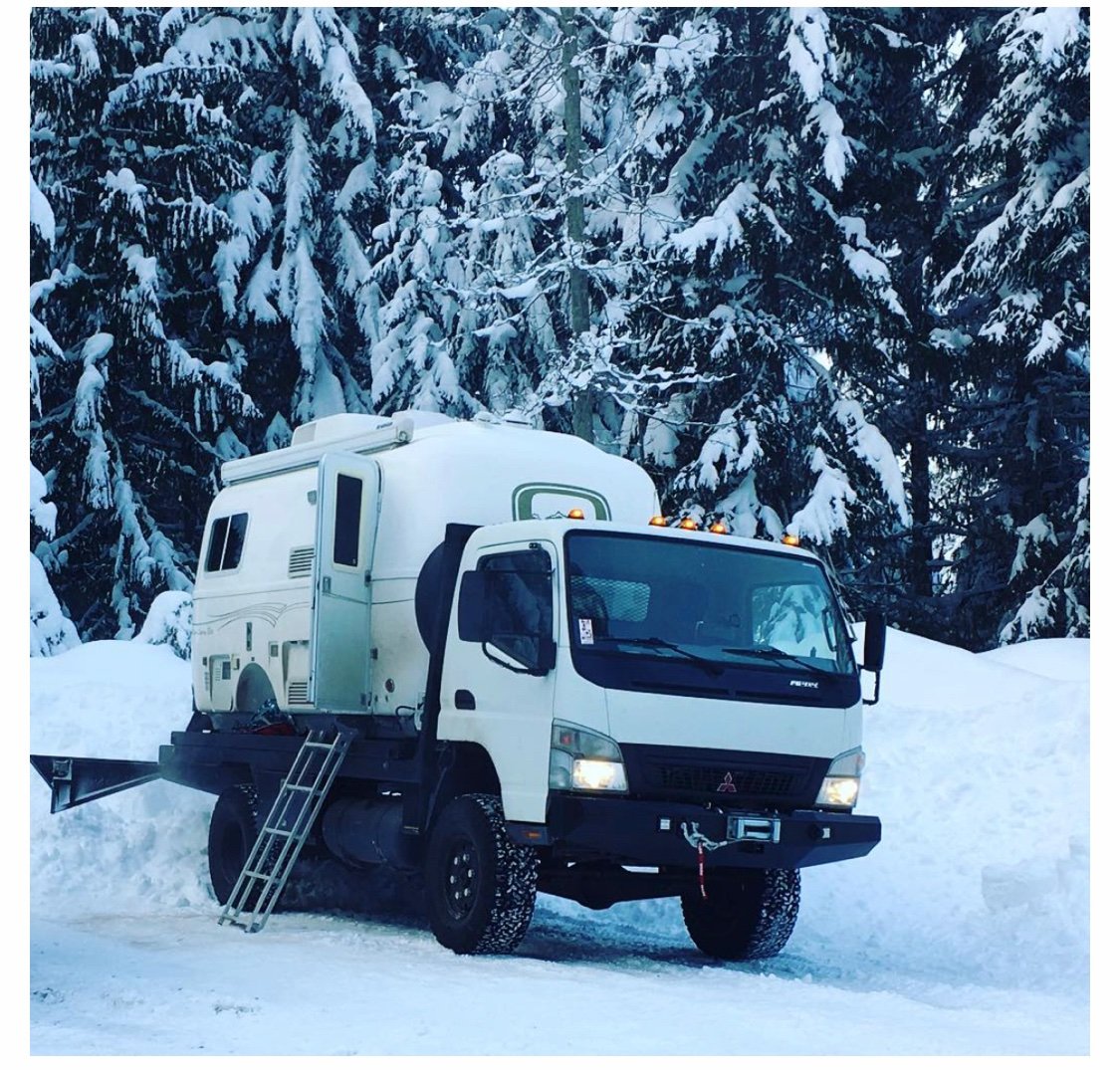
Hello everyone! I have been lurking on here for a bit waiting for my chance to finally post. 🙂 I have been waiting until my Oliver was whole again! While I was waiting and watching there were even some posts about my Ollie in its previous incarnation. It was hard to hold my tongue 😜 LE hill #25 is a trailer once more! Some of you may be disappointed that she is no longer a monster adventure rig, but I am over the moon now that I can tow her. It was quite the odyssey to collect all of the pieces and find the right person to set things right, but she is back together and our adventures together have begun!
1 point
-
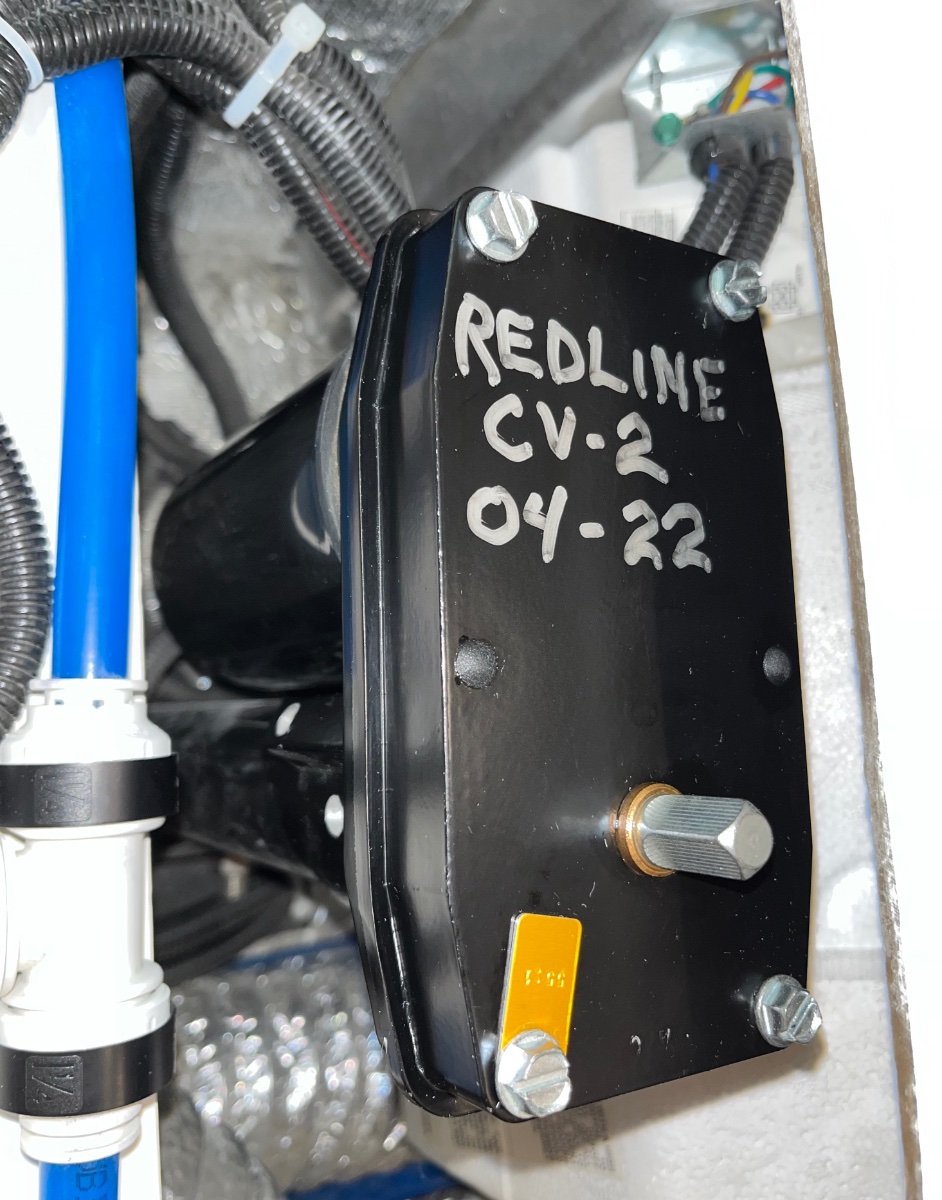
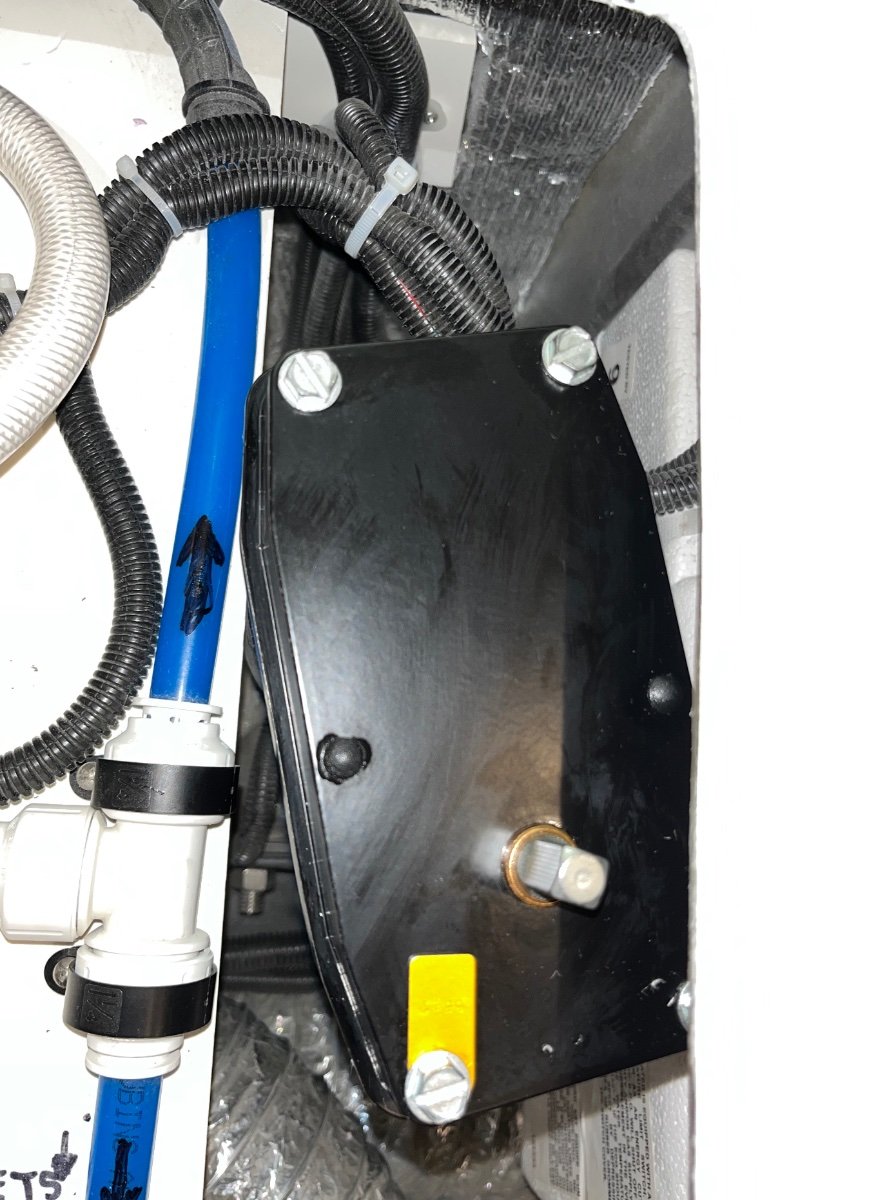
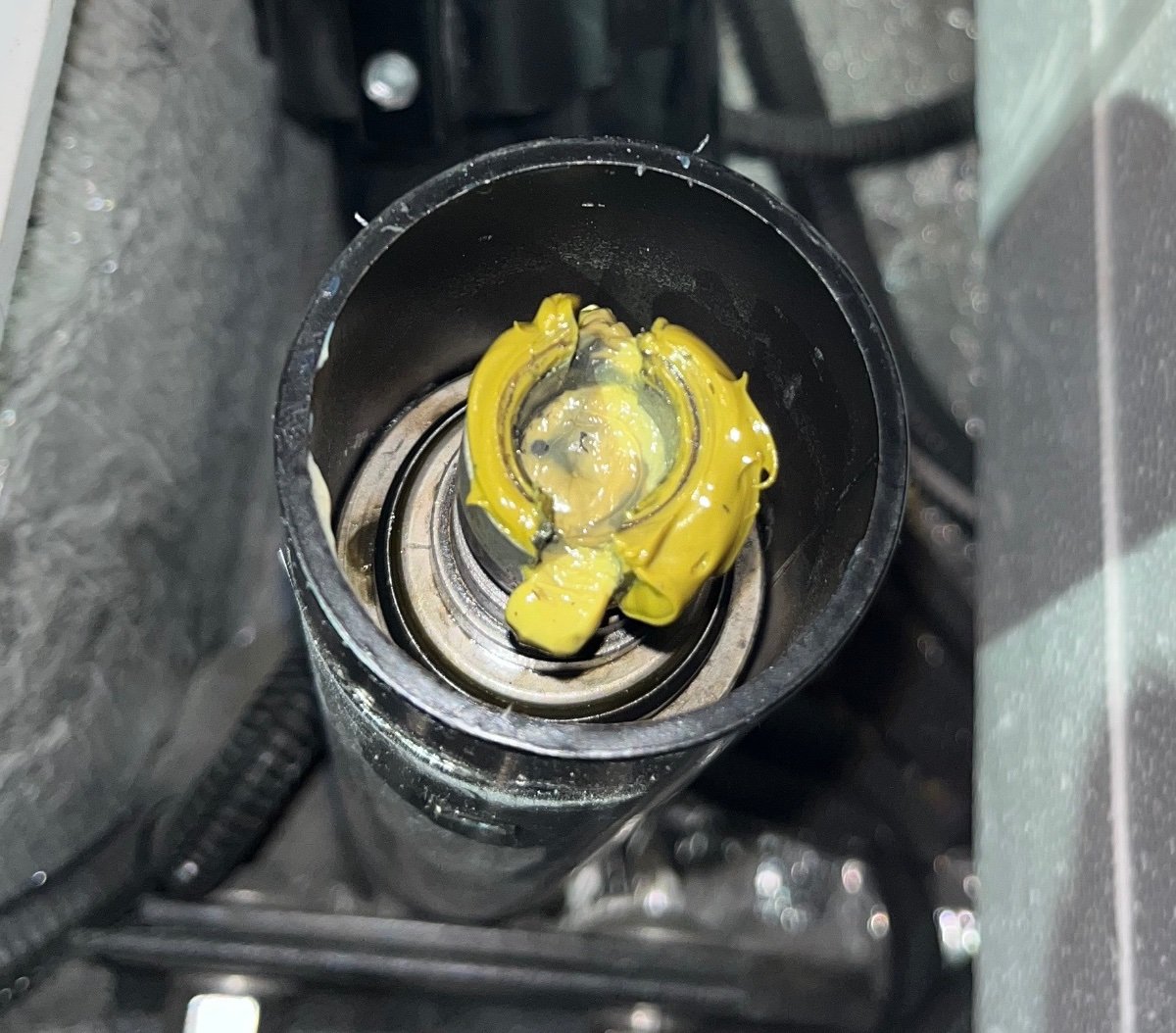
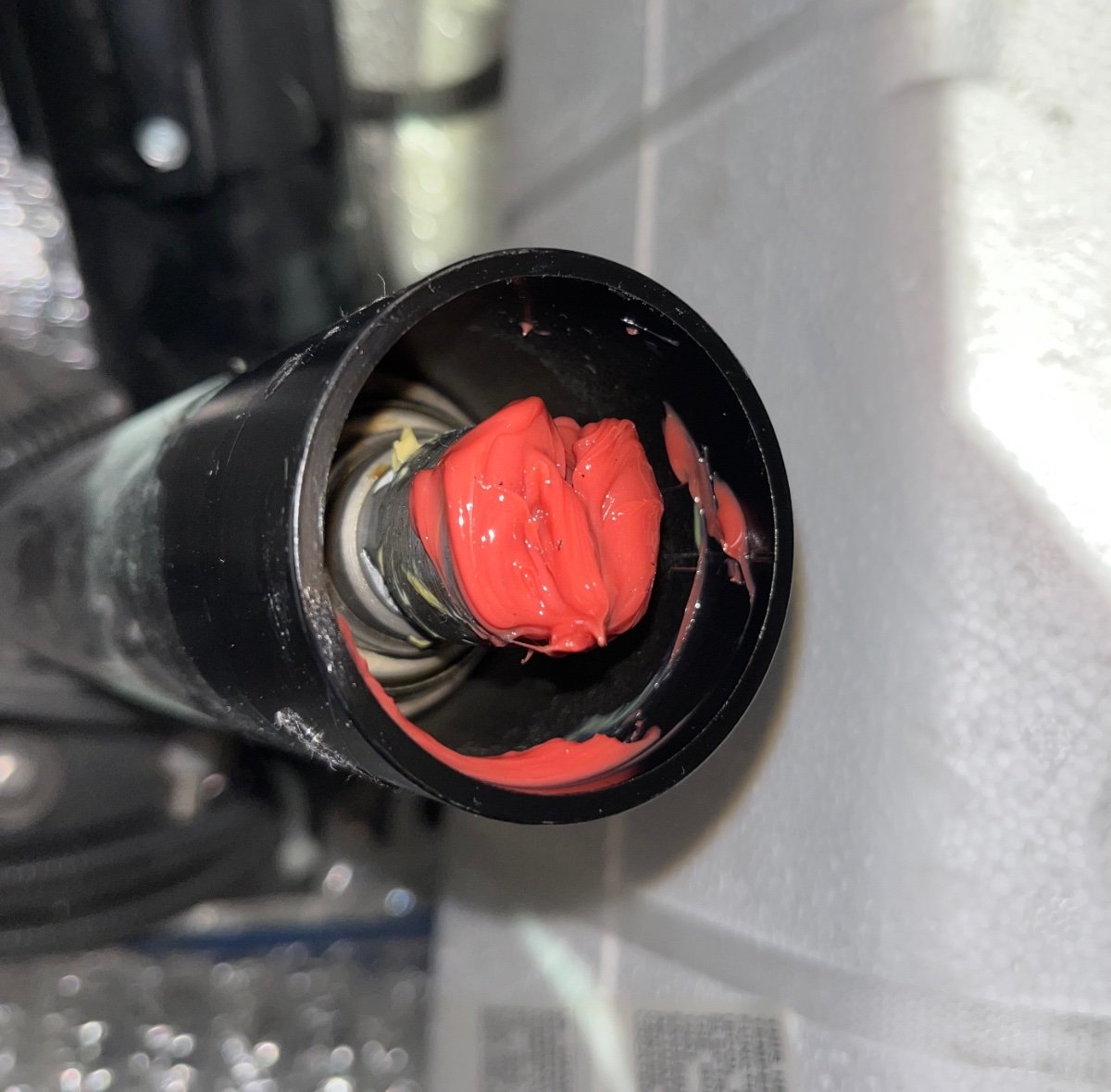
I covered a lot of info here, read this thread first please: https://olivertraveltrailers.com/forums/topic/4094-how-to-vip-3000-electric-stabilizer-jack-service/ FYI I used about 2/3 of a jar on two jacks, so a full one might be enough for all three. I finally got around to doing the rear ones, it is not especially hard but it is a little nasty. For the tongue jack, I removed the entire head unit and took it to the workbench. It is possible to remove the head on these rear ones, if you don't mind cutting and re-splicing the power wires. I chose to do the job in situ, with a couple of foam pads to cushion my knees. I wore a headlamp so I could see better. Loosen the three set screws a couple of turns, with a 3/16" Allen wrench. Once they are loose, the gearbox/ motor assembly can be swiveled around for better access to the top bolts; This is the CURB side one, the STREET side one has a lot more room around it: Remove the four bolts, tap the side of the upper cover carefully with a soft mallet to break loose the gasket. If it doesn't tear, you can reuse it, be careful. Both rear gearboxes looked a lot like the tongue one, except that the grease had not hardened in these. It was however contaminated with metal particles. There was not nearly enough grease installed at the factory, and there was some obvious wear from "dry spots". By lifting off the unit you can access the drive pin and the top of the jack screw. Clean off all the old stuff there with paper towels and a light dash of a solvent like brake cleaner. Lube with CV-2: Set the unit back in place and clean out the old glop. The top cover and big gear can be taken away and blasted hard with brake cleaner. Do NOT try that inside! Lube the bottom part. I used a small plastic piece as a trowel. Try to get the lube under the big gear and apply it liberally around the outside. Wipe off the gasket surface. Be VERY careful not to lose the little stainless shim that goes against the small gear face. When you reinstall the gear,use grease to capture the shim. John Davies Spokane WA
1 point
-
Just a quick note for those interested in the lithium platinum package, which we have on our 2022 Ollie. We took our maiden voyage in VellOllie this week, about 4.5-5 hours from home. Because I knew we would have an electrical hookup at our campsite, I decided to run the regrigerator on DC for the entire trip down. We started at 100% battery, according to the Lithionics app, and ended at.....99% battery on one, 100% on the other. It was sunny the entire trip, which helps of course. On the return, we ended at 99% and 98%, and were in cloudy conditions for the entire drive. I'd say that's pretty good performance, and have confidence in running the fridge on DC while traveling, even when I know we won't have electrical hookups at our final destination. Pretty cool...and part of why we went with the biggest solar/battery package we could get.1 point
-
The Cilajet page says it’s for painted and metal surfaces, but does mention boats. The Ollie isn’t painted or metal. Is there a different Cilajet product for fiberglass? Seems that folks have had the best success with products intended specifically for fiberglass/gel coat, like those used in the marine industry for fiberglass boats.
1 point
-
Can this be applied by an owner? How much? I use Rejex, which was originally an aviation product, and am very happy with that, it requires proper prep and lasts a long time if the vehicle is stored indoors. A bottle is plenty for an Ollie or several cars and less than $20. John Davies Spokane WA1 point
-
Jim, we bought our #617 with BB batteries already installed by the former owner (incorrectly I might add) so I wasn't aware of what LifeBlue's BMS monitors. Thanks for clarifying. Charlie.1 point
-
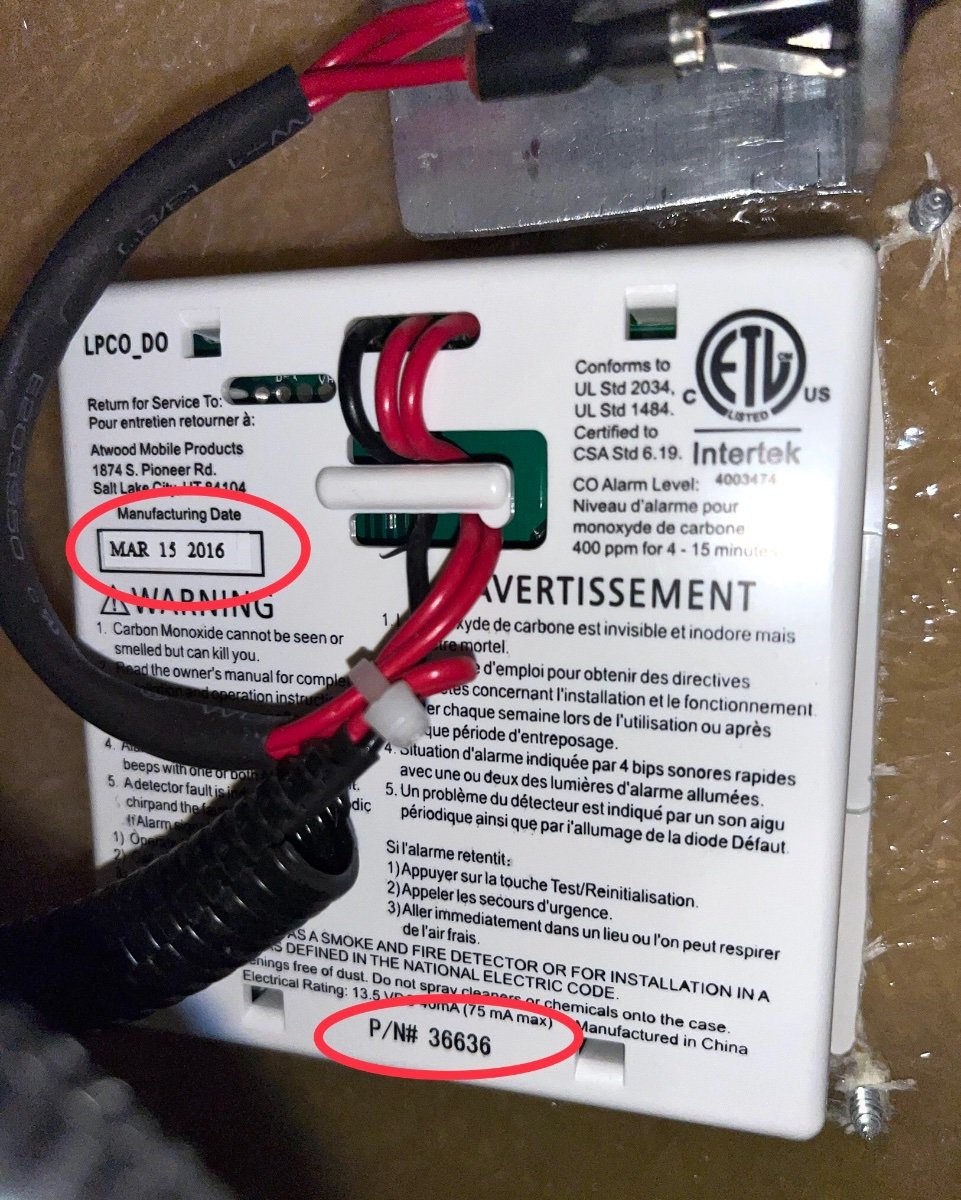
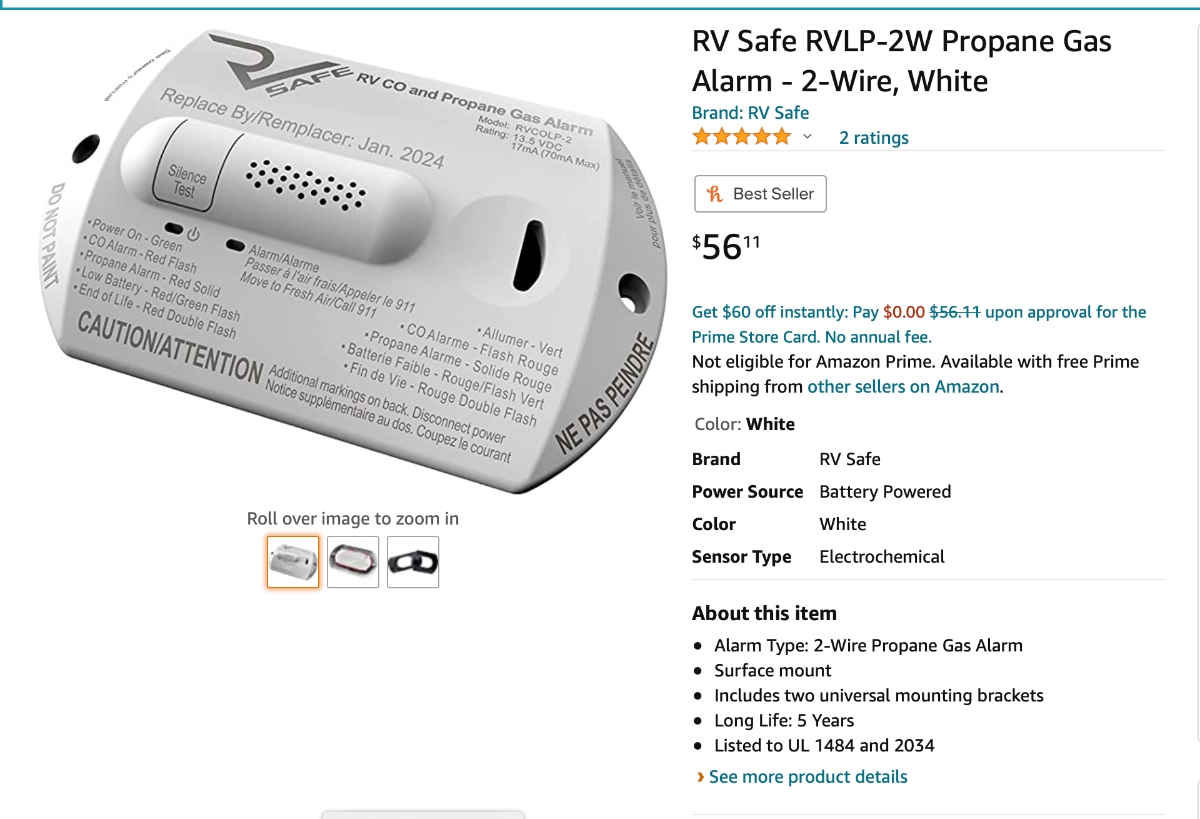
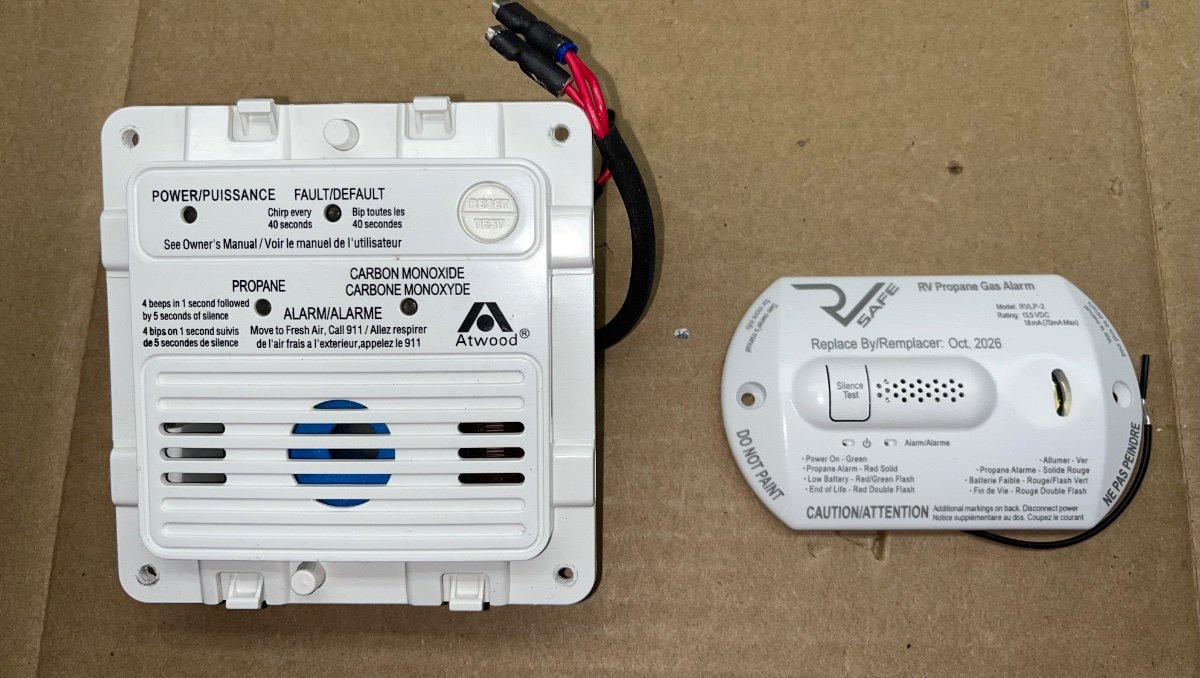
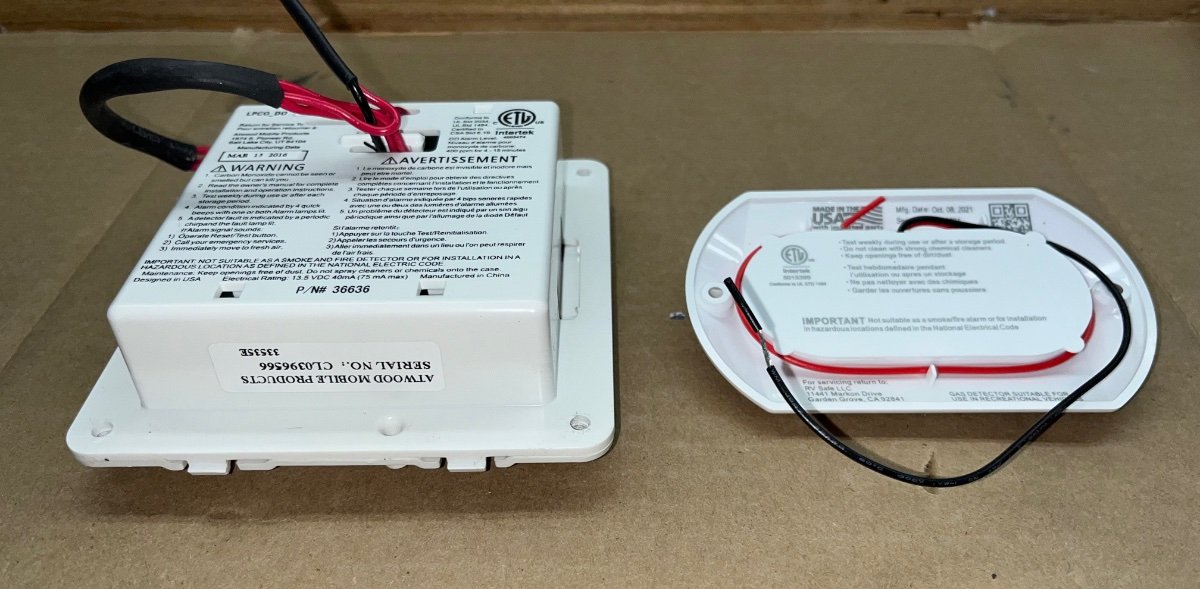
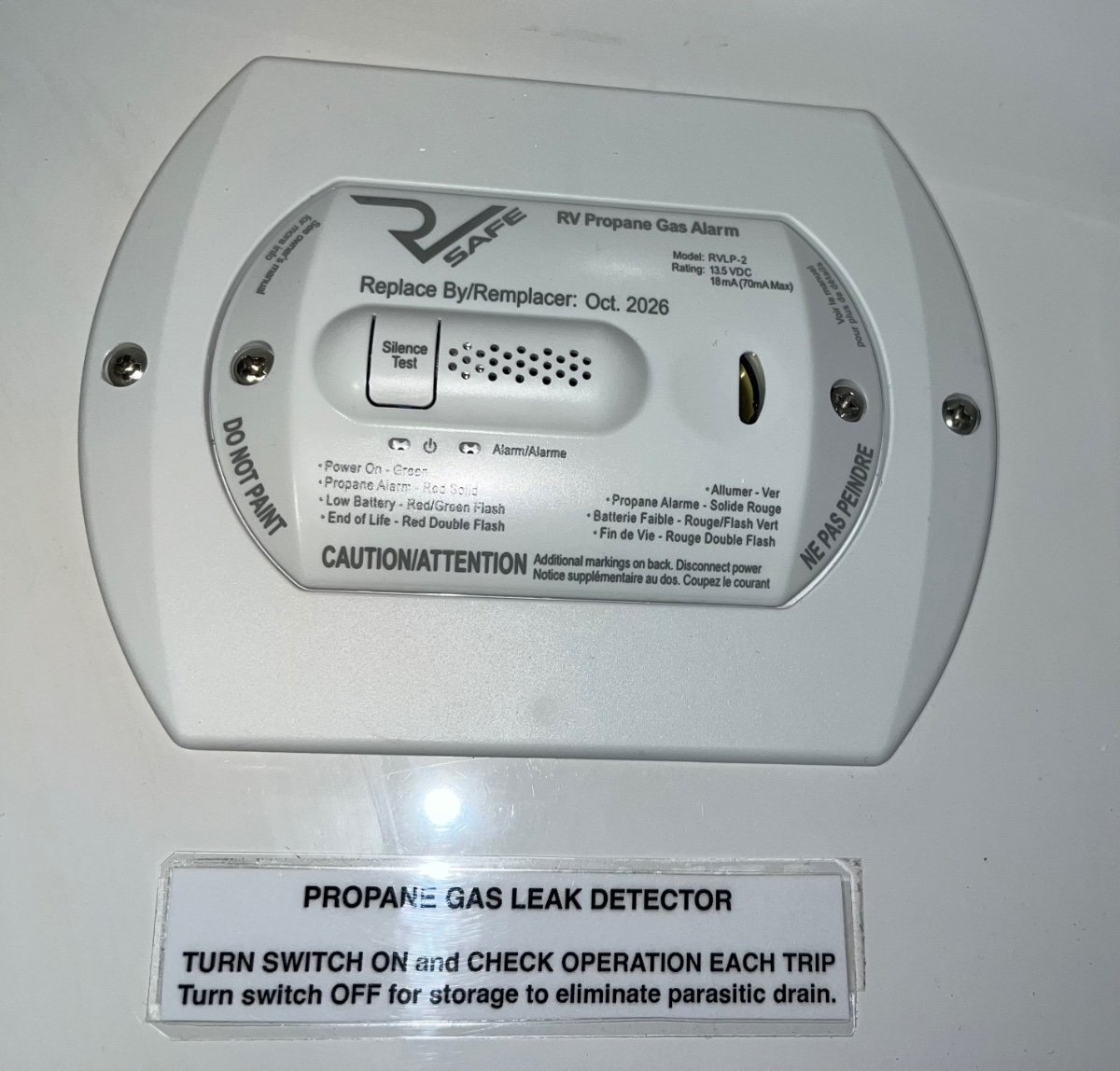
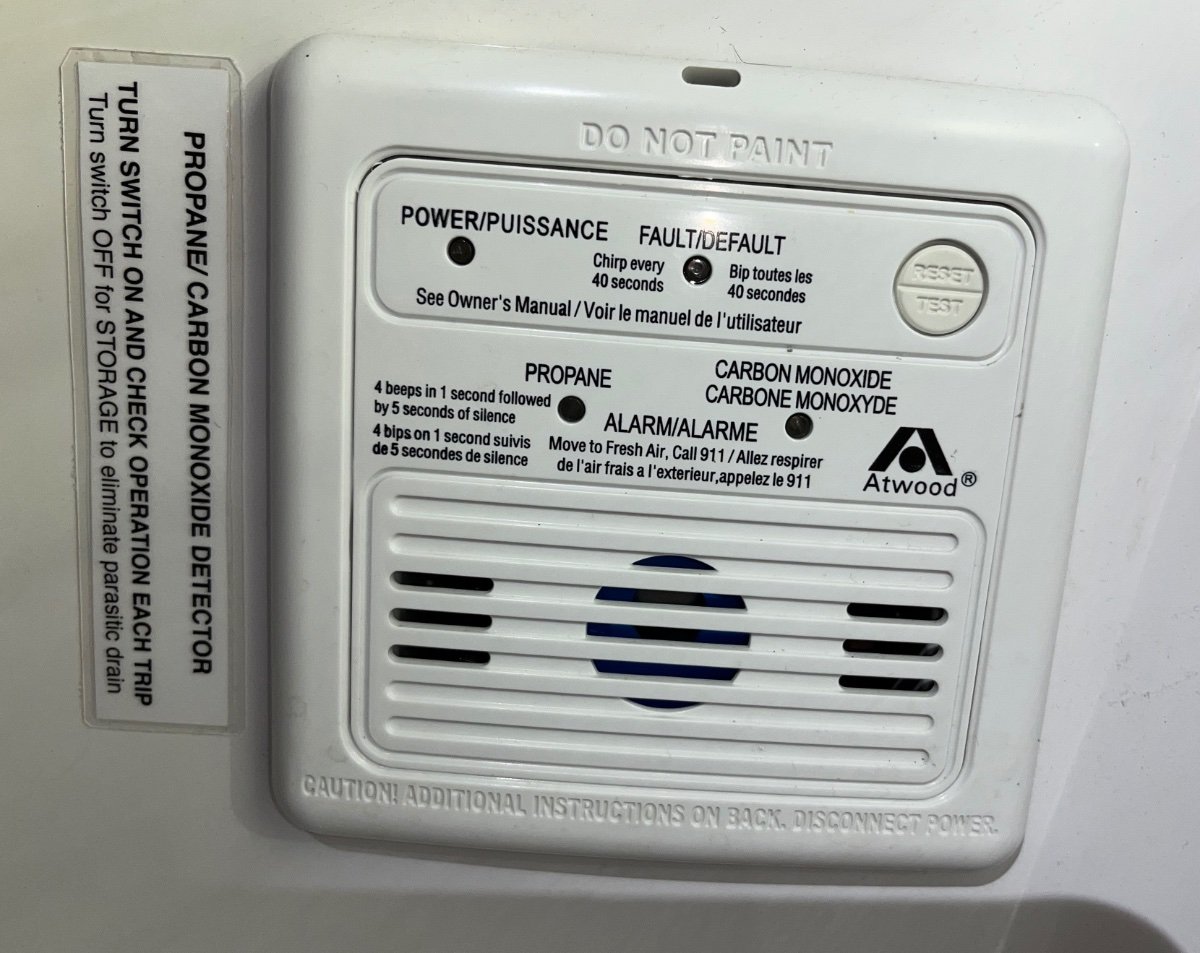
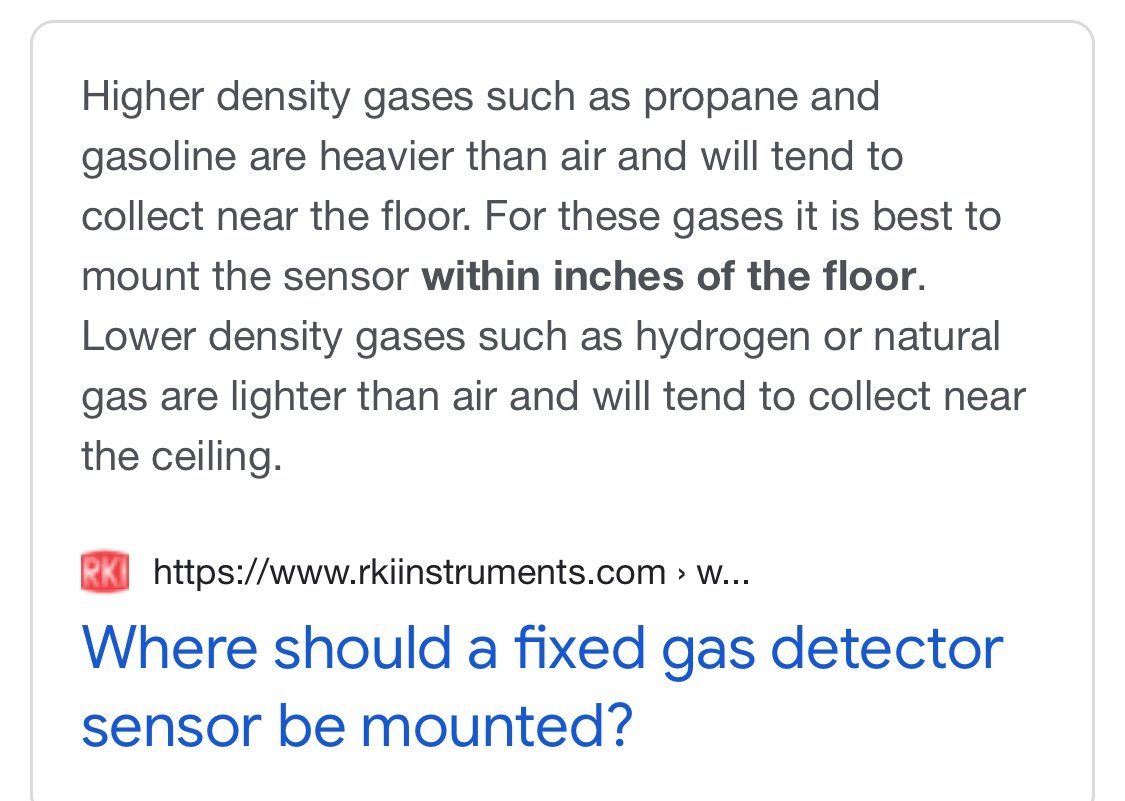
My original combination detector was getting close to retirement (72 months). It is a really expensive unit ($90 to $160 online) and a little hard to find in stock. I bought these units: The propane detector has to go near the floor, because the gas is heavier than air. Here is the Oliver installed one: Size comparison: The difference in thickness and weight is enormous, too bad Oliver doesn't use these from the start. The RV Safe unit comes with two big bezels, to cover up the big ugly hole when you remove an older unit. The small one worked fine here, positioned vertically. This position makes it easier to read the label when crouched down under the table: It uses the same amount of power as the old one, about 50 milliamps. The big difference is size and (if surface mounting) the need to only drill a 1/4" hole for the wires to pass through. My detector has a power switch: https://olivertraveltrailers.com/forums/topic/5330-how-to-propane-co-detector-on-off-power-switch/ John Davies Spokane WA
1 point
-
I've read that rv designated units use a more sensitive reading than home units, as, at home, you have much more dispersement space available. ( my bedroom closet is bigger than my Ollie, honestly) I would not personally depend solely on a home battery unit for co detection, but that's not John's suggestion either, as I read it. I think it is his 3rd backup.1 point
-
It's already happened with model x suvs towing trailers, though not ten stalls. Some of the newer Tesla charging stations have spots for vehicle plus trailer, but neither in my county are set up that way. Otherwise, trailer has to be dropped, and reconnected. Another time consuming operation. All the stations in my county are busy, except at odd times. Evs have been quite well received, here. Both superchargers are at WAWA stations. Always busy, when we've been there. Things will change. They always do. Towing, without adequate battery capacity, will remain an issue, until things develop and change. My great grandfather had one of the first "horseless carriages" in his county. In spring rain mud, he had to use the farm horses to drag the motorcar out the long muddy drive. Still drove it to town, though. Stubborn pioneer spirit, I guess. And wanted a better life for his family. We'll get there, eventually, with compromises, and research and development. That said, my gasser Silverado is soon celebrating birthday 17. They'll be around awhile.1 point
-
A nice solution, and the original combo detector mounted by the floor doesn’t make a lot of sense since the recommended locations for CO vs. propane are different. A CO detector should be mounted higher, while a propane detector should be close to the floor. Thankfully Oliver installs the other smoke/CO detector up high back by the beds.
1 point
-
The recipe reads pretty well. I would do it all in one pot. Cook the chicken first, set aside. Saute veggies. Use no salt added rotel for the tomatoes. I might add a little can of hatch chiles. No need to rinse the beans if you use low sodium. I like to add mrs dash Chipotle for a bit of smoky flavor. I don't love cumin, so I often omit it. I love chili recipes. Thanks.1 point
-
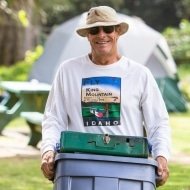
Nice hat - nice camp ground. But, a very suspect individual eating the chili!🙄1 point
-
We installed the GasStop emergency propane valves at the tanks so that we could tow with propane. But....since we suspected a propane leak right before this trip, propane wasn't an option. I'm pleased that this worked out - I will likely always throw the fridge on DC before trips where I'm headed to an electrical hookup, but will still use propane when I'm going to be boondocking.1 point
-
Great...more government trying to "do what's best for us". Laws like this are conjured up by some dips**t politician pandering for donations to keep themselves in office. Macro changes occur when something better comes along. We aren't using a horse and buggy on a large scale anymore because cars are better for transportation. You don't drive across the country for a business meeting, you fly. My wife has a Telsa and it is a great car for how she uses it. As you said though it wouldn't work for pulling a trailer full of hay out in a field. The other problem is cost. You can't force Joe six pack to spend a years pay on a car, but I'm sure the state has a plan.🙄 John1 point
-
Yep... But... Thinking that many folks pay over 200 per month for a cable / phone / internet connection. So, $110 for Starlink plus just basic cable might equal a small savings overall. Not ready to make the jump yet but... maybe when they get service at our home location.1 point
-
I've watched a lot of TFL videos and I like there views on there test results. My personal view on electric vehicles is pretty much a no go at this time and the more it's pushed on us the less I like it. I think for those who want an intown vehicle to run around in is probably a buyable solution for some and if it can help save the planet and it works for you, them go for it. Being retired and using so little fuel in our vehicles it would never work out for us to go electric at this time. trainman1 point
-
Just finished my install today of the side mount. Plan to use the table now. Now I have a hatch into the basement, which I wanted for during cold weather to get some heat to basement, while using a small fan. Will insulate the outside hatches at some point. Thanks Overland for your post and Mattnan for your helpful hints.1 point
-
I saw Beacon on I-95 in Wells Maine heading south yesterday around 4:00 p.m.1 point
-
Correct. It's disconnected because the lithiums can absorb power way faster than the vehicle alternator can handle. (My probably over-simplistic understanding of the engineering.)1 point
-
For sure the microwave plate is on our arrival/departure list. We use a large fluffy towel and wrap it well, and put it back into the microwave. Best place for it. Never had even a second thought about it there.1 point
-
Pretty sure that's an older Dodge Ram, 1997 to 2001, second generation design. Look at the grill and the rectangular insets for fog lamps, if ordered, and the rectangular shape of the headlights. (Grill became a little more rounded and bigger, in the 2002 through 2008 redesign, and the fog lamp inset is round, headlights one unit and more of a European look. ) I'd agree, probably a work truck. How many extended cab, grey Dodge Ram pickups can there still be on the road in that area, 21 to 25 years old?
1 point
-
You must be reading this on the Airstream Forums, or somewhere else. I have known of only one Oliver that leaked, and it was an improper installed seal around the roof top A/C unit. I'm not sure how a Oliver would leak around the two haves, as the top does over lap the bottom by some 2-3 incher, but anything is possible under certain conditions. trainman1 point
-
Thanx again. The glass turn-table in the microwave....... Good Tip. I would have missed that for sure..... Glad to here that it is not common to have to get on top. Always wondered why RV's (trailers, 5th Wheels, truck campers) had a ladder on the back, and then it occurred to me: I am expected to use it. Hmmm. I would hope that Oliver could work into their design the use of swing-out windows; that design lets you keep windows open during a rain shower. Awning side maybe could be left opener with these sliders, but if a breeze kicks up...... There goes the awning. Anyone had experience with the legless awning that has the auto foldup feature if the breeze exceeds a certain wind speed? Hate to speed the dollars on the driver-side awning for this, only to have it close up because a breeze came along........ Thanx again and will post again after my trip to Odessa. God bless. Tom in Lubbock,1 point
-
The microwave plate is one of our departure chores - it goes in a drawer with hot pads/towels. It doesn’t even take a rough road to dislodge it from the microwave! Mike1 point
-
Understand the concerns about water leaks but it seems most here have provided answers. Given where you intend to camp, especially in spring and fall, I would be looking for a trailer capable of handling cold temperatures. The Oliver does this well and from experience I would consider it a 3 and a half season trailer. We have been down to 5 degrees in New Mexico. In those temps you will need to plan for condensation!!!1 point
-
Liked others have said, all RVs leak. We are buying an LE2 for that exact reason. With our previous RVs there was always fear of the dreaded delamination of the walls because of a leak somewhere. That's not possible with an Oliver. As my wife keeps telling me, "no RV is perfect." I don't care for the sliding windows on the Olivers, would prefer swing-out. I wish the LE2 was 8' wide instead of 7'. I wish the black tank was a little bigger. But overall, the Oliver scores more points for us than it misses, and number 1 of those is the general water resistant nature of its construction. As others suggested, browse some of the other manufacturer's forums and owner YouTube videos. So much water damage and so many cracked frames, even on the supposed "full-timer" rigs. No wonder they lose value so quickly!1 point
-
Dry Camping vs. Boon-docking are maybe two different things....which are you planning? DEFINITION: Boon-docking - No Hookups, no designated campsite, go off road to find a spot in a desert/forest/mountains with some ruts etc to get to the chosen site. The road may be a fire service road that is pretty bumpy, rutted, not maintained. Dry Camping - No Hookups , paved or maintained gravel road getting to and even at the campsite. May or may not have water near by, pit toilets. Site has a designated number or space with markers (rocks/boulders/posts) for where to park the trailer. Maybe a fire pit and table. Considerations: For Boon-docking: In an Oliver Size & Ground Clearance: The Oliver is perfect fit as it's width and length make it very agile even in older small campgrounds. Ground clearance is very good with no plumbing hanging down below the trailer to snag You still need to be careful for rocks and steep slope changes mostly for the back bumper The suspension for the Oliver is pretty good for moderate off road use. *(There are better suspensions on other types of trailers) Water & Sewer: Water tank and Grey Tank are both limited to 30Gal, but has a standard boondocking port to suck in water from a bladder or tank. Black Tank is 18gal which is about 5 days for 2 ppl Option of a Composting Toilet for an Oliver to make off Boon-Docking a much longer experience. Electrical & Solar: With our Dual Lithionics 315 Batteries (630AH Total) and Solar we've gone 8 days without any sun and still had power. New Trailers are shipping with more solar wattage and use new Victron control systems Hope your search is useful and let us know what you decide. Our Blog is here if you are interested in use cases, pictures etc. https://4-ever-hitched.com Craig Short1 point
-
We "boondock" in our E2. The hitch, ground clearance, tire size and suspension system make our Ollie very maneuverable in the rolling desert hills. Amen. Charlie
1 point
-
Oliver is upping their game as far as off grid / boondocking ability are concerned. Mostly due to improvements in solar / battery / components etc. I think they can nibble around the edges of the overland market. Not the hard core expedition guys... who will go the 4x4 van, Earthroamer, jeep with rooftop tents, and the like. But the folks who want to get out into BLM land away from the crowded campgrounds. And still have the creature comforts that the Oliver brings to the table. Serious off grid / road capability puts you into a whole new category of vehicle, with a whole new price tag. Any choice you make will involve compromise as to capability, components and price. Do your research. Read and consider everything. I think you'll find yourself coming back to Oliver.1 point
-
What Mike and Carol said! They are easy to tow and maneuver as well as anything else out there and far better than most. We just returned from a 10ish day trip to the Utah deserts with no hookups except one night and could have gone without that but it was there and we paid for it in a state park so why not use it. I agree with others if your'e looking for a hard core overland camper the Ollie is not the best choice but it does well enough on USFS, BLM backcountry roads as long as they are not extremely rocky and rough.1 point
-
There have been some posts about leaks. When you consider the number of Olivers out there it’s a minor problem that can be fixed with a little diligence. As has been stated, water leaks in an Oliver are not a major deal in that there is little to no resulting damage. Our Oliver is 6 years old, 80K miles and we’ve never had a leak. At some point I’m sure a leak will appear, but I know it’s an issue that can be dealt with effectively. If you are talking about camping with no hook ups, whether in a National Park campground or out on BLM land somewhere, the Oliver is a great place to be in those situations. I am careful about pulling my trailer where the terrain is rugged, it’s not really a serious off road/rock crawling trailer but does well on most unimproved roads and flat desert. Mike1 point
-
Any travel trailer is going to leak at some point, because roof penetrations are unavoidable. The more critical question is: "What will get damaged when a leak occurs?" We have an Elite II on order precisely because we are concerned about water damage inside the trailer. My wife and I were persuaded by the Oliver double-hull design, complete with scupper holes in the bottom hull to allow any water that gets between the two hulls to drain out. We also like that there is little wood inside the trailer (just the galley cabinet) to be water damaged. We considered an Airstream, but were not interested in the plywood subfloors still used on many models, along with the much more extensive use of wood inside the trailer. Like all trailers, Airstreams have roof penetrations for AC, fan, vents, etc., so leaks will eventually develop. Once wood products behind walls get wet, they will develop mold and rot. Google "replacing an Airstream subfloor" to find out how many Airstream owners have gotten to deal with mold and rot in their subfloors. No thanks. Check out forums for other travel trailers, and you will find hundreds of horror stories about water damage resulting in rot and mold in the mass-produced "stick and staple" trailers. You will also learn that post-sale customer service from those companies falls far below the high standard set by Oliver's outstanding Customer Service Department. The results of our research persuaded us that if potential water damage, including avoidance of mold and rot, is a top priority the Oliver is an excellent choice.1 point
-
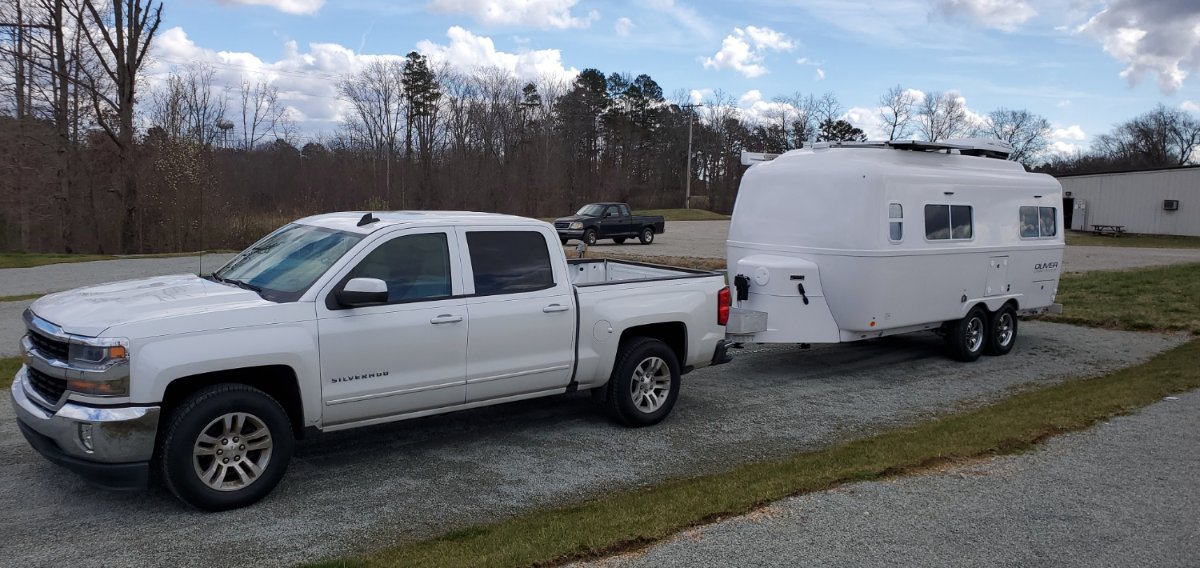
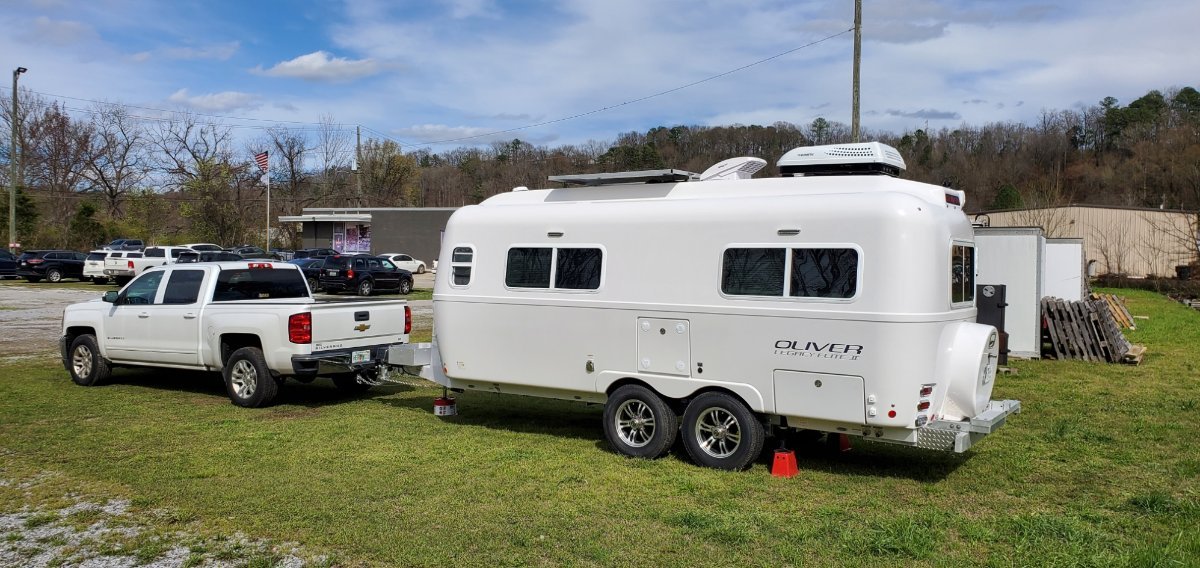
Pulled Tail #1052 out of the Ollie hangar on 17 March, stayed on the OTT ramp that night. Day 2 we departed for a Harvest Host winery about 15 miles east where we spent the night, then a Harvest Host brewery on night 3 in Alabaster AL, before landing back in the FL panhandle on Sunday. Trip went well, love the camper. Thanks to all the awesome forum members whose knowledgeable contributions went a long way in helping us prepare for our delivery. Still much to learn, but so far so good! BTW, I'm not smart enough to figure out how to rotate the pics left or right...
1 point
-
Thanks for flipping my last picture. Not sure how that happens. It has warmed up to 34 and that will be the high for the day. Down to the mid teens tonight. We got some melt. Not the best photo with this very old android phone but I bet few have seen Monument Valley like this.
1 point
-
1 point
-
We need to finalize our options list by August. In looking at the basement access door, it looks quite small. There's also access to the basement under the streetside bed. I wonder how useful that access door is. I can see a couple benefits; open it up in cold weather to get more warm air between the hulls, and a place to put small items like shoes or slippers. Do any of you owners have that option and was it worth it? I will probably be asking lots of questions. Sorry in advance!1 point
-
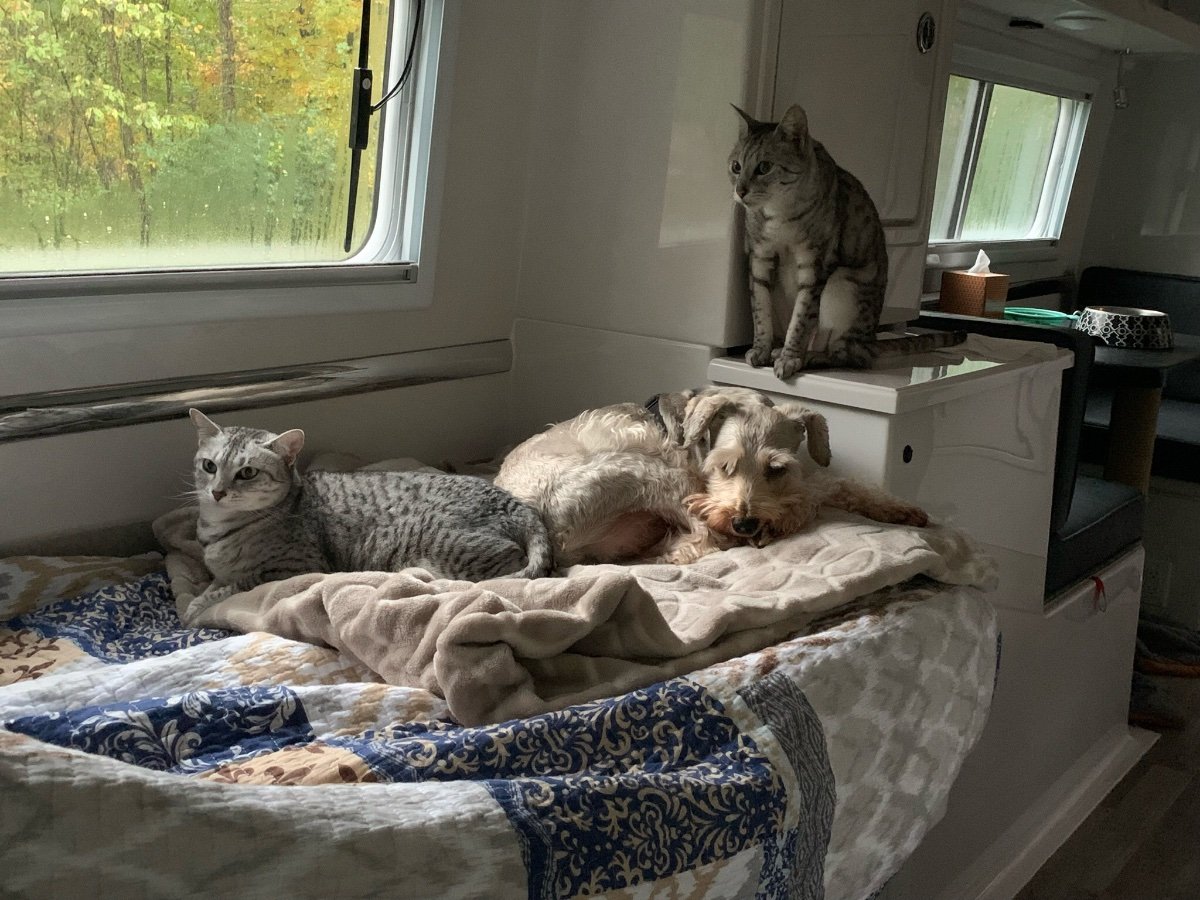
We love our basement access door! We have a dog and two cats accompanying us and they all ride in the back seat of the truck in transit to our next destination - we utilize the basement to hold our chocks and set up equipment but once we are set up we set the empty crates in the truck bed and the basement is where the cat litter box goes - fits perfect, easy to access and clean daily, and the basement door stays open for the cats, only closing it long enough to clean the litter box. Works great for us and keeps the dog from getting into the mess.
1 point
-
Yes. At $200 it's cheap enough to store small items that you want handy. Also, the basement is long. I usually keep an old fire poker and use it to hook the milk crates I use to store stuff. But, if you had something small that was tough to reach it might save you crawling into the basement. You have plenty of time to think about it. 50% deposit and final build list is mid July - ish. Sorry for taking the thread off into the cube heater woods.1 point
-
Thread drift is OK, as long as it drifts back again after a while😬 https://www.truckcampermagazine.com/camper-reviews/alde-hydronic-heating-system-test-and-review/ John Davies Spokane WA1 point
-
Welcome, which model? They are really great trailers, but if your TAB has the wonderful Alde heating system, you are REALLY going to miss it. Ollies have regular forced air furnaces, and they are quite noisy and not very effective or efficient. I am quite enamored by the Nucamp Cirrus truck campers because of that item.... John Davies Spokane WA1 point
-
😀 Well said, but we should keep trying with stuff like this. At some point, maybe when RV sales are in a deep slump, they will decide to offer more “adventurous” options for us, the fringe market. It certainly does NOT hurt to keep asking. John Davies Spokane WA1 point
-
Yes, we started off with the king bed table in a twin bed. That was a hare brained idea of mine that Jason tried to talk me out of. It worked O.K., but I should have listened because the table is heavy and bulky and I could never find a place to store it when it wasn't set up. So in practice it was awkward and it didn't make it past the first trip.1 point
-
If anyone wants to make the block I made, here's the list of pieces you'd need to order: #3075 Extrusion, 24" #4303 Bracket, 4 pieces #4302 Bracket, 2 pieces #3320 Bolt Assembly, 14 pieces You'll also need some stainless ¼" or 5/16" bolts to fix the block to the hull. I think most can be 1" or 1.25" long but you'll need two 3" bolts for the two vertical ones that go through the bed extension. I used lock nuts and large fender washers to spread the load against the fiberglass. I also cut off all the bolt ends around the bed side with a dremel and cutoff disk and filed them smooth so not to damage the mattress or cushions.1 point
























.jpg.491133de5404b1a0901d4a6d64215d46.jpg)
.jpg.6c5ef030d9312b583a24373f38fd9d06.jpg)



-
Recent Achievements
-