Leaderboard




Popular Content
Showing content with the highest reputation on 05/10/2022 in all areas
-
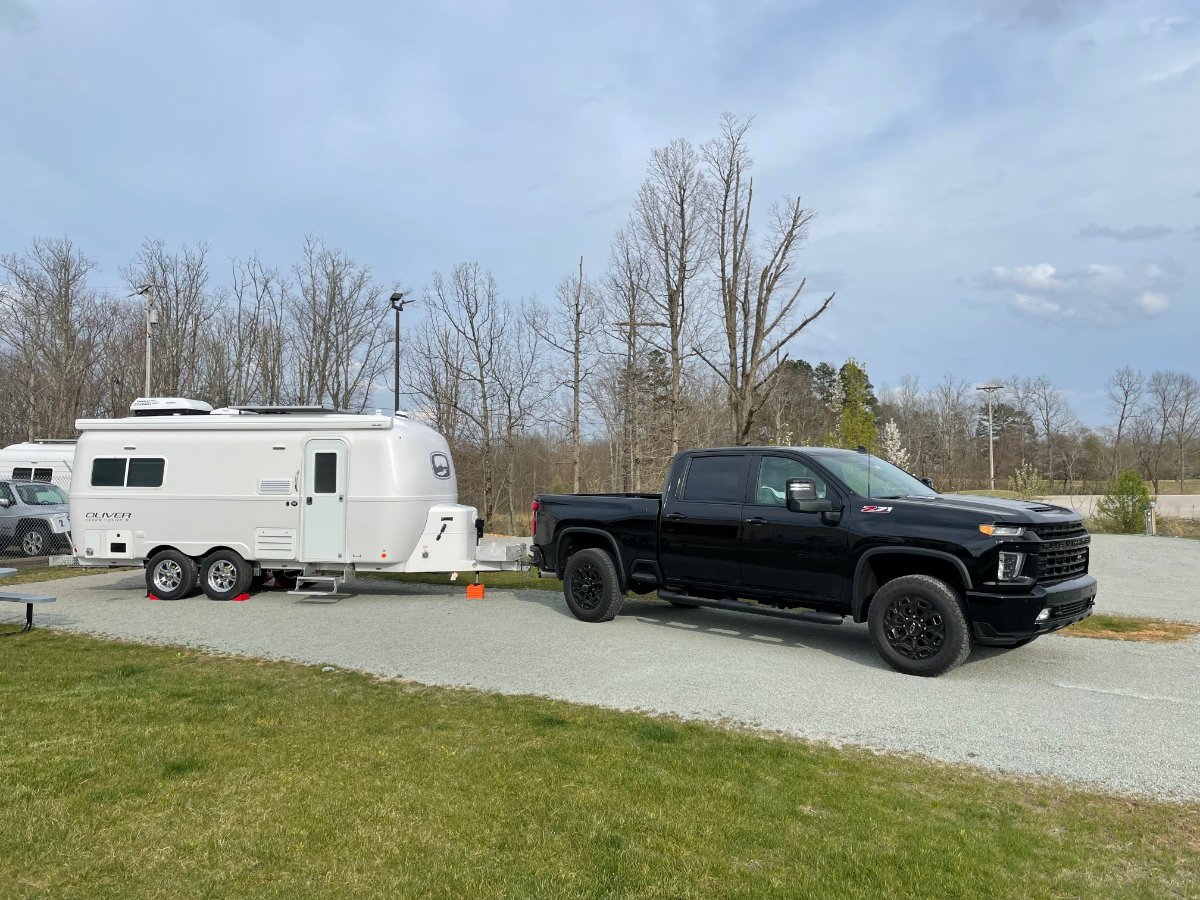
I took delivery at the end of March and slowly made my way back to the Florida swamp. At the factory campground I was thankful to have some wonderful guidance and help from veteran owners who were there for service visits, and some of us met up again at other campgrounds in Tennessee. There were a few hiccups (yet to be addressed) and I'm still learning that I have a lot to learn about the systems, but it's all good. I really love my Oliver and I'm thrilled to begin new adventures. The rally is just around the corner!
 7 points
 -
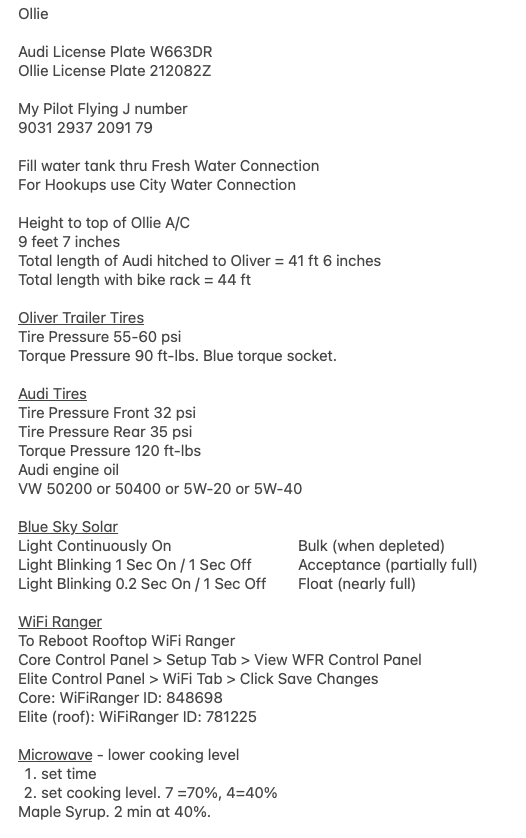
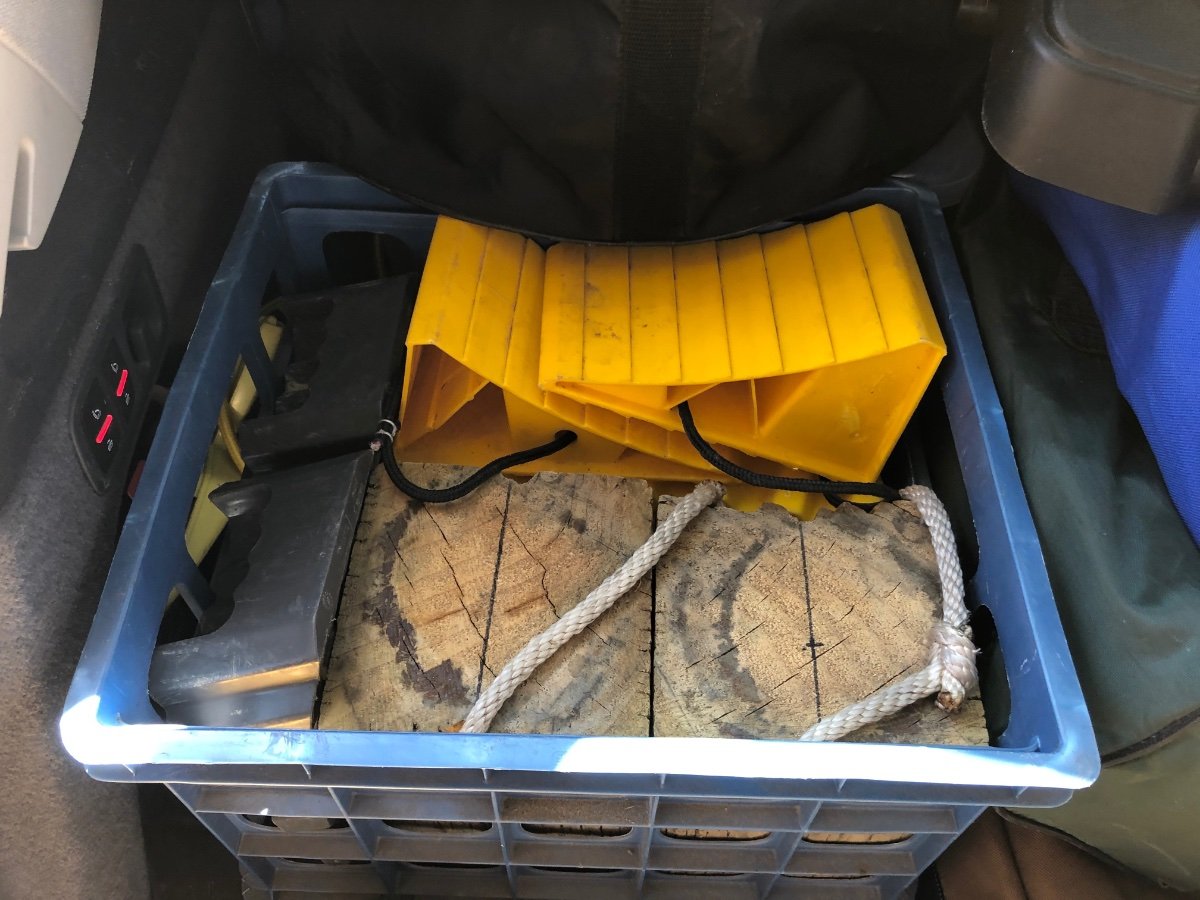
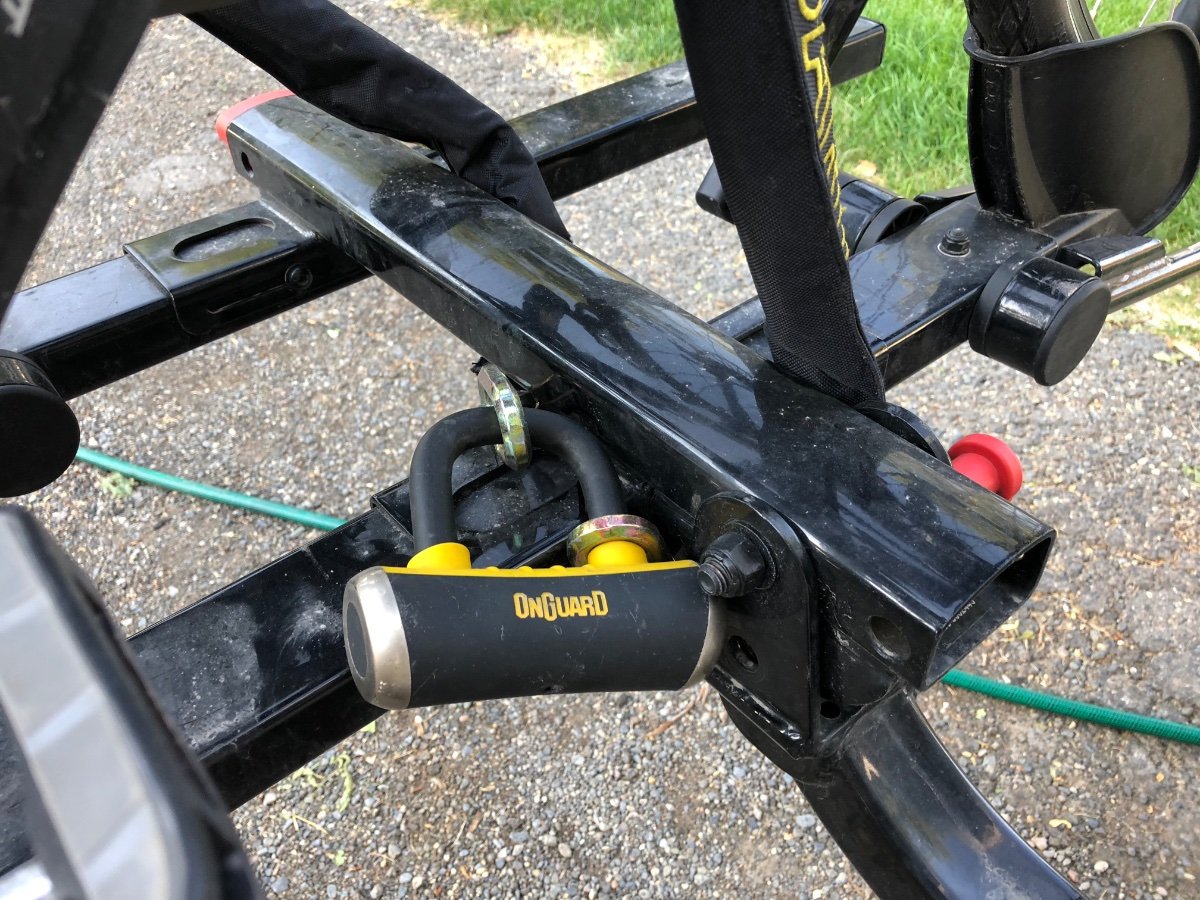
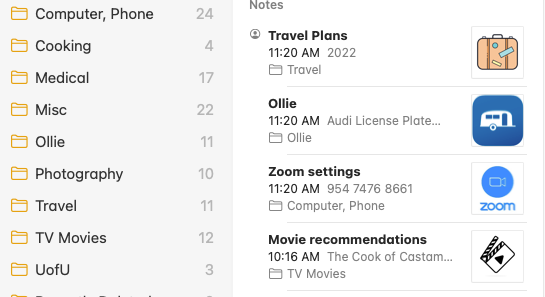
I want to tell you about a number of ways you can use the Apple Notes App for travel. The Apple Notes App is free. One of the nice things about Notes is that it uses iCloud to seamlessly sync between an iPhone, an iPad, and a Mac. I typically use the Mac to copy/paste information into the file but then use the notes on my other devices. (I am more comfortable with the laptop keyboard than the phone.) Importantly, you can share a note with your partner. This is particularly useful if I am driving; I can ask my wife to open her notes app and find some info or dial a phone number listed there. What is it useful for? I will start with a simple example. I have a Note called Current Trip. If it is a camping trip I will list each of our campsites in chronological order. For each campground, I copy/paste the Address, Phone Number, Website, etc, into the Note. For non-camping trips, I put in hotel or Airbnb information. If I book a restaurant, I put the info into the Notes file. Ditto for Car Rental information. The Address, Phone Number, and Website in the Notes file become links. If I touch the Address on my phone, it opens up the Address in the Maps app, and I can now click on directions. If I click on the Phone Number it offers to dial the number. If I click on the Website it opens in a web browser. These links can be incredibly useful. Again, having the notes file shared with your spouse or other traveling companions means they can access this info. This Notes File can be wonderful for Wi-Fi Passwords. Suppose you check into a place and they give an awful random character password, such as t?Uc'C&Ds9Ye;v. Now you have to enter this into each of your devices, under conditions where what you have already typed is obscured! Instead, I enter the password into my Current Trip file and verify that I typed it correctly. I can then copy the password, go to Settings > Wi-Fi, select the network, and paste in the complex password. Since my Current Trip file syncs with my wife’s devices, I can copy the password from her Notes and get her Wi-Fi set up. You can put nearly anything into a Notes file, including images (jpg, heic, png, tif, or pdf). On our trip to Zion NP last month, I pasted maps for the Zion Park shuttle system and the campground map. I have also pasted driving directions for the trailhead for a hike into the Notes file, or the mile makers for Rest Areas along the route. Another Notes file I use is called Travel Plans, and this I also share with my wife. It helps us both know what upcoming trips we had or when visitors were expected. I started this in 2018, when we had a lot of travel planned. I discovered that this Travel Plans file turned out to be very useful for examining our travels retrospectively. I found it so useful that I used my photo files to add dates and destinations for all of our past foreign trips. Another Notes file is called Ollie. I started this file soon after we started camping with Ollie. We pull into a commercial campground and walk into the office to register, and the first thing they want is the vehicle license plate number. So I put this info in the Ollie file. When we first started camping with Ollie, I had to look up in the Owner’s Manual which water inlet I wanted to use, Fresh Water Connection vs City Water Connection, so I put that in the Ollie file. Height to the top of Ollie, tire pressure and torque info, details on the Solar controller or the WiFi Ranger. We like to make pancakes when camping, and we heat up the real maple syrup in the microwave. If we heat at full power the syrup boils, so we needed to use a lower cooking level. After looking up how to do this several times in the instruction manual, I decided to put the info into the Notes Ollie file. (Note, our microwave is a Summit OTR24, and yours may be different. Basically, anything I had to lookup more than once went into the Notes Ollie file. I also put pictures into the Notes Ollie file. I use a milk crate to store my chocks and wooden blocks. I had worked out a nice way to fit them all in neatly, but then at the next stop, I couldn’t remember. So once I figured it out, I took sequential pictures of the packing steps and put them into the Notes Ollie file. I posted about how we lock our bikes on the rack on the back of the trailer, using a 6-foot heavy-duty chain that just barely fits. A picture of the bike lock on the bike rack that is stored in the Notes Ollie file helps me remember the strategy for attaching the lock and chain. The last Notes file I want to mention is the After camping list. While on a camping trip I think of things I want to repair or want to research/purchase to make camping more enjoyable. I always have my phone with me, so I can add to this list while barbequing. I recommend all Ollie owners use a file like this. A couple of final points about the Notes app. Pin. The default is to sort by Date Edited (which can be changed), but sometimes the Note you use the most has not been edited in a while and is far down the list. In that case, you can Pin the most important Notes to the top of the list. Folders. If you have a lot of Notes, you can put them into Folders, so that you can look in a particular folder. I have a number of folders, including Computer & Phone, Cooking, Medical, Ollie, Photography, Travel, and TV & Movies. Icons. If you have a lot of Notes, a picture or an icon can make it easier to find the Note you want. When I first started pasting photos into Notes files, I discovered that the photo would be visible in the list of notes. If there are multiple photos, only the first one appears in the list. I later decided to search for icons to mark Notes files. Suitcase icon for Travel, trailer icon for Ollie, etc. If I have pictures in the Note, then I put the Icon image earlier in the Note. These icon images can be tiff, png, jpg or heic files. While you can put pdf files into notes, the pdf images do not appear in the list of Notes files. Perhaps a PC / Android phone user can provide info about similar apps for the PC and android devices? I did find an article explaining how iPhone owners can edit their Notes on Windows.
6 points
-
Once you have "filled" the main propane supply line with the method I suggested then there still could be a small amount of air in the relatively short line that goes to the fridge. But, that air will be expelled by the propane without difficulty. Your fridge will ALWAYS use your batteries for ignition of the propane since there is no "standing" pilot light - the fridge and your furnace both use electronic ignitors. Make sure that you are not confusing running your fridge on propane versus trying to run it on DC (straight battery power) The electronic ignitors take very little battery energy BUT when you run the fridge on straight DC they take a bunch of power out of the batteries. Easily - propane is the most efficient and best cooling for these fridges. Bill5 points
-
I have a Champion 2,000W. It weighs 38 pounds. It runs my AC. Mike4 points
-
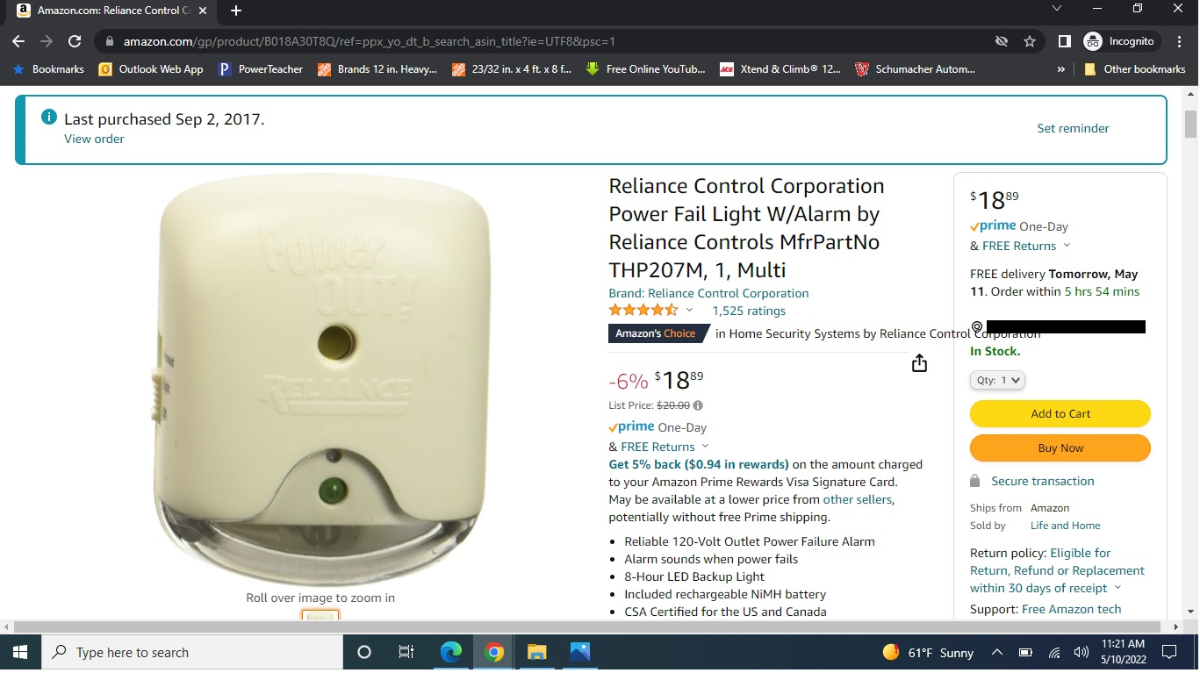
When we have shore power I leave our current gas/electric fridge on Auto. As a precaution in case the shore power fails while we're outside the fifth wheel, or if we're sleeping, I bought one of these AC power alarms. If shore power fails, the fridge goes to gas and the alarm warns me. I plan to do the same with the Norcold in our Ollie. (If we're dry camping, I'll put the Norcold directly on gas.)
3 points
-
One additional thought - Yes, the control board of the fridge also needs a small amount of battery power to keep the fridge running. This control board is what allows the fridge to "know" when to supply power to the igniter, when to turn the ignitor off, when to alert you that something is wrong or right, etc. But, again, like the igniter itself, the control board takes very little battery power.3 points
-
As has been pointed out on this forum in the past, it is not really advisable to routinely use the "Auto" setting on the Norcold 3-way due to the risk of accidentally drawing your batteries to empty accidentally. When set to auto and not hooked to shore power, the Norcold will automatically switch to propane. If propane is not turned on, then the Norcold will switch to 12-volt and you won't know. Even if set to Auto and you confirm that it is successfully running on propane, if the tank were to run out of propane and you didn't realize it, the Norcold would switch to 12 volt and once again, you would not know. The Norcold on 12-volt can draw up to 15 amp-hours per hour which puts a big draw on the batteries. If one manually sets the Norcold to gas but gas is not available, the refrigerator will generate an error message alerting you if the gas is not on, or if it runs out, prompting you to investigate why the Norcold is not getting gas. The choice of power source is best made as a deliberate decision. An exception might be if you were away from the trailer all day and wanted the security of 12 volt backup should the propane supply be interrupted to the Norcold while you are away.3 points
-
Bleeding air from the propane lines is simple: 1. Make sure that your propane tank(s) are turned on - the valve on the top of each tank) 2. Go inside the Ollie to the cooktop. 3. With a match of lighter in hand and flame at a burner on the cooktop, turn on that burner. When it lights you have basically bled the system of air. Many times you simply can not see any flame on the fridge. This is particularly so during daylight. When first turning on a fridge after a period of having it shut down, I'll make sure that it is turned on inside (auto or propane) and immediately go outside and place my ear near the lower fridge vent. There will be "clicking" sounds and then when the burner lights you should hear a "woosh" sound as the burner ignites. After that the fridge pretty much just does its thing. Bill3 points
-
Easily within 24 hours for both the fridge and the freezer. Do what ScubaRX mentions or if you do not feel comfortable with having the propane on while you are not with the camper then wait until you bring it home the day before you leave to get to the Rally. If you are leaving directly from your storage location to get to the Rally then have all of your food well chilled and/or frozen, turn on your propane and fridge as soon as you get to the storage yard and hit the road. Another hint: while you have your fridge in storage, keep both the doors (the fridge door and the freezer door) open and take some crumpled newspaper (10 sheets are more than enough) and place them inside. The newspaper will keep odors from forming in the fridge. Obviously, take the newspaper out before turning on the fridge and freezer for your trip. Bill3 points
-
I am looking forward to seeing everyone there -- the park office told me this morning there will be over 190 Olivers! What a great gathering!3 points
-
I'm embarrassed to admit it but mine would mysteriously come on in the middle of the night too. I figured it out in the middle of the third night of ownership that it even had an alarm clock function. I didn't intentionally set it but it blasted out some wrap song @ 03:17 at full volume. I didn't wake up happy. I don't remember what I did but I found the answer in in the manual.3 points
-
Pretty heavy, at almost 100 pounds. I'd look at something lighter, personally.2 points
-
The one at the link would run your AC. When to get it is hard to say, depends on your travel plans. Mike2 points
-
Great ideas. I will use some of these! I do a subset of this using the OneNote app on my phone, and I'll often add more at home from the desktop OneNote app. Among other things, I've created a "notebook" (which has sections/folders w/in it) for making notes on good boondock sites we've used, seen, or read about, as well as details on which sites at established campgrounds we'd like to try to book or grab on return trips, etc and have shared this with a few friends who can also add to it. We've included a "general resources" section in which we have lists of useful apps for different tasks (including things like tide tables/charts app, a "photographer's ephemeris" etc which can be useful for planning our days). It's a nice way of creating a shared store of the type of knowledge we're all apt to forget.2 points
-
You've had excellent advice so far. I'll try to consolidate,, in one routine, which was ours when we had 3ways. I have a dc compressor fridge now in our Ollie, but had two different 3ways in our Oliver, 3ways in other campers, and this was our experience, fwiw. Your friend was correct. Solar is plenty to run your fridge on gas, even in crappy weather, if all that is running is the fridge. (Gas mode does require dc power, but very little. The fridge won't shut down for low battery til you're almost flat. ) check your battery level when you enter the trailer, to make sure you're all good before you begin, since you have no power at the storage unit, before you turn on the solar and battery disconnect switches. If you have the norcold, make sure you are set to gas, not auto, because if you run out of gas, it will revert to 12v operation on its own, and that not only uses a lot of battery, but is the least efficient (and most power greedy) mode of the fridge. It will run your house battery down, even with solar, imo. In our experience, we found the fridge cooled faster if we loaded a couple frozen water jugs and cold, non perishable items in the fridge after turning it on, in the fridge compartment, not the freezer. (Cold water, beer, sodas, unopened chilled condiments, etc.). These cold items provide a steadying cold sink, just like your home fridge. The frozen water jugs went back in a cooler after fridge was at temp, and we loaded the food we wanted to take, and we used the thawing jugs for drinking water on the road. Resist the temptation to jam the fridge to the max. You need air circulation to keep the fins clear of ice. Especially, leave free space near the fins. Pack stuff close together, but not high items, there. Before you turn the fridge on, turn your gas valve on SLOWLY if you've had it turned off. Then, light a burner on the stove and run for 30 to 45 seconds, or longer, with a clear blue flame, to insure gas line is free of air pockets. (If you have air pockets in the line, you'll see a lot of orange or yellow, or sputtery flame, but that's ok. Wait til it's all blue flames, none missing, with tiny yellow tips above the blue, steady, and then you're all good to turn on the fridge. ) If you don't have one, I'd recommend a thermometer for the fridge. One with an outside wireless readout is great. After you've turned on the fridge, you'll hear it light off. (It usually clicks a few times, that's the igniter, then you hear a little whoosh as it lights. (It may do this a couple times, with a pause between attempts.) I could usually hear this from inside the trailer, if I wasn't running fans, and there wasn't a lot of ambient noise. After the fridge lights, if you go out and put your hand near the outside upper vent, you'll feel some heat exhaust after a few minutes, and you'll know it's running/flame is good. (Its hard to see the fridge flame, as its really small, even with the bottom vent off) After five or ten minutes or so, open the fridge, put your hand on the freezer bottom, and you should feel it's cooler than before, though not super cold. That lets you know it's started the cooling process. (30 minutes in, you can probably sense a bit of frost on the freezer floor with your hand.) Our gas fridge took about 6 hours empty to cool down to foodsafe temp of 41, three or 4 hours depending on ambient (outdoor) temperature if we preloaded with the frozen jugs and cold nonpershiables. Winter in Florida it obviously took less time. Summer, more. Working with a 3way is very different from a home fridge, but you'll soon find it's easy and routine, and a great asset for boondocking. It does require some getting "used to." If your subdivision allows overnight in the driveway for loading, like ours, I'd go get the trailer day before, start the fridge, and get on with enjoyment. It saves a lot of load tv/unload/ load trailer time. I'm sure others will find things to add. Steph and dubs alarm is great, if you camp with ac, which we rarely do. Fridge runs great on ac power, so if that's your plan, get their alarm.2 points
-
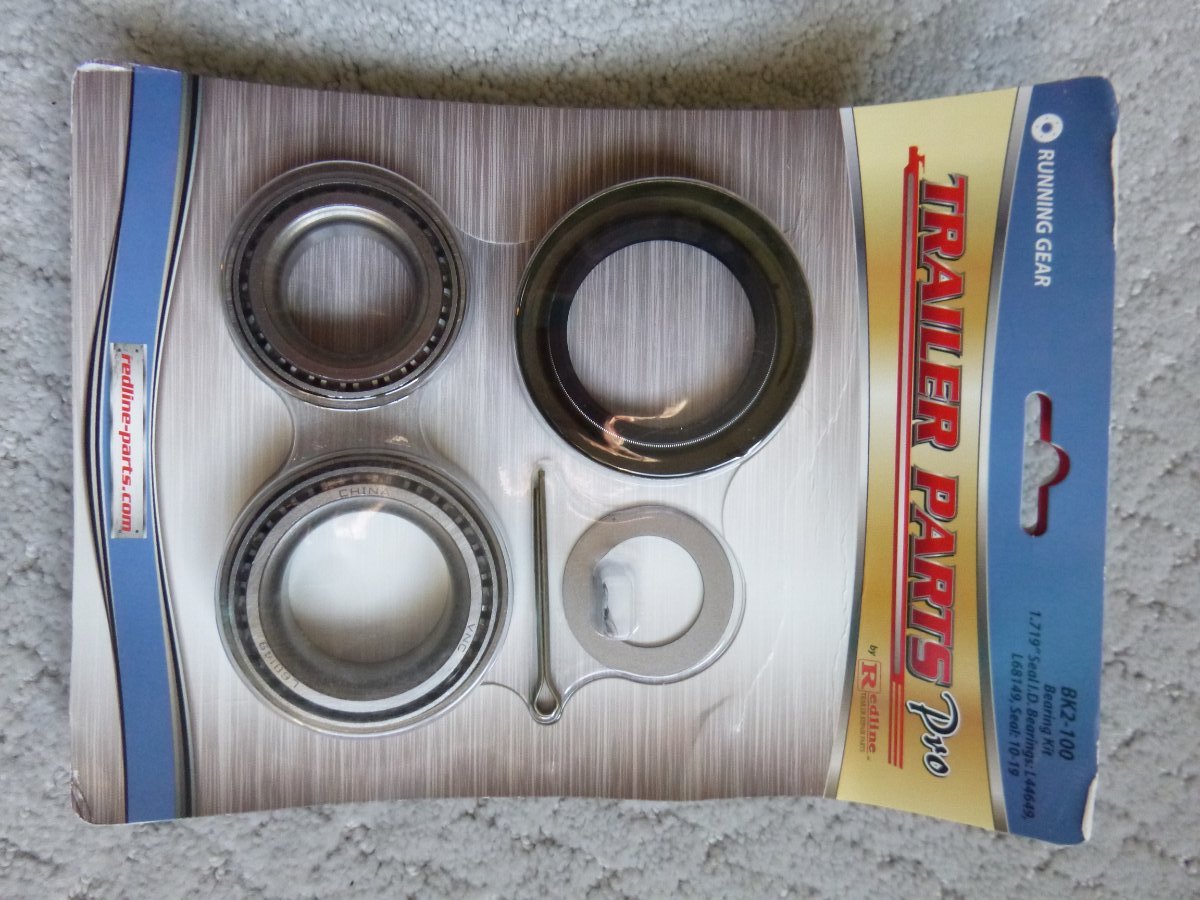
Imelda - Here on the Forum there are numerous threads concerning wheel bearings. It is fairly well recognized that Timken bearings are about the best out there but there is some difficulty in making sure that you actually do get the Timken bearings that you pay for. I'd suggest typing "Timken" in the search box and start reading. If you are not as concerned about the quality of the bearings that you will be using or you simply want to make sure that you have an extra set with you on the road in the event something unfortunate happens then you can purchase something like the bearings below: Bill
2 points
-
Here's a Furrion-related kudos-to-the-Oliver-support-team post. Our radio began swallowing disks. It would not eject disks, but would instead read "Load." That's how two disks ended up in the radio (I forgot that there was already another one in there from a previous trip). I removed the radio, removed the disks, and tried again to eject a single CD, to no avail. Ok, so time to call support (the radio was still within the 1-year warranty period). Furrion has a technical support number, which I called, and heard a message to the effect of "due to overwhelming number of calls, we ask that you submit all requests by email." So I dutifully filled out the long support-request form, submitted it, and ... received ... absolutely no response. One day goes by, then one week, then two weeks. No response. I reached out to Mike Sharpe, who said he would try to reach Furrion through his contacts. After another week ... no response from Furrion. So Mike offered to send a new radio from Oliver's stock. Ryder Cogdill sent one pronto, I installed it, and returned the defective one (Oliver even paid return shipping). I'm happy to report that the new radio works great. So the point of this post is that, in my experience, Furrier's technical support is non-existent, but Oliver came through with flying colors!2 points
-
I agree with this statement. I suppose it could be viewed as simply adding 'fridge power switch" to the routine list each time one sets up or leaves camp...2 points
-
Common problem. Easy to replace from the roof. They've improved the design of that gearbox now. The new ones are reinforced with a couple of metal screws.2 points
-
Mine did the same a few years ago. I ordered the part from the company. It’s fairly easy to replace, no need to take the fan out. I posted some pictures that I will try to find. Mike2 points
-
Exactly what his wife says!😁2 points
-
I will say that we have none of those options that you listed, plus not many more of the other options that Oliver offers. As I have said before we purchase a stripper Elite II in 2019 and got it out the door for $55,500. We only got the two propane out side disconnects, the bike rack/hitch which we don't use, and the confection microwave. As you know the trailer does come with many things standard and for our camping needs it works out great for us. We don't Boondock so many of those options were of no interest to us, plus many of the electronic upgrades we didn't feel were needed. An iPhone with Hot Spot will get just about everything we need, so far being disconnect with the world has never been a problem. I will say that most new buyers today do go for the $80,000 models with all the upgrades, many from when I talk with them have never used many of the options, but I'm sure many do when they work. We now carry our electric bicycles in the bed of the truck, too heavy for the bike rack on the back of the trailer, so it sets in the shop over in the corner collecting dust. Personally get what you think you will use on your new Oliver, we did. trainman2 points
-
https://www.ebay.com/itm/234545806758?hash=item369c04fda6:g:xjgAAOSwac1iLirK2 points
-
Just a quick note for those interested in the lithium platinum package, which we have on our 2022 Ollie. We took our maiden voyage in VellOllie this week, about 4.5-5 hours from home. Because I knew we would have an electrical hookup at our campsite, I decided to run the regrigerator on DC for the entire trip down. We started at 100% battery, according to the Lithionics app, and ended at.....99% battery on one, 100% on the other. It was sunny the entire trip, which helps of course. On the return, we ended at 99% and 98%, and were in cloudy conditions for the entire drive. I'd say that's pretty good performance, and have confidence in running the fridge on DC while traveling, even when I know we won't have electrical hookups at our final destination. Pretty cool...and part of why we went with the biggest solar/battery package we could get.1 point
-
Another thought is to remove the inlet hose and inspect to see if it's filled with plastic shavings, which seems to happen on a fair number of Olivers. With sufficient blockage, it may be able to prevent the pump from drawing in water from the tank or boondock port.1 point
-
Glad you posted. Mine will shut the inverter OFF, but I have to get under the bed to turn it on! Appreciate that there are good suggestions here and that it's not necessarily something I'm doing wrong. 😄1 point
-
Are the connections on either end of the inlet hose that attaches to the pump tight? If either of those is drawing air, you could get those symptoms. Also check that the strainer bowl on the pump is screwed on tight (and that it isn't cracked) - this is the clear plastic "bowl" with a metal strainer on the inlet side of the pump. Any air getting in on the inlet side via these spots could prevent the pump from drawing water from either the boondock port or the fresh tank.1 point
-
Hi, We just level and turn on the propane feature overnight before leaving, then pack the refrig in the morning before takeoff. No DC or AC necessary.1 point
-
(Mental note: watch @ScubaRx at all times!)1 point
-
Since our trailer is at home with us and we have both shower power and sewer hookups I would say our trailer is ready to go in a couple hours notice. Do note here it does take longer to get the food and all the camping gear ready. I would say we start about a day before we leave to go camping, that is plenty of time for us, I guess we just have had a lot of practice over the years. I do at least once a month fire up all the trailer systems just to check the out and being a trailer there are things that come up from time to time that need attention. You asked about the refrigerator and we usually turn it on 24 hours before we leave for camping, it probably doesn't need that much time, but it's just what we do and at that time I will also check out the gas appliances for operation, stove, water heater, A/C, furnace, just turn them on for a short time to see that they are operation correctly. I will say that trailers are pretty notorious for something not working correctly and I would rather take care of it at home vs. on the road. We do have camping friends that don't do a good job of checking these things before they leave home and they spend time camping working on there trailers at the campsite, not that much fun. trainman1 point
-
1. Always turn Propane tank valve on VERY SLOWLY, otherwise the force of rushing gas can cause safety valves on furnace, frig, or hot water heater to shut that appliance down. Only remedy is shot of gas, reset appliance, then turn gas valve VERY SLOWLY. Seemingly faulty appliance has always worked after that. 2. Always lock bathroom door before driving even the shortest distance. Otherwise it will be broken for sure from swinging open. 3. Never camp between other RVs that run generators with exhaust pointed towards your Ollie. The CO detector will go off. NEVER ignore your CO DETECTOR!!! You might die in your sleep. 4. Never run propane appliances while driving. They can cause gas explosions at gas stations. 5. Viair Air Compressor makes winterizing water lines and keeping tires at proper pressure a piece of cake 6. Anderson Leveling wedge is worthless on ice and snow. They need a studded version. 7. Boondocking in Winter requires a decent and quiet generator. Solar power is gone for perhaps weeks. I recommend the Honda 2200i. 8. Protect front lower sections of shell from rock chips with plastic coating. Tow vehicle will spray a ton of gravel into it, especially in Winter. The folks who applied 3m film to my Audi are doing my Ollie. 9. Keep Drain hose attached to outlet in rear bumper and simply cap the end. This is way easier and cleaner than taking it apart each drain cycle. And always drain Black then Gray for odorless hose 10. Dehumidifier is a must when Winter camping. Otherwise condensation runs amuck everywhere. 11. Hoppy Rearview Mirror Level on front of Ollie saves tons of time. And, your head doesn’t get nearly as wet running in and out and in and out etc, etc in the rain and snow to get the darn trailer level. 12. Use other Ollie owners for tips and advice, especially for Set Up and Departure Checklists. They are valuable beyond belief. I’ll add more as they happen. Happy travels1 point
-
I have a new Rotopax fuel tank and mounting that I purchased for my motorcycle off road riding to carry extra fuel, common for dual sport motorcycle riders to carry extra fuel. Now since I don't ride anymore I just need it to find something that I need fuel for when camping. I will say these are very good fuel container and very sturdy for all uses, many carry then on there ATV's and UTV's. trainman1 point
-
I think I will take the advice and not keep the shore power plugged in all the time, that is I may just plug it in once a month for a day or so and let the batteries catch up if need be. We try to camp once a month or so, so this should not be a problem with the battery and hope we can get a better life out of this battery. trainman1 point
-
Is that part of the transmission or part of the lifting mechanism? This may be all you need.1 point
-
see if the alarm function is activated..1 point
-
And let's get rid of vehicles. Horse and buggy or if you're cheap, just a horse.1 point
-
That's a new feature. The radio uses a combination of microphones and motion sensors, interpreted by A.I., to determine your mood. Based on that evaluation, it automatically picks the appropriate genre of music for your mood (based on an analysis of your past music selections and Google searches related to songs and artists) and powers up. Future revisions will also feature integrated mood lighting along with the audio. To stop the music, remain perfectly quiet and still while breathing slowly and twitching your eyes to simulate REM sleep. This will signal the A.I. to terminate the music. NOTE: Swearing and gesticulating energetically in the direction of the radio will only serve to switch the music to Kenny G. or a similar genre, so caution is advised. Or, it's broken. Good luck either way.1 point
-
I’m glad you looked closer at that “red” cable coming off the back side of the shunt. All Oliver installed ground wires are yellow. So all is good there. And remember, turning off that breaker will not cut off power coming from the panels. It will only kill the (charging) power going to the batteries.1 point
-
1 - take the four screws that hold the remote panel off and gently remove the panel. There should be a phone style connector in that back of that panel - unplug it and re-plug it in three of four times - and - do the same thing where the other end of the wire goes into the inverter. 2 - Check to make sure that the wires (both ground and positive) going into the inverter are tight. 3 - now re-try the remote switch. If it works you are done. If it doesn't work - do what they said. New remote panels are not all that expensive on Amazon but, hopefully, you don't have to go that route. Bill1 point
-
I wasn't sure myself and found an excellent article that pertains exactly to your question. The determining factor is whether you have an internal "bonded" neutral and ground... or not, which is called a "floating neutral". Check out this article and you might find it helpful. I did. An interesting thing is that two major inverter generator manufacturers (Honda and Yamaha) have floating neutral which means you need to put on an external bonded plug. Many of the others have internal grounding hard wired inside the generator. It would be worth your time to read the attached article. https://www.rvtravel.com/rv-electricity-generator-neutral-bonding-basics/1 point
-
The short answer is yes. Here a little helpful info - https://www.rvtravel.com/rv-electricity-companion-bonding-plug/1 point
-
These questions about what charges/discharges during various conditions can be answered by simply installing a smart shunt. Then you can "see" the changes when things turn on/off - start/stop - connect/disconnect. It's the best money you'll ever spend on your electrical system. I use the Victron Smart Shunt with the bluetooth app to monitor ALL energy flows via the negative buss. Charlie.1 point
-
Thanks to OP and everyone else for chiming in on this topic. Have been very interested in this topic and it's good to have some first hand reports.1 point
-
Be aware the Lithionics app takes some time to calibrate the SOC calculation. There are some good posts on this forum about this. You have to draw your batteries down several time and then recharge for the SOC calculation to become accurate.1 point
-
Hello, We have a 2022 Oliver Elite II that is scheduled for delivery in mid-august. Oliver gave us a military discount of $1,000. To get the discount all I had to do was to email them a copy of my DD-214. Hope this helps answer that question.1 point
-
"They" do - if you organize it! 😁 Two mini-rallies have been held in Florida (Thanks Foy & Mirna!). Some work has been done at Oliver regarding holding rallies in other places but nothing firm has been set that I know of at this time. Bill1 point
-
Ray-Sam Get rest before you get there as there will be a bunch for you to see and learn. I've marked your site and will plan on dropping by at some point to say "Hi". As far as I know, virtually all activities are still being formalized. So, I'd just relax a bit for now. There are some of the presentations already listed and you should take a look at those to determine which will be a MUST DO for you so that you are sure not to miss them. In this regard - pay attention to where the presentation is to be held. Registration and the Beach Pavilion are reasonably close to the camping area. But, most people will prefer to drive up to the Lodge for anything being held in there or in the Ballroom. Bill Yes, while there will be a few non-Olivers there, it will basically be filled with Olivers. Be sure to allow yourself plenty of time to simply walk around and visit. Don't be afraid to knock on doors and ask for a tour. Take plenty of pictures of any mods you see that you are interested in. Perhaps even start making a list of any people you'd like to meet while there.1 point
-
For all OTTO's, present, future and wannabes, a Guntersville State Park campground map for reference Mossey
1 point
-
Soak a cotton ball with Braggs Organic Apple Cider Vinegar and tape it to the bug bites for about 20 minutes. I get big red welts and bite bumps from mosquitos. The redness goes away in about 20-30 minutes. I keep applying the Vinegar and the bumps go away too. Best to apply it right after you get bit. Hope this helps.1 point
-
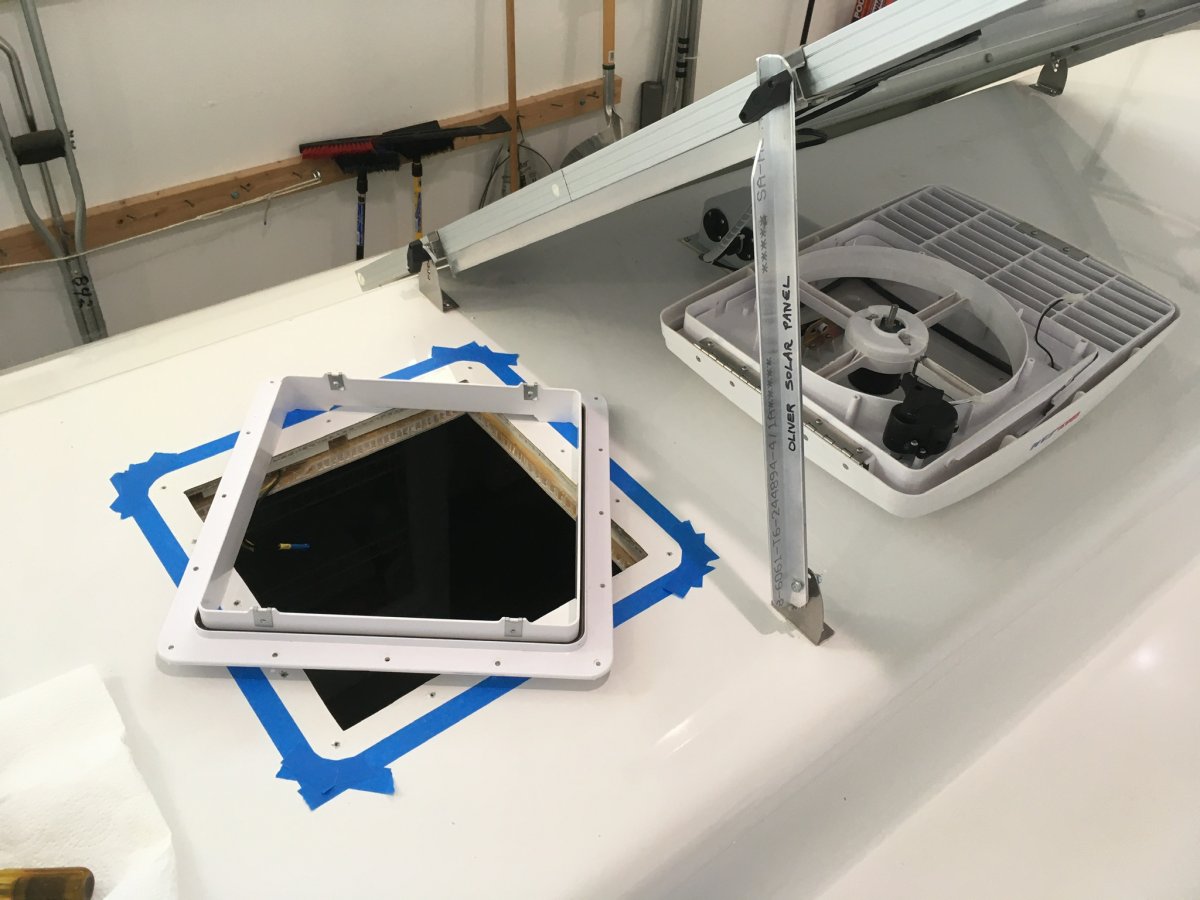
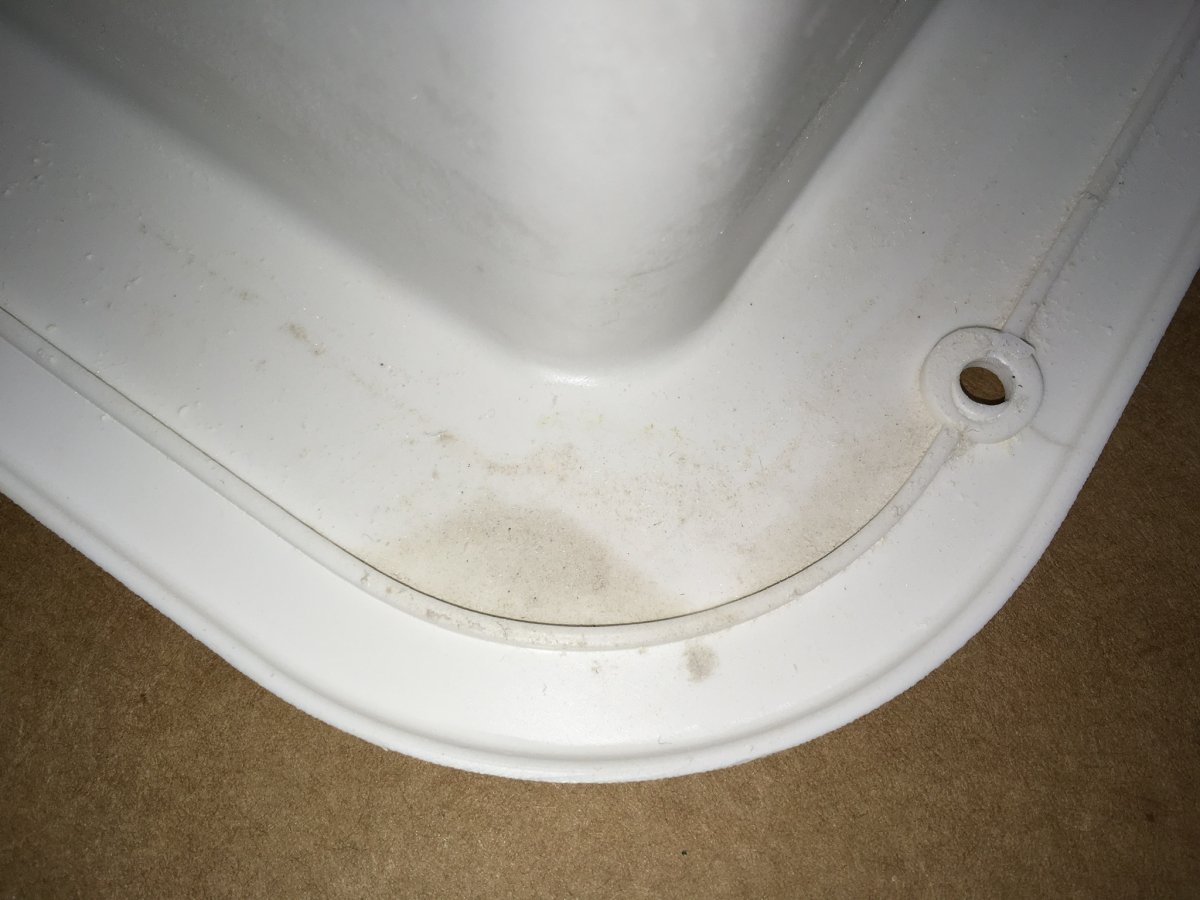
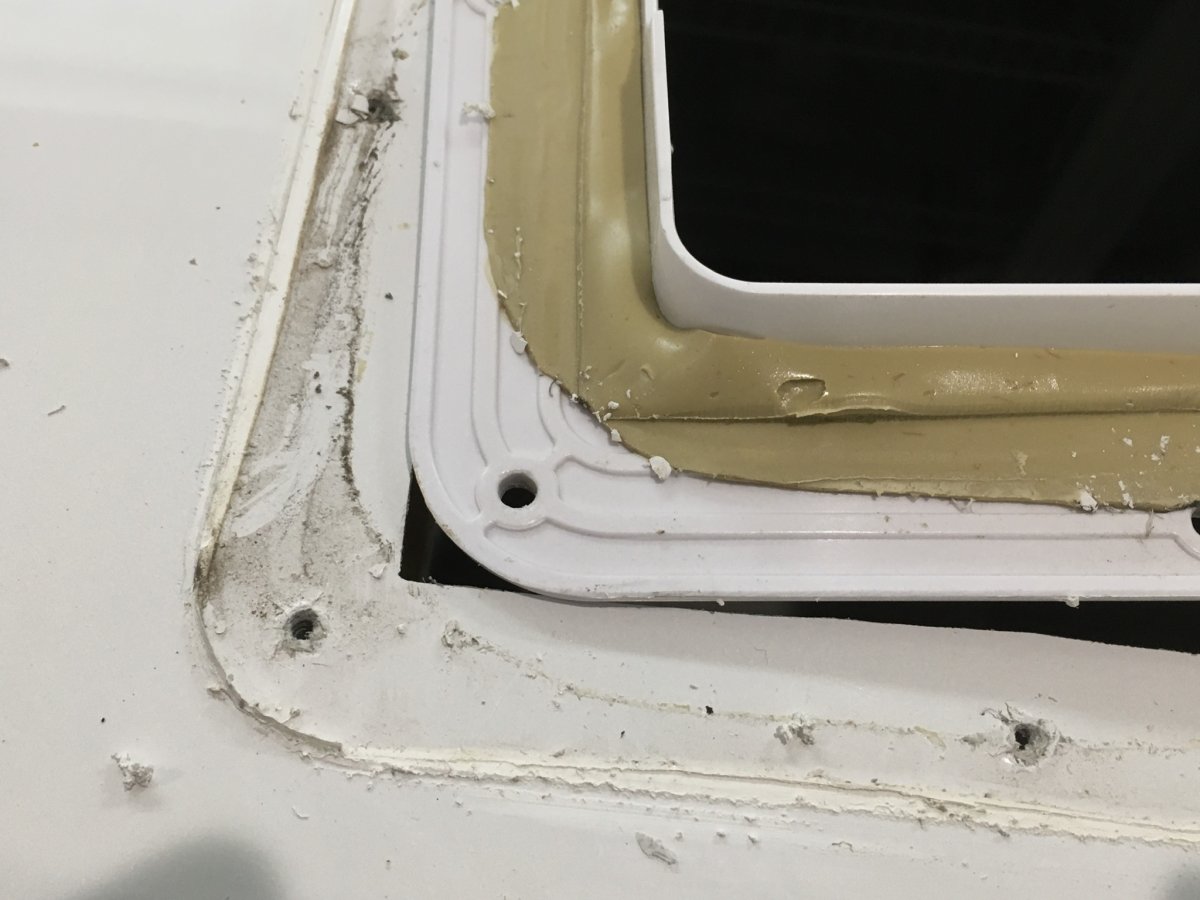
Well, this is what my roof looks like now.... i am waiting on some 3M 4000UV sealant, the good stuff, before I can reassemble it. Other than the shuddering, I had a small nuisance water leak from the rear curbside corner of the inner trim piece. This shows evidence of the leak: I discovered that the upper mount flange screws were not sealed, and the sealant inside was misapplied during the build, so that that corner had a gap, notice the dirt entry into that corner via the screw heads: I got the shuddering issue fixed, I will write all this up as a new thread with lots of pics and some tips. Darn it...... this is sloppy work. But OTH, in a stick and staple trailer, this would probably have screwed up the roof. John Davies Spokane WA
1 point



.thumb.JPG.dd838cdb3df463dab6a16861fa23a319.JPG)













-
Recent Achievements
-