Leaderboard


Popular Content
Showing content with the highest reputation on 08/03/2022 in all areas
-
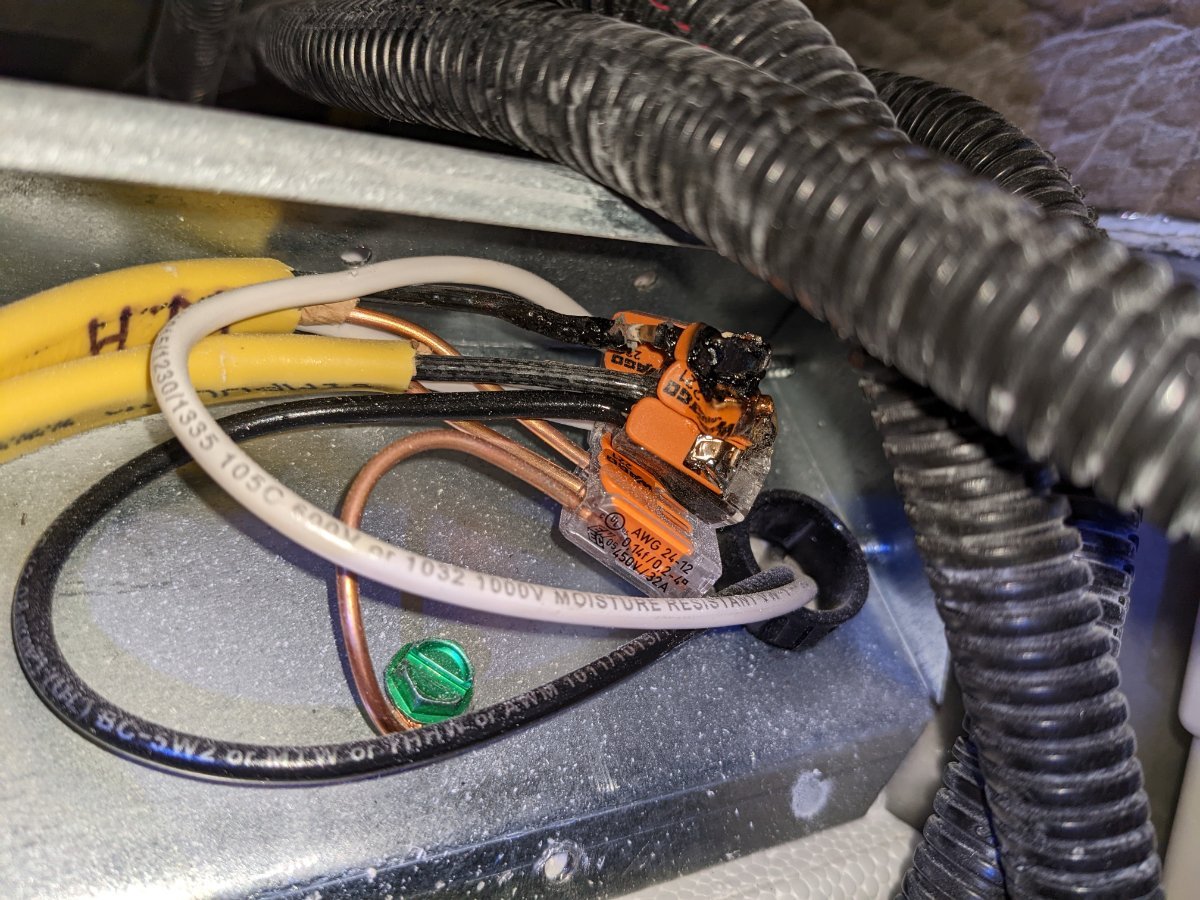
Those are Wago lever nuts. They are NEC approved as an alternative to wire nuts for 120V connections. They are easier to use than wire nuts, but are much more expensive. They make it easier to see if you have a solid connection during assembly (because they have a clear plastic window through which you can see if the wire is fully inserted) , unlike wire nuts. When properly installed, I believe they are also more reliable, and less likely to shake loose from vibration (such as when towing) than a wire nut connection, as they have a lever than locks the wire into the connector. I am not an electrician, but have done all of the electrical work on the 4 existing homes we have owned for the past 40 years, along with the new home we moved into in 2020. I have had to troubleshoot dozens of shorts caused by loose wire nut connections over those years. Neither type of connector is foolproof, and as illustrated by this thread, all require attention to detail by the installer to avoid problems. I suspect the wire that shorted was not fully inserted, and visually verified through the clear plastic window in the lever nut, during the build at the factory. Sloppy wire nut connections also cause shorts, but they are harder to detect during installation because wire nuts don't have clear plastic windows. I like Wago lever nuts so much I used them when wiring our entire new home. No issues yet after 2+ years, but I checked all of my connections to ensure full insertion during installation. I prefer Wago lever nuts over wire nuts. I am pleased to see Oliver using them.6 points
-
IF the noise is coming from your suspension system, I would say you need to inspect the bronze bushings inside your spring eyes. Greasing them will hide any noise coming from worn bushings but it won't fix them. They would need to be replaced. A messy, time consuming job but not too difficult. I can give you some tips if it comes to that. https://www.amazon.com/Century-Drill-Tool-44344-Industrial/dp/B004UUGDSE/ref=sr_1_3?crid=3FWZCH5KSBYP2&keywords=silver%2Band%2Bdeming%2B11%2F16"&qid=1659497041&sprefix=silver%2Band%2Bdeming%2B11%2F16%2B%2Caps%2C77&sr=8-3&th=1 https://www.amazon.com/Yemtuls-K7129100-Resistant-Machine-Processed-Cast-Processed/dp/B098XGN6PK/ref=sr_1_2_sspa?crid=1DKF569NF7SEV&keywords=dexter%2Bbronze%2Bbushing&qid=1659497417&sprefix=dexter%2Bbronze%2Bbushing%2Caps%2C99&sr=8-2-spons&spLa=ZW5jcnlwdGVkUXVhbGlmaWVyPUExTUE0S1FJSVo3UDlWJmVuY3J5cHRlZElkPUEwNDE2OTA5N1ZYTUkzWlVaNlExJmVuY3J5cHRlZEFkSWQ9QTAxMzYwOTgzRFlCQ1NOUEdSQTBIJndpZGdldE5hbWU9c3BfYXRmJmFjdGlvbj1jbGlja1JlZGlyZWN0JmRvTm90TG9nQ2xpY2s9dHJ1ZQ&th=1 The first thing I would pay attention to if you hear popping when jacking the tongue is the propane housing cover. Sometimes it will shift forward or backward a bit. Check the nylon bushings attached to the underside of the lid. There have been some recent reports here of them coming off.5 points
-
I have never sterilized my blue water container, but after use, I dump out the contents, flush it well with chlorinated city water, and store it with the cap off so it dries. It always stays nice inside. If your water comes straight out of the ground, add bleach or treatment tablets. I don’t need these for my Ollie can, but I keep them in my bug out backpack. http://www.expedition-research.com/shop/tac-h2o-refill-100-aquatab-water-purification-tablets John Davies Spokane WA4 points
-
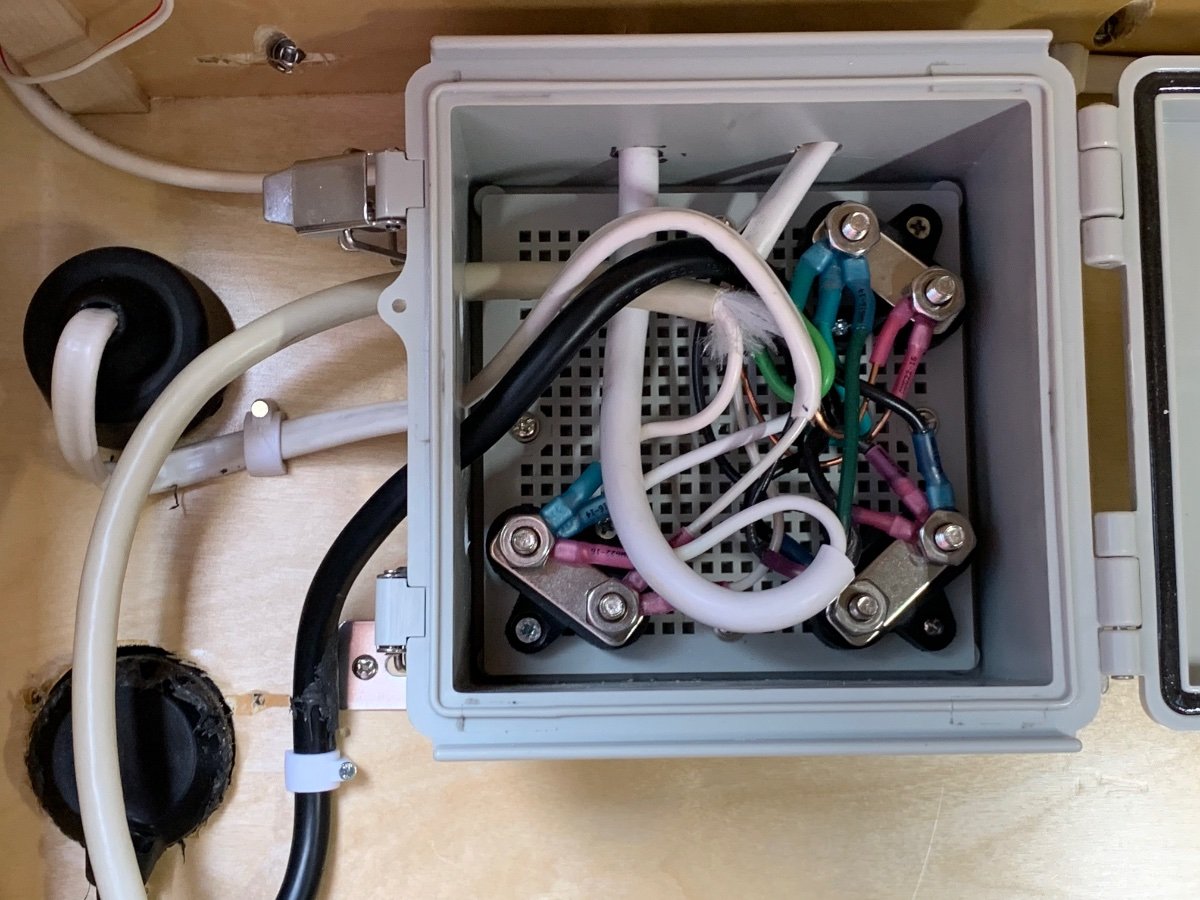
Last night I heard the fridge gas ignitor kick in, which shouldn't happen because we're on shore power and the fridge was on Auto. This morning I went looking for the 120v fridge plug and didn't find it behind the kitchen drawers. It's actually under the drawers in our 2022, away from the water hose, so that's a design improvement. The fridge was plugged in. (There was even a big ziptie to hold the plug in, but nobody at the factory bothered to actually connect that.) My multimeter said the outlet was dead. Tracked the wire back to a junction box on the water heater and found this inside: Best guess from looking at it is that the fridge wire (top in photo) pulled partially out of the splice connector and overheated. There's no strain relief entering the j-box. I was lucky enough to find another splice connector lying in the bottom of the hull (dropped at factory) so I cut off the burnt wires, restripped them, and used the "spare" connector to reconnect them. Then I tied the two Romex cables together with a zip tie just outside the j-box to add some strain relief for the connectors. Seems to be OK now.
 3 points
 -
Olivers aren't perfect, nor are any other RVs. Just looking at other owner forums and watching YouTube will show you that. I'm still hopeful that the overall better design and materials used in Olivers will make this trailer our favorite eventually. I will say that the Service department has been responsive to our problems so far.3 points
-
If you want to boondock, avoid the flush toilet, it absolute EATS your fresh water supply. ... https://www.doityourselfrv.com/how-much-water-does-an-rv-toilet-use-per-flush/ Buy the Natures Head, learn its quirks, and don't look back. Two people using it daily means a trip to a toilet or privy every two to three days to empty the pee tank, unless you buy a second one. The solids part of this equation has ben discussed at length, look here: ... https://olivertraveltrailers.com/forums/topic/1978-nature039s-head-composting-toilet-installation-in-an-oliver-big-thread/ I keep a little stainless flip top trash bin beside the toilet, with a liner, ALL paper goes in there. Fresh water is hard to quantify, when my wife is along we go through a tank in three days, including one navy shower each. I conserve a lot more than she, and smell more, and can go 8 to 10 days easily when I am solo. I carry an empty 6 gallon water jerry can (blue plastic) and have actually used it one time in five seasons. So usually finding a water source isn't that hard, unless you are dry camping for long periods. There are devices that allow you to get water from unauthorized sources, like a Water Bandit. Get one of those and you should be fine. If you can't connect the hose, your boondocking/ winterization port is your next step, just suck the water out of a can or bucket. Figure 3 quarts day in hot weather just in drinking water, that adds up fast! 1.5 gallons per day for a couple, over ten days, is half your tank volume. A navy shower is maybe 3 gallons, I use less than she because I have a lot less hair. Grey water can be carefully emptied with a sewer adapter and a 3/4" garden hose in SOME places, like the open desert, you can run it off to under a sagebrush and let it trickle out overnight. I dump mine at home in the gravel driveway... 😉 It would certainly be educational to rent a stick and staple trailer for a week, it will let you experience the systems, especially dumping, and the poor build quality, and the latter will make you appreciate the Ollie all that more. I will repeat myself, your LC200 will be "adequate" for towing an LE2 in the Eastern states, with the Andersen and airbags; you may find yourself wishing for the smaller LE when you travel out West, That would be a stellar combination for many reasons. I think yours is a Heritage edition? If so, good, you don't have to remove that pesky third row or buy proper LT tires.... do you know your payload? John Davies Spokane WA3 points
-
I guess I’m confused as to why you’d want to remove a working unit. My Elite II was delivered with a defective refrigerator at initial factory pickup. In order to replace the defective unit the whole door frame had to be removed so they could make the swap. The refrigerator unit is bigger than the door frame, but smaller than the door opening. It’s a major undertaking to get the refrigerator out and onto the bench in the shop for a likely unneeded service. Nothing else to add other than be ready to remove the whole door frame or be ready to service on the dinette. Ken3 points
-
In a few words, don't do it. Grey water fine. Fresh water could be easily contaminated, and the black tank is not rated for potable water.3 points
-
I hadn't thought about using the black tank for fresh water, but I *did* procure everything I need to use the black tank as extra gray storage. Most places we boondock have water nearby that we can filter with a filtering jerrycan and pump into the fresh tank in boondock mode, but I often find ourselves butting up against gray tank limits. If you haven't see this yet, it's clever!3 points
-
We carry one of these 7 gallon AquaTainer containers for extra drinking water. You can get them from Amazon or at Walmart in the camping section. As far what type of plastic, just make sure it’s a container specifically labeled for use with potable (drinking) water. Do not use plastic gas cans for drinking water! As far as your mention of plastic to avoid, you may be thinking of the concern over the chemical BPA (bisphenol A) that is present in some plastics used for drinking water, usually in polycarbonate bottles. I had to deal with this issue with regard to plastics in medical applications in my career before retirement. The AquaTainer is labeled for potable water and also labeled as BPA free. Reliance Products Aqua-Tainer 7 Gallon Rigid Water Container https://a.co/d/ezSC0A6 Here’s an article on BPA. https://www.mayoclinic.org/healthy-lifestyle/nutrition-and-healthy-eating/expert-answers/bpa/faq-200583313 points
-
The black tank on trailers currently being delivered is 15 gallons.2 points
-
Service told me they were forwarding this incident to the Engineering and Quality departments for review.2 points
-
We have a 2019 EII with the standard toilet. Tanks on 2019 were specified as : Fresh = 30gal - more like 28Gallons Grey = 30 Gal Black = 18 Gal (Now 15 Gallons reported in later models.) The NEWER Specs from 2023 data sheet are shown below: Fresh Water Tank Capacity Design Capacity 32 Gal. Grey Water Tank Capacity Design Capacity 32 Gal. Black Water Tank Capacity Design Capacity 15 Gal. Use Case: Boondocking sites...no restroom or pit toilets. We take very short (Navy) showers, wash hair outside or in a basin, and use wipes every other day. Black: Boondocking the black tank fills between 3-5 days. (If there are pit toilets or other facilities then we can get to 6 days.) Grey: Typically lasts 8 days. We've not typically had an issue with GREY filling up. For Boondocking, the toilet really is the limiting factor, and many have specifically chosen the compositing toilet for that reason if they plan to do a lot of boondocking. Craig Hull 5052 points
-
We have come to campers from a 30 year history of backpacking & water conservation, so YMMV. Our 2022 Elite II twin is our 4th camper since 2008. We spent 10 days in early July boondocking. Our biggest use of water is making 4-6 ginormous cups of good coffee daily. We have a composing toilet, which fits our wants and needs, so nothing goes into our black tank. We emptied the urine container about every 2 days, at about the 2 gallon level each time. After 10 days, the remaining fresh tank was 31% full, the gray tank 63% full, according to our SeeLevel II monitor…they aren’t dead-to-rights accurate.2 points
-
I use a bleach & water solution as described in the Ollie manual. I use this for sanitizing all of the Ollie fresh water system, my fresh water hoses, and my portable containers. I use the large AquaTainer portable container as the reservoir of the bleach & water solution for drawing it into the boondocking port during the sanitizing process. It’s worked well so far to prevent any problems.
2 points
-
We've had many threads on water storage. I'd be careful about reuse of milk and water containers, unless labeled bpa free. Most are not so labeled. There are some really good pitcher filters out there. Not brita, imo. Read the testing results, and decide what you can live with. Change proprietary filters on required basis. I bought pur plus/ultra for my mom, and us. One of the few that removes lead, and many other contaminants. There are other reasonable and decent choices. At home, we have an engineered 7 step filtration, plus uv system.2 points
-
John, The top aluminum plate will come out easily with tape removed or cut, if that's your question.2 points
-
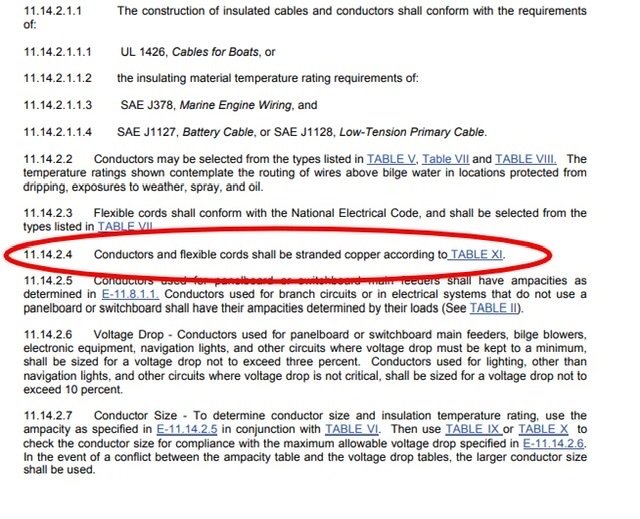
Thank you Steph & Dud! I really appreciate posts like this one, because it gives me an opportunity to figure out a better solution before I experience a similar problem. I’m disappointed that it is necessary, but it comes with owning any RV (or boat), even an Oliver. John Davies mentioned the shortcomings of AC Romex and the residential junction boxes in a recent post. This prompted me to make a note on my task list to inspect all AC wiring that is accessible, and improve the installations if feasible. This post confirms that concern. I did a quick check on RV best practices and came up with a good article and reference to marine codes. 120V Wiring for Campers WHAT Type OF WIRE IS NEEDED FOR 120V OUTLETS In a Camper? ALL wire in a camper must be stranded wire. This includes circuits for 120V outlets. Wires in a camper must be stranded wire because solid core wire (like the Romex used in the walls of your house) will, when subjected to the vibrations of rattling down the road, will work harden and break over time. For this reason, solid core wire like Romex is EXPLICITLY forbidden in marine applications (boats) by ABYC E-11.
2 points
-
Remove the fridge annually? 😳. Nope. Going on 7 years and never removed. I don’t think it is part of the factory annual service either. Mike2 points
-
5 gallon gas cans are not only inappropriate, but probably more expensive than bpa free 5 gallon water containers.(containers are color coded so people don't make a mistake.) If you can find them locally, less shipping. We bought containers like these, locally. https://www.legacyfoodstorage.com/products/5-gallon-blue-water-tank-stackable-container?variant=19404273418307?utm_source=google&utm_medium=cse&utm_campaign=base&utm_source=google&utm_medium=search&utm_campaign=1781302546&utm_term=&utm_content=343723866691&gclid=CjwKCAjwlqOXBhBqEiwA-hhitJS9I8x-oVcYtLJw8tSD5NdLh895qJVnQsvASzJTkLizXBe7SFRwdxoCVOUQAvD_BwE2 points
-
The upper black tank hole is plugged when there is a NH installed, no worries there. ABS can be used for potable water, the main drawback is it is never to be installed in direct sunlight, not a problem in an Ollie. By RV CODE you should not use the black tank, in reality it would work fine, as long as you disconnect it from the main 3" waste pipe under the front dinette seat, and cap off the tank outlet tank. Install a PEX drain line with shutoff valve and also a BIG PEX overflow pipe from the top of the tank, exiting out the bottom hull. And be sure to go under the bath sink and disconnect and cap the 1 1/2" black tank sewer vent, otherwise the two systems are still physically connected. While you are under there, cap off the fresh water line going to the toilet, so you don't have to keep winterizing that unused section of pipe. I have been thinking about this for five years but never did it. Please go ahead and post pics, we like research and development pioneers here. 😉 Small projects tend to get big in a hurry when you figure out all the angles. https://westernrooter.com/abs-vs-pvc-pipe/ John Davies Spokane WA2 points
-
The black tank drain valve and gray tank drain valve both share the common drain pipe in the Ollie. The drain valves do not seal perfectly, so there’s a risk of cross over leakage/contamination between those two tanks. I wouldn’t use the black tank for fresh water unless it was completely isolated from the gray tank. And on Olivers with the composting toilet, I’m not sure if Oliver still cuts the hole in the top of the black tank where the toilet flange is installed with the flush toilet option. There may be a 3” diameter hole on the top of the black tank, even with the composting toilet, since Oliver does try to make it easy to switch from one toilet option to the other.2 points
-
Assuming a composting toilet… There is a backflow valve in the line for the black tank flush and the flush line enters the black tank near the top, so that won’t work. The only other way is through the black/gray sewer hose that exits at the rear of the trailer. Not very sanitary. Finally, I’m sure the plastic used in the black tank is not drinking water safe. I would say no. Mike2 points
-
While he is underneath, have him check the nuts for the four big jack bolts (use a 3/4” deep socket) that go down through the frame, the spec is 43 foot pounds. They do loosen, as do the suspension and ubolt bolts. He probably already was going to check those, but he is probably completely unfamiliar with Ollies and their peculiarities. If any of the lower jack bolts are loose, have him retorque the four inside that go sideways. The front jack hardware also loosens, that is easy to access. Good luck. Don’t worry about hijacking, we all do it and eventually that spawns a new thread, or the conversation drifts back to the original subject. 😬 John Davies Spokane WA1 point
-
I agree with the numbers you are seeing here. We dry camped for 10 days this past June with a NH toilet on board. Grey: about 80% full at the end - we did dishes once per day and reserved that water to put out the nightly campfire. We each showered every 3 days or so. Fresh: We started with a full fresh tank, refilled with about 15 gallons through the boondocking port (we have a filtering jerrycan that worked extraordinarily well to fill from a creek), and had separate drinking water of about 15 gallons. Ended the trip with about 6 gallons in the fresh tank. Composting toilet: we emptied the pee bucket about every other day. We drink a lot, and pee a lot. The solids required no maintenance other than stirring. We put all TP in a separate lined waste basket. mb1 point
-
Our numbers are about the same.1 point
-
Appreciations for the info! Unfortunately, I have to hire a mobile RV mechanic to help determine the cause. I am unable to get down under the trailer myself due to injuries sustained over 28 yrs of military service. I will give this info to him to help ascertain what is going on. The sound (a popping/creaking) seems to occur in the middle underside (near axels and frame) of the trailer. I spoke with Mike (very nice and helpful) at Oliver and he thinks the Dexter system needs to be lubricated. So, we will start with that and then move on to more troubleshooting if needed. I sure hope I am not hijacking this thread in any way. Either way, I am thankful to Corvus and ScubaRx for your assistance. Our Ollie is my ticket to peace and tranquility and hope to get it back operational soon.1 point
-
You will have an initial payment of $2,500 when you place the order; that will get you in the queue. We pick up our trailer in a couple of weeks so I don' have any water usage stats for you yet, but we did ordered the composting toilet. They are very popular according to Oliver and have a good amount of information concerning them on YouTube.1 point
-
As someone coming up on his 90-day limit to finalize my 2023 build, you can change anything on the build up till 90 days from the start of the build on your paperwork prepared in your initial order and deposit. At that same time you need to have the 2nd payment to them which is 50% of the remaining balance based on the pricing of that finalized build sheet.1 point
-
Again, I have to wonder if the speed of production is the culprit. I know Oliver has been ramping up production numbers in the last three years, which puts more pressure on the line workers. With that pressure I think it would be easier for the person(s) installing the wiring to miss something, resulting in this post. A sharper focus on quality control will benefit OTT, and I hope they're discussing this on a daily basis.1 point
-
Thanks, @Rivernerd I'd never heard of those before. Learn something every day! I avoid wire nuts whenever possible, too. And I can't think of any time I've used them with stranded wire, which is what should have been used in the trailer. That's why I used crimped terminals with heat shrink insulation in all of the above connections, and anchored them to fixed terminals. I'll look into the Wago lever nuts for possible home use. Thank you.1 point
-
Just an fyi that obviously may change from trailer to trailer and year to year: We have hull 688 (2020) with the composting toilet option out of the factory. Although the hole is there in the fiberglass floor under our Nature's Head, our black tank has no drilled holes on top - or anywhere else. It is also properly vented so you can fill it through the outside port (I use it for extra grey water storage only).1 point
-
I have a Truma WH and the manual does not show a gas cutoff for it and I looked and didn’t find one in the trailer either. Since the 2017 manual does not show a gas shutoff anywhere, I assume the Suburban WH does not have one either. Can you verify that? Mossey1 point
-
New video! Screen Door Cross Bar Handle.1 point
-
😮 That’s the connectors they use in the factory?? That can’t be to any kind of code. Yikes! Even wiring the simple AC electrical system I adde to my tiny squaredrop I used terminal blocks! Same with the DC side.
1 point
-
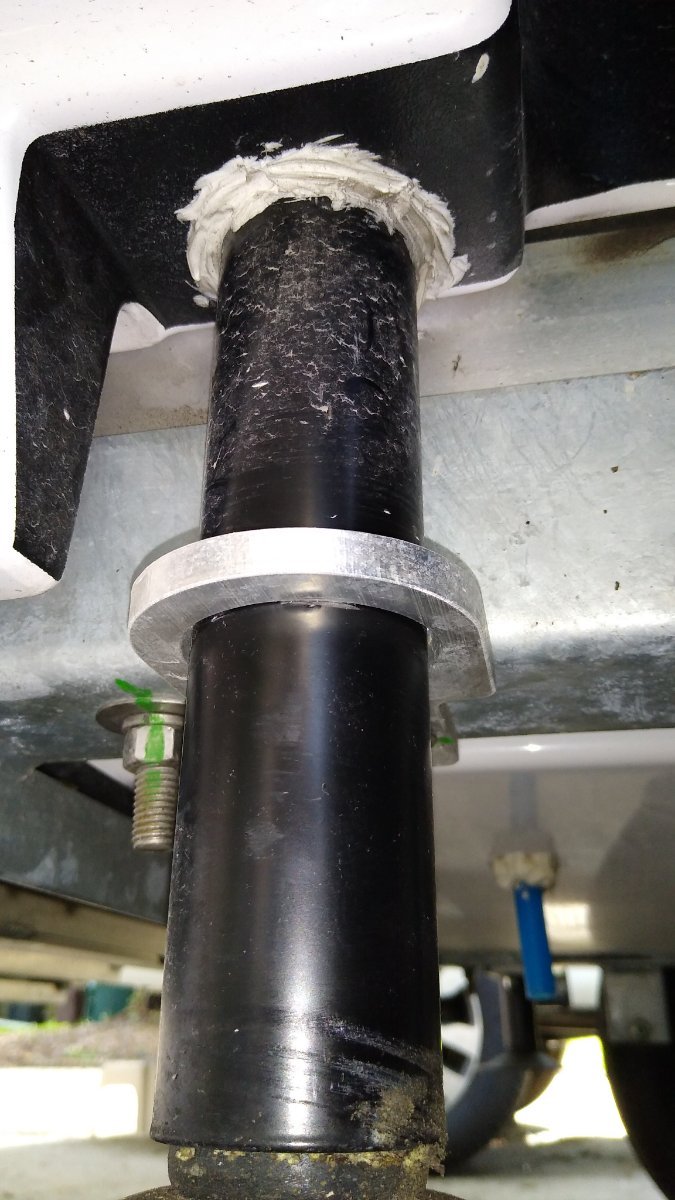
rangerK9 take a look at this recent post about Creaking Stabilizer Jacks. There's a lot more information, including images and video, on this topic there. This image was not posted on the other post. What I tried was above the caulk inside the trailer and adjust things using the two bolts securing the stabilizer jack head bracket inside the hull and the collar on the outside on the trailer frame. The second bolt is hidden by the jack. Hope this helps.
1 point
-
On a recent trip I had the misfortune of draining my Lithionics down to the point where BMS shut them off. At a campsite without electric I was running refrigerator on propane and ran out of propane. This switched fridge to DC and depleted the batteries overnight (they were already low do to cloudy weather). That left me with the "fun" task of hand-cranking the jacks up which of course was in a torrential rain storm. As others have said, hang in there. Leverage this forum and online videos to get comfortable with trailer functionality. There's a lot of technology in these Ollies!1 point
-
As many of you know I am raising my prices as my costs have increased significantly over the last 3 months. If you ordered before today you are grandfathered in at the old pricing. Link to PDF Catalog: https://drive.google.com/file/d/17XFL_5ine1WusHVKYguUBRmkj2KnJUN_/view?usp=sharing
1 point
-
My brother reworked a vintage Old Town canoe. (1920s?) Beautiful.1 point
-
Thanks @Dave and Kimberly , the Kayaks are Old Town Cayuga (rotomold) 13 footers so they cut through the water nicely still do not hold a candle to a well made FG or Kevlar. We were once out with some people who had a 17 foot tandem FG very thin, narrow, sleek and light weight. The couple would flawlessly perform 3-4 strokes and they were gone. It was quite amazing to watch.1 point
-
Those are beautiful pics and LOVE THOSE kayaks!1 point
-
A dry bath in a small camper is comprised of some "expensive" real-estate given how much actual time is spent in that shower versus that same space's other possible uses. Yes, I know of a number of people that use the shower as a storage closet, but, of course that means cleaning out the closet/shower each time you would like to use it for wet purposes. The Oliver is my first camper with a wet bath and I didn't think that I would actually be happy with it - but - I am now. The fiberglass is very easy to clean/wipe dry and the space used for the closet is much more practicable. Bill1 point










.thumb.jpg.91ab93de4a01f9040d89cc75c92a3115.jpg)















-
Recent Achievements
-