Leaderboard




Popular Content
Showing content with the highest reputation on 12/27/2022 in all areas
-
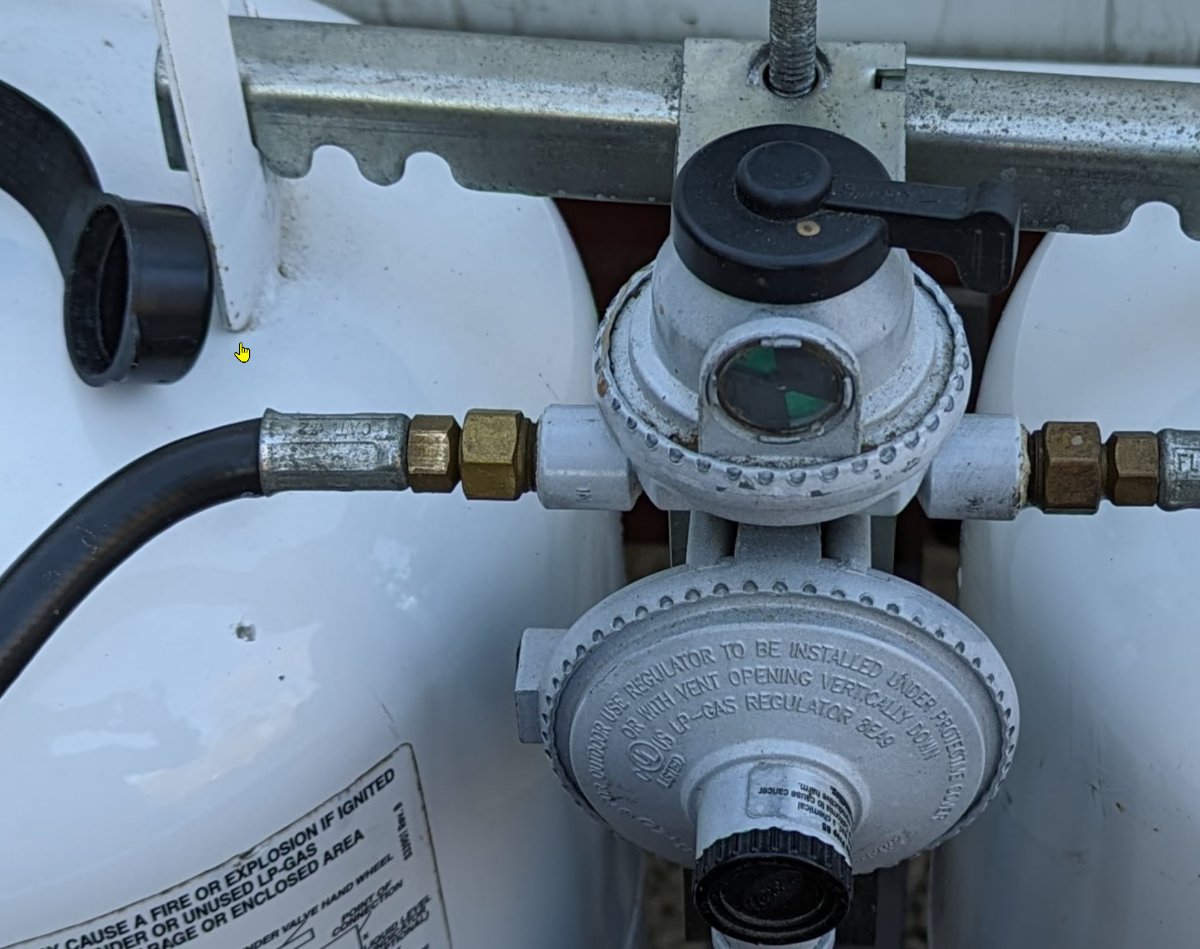
For what its worth - last Spring I replaced my hoses with two of THESE in the 12 inch length combined with two of THESE emergency gas cut off devices. All was purchased from TechnoRV.com. A couple of notes - 1 - make sure that you check the size of the connections on the hoses. Given your hull # I'd bet that you will need adaptors for these hoses to connect to the regulator. 2 - Given that the fittings on any of these hoses are made of brass, be careful that you do not over-tighten the fittings in that you stand a good chance of stripping the threads on that relatively soft brass. I believe that the torque setting is 25 foot pounds (but please reconfirm this). 3 - Make certain that you use "gas" tape or pipe dope. The tape is a bright yellow color and the pipe dope will be clearly marked as for use with gas. Bill6 points
-
Carrying too many spare parts gets really expensive. Not only takes up more space, but then I need to upgrade from a 1500 to a 2500 truck. Oooh, that's a good reason. LOL5 points
-
Getting a new regulator will make you feel good for being on the ball. Getting a new truck will put a smile on your face every time you have to go somewhere, or even look out in the driveway. 😉4 points
-
Just stick with the same length and style in a quality brand hose. The e-trailer cheaper MB Sturgis hose is made by MB Sturgis, not just a repackage like the JR and Camco. Hoses with the stainless steel overbraid won't do anything for you in a protected tank enclosure except cost more money.4 points
-
Pretty common for those pigtails to fail with age. I wouldn't bother replacing the regulator if it's functioning correctly.4 points
-
And getting a truck big enough to haul everything will get you admitted to the cool kids club.3 points
-
That’s the idea….3 points
-
Shut off both propane tanks. Wait a few seconds. Then SLOWLY turn a tank on. Sometimes(?), turning on tank to quickly will jam the regulator. May not work, but nothing to loose???3 points
-
Yes, I thought the same thing. But, the original hoses did give me more "wiggle" room - particularly when taking the tanks in and out for refilling. Having said this, I'd still do the same thing over again in that the new hoses really do reduce that big bend in the original and clean up the space a bit. Bill2 points
-
There are a couple of sales going on that I saw today: 1 - The Cooper Discoverer HT3 LT 225/75R/16 has a holiday "special" good until December 31, 2022 at Discount Tire where you get $100 off on a set of four. 2 - Harbor Freight has all generators on sale at 20% off valid through January 5, 2023.
 2 points
 -
Or, keep using the old working regulator and carry a new one as backup.2 points
-
You could replace the regulator and carry the old one as a back up.2 points
-
Results After 2 Years Of Use: We have never had any problems at all with our composting toilet. This is mostly due to doing our homework by having read through the earlier parts of this forum and watching a few you tube videos. Helped us avoid problems others have suffered through. The only modification we've done is John's idea on drilling a few small holes in the bottom of the container holding the pee tank. Never had bugs of any sort. The fan housing unit has a fine screen where it feeds into the solid tank so no bugs can come from the vent pipe into the solids container. There is also a fine screen on the intake side. For good measure we add a half cup of diatnatious (sp?) earth to every load of coir. We don't add toilet paper to the solids container. Seemed like a gross option when we first started but has turned out to be an easy solution. We use the same round step lid garbage container suggested earlier in this thread. We line it using recycled plastic bags from grocery store - the type you put fruits and vegis in. Soiled paper and wipes take about 5 days to start to fill the bag and we've never had any smell at all. Weird but true. As previously discussed, the only smell associated with the toilet is a slight potting soil odor when changing the coir, even if the toilet has been recently used. We add a few ounces of vinegar to the pee bottle before using and there is never any smell from there either except while emptying a full container. Even then, it's surprisingly slight. To clean, we allow to soak for a few hours filled with water with 1-2 tablespoon of bleach. Our bottle is 2 years old, has had lots of use and looks practically new. To empty the solids bin, while on the road, we simply cover with a 13 gallon recycled garbage back, invert and ban the bottom a couple of times. If anything sticks, we use a paint stir stick to dislodge which, in turn, we wipe with alcohol and store in a zip lock. If at home, we dump the contents at the base of a bush and spread out with a rake. Plants seem to love it. While on the subject, we dump full bottles of pee around bushes as well and they really seem to benefit from it. We use coir as it is cheap and more environmentally friendly than peat moss. We travel with two 1 gallon zip locks of prepared material (the perfect amount to fill container to center line of stirring units) and an extra brick big enough for to make another batch. Soaking for an hour is all it takes to totally break a brick down to the right consistency. The video on the first page seems like an easy process. Our test for proper hydration is to squeeze a fist full of material in our hand. If it almost holds together, it's just right. Takes about two weeks of constant use by the two of us to be ready for changing. If not quite ready after a trip, we leave the fan on for about a week, then unplug and let it sit and continue to decompose. True for winter as well but, if around freezing or colder, the decomposition will pause till things heat up again. No smell at all even after the fan is turned off. We couldn't be happier with this system.2 points
-
@Steph and Dud B I’d squirt some tri-flow in the locks. Tri-Flow1 point
-
I did a review on their site. Other reviewers have complained about the same thing.1 point
-
It seems to me that the brass 90 built into the 12" replacement hoses you bought would reduce the stress on the hose connections, likely increasing the useful life of the assembly. Does anyone know why Oliver doesn't install 12" hoses with the brass 90's, instead of the longer hoses that must be bent into a tight curve to make that 90-degree turn from the tank to the regulator connection?1 point
-
Bill, Looks like I already have the hose connector adaptors.
1 point
-
Well, that's a huge cost difference when I'm already looking pretty good, AND I have the Decked system already in the truck. LOL But, if I do more mountain-driving, then I'm sure I'll change my tune. 😝
1 point
-
You’re on to something now! 👍🏻😊1 point
-
I'm very surprised to hear that. I think you should send an email. That's unacceptable, imo. Ps spray de-icer really did work, when I lived in Minnesota. Magic. But, we used it on vehicle door locks. A lock on the flat lid should have a cover. (That could freeze, too, but....)1 point
-
We had a Diamond Back covers on a previous Tundra and Frontier. Really like Diamondback covers. Should have purchased one for our 22 Tundra, too.1 point
-
I have one on order for my 2019 Toyota Tundra....Arrives Jan. 3rd.............Sold my Paragon cover and replacing with the Diamondback1 point
-
This has happened to me with propane tanks not in my trailer. Easy to try and see if it works.1 point
-
More feedback on our Diamondback. It has issues in freezing weather. We had rain followed by a hard freeze. Afterwards, I couldn't open my Diamondback for 2 reasons: The large rubber gaskets froze to the bed rails and tailgate. I was able to open the tailgate my manipulating the rear gasket, but raising either half of the cover was out of the question. The keyholes do not have weather covers. Moisture gets into the cylinders and freezes solid. I couldn't even insert my key. They will certainly fill with snow and ice after every storm. Careful use of a small torch temporarily solved my problem but they'll freeze again tonight. Ordered some spray-in lock deicer. Hope that stuff works. My Diamondback ratings: Security: A Load carrying: A Appearance: A Water resistance: B Winter performance: C1 point
-
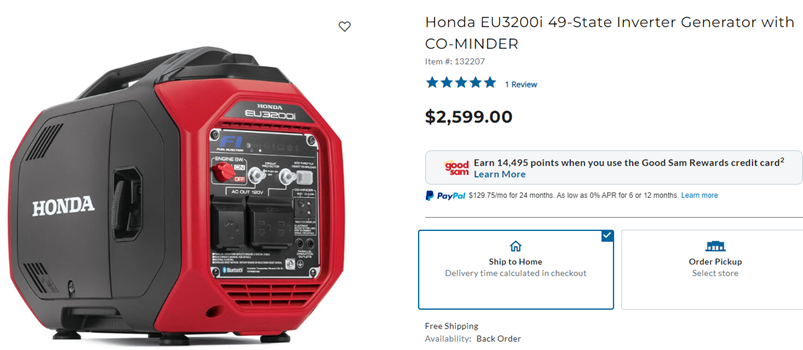
Coming soon the HM LP conversion kit for the 3200. https://www.hutchmountain.com/collections/propane-natural-gas-conversions/products/honda-eu3200i-propane-natural-gas-gasoline-generator-tri-fuel-kit1 point
-
A pretty neat promo vid on the EU3200i.1 point
-
SnakeRiverIdaho: Interesting new generator. Its 65 pounds packs a lot of power. I could justify that weight in my basket; where as the traditional Honda 3K generator for my rig is just too much added tongue weight on our F-150 regardless of where I would put it. For those that need the power, I agree this would be a great choice. However, it is certainly pricey. GJ
1 point
-
THANKS GUYS FOR THE HELP!!! Happy Holidays and Happy Camping!!!1 point
-
Like John, I’m also a big fan of Redline CV-2 grease, and I use that for my annual Ollie wheel bearing maintenance. But with the jacks, considering the pain in the a** it is to clean out all of the old grease from the gear drive mechanism, plus the very limited running time that the jacks actually operate (only a couple of minutes total run time per year for the jacks, compared to wheel bearings that see many many hours of high speed, high temperature and high load), I just used the grease recommended for the jacks (packed well) since mixing different types of grease isn’t recommended.1 point
-
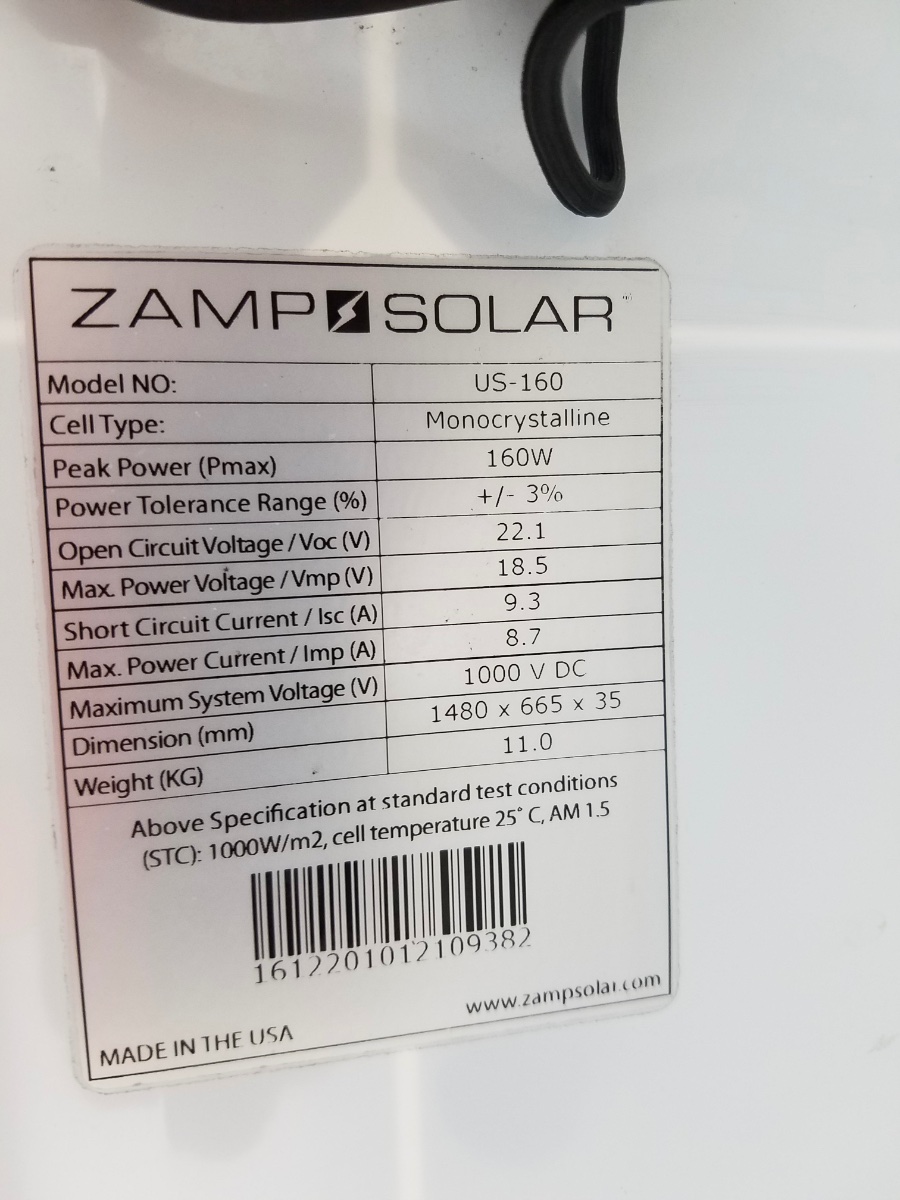
You best bet would to be look at the label on the bottom side of the original panels. The label should look like the picture below, but have different values. Search online for a PWM solar charge controller calculator if you are going to use the stock Zamp controller. Or multiply the Short Circuit Current / Isc value by 1.25 to find the max amperage value you need to account for. Mossey
1 point
-
You as well! Wishing all of you a safe and happy holiday season.1 point
-
"That's" putting a new "wrinkle" on it!😃1 point
-
Merry Christmas to All !!!
1 point
-
Perhaps a fitting "offset" to the wishes above. But, the wishes are the same! Bill
1 point
-
I think it is. You said in your first post that your batteries were fully charged by the generator. It won’t do that unless you have a bonding plug. Next time you hook up the generator, if your code is not reading E0, try turning off the main AC breaker to see if it doesn’t reset. I’m guessing the system is operating normally.1 point
-
For THAT - I'd change my name to "Ollie" 😁1 point
-
Hey Chris, First off thanks for the kudos! My wife and I both stepped into our trailer while it was running in the gen basket during our shake down and we did not feel any vibration at all and you could barely hear it. Needless to say we are happy. We purchased a hydraulic lift table from harbor freight to initially load the gen onto the tailgate. It works great. From the tailgate to the gen tray we just both lean in, lift and set it in. -David1 point
-
Charlie: With a Solar System, Lithiums, a Champion 2500 Dual Inverter, a1000 watt Yeti AND a 300 watt Jackery (Power Station).... I think you take easily have mastered any concern for "Power Security"! Not that you would ever need it, but I bet you also have a set of 20 foot heavy duty jumper cables as we do! Well done. GJ1 point
-
Dave, Are you sure it produced heat? If the blower shuts off 20 secs after startup with no heat it's most likely the sail switch. If the igniter lights and you feel heat and then shuts off, it's another problem. That's my experience. The sail switch, if that's the problem, is fairly simple to remove from outside the trailer and see if it's gummed up with lint, etc. Oliver service was very helpful with instructions. Best of luck :) John1 point
-
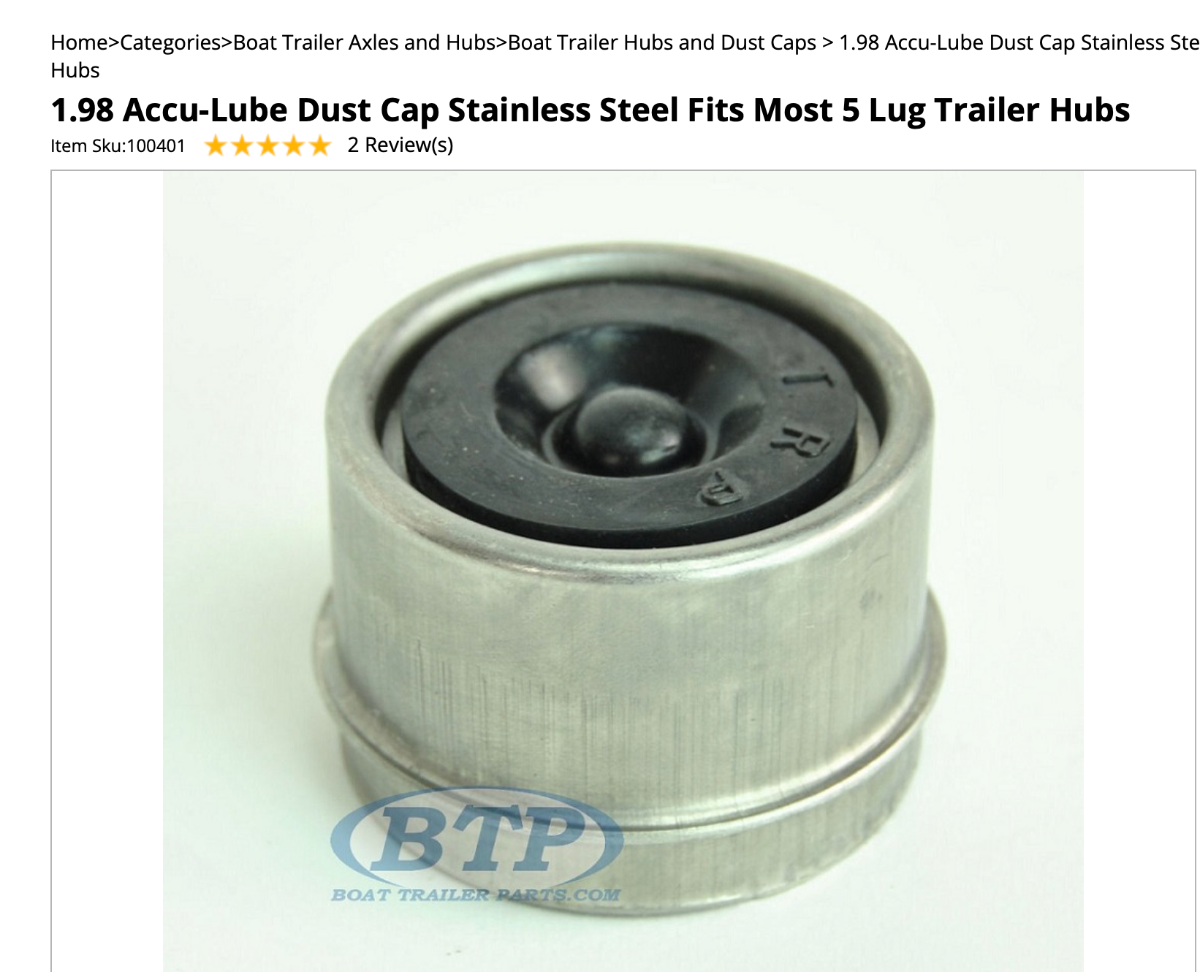
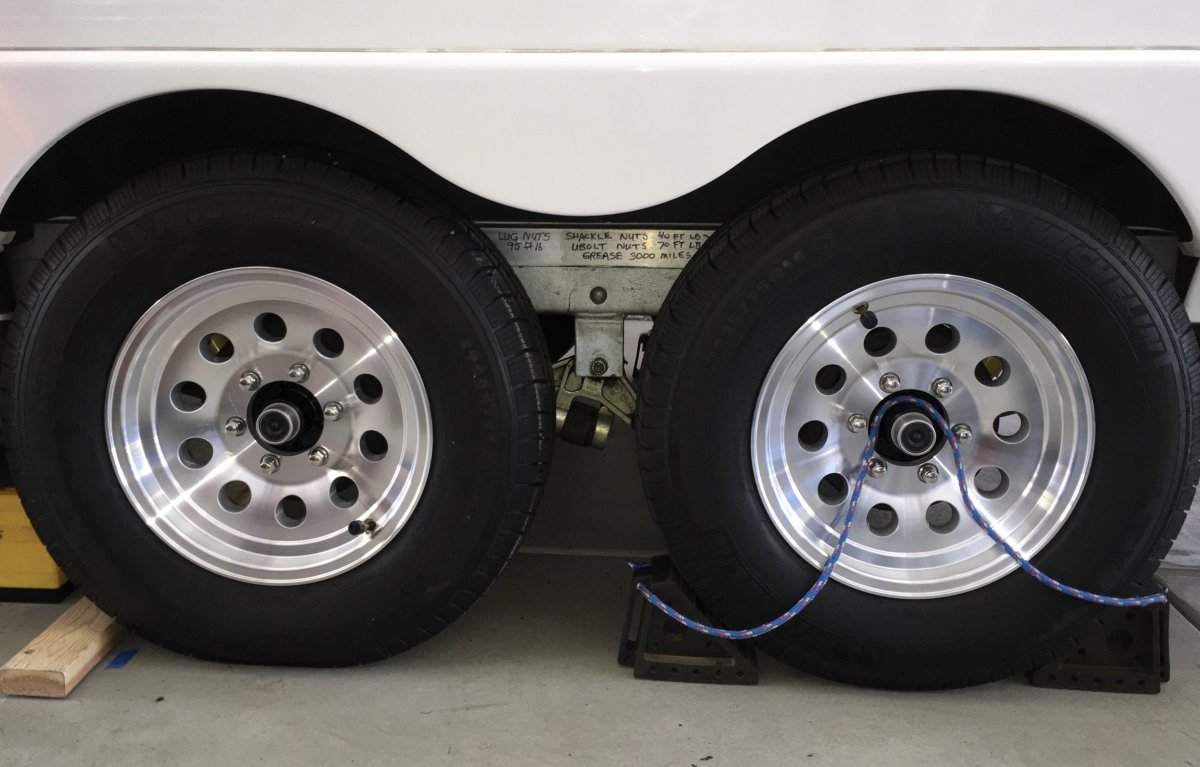
Or throw yours away and install stainless caps over the axle hub nuts: I use this type so I can pop the rubber out to check the condition of the grease. Add a slight skim of clear silicone sealant to each cap before driving it in, so it will not seep oil. Paint the hubs gloss black and it looks fine. This way you can readjust a loose nut without removing the wheel and you can take a more accurate temp reading of the hub... John Davies Spokane WA
1 point
-
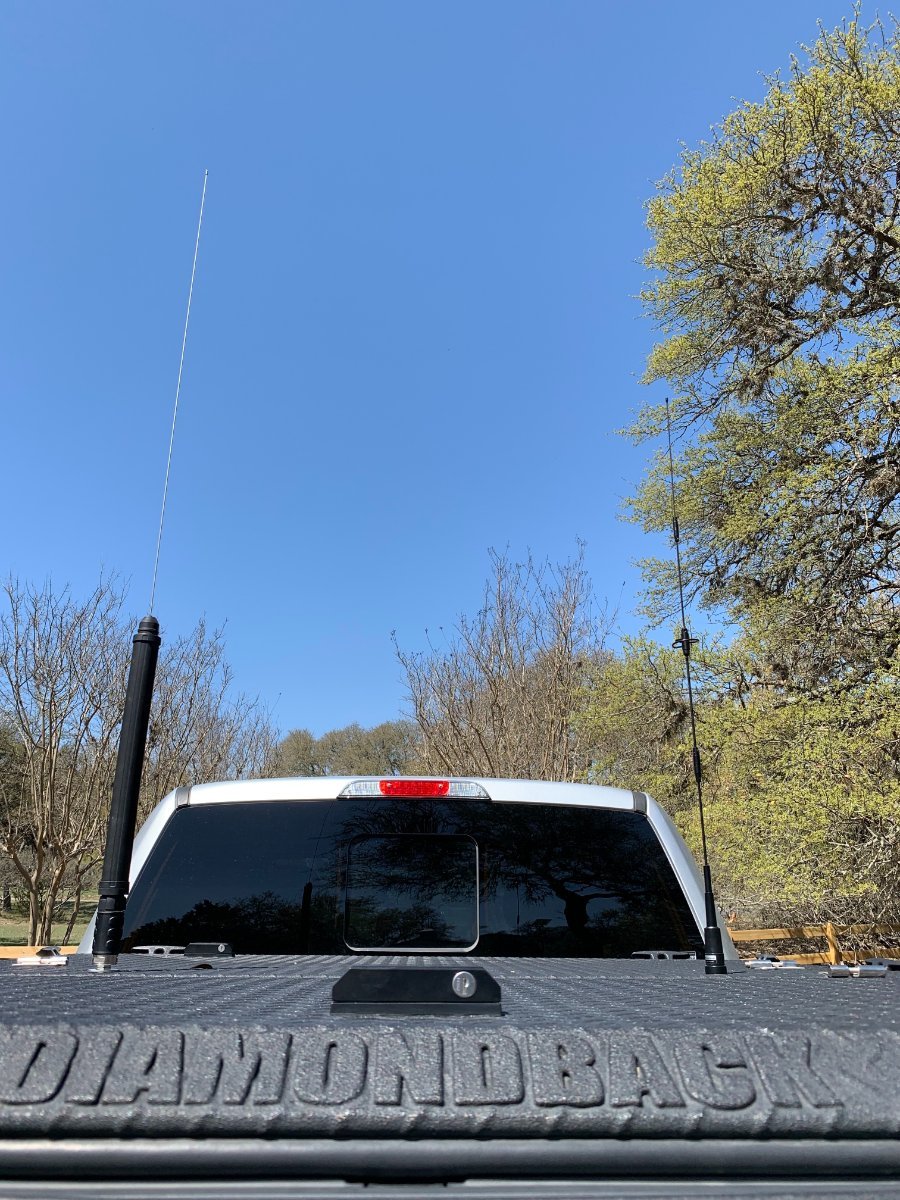
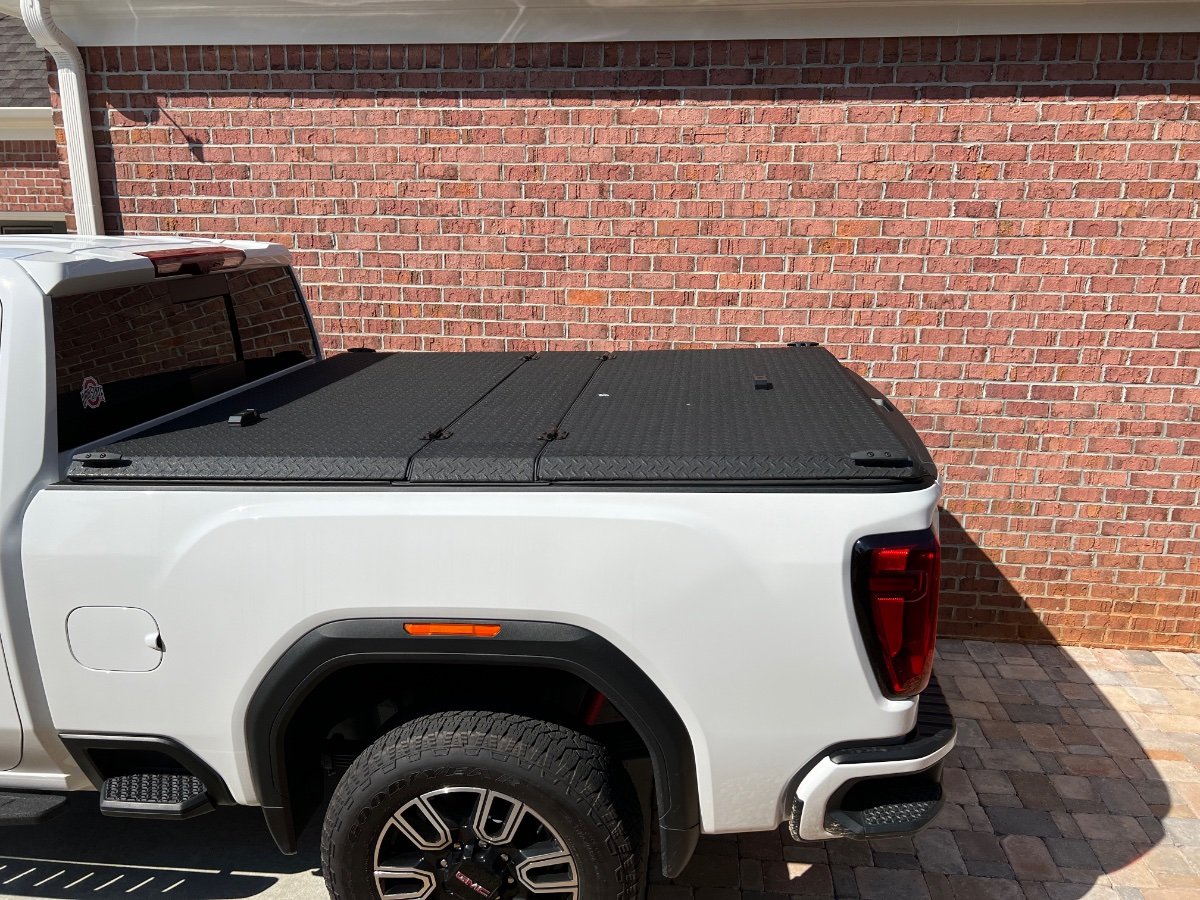
I really like my Diamondback. I have all of the tie down points, which makes it convenient for hauling oversized items on top, knowing they won't budge at all. It did leak underneath the fat rubber seals initially. That was easily remedied by adjusting the height of the hold down rod brackets. It is an impressive, yet expensive looking piece of equipment for my F150. ALSO . . . after bonding all panels together and bonding the center piece to the truck bed, which is bonded to the entirety of the truck with 15 large brass ground straps, it provides a magnificent ground plane for my ham radio antennas. I've talked all over the world with the ATAS 120A on the left!
1 point
-
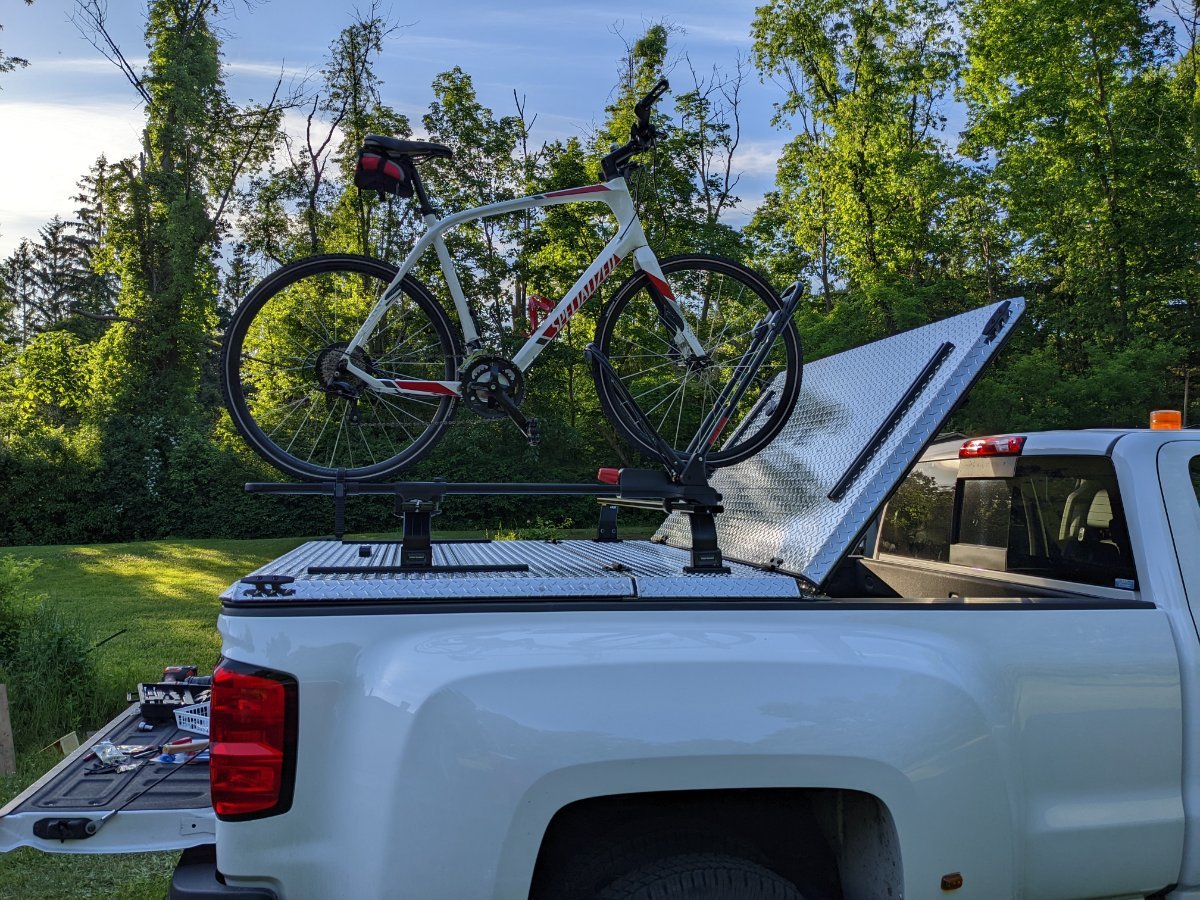
Diamondback installed, with the Front Runner racks and Yakima bike racks. Just about ready for our delivery date now.
1 point
-
Several posts with photos about Diamondback covers at this link.1 point
-
I have one and I love it. Makes the truck bed like a vault. If I have to haul something large I can remove the whole thing in about 5 minutes. I'm currently working out a plan to install a mount for a removable solar panel on the back panel to charge a battery in the truck bed to power my iceco fridge/freezer. Only con is the price...
1 point
-
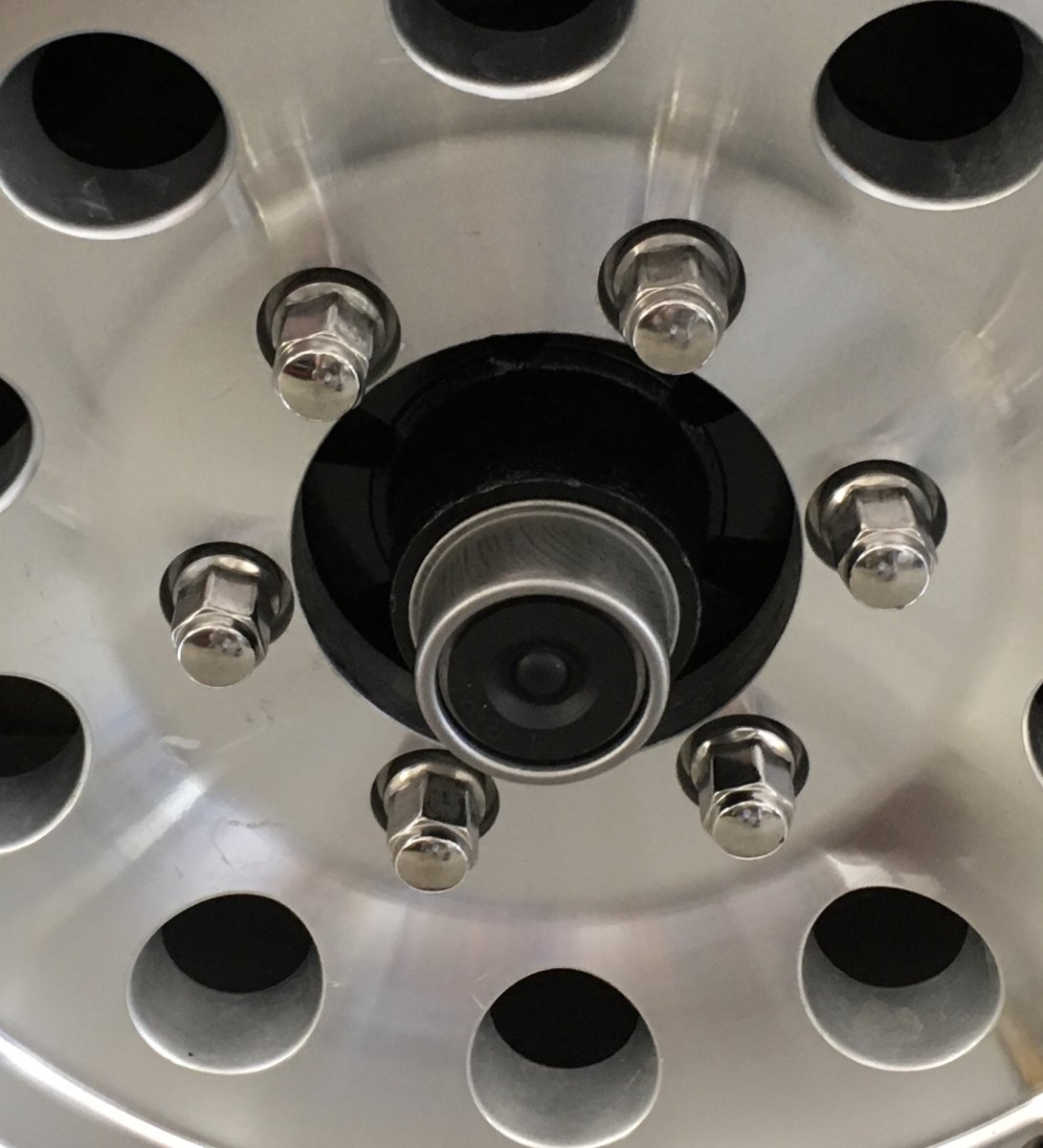
I thought I would revive a stale thread. I was rotating tires today, checking brakes, doing the Dexter brake recall and other stuff and decided to eliminate the chrome wheel bullets: I never cared for them- they are way too long, they dent and they look dorky IMHO. Now I can easily check hub temperature, pop the rubber plug to inspect the condition of the grease, and pop the cap to adjust a slightly loose bearing without removing the wheel. Also it is a little easier installing the lug nuts. The new bearing caps are stainless steel so they will not rust, and the paint is Duplcolor ceramic brake caliper paint. Very good paint, no primer needed, fast drying and very tough! They also offer the paint in red (the fastest color for sporty cars) and silver, if you wanted to make the hub blend in with the wheel. My Land Cruiser has no center caps, now the trailer matches. I am sure it will be faster now 😀 John Davies Spokane WA
1 point
-
For those that are really into this subject simply type tools and/or tool box into the search function and you will get even more tool information. Bill1 point
-
What is Galvanic Reaction? - When two dissimilar metals are in contact and exposed to an electrolyte substance it causes one of the metals to lose ions and slowly consumes that metal. - It works much like a battery. One of the metals will become and act like an Anode(Negative) and the other a Cathode(Positive). This process will slowly consume the Anode and actually strengthen the Cathode. - Galvanic reaction occurs when an electrolyte combines with water. Depending on which electrolyte is present, it will completely(strong) or partially (weak) ionize with the water to form a strong or weak electrolyte substance. What is an electrolyte substance? Strong Acids Examples: Hydrochloric Acid, Sulfuric Acid, and other Acids Strong Bases Examples: Sodium Hydroxide, Calcium Hydroxide, and other Hydroxides. Salts Sodium Chloride Winter Road Treatment: - Different cities utilize a handful of different chemicals to treat roadways for ice. Most of these are from a form of chloride which does become an electrolyte once dissolved with water. TIP: It is always a good idea to clean these chemicals from any vehicle and/or camper when possible. What type of impact does this play on Aluminum? - When oxygen is present (in water), aluminum naturally reacts to form aluminum oxide and this is the key to its ability to resist corrosion. Unless exposed to a substance or condition in which destroys the protective layer, aluminum will remain resistant to corrosion. - When aluminum contacts another metal(steel for example), it sets in place the possibility of a galvanic reaction if an electrolyte substance comes in contact with the metals. What does Oliver do to prevent this natural process? A protective layer, cavity spray, is placed between the two metals. Zinc anodes are attached to the aluminum frame The Zinc becomes the anode part of the equation and if the galvanic reaction process takes place, it will consume the Zinc anode instead of the aluminum frame. How often should I check my Anodes? - Depending on where you live or where you travel you may or may not even have a galvanic reaction but it is still a good idea to inspect your anodes at least once a year and more if you start to notice that the anode is deteriorating.1 point





















-
Recent Achievements
-