Leaderboard


Popular Content
Showing content with the highest reputation on 02/24/2023 in all areas
-
TEASER POST: Ken and I are collaborating on a thread about the Nova Kool R5810. We will be significantly expanding upon his, and Randy's (Try2Relax), dated posts on the topic. It briefly compares the R5810 and IsoTherm CRX1140. But mostly it is all about how to DYI retrofit it into into our LE2's. If you are considering a DYI replacement of your Dometic refrigerator, it will be something you would be interested in. Give us a week or so and I'll have it posted. GJ6 points
-
Why title this "...towing vehicle issues"? As I read the first post from Bill and Nancy, they were commenting on how well their chosen tow vehicle was working out for them. Just because many disagree, doesn't mean their comments aren't valid, from their perspective. Perhaps "positive towing experience" would be a more appropriate title? Andrew4 points
-
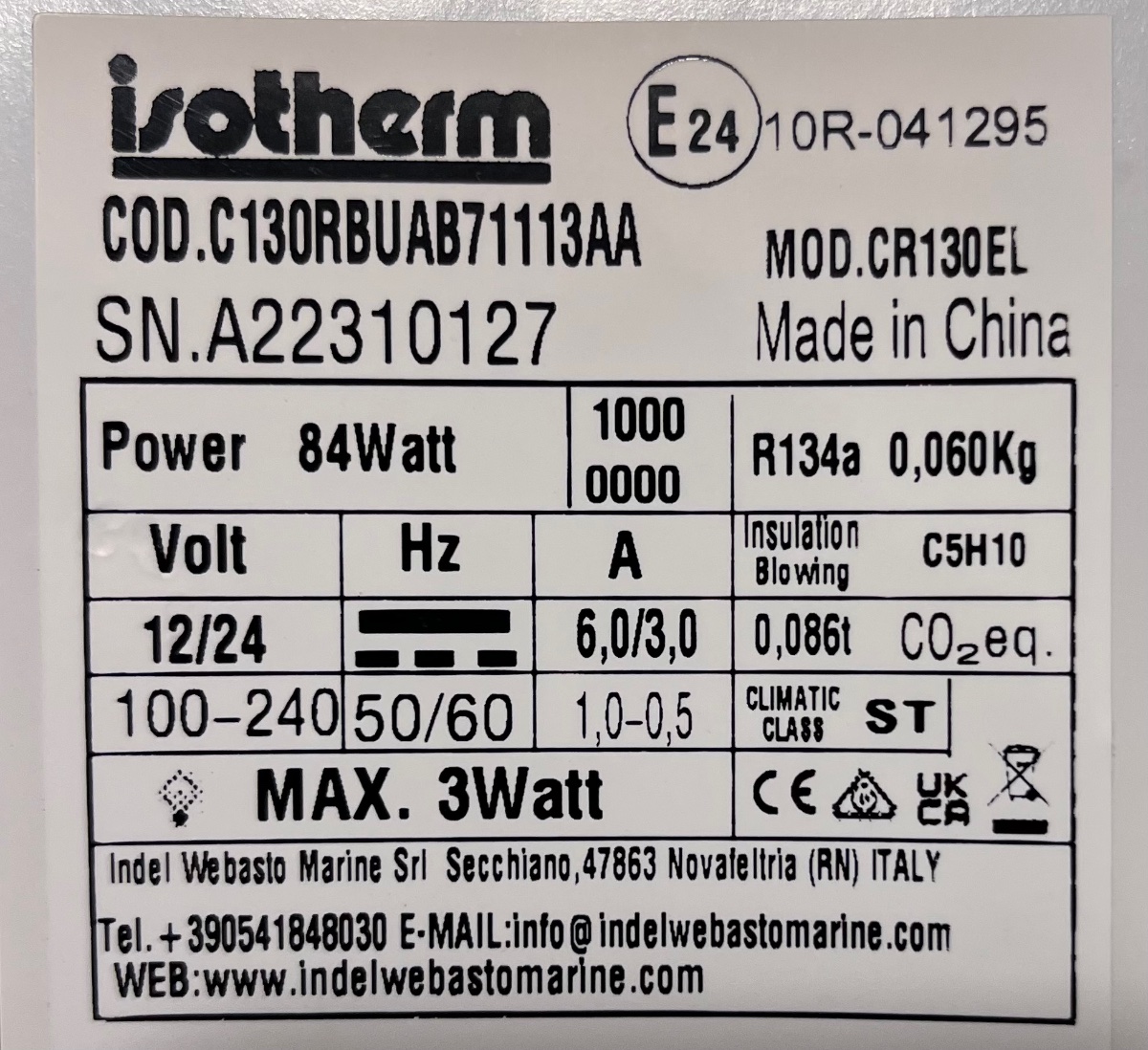
The Isotherm fits through my door opening with 1/2” to spare on each side. I did tape down the protruding wires on the compressor so they would not catch. John Davies Spokane WA
 4 points
 -
I really like the fuel economy of several diesel TV available. Also like the diesel lower RPM needed to reach maximum engine torque for towing. For us selecting a TV to be a daily driver, good overall fuel economy, and tow/load capacity to haul camping gear while towing Ollie. With the new breed of smaller displacement turbo charged gas engines, found the new Tundra 3.5L twin turbo engine to deliver good fuel economy unloaded and after several miles of testing getting over 15MPG towing Ollie in eastern US after finding the sweet spot for gear/RPM/MPG combination with cruise control on. Not as good of MPG as many diesels, but good gas engine low RPM torque performance reaching maximum torque at 2400RPM. Used CAT scales to find our 1/2 ton TV curb weight after installing accessories. I did not document accessory weights during installation. Installed side rails, folding hard bed cover, bed mat, mud guards, and Timbren SES rear suspension kit. Weighed TV with all contents/cargo removed, accessories installed, full 32 gallon fuel tank, and no occupants. Subtracted Curb weight from TV GVW to learn payload capacity. Calculating your truck's maximum payload and towing capacity: https://www.readingtruck.com/calculating-your-trucks-maximum-payload-and-towing-capacity Edit: I'm off topic again. Retired from the railroad, never met an unhappy steam or diesel Locomotive Engineer. 🚂3 points
-
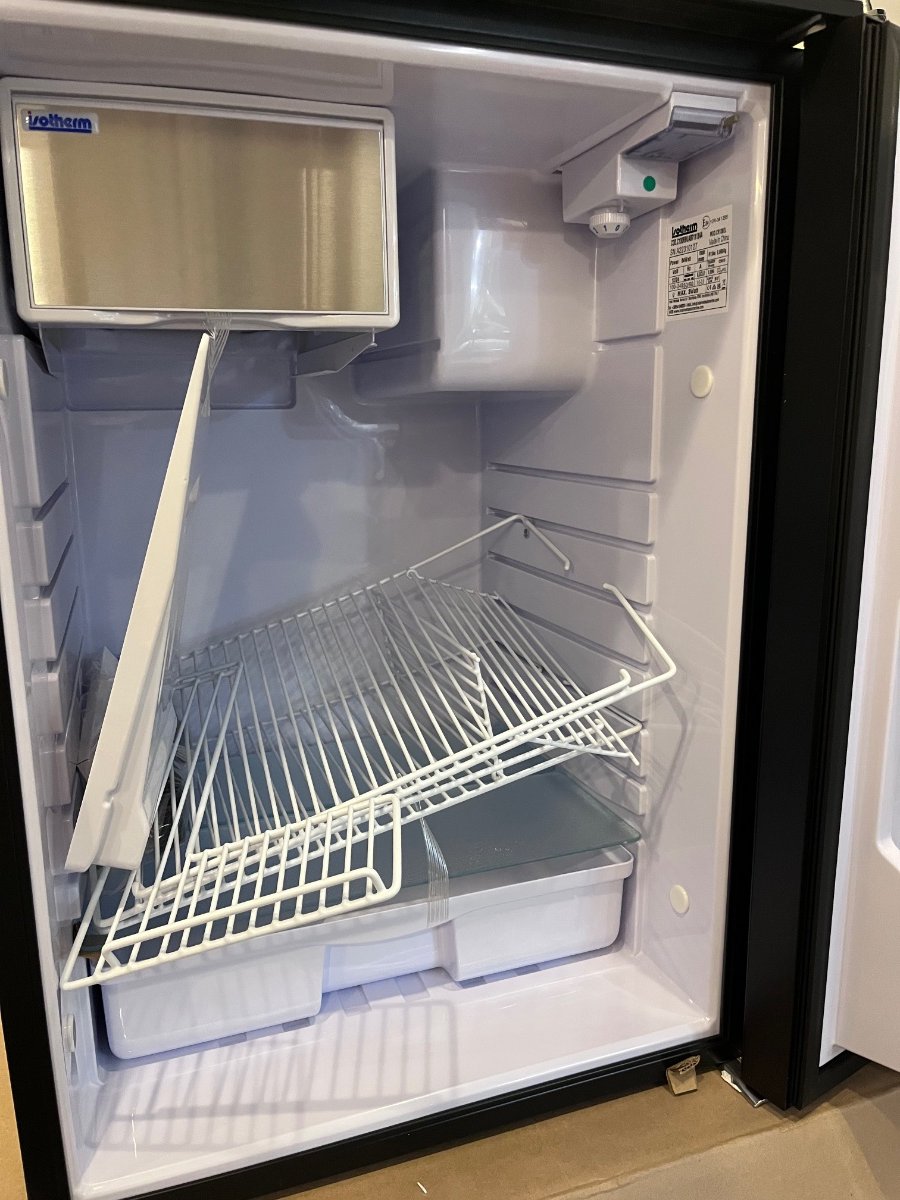
That was a mess,,and shouldn't have happened. Our cheaper truckfridge had hold-downs for the shelves. I have complete confidence that JED will get it sorted out.3 points
-
Our 2019 Tundra with 5.7L V8 and towing package is adequate for towing our Elite II. But IMHO, it is not optimal, like a 3/4 or 1-ton gasser truck could be. We will not find out until prices for heavy-duty trucks (hopefully) settle back down in a couple of years from today's obscenely-high price levels. We get between 8 and 9 MPG when towing the Elite II with regular gas. Not optimal, but for now, a sensible trade-off.3 points
-
I guess we will have to have this conversation a year from now because so far its towed the trailer without any problem. I may change my mind 2 years from now but its been perfect so far.3 points
-
I realize this not what you want to hear but as most of us have already stated, this is not a good choice for a tow vehicle for the EII. It is underpowered and won’t provide you with a pleasant towing experience.3 points
-
I agree bigger is better but if we went bigger we out priced our selves on the truck. We used every penny we had to buy what we did and almost backed out of everything truck and trailer. But we only live once so we are giving it a try. So far so good and we dont travel any distance other than picking up the trailer in TN. As soon as the snow stops I plan to go to the local cat scales and see where we are at. The truck has a rated tow capacity of 7,700 pounds Oliver told us its pretty hard to get the trailer over 5,800 pounds and we dont have any black water or generator so that helps. That leaves us 2,200 pounds to put in the truck. Take off 580 pounds for the tong weight and 330 pounds for me and Nancy that leaves us 1,200 lbs of useful load, unless Im figuring something wrong. We travel light so that helps and we always drain our gray water so that takes off another 240 pounds. You're talking to two people who up until now traveled the country on motorcycles so we travel light. So Ill keep you up to date on what we weight on the cat scales to see how close we are to the real numbers. We also have an Anderson hitch which I think is a must. Thanks for the insight Bill3 points
-
So after reading other peoples post I decided to see if I was accurate on what I had said. My wife accuses me of being a fisherman and exaggerating so I pulled my travel logs out and she was right once again. But I wasn't that far off. On the way down it was all flat highway driving straight through from MA to TN non stop. Stopping only to stretch legs use the bathrooms and get Fuel. We stopped 2 times for fuel and averaged 28.2 gallons on the way down. On the way back with the trailer we stopped for Fuel 6 times and averaged 18.86 MPG but it was also a lot of twisty mountain roads and a lot of stop and go traffic through NY city. So all and all the mileage was pretty good. Bill
3 points
-
Ditto Rivernerd's comments! Might find myself in the same situation a few more mods down the road... John Davies - that poor fridge sure looks abused. Amazing there is no damage. Shippers and warehouse forklift drivers are not known for their gentleness and respect for our expensive toys 😞3 points
-
I am keenly interested in whether the Isotherm fridge will fit through the door of your Elite II without removing the door frame. I noted that you had to take the old fridge out in pieces. My wife would strongly prefer a Danfoss compressor fridge over our absorption fridge (after I mentioned an article on RV fridge fires), so the day may come when I get to do what you are doing right now. I look forward to your usual clearly-written and photographed report on the process!3 points
-
Big Cat, Message me with your email address and I will send you a list of items I used and the installation instructions I followed for two 170-watt panels. I can send you pictures as well, if you would like. This should get you at least 85% there. Andrew2 points
-
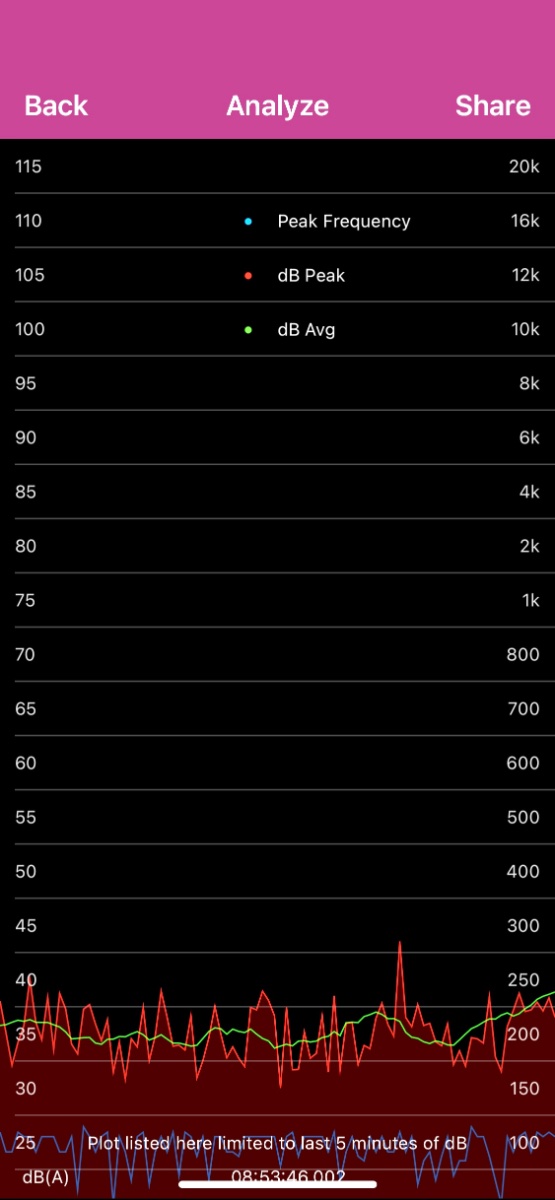
I finally received an undamaged fridge from West Marine. I set it on the cabin table (lowered position) and ran it for a few hours on 120 volts AC. When I first turned it on, I thought it was dead, then I saw the fan spinning and felt the compressor. Yep, running…. I did this sound test from 12” away from the compressor. Woohoo! I haven’t seen an actual sound reading before. I am blown away. But not blown away by how the inside looked “as received”. Nothing was damaged. I am doing extensive carpentry this weekend. John Davies Spokane WA
2 points
-
This math doesn't seem right. I am not a Canyon owner, but I looked up the rated payload of the 2022 diesel version and it was stated (Car and Driver) as 1605 lbs. There should be a sticker (probably on the driver's door jamb) that states the actual payload rating for your vehicle. Remember to subtract the weight of any permanent accessories (such as tonneau cover) that you may have added. Using your figures of 580 lbs tongue weight and 330 lbs for people, this leaves 695 lbs of payload at the 1605 rating. The towing capacity and payload numbers are not directly related.2 points
-
I think the "issue" being raised (and it's a valid issue) is that as Bill is doing his weight calculations and assumed safety margins, he is mixing up towing capacity and payload capacity. They are not the same thing. He has mentioned the towing capacity rating of 7,700 lbs. but then is using that number to calculate how much load he can put IN the truck instead of using the cargo/payload number from the truck door jamb sticker.2 points
-
That question ("Can I tow with 2006 Ford F-150 XL 4.2 L, 6 cylinder truck?") was unanimously resolved within two days many posts ago, The consensus was a resounding NO. Thread hijack moved to https://olivertraveltrailers.com/forums/topic/8915-bill-and-nancys-towing-vehicle-issue/#comment-874032 points
-
If you have a Xantrex unit, there are two things going on in there. The Inverter converts battery power to household current to run your outlets when you're not connected to shore power. That's what the round button on the Xantrex panel turns off/on. BUT... the Xantrex also has a Converter that converts shore power to 12 volts to charge your batteries. That will be on whenever you connect to shore power and is probably what's powering your 12v lights if you're plugged into shore power now and your batteries and solar are off. If the blue buttons on your lithium batteries are off nothing external can drain them. However, if you have the Platinum Package, those batteries contain internal heaters that could drain them. You should definitely check your Lithionics manual for the correct storage procedures for your specific batteries. Not sure what you turned off under the bed...2 points
-
Absolutely!! Any chance to see an Ollie, and owners. It will help my motivation to stay the course until I am showing my little beauty off also!2 points
-
Engineer's wife says you never stop, just temporarily suspend . Have a great time. Camping experiences have been some of the best, in our lives . Usually, no engineering required. Just time to have fun.2 points
-
You didn't mention shore power. I presume shore power is not connected, right? The lights are 12V. The inverter inputs 12V and outputs 120V. The inverter cannot be powering your lights. The lights are getting 12V power from somewhere. Are your lithium batteries the Lithionics brands now being installed by Oliver? If so, are all of the blue on/off buttons dark? More details of your 12V electrical system would help diagnosis. That includes brand of lithium batteries (which I presume are LiFEPO4), number of batteries and total amp hours. A photo showing their current condition would be really helpful. If you have three 130Ah Lithionics batteries, is there a red switch mounted on top of them?2 points
-
Bill: I weighed my Elite II after stocking it up with all my camping gear, linens, dishes, etc. (no generator no food and no gray and no fresh water). I have a compost toilet so no black water. The Ollie weighed 5760 lbs with a tong weight of 480 pounds. FYI, In my Owner's manual there was a description of a 3 step weighing process so you can determine the tong weight.2 points
-
Unexpectedly high fuel economy while towing is VERY suspect, but in certain conditions you can get it for short distances. For example going east (downhill) out of the Rockies with a 40 mph tailwind. But where it is generally low and flat, and without ferocious head winds… maybe once in a while. That goes completely out the window when you tow at high altitude in hot weather. You can’t deny simple physics, for a long distance it takes a fixed amount of energy to move X pounds of load. Having a very light modern (aerodynamic) TV, strong diesel, correct axle ratio, 2WD, and extra light trailer with rock hard tires helps. What you save on fuel comes back to bite you in the butt in long term diesel maintenance and fuel/ DEF expenses. And you have to hand calculate, not use the Lie-O-Meter on the dash. 22 mpg towing an LE2 …. we wish… I keep thinking about the new Sequoia with its Hybrid power train, it gets great mpgs toodling around town in traffic or cruising, but when towing 6000 pounds, the mpgs drop back down to close to the average of 12-14, it’s that darn physics again. I can live with my LC200’s dismal 10 mpg towing/ 16 mpg city, it is not my daily driver. John Davies Spokane WA2 points
-
First class work as usual. Gives me a few minutes to shower before I realize I didn’t open the drain valve.2 points
-
Melody: There are many half ton trucks that are NOT capable of pulling a heavy Ollie with high truck payloads. That said there are a BUNCH of OE2 owners using highly capable half ton trucks and even a handful using SUV's such as the Toyota Land Cruiser. I'll not (again) dip my toes into brands but you can search TV's on this forum and you'll get many scores of valid opinions. For example, there is the diesel vs. gas perspective, the gotta have a super duty perspective, and of course the gotta have a 4X4 perspectives (just to name a few) all with valid justifications. Just keep in mind that those valid posts are based upon each owners perspective about their rig (TV and RV) and how they use it. Some of those factors include: HOW THEY WILL USE THEIR RIG & WHERE TV payload weight? (Includes weight and number of seats needed, Etc.) Ollie weight Where they intend on towing? (Mountain roads, Flat Land, Near Others or boondocking alone well off the grid, etc.) What kind of roads will they be using or not using? (Interstate, paved, paved bad condition, maintained fire roads, bad fire roads, etc.) Is the TV your daily driver or is it a single purpose vehicle only used to tow Ollie? How many of the four seasons do you expect to normally use your rig? Your driving style (Aggressive, normal, and uber conservative for example) .And I am sure that there are other considerations that my fellow members could add to the list. WHAT ARE THEIR TV and RV METRICS? Axle ratings and the fully loaded certified actual loads on each Combined gross weight ratings of the rig and actual weight "all in" What towing characteristics does their trailer model exhibit? For example is it stable under tow with no sway such as OTT's are. Point is that opinions from any specific owner that their XXX TV is great/poop to tow an OE2 is useful only if they make clear what their use is. If they did, then you would know if it's germane to your use. Please also keep in mind that the MFG tow ratings are traditionally suitable for flat land towing on good roads. If you expect to be using your OE2 under more severe conditions, you need more capable TV. And there are many of suitable TV's half ton and up. So if you really want to get the best recommendations from your Ollie Family, you would be well served to draft out your thoughts about the above "meat balls" and your expectations for towing your OE2. GJ2 points
-
Melody, while I am sorry you already bought your truck and have some rearranging to do now, I am very thankful that you asked the question. I am in the market now for a new, or at least maybe new to me, and all of this is so helpful. I am getting my TV situated before I order my LE2 a few months from now. Thanks for all the amazing information everyone!2 points
-
You will not have a great deal of trouble finding places to camp, especially if boondocking. There are spots, Laird Hotsprings comes to mind, where dropping in could be a problem in the summer months but normally it is easy to find a spot. Do you have the capacity to charge from your tow vehicle? If not, consider a small generator like the Honda 2200i. Even with solar panels finding the sun in June can be iffy. The roads are generally quite good but do not pass up an opportunity to top off your fuel tanks whenever possible. On our last trip from Washington I hauled two full 5 gal gas containers but never needed to use them. If you doubt your tires condition, change them out ... it can be a long way between good tire stores. I am assuming you have a good GPS? If not, it is a good investment. I carry tire chains for the truck and cable chains for use on one axle of the trailer. Never had to use them during spring, summer and fall months but have encountered snow. The horror stories about endless miles of bad dirt roads and lack of services are very old history. Condition of the roads will vary from very good to not quite so good but the main routes are quite pleasant. It used to be that you could hardly make the drive without losing a windshield but that has not been the case for 15 - 20 years. The only stretches of dirt / gravel will be sections under repair as pretty much the whole routh has been paved for years. Have fun and enjoy - your Oliver is more than a match for the trip! Just one last thought - give yourself a lot of time (two months if possible). Your round trip is likely to be in excess of 7K miles and every few miles will present an opportunity for camping / hiking / fishing and enjoying a truly spectacular part of the world are limitless. Have fun!2 points
-
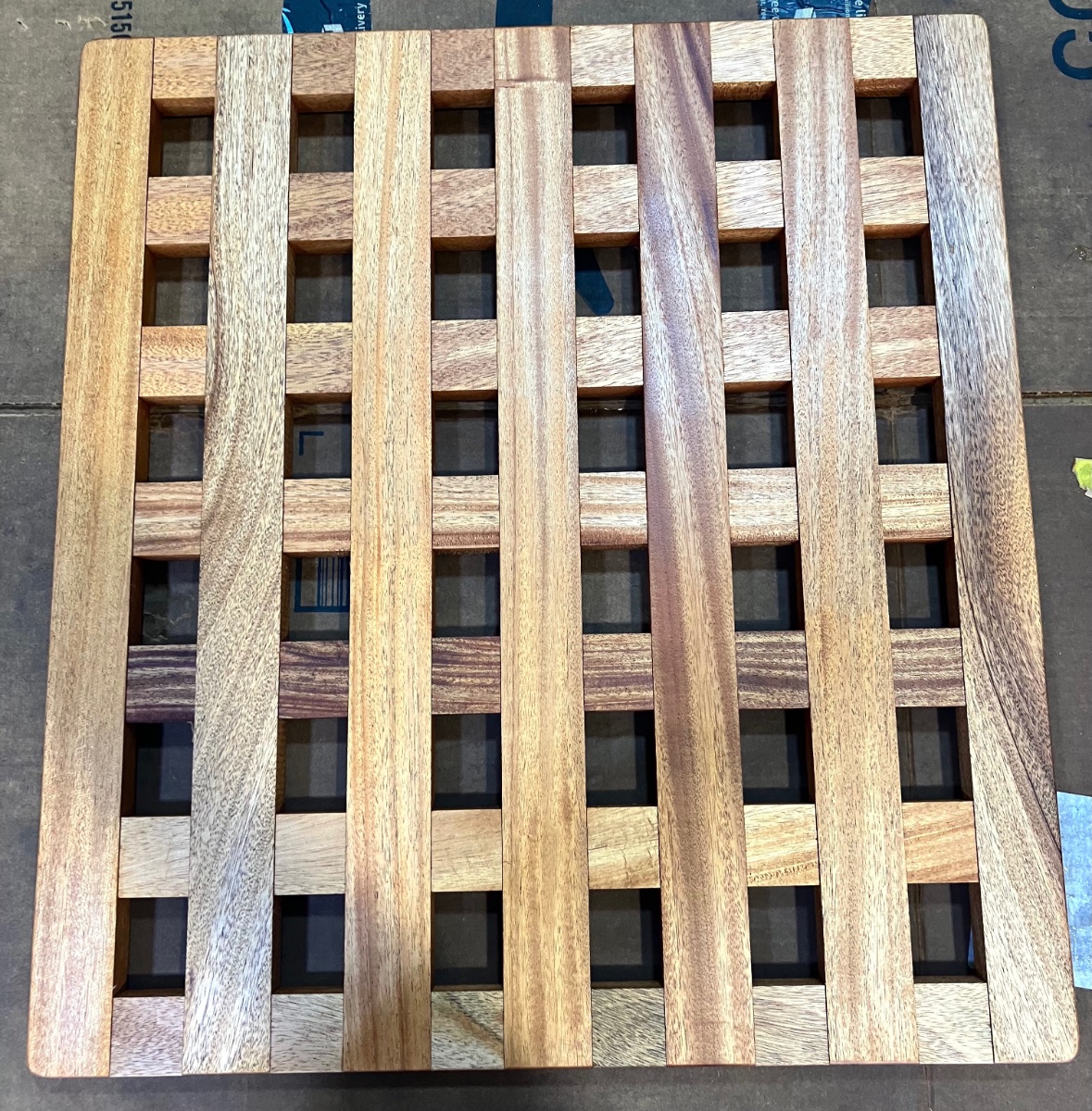
I love the way mahogany lights up when finishing oil is applied. Beautiful grain and color. Can I craft one for your Oliver? My PDF catalog can be downloaded here: http://bit.ly/3v0qiqU
1 point
-
We seem to get the ice storms in southern Ohio a few times in the winter. Good - beautiful scenery ... Bad - loss of power, horrible driving conditions1 point
-
Thanks to everyone who responded. Good information. Confirmed what I already was thinking. Will definitely aim for some extra time at Jasper. BTW once I get to Anchorage I have a driveway to camp in. In Seward I have a spot on the beach at a friends property with water and electricity. Well as long as they don't have another mountain slide that cuts off access. The city has a dump station. Wish us luck.1 point
-
We tow with a 2022 GMC Diesel canyon and so far we haven’t had any issues. We love our truck it has a tow capacity of 7,700 lbs and we have the tow package. We picked up our trailer this fall and averaged 28 mpg on the way down and 22 on the way home pulling the trailer. I almost ran a red light on the way home and with my wife yelling I got on the brakes and we stopped very quickly and under control. They stopped building the diesels in 2022 but you might find one used. We maintained 60mph over the smokies without any problems and navigated a bunch of twisties and the Diesel brakes worked as advertised.1 point
-
Sorry, didn't see this before my last post.1 point
-
A little bit of that ice worked its way over to CT today. Definitely been a strange winter.1 point
-
Of course! Retired 13 years, and already stopped using my engineering brain... Thanks!
1 point
-
With a posted curb weight range of 4036 to 4500 pounds, and a GCWL of 12,000 pounds you may be technically legal. But having an OE2, typically weighing in at say 6,000 pounds, you have very little safety margin in the best of circumstances. The two situations I would worry the most about having white knuckle experiences and little safety margin are: On a mountain going down hill and finding a sharp turn that was not on the radar screen. On the interstate and being passed by big trucks in strong crosswinds. That said, great MPG. We hope your good experiences and luck continuers. GJ1 point
-
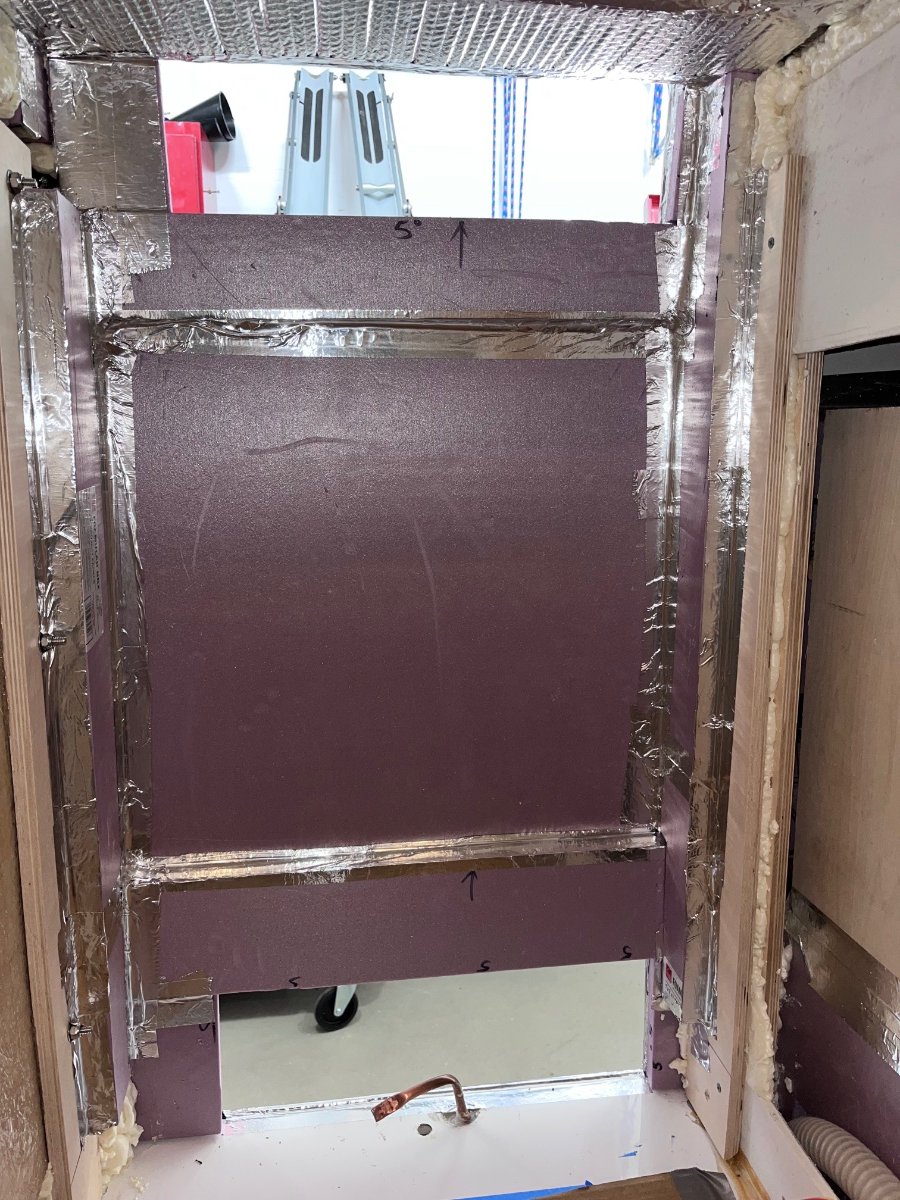
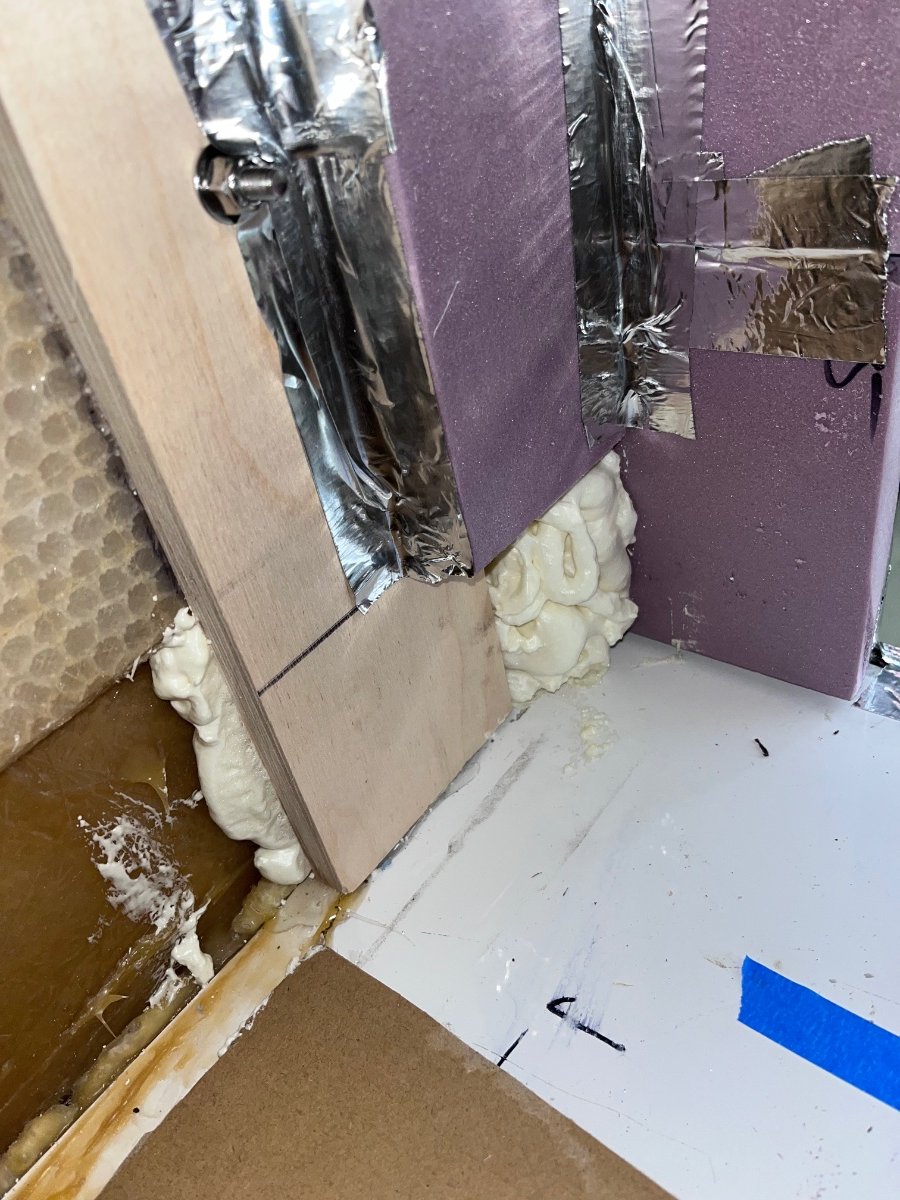
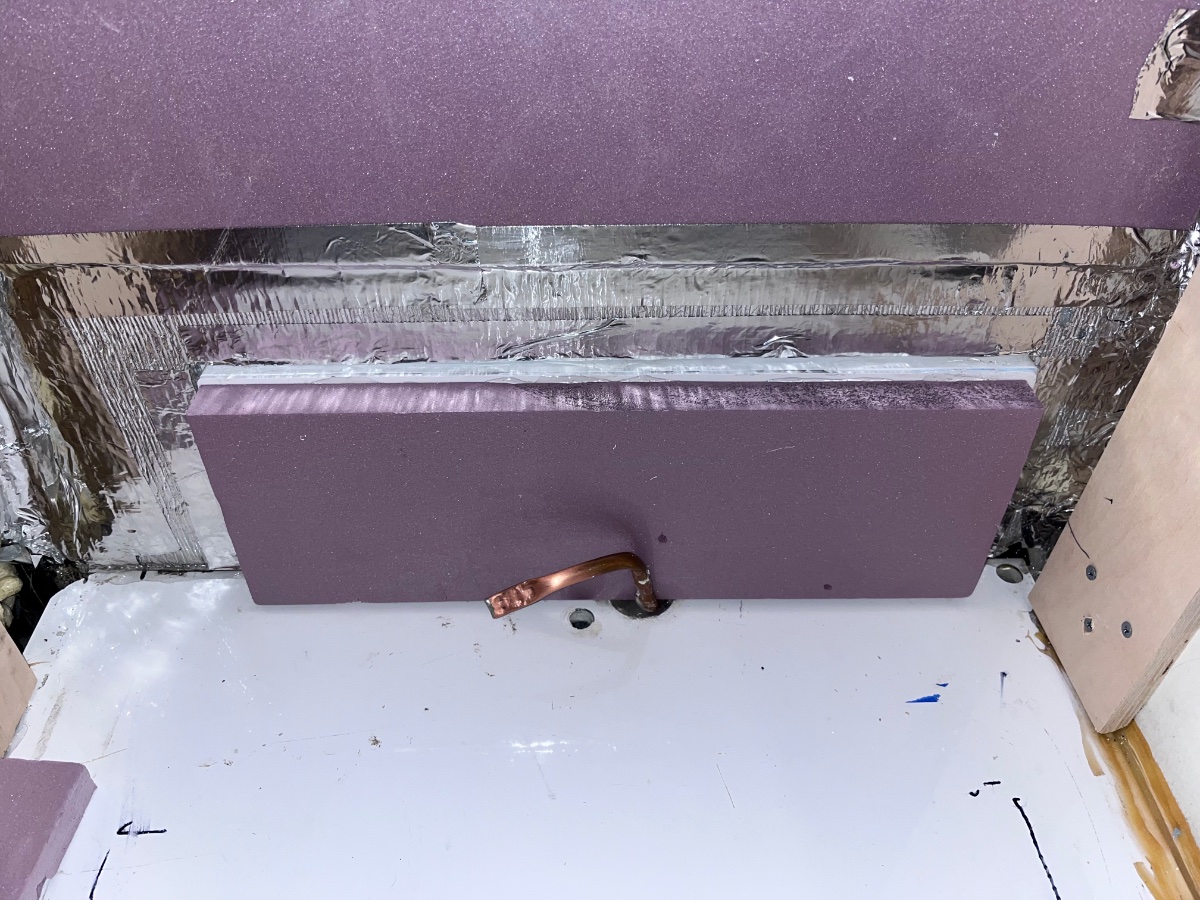
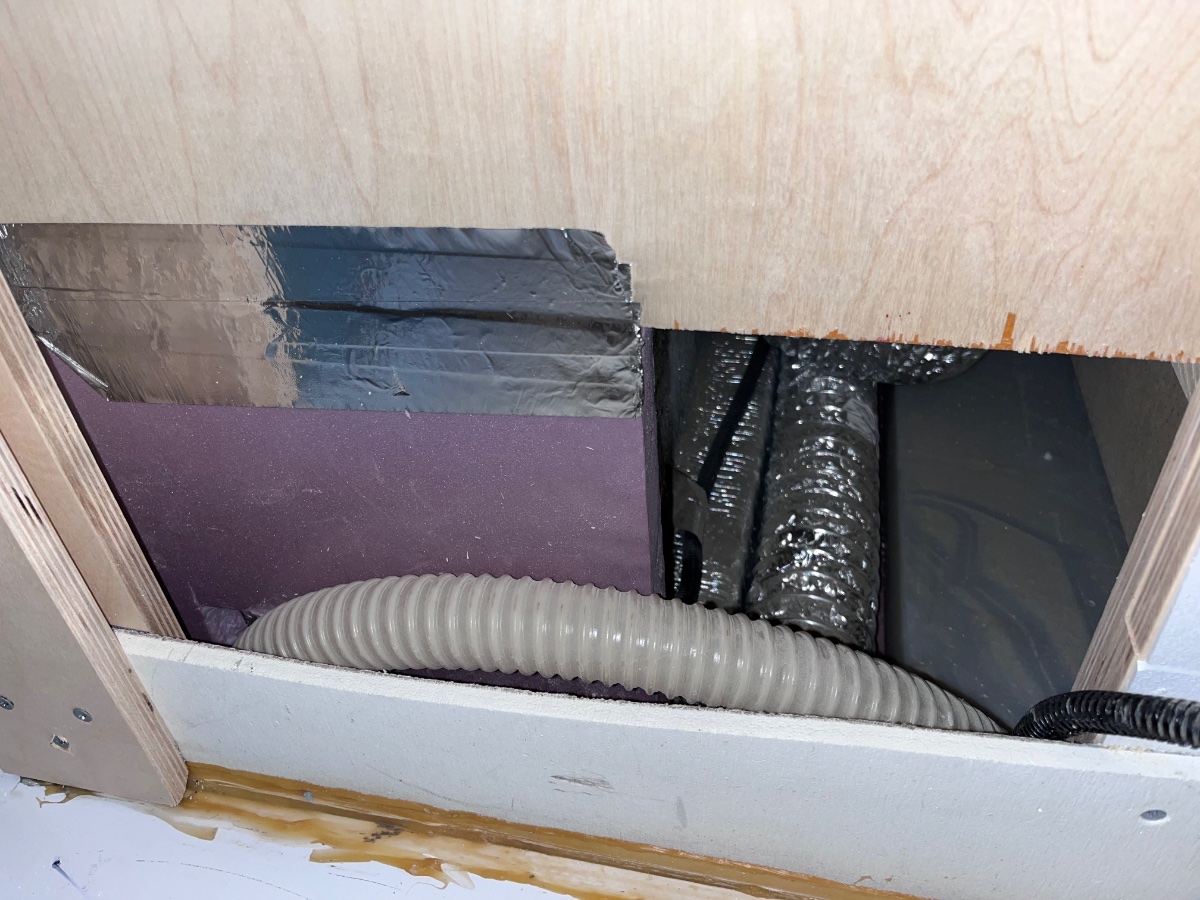
Funny you should say that. I am getting there, here is my fridge compartment, I am working my way inward toward the cabin, adding foam and 1” R5 foam board pretty much everywhere… A thermally isolated compartment will hopefully greatly reduce compressor cycling and amp hours. The board is relatively cheap and easy to shape with a table saw. The Baltic Birch is $140 for 25 sq ft! Don’t ask me how many hours this has taken so far.. John Davies Spokane WA.
1 point
-
I actually averaged 99 MPG pulling Ollie!- -Drum roll Drum roll Drum roll Drum roll Oh, did I mention I was going down the TFL Ike Gauntlet in Colorado! :GJ .1 point
-
Bill & Nancy - How's that payload capacity working out for you? Bill1 point
-
I have a 2.8-liter four-cylinder diesel Canyon SLT and a 6.6-liter eight-cylinder diesel Silverado 3500. We only use one of them as our tow vehicle for our Elite II, Hull #050. The combo weighs in at just under 18K pounds. We just returned from our winter western sojourn with a little more than 5100 miles traveled. We drove on the flats, in the mountains, with the wind, against the wind and averaged 12.8 mpg. Pulling a 5-6K pound trailer with a light duty truck sporting a 2.8-liter four-cylinder diesel engine and still getting 22 mpg is, like@Geronimo Johnsaid, just “amazing”, in fact, it’s unbelievable, really unbelievable.1 point
-
FYI, we scale out at 6200# with full water and a week's worth of boondocking stuff. Charlie.1 point
-
I have respect for the elegant and creative solutions on these mods. I have given my voice on prior mods to the trailer bumper rack system. I spent 20 years as an executive and partner at Yakima Racks and can speak from experience. There is a good reason for the factory set weight limit. The length of the back half of the fulcrum (trailer axles to the trailer bumper) is many times greater than from the axles of any TV to its bumper. Not to mention the forward distance from trailer axles to the bulldog hitch. Consider these distances and the vertical distance the bulldog hitch instantly travels up and down when your rig encounters dips, rises, steep driveways and potholes. The results of these encounters are nothing less than absolute violence at the trailer bumper. The forces applied at the trailer bumper are magnitudes greater than almost all receiver hitch systems are designed to withstand. Of the many receiver hitch mounted bike systems Yakima produces, only one is approved to withstand the extreme forces of being mounted to an RV bumper. I cannot judge your mods and if they will withstand the test of time. The test of time being constant vibration, sudden jolts, and that once in the life compression or frost heave that rocks your rig like never before. The scope of actual experience of trailer bumper systems within Oliver users is very small as there are 1,200 +/- trailers on the road compared to the well more than a million Yakima systems on the road. I can only advise to operate with an abundance of caution when modifying your bumper system and or exceeding the factory load limit.1 point
-
There's a 1/2" hex wrench for the exterior water hose fittings. I bought this one, but it's not currently available: Bondhus 12116 1/2" Long Hex L-Wrench https://a.co/d/6MCI0Jf I also find a spring hook can be handy in many situations, not just for springs.1 point
-
Thanks Mike and Bill! I knew about flushing with gray after, but I never thought to allow some through first to wet the drain hose. Great tip! Nor had I thought about "stuff" accumulating in the gray tank. We plan to avoid as much food particles and grease going down the drain as possible. Kitchen traps smell worse than bathroom traps! Thanks again for the wise counsel!1 point
-
Yes, you don’t want to leave the black tank drain open - just when dumping. For the gray tank I usually leave it closed until I dump. If you want to leave it open it shouldn’t pose any problems except you won’t have gray water to flush through your hose after emptying the black tank. Mike1 point
-
They make a small GPS tracker with an integrated solar panel. A roof mount would give you solar power and good GPS tracking and communications.1 point
-
i drove from San Diego CA to Fairbanks and then back to San Antonio TX this past July/august before i got the ollie just tent camping along the way. by that time of the year lots of the Canadian campgrounds would be full or very close to full if pulling in around 6 or 7 pm as i was, I've got google Fi so it'll pick up most carriers networks and there were still quite a few times i was without cell service for the night but would pick it up fairly quickly after getting back on the road in the morning. It worked out for me to stop in a town somewhere with cell service for breakfast and to plan where i wanted to stop that night so i could have a few alternate campgrounds picked out that i could just punch into my trucks GPS in case the one i was shooting for ended up being full. saw many trailers spending nights in pullouts all the way through Canada and Alaska though i wasnt interested in tent camping alone on the side of the road given the bear population.1 point
-
@John E Davies That is a great article and the authors have some really good credentials. I did not like the absorption fridge in our Airstream. It was “ok” at keeping things cold once it did get cold but it needed to be defrosted often. I didn’t like running on propane while traveling but also didn’t want things to get too warm. For that reason, I always ran with GAS STOP devices and will have them on my LE II. I was happy to see Oliver went with the Isotherm AC/DC fridge. I am not sure as to “why” but I heard it was because many trailers in the industry are moving to all-electric compressor style fridges. This could account for a low supply of the absorption fridges in this size. I also like that if you are not level when parked we don’t have to worry about damaging the fridge. I think you made a good choice. My brother-in-law has had Isotherm on his boats for as long as I can remember and they always perform. Another great share, thank you! Brian1 point
-
Based on some of the design inadequacies of the Anderson hitch, I would highly recommend not using it if possible. The 2" Bulldog is more than adequate for the LE2. It's one of the strongest coupler designs on the market and many including myself have be pulling heavier trailers than an Oliver with 2" Bulldog couplers for years with no issues. Even thought we haven't picked our Oliver up yet, many have stated very clearly that the Oliver is one of the most stable travel trailers made. Sway control is a non-issue with these trailers. With an Anderson you are really only addressing tongue weight, which is very reasonable even for a loaded Ollie. One additional thought. Weight distribution hitches add complexity to the hitching process, and introduce stresses and limitations to maneuverability of the trailer when pulling. Maneuvering dips and rises in the road like railroad crossings, hills and dips in less improved roads like those in state and national parks and even more so in remote areas, can put extreme amounts of strain on the hitching components and vehicle and trailer frames. There are many vehicles that won't tow an LE2 safely without a WD hitching system, but that's a compromise to live with if one doesn't want to invest in a heavier vehicle. But if you can get by without one, and your 2500 series truck should be just fine with the standard hitch, you are much better off.1 point
-
Good question. I appreciate you calling me on it. I want to be safe on the road but would like to avoid a WDH if prudent. I see that others with similar TV's have chosen not to install the Andersen. Are there others out there that feel the same? The Oliver is new to us, the only road experience we have is the trip home 100 miles up I-95 and it followed like a dream. We will be leaving soon for an extended trip of 2,000 miles. That being said, if we opt out on the Andersen is it necessary to replace the 2" Bulldog hitch with the 2 5/16"?1 point
-
Well a update on my 3.0 Duramax max tow PKG. 4100 miles with 2900 miles towing the Oliver or my 6000lbs boat. Average milage towing all at 70 plus 16.4 mpg and in all 7.5 gals of DEF used in all 4100 miles. Two and a half gals of def per in 1300 miles of running 70+ plus towing the Oliver. Love this motor compared to my past 5.3 max tow PKG truck. On one short 30 flat puling the trailer it was 19 mpg running 55-60. Due have to keep a eye on it likes to climb past 80.1 point

























-
Recent Achievements
-