Leaderboard




Popular Content
Showing content with the highest reputation on 03/27/2023 in all areas
-
After each trip when returning home we empty our fresh tank. We refill again with home tap water the day we depart on our next trip. We sanitize usually once a season. We do not drink water from our fresh tank. We carry plenty of bottled water. Patriot🇺🇸6 points
-
We have chlorinated city water at our house so when we get home after camping trips I drain the fresh water tank to empty out any water left from our last campground hookup, then I run our house water through the trailer city water connection to flush all the faucets and toilet, then I fill the fresh tank, drain it, then fill it again and run all the faucets again using the trailer onboard pump. This gets our chlorinated house water into all the trailer lines (and I leave the fresh tank full with our house water). I repeat this process once a week or so, including draining and refilling the fresh water tank if the trailer is sitting at home for any length of time between trips to keep the water fairly fresh. I also plug into shore power about once a week at home to keep the trailer batteries charged, and I get the propane tanks refilled. It’s easy to do (I have quick connect hose couplings on all of the trailer water connections) and this way I have a 30 gallon emergency fresh water supply at the ready if anything happens at the house with city water being turned off due to borough water line maintenance, etc. Plus the trailer is ready to go on short notice if needed (think of the situation of the folks in East Palestine Ohio that had to evacuate after the train derailment). I like being prepared for emergencies as much as possible, and a stocked & ready Ollie provides a good backup for a lot of situations. We do drink and cook with the water from our fresh water tank while camping, but we always use a multistage filter system. I do winterize as recommended during winter months, and I do the bleach sanitizing process in the spring after de-winterizing.5 points
-
It’s not scary. We’ve towed our Oliver over 80K miles. Big trucks have been no problem. We usually stay at 65mph or less. If the weather is bad (rain/wind) we slow down. I don’t know what your tow vehicle is but with at couple of different half tons and now a 3/4 ton the Oliver has been very stable, we’ve never experienced any sway. The few times we’ve had to brake hard the Oliver tracked behind us perfectly. Don’t get stressed. Take it slow when you begin and plan ahead. Check out gas stations before you pull in to ensure you have room to get in and out. When backing into your campsite take it slow. I mean very slow. It will give you plenty of time to adjust - don’t be too proud to stop, pull out and start the backing in process again. You’ll do fine. Mike5 points
-
We usually leave water in the fresh tank. If it’s only a month or so between trips we’ll just go with what we have. If it’s a couple of months or more I will empty and refill right before we leave. I do the bleach thing once a year. We don’t drink or cook with our fresh water. I also carry a small water softener for when we’re on city water. Mike4 points
-
It depends. If it is always filled with chlorinated city water, that is fine. If you are filling from unknown wells, that can be very risky. Always use a basic filter at your inlet port, change it at least annually. Shock treat with bleach annually. In between, it’s up to you to decide if you want to dump or treat more often. What is your risk tolerance? On short weekend trips I fill up only at home with softened city water, and I leave the tank partially full until the next trip, when I run about 30 gallons of extra water through to flush it out. On long trips I try to choose my water sources wisely. For long term storage, I keep only soft water in my system to avoid mineral buildup. I no longer bother to winterize because my indoor storage stays warm. And with soft water I don’t have to use vinegar any more. Soft water sitting or flowing in pipes actually cleans them over the space of six months. BTW it isn’t a stupid question at all. John Davies Spokane WA4 points
-
Dear kitchens, No need for anxiety. I think ADKCamper's advice is very good. Having a substantial tow vehicle (3/4 ton) makes your towing much more comfortable but is less maneuverable is tight spaces. In general, don't put yourself in a position of feeling you need to be in a hurry or cover a lot of ground in a day. If the weather or road conditions become bad, just find pull off the road. Avoid city traffic until you gain some experience. Even with experience, we usually plan for low traffic times when going through big cities. Hitting the road at 4am to beat LA traffic makes for a low stress day. We live 5 hours north of San Francisco. We often plan to stay north of the Golden Gate aways off the 101 near Pt Reyes State Park and go through the city very early the next morning. This relaxed low pressure and flexible schedule makes for low stress travel. As stated before, never be in a hurry when towing your trailer. Backing up is a skill everyone has to learn. A classic situation is having to make several attempts backing into a camping spot and you are holding up traffic. You have two choices, continue to work at parking and know that everyone has been in this position. Put your head in a space you do not pressure yourself about them waiting or pull out and go around for another approach to your parking space. Within reason, ether choice is ok. If the folks behind you have a problem, they need to get a life. Hey, we are all out here camping and having a good time. The Oliver tows very well but for sure you need to slow down or just take the day off from towing if you find yourself with a substantial cross winds on two lane roads. ADKCamper talks about "gust Velocity". This is a very real situation. In my youth, was driving fast crossing the Montana prairie between Great Falls and Billings with strong cross winds. Every time I would pass an oncoming truck, the truck would block the crosswind, my car would move toward the truck as the truck blocked the crosswind. After clearing the truck and its "vacuum effect" and again being exposed to the crosswind would "blast" my car a few feet to the opposite direction. I was foolishly / fearless racing down the road until I passed this one oncoming truck and the blast was so powerful it ripped the front hood latch welds apart. The hood of the car buckled / folded the half way to the windshield. The moral is to do some planning, practice driving on the backroads, use common sense, don't be in a hurry and enjoy being on the road.4 points
-
If you camp at dcsp after camp Oliver, your tanks should be empty and fresh water full. However, if you need water at Meriwether it is available. Just look at the water fountain closely and you will find a spigot where you can attach a hose. The water fountain is located right in front of the campground restroom. Bill3 points
-
If you want to test out your boondocking capabilities while in the area, there is a free space available National Park campground near Hoehenwald at milepost 385.9 on the Natchez Parkway. Meriwether Lewis Campground3 points
-
Invest in a backup camera for your trailer, it's worth it, as well as a good brake controller for your tow vehicle. Also tow mirrors with upper and lower sections which make it easier to keep an eye on the wheels when you're making tight turns or backing.
 3 points
 -
Well we ended up with the display and it'll get used. And Culvers is my wife's favorite "cheap date" location, so we'll go there too and take the doggies with us!😍3 points
-
That box is where all the connections for the 7-pin cable and the trailer are located.3 points
-
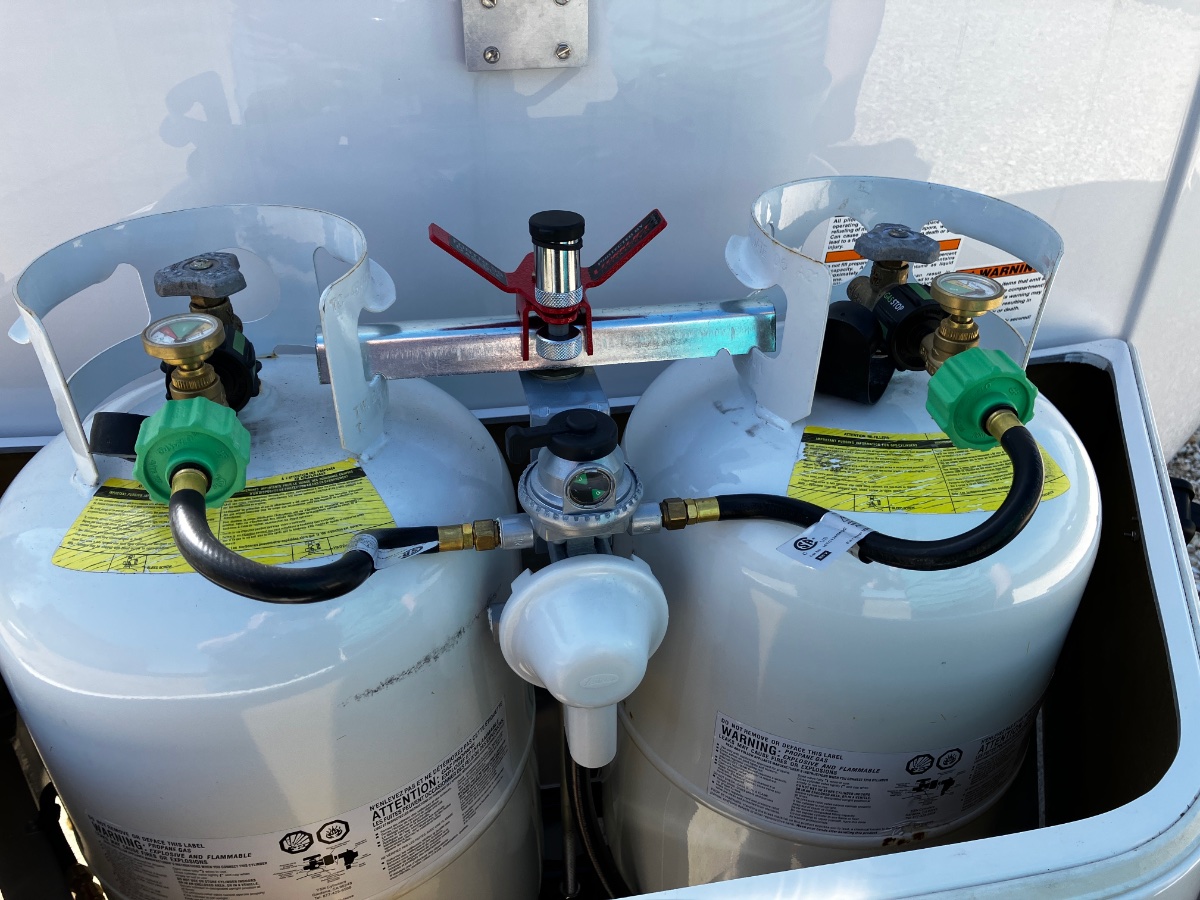
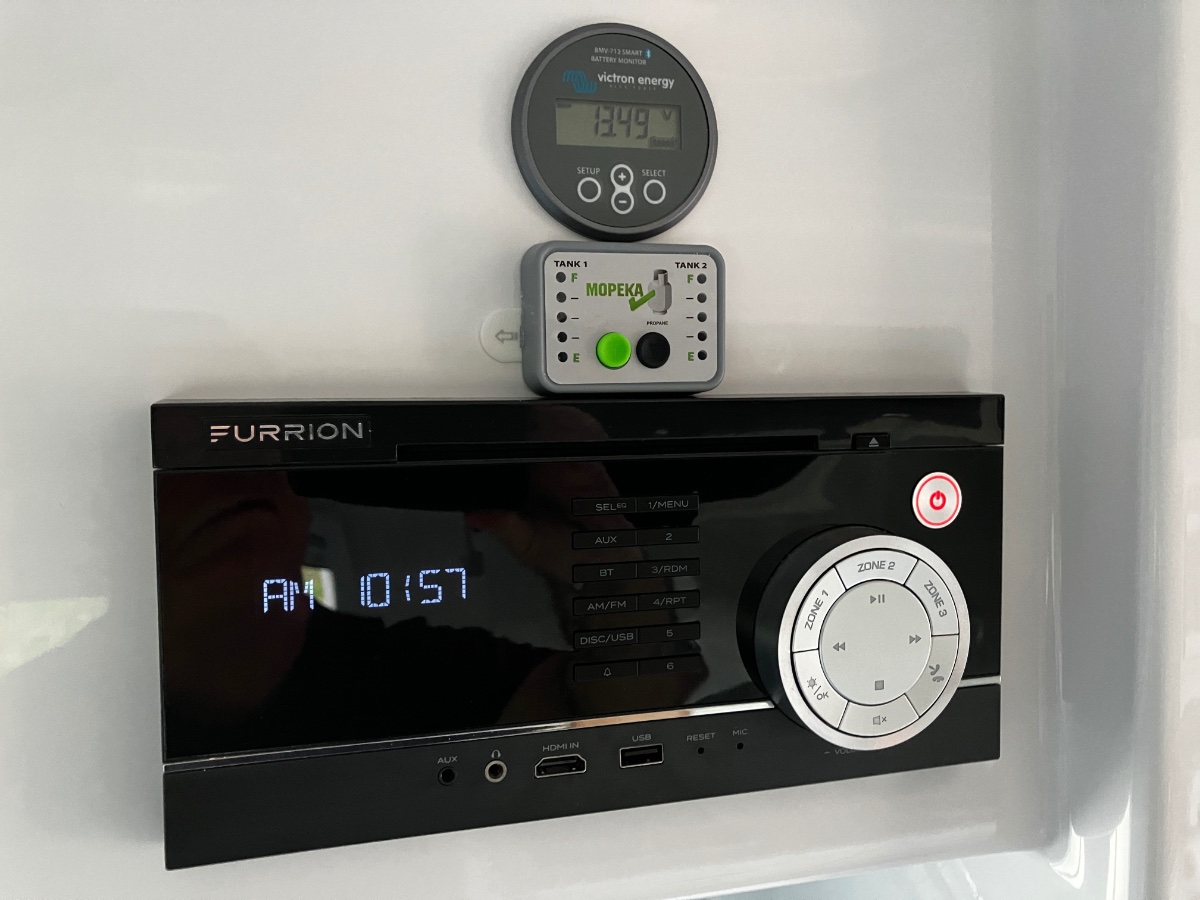
These are some great mods to the propane set up. I chose a slightly different locking mechanism (since I had it left over from my AS days) and I didn't like the way the regulator assembly was just placed on the threaded rod. SO, I went and got two 1/2" nuts and matching washers to secure the regulator assembly to the rod by itself. Then I installed my "GAS STOP" devices and my Mopeka tank monitor sensors. Finally, I got my Torklift Fortress tank lock in place. Picture below along with second pic of tank monitor wall mount console.
3 points
-
I started towing trailers with my dad, when I was in high school. It was scary. I still remember. Since you're new to towing, before you order a trailer, you might consider renting a small trailer from outdoorsy or rvshare a few times. Stay off the interstate, take smaller roads, see how you feel. When/if you do get a new Ollie, drive the small roads vs the interstate for awhile. You'll get the hang of it. Our little Ollie tows remarkably well, but there is a learning curve to towing. Take heart. No one was born with those skills. Everyone has to learn, sometime. It just takes some time and practice. And, get some practice before towing with a new tow vehicle, if that's what you decide on. Starting out with a new vehicle, plus a new trailer, plus never towing before, is a prescription for anxiety, imo.3 points
-
It's much less stressful if you have a substantial tow vehicle. Not just pulling power, but lots of mass with good brakes, so your trailer doesn't overpower your truck. For an Elite 2 many here prefer a 3/4 or 1 ton truck (although many are towing successfully with 1/2 ton trucks, too). No-one ever complained they had too much tow vehicle. Try to load your trailer evenly, or even biased toward the front a bit. Heavier tongue weights enhance stability. Plus, everything @ADKCamper said above. For maximum stability in a towable, go with a fifth wheel. They have the pivot point above the rear axle, which stops any of the tail-wagging-the-dog you can get with travel trailers. (Although Olivers are some of the most stable bumper pulls.) Lots of options out there, including special hitches, too.3 points
-
I've only been towing an Ollie for 5 years so more experienced owners may want to chime in, but in my opinion the answer seems to be "it depends". I'll explain... The Oliver is a smooth, nicely rounded trailer and is *generally* very well behaved on the highway... *assuming* a bunch of things like: properly sized & inflated tires, no excessive speeds, properly sized and equipped tow vehicle, load-leveling Anderson hitch (if indicated by your tow vehicle/trailer combination), neither trailer or tow vehicle are overloaded or excessively top-heavy, etc. That said, heavy traffic, bad weather, rough or slippery road conditions or cross-winds require more caution. Heavy cross-winds or extremely gusty winds can be dangerous on their own, and even more so if a large truck passing from either direction either adds to the "gust velocity" that the tow vehicle or trailer are exposed to, or temporarily shields you from the gusty winds and then you become rapidly "exposed" again after they pass. Slow down, stay focused on your surroundings and maintain a good grip on the wheel. If it gets too bad, find a safe spot to pull over until its safe to continue.3 points
-
I own both the Champion 3500W and now the 2500W Generator. I wanted to mod both to run off the Quick Connects from the Oliver...and also still have the ability to quickly setup with stand alone propane tanks for other applications. Both use the 2500W and 3500W us a dual stage regulator propane hose (one with the little finger, one without.) The first stage small regulator connects to a standard propane tank with the larger plastic ACME fitting. The first stage regulator knocks down the high pressure from stand alone propane tanks in prep for the larger diameter second stage regulator. This second stage (much larger size) provides a more precise regulation needed for the generator under various load situations. Stage 2 is really a flow regulator. It doesn't change pressure, it just restricts the amount of gas that flows into the generator. Without it you basically flood the generator with gas and it won't start. To make the Generator work with the quick connects from the trailer, one must remove that smaller first stage regulator. The Oliver Quick connects are already regulated to the correct pressure for the larger second stage regulator on the generator propane cable shipped with the Champion Dual Fuel Generators. In my case, I've disassembled the original dual stage and broken it into two pieces at the coupler between the stage 1 and stage 2 regulators. 1) The second stage regulator has been modified to have a quick connect male feeding into the larger regulator. That stage 2 regulator now connects to my long extension hoses that attach to the female quick connects on the trailer. 2) The first stage regulator is then coupled to a FEMALE quick connect for re-use with stand alone propane tanks. Shown below: First stage regulator with ACME fitting is modified to have a female quick connect coupler. The benefit of this mod is that I still am able to use stand alone 20lb propane tank by coupling the modified smaller regulator to the tank, and the larger stage 2 regulator hose to that this modified coupler. This may be a repeat but I was writing up for my blog anyway so thought I'd post it here. Craig Hull 505
2 points
-
Will be checking this out while down there. Thanks!2 points
-
Since Camp Oliver has been available, I believe Oliver no longer reserves sites at DCSP. Verify with your sales rep. When we took delivery on November 10, 2022, we stayed one night at Camp Oliver, then 3 nights at DCSP. We were glad we booked our DCSP site a couple of months in advance, because it was over a busy weekend. I recommend booking ASAP. You should be able to rely on the delivery date Oliver has specified. If that changes, the DCSP cancellation fee is nominal.2 points
-
Well, $35 might have covered a date night at Culver’s! 😀2 points
-
When I purchased my sensors on Amazon, they sort of forced me to buy the display. I say this because it looked like a package, but when I placed the order, it was broke down as two separate orders, one for the sensors and a separate order and package and delivery date for the display. Had I the choice I would have skipped the display for $35.2 points
-
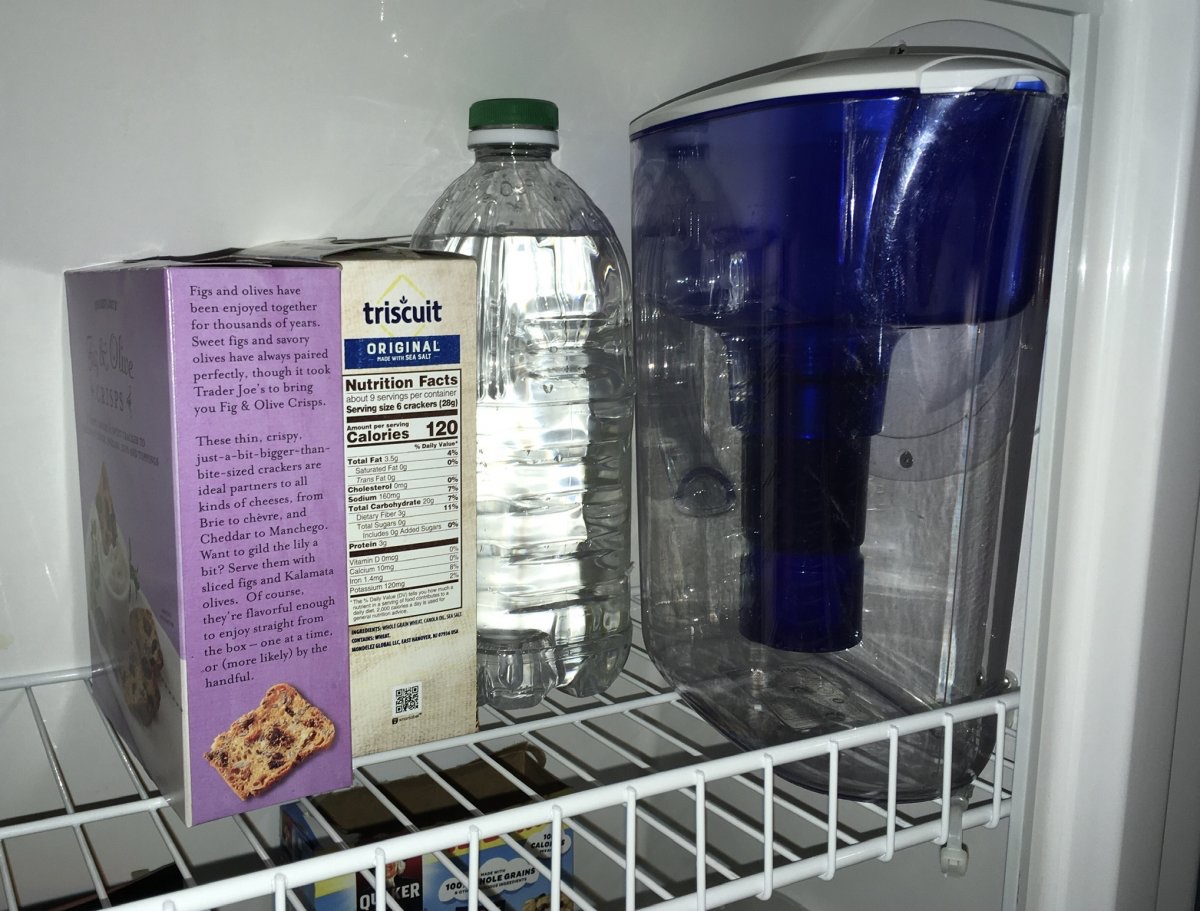
Re bottled water: https://olivertraveltrailers.com/forums/topic/4376-7-cup-pur-water-pitcher-fits-neatly-in-pantry-affordable-filters/ John Davies Spokane WA
2 points
-
Ps: we have no problem with drinking our filtered tank water (THE FRESH TANK ONLY ! LOL). It tastes great.2 points
-
I use a portable 3-stage water filtration system for ANY water going into my baby. I also do the annual bleach cleanse. We fill up at home regardless of the distinations hookup arrangements (just in case). Most of the time we drain it after each trip, unless we're blessed with another trip within a couple of weeks. I'm in Bakersfield, CA, so freezing is not a concern, but due to heat in the summer, all water is drained after every trip.2 points
-
Chris, Our sales rep coordinated closely with us on the details of delivery day. Yours should as well. As you get closer to your delivery day your sales rep will email you confirming your delivery date other details and and hopefully info on a reservations at DCSP. Oliver usually has a few campsites set aside at David Crocket SP solely for new owners. Hopefully they are still doing this but you may want to ask your sales rep and confirm. We took delivery June 16, 2020 and we stayed at DCSP. We enjoyed this park. I believe our first night at David Crockett was compliments of Oliver. You can add a few extra days on your dime. Think hard about staying a few extra days at DCSP (highly recommended) this will give you time to give your Ollie a really good systems shakedown, push every button! If you have any “shake down” issues you can head right back to Oliver Service and get them addressed before heading home or beyond. Your special day is right around the corner and approaching fast! The team at a Oliver will go to great strides to get you taken care of, that I can tell you. - David2 points
-
We always empty ours in between trips even it’s only a few weeks.2 points
-
That would be a great place for information, as well as the door manufacturer which I believe is Lippert. Mossey2 points
-
I removed my awning gasket because it caught every leaf, needle, acorn or anything else that falls out of the trees. And I have never regretted that decision. So I haven’t looked at that gasket in a long time, but I didn’t have to remove the awning to remove the gasket. So I’m going to go out on a limb say that based on my limited experience, I don’t understand why you are going to remove the awning. I know from some of your other posting’s, you’re not afraid of tackling the hard jobs. Are you sure removing the awning needs to be done in order to replace the gasket? If you have time, please take some pictures documenting the door removal and let us know how your did the job. Mossey2 points
-
Usually it’s just for the camper. Some national parks have some really small sites that an Elite II won’t fit in. But usually there will also be sites that are big enough. We’ve had “barely big enough” sites at Joshua Tree and Glacier. I remember a very short site at Grand Teton, but there was room on the side for our truck. A lot of other national parks had sites that were plenty big enough for our Oliver. You’ll be surprised at how well your Oliver fits into spots that bigger/wider trailers can’t. Mike2 points
-
For the inside gelcoat surfaces, I typically use Windex, and paper towels or microfiber towels. You can use any product that says it's safe for use on fiberglass shower stalls. (I also wax the interior annually, so that really helps seal the pores and makes cleaning easier.) I wouldn't use regular toilet bowl cleaner in the toilet, because of the seals and the tank. I usually just use a bit of liquid dish soap, and a soft long handled brush.2 points
-
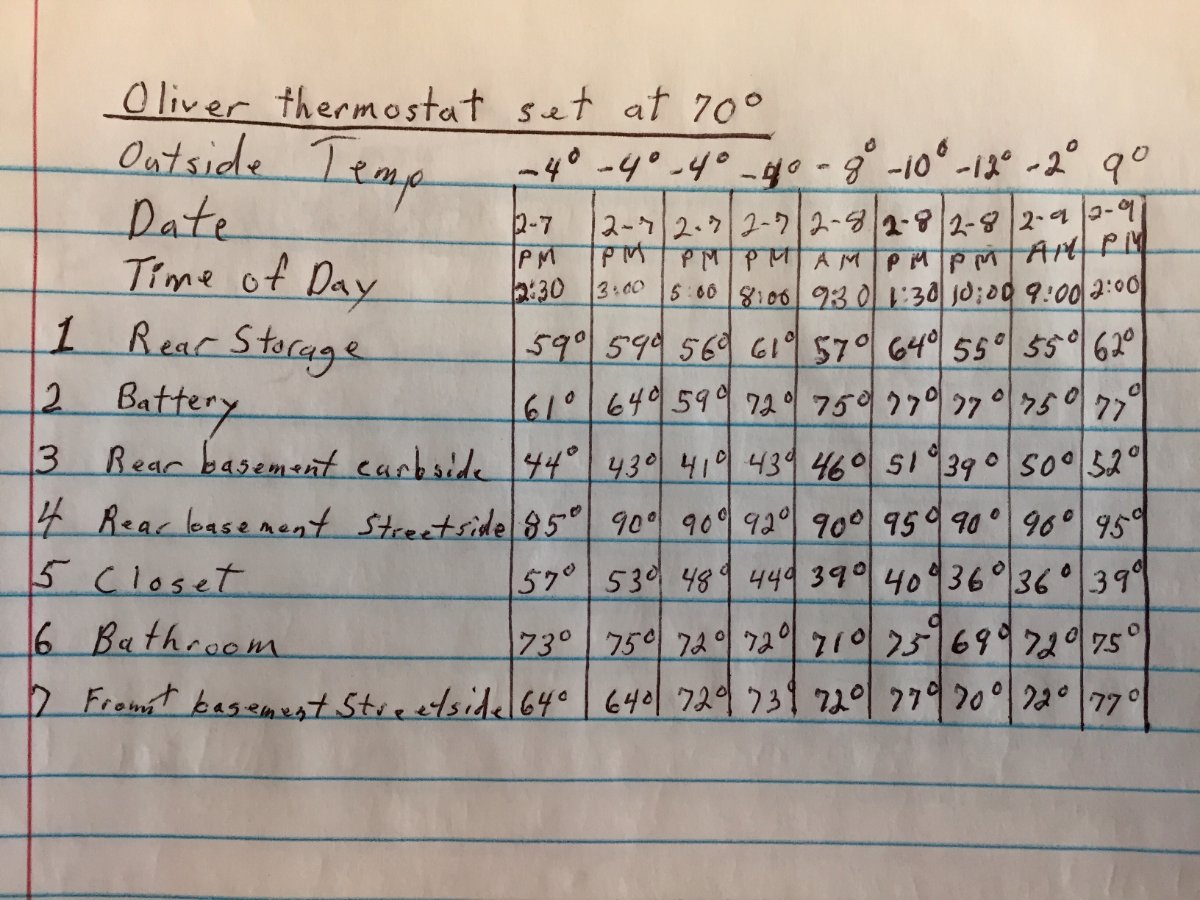
I have been following the discussion on this topic and just want to restate that with a mod done to the furnace duct system and zero changes to the water piping and adding no extra insulation I have tested in sub zero temperatures for two and half days with water system not winterized and experience no adverse affects. I have read about many different mods to accomplish the goals of a four season camper and the troubles to hit that goal. I will admit that I have not had the opportunity to do further testing such as how it would do traveling with the furnace on, or if parked and experiencing very windy conditions. I think the initial test show very promising results and the mods to the duct system were not that difficult to do. I know this is relying on the heating system functioning but even a house up in Minnesota relies on the furnace working to avoid plumbing freeze ups. I did my mods not so much to camp in the winter but to have a bench mark of what it could withstand if I got caught in a cold snap while out camping. Here is a link to a how to for anybody that is trying to get the Oliver ready for winter camping. Here are some temperatures in different locations in the camper during testing.
2 points
-
This may be a stupid question but I was wondering what most people do in between trips when the Ollie is sitting idle for a few weeks at a time. Should I fill my fresh water tank, empty it or don’t worry about it until it’s time to winterize? Bill1 point
-
Thanks for the tip. Went ahead and reserved three nights.1 point
-
Frank: Great water process and planning for an emergency BugOut. The only caution I would suggest to new owners is to be aware that if they have LiFePO4 batteries, to know their specific charging requirements. For our Battleborns, it is not recommended to keep floating them to 100% for both use or for storage. Each mfg has specific charging and storage requirements for their batteries, and some, such as Battleborn, especially so for unattended deep cold winter storage, and it is not anywhere close to 100% SOC. Thanks for sharing your process. I'll be copycatting some of your thoughts into my routine as a result. GJ1 point
-
Love this photo!1 point
-
Are you also using the Mopeka app? Just wondering if the wall display is needed? Mossey1 point
-
Thanks for that David. I just didn't want to be constrained in any way and not be able to get a spot at DCSP. I don't know how much time Stace will get to spend with the initial shake down, but she'll be there with me 2-3 nights. I won't head back home until I'm comfortable with everything and confident every thing is up to par, within reason. Plus it will be a nice place to spend a few days this time of year. I'll check in with Josh White today and discuss the particulars. Thanks again!1 point
-
My choice for all interior cleaning is simply a diluted white vinegar mix. Additiomally, if needed, a little dish soap and a brush on the bathroom floor. Around cooking area, just the usual soapy dish water. But, we thoroughly clean after every outing.1 point
-
Looking good Brian! 👍🏻👍🏻1 point
-
I agree. I've actually never had a door leak, nor heard of one, but if it has happened, I'm sure Jason would have heard about it. Lippert bought Hehr around 2018, i think. They should still support/have parts for a 2016 door.1 point
-
@mossemiI was also considering removing that PITA gasket and put my extra gutter guard just over the door. I agree, that gasket is horrible and at least needs an area in the middle to release water and junk. Now you have me thinking.1 point
-
Congratulations Steve and Deb! Now the fun begins in earnest. Sounds like you have a well thought out plan. That brings up a couple questions for me. We have a delivery date of April 18 based on the original invoice information. How accurate is that date and can we expect more of a window as far as pick up date? And with that question I wonder how late we can wait to make reservation at David Crocket not knowing the exact schedule at this point being three weeks out? Thanks for you help and most of all, enjoy and safe travels!1 point
-
Dang Brian, you and I could be brothers! 😃I just got my Mopeka propane monitors, and have been looking for the perfect tank security method. Love what you have here. And I have the Gastops in my Oliver shopping list on Amazon for a purchase after we get back home. Glad to see they fit together in the assembly and still fit with the tank cover installed. Thanks a million for the suggestions! BTW 3 weeks until delivery day!1 point
-
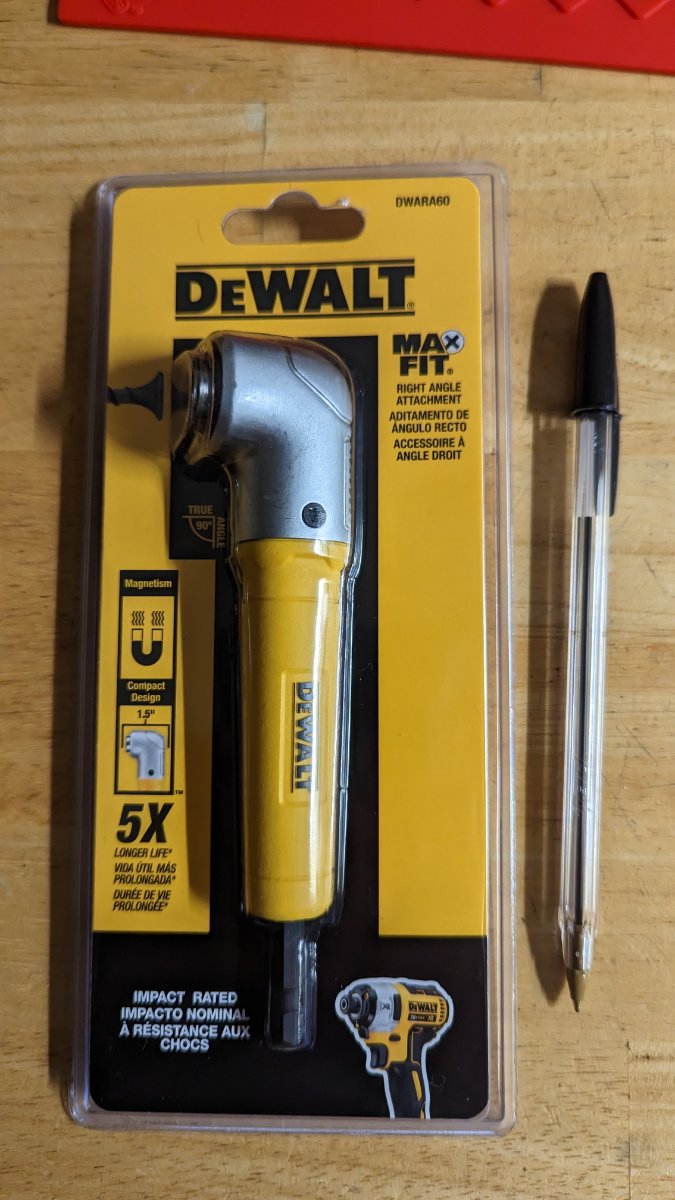
This might help get in those tight spots on the doors.
1 point
-
w00t! Tomorrow morning, @DebMand I leave on a leisurely two-day drive to Hohenwald, Tennessee. Wednesday morning, we will take delivery of #1360, and stay two nights at Camp Oliver. Then two more nights just down the road at David Crockett State Park. We are beyond thrilled that this day is soon upon us, and thank all of you here for your encouragement, suggestions, and answers to endless questions!! After DCSP, we head to Pine Mountain, Georgia, where we will spend three nights at the Callaway Gardens lodge with [name redacted] in the parking lot. As mentioned before, Deb is an avid vegetable and flower gardener, and decades long member of our local garden club. We visited Callaway Gardens 25 years ago, but missed the rhododendron and azalea blooming. Hopefully, we will be at peak bloom next week. Then we will head home {unless a stop is needed at Oliver for any fixes) where we have several accessories to install before our spring/summer camping begins. If anyone will be at Oliver Wednesday through Friday, stop and say "Hi!" We'll be in the white trailer. 😉 A new thread with delivery photos, our travels, and modifications will start soon!1 point
-
Don’t freeze yourself out of the back and forth… the more input the better! Mike1 point
-
We were coming back to the Great Southwest after a month on the road to Key West, and running Goodyear Marathon/Chinabombs we experienced our first and only (knock on wood) right rear tire failure. We run TPMS, which worked perfectly, but a catastrophic failure happens in a couple dozen micro-secs. On a smooth secondary road in good WX, didn't hear anything - but we felt a slight tug and pulled over to inspect. What was left of the tire looked like a "ghost" - only belts and chunks of tread rubber, totally see-through. Fortunately, the relatively slow speed (25-30mph) may have helped to save the wheel well and we didn't experience any significant secondary damage. Limped over to a Discount Tire a few miles away and bought 5 Michelin RIBs. Thanks to having a spare axle!1 point
-
This should help answer your question -the caps screw in. And I like having the safety chain as an added security measure to keep from loosing one of these while in transit.1 point
-
I have a Champion 2500 watt dual fuel inverter/generator. It came with a 1/4" RV quick connect fitting for the generator end, and an ACME female fitting with a regulator, for connection to a bulk propane tank. To use it with an Oliver quick connect, you will need a different hose which has only the second regulator of a two-stage regulator. See Galway Girl's post dated March 27, 2023. This is because the Oliver propane tank outlets are already regulated down to about 11 inches of water column (an appropriate LP gas pressure) by the regulator on the tanks. I believe you will need a propane hose with only the second stage regulator, and 1/4" RV quick connect male fittings on both ends, since the Oliver quick connects are 1/4" female and the Champion generator connection is also 1/4" female. Again, see Galway Girl's more accurate, and precise, post dated March 27, 2023. FWIW, I considered getting the quick connects on our Elite II and doing what you plan to do, i.e., run the generator from the trailer's propane tanks. But, I finally decided to carry an extra 5-gallon propane tank in the bed of my pickup to run the generator, to preserve the fuel in the trailer's propane tanks for heating, cooking and water heating. An added benefit is that I can place the generator farther from the trailer without a long propane hose. So, I plan to use the hose with regulator that came with my Champion dual fuel inverter/generator. Hope this helps.1 point
-
Definitely get a firepit - these days it’s non-negotiable. Pro tip, if you pair the firepit with a good smoky mezcal, it’s mostly the same. 🍸Bueno.1 point
-
Neat! do you have a link for the flexible insulation material you used in the outside access doors? You might want to think about sealing off the big screened vent holes in your battery door. Wouldn’t it be NICE if Oliver would build these trailers with molded in place fiberglass air ducts going through all those locations? Thanks, John Davies Spokane WA1 point















-
Recent Achievements
-