Leaderboard



Popular Content
Showing content with the highest reputation on 05/17/2023 in all areas
-
Oliver Service has made a habit of under promising and OVER delivering with our service. Thank you!! Outstanding! Patriot🇺🇸4 points
-
Growing up, my family camped a lot. Many times near the end of the trip, if I had used and soiled all my T-shirts, my Mom would have me wear them inside out. She figured it looked better to the bears. When we are nowhere near a washing machine, I have to admit thinking about that experience and our sheets. Turn them inside out and swap sets, and it looks like clean sheets for all. Fortunately, my better half overruled the thought pretty quickly. However, it would be easy to put another set of tags on the back side of the sheet if one was "Sheet Side Dyslectic"! 🙂 GJ3 points
-
Use of the word COMPLETELY POWER down is a foot stomper. Just killing the master switch (if you have one) still has power going into the batteries from several sources. Such power transfers could ignite vapors as I indicated above depending upon their concentration relative to the LEL and UEL's. SO, in addition to not being on shore power and shutting off the Master Switch: You would also need to disconnect from your solar panels (Both installed and portable), your TV 7-Pin, and of course your 12/12 DC to DC Charging System if you have one. And anything else coming into Ollie's hull that could cause power transfer or a spark. Such as a battery powered mosquito zapper, Etc.) Me, I would either move the smelly stuff out of Ollie or turn on the Max Fan and open windows. The odds of any of the above causing an explosion is all dependent upon the level of concentration of vapors. The odds of Olfactory Offense is only a function of dilution. However there are a few soft surfaces in Ollie that will absorb smells only to let them free later for more enjoyment. GJ3 points
-
Here is the switch thread. https://olivertraveltrailers.com/forums/topic/5330-how-to-propane-co-detector-on-off-power-switch/ Or an easier fix is to remove your rear CO/ Smoke detector entirely, and tape over the openings on the propane detector under the dinette. If it can’t “breathe” it won’t start squawking. BTW the only way to completely power down the trailer is to disconnect the battery cables or install a battery master cutoff switch. John Davies Spokane WA3 points
-
@Dwain Kitchens, my 2008 elite 1 weighed in around 3900 pounds, (cat scale), loaded for camping, with some water (not all tanks full, partial grey and fresh.) We've towed with three vehicles. A Volvo xc90 ( heavy, and somewhat anemic t5, 4900 tow capacity), 2005 chevy Silverado(7500 tow capacity, 5.3 v8) , and a 2008 4 x 4 dodge ram 1500 hemi, 5.7). Best tow vehicles are in reverse order of what I listed. The Ram has been stellar. I would say that unless you really plan to stay on flatland, get a vehicle with a higher tow rating than the Subaru, and make sure that whatever you buy has a true tow package (not just a hitch.) Google "Subaru ascent towing issues" and you'll likely find lots of negatives from actual users, imo. I'd be looking at a truck, or, at the least, a SUV with a higher tow capacity than the Subaru. 80 per cent is just part of the equation. Tow vehicle Weight vs trailer weight, length of wheel base, transmission, etc., all impact the joy and safety of towing.2 points
-
On a recent trip out west we were pulling our Ollie through Las Vegas during rush hour. Google maps' algorithm calculated it could save us 8 milliseconds (😉) so it routed off the highway only to tell us to get right back on using the same exit's on-ramp 😠. I have also had Google Maps direct me down roads not maintained but the county in the middle of winter in northern Michigan 😟. Trust but verify. I always do a paper map or atlas reality check on these routes.2 points
-
I'm in the middle of upgrading from four 6V AGM batteries to three Battle Born lithium batteries and have learned quite a bit about the electrical system on our Elite II this past week. On my 2018 there isn't a master electrical cut off switch. I'm installing one as part of the lithium upgrade. Disconnecting the battery cables will power down the trailer, but the lines from the solar controller to the battery will still be hot, at least on my 2018. There is a dedicated circuit breaker for the solar, it's just not the type that you can manually disconnect/reset, so you can't easily disable the solar charging with it. If you don't understand this statement completely, please don't start disconnecting battery terminals. I don't know what an accidental dead short to the live solar leads would do to the system, nothing good I'm sure. If you just want to kill power to the propane detector under the dinette, there is a 1 amp fuse under the street side bunk on a 2018 in the wire that leads to the propane detector. The wire for it comes off of the hot side of the circuit breaker that is also under that bunk. The propane detector is wired direct to the battery and is always hot. The only way to cut power to the propane detector on mine is to pull that fuse under the street side bunk. Though finding and pulling the 1 amp fuse isn't a big deal, I like John's idea of just covering up the openings on the propane detector best and not messing with the electrical. HTH, Ken2 points
-
After sending an audio file to the service Dept they immediately knew what the problem was. The cricket or chirping sound from under the dinette was coming from my charger. They had the part at my door in a few days. Thanks Oliver!
 2 points
 -
Here if you want a “custom” gen box- https://kshmarine.com/custom-generator-boxes/2 points
-
I've had this box on the tongue of my utility trailer for about 8 years. It's actually a very nice box. Gas strut still works and the lock works fine if you need it. I purchased mine at Tractor Supply. They usually have them in stock at their stores.2 points
-
That’s awesome! Oliver service is fantastic! That noise would definitely drive you crazy. Glad you got it fixed.👍🏼2 points
-
Be aware that an inexpensive box is made of VERY thin aluminum, that is good for keeping down tongue weight, but it is super easy to damage or break into. A plastic version might prove to be more durable, and lighter. This box is less than 20 pounds shipping weight, it is one of those fragile ones. John Davies Spokane WA
2 points
-
Not a powerboater by preferance but have spent a lot of time on them including a couple trips from WA to AK. If I were to buy another boat at my current age of it would be a powerboat because they are generally easier to handle if not as challenging or fun. While standing wet and cold at the wheel on the stern of my sailboat can be charming, especially in really cold, nasty weather, at '71 I admit there is something to be said for sitting warm and dry at the helm of a trawler type boat. My own cruising powerboat preference would be a displacement type hull along the lines of a Nordic Tug. I'll keep this discussion down to vessels of around 40' or less (about all an older couple cruising alone can phsically and financially handle. I am not a fan of those designs, such as some of the Rangers, which attempt to turn a displacement hull into a planing hull. A couple of problems there. First, they are incredible fuel hogs. Fuel up the tank of a boat that burns 20+ gallons an hour in a remote village on the way to Alaska and you are in for a serious sticker shock. Secondly, they are screamingly loud, which is fatiguing aboard the boat and irritating to others in the neighborhood. They also throw up a huge wake. It has been my experience that there is an inverse relationship between seamanship and available horsepower. A slower, more stable pace allows for far more accurate navigation, situational awareness and overall safety. Your chances of piling into a deadhead at 20 knots is far greater than at 6, especially in foul weather or high sea state. The damage done at high speed is far greater than a lower speed. A collision with a rock or other boat at 5 - 6 knots will normally mean an expensive hull repair. The same collision at 15 - 20 would entail no repair as your boat is going down ... fast. Next to a pet peeve. Powerboaters driving heavy hulls at speeds which raise huge wakes. Folks of this type (I hesitate to call them sailors) are flat dangerous aside from being irritating. Case in point, a fine gentleman and friend who for many years kept his sailboat in a slip next to mine had a powerboat pass close beside him at the entrance of our marina on Admiralty Inlet in WA. The huge wake caught him off balance and he was thrown against the binnacle of his sailboat injuring his ribs. A few days later he was dead from a punctured lung. Enough lecturing. After a lifetime of messing about in boats I would offer the following advice. If you are on a budget, buy a used, well equipped and lovingly maintained boat. The cost of the boat itself is only a starting point. I just bought two new sails for my relatively small (35') but circumnavigation capable sailboat. The main, genny and new roller furling setup ran over 20K. Best to let a previous owner foot that bill. Integrity of the hull and overall quality of the build are far more important than glitz and nautical bling.2 points
-
So with the retrofit complete, ours runs fine on AC setting using a 20amp circuit. However we do have a 30amp we plug into in our barn. We run a 12volt fan and the invertor when we are storing it in our barn. Has anyone measured the E2 height with the retrofit?2 points
-
1 point
-
Hi everyone, I don’t have an Oliver yet, but seriously looking at the Elite II (I will go the used route if possible). I have a 2020 GMC Sierra Crew Cab with 5.3, 10 speed transmission, 4x4 with tow package. Based on numbers (will attach), I will be able to use this as my tv. I’m looking to see if anyone with this truck can really tell me how well, or poorlyit does. I know this is a little subjective, but thought I’d ask anyway. I know it won’t be as effortless as a 3/4 ton. I understand that I will need to use a wdh. Payload in truck would be 300# of humans and 60# of dog. We haven’t been camping/road tripping in a lot of years, so I know it may be easy to get close to payload capacity. I looked at a couple of 2500 today-huge increase in payload, but mine is paid for so I’d like to see it work, but am realistic. Anyway, let me know your experiences (if any). Thanks. No matter how I orient the picture in my files, it loads here upside down-sorry. Eric
1 point
-
Been there, done that, just letting them "air out" and overnight "dew wash" or at least "dew rinse" on lifelines, on sailing trips. If we camped in poison ivy country, I'd be afraid of turning any clothing inside out. (But then, we all drank from the garden hose, in those days, too, and we lived to tell the tale, right?) 😅😅😅1 point
-
We just installed this before leaving on a 6 week trip. It's been a game changer! https://a.co/d/a6BiZn5
1 point
-
Saw the post on QST Mag. KI7SXN checking in from Everett Wa. C. Short Hull 505 - Galway Girl1 point
-
Hi, I am looking for an Oliver owner in the San Fransisco area that I can speak to. I am seriously looking at buying an Elite II. Any help would be appreciated!! Thanks! Scott1 point
-
I have not and won’t as I have 30 amp shore power at home. You could call Truma customer service and ask. Patriot🇺🇸1 point
-
Here was the file. 492965056_CamperNoise_.mp41 point
-
The MN State Bird must have migrated to a campground in Nebraska. One morning while at the dump station I was attacked by the mosquitoes, there were many, they were big, bad, fast, and hungry. ☹️ On a more pleasant topic I guess, we were at a local State Park the morning after Nebraska beat Miami in a football game. Someone shot a cannon at 7:00AM at the campground, still celebrating. 🧨 We felt out of place with a Black TV, all the Nebraska fans had Red TVs. The football game was close by, made reservations months ahead of that date and never understood why the campground was full until the day of the football game. 🙂1 point
-
Truma says that a 3000 watt generator is required to run the Aventa unit. A 20 amp outlet would not be sufficient.1 point
-
S Yes I agree. And if it wasn’t for the insurability of only submarine experience, then I would immediately be looking in the mid 40 ft range just probably not new. If you look at a lot of people that own the Rosborough, they are often people that are actually downsizing, so it is interesting. Now I am not trying to sell boats to anyone, just responding to that thread. I also understand the cost of marina fees in south Florida. Personally, I would rather be up in the panhandle or Alabama, but Chattanooga, Nashville, Charleston, have their draws for that sort of boat. You can even get to the intracostal leaving Oklahoma if you want on the water…😀 I have been looking at the Oliver for awhile on line, I just have never joined the forum. I am due a trip to middle Tennessee any way, so I probably should just fly up there and check it out.1 point
-
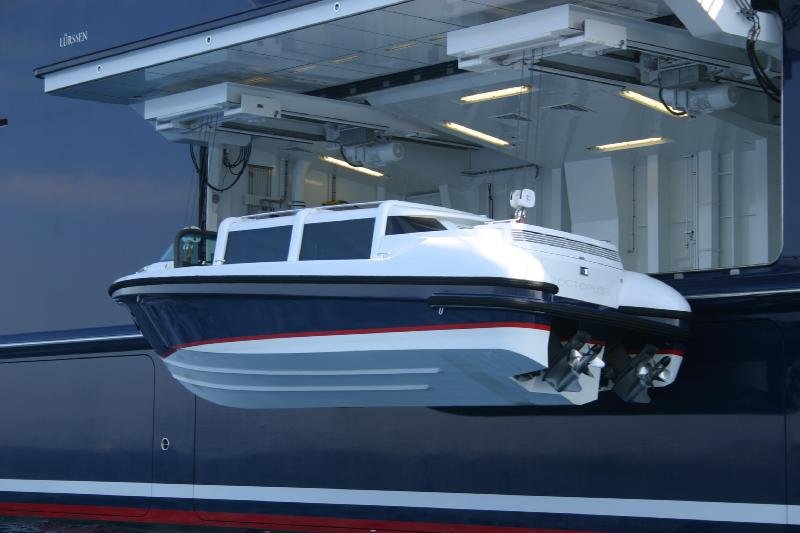
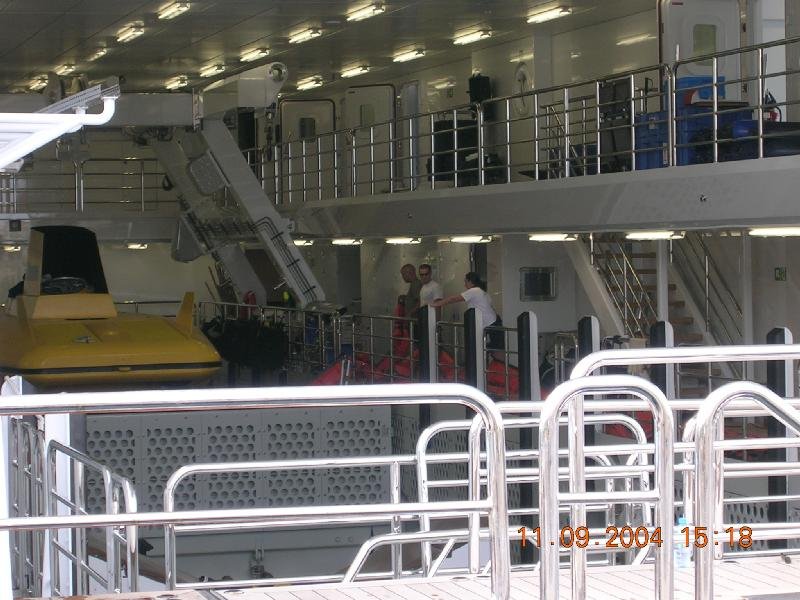
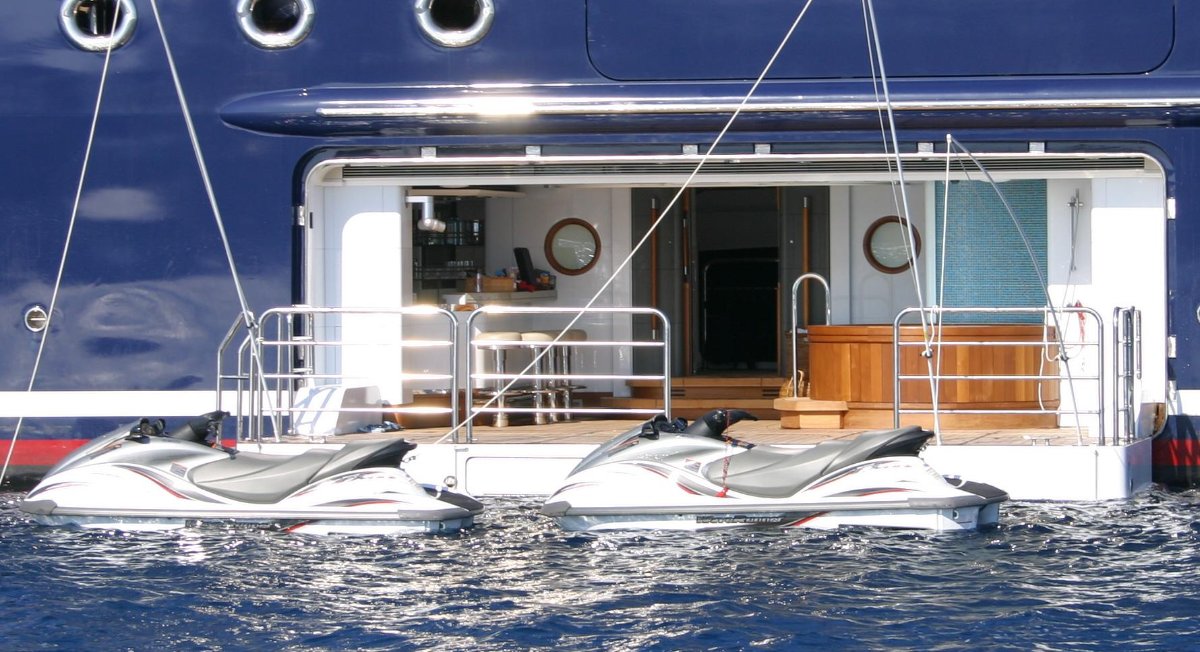
We've never been into boats. Don't particularly like the water or the beach. But, this thread has gotten me to thinking. If I take up something new, I like to go all in. No messing around and trying to just "get by." This boat has recently come on the market and we are seriously considering it. It looks pretty good, comes with two helicopters, 60 foot tender, 10 man submarine (yellow, of course), a bunch of smaller boats and watercraft and several land vehicles on board. Hey @bugeyedriver, you want a job flying one of the helicopter's, includes free room and board. I really believe there would be plenty of room on board for all I like to take with me, plus about 100 or so of my buddies. If we do plan to tow it, I'm gonna need a bigger truck, might go up to a 7500. Hey, don't laugh it's no more ludicrous that pulling an LEII with a Tacoma. At least the 7500 actually has 4 wheel disc brakes. I wonder if Foy would like to redo the woodwork on it.
1 point
-
When we got the LE2 home last evening I plugged in with an adaptor to the standard 115v outlet. Mine are on 15 amp breakers so may not actually answer your question. As soon as the AC kicked on, it popped the 15 amp circuit breaker. Will be installing my 30amp RV plug in the garage today. BTW the Truma did run OK on the 3200 watt generator all night. Just another test I wanted to perform.1 point
-
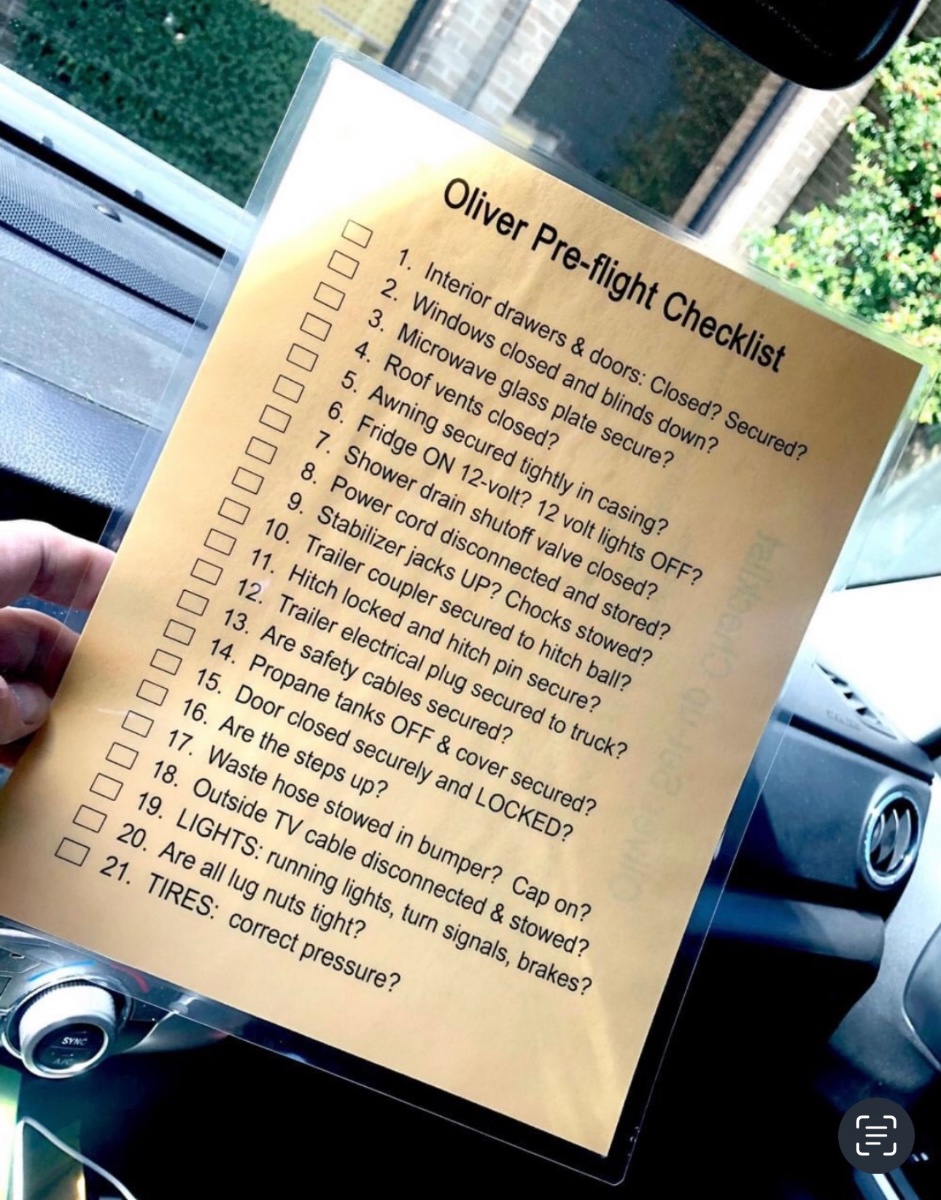
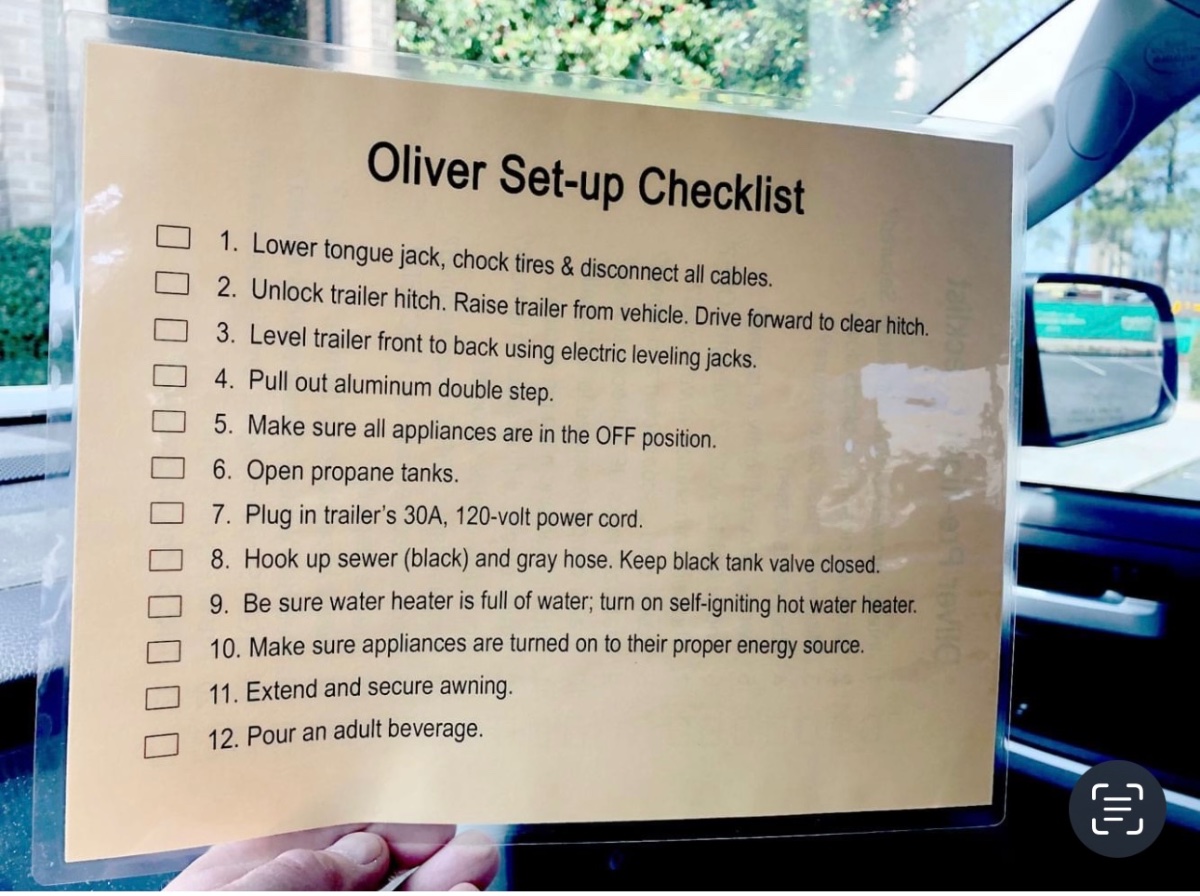
Hello, I’m sorry I don’t remember who posted/made these lists (please chime in if it’s you) but we love it and use these checklists every trip!
1 point
-
1 point
-
The IC-7300 is not permanently mounted in the trailer. Going down the road it is nestled inside its Pelican case in the truck and while setting up camp I bring it inside where it sits on the dinette table. This works for me because I am a solo traveler with a small dog, so using the table as a ham station is fine. The DXE-TW-2010-P has a control cable which enables me to change bands remotely. I feed the cable into the trailer through a small hatch where the power cable enters the trailer on an electric the wind-up reel (an early model feature). The antenna control box is powered by a 10AH battery.
1 point
-
Well - that certainly clears it up!😜1 point
-
This is a little off subject, but I have certainly felt this way when camping. The pic is from the bike park at Virginia Key in Miami.
1 point
-
Camping season in Michigan is coming soon and so are the mosquitos. Off spray, keeps mosquitos off! Not. 😂 I’ll stick to Thermacell.
1 point
-
https://www.facebook.com/reel/1311562709626880?fs=e&s=TIeQ9V&mibextid=0NULKw1 point
-
Minimalists!😜
1 point
-
We were camped near Asheville and were meeting @topgun2and his wife for lunch in Brevard. We checked the GPS which showed that the shortest route was also the most scenic, mountains and back roads. BIG MISTAKE! Besides being way late for lunch we had some very frustrating moments when small back roads didn’t match GPS and cell coverage was lost. Out came the paper atlas. Lesson learned! Mike1 point
-
For those of us who have to wait for camping season, this is so true!
1 point
-
One of our camping friends sent us this today.
1 point
-
From what I’ve seen over the years, the number of owners who regularly camp in severe conditions is small. In the beginning that was probably just a few. As more and more trailers are built and sold that number is increasing, although still a small minority. Most of us that do camp in very cold weather do it for short periods of time because we don’t find that kind of cold enjoyable. Voicing these issues by those who like consistent cold weather camping is enlightening and I’m sure Oliver is noticing. Maybe these suggestions will result in meaningful cold weather capability improvements. Extra insulation in the right spots is not expensive. An HVAC expert could help re-engineer the heat/ducting design. It seems to be to be a cost effective way to increase cold weather capability. Mike1 point
-
Good suggestion. Oliver has already chosen to install Truma Varioheat furnaces in all 2023 models. I believe the improvement in cold-weather performance in trailers with that furnace are due to Truma's insistence on use of Truma's specified ducting and design, including the return air vent in the bathroom. But, our experience camping with our Varioheat-equipped Oliver in single digit overnight temps above 5000 feet indicates that additional improvements, including more insulation in critical areas and additional furnace return air vents, could move the Oliver toward becoming a true "4-season trailer" even in more extreme climates. I believe Oliver does care about improving the quality of its products as the model years go by, and so would welcome the input. In my judgment, the Oliver is already superior to Airstream's offerings, or we would own an Airstream. Such improvements may not cost much more during production, and yet could push Oliver even further ahead of its competition.1 point
-
These heat system problems and winter worthiness of the Olivers is frustrating on a number of levels. First and foremost, OTT should certainly not allow for multiple folks with similar heat system problems on trailers still under warrantee, fight it out with manufacturers and service centers, especially with the upcoming winter. I feel it's their lot in life to cover the cost of repair themselves and fight it out with Dometic. On another level, I have found through both first hand experience and related stories here on multiple forum entries, that Olivers are lacking in capacity to handle even modest winter temps that stay below low 20s for multiple days. I obviously can't speak for everyone's experience but have found myself and yet to hear of someone who 1) had their water system on, 2) was camping for multiple days where temps did not get above low 20s and 3) did not skirt the bottom of their trailer, who did not find temperatures in the most exposed water lines to be perilously close or below freezing-primarily the exterior shower, under forward dinette and rear most part of garage. Please share any positive experience in similar conditions. In communicating directly with Oliver, the response was that there is no problem. They suggested problems could be attributed to running propane tanks too low, running "summer mix" fuel, operating in high altitude and wind conditions. All are valid potential sources of issues but I've camped in ideal conditions free of any and still had freezing in those vulnerable spots. My thought is that even if out of warrantee, those of us that have had these problems should open a ticket and share with OTT. They are a great company that I would bet would respond in a way that, at least benefits future owners. In a perfect world, they would also offer us current owners to make air flow (= cutting vents) improvements free of charge at the factory. It's important to remember that, being in the south, they are in a part of the world that has a warmish winter. That said, I'll give a big thumbs up to earlier post that suggested it is past-time for OTT to have a HVAC specialist come in and go through the system. I won't pretend to be an expert but with my mad scientist experiments, seems that most if not all Oliver cold weather issues can be fixed with better vent placement and some tactical insulation improvements which would make for a cheap and seemingly easy process.1 point
-
Ran across this one. A bit in the gray zone... so to speak, but really funny. GJ VIDEO-2022-09-09-13-50-14.mp41 point
-
My favorite campground accessory, (partner per se,) is my husband. Next, my friends that we camp with. We don't carry a lot of stuff, but travel a lot of miles. 2nd most important is my tea kettle. Not for nothing, but if you're new to camping, please don't buy a truckbed full of stuff for your new trailer. What you need depends on your camping style. If you don't even know what that is, wait. And buy it later. My rule has been not to buy it, unless we needed it at least twice or three times. Our 2008 came with many things that we never, or rarely used. We bought some things that we never, or rarely use. I carry three good knives, a sharpener, 2 cutting boards,, a wok pan, a skillet. And a small pot, with a lid. I know that sounds spare, but I'm a previous restaurant owner, and I can do most things without anything else, and we don't have a microwave. Trust me, you don't have to carry the contents of a home kitchen to enjoy good healthy meals. I could see a clam, if you have electric awning. We like sitting out in the rain, if it's not too heavy. Life is good, camping. Just, don't get carried away. Too complicated =less fun.1 point
-
Good ones, all of them1 point
-
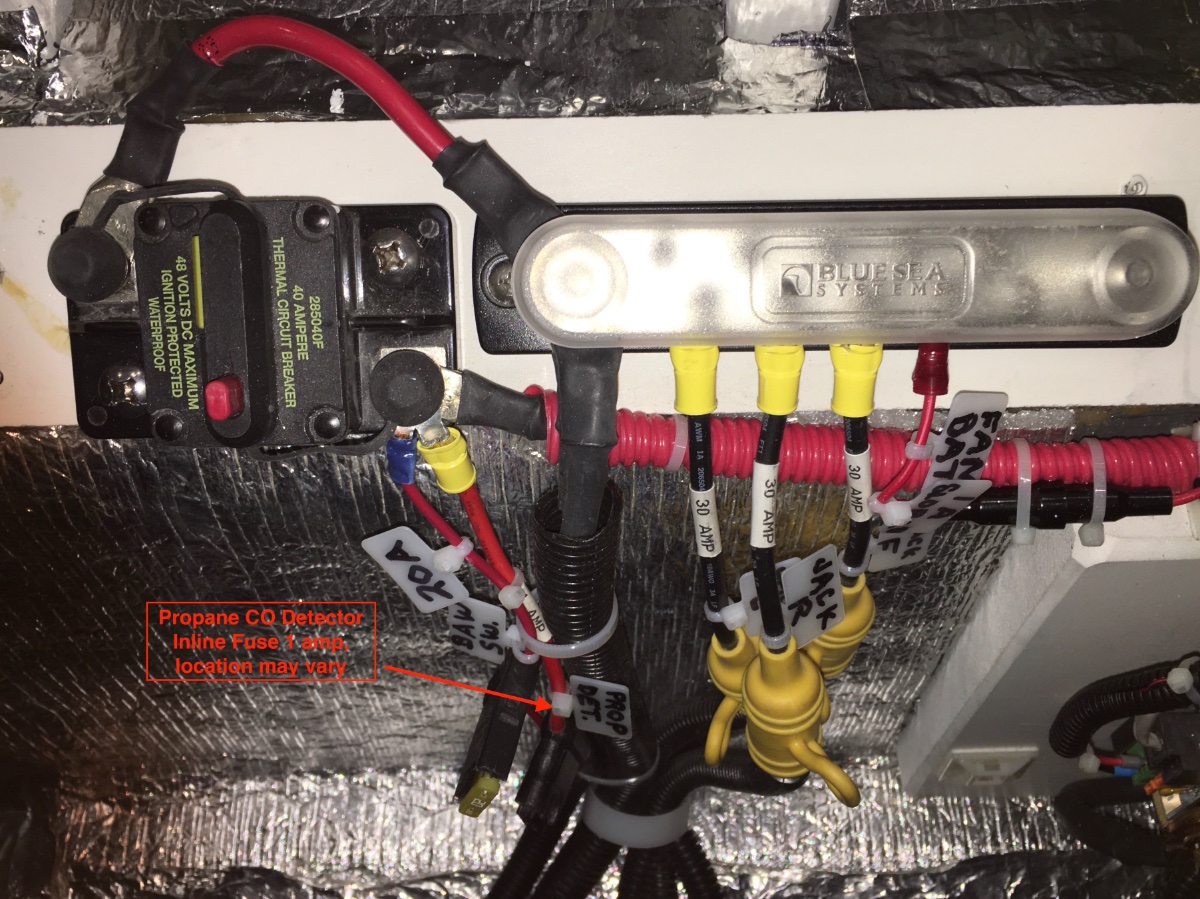
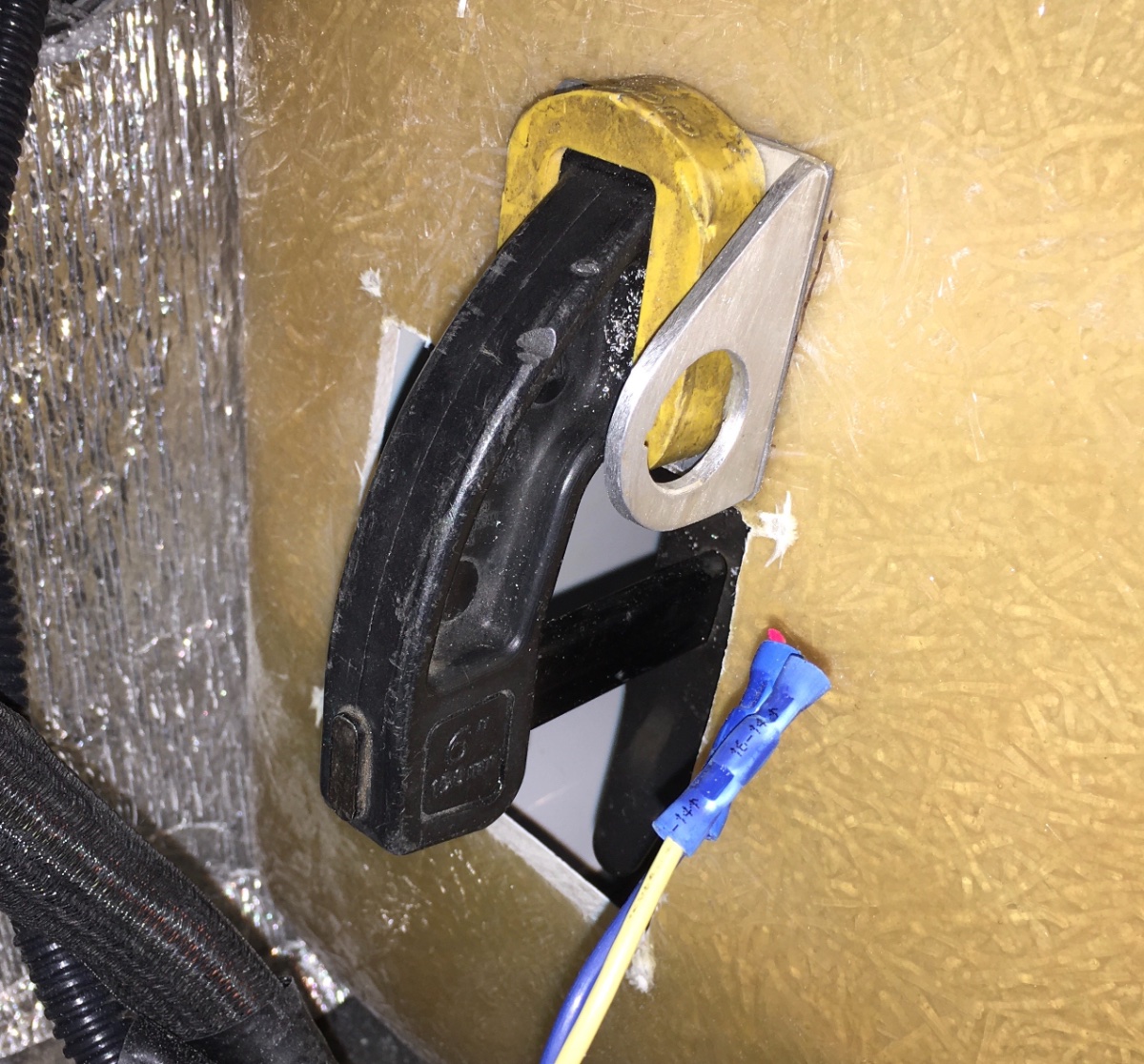
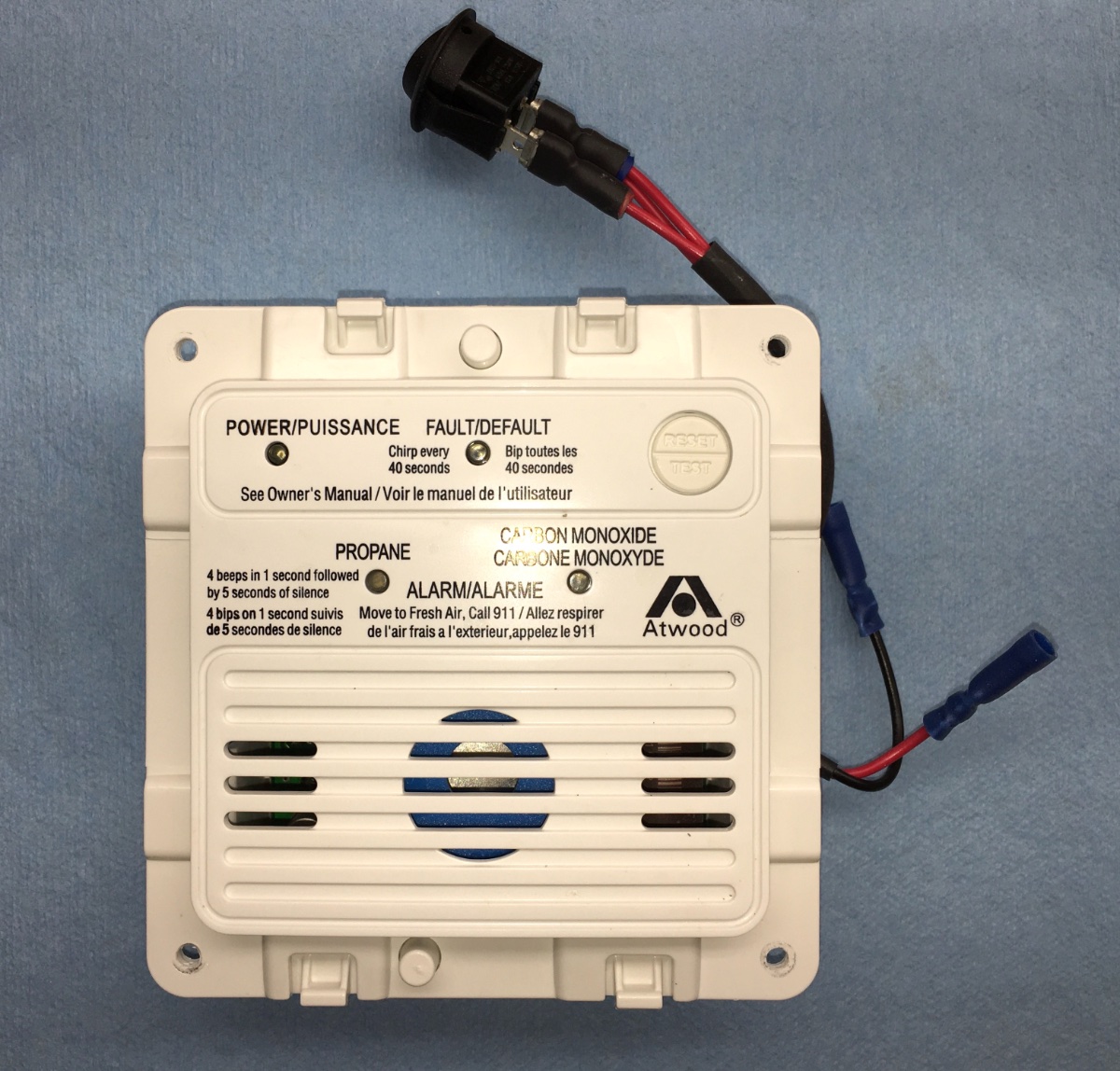
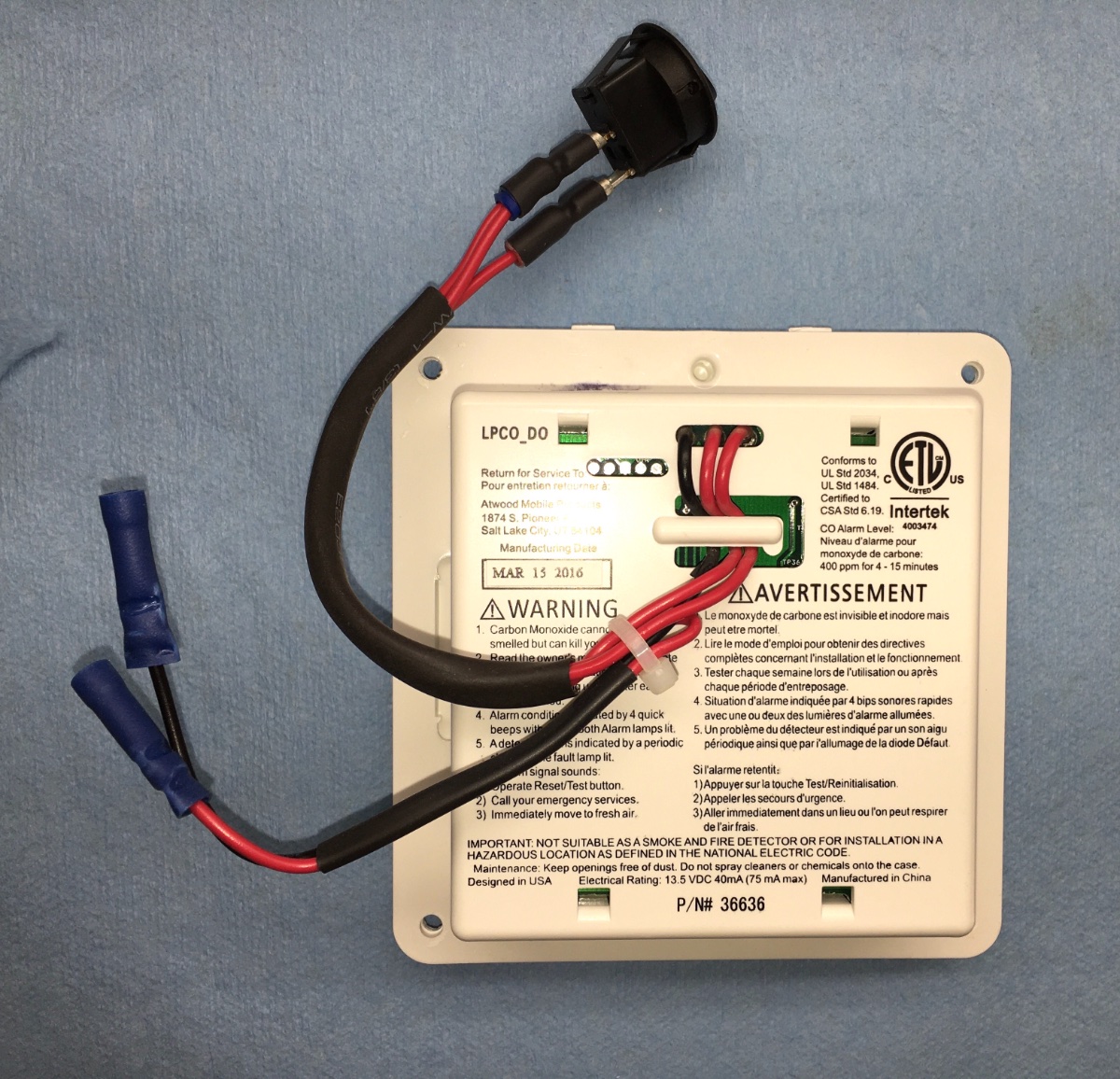
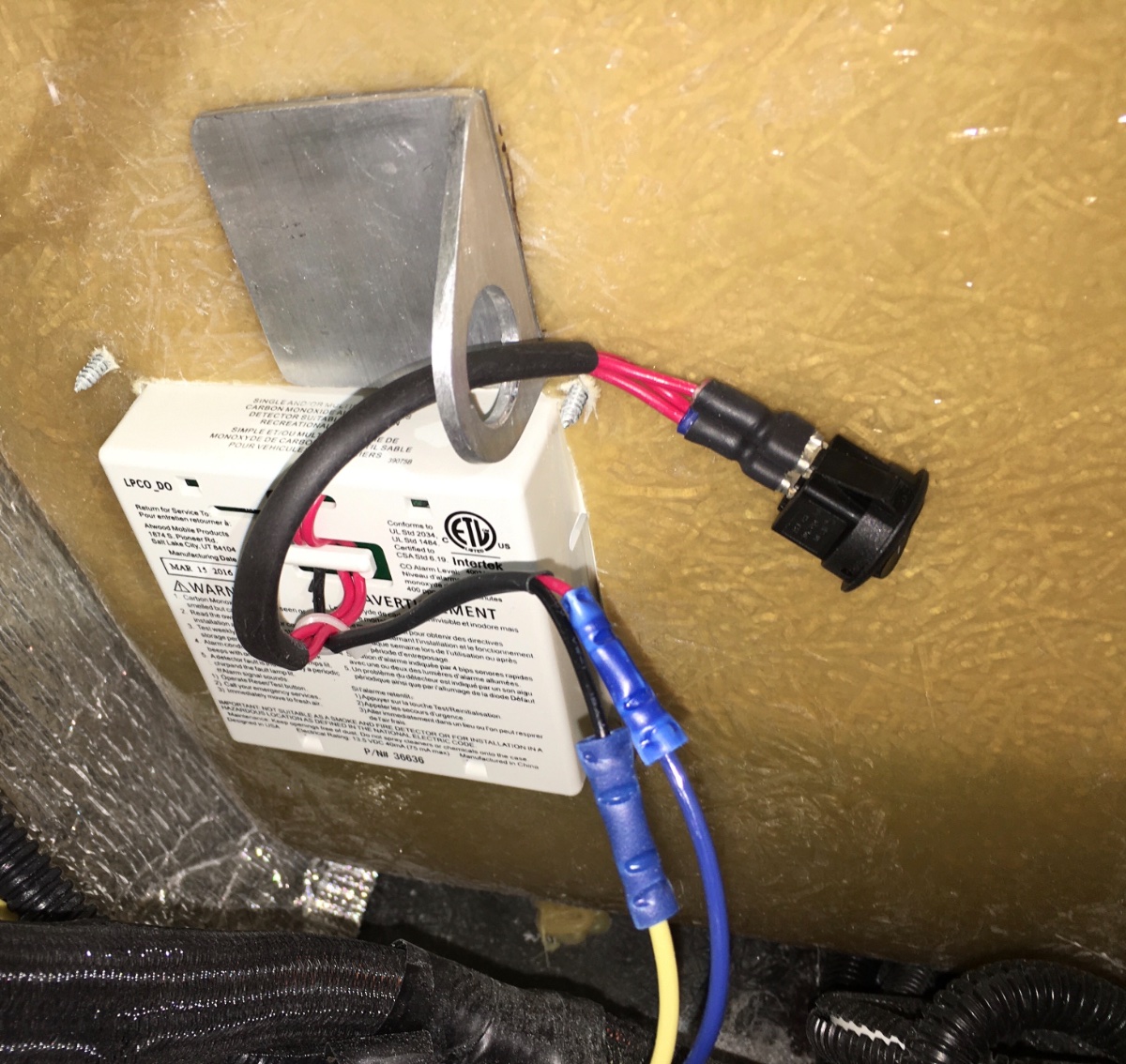
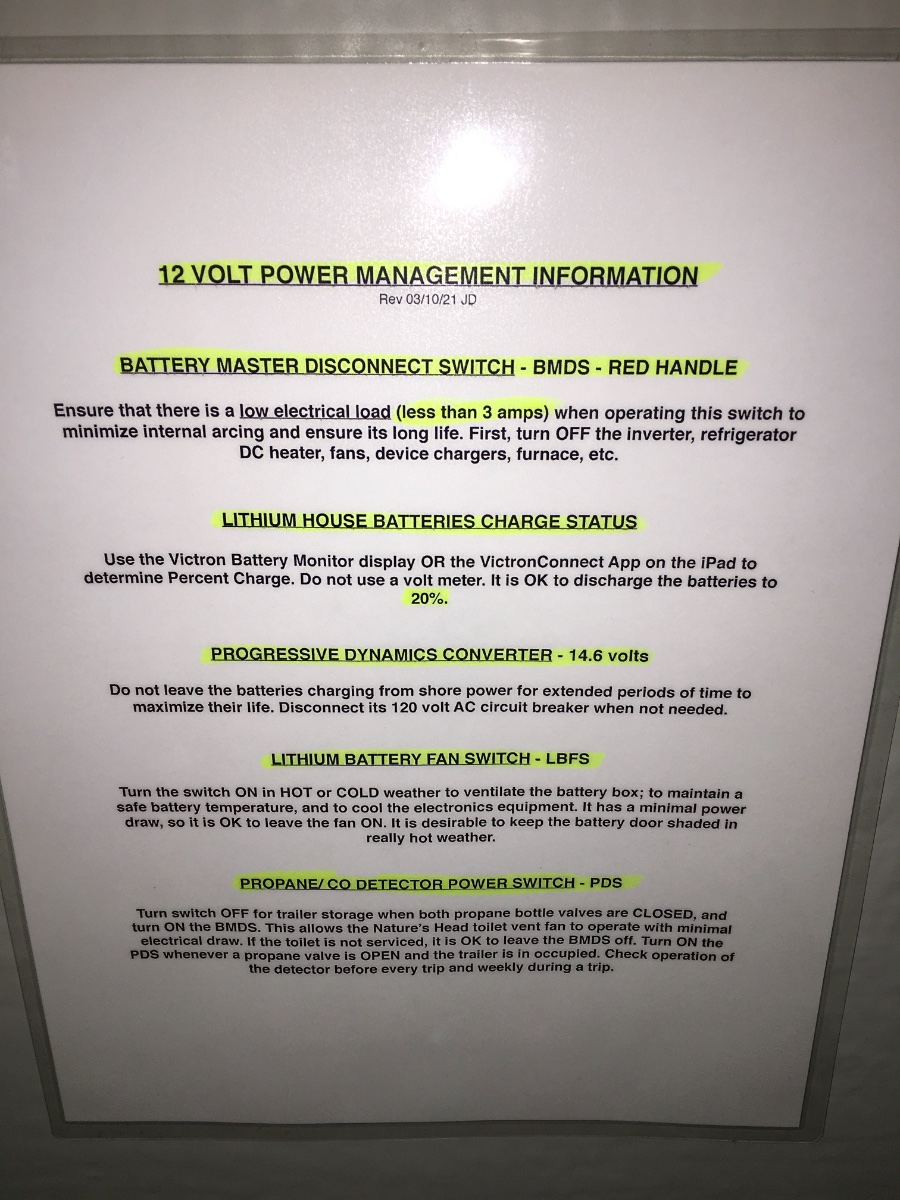
The detector uses a little bit of power, about 0.05 amps, even when everything else is turned off. Normally that isn't a worry, unless you want to keep the batteries connected long term and you are not plugged into shore power. A little drain over many months can flatten a battery bank. Plus it is nice to be able to silence a nuisance alarm or a failed unit by switching it off rather than locating and pulling its fuse (which is at the 12 volt DC bus under the rear street side bed). Here is mine, the location WILL vary because I moved mine to the back a foot, but the wire comes off the manual reset circuit breaker. I added the labels. The Oliver wire does have a factory installed label "1 amp" but it doesn't identify the purpose of the wire! Remove the fuse or disconnect the batteries! Remove the unit (4 screws) and cut the wires. Make a little bracket from 6061 T6 2" x 2" x 1/8" aluminum angle, and secure it to the compartment wall with 3M VHB (Very High Bond) tape. Epoxy would also work fine. The switch is a simple, non-LED On/Off SPST switch that matches the other Ollie switches. It requires a 0.800" hole, which can be made with a step drill AKA Uni-Bit. https://www.harborfreight.com/3-piece-titanium-nitride-coated-high-speed-steel-step-drills-91616.html Any type of switch will work because it is not normally visible. It is similar to this illuminated model: I used the existing Red for positive and Black for ground detector wires. The factory harness has a Blue positive and Yellow ground. Unplug the switch. Splice the new harness into the old one, working outside the compartment (under the table). I was able to discard two feet of extra wires. Install the detector body into its hole. Feed the switch wires through the round hole and mount the switch (it presses in with two retaining clips). Note that it has a little plastic "key" under the lip, that needs a matching notch in the hole, or else just file off the key entirely. Cover the wires with plastic split loom and secure them with cable ties so that they don't flop around. The switch could be located anywhere, but this spot makes it quite simple. A location on the outside of the compartment would work, but it would be possible to turn it off by mistake, which could be dangerous or fatal. Put it somewhere out of the normal traffic flow, and not in a storage compartment where loose gear could bump it! You still need to check the unit for proper operation before each trip and then weekly. Finally, adding a switch violates the RV build codes! Do this mod only if you fully understand its benefits and its potential risks. Because of my extensive mods, I added a BIG information placard under that access cover, it includes information on the Propane Detector switch. Something similar to the last paragraph might be prudent. John Davies Spokane WA
1 point
-
1 point
-
Camp pillows that tickled my funny bone...
1 point
-
Label ties: Nylon Marker Cable Ties, 250pcs 6 Inch I paid $10, I do not know what happened to that seller. Do some searching for a good price...., A brand NEW Sharpie Fine Point pen (not the Ultra Fine) works great to mark them - don’t use a worn one with smooshed tip, that is a mess. John Davies Spokane WA1 point
-
We have two of the "James" thingys. I have one on the pantry wall (Elite II) at the foot of the bed that I use for my cell phone - A Samsung 10 ( 3" x 5 3/4" in a case) fits perfectly. The divided section is perfect for keeping a pen handy.1 point







































-
Recent Achievements
-