Leaderboard



Popular Content
Showing content with the highest reputation on 06/26/2022 in all areas
-
"Naw," says a female who has hitched & unhitched the Andersen many times by herself. It has idiosyncrasies.6 points
-
Since Tundras are being discussed, I thought I’d put my two centavos in. We have a 2008 with the 5.7l engine and tow package. I got it to pull a boat which probably weighed 8000 pounds or so including trailer. The boat was wider and longer then the Ollie II. The truck never cracked a sweat though I didn’t enjoy pulling something that big, hopping curbs in filling stations, etc. With our current trailer - Casita 17, I can almost forget its back there. We have hull 1227 coming in August and I intend to start out with the Tundra. I’ve owned Fords, Chevies, and Dodge pickup/service trucks. The Tundra has been, hands down, the most reliable and comfortable truck that I’ve owned. We do spend a lot of time out here in the West with mountain passes, etc. and we are getting the Anderson sway hitch. I am a cautious driver and go slow. That being said if the truck doesn’t seem to be a good fit, we’ll do something different but I hope to get a few more years out of it 🙂. After all I’m 68 and the boss hasn’t traded me in, yet.5 points
-
After reading most of the post on here, I feel many purchase tow vehicles and then go find a trailer that works for them, which is what I would call doing it in reverse. I started pulling travel trailers some 40 years ago. I worked for a Chevrolet Dealer and we sold many Suburban's with 454 engines, 3.73 rear axles and it was the vehicle of choice for the Airstream, Avon, Silver Streak, crowd. I finally purchased a Suburban 454 and it towed wonderful, Wolf Creek Pass was not even an issue and we got 8 mpg with, or with out the trailer, towing was a non issue. So for me today I still want a vehicle that can tow, I actually think there's more safety in power, them less power. So for those who want to skimp on a tow vehicle I feel you are not really thinking it through, your either looking at a tow vehicle size, yes 1/2 ton pickups are large, cost of the tow vehicle, or just don't understand what works safely. I think many on this forum have given good comments on what works and what doesn't, but what about those who read them, them do what they want to anyway. My favorite thing is walking around the campsites and see rigs and wonder how they got here with there setup, obviously the tow vehicle doesn't match the trailers size. PS, and no I don't want another 454 Suburban. trainman3 points
-
I worked for a few years in a NF campground and yes, it's true, many people have no idea how unsafe and unmatched their tow vehicle is to their trailer. The inhibiting factor for most people including myself is that people usually have the tow vehicle BEFORE they buy a trailer and end up having eyes bigger than their stomachs! My Tundra would have worked fabulous for my Casita but is right on the hairy edge for my ILOVHER. I can't afford to upgrade at this time, nor are there any trucks available...so I will settle for packing light and ALWAYS using the Andersen...AND of course steering clear of the swaying train wreck trailer combo doing 80mph in front of me!!3 points
-
Thank you Patriot! I just ordered one & hope it gets here in time for Duke's birthday. Shhhh ... Chris3 points
-
Hmmm... ours is open 24/7 rain or shine. A haboob or dry dusty dirt road would motivate me to close it.3 points
-
It’s 99% cosmetic, just leave it off, a tiny amount of water in there isn’t going to hurt anything. John Davies Spokane WA2 points
-
My case is likely one of those posts you refer to. January 2021, I picked up a new Toyota Land Cruiser Heritage Edition that I'd ordered in September; the one and only aspirational vehicle I've ever had. Yes it is crazy expensive for a model with the last major upgrade in 2008, and has practically no bells and whistle that are standard on vehicles 1/3 this price. It doesn't stand out, doesn't say "Look at me!!", and pretty much flies under the radar. It is often mistaken for an older Sequoia or Highlander. But I absolutely love it! It is my only car (other than a non-running 1958 MG in the garage), and the last vehicle I will ever buy. All of the oft quoted detractors are exactly what I want in a vehicle. It'll last 30,000 miles easily on routine maintenance. And I spent way more than I ever should have to get one when it was announced that Toyota would discontinue the Land Cruiser line in North America. And the new Land Cruiser available in the rest of the world now is a technology loaded turbo V6 with questionable reliability. Due to the timing, I bought mine at $9000 under sticker price. I could now easily sell it for $30-40,000 more than that. But I won't, because there's nothing else out there like it. So, yes, I'm looking for a trailer *after* already having a tow vehicle. That's not going to change. And being in our late '60s, I'm not going to get a cheap starter trailer before eventually getting one of the best available. Both of my brothers have gone through umpteen larger trucks and larger trailers; now both with dually diesels and 37' and 41' unwieldy monsters. That's not me. I've been warned. Both @John E Daviesand @mossemi have similar Land Cruisers (albeit both with the 6-speed transmission with a better gear ratio than my 8-speed) and have mentioned the limitations of pulling an Elite II with one. I'm willing to live within those limitations. Will it be a choice that I regret down the road? Maybe. But I'd rather regret it later than not having had the experience of finding out. We will be visiting the Oliver factory and show room sometime during the week of July 10-15. Unless something completely unexpected rears its head (and if I get an all clear on a medical concern), we'll be ordering one.2 points
-
Hi Paula, We just left Murfreesboro, TN this morning. CGI finished our trailer and truck yesterday. The guys said it comes with a 2 year guarantee. Everything past the 2 years depends on how you take care of it, i.e. covered, stored inside, how you wash it, if you use their "shine and shield" spray after washing. But 2 years is a guarantee. Best of luck :) John2 points
-
I would, except Oliver had to fix my bath interior courtesy light and took the towel bar insert out to do it. They did such a professional job on the caulking (such I could never duplicate) that I would just like to fix the faucet myself. 😀2 points
-
Made me wanna throw up watching all that. Approx 1 mile/Kw, Over an hour to get enough juice to go another 100 plus miles, having to unhook in most cases. I'll stick with our big boy diesel. I'm not really concerned about the price of fuel, I planned for this lifestyle for nearly 20 years and calculated fuel at $5.00/gal into those plans. Load up....2 points
-
Across the US in 2021, 22% of all electricity came from coal. 39% came from the combo of renewables and nuclear (the remainder came from natural gas). Given how electrical generation is shared across areas (see the use of the "big bathtub" analogy regarding blending of all the sources that feed into a region's grid), there are fair odds that the trip used a mix at least somewhat like this (yes, the mix does vary a bit depending on which part of the country you're in).2 points
-
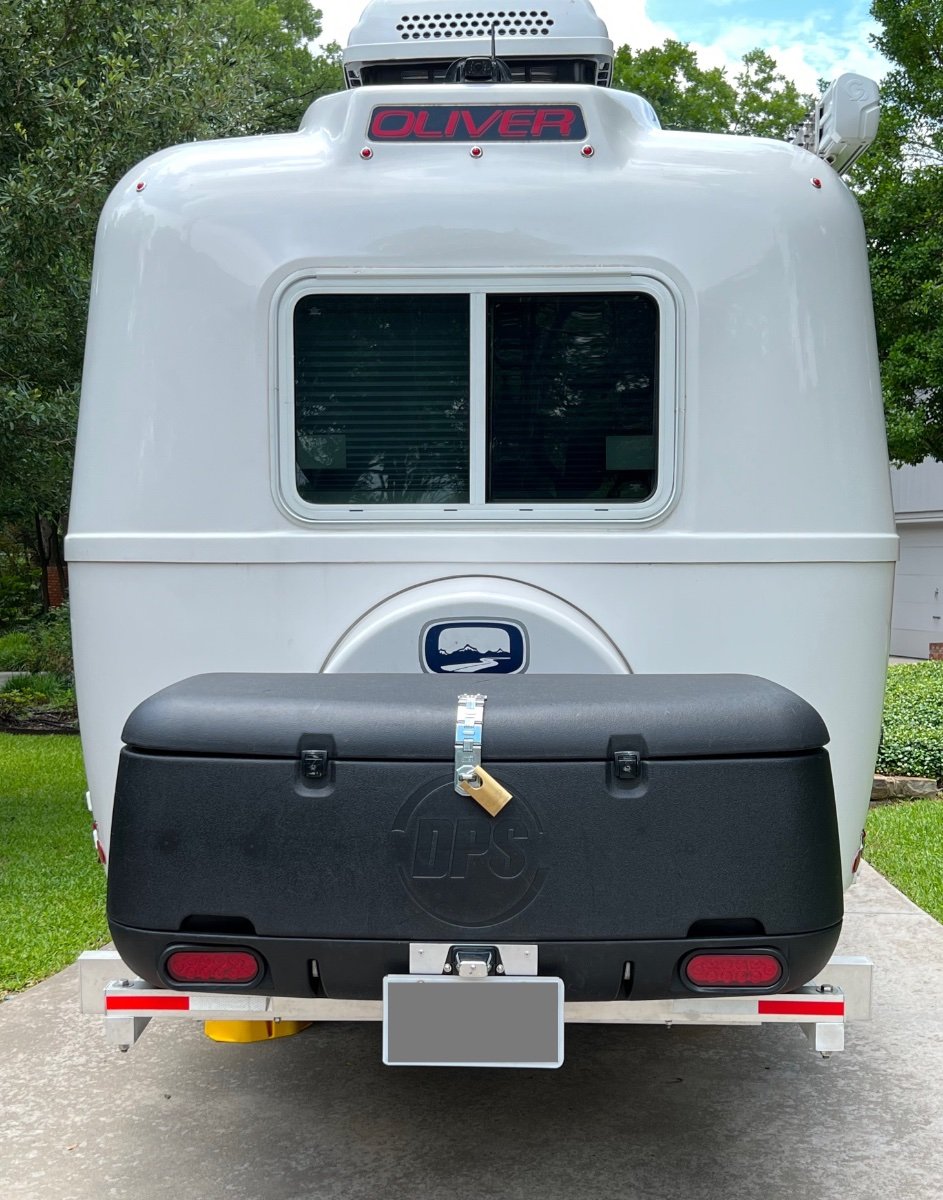
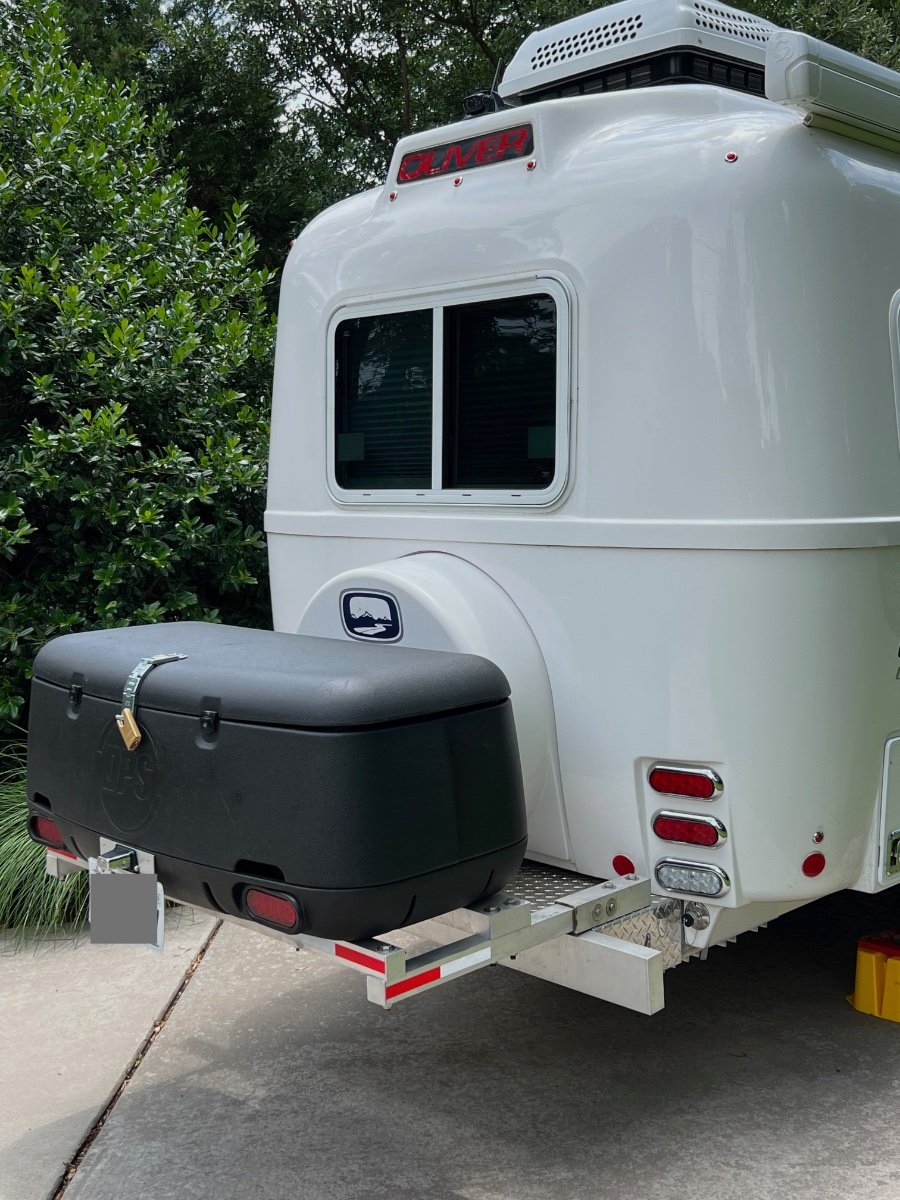
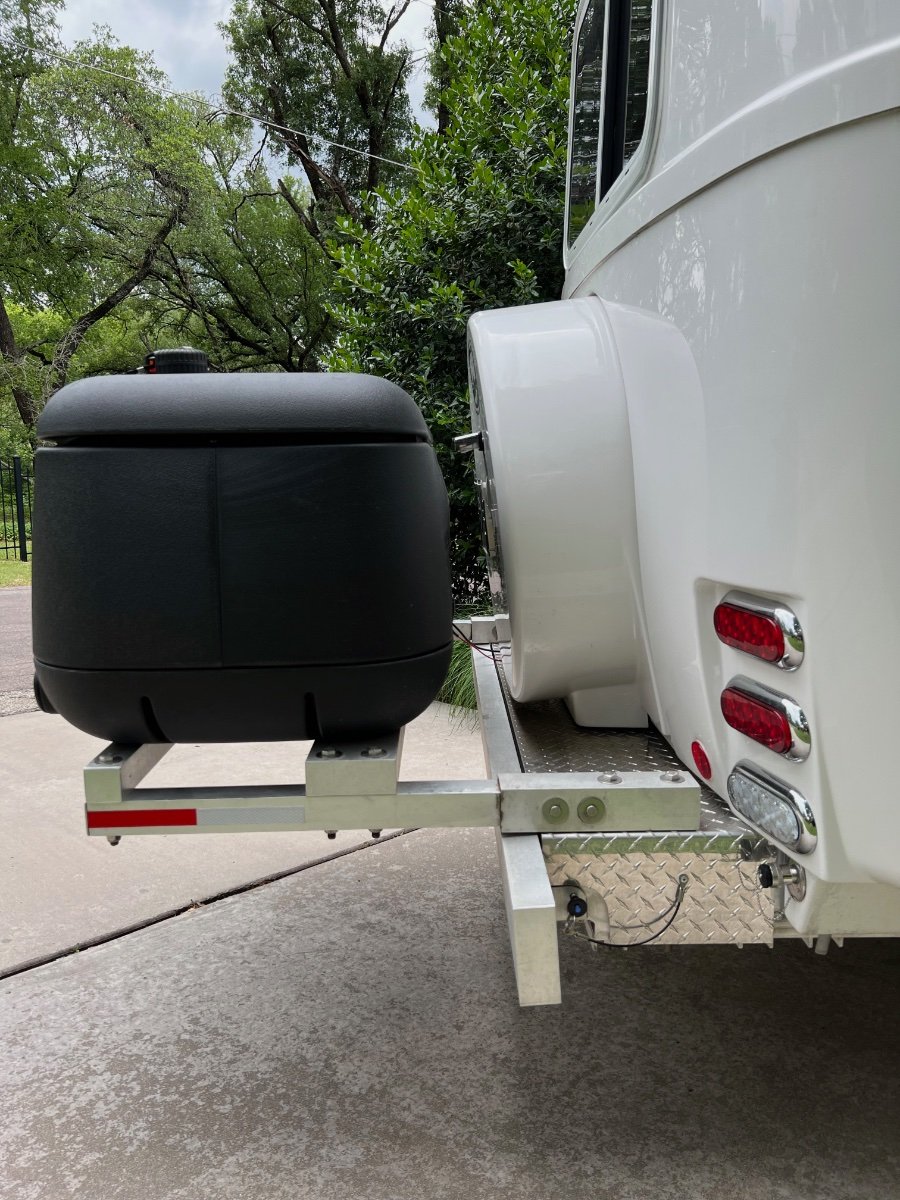
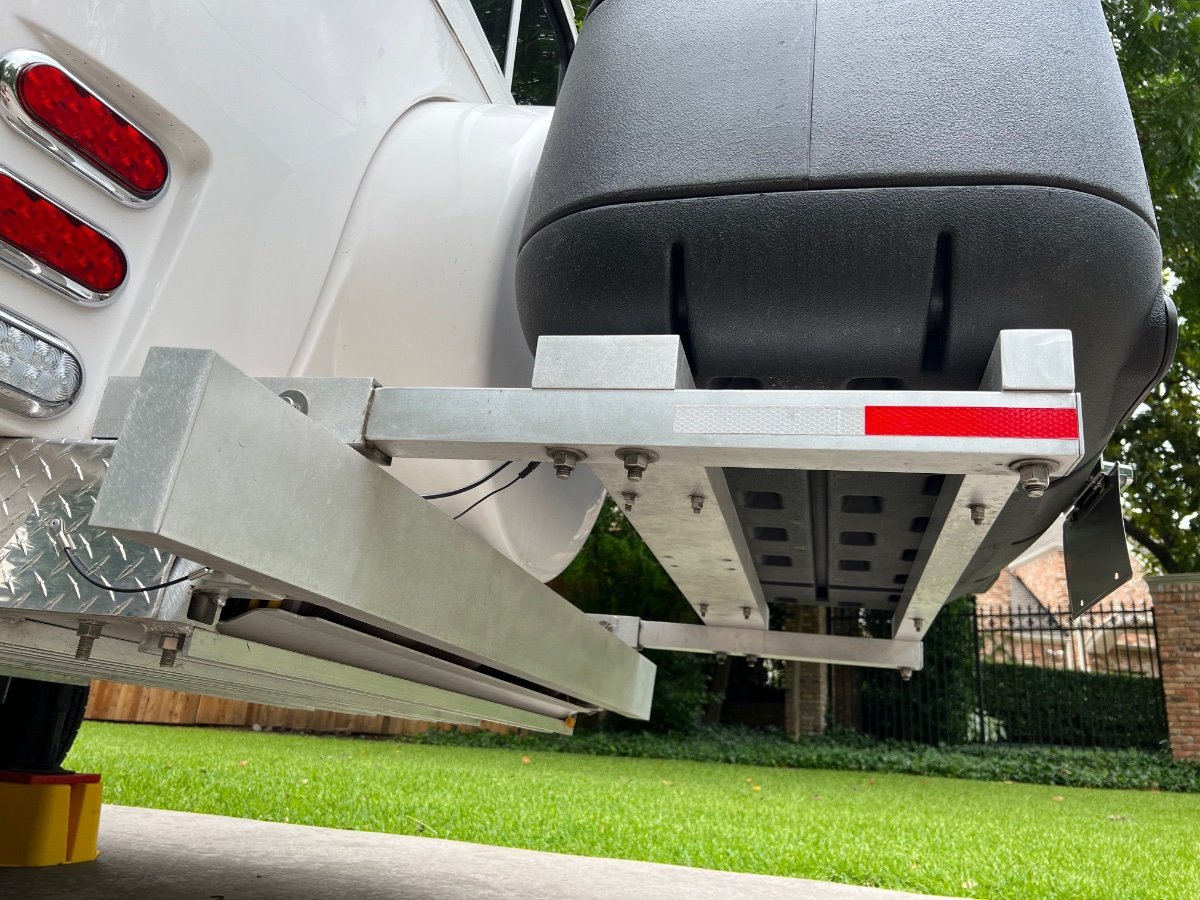
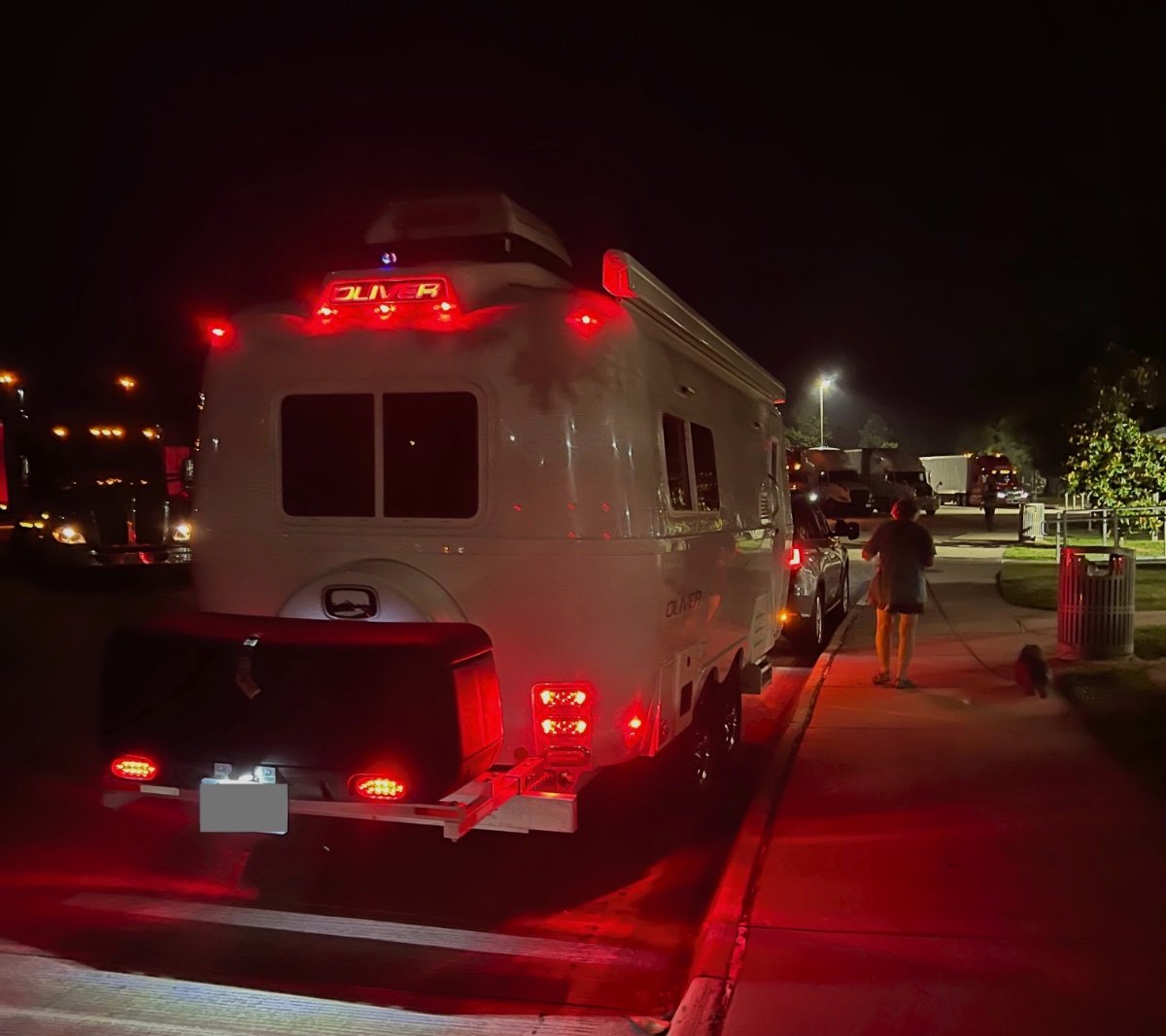
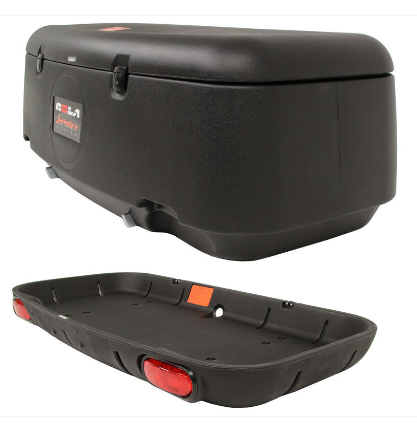
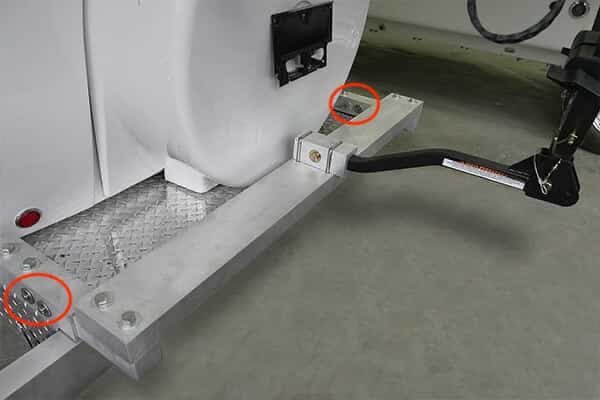
Summary I have installed a rear mounted cargo carrier, with lights, to our 2022 Oliver Legacy Elite II (LEII) travel trailer. We recently completed a two week, ~2000 mile trip, using the cargo carrier, which performed flawlessly. Below are photos of the installed cargo carrier, which are followed by a detailed description of its installation. Storage Constraints Prior to ordering our Oliver Legacy Elite II (LEII) travel trailer I knew we would need additional storage space on the trailer. We are using a 2014 BMW X5 35d (diesel) as our tow vehicle, rather than a pickup truck. Thus, we could not plan to use the pickup bed for supplemental storage. We also needed to stay within the tow vehicle's cargo capacity of 1100 lbs and maximum tongue weight of 600 lbs.. Expecting a tongue weight of approximately 500 lbs. plus two occupants at approximately 300 lbs, we could only accommodate a maximum of 300 lbs. of other cargo. The available payload will be partially used by our camera gear, which must be protected from exposure to moisture. A tongue mounted cargo carrier was not viable, given the tongue weight limit for the tow vehicle. Storage Requirements I anticipated needing additional storage space for the following items: Champion Dual Fuel Generator- 2500 watt (~45 lbs.) (too large for basement storage) Napoleon TravelQ™ 285 Portable Propane Gas Grill and hose (~35 lbs.) (too large for basement storage) Anderson Ultimate Leveling kit (~25 lbs) Harbor Freight rubber chocks (4) (~20 lbs.) Camco Stabilizer Jack Supports (3) (~10 lbs.) Miscellaneous accessories All of these items can tolerate some exposure to moisture, which is likely when stored in any external cargo carrier. A closed and reasonably secure cargo carrier was needed. Searching the owners' forum, I found examples of rear cargo carriers/bike racks and found several examples, including: Oliver's original bike rack design using twin receivers and extending approximately 3 feet beyond the rear bumper; Various rear mounted metal cargo boxes, including custom designs; Rear mounting of an Oliver tongue cargo box by John E. Davies. I also looked extensively at aluminum cargo boxes from various manufacturers, trying to find options which could accommodate the cargo items listed above. I already owned a cargo carrier which we had used on the BMW X5 tow vehicle. This carrier has a heavy steel swing-away frame which mounts to a standard 2" receiver. Mounted on the steel frame are a polypropylene tray and an enclosed container with 13.5 cubic foot capacity. The tray and enclosed container interlock. This cargo carrier also is equipped with fully functional lights (running, brake, turn, flasher). Interlocking pins on the enclosed container mate with the tray. Locking latches secure the container to the tray. Solution Approach I decided to re-use the polypropylene tray and enclosed cargo container, but not the heavy steel frame. Instead, I would use a design similar to the original Oliver bike rack. I ordered the current optional Oliver bike rack when we placed our LEII order, planning to utilize some, but not all, of its components. The current Oliver rear hitch (photo below) utilizes twin receivers that are 11" long, constructed to receive 2" x 2" X 0.25" (wall thickness) T6061 aluminum square tube support arms, which are 17 inches long. The receivers are each mounted to the LEII frame by two long 0.5" diameter stainless steel bolts and nuts. The other components of the rack are a 2" x 5" x 0.25" T6061 aluminum cross-member, 51-1/8" long (with end caps), and a 1-1/4" receiver for connecting a bike rack. I planned to use the twin receivers, and the cross-member, but not the support arms, nor the 1-1/4" receiver. Instead, I would replace the 17" long original support arms with longer equivalents, whose length was to be determined. I would utilize the original 2" x 5" x 0.25" T6061 aluminum cross-member and add another cross member, this one 2" x 2" x 0.25" T6061 aluminum, also 51-1/8" inches long with end caps. The cross members would be bolted to the support arms, in the same manner as on the Oliver rear hitch. The tray and enclosed container from my existing cargo carrier would be mounted to the cross-members. Note the clevis pins circled in the photo below, there are two 0.50" diameter horizontal clevis pins securing the support arms in their receivers. Each clevis pin has a washer on either side of the receiver. Removing the clevis pins permits the support arms to be pulled to the rear, enabling removal of the spare tire cover and spare tire without dismount the support arms. Solution Model A critical dimension to be determined was the length of the 2" x 2" x 0.25" support arms. The new support arms need to be long enough to: Support the polypropylene tray and enclosed cargo box and attach using the molded mounting holes in the tray; Allow the lid of the enclosed cargo box to open without striking the spare tire cover; Permit removal of the spare tire cover and spare tire without removing the cargo carrier and support frame; Permit access to waste water hoses stored behind the bumper; Minimize the additional length of the cargo carrier and support frame to the LEII's length. I fabricated 2" x 2" wooden support arms, approximately 40" long. Using woodworking equipment, I cut slots into one end of each support arm to fit around the bolts holding the twin receivers to the frame. I also drilled horizontal holes for the clevis pins which retain the support arms in the receivers. Positioning the Cargo Carrier on the Cross-members The wooden support arms were inserted into the twin receivers and secured with the clevis pins. Then the 2" x 5" x 51.125" T6061 cross-member was placed across the support arms near the bumper. The additional 2" x 2" x 51.125" wooden cross-member, was also placed across the support arms, but further from the bumper. Clamps were used to hold the cross-members in place on the support arms. The polypropylene tray and enclosed container, latched together, were positioned on the cross-members, centering both to the trailer's width. I opened the lid of the enclosed container and adjusted the spacing (fore and aft) between the lid and the spare tire cover to ensure they did not contact each other. Once I had located the joined tray and enclosed container in what appeared to be a desirable position, I adjusted the positions of the cross-members fore and aft to establish alignment with the mounting holes in the tray. The 2" x 5" cross-member engages two mounting holes on each side of the tray. The 2" x 2" cross- member engages only one mounting hole on each side of the base of the tray. Six 5/16" carriage bolts will fasten the tray to the cross-members. Only four carriage bolts attached the tray to its original steel support frame. I used a mason's string stretched across the width of the tray with weights on either end to aid in aligning the mounting holes in the tray with the positions of the cross-members. I also used carpenter's squares to verify the cross-members were perpendicular to the support arms. Another check of squareness was made by measuring the distance from the trailer bumper to the cross-members. Once I was satisfied with the position of the tray and enclosed container on the support structure, I marked the locations for the holes to be drilled for the six mounting bolts to secure the tray to the cross-members. The tray overhangs the rear cross-member at the rear. With the cargo carrier tray and enclosed container in place on the clamped cross-members, I wanted to determine if the spare tire cover could be removed without removing the entire cargo carrier and support assembly. I found I could remove the clevis pins and pull the support arms aft approximately 7 inches out of the twin receivers and enable removal of the spare tire cover. With the tray and enclosed container positioned on the cross-members, I could now determine the required length of the support arms, which is 33.75 inches. The location of the rear cross-member determines the length of the support arms. After locating the mounting position of the tray and enclosed container I marked all key positions and hole locations on the wooden support arms and wooden rear cross-member. I cut the wooden support arms to the desired final length. Material Sourcing and Machining The required T6061 aluminum components required are: 2" x 2" x 0.25" x 33.75", square tube, quantity 2 (support arms), cost= $110.18 2" x 2" x 0.25" x 51.125", square tube, quantity 1 (cross-member), cost= to $99.08 2" x 12" x 0.125", flat bar, quantity 1 (to be cut into 2" squares for end caps on the support arms and rear cross-member), cost= $6.86 Sales tax= $17.83 No shipping charge. I picked up the materials at the local Metal Supermarkets warehouse Total cost= a $233.95 The above T6061 aluminum components, cut to specified length, were obtained from: Stainless steel bolts and nyloc nuts were obtained from: I was referred by Metal Supermarkets to a local machine shop: When I received the materials I took them and my wooden mockups of the support arms and cross-member to Air & Earth. I also took one of the original support arms. I discussed the machining needed: to cut the slots in one end of the support arms and to drill the needed 0.50 diameter holes for the clevis pins and mounting bolts. I also asked them to cut the 2" x 0.125" flat bar into 2" x 2" squares. I did not ask them to drill the smaller holes for mounting the cargo tray to the cross-members. I was quoted $220 and turnaround of the job within a week. They did an excellent job within the promised timeframe. Finishing and Assembly of the Support Structure After Air & Earth completed the requested machining, I performed the following finishing steps, which included: Rounding the edges of the 2" x 2" square tubing on the slotted end to be inserted into the receivers. I used a 3" wide belt sander with 100 grit sanding belts to round the corners of approximately 12" of the tube which would be inserted into the receivers . The original Oliver support arms also had the corners rounded to more easily slide within the receivers. Several trial fittings were required to verify smooth insertion and removal to/from the receivers. The support arms and the rear cross-member were sanded with an orbital sander using 200 grit disks. This sanding removed markings on the tubes and made the surface textured, similar to the Oliver rear hitch components. The support arms were inserted into their receivers and fastened with the clevis pins. The cross members were aligned with the mounting holes on the support arms and bolted into place. The cargo tray was positioned on the 2" x 5" cross-member at the previously determined mounting position and holes drilled to mount the cargo tray. Holes were then drilled in the 2" x 2" rear cross-member. Carriage bolts, flat washers and double jamb nuts were used to secure the cargo tray to the cross-members. Once all test fittings of the support assembly were completed, lithium grease was applied to the ends of the support arms which are inserted into the receivers. 2" x 2" x 0.125" caps were attached to the open ends of the support arms and the rear cross-member, similar to the end caps used by Oliver. These were attached to the square tubing using JB Weld epoxy. Cargo Carrier Lighting The cargo carrier partially blocks visibility to the taillights of the trailer, which is most noticeable when viewed from close behind the trailer. At a distance the taillights are largely visible. The cargo tray is fitted with two LED light fixtures and a wiring harness with a 4-pin flat connector. A corresponding 4-pin flat connector was installed on the LEII to integrate the lighting on the cargo carrier with the trailer lighting. Details of the installation of the 4-pin connector in the trailer are covered in a separate article. The lights on the cargo carrier ensure the trailer is quite visible from behind. A license plate mount was added to the cargo carrier tray, since the license plate mount on the spare tire cover is blocked by the cargo carrier. Lighting for the license plate mount is provided by adding a Y connector to the license plate light cable under the spare tire cover and adding an extension cable routed to the cargo tray mounted license plate mount. I also added reflective tape to the support frame members. I used the following reflective tape: https://www.amazon.com/gp/your-account/order-history/ref=ppx_yo2ov_dt_b_search?opt=ab&search=reflective Conclusion This addition to our trailer provides significant benefits, with no significant disadvantages. It does add approximately two feet to the length of the trailer. Besides the additional storage space, the cargo carrier and its load slightly reduces the tongue weight. I measured the tongue weight, using a Sherline scale, at 450 lbs., with no water onboard. Tongue weight seems sufficient, as no swaying or other handling issues have been observed. This project had a successful outcome due largely to the information I was able to glean from the Oliver Owners Forum. I hope this information is useful to others on the forum. Comments and suggestions welcome. Regards, Don
 1 point
 -
Hi Everyone, I will pick up my Elite II in late October. I am downsizing my life to a TT after losing my husband to cancer last August. I am waiting for the Rivian with the 400 mile range and am waitlisted for it to arrive in late 2023. Meanwhile, I need a TV and am trading in my Subaru Outback for it. I have gone through the forums and done research. I test drove a 2017 Titan (not XD) yesterday and while it is an awesome truck, it is a lot for my 5'3" , 120lb personage. But it did have all the features I want. I did drive tomato trucks in the Central Valley of CA some 30 years ago, and could handle a full rig with double trailers, but that was A LONG time ago. Any suggestions on a TV for someone who is short and a little nervous about a ginormous vehicle? Since I will be solo, I think it best to have 4x4 for safety. I'd like as decent as mileage as possible and to keep the vehicle length less than 228, which would barely fit my garage while I still have a garage (I am selling my house after I get situated with the trailer). I will test drive some 150s today and have yet to try a Silverado. I am only looking at used vehicles and will get $31k for my trade in per Carmax. So I'm looking at prices in the 30k range. Thank you!!!1 point
-
I have never actually removed my towel holder. I use it for hand sanitizer and a vinegar spray bottle for the Natures Head.. Put a large round access panel in the closet inner wall, low enough down that you can see and reach under the sink. It won’t be great, you can only get one arm in, but it is better than not knowing at all. I have one there. Mine is 6”, factory installed back when they did custom stuff. An 8” would be better, especially if you have big forearms. Measure carefully to make sure it would fit. X-Haibei Round Boat Non Slip Inspection Hatch White Plastic Deck Plate with Detachable Cover, Anti-Aging,Anti-UV, Marine Accessories (Inside Diameter 8 inch) You could go bigger there, but IMHO if you do have a problem you will end up removing the towel holder for proper access anyway. So “one arm” is enough. I wouldn’t like to do any serious repair while lying awkwardly inside the closet. 😬 John Davies Spokane WA1 point
-
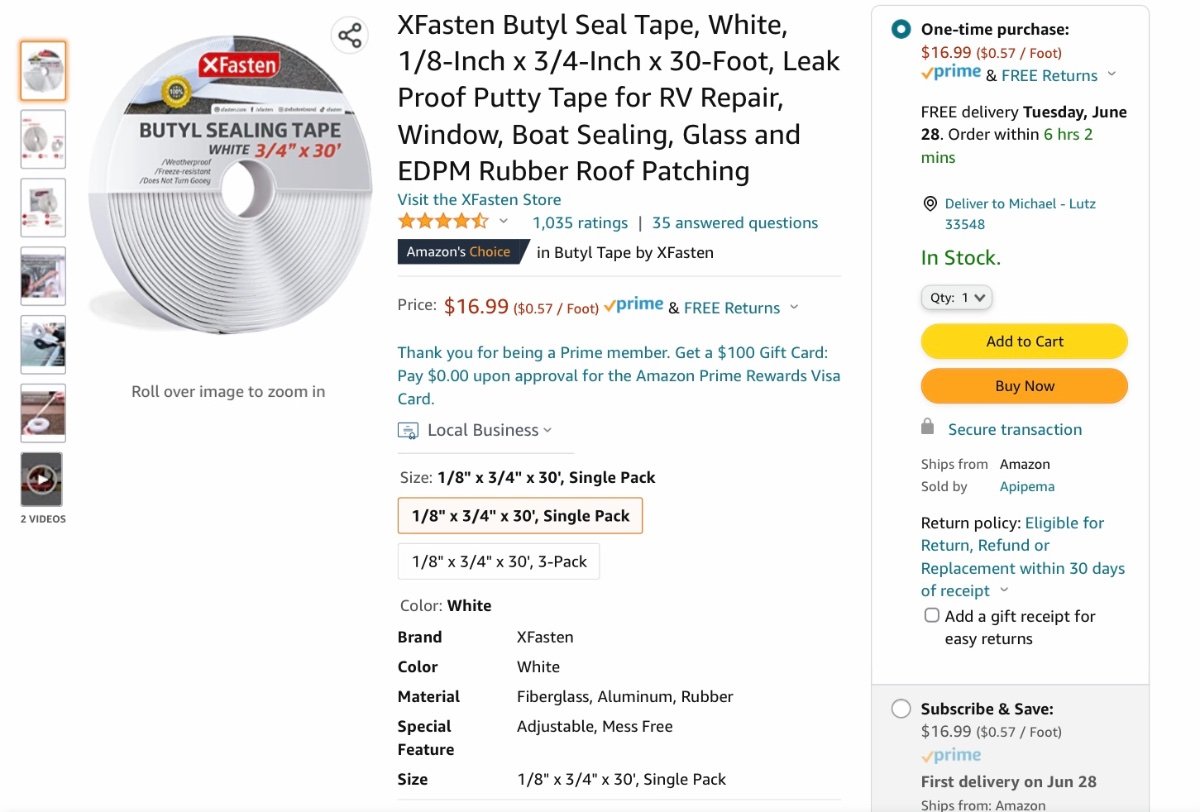
This is the product I used to seal the bath vanity deck hatch when I replaced the stock vanity access cover. Mossey
1 point
-
There are at least a couple of owners that have replaced the original with a porthole style access hatch. Hopefully they will chime in here. Bill1 point
-
We love our GMC turbodiesel, and dealing with DEF is no problem. Initially, I kept a backup container in the bed. I soon learned that many of the major truck stops have DEF right at the pumps, and that is far more convenient, saves space in the bed, and keeps me from one more thing to purchase at Walmart. It may be a little more expensive at the pump; however, it is worth it to me. I monitor the DEF level and never let it get much below half. Never have I had a problem locating it, but I recommend keeping a close eye on it. My truck gives a message when I have 1000 miles of DEF remaining. To me, cost is incidental.1 point
-
Ah, memories. My dad had an International Travelall that we used to tow a 27' Holiday Rambler travel trailer. I remember "vapor lock" well. It was my Dad's nemesis, much like the furnace was for the dad in the Christmas Story movie.1 point
-
Great post, you can sort of get away with a marginal TV if you live and camp in the East, but once you start stressing it really hard in the Western mountains, passes, headwinds and hot deserts, it simply isn’t acceptable. Too much trailer for too little truck I had a 1984 Suburban 3/4 ton 2wd with the 454 gas carbureted engine. It was an underpowered brute (just 360 ft lbs) but with some engine intake and and exhaust mods and a different distributor advance curve it was wonderful. In spite of only having three gears. I pulled a 9500 pound boat/ trailer combo and found that the factory axle (3.5 ish? ) was very inadequate for mile high elevation, and I had a 4.10 Detroit Locker installed in SLC, mid way to my Lake Meade destination. That fixed it but there were still times when it would vapor lock and quit at the top of a long steep hot grade. I had to install an electric inline fuel pump that I could turn on manually to feed the stock engine driven pump, which would overheat otherwise. I put a 40 gallon tank in place of the stock 25 gallon one. Ah the good old days; carburetors, points and distributor, spark plug wires, frequent tuneups, oil leaks, crappy build quality, and too many roadside breakdowns. John Davies Spokane WA1 point
-
Would you provide the towing and cargo capacity of your Ram 1500 for guidance purposes? Mossey1 point
-
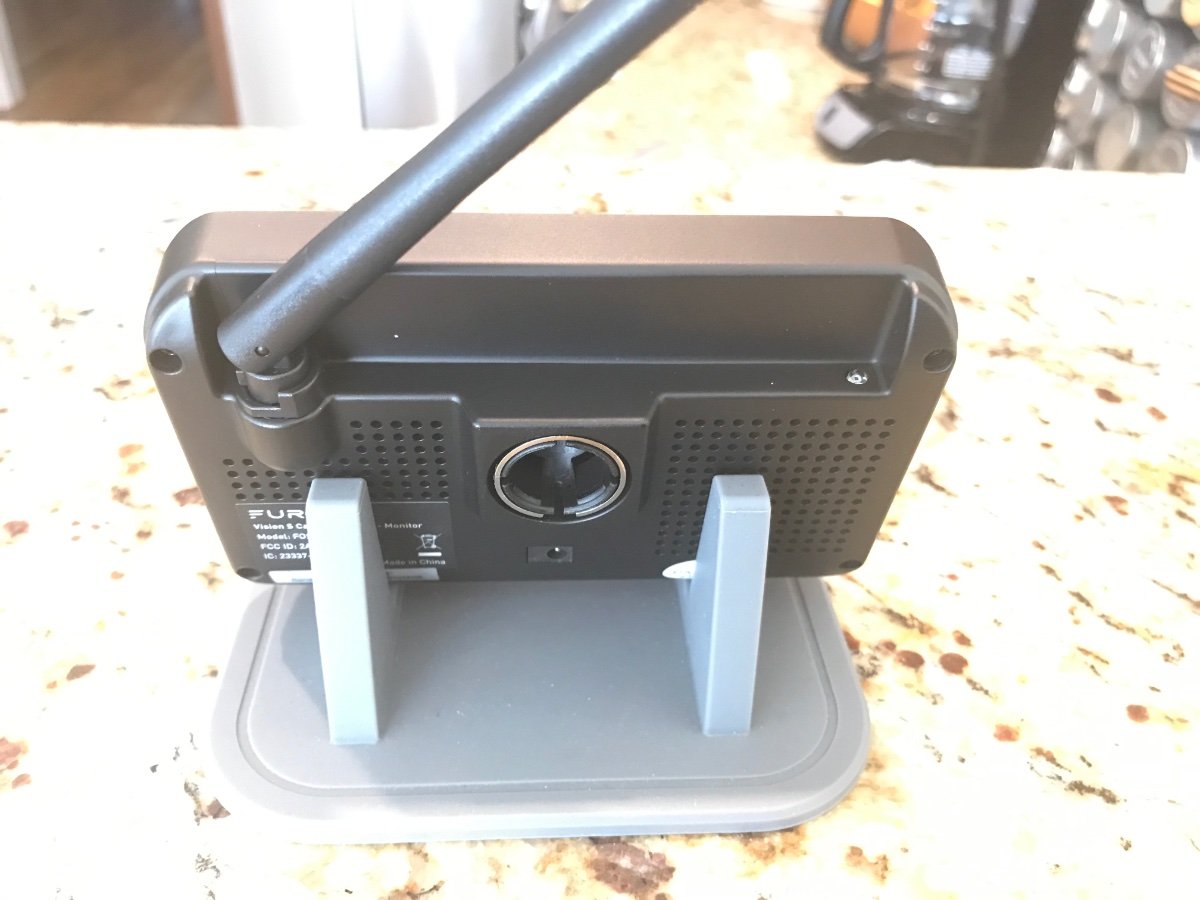
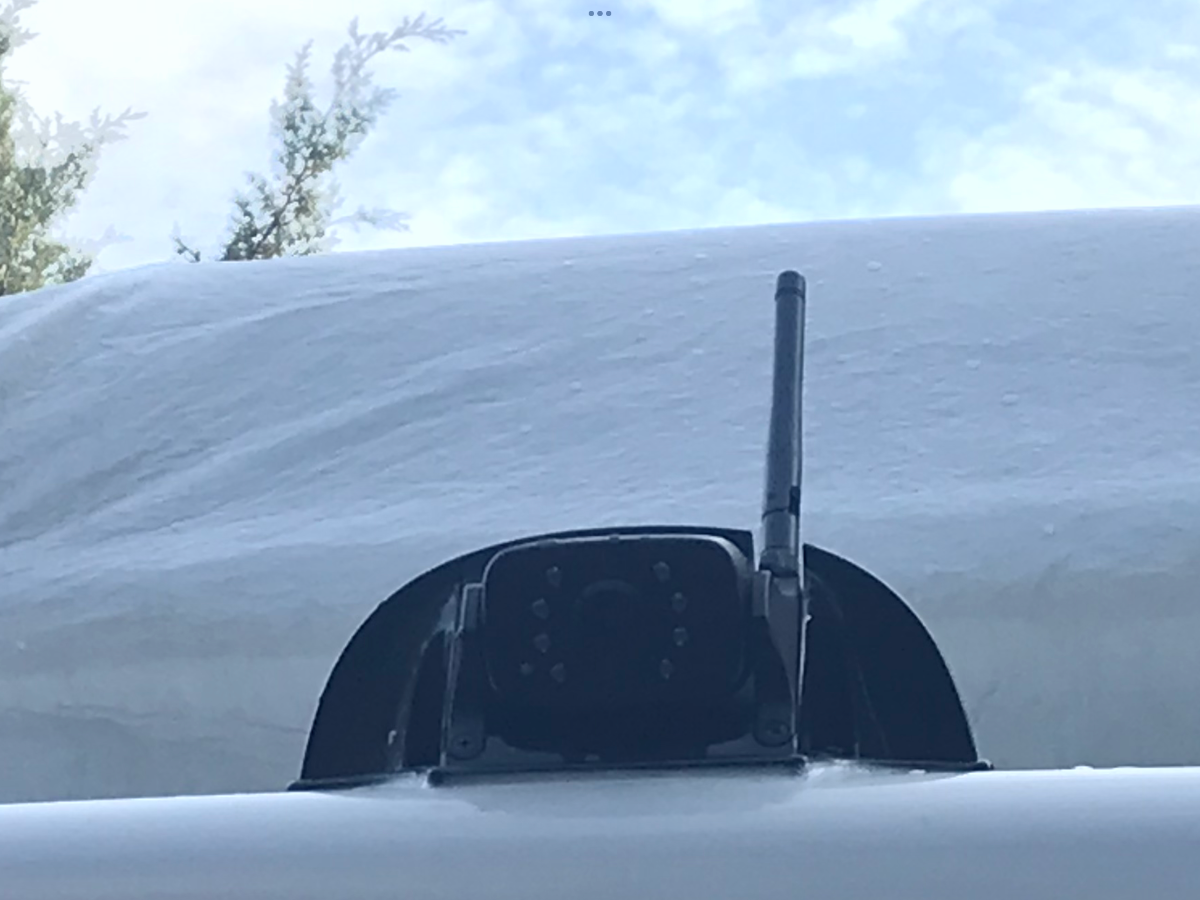
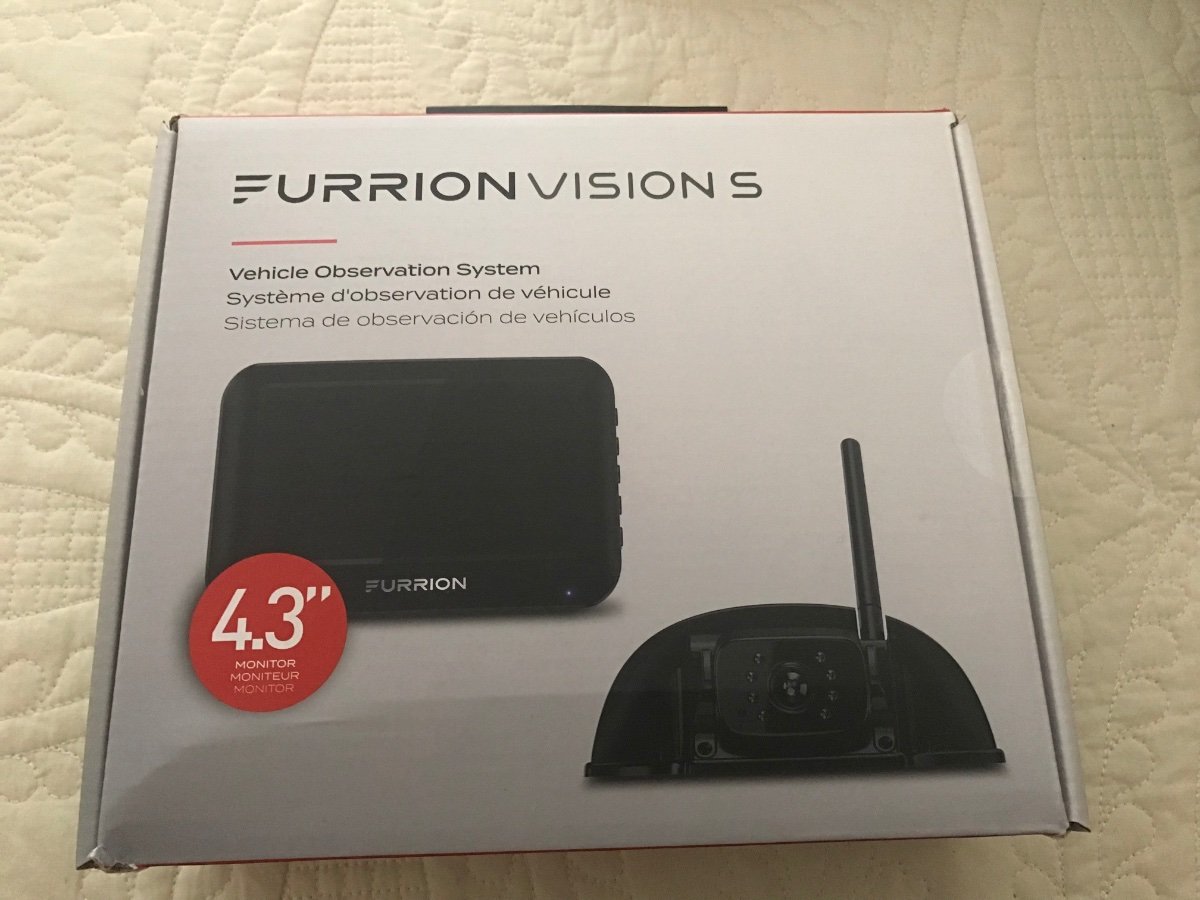
We recently had Oliver Service Center install a new Furrion Vision S Rear Camera on our Ollie. The original Voyager camera that it came with was diagnosed with water intrusion and was out of warranty. So a replacement was in order. The new Furrion S works great and we really appreciate long distance rear highway visibility and the safety factor when changing lanes when under way. A real plus is we can also see our bicycles when mounted up on our bike rack. The Furrion S also has a feature which allows the driver to hear the spotter when backing into a campsite as the camera has a microphone and the video monitor has a speaker. This allows the driver to see and hear voice commands of the spotter when backing up. Pretty cool tech if you choose to use it. The Mod- I decided to purchase an extra silicone dash mount for $13 which is the exact same mount we use for our “TST TPMS” system. The rubber mount holds the Furrion monitor securely on the dash which I prefer rather than use the suction cup on the w/s. The fit of the monitor into the silicone holder could not be more perfect. And now no more sticking a suction cup to the w/s for viewing the rear cam monitor. Just thought I would pass this along in case anyone is interested. A side note. I returned the Voyager Camera to the company that sells Voyager. They have agreed to replace the old camera which had water intrusion with a brand new one. They did not have to do this, as I was 6 months past the 1year warranty expiration. I have already promised/sold the Voyager to another Oliver owner with full disclosure of why I replaced it with a new Furrion. Pics of silicone mount, Furrion backup cam monitor and shark fin rear camera - TST silicone rubber dash mount - Rear Sharkfin camera- Furrion Vision S - Temporarily laid the mount on the dash to check line of sight visibility. I am still deciding on the best location for the monitor.
1 point
-
If I remember correctly, and that's possible that i don't, there's a fuse in the body of the ventline fan that we used to have. It was buried, if I remember correctly Our newer maxxair dome has the fuse receptacle easily accessible. Visible and accessible from the interior. Before I spent a ton of money and time, repairing a ventline, I'd buy the maxxair dome, with light. We have loved it, and the additional overhead light. Just a thought.1 point
-
Do you have a fuse? If your in Florida, stop by. If not, I can send you one. Mossey1 point
-
Thanks a lot Patriot! Your post was actually helpful to me so thank you again.1 point
-
Since the DEF consumption rate is proportional to fuel burned, if you are towing an Ollie and getting say 16 to 18 mpg, you will be burning, almost twice as much DEF. I would appreciate hearing fuel and DEF consumption numbers from owners here, towing and not towing. And have you ever NOT been able to find some when you needed it? Ever had your engine go into limp mode? How did you deal,with that? Thanks. John Davies Spokane WA1 point
-
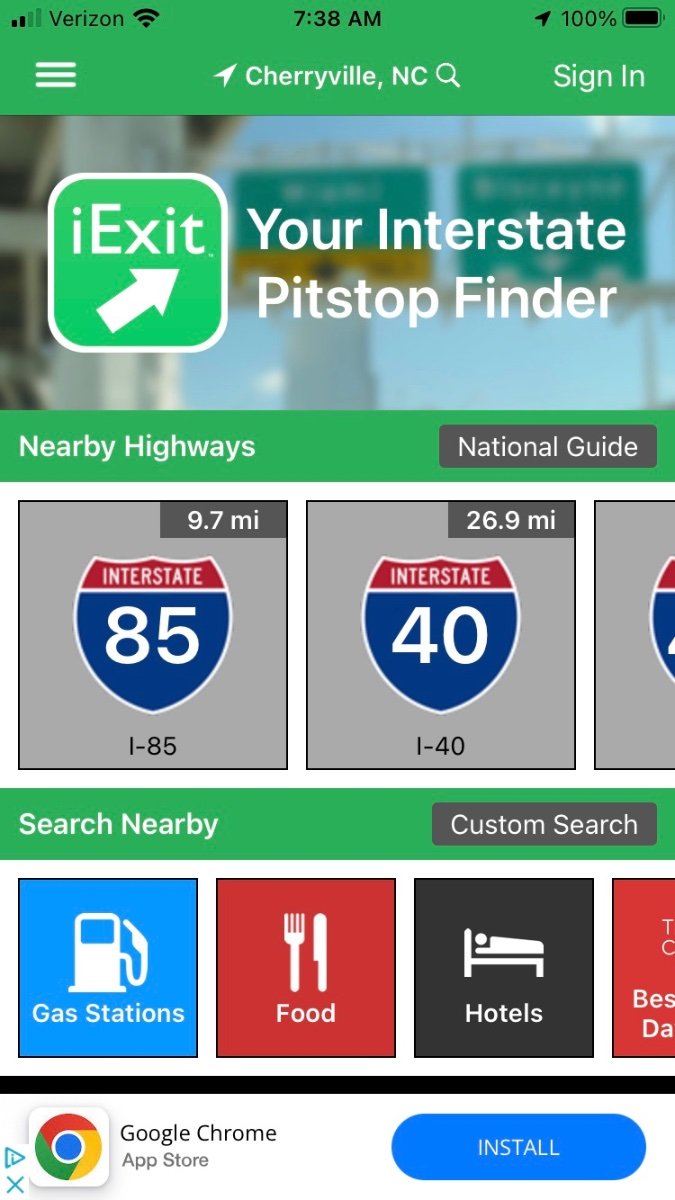
Here is a free app we find very handy when deciding on fuel stops. It works great if we are traveling on the superslab which we do try to usually avoid. We typically prefer the roads less traveled. It’s called IExit.
1 point
-
I have two rearview cameras. One is mounted in the spare tire cover and the other in the usual roof location. Patriot is correct when he mentions the "road spray" issue with the lower camera - other than that it is great. The roof location provides approximately the same view but, obviously the angle is slightly different. The roof location also gives the advantage of being able to see a fair number of vehicles back when stopped at a light or stop sign while the lower camera gets a good view of the guys license plate 😃. Bill1 point
-
Having to disconnect the trailer (including the Anderson WDH) to charge every 3 hours or so would be enough to push me to a truck-top camper if I were set on using an e-truck for camping. But we all make different tradeoffs on such things.1 point
-
Wow... that was an informing video. Electric tow vehicle.. On your next trip I think you should practice unhooking your trailer every time you fill up with gas. I think that would put the issue to bed in one trip. Also wondering where the electricity is coming from at their charging locations. Might have been a lot of coal used to power that trip. And this coming from a guy whose second car is a Prius. And I love the 45mpg I get from it. Just not for long trips and towing. Scotty1 point
-
I just quickly checked the web page and 7,700 was what was listed. That will change depending on the model and options etc. Whatever TV you decide on.. before you buy.. Get out your Sherlock Holmes Magnifying Glass and in a Lawyer frame of mind and read the manual regarding towing very carefully. The fine print can be a killer. My comfort level was having about a 30% buffer in capacity. So, 11,000 lbs. capacity will do that for you. But check on the need for a WDH. My guess is you will need one to be compliant. Most half ton pickups REQUIRE them. Now that doesn't mean the half tons won't tow an LE2 quite handily without one... but it does mean if there is an accident and you don't have a WDH when it's required... some attorney might have you for lunch. Good Luck and let us know how you make out.1 point
-
Update: I think we've identified the problem. The short cycling returned the night after OTT inspected the unit. Immediately after a cycle shutdown I went to the thermostat and shut it down so I could see the current temperature it was reporting. As I watched, it rose 3 degrees in about 2 minutes. An IR thermometer verified the final reading was the actual temperature of the thermostat. Working hypothesis: the thermostat was ingesting cold air directly from the overhead A/C unit, causing an early shutdown. When the cold airflow stopped, the thermostat called for A/C again and the process repeated. Experimental solution: the thermostat has vent openings top and bottom. I placed a folded handkerchief over the top vents to shield them from the cold airflow. Viola! Normal A/C operation for the first time! I was concerned maybe the thermostat needs the top vents to release internally created heat, but that doesn't seem to be the case (because that would cause increasing calls for A/C, which didn't happen). The weather has cooled, so I can't field test anymore. Going to try something more elegant than a folded handkerchief next time. Maybe a piece of felt. I think our mystery is solved, but it raises other questions. Why couldn't Jason recreate it at Service? Why aren't more people reporting this issue?1 point
-
We also have to remember that the op eventually plans for her tv to be her daily driver, in various conditions. My daily driver for over 30 years has been some kind of a truck or truck-like suv. I pretty much learned to drive in trucks. (Other than lessons in my mom's 1963 falcon, 3 on the tree.) Moving up from our truck world from a Subaru is different, but fun, imo. I love the bigger expanse of windshield, bigger side and rear windows, bigger mirrors,, and the height that allows my short stature to see further ahead. What I don't love: more expensive and bigger tires. Less mpg than my previous suvs. I don't have a tonneau cover on my Silverado, so everything is exposed in the rear. I carry tarps, stakes, and bungees.. we of course have a tonneau cover on the 2008 Ram 1500 . Thats our primary tv. My vehicle is the go get mulch, and garden supplies, move the atv, etc., vehicle. She only gets to pick one. The very happy medium. And, comfy drive for us shorter folks. I've been driving trucks of various sizes since I was 14. Some were great, many awkward to handle for my size and height. As I've said before, I hate driving the dodge ram. Ergonomics just aren't there, in the 2008. I'd love to hear more from the women who drive. But, the true test for the op is drive everything .1 point
-
The Rivian has pretty impressive payload and towing specs, but if the real world actual range while towing ends up around 200 miles or so (towing causing a reduction of ~50% of the 400 mile claimed range as mentioned in the above post in other examples) that would be a real pain and not practical for long road trips towing a trailer. You’d be making long charging stops every 2-1/2 to 3 hours, plus the anxiety of constantly looking for charging stations that have access for a vehicle pulling a trailer. The charging stations I’ve seen on our long road trips were just set up for single vehicles. And the charging time to get a full charge would add significantly to your travel time. I get about 325 miles range with my gas F-250 when towing, and on long road trips out in the mountain west states like Wyoming and Montana, there were times when I wished I had more range than that to avoid the anxiety when the gas gauge gets to a 1/4 tank. Even gas stations can be few and far between in some of those areas. I even carry a 2 gallon RotoPax gas container as well just in case. I love the electric vehicles coming on the market and I think they are perfectly suited for the right applications, but towing a heavy trailer over long distances isn’t one of them yet. Our next daily driver for around town errands and short trips/commutes will likely be an electric vehicle. But in that future scenario my daily mileage would be way less than the vehicle range limit, so I could recharge overnight at home as needed when time isn’t an issue, and not have to worry about constantly looking for charge stations. If you want a great show to watch about long distance travel with electric vehicles, watch the series called “Long Way Up” on Apple TV+. Ewan McGregor and Charlie Boorman riding Harley Davidson electric motorcycles from the southern tip of South America to Los Angeles, with Rivian trucks as support vehicles, along with a diesel Mercedes Sprinter van with big solar panels for help in recharging the electric vehicles, but they still had to bring in diesel generators now and then to recharge, and even had an 18 wheeler big rig do a tow charge of the Rivians at one point.1 point
-
Roadlotus, (great name!) First, I'm sorry for your loss. As there are many threads on TV selections - my comments are towards the used preowned car market. While I am not familiar with your area, in general - across the nation pre-owned vehicles are fetching insane prices - in some instances near the price of a new vehicle. For my money, I would not rule out new - if one is available. Not many if any in my area. You say your downsizing to a TT - is that a full time -tour around, or are you going to stay put in a smaller circle of location? I think that makes a difference in your TV choice. If you intend to travel - payload and towing are really important. As for fitting in the garage - your leaving that phase, I would not worry here. The Rivan is a very risky choice - in my opinion- unproven manufacturer, unproven promised performance, and traveling around would be a pain looking for charging all the time. But - that's just my take. Diesel is the way to - but fuel prices are up, but then what isn't. A stout, well equipped 1/2 ton has proven to be a good choice for many - and the WDH certainly helps here - although I hated using mine - so I went to 2500 GMC. At $31K I don't think there will be much worth the asking price - but you have time to be selective. I wish you well in your search. RB1 point
-
I know we all want and do buy what we think would work for our towing needs. I personally feel the purchase of any battery powered vehicle for towing would be a mistake at best. The Rivian wouldn't be my choice under any circumstances whatever they might say about it and the results from test, etc. I think you can spend a lot of money and be totally dissatisfied with the results you would get from it and then have to purchase something else to get the job done. I realize the battery thing is being crammed down us, but I also realize there is a need for it, but not as a working person who need a actual truck, or for those towing needs. I know what looks good on paper does not always translate to actual use, being Green is one thing, but throwing Green Dollars away can be costly. I'm just saying the battery powered towing vehicles are just now starting to hit the roads, but just like the new Ford F-150 battery powered vehicles, it's going to take 2-3 years to see how well they pan out over time. I always tell new prospective campers to go to a campground and talk with campers, you won't have any problems on finding campers that won't talk to you about camping, tow vehicles, etc. trainman1 point
-
Albert, X2 Like you a we have owned several Tundras over the years they have all been very reliable trucks. When we took delivery of our Ollie in June of 2020 we had a 14 Tundra Platinum. It towed our Ollie ok on the flats but the tach displayed much higher rpm’s in the mountains and the cargo carrying capacity really was not enough truck for our needs being right on the edge of being over the legal weight limits. This was not an option for us given the gear we carry. The Tundra never felt as planted and stable as our present TV of course it’s comparing apples to oranges. We now own an F350 which just feels a whole lot safer (it sits nice and high so the view is great when traveling). Stopping power and engine power and cargo carrying capacity are never a concern. I am not going to go down the rabbit hole of what make or brand of vehicle is better as everyone has their personal preferences. I do know that we are happy with our present TV for many more reasons than I have mentioned. It’s mainly used for towing and not a daily driver as it is a large heavy duty truck. The interesting thing is we get better fuel mileage with the F350 than we ever got with the Tundra both towing and not towing. We typically get 19-21 highway unloaded and 15.9 -16 mpgs towing our Ollie loaded which we are happy with being a one ton truck. The diesel just pushes 1400 -1500 RPMs at 65-70 mph and is very quiet in the cab. Bottom line is purchase what works best for your budget and your towing needs. Happy Camping and Safe Travels, Patriot1 point
-
Welcome to the forum, I too am a nubie here but not to trailer towing in general, just to Oliver. A few comments, 1. The 400 mile range of the Rivan is for just the truck, we don't really know what the numbers will be towing but it seems like people are going with 50% when discussing the range of electric vehicles as tow vehicles (TVs). There are a few posts and youtubes currently posted of people towing with teslas and the 50% number looks pretty close to reality. More on that as they become more commonplace TVs 2. When we were shopping for our TV for our E2, I was initially leaning towards the Tundra for several reasons, not the least of which is that I have a long happy history with toyotas in general. The problem came down to the carrying capacity and what our anticipated needs would be. We spend a fair amount of time going through the Rockies so up and down steep grades are common for us. Most anything will pull the E2, the concern I had was being able to panic stop on a downgrade at normal speed. The smaller trucks (150s, 1500s and the Tundra) all will tow fine when properly equipped, but the brakes are smaller and that's the rub. The 250s / 2500s etc and larger trucks have more robust brakes and thus give a greater margin of safety which for me translates to piece of mind. I figure it's better to be a bit over-kill then living almost at the max and then regretting not having a big enough safety margin. 3. There are two numbers you need to be familiar with, the "towing capacity" the "carrying capacity." For example, one of the Tundras we checked out had a very nice cap on the back, was 4-door, low mileage, seemed to check all the boxes. When I checked the sticker stating the carrying capacity it was only something like1300 #s. The hitch weight on the E2 is between 600-700 depending on how you're loaded, my wife and I total around 425. 425 + 700 = 1125. 1300 - 1125 = 175. That's 175 pounds of stuff I can carry, but wait, there's a cap on the back so it weighs in around 200 pounds, so I'm already overweight. Had we had gone with the Tundra we would have a very nice pick up which would be a piece of art, but not capable of carrying anything without being past it's carrying capacity. Exceed the carrying capacity and then heading down a steep grade with a sudden need to stop before the bottom and it's a recipe for disaster. We started looking at the 250s / 2500s and ended up buying a 2017 Ford F250. So far with the Oliver we've only made a run from the factory in TN back to Maryland, our gas mileage went from 12-14mpg (truck alone) to max of 10.7 towing the E2 (mostly 9.1-9.7 mpg towing). That's running about 5 over the speed limit in both cases. The 10.7 towing I was running the speed limit or a little under and only feathered the gas, just to see how good I could do, but my foot generally tends to be heavier so the 9.1-9.7 is more of my reality, and to add insult to injury, I have to use premium so the price is never "low" when filling up. That said, the truck is carrying everything I need, I have no worries about how much I'm throwing in the back. When we bought a case of wine at the harvest host on the way home I had no worries about carrying it in the back of the truck, we could have bought two and not had a concern 🙂 It tows like a charm. Ideally I'd like to have a cybertruck but no telling when they'll become available. We spent $46,000 on the F250 in November of 2021 and it had 95,000 miles on it. It's a lariat with most all the options, we added a topper with tool boxes and have no problems other than paying stupidly high prices at the pump. It also has a 48 gal tank (and 6.2 L motor) so I have no problem going 300-400 miles towing and almost 600 miles without the trailer. I recommend springing for the 250 or 2500. When the rivian finally arrives you can reassess but I doubt you'll regret having the added capcity in the mean time. Good luck!! I'm so sorry to hear about your loss, I hope this new adventure will help ease the pain, I'm sure it's a real bitter-sweet. albert1 point
-
I very rarely, if ever offer anyone advice about spending their money, but I will offer myself as an example. I bought my used Toyota SUV in 2016, knowing that I was going to buy an Oliver LEII, which I did in 2018. The reason for choosing a Toyota was based upon past experience and I like dependable products and it has a towing capacity of 8100 lbs and a cargo capacity of 1295 lbs. That’s not a lot of capacity in the grand scheme of travel trailer towing, but we make it work. What I didn’t know was that I would need a weight distribution hitch. But my Toyota owners manual states that it is required if it used to tow any trailer weighing more that 5000 lbs. I trust Toyota’s engineering, so a WDH is part of my towing equipment. I compare the Andersen WDH to shoes. I love wearing flip flops, but when I’m cutting the grass, I’ve got my boots on. So if my tow vehicle requires a WDH, it’s incumbent upon me to learn how to use it. So please do not let anyone scare you away from using the Andersen WDH if your tow vehicle requires it. And please verify the towing, cargo and tongue weight capacities of any vehicle you are thinking about purchasing. Do not trust someone else’s assurances that a given vehicle will be just fine towing a travel trailer. The capacity information is posted on each vehicle, usually on the drivers door jamb. Happy hunting, Mossey1 point
-
Hi Roadlotus, Welcome to the forum and the Oliver family. It seems like getting an Oliver is a major life milestone for many of us. You've gone through a lot in the past year and I hope that the adventure of buying and traveling in an Oliver will help you transition. Regarding the tow vehicle, I have a GMC Sierra 1500 4x4 and no weight distributing hitch on the Oliver Elite II. I've got about 3000 miles on the trailer so far and haven't noticed a problem. Before I decided to buy a trailer I rented three and pulled them with my old pickup, a 2014 GMC Sierra 1500 2wd, short bed. It only had a 6 cylinder engine and had to work too hard getting over some steep passes, but overall it was fine. One one of our rentals we had the weight distributing hitch. On the other two, no. Never had a problem even with the old, less powerful pickup. I'm definitely a newbie here compared some of our colleagues, but so far so good with a half-ton pickup and no WDH. I'm in San Francisco and often travel up to the Sierras so if there's anything I can do to help, let me know. P.S. I'm seeing some of the Rivian's on the streets here in SF, they're sharp!1 point
-
Thank you Frank and SeaDawg, I will be coming up on the one-year anniversay of his passing, and I appreciate the kind thoughts. We knew this would be my next step long before he passed. He worked on the house to do whatever he could (which was a lot) before he couldn't. Yes, an unbelievably difficult time. In addition to my work with farmers, I am an estate planner (retiring from that this fall) and so I knew all the things to do, but the heart has its own time. I work with a number of widows who lost spouses recently, so I know personally their challenges. I am relishing every step of downsizing, but I am not sure I'll have it whittled down by December. I will have a small storage unit in N. CA where most of my work is, but I am looking forward to relinquishing an acre of house and land in the high desert. It is a good time to sell and then I can buy something smaller later whereever I decide to settle. I spent a long time looking at trailers, too. The Oliver's insulation, user group support and stamina finally won me over. I don't know about the warranty. I'll have to talk to Anita. I'm test driving some Fords tomorrow, but don't see any 4x4s on the lot. As you noted, I don't have to do this immediately. I just liked my carmax offer and got the itch. Also, I think end of the fiscal year (June) for some might be a good time. Thank you again!1 point
-
I also don't know if the current Oliver warranty covers full timers, so, you may want to check that. Most manufacturers don't cover full time occupation Just a thought.1 point
-
Last time we were at Boya lake, and that's probably four years ago, there was no freshwater available at the campground. I don't remember why. But, new friends there told us about a spring source a few miles down the road. It wasn't hard to find, because of the number of people parked, filling jugs. If we have to take drinking water from a spring, I boil it. Just in case. Chlorine doesn't kill giardia, and a few other things. But, heat does. One minute rolling boil below 3000 feet, 3 minutes above is the rule I've used. You can Google it yourself, to be sure. I don't even trust a great filter, for giardia. I double down. No interest in getting sick in remote locations.1 point
-
I would also suggest a visit to Stanley Park in downtown Vancouver if possible. It is similar to Central Park, a little larger and bordered by water on three sides. But don’t take your Ollie, it’s in the city. Mossey1 point
-
When you get to the beautiful Provincial Park on Boya Lake, check out the amazing beaver dam to be found at the end of a short hike out of the park. It is amazing... massive - makes me think beavers must use backhoes and bulldozers.1 point
-
Kimberly and I have had our inaugural road trip… and feeling pretty good about my understanding of the various systems of our new Oliver. A big thanks all in the forum! IMG_5046.MOV1 point
-
I missed that. Scrolling too quickly, I guess. We carry two hoses. I think many people do. I'd never connect my freshwater hose to the black tank flush. No matter what's in between. Thank you, @John E Davies.1 point
-
I dont know about others, but in my trailer I refer to it as the late night practical joke switch as it makes it easy to turn off the hall and bath courtesy lights on someone on the throne.1 point
-
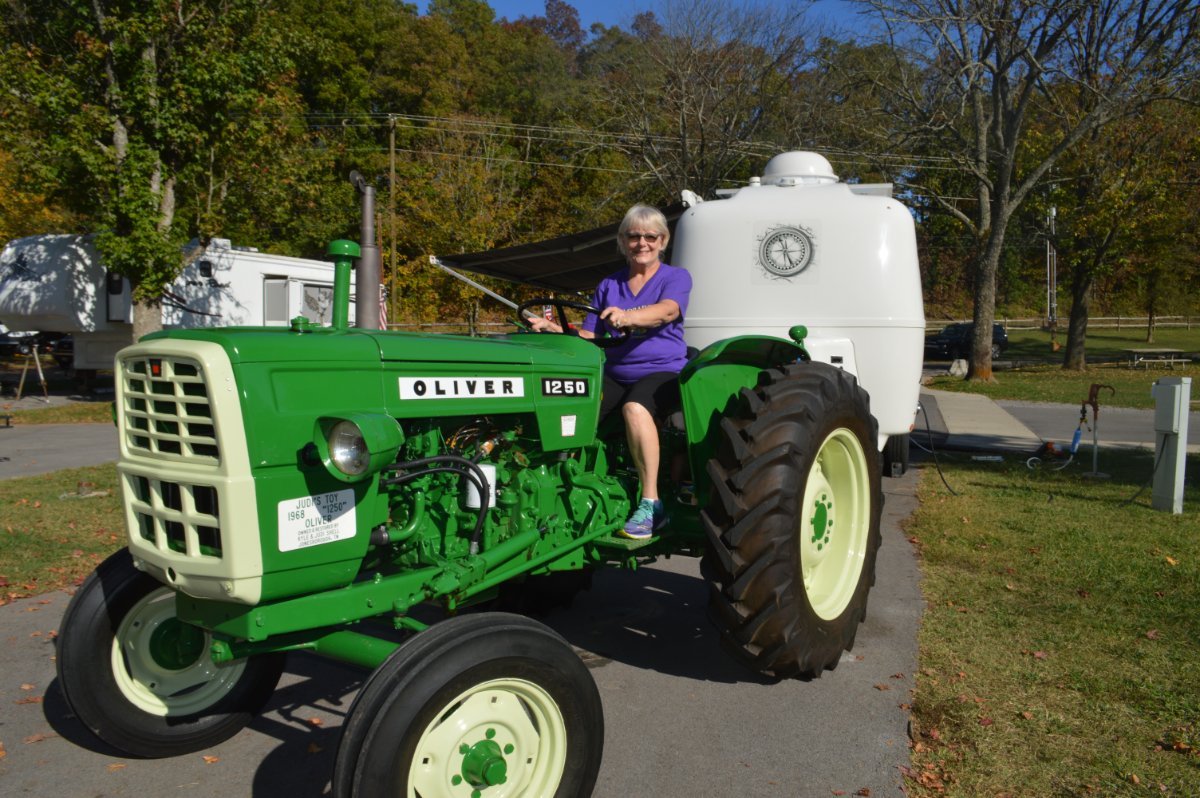
We have found the coolest new tow vehicle. A restored 1968 Oliver 1250 tractor. We can also use it to clear an area to camp in.
1 point
-
Just a suggestion ... whenever any owner opens up a hidden compartment like this, be sure to use nylon wire ties to secure dangling wires and hoses. The factory still has not learned this, it appears. This “rats nest” is very disappointing to me.... Loose wires and lines flop around, chafe, loosen or break electrical connections, start water leaks and just look untidy. Five minutes with ties makes things secure and you won’t worry so much about failures down the road. Adding split loom would be even better, but more time consuming and not absolutely needed. John Davies Spokane WA
1 point






.thumb.JPG.dd838cdb3df463dab6a16861fa23a319.JPG)



















-
Recent Achievements
-