Leaderboard



Popular Content
Showing content with the highest reputation on 11/14/2023 in all areas
-
If you have an inverter, which I assume you do since you have solar, you need to turn it on to power the 120v outlets when you don't have shore power. Our inverter is a Xantrex and pushing the silver button on the control panel in turns it on. Note that the inverter is a fairly large battery draw.5 points
-
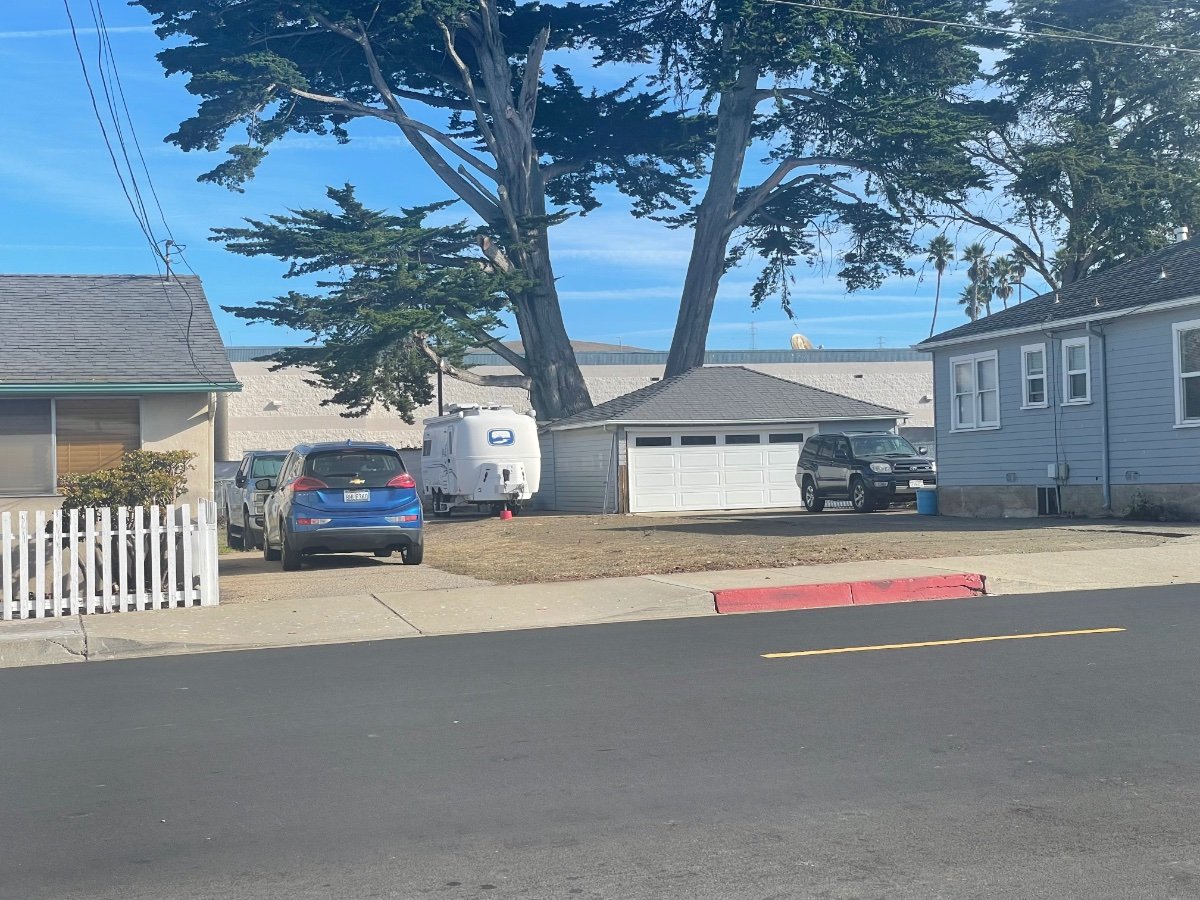
Z My daughter was waiting for a bus near a friend’s home in Morro Bay and saw this Oliie across from the stop. She should now buy a lottery ticket!
 4 points
 -
@Cort: Something to consider here, Cort - If you could provide pix of your interior/compartments as @Boudicca908 suggests, if it can be determined that there's enough mounting space you should be able to install an inverter. Further, suggest checking with Jason Essary at OTT Factory and ask where inverters were installed for your interior layout and Hull#/MFG year. We're happy to discuss, via PM, the possibility of making our ProWatt 2000 available to you because we're considering upgrading to a Victron 3000. We boondock most of the time as well and the ProWatt comes in quite handy - it's a single function inverter in that it doesn't charge the battery bank - it only inverts stored DC electricity into AC for the outlets and AC-powered accessories. Just a thought, PM when able, if you're interested. Cheers,4 points
-
I always wondered if that wouldn’t turn out to be the proper way to deal with the beads. If for no other reason than to be able to balance the tires the correct way.4 points
-
Installing an inverter is a big job involving running big wires. And upgrading the batteries. If you can’t do the work yourself it will cost thousand$. Consider one of these instead. EcoFlow RIVER 2 Max Portable Power Station I think the capacity is a little marginal, bigger units are coming out soon, they will have the new excellent lithium iron phosphate battery. John Davies Spokane WA3 points
-
Unfortunately I did not get a response to my question about what was allegedly said by Jason T or maybe Jason E at the rally about torque specs. Perhaps it didn’t happen. I’m writing this response because some new readers may not have seen this older thread, and if not, I encourage them to go back and read as it is a very important safety issue for all. Several of us ME’s including Geronimo John and @mjotto did some research and the findings are in this thread. GJ and I turned in Service Tickets on the issue, read by Jason E., and GJ reported back on it. GJ was able to persuade OTT to reduce the torque value, which is better, but they apparently didn’t want to go lower for reasons unknown. They updated the newer manuals, but made errors, and did not send out a service advisory to those of us with older trailers. I have been using 100 ft-lbs and 45-50 psi in my trailer tires since Mile 1, which I understand contradicts OTT instructions. I periodically check my torque wrench calibration (I have several) and never use lubricant on the threads.3 points
-
That is not your inverter remote control panel; it is your solar panel charging panel. Below is a photo of the Xantrex inverter control panel in our 2022 Elite II. The silver button in the lower right hand corner is the "on/off" switch. "In" is on, "out" is off. In the photo, the inverter is on (switch in the "in" position).
3 points
-
Yeah, it does that. Try turning a wifi hotspot on on your cell phone, then connect the TV to your hotspot. Once it's connected, you'll be able to switch back to antenna. Next time, make sure you're on antenna before turning it off. It always tries to go back to Wi-Fi if that's where you left it last time you used it.2 points
-
@Vector - Lanham: You also may wish to consider disconnecting the toilet water supply line to ensure its a clean/clear and unobstructed run from the supply valve into the toilet - this area can also accumulate the "crud" you experienced in your shower pan and bathroom sink. Clearing out this debris allows for the desired flow when flushing the toilet.2 points
-
Our Oliver Elite 2 #1125 was one of the 25 or so units that had balance beads in the tires from the factory. My understanding is that the wheel/tire combos arrived at the mother ship already mounted and with the balance beads installed, a fact that was unknown to Oliver at the time. Once this fact became know to OTT, they mitigated the problem by sending out a set of 5 valves that have a sort of filter screen to prevent the balance beads from plugging up the valve mechanism which would result in the valve being held open and lead to loss of tire pressure. OTT also provided a visa debit card loaded with $25 to cover the cost of a tire servicer to replace the valves. We did the replacement last year and assumed all would be fine. The trailer has been sitting for about 2 months, a couple of weeks ago when I was prepping it for a voyage I discovered the TPMS was not functioning due to the batteries in the sending units having gone bad so I pulled out my trusty tire gauge and set out to check my tire pressures, only to find that when I removed the TPMS (caps) that the air was flowing freely out the valve stem, exactly as it had been doing before installing the "filter" valves meant to solve this problem. I immediately replaced the cap to prevent any further pressure loss, kicking the tires to determine if they seemed inflated enough for the 60 mile journey to the tire shop, which they were. Discount Tire in Montrose, Colorado was prompt to break down the tires, including the spare, thoroughly clean out the balance beads, replace all the valves, balance the tires the normal way (without balance beads) and remount the tires on the trailer, took about 60 minutes and they had 4 techs working on it at the same time. When I went to pay the bill the service manager smiled and said, 'Don't worry about it, just come to see us the next time you need tires." I told him that they had nothing to do with the balance beads installation, he acknowledged that fact but held his ground and refused payment. What a wonderful experience. To any of you who have had to deal with the Balance Bead issue, the solution of the filter valves is inadequate, the tires need to be remove from the rims and the Balance Beads physically cleaned out...Be Aware!!2 points
-
Correct. I wasn't specific about the outside switch location, but inside the battery compartment works, further, I didn't realize newer OTTs now have a master DC cut-off switch with certain battery bank options. But, IMO, it would still be of value to have the capability to externally secure DC power from outside the Oliver in the case of emergency.2 points
-
I generally agree with this statement. However, if you are storing your OEII, leaving the batteries installed, turning on the heating pads, and connecting an external charger to prevent depletion, then you have to leave the batteries on. In that case, a master cutoff switch would shut down all parasitic draws in the OEII. As Geronimo John pointed out in a different thread, a small propane leak and leaving the tanks turned on during storage could lead to propane pooling and possible ignition, so having the interior devices turned off is an additional safety precaution. If you store by depleting charge to 50% and turning off the batteries then there should be no need for a master switch.2 points
-
This is not expert advice so take it for what it's worth, (just what worked for me) I had to remove my GFCI receptacle on the exterior house outlet and replace it with a regular outlet. I used a single 20 amp outlet instead of the 15 amp GFCI duplex breaker. The inverter charger would not work with a GFCI connection. Yes, my breaker in the panel is 20 amp. I use a 25' extension cord, 15 amp rated, dog boned to the 30 amp cord. I also had to change my Xantrex app "Breaker Rating" setting to 15 amps. I am careful to protect the cords and connections from the elements and when I move my E2 away for the traveling season I put the GFCI back in place for safety. Also noticed I can't use an external surge protector at the power pedestal with the integrated EMS that came with the Oliver. I plan to add a 120V, 30-amp outlet in the coming days to resolve my power issues.2 points
-
If you don't see the Freedom panel, see if there is a PROWatt panel like this one. I got this from the 2018 model. I couldn't identify the one used for 2019 specifically.
2 points
-
@Rivernerd, @Cort, this one, circled, in red? Thank you rivernerd. Cort, don't forget to turn it off when you're done with 120 needs. Inverter will drain your battery, even with nothing on 120 running. Best of luck.
2 points
-
@Steph and Dud B caught it, i think. In a 2019, your tv/cd player were probably 12v. Lights are 12v. 110 outlets will only work if your inverter is on. And, if you have sufficient battery to power them. Or, if you're on shore power.2 points
-
Basically, an Oliver Owner has three choices on where to put his/her portable generator. 1 - Put it in the basket on the tongue of the trailer. 2 - Put it in the rear of your truck and deal with having to futz around with it when you want to use it. 3 - Put it in the garage at home and leave it there.2 points
-
Yes! And, its still a bad idea.2 points
-
It was probably actually Jason Essary (Service Manager). Bill2 points
-
Ninety is probably plenty, but one hundred is OK too. Tighten in steps, say 50-70-90 or 100 pound/feet at a time. Important, check torque again after driving about 75 miles.2 points
-
There appears to be some confusion around setting number 28 which is a dedicated internal circuit breaker for the 3000 watt inverter. The factory setting must stay at 25 amps because it requires at least 20 amps of 120 volt input current to charge the batteries at the factory default 150 amp charging rate. Stated differently and ignoring losses, the inverter requires a minimum of 2,100 watts of 120 volt shore power to achieve the 150 amp charging rates (150 amps x 14 volts = 2,100 watts). 2,100 watts of 120 volt power results in a shore power draw of 17.5 amps (2100 watts / 120 volts = 17.5 amps). If setting #28 is set to only 15 amps, I believe that it is guaranteed the inverter will shut down and not charge the batteries. Once the battery charging stops, the inverter will after awhile reset, restore shore power and start charging the batteries again. The inverter starts charging the batteries at a low rate initially and slowly ramps up the charging voltage until it reaches a steady state 150 amp charging rates. If setting #28 remains at 15 amps, then it will never reach 150 amps charge rate because shore power will shut down again and the cycle will repeat itself over and over. OTT should verify the above, but I don't believe there is ever a reason to reduce the AC input limit in the inverter/charger to below 25 amps. Rivernerd's advice to use an extension cord with a higher amperage rating is excellent advice in all situations. The reason is to reduce voltage drop. The footnote to the table above that rich.dev posted states that the inverter will trip shore power and switch to battery power if the shore power voltage drops below 106 volts. An undersized extension cord can cause significant voltage drop. For example, assume the voltage into the house from the utility is 118 volts. Further assume that there is an unusually long 75 foot run of 12 AWG romex from the breaker box in the house to the wall outlet feeding the extension cord to the trailer. In this example, the voltage at the wall outlet has already dropped by 6 volts to only 111.96 volts, merely due to the 75 foot run from the breaker box to the wall outlet, assuming a 20 amp current draw at the outlet. Now lets assume that you use a 12 AWG (20 amp) extension cord between the wall outlet and the Ollie. Adding the additional 50 feet of 12 AWG extension cord will further reducevoltage at the Ollie by an additional 4 volts to only 108 volts. Everything should still work fine. However, if one were to use a 14 AWG extension cord instead of a 12 AWG extension cord, the voltage at the Ollie will drop to only 105.8 volts and will cause the inverter to cut off shore power (and battery charging) because it is less than 106 volts. While this situation is unusual and situation specific, everyone should probably own a "kill a watt" or similar meter to quickly eliminate voltage concerns. This can be inserted between the extension cord and the Ollie plug to observe real time voltage and power consumption into the Ollie. They are only $30 or less and have many beneficial uses around the house besides measuring voltage. https://www.amazon.com/P3-P4400-Electricity-Usage-Monitor/dp/B00009MDBU?th=1
2 points
-
Concur 100%, @Patriot; thankfully, we're having a new DCT shop being built within 4 miles of our home and will no longer need to drive the 25+ miles to our current shop. We've had nothing but positive experiences with them for 15+ years as well... Glad to hear they took good care of y'all @AlbertNTerri up there in Montrose! Cheers to DCT!2 points
-
Hey, @Badger: Like mentioned above - there's really no option for a permanent mounting location other than the cargo basket or perhaps a covered aluminum lockable cargo basket. @Patriot has a well thought out mounting arrangement for his 3300W Honda, FYI. However, if you could give us an idea of your OTT's general configuration such as: Solar output (Watts)?, Inverter output (Watts)?, Battery bank storage capacity (AmpHrs), GENSET output (Watts), etc., we could help you with ideas of how to transport, use, and secure your GENSET. For example, when boondocking - our GENSET will stay locked in the TV and will likely not see the light of day unless there's many days of cloudy, dark, nasty WX where the solar modules can't keep up with replenishing the battery bank and they'll need "topping-off" using the generator. Everyone's OTTs are configured slightly differently and owners have their particular "style" of camping - this combination tends to drive different uses of their GENSET, if even needed at all. At a high level, there's no "right way" or "wrong way" of doing what you're asking - but we need more details to give you our suggestions. Glad you've reached out to the forums - there's a ton of expertise here and owners willing to share their ideas... Cheers!2 points
-
@AlbertNTerri Glad DCT got you taken care of. I have been doing business with this company for 15 years and they have always taken excellent care of our trucks and cars. Thanks for posting the issue and your resolution with the balance beads. We spent time in Montrose, CO recently while touring the state. What a beautiful place. Safe Travels! 😊 Patriot🇺🇸2 points
-
And, don't make the same mistake I did when sanitizing: don't drain the bleach water onto concrete, if you can avoid it! I did this earlier this year, thinking that it would do no harm to the concrete pad in front our our garage. The error in that thinking became apparent the next time it rained. Six months later, whenever it rains, you can still see a light-colored pattern where the bleach water drained onto the concrete and then flowed off of it. Fortunately, once the concrete pad dries up the splotches disappear. But, the next time I sanitize my tank, I will take the extra effort to move the Oliver and drain the bleach water onto our gravel parking area beyond the concrete pad!2 points
-
@Ollie-HausThanks Chris, it is a good hobby and I get to take it on the road with me when we go camping. Brian2 points
-
Hey Brian, nice use of your vertical real estate. I was a production supervisor for a few years at Rohn Towers in Frankfort Indiana. We manufactured thousands of masts similar and of course much larger as well. Seems like a fun hobby and community to be a part of .2 points
-
Nice idea, John. Those power stations are impressive and getting better and better.1 point
-
Same here! 30A all WX outlet installed outside the Man Cave for travel prep, maintenance, and the occasional visitor (eh, @Geronimo John?)
1 point
-
Good point. During the winter, we store our Hull #1291 in a covered shed, with a 30A shore power connection, and with the battery heater turned on. So, we don't need an "external charger to prevent depletion", as the Xantrex inverter/charger keeps the battery bank at full charge. Parasitic draws are, therefore, not an issue. And, we ensure that the propane tank valves are fully closed when in storage. Of course, per Lithionics' protocol, every 3 months I draw down the State of Charge to Reserve Cutoff Level, then let the Xantrex charge the batteries back to full charge.1 point
-
People really don't have much consideration for their camping neighbors. OK... SOME people... We've had folks using generators (that were placed behind their camper and in front of ours) right up until the 10pm cut off. And most recently a group that set their campfire ring and chairs right next to our trailer and were yakking away until 11:30pm. (OK.. it was in NJ.. I should have expected it) The first night when I told them we were trying to sleep they knocked it off. The second night one guy who had a little too much to drink wanted to start a fight. Preference is state or NP campsites, but when we have to book a commercial campsite I look for one with sites as far apart from each other as possible (Thankful for google maps satellite view) and always check the quiet hours rules. Scotty1 point
-
Look low, also. Some early trailers had panels mounted low, like under beds. Or, under seats .1 point
-
Did I mention that this rear mounting thing is a bad idea?1 point
-
Bad for weight distribution, too. Many Olivers are already at or even slightly below the 10-15% tongue weight recommended for stability.1 point
-
I also encountered problems with air loss from Shrader valves which would not seat due to obstruction from balance beads. I suspect the problem affects more than 25 trailers. @AlbertNTerri indicated their hull number to be 1125. Our hull number is 990. As had been indicated by nearly everyone posting on this subject, Discount Tire has loyal customers for a reason. I have been doing business with them for over 25 years. I don't recall ever encountering an issue with their service, but do recall many occasions on which they exceeded my expectations. Fortunately, their nearest store is within 3 miles of our home.1 point
-
We have one of the Hulls that were impacted by this. So far no problems but this makes me think I should probably follow your example before we find ourselves in bit of trouble.1 point
-
We used 2 Lippert friction hinges on our door - wonderful!1 point
-
Discount Tire has always done right by me. Glad you finally got resolution to that problem! Mike1 point
-
It is about time. When the Outlaw Oliver was being built in 2013, I specified that each light should have its own switch. If they do this, I can add it to my long list of our original ideas that have now become either standards or options.1 point
-
So sad to hear Phillip is leaving Oliver. What a great asset he’s been to Oliver and all us customers. He’s helped us many times, always a pleasure to speak with. Phillip, I wish you all the best with your future endeavor. You will be missed! Happy trails and many blessings.1 point
-
You likely have aerator screens on your faucets and shower. Removing and cleaning them, and then flushing with removed may improve your water pressure and flow rates. GJ1 point
-
I have an ARK XO500 Jockey Wheel on my Hiker squaredrop, and it is an engineering marvel! They didn't have the XO350 when I bought mine in 2017, so the 500 Kg model is way over what I'd need for the 800 pound trailer. I'm probably at 1/10th the limit on tongue weight. Many other Hiker Trailer owners have added one since I showed ours at a gathering, and now Hiker even offers the tube version as a factory option. With that little trailer, it is easy for one person to roll it around on a driveway, grass, or packed gravel. We used it to maneuver the trailer into sites I couldn't back into, or to rotate the trailer to take advantage of views. IT was the best modification I ever made to that trailer. The XO750 would fit the Oliver's tongue without the front basket option. I don't know how much it would pivot out of the way, but at least as much as the retracted current jack. Videos of the ARK Jockey Wheel being used in Australia are crazy! They hook up a trailer by the safety chains and drag it though mud, sand, river crossings, and more. It is a very robust system! And six years later, parked outside, it still looks as good as new. A word of warning if anyone goes this route. Use chocks! The bearings are so good that even any unnoticed slope will start the trailer rolling. I learned this from personal experience! 😲
1 point
-
The procedure for Sanitizing is on the Oliver University section of the forum. I suggest that you watch that prior to doing the sanitizing (and take notes as I did). I agree with SeaDawg that you might want to sanitize twice. Make sure to drain the fresh water tank completely before starting the second sanitizing effort.1 point
-
Saw the post on QST Mag. KI7SXN checking in from Everett Wa. C. Short Hull 505 - Galway Girl1 point
-
oops! Sorry, guys! Anyhow, yes! Great rig - I love DXE antennas... Here's a pic of one of my SOBs with my home brew multi-band screwdriver and 12v electric tilt mount...
1 point
-
June QST magazine is out, with THe Wonder Egg on the cover! This was my setup during field day last year.
1 point
-
It certainly does! Ha! 🤪1 point
-
Are you guys speaking English? 🤔1 point
-
This is my Mosley S-33 and 18' Diamond Dual Band antenna up on my Universal, All-Aluminum tower. It also has my Acurite weather station. 73 de AF1US Brian
1 point
-
Hello and 73 to you! I have been a ham since the early ‘90’s and have been active most of that time. My call sign is, AF1US (cannot get a better call sign for being retired USAF!). I regularly work Parks on the Air (POTA) and enjoy portable, mobile, and base operations. My wife is KV4SF (also an Extra Class) and we are training Storm Spotters for the National Weather Service (NWS) supporting SKYWARN and ARES (Amateur Radio Emergency Services). I am presenting “A Conversation on Communications” at the Oliver Rally and will discuss Amateur operations as well as many other forms of communication. I am also planning a POTA activation since we will be in a State Park! I have a Yaesu FTM-300 in my truck and typically carry my FT-991A and Chameleon vertical when we travel. We also take a variety of handhelds (HT’s) along with us. From the description you would think I am a Yaesu man but my home shack is mostly ICOM, IC-7610 and IC-9700 along with a ACOM 1200S for some added power. I run that through a Mosley S-33 (40m, 20m and 17m) all other bands are on an EFHW long wire. Looking forward to some more talks, ideas, activities. 73 de AF1US Brian PS - I have no intention of installing any type of radio IN the Oliver. Ok, maybe a remote…1 point



























-
Recent Achievements
-