Leaderboard



Popular Content
Showing content with the highest reputation on 08/05/2022 in all areas
-
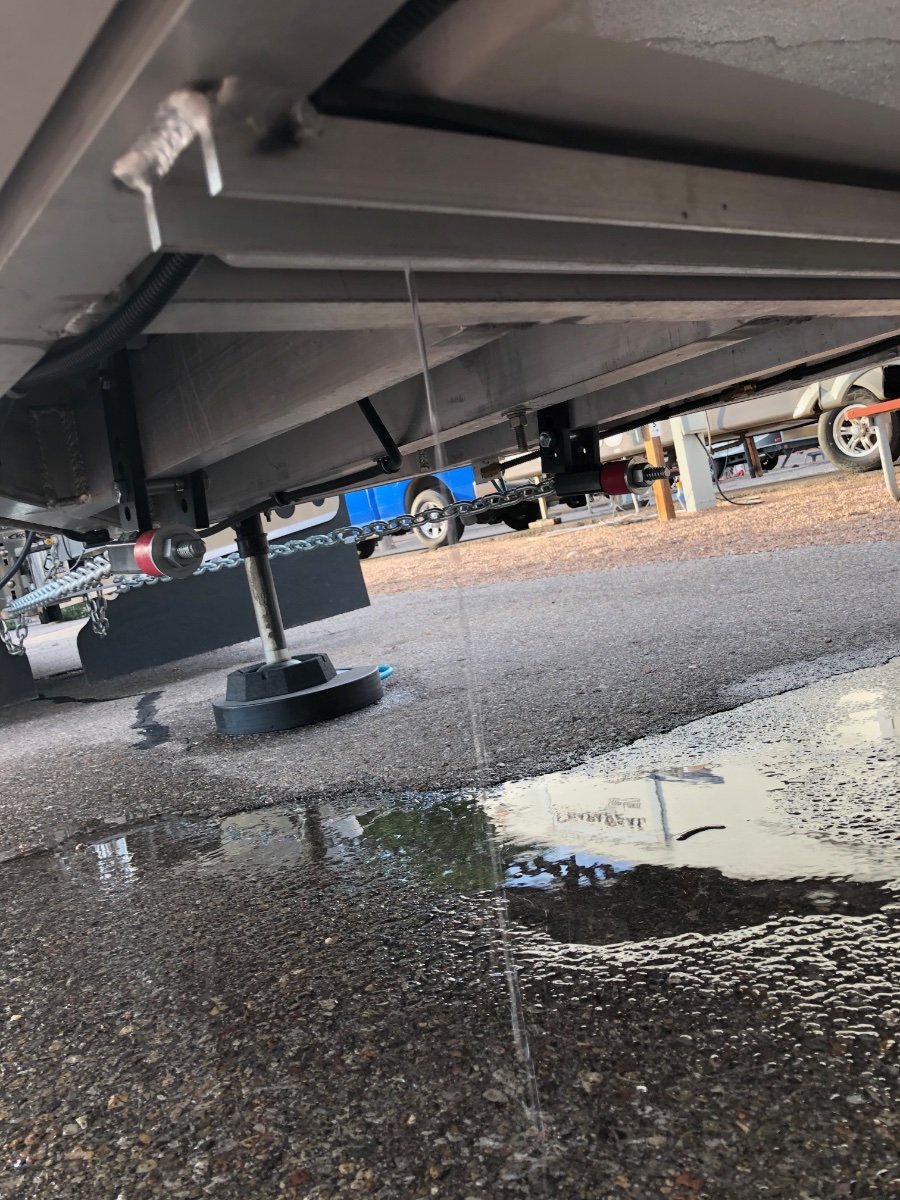
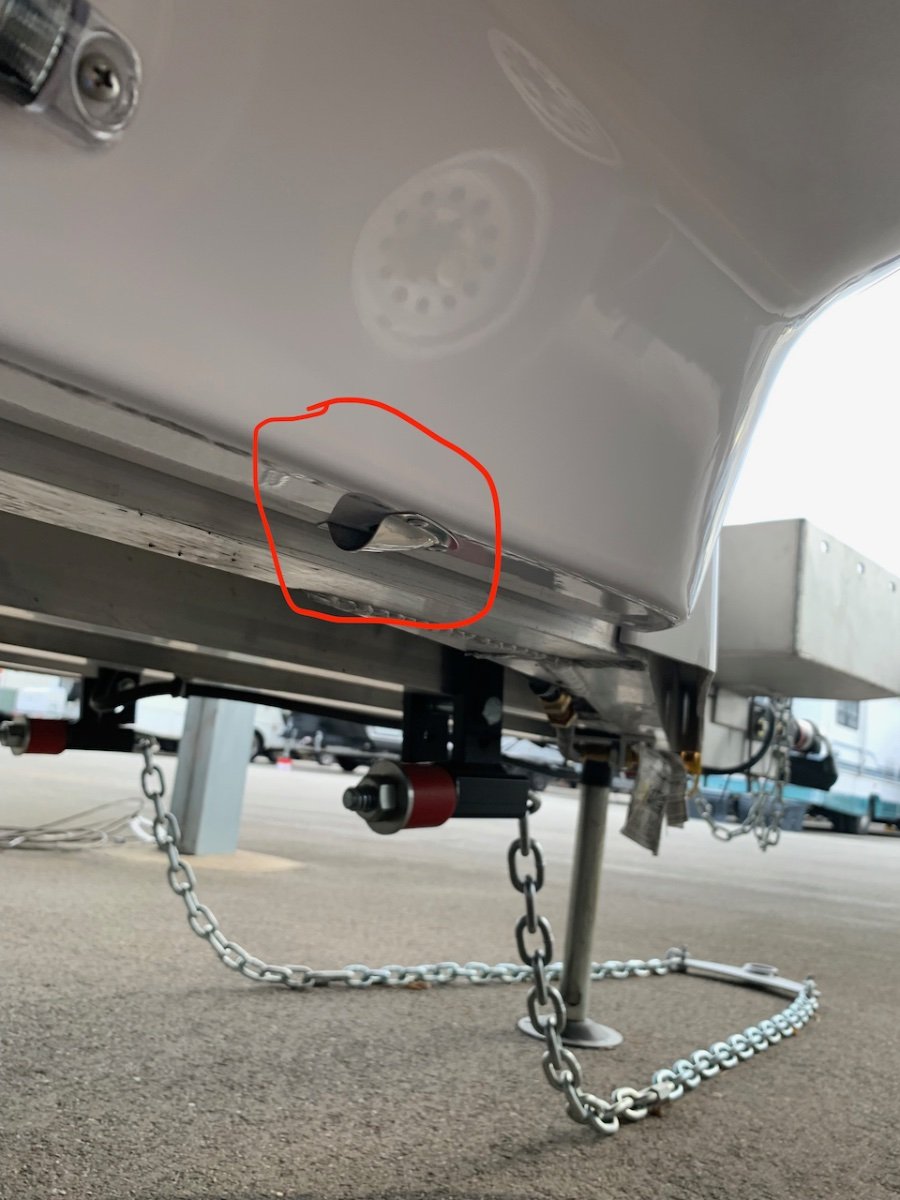
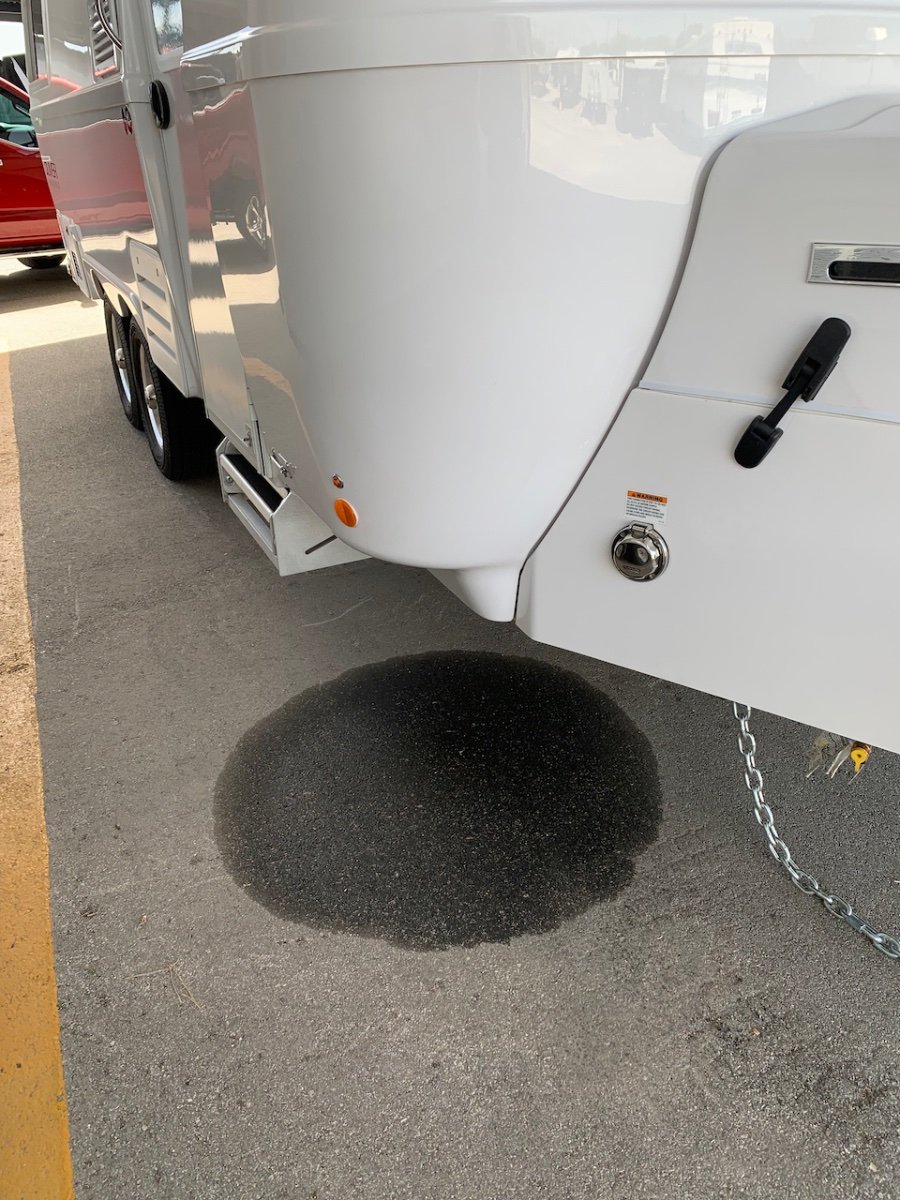
There is a weep/drain hole under that cover. It and the others like it are located around the underside of the trailer. It looks like your parking space is under cover, so it shouldn’t be weather related. That mean’s there is probably a water leak inside. Is the front curbside corner the lowest part of the trailer? Is the water pump on? How much water is in the black, grey and fresh water tanks? Are you storing drinking water in bottles or jugs in the trailer. I would start troubleshooting with a bucket under the weep hole to quantify the amount of water your a dealing with. Then I would look for moisture under the rubber mat in the closet. I would also look under the kitchen drawers and bathroom vanity for signs of leakage from the faucets or drains. Let us know if you find any sign of water. Mossey8 points
-
I just did a forum search to see if I could find information on building a PEX repair kit to carry with us while camping. The most informative thread (after reading a bunch) had some good information: Upgrades with Sharkbite Fittings I know we have some very knowledgeable owners (at the last rally @mossemi and @scubarx had an informative hands-on PEX demo). It would be useful to list some of the supplies, tools and sizes that would be handy to have in case of a plumbing malfunction while out in the middle of nowhere, a spot Oliver owners seem to like to visit. What do we need to look for while in the plumbing aisle at Lowes or Home Depot? Mike5 points
-
Your kind of leak is normally just a small nuisance. Be very thankful that you have an Ollie, because if it was a stick and staple brand, there might be wet wall insulation and mold/ dry rot to deal with. In an Ollie, you say, “Oh a water leak, I’ll fix it” and you go camping. In another brand it might be, “Oh a leak, my ceiling, wall and floor have to be replaced by the dealer, and they are backlogged three months!” If you had a defective tank, that would be a pretty big deal, but they are designed to be removed from the back through the sewer opening, but this is highly unlikely. Roof leaks will usually travel down between the two hull parts and drain out the bottom, but since yours has been dry for a month, it is a plumbing related issue. The only place you DO have to worry about with any Ollie is under the galley cabinets, if you get a sink faucet leak, it can eventually destroy the bottom plywood. So it is prudent to never let a leak go for very long without fixing it. John Davies Spokane WA5 points
-
@John and Jodi also consider checking ALL of your white compression fittings on the curb side under belly area where your waterlines lay in the belly of the Ollie floor. If one of these fittings are loose and they do loosen ask me how I know😅, just hand tighten only and recheck to see if you have any further leaks. A blue shop paper towel aid in showing you if any or which ones are leaking or even seeping. Try this using your pump and then try this with just your city water on. Any loose compression fitting can allow enough water to travel to that scupper if your Ollie is just slightly nose down. I find myself checking all of these fittings before and after long trips. After a good hand tightening I have not had any come loose. You can also install foam rubber pipe insulation to reduce the vibration between the plastic connectors and the Ollie interior shell. You many already know what a compression fitting looks like, incase you don’t here is a pic of a white compression fittings look like. Don’t over tighten these as there is a potential for it to break or split, it’s only plastic. A good gentle snug tightening has served me well. Hope this helps!
 5 points
 -
Gosh, Mossey I was going to respond with some ideas but you had them already listed plus several I didn't think of. Glad you answered while was typing . Nice answer! John4 points
-
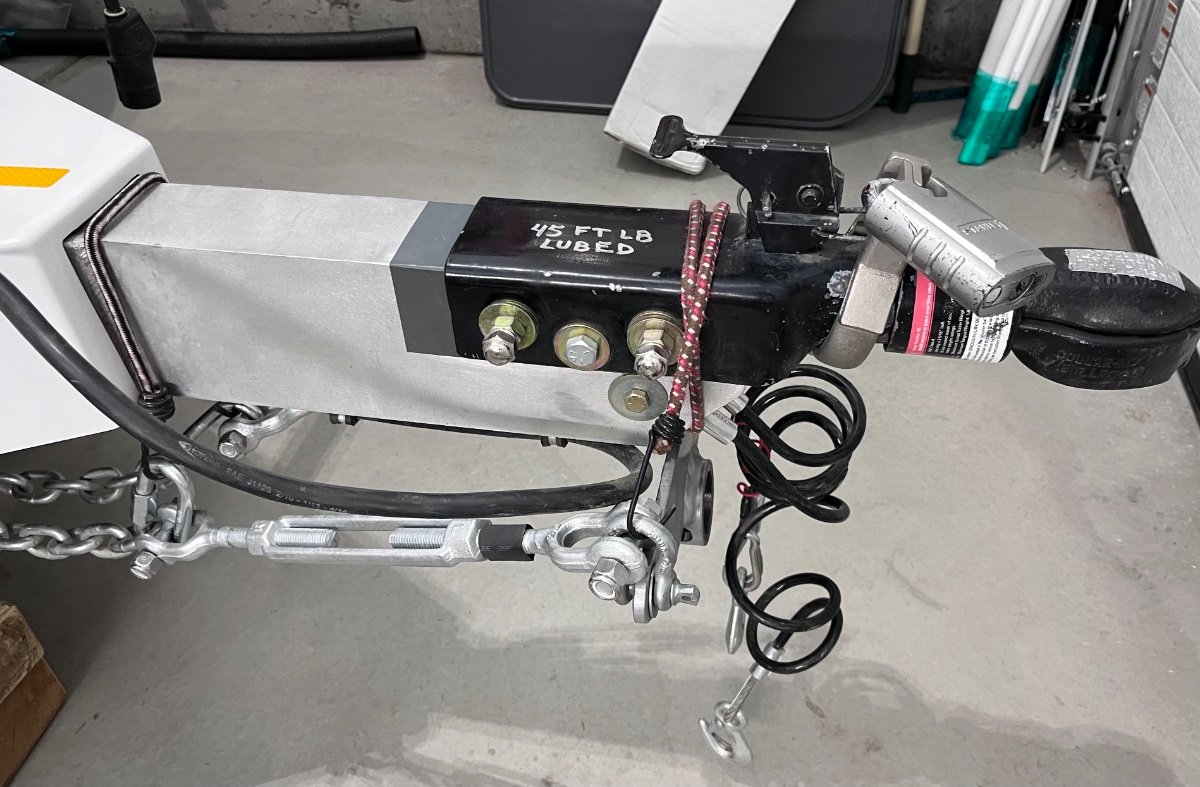
How long have you had the trailer? Have you learned the tricks for hitching, like not reversing the truck at an angle? Or was this a maiden voyage? Please add your trailer type and hull number and tow vehicle info to your signature, that is very helpful. I can’t imagine any part of the Andersen that could slip and render BOTH chains too tight. If the “whaletail” is misaligned, one chain will be slack and the other too short. We need more information, pictures help too. John Davies Spokane WA4 points
-
I have had the adjusting bolt on the end of the chain get turned wrong when it goes into the bracket on the trailer, thus the chain does not go all the way up inside the bracket. All that is needed is turn the adjusting bolt a 1/4 turn or so and it will now slide up inside correctly. This doesn't happen very often, but it has once, or twice and you will notice it when you insert the adjusting bolt and it seems too short. Like someone said, make sure the chain wing is at a 90 degree angle to the hitch, this will make one side longer and the other shorter when hitching, easily corrected if you know what to do. trainman3 points
-
John and Jodi, Your leak could be one of the issues Mossey mentioned, nice reply. 👍 I see your Ollie is a 2022, so warranty covers many issues. 🙂 We used to keep a gallon jug of distilled water for the Neti Pot in the front closet until the jug started leaking. 🙁 We had water coming out of the bottom rear with city water connected to Ollie and turned on. 🙁 Started searching and eventually found a hot water PEX T dripping below the hot water heater. Started researching on YouTube about PEX repairs and purchased a brass T with various brass fittings red & blue 1/2" PEX pipe to make the repairs. Also put together a PEX repair kit for future issues, it fits perfectly in a Pelican case I was not using. Also purchased some Sharkbite fittings, straight, 90s, and Ts that don't require a crimping tool or crimp rings. Like mentioned earlier in this thread, we're happy we have a fiberglass Ollie with minimal amount of wood. Bill 2015 LE2 #753 points
-
We live in New Hampshire and store our Ollie uncovered in the driveway. David clears most of the snow off after storms and that keeps the solar panels charging enough so that we almost never have to plug in to shore power. We give it a quick wash after each camping trip and wax 2-3 times a year. Ours is a 2019 and so far it still looks good. Paula3 points
-
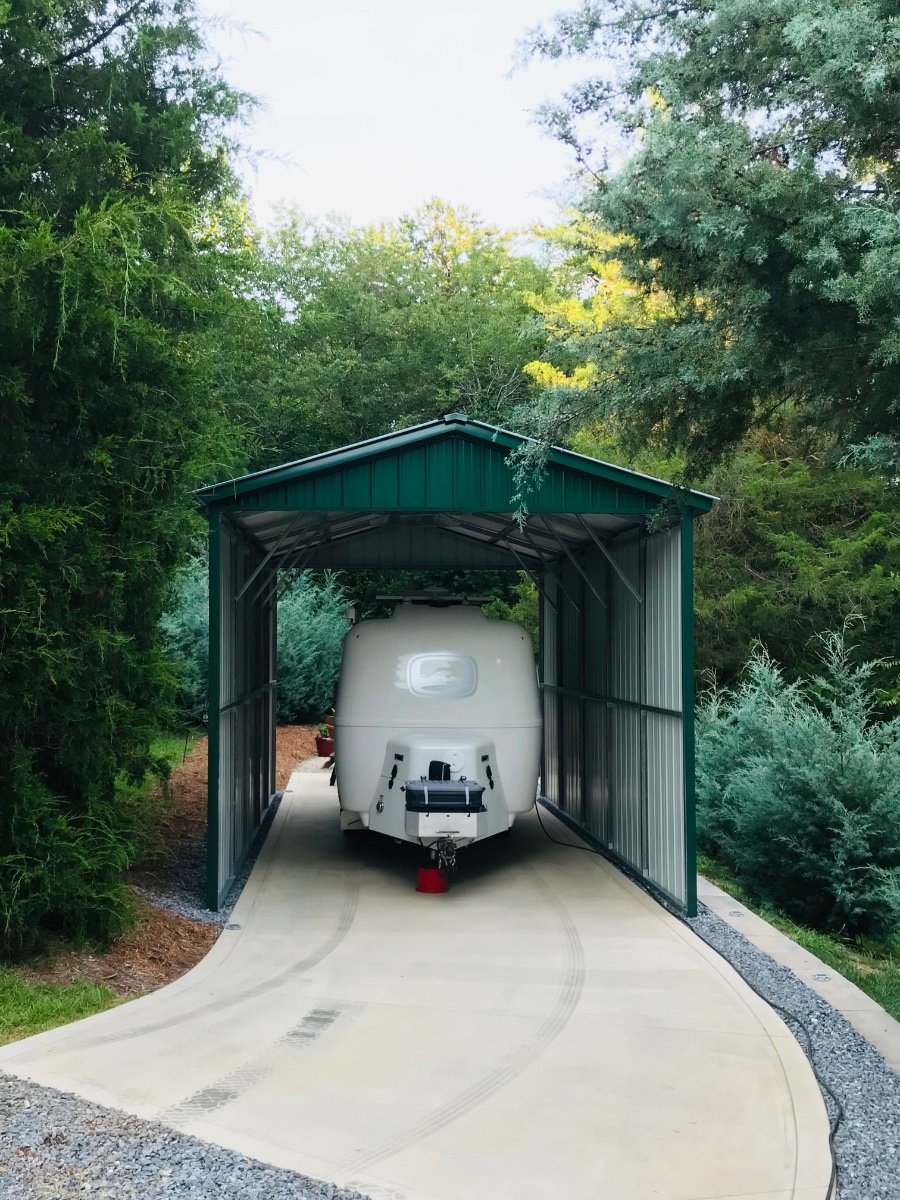
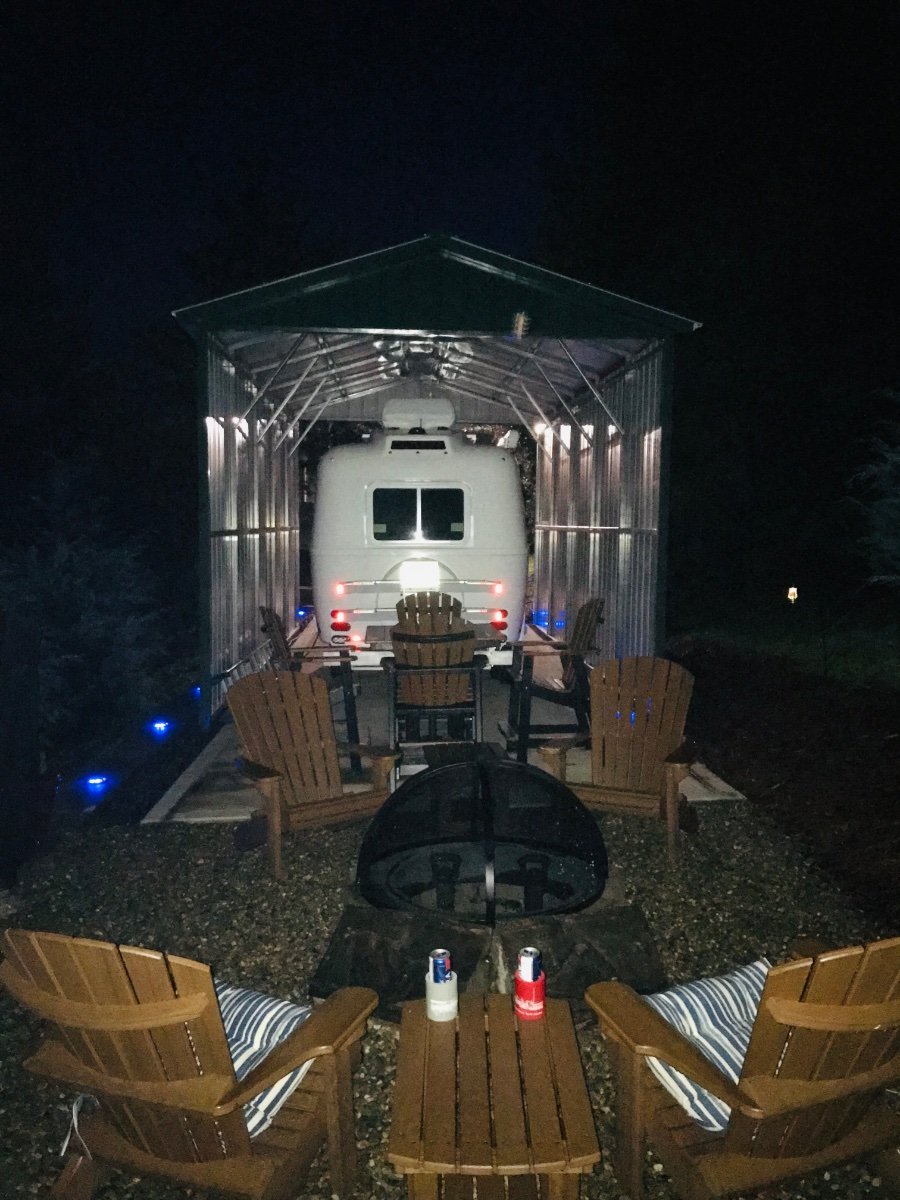
We have the newer lighter weight cover from Calmark which we purchased from Oliver last summer. It is easier for two people naturally with ladders to install the cover. It’s not difficult but it is not a quick on and quick off procedure either, there are some gymnastics involved 😅. We always install the cover on the curb side and sit it on the awning and unravel it from this point. Others may have a magical way, but this worked for us. We used it last winter for the first time when we winterized and stored our Ollie here at our home. We used foam pool noodles on the sharp angled corners to reduce wear and tear on the cover. Corners such as the solar panels, rear bumper, entry steps. We had no visible signs of scratching or marring of our Ollies finish at all. Naturally without a cover you will begin to see some dulling or oxidation of the gel coat and you will reeeeally need to stay ahead of that with waxing and buffing. With the price tag of new Olivers creeping up year after year, we opted to take the best possible care of our Ollies finish. That said and here is another option to the Calmark cover- Last Friday, July 29th after a lot of previous research, planning, and due diligence we had a custom built “RV port” or as we call it an “Ollie Hangar” built on our property in our backyard area and are very happy with the results. We used a local Mt Airy, North Carolina company called - steelbuidlingsandstructures.com This NC company is an engineered certified steel structure builder which meets and exceeds our State and County’s code requirements for wind and snow. It does exactly what we intend it to do- keep our Ollie out of the UV, and elements. The crew installed it in a day and a half so we feel it is well worth the investment for us. We also like the convenience of taking off in the winter months without wrestling with the cover standing on ladders and all the gymnastics that goes with it. This structure is fully covered by our homeowners policy, note - some policies do not cover out buildings. We have 30 amp shore power so no issues with battery maintenance. Just another option. “Ollie Hangar” located on Blueberry Hill Demenions - 13X25X11H “Back Stage” as we like to call it. 😅 Our home LED motion sensor lights put a lamp on our path for a few minutes when we walk out to the hangar.
3 points
-
FYI, don’t leave your Andersen chains and whaletail lying on the ground, eventually they will rust as the finish gets scratched up. Two short bungee cords, one hooked to the middle of each chain, and one hooked to the ends of the whaletail, will support them neatly off the ground. You can leave the middle one attached while towing. The front one can then be used to secure your wiring to keep it off the ground. This method protects your big investment and makes you look like a pro; the parts never touch the ground, unless you have to lower the tongue way past the normal position at a steep campsite. The same applies to your three jacks, put a block of wood underneath each, or they will rust and leave nasty stains on the pavement. They are also more stable when they are not fully extended, and it reduces wear and tear on the motors and gears. And saves battery power. How do you like your new trailer? John Davies Spokane WA
2 points
-
Hi Katjo: I and Maniac and a number of other owner's in Maine keep our Olivers outside and do not cover them. Our average snowfall along the coast is 50" to 70" and inland is 60" to 110" in Maine. Along the coast where I live, we can get a storm that drops 10" or more in one day. I do not remove my AGM batteries and the solar panels always keep the batteries at or near 100%. Although not necessary, if the snowfall is over 8", I will brush the snow off the solar panels just so they start charging sooner. If it is less than 8", I let the snow melt off the panels. It will melt after a couple days. I have not seen any sign of UV degration of the gelcoat with my 2018 Elite II (sun is not that strong in the north). I do wash and apply 2 coats of wax in the spring, wash it as needed in the summer and install one coat of wax half way through the summer. In the fall, as part of winterizing the water system, I will wash and wax the Oliver. I used to put a cover on my 34' Luhrs sportfisherman as well as a 24' T-Top boat and it was a hard task as the cover was heavy not easy to move around. If you buy a cover for your Oliver you will need to provide a protection (and secure the protection) on the sharp edges as Patriot suggested above. Now that I am older, I would not consider a cover as they are not necessary. Maybe different where he sun is stron and there is a lot of smog. Hope this information helps you in making a decision.2 points
-
Setting the grid limit at 15 amps on generator power seems correct because the EU2200I is rated at 1800 watts continuous which equates to 15 amps continuous current at 120 volts (120 volts * 15 amps = 1800 watts.) However, I don't think you need to set the charge current as low as you are doing, especially if you have the lithium batteries. Remember that the charger is supplying its charge current at a nominal charging voltage of 13.5-14.5 volts, not 120 volts. One amp of 120 volt current delivers 120 watts of power, whereas 1 amp of charge current is only delivering 13.5-14.5 watts of power to the batteries (volts * amps = watts). The Eu2200I is capable of 1800 watts continuous at 120 volts. If the battery charger is the only load and you assume 15% losses through the inverter charger, then the EU2200I is capable of charging the batteries at a rate of 1,530 watts (1800 watts * 0.85 = 1530 watts). If the charger is charging the batteries at a rate of 1530 watts at a charge voltage of 14 volts, then the charger is delivering 109 amps to the batteries (1530 watts / 14 volts = 109 amps). I would think you should be able to set your charge rate at 100 amps and the EU2200I would supply the 100 amp charge rate just fine if there are no other 120 volt loads. (My inverter charger has a maximum charge rate of 80 amps which is what I have it set at when charging with my EU2200I). I don't know how many watts your air conditioner draws with the compressor running, but lets say it is 1200 watts. That leaves 600 watts of generator power to charge the batteries (1800 watts continuous from the generator minus 1200 watts to the air conditioner = 600 watts). Assuming 15 percent losses through the inverter charger, you should be able to run the air conditioner while simultaneously putting as much as 510 watts into your batteries (600 watts * 0.85 = 510). If the charging current is 14 volts and power into the batteries is 510 watts, then the charger is putting out 36 amps of charge current (510 watts / 14 volts =36 amps). This means you should be able to set the charge current limit as high as 30-35 amps while running the air conditioner with the EU2200I without overloading the generator. This will result in a 6-7 times faster battery charge rate than the five amp setting you chose. When not running the air conditioner, you should not have to reduce the charge current at all from your 50 amp normal. In fact, you may want to increase the rate to 80-100 amps to take full advantage of your 1800 watt generator and thereby reduce your generator run time needed to charge your batteries. I may have calculated something wrong here. Others please chime in if I have. All this is not really intuitive.2 points
-
Read this entire posting, there is a link to the proper tool under a post by Townesw. Mossey2 points
-
I'm torn on that. I suspect a cover "might " make it harder to clear snow, in a dump snowfall like my younger days in Minnesota. A hard sided cover, like @Patriot's, rated for snow load, would obviously be ideal. But wind driven snow could still be an issue.2 points
-
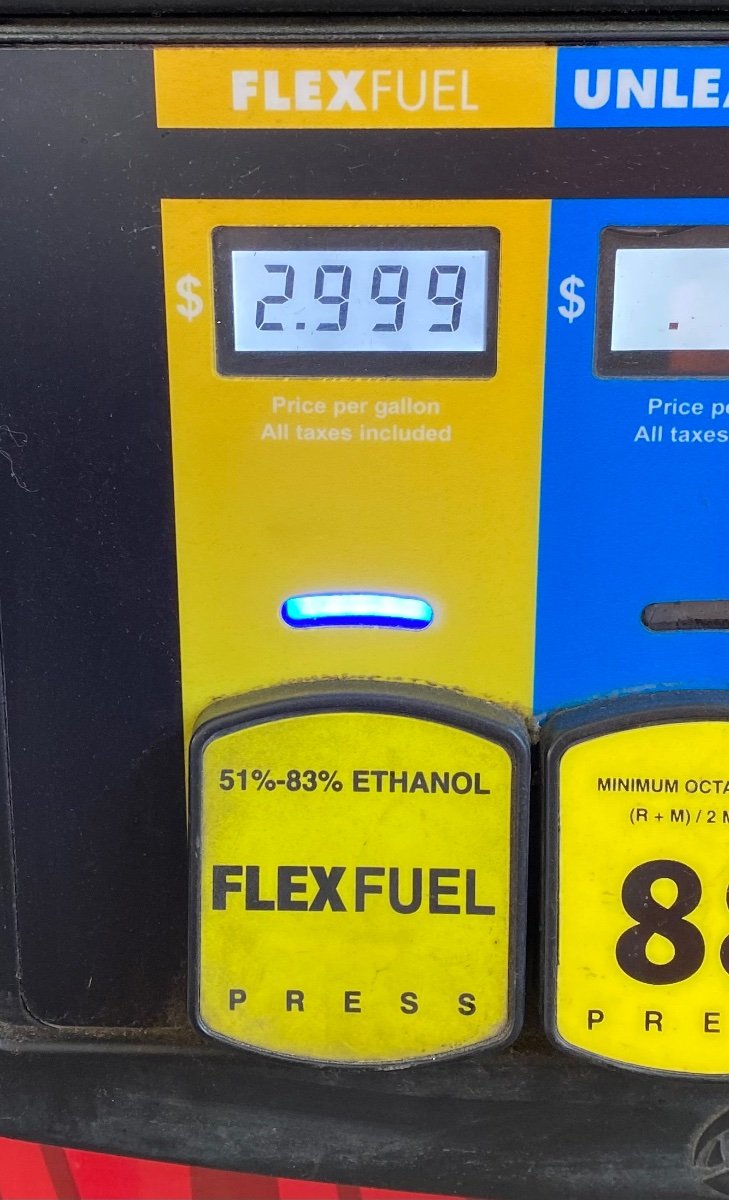
Had my first chance to do a long range experiment of gasoline vs. E-85 in my flex fuel F-250. Recently towed the Ollie about 1500 miles so I had a chance to compare mileage over several tankfuls each of both gasoline and E-85. I typically get about 11.5 mpg towing the Elite II on regular gasoline (which can still contain up to 10% ethanol). On E-85 the mileage dropped as expected (due to the lower energy content of ethanol) to about 10.0 mpg. But now to look at $/mile, with gasoline at $4.49 per gallon here in my area of PA, and E-85 at $2.99 per gallon. So on gasoline it’s costing me about $0.39 per mile. On E-85, it’s about $0.30 per mile. So the E-85 wins on cost per mile, but a downside is the loss of range of about 50 miles on a full tank. I’ll keep using E-85 when it’s available, but now that I’m looking for it I did discover that it’s hit or miss at gas stations if they have E-85. It’s nice to have the option of both though. We can have a separate debate about the environmental impact, the government incentives for ethanol blending, etc. 🙂.
2 points
-
One of the several reasons we swapped out our dinosaur 2008 oversized dometic ac was the cost of a new shroud to replace our very cracked and brittle old shroud, probably half eternabond tape. We waxed the shroud every time we waxed the trailer, but the Florida sun takes a toll on plastics. I wouldn't expect that in a newer trailer like yours. I think your dometic has a limited 2 year warranty. Open a service ticket for advice, and see what happens. The $200 for a new replacement shroud for the old dometic was 20 per cent of the purchase price of our quiet 9500 Houghton. Obviously a bit more work to swap the whole unit, than swap shrouds, but worth it in the end.2 points
-
Love it, and love the "back stage." Just like camping, at home.2 points
-
Did the brackets locking the chains to the trailer move?2 points
-
Ouch, not good hitting deer especially while towing. Couple of thoughts regarding hitching, have you raised the TV enough after connecting the hitch mount to trailer so that the tension is eliminated? If not you’ll never get it connected because essentially you have your weight distribution fully engaged. Also uneven or out of level ground will exacerbate this situation based upon my experience. Keep us posted on how things go.2 points
-
Yours may still be in warranty, check to see. That doesn’t mean you shouldn’t change it yourself if it is going to take two months to get it through normal warranty channels. Sometimes it makes more sense to just buy it and do it yourself, if you are comfortable doing that. John Davies Spokane WA2 points
-
I had the same issue on #676 (2020). The crack in my shroud, like yours was at the screw hole, but mine did not seem to have as many cracks as yours judging from the picture. I bought a replacement shroud from a local Camping World, but have not used it yet. I was able to patch my current shroud using a strip of fiberglass drywall joint tape and JB Weld epoxy. I put the epoxy on the inside of the shroud, then layered the fiberglass tape on and more epoxy. It is still holding 18 months later.2 points
-
I’ve never seen that happen. We’ve been in and through some pretty high wind conditions. I’d get it fixed. I did lose a screw at some point and called Dometic for a replacement. They sent me a pack of six for free. I’ve seen various Dometic AC covers on Amazon but would check some of the RV parts places first. UnitedRV.com has provided good service to us. Mike2 points
-
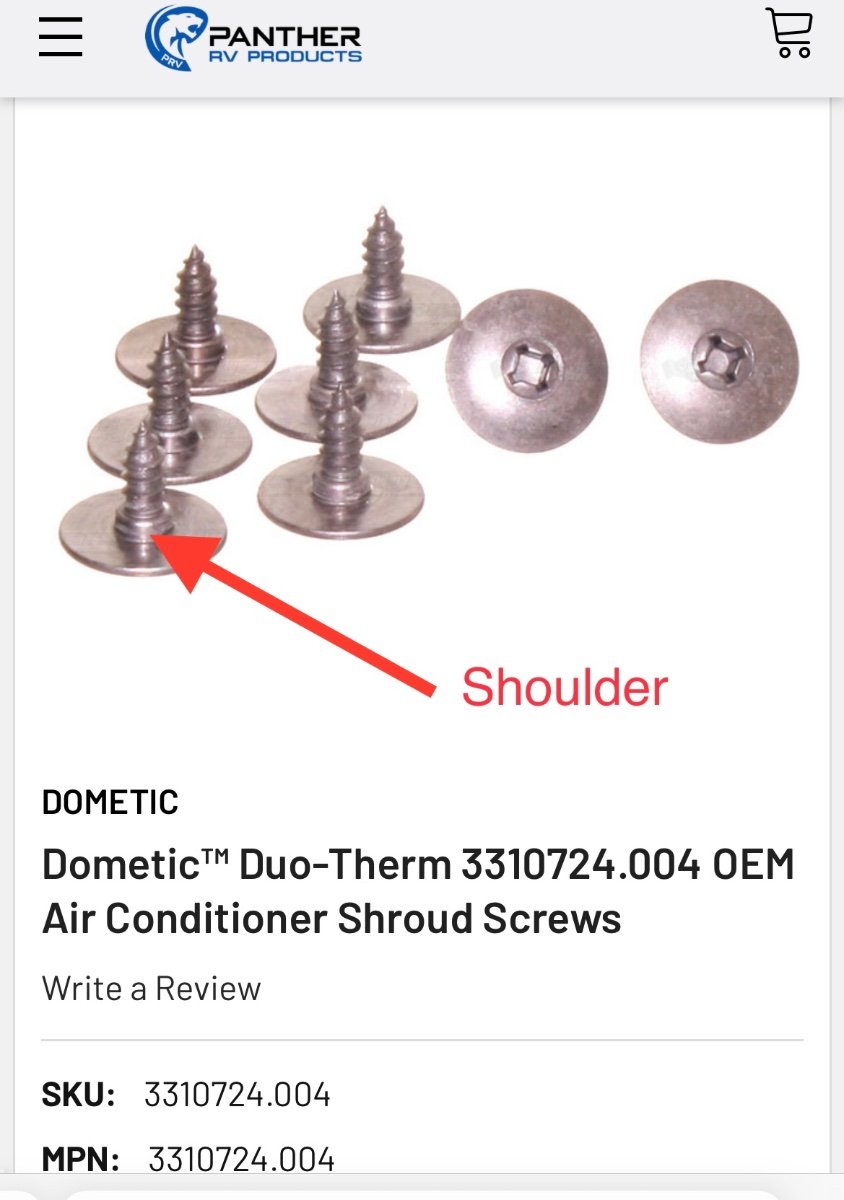
Those screws have a shoulder on them. The shoulder should pass through the elongated hole in the shroud and be tightened down against the steel base, leaving the head of the screw snug but not tight against the shroud to allow the shroud to expand and contract with heating and cooling. You might find that the shoulder was tightened down against the shroud, or the screw was loose allowing too much movement of the shroud. We’ve been in some very strong wind and never had that happen. I agree with @Cameron I’d fix that also.
2 points
-
Hi Sak That's weird. Doesn't seem like the wind could crack it but who knows. The important thing is to make sure that the shroud doesn't come flying off to hit someone behind you on the road. If the other connectors are secure, you're probably OK but if it were me I'd want to fix that.2 points
-
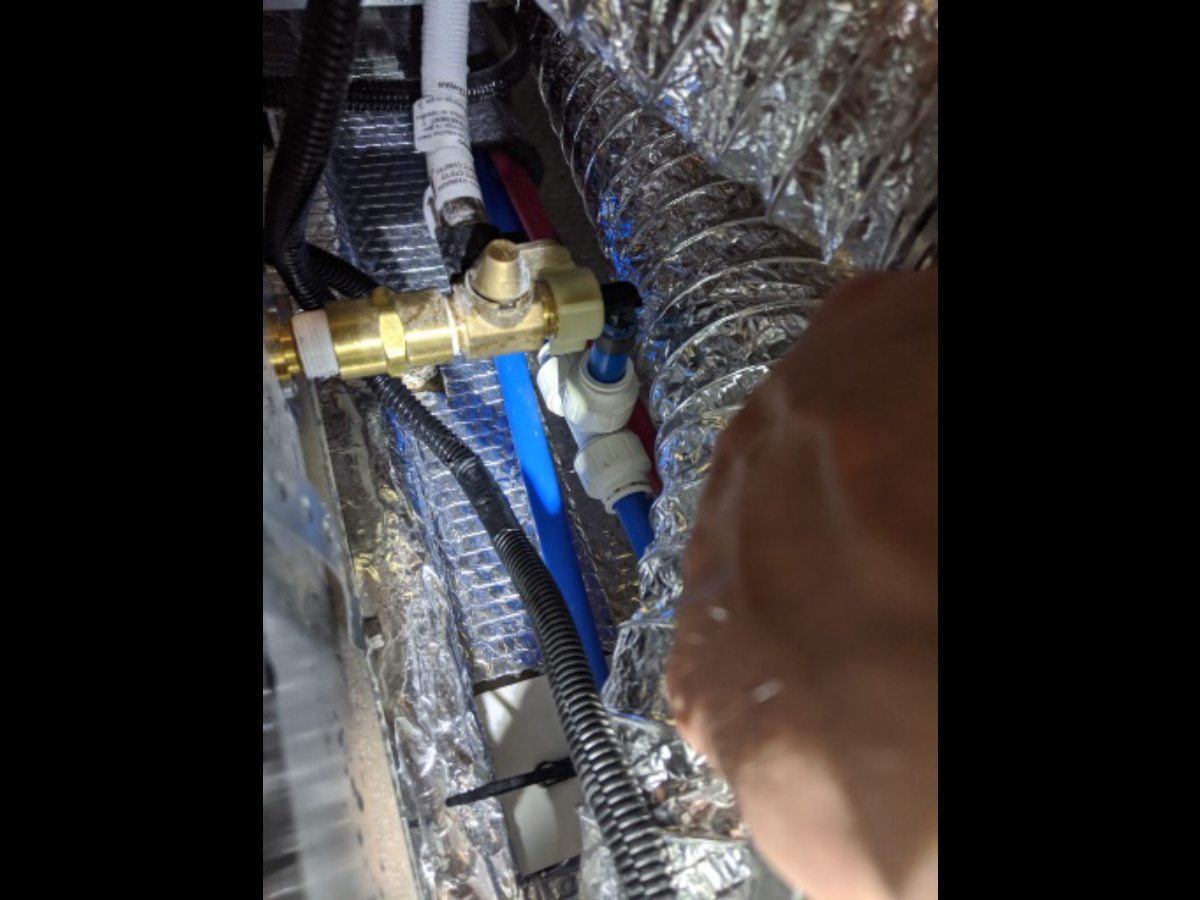
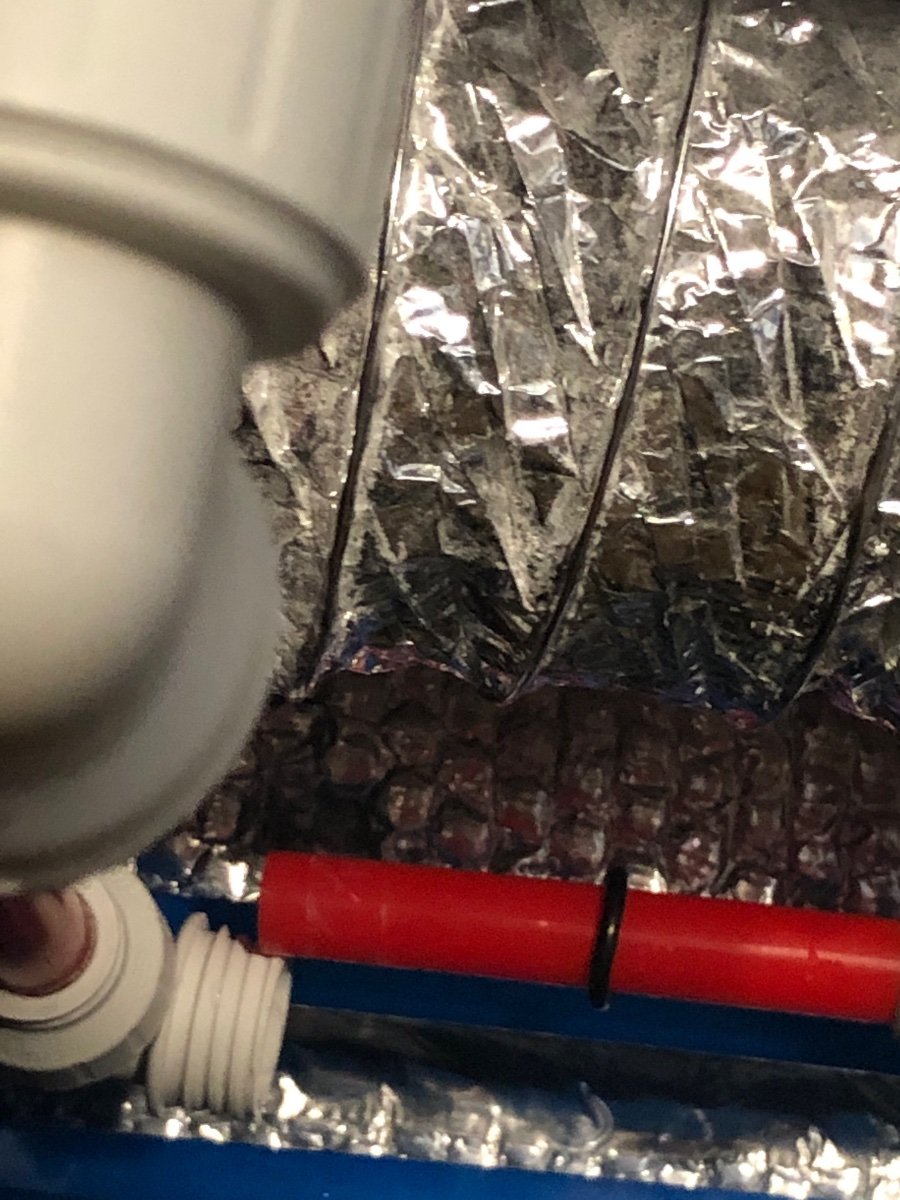
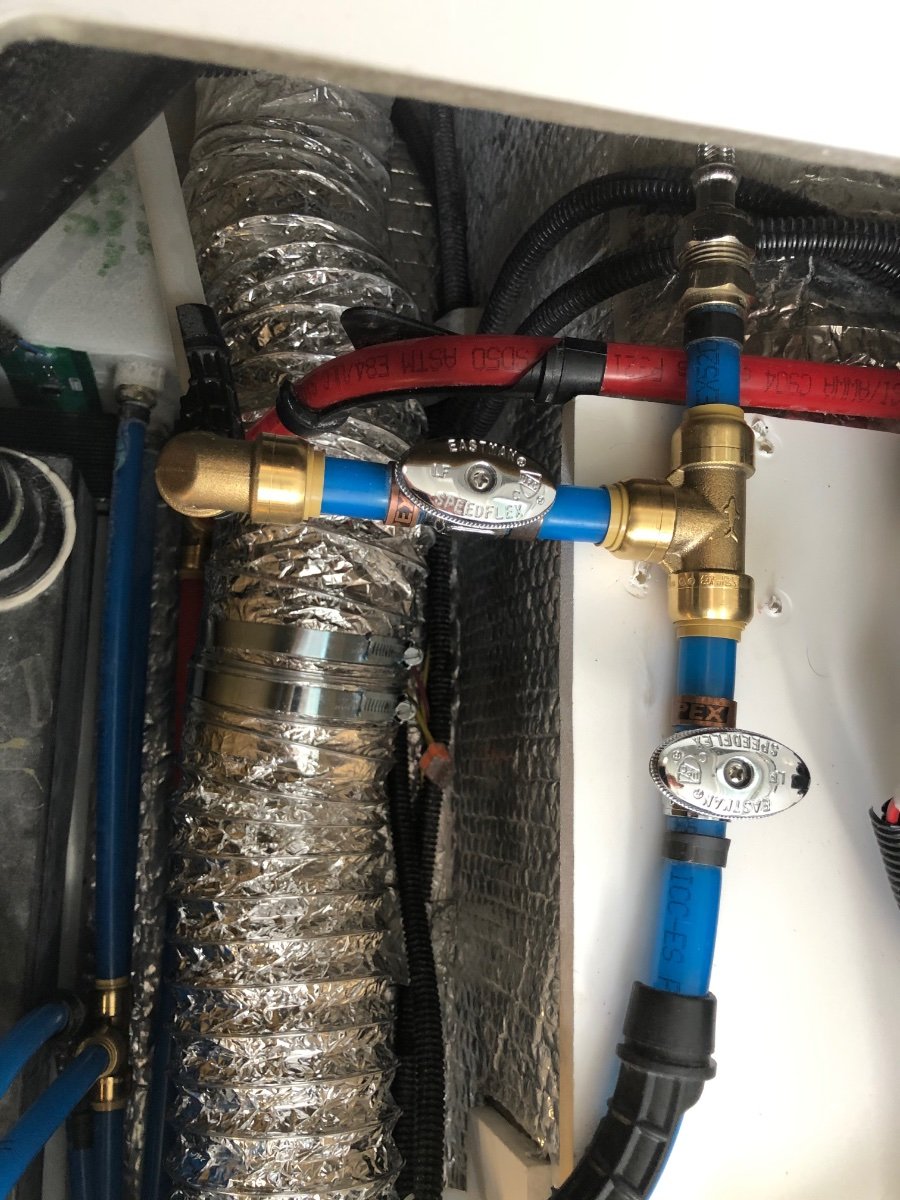
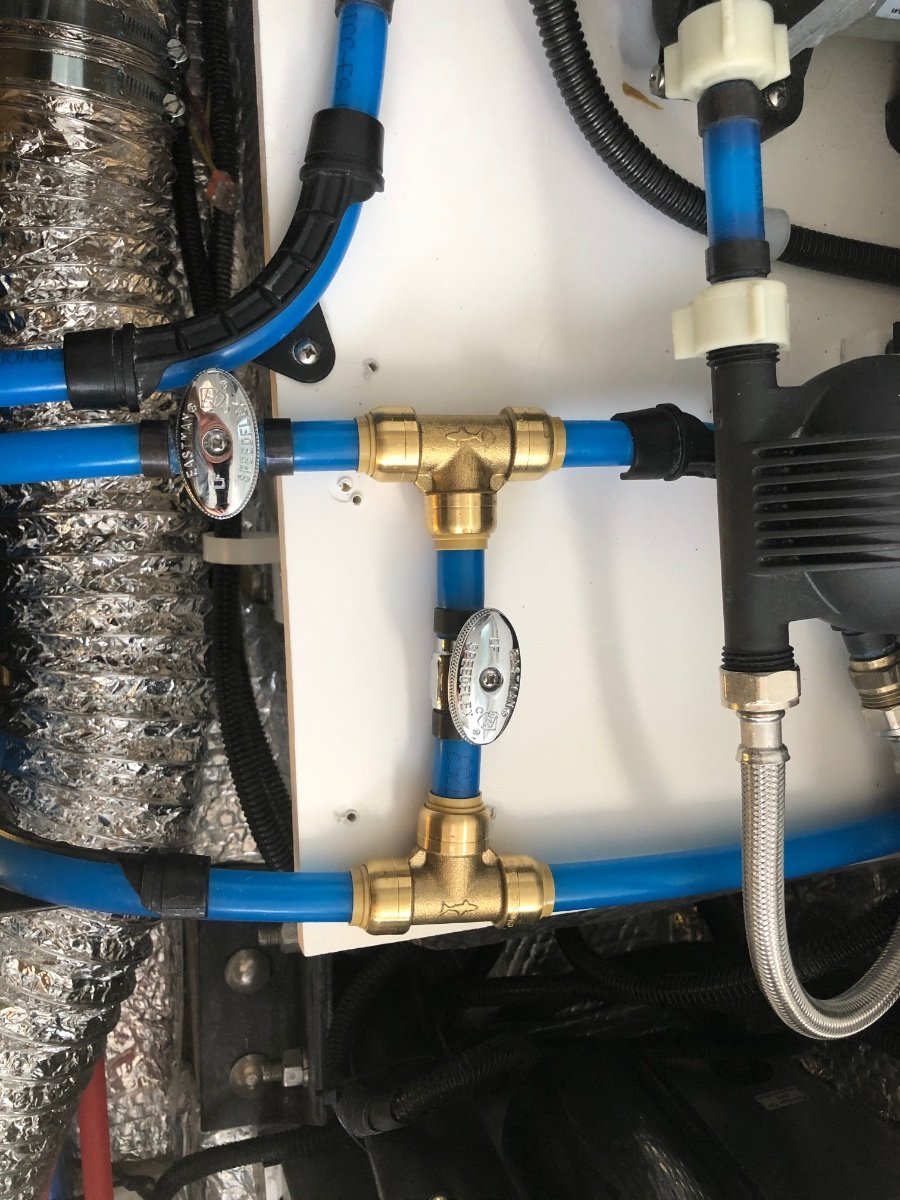
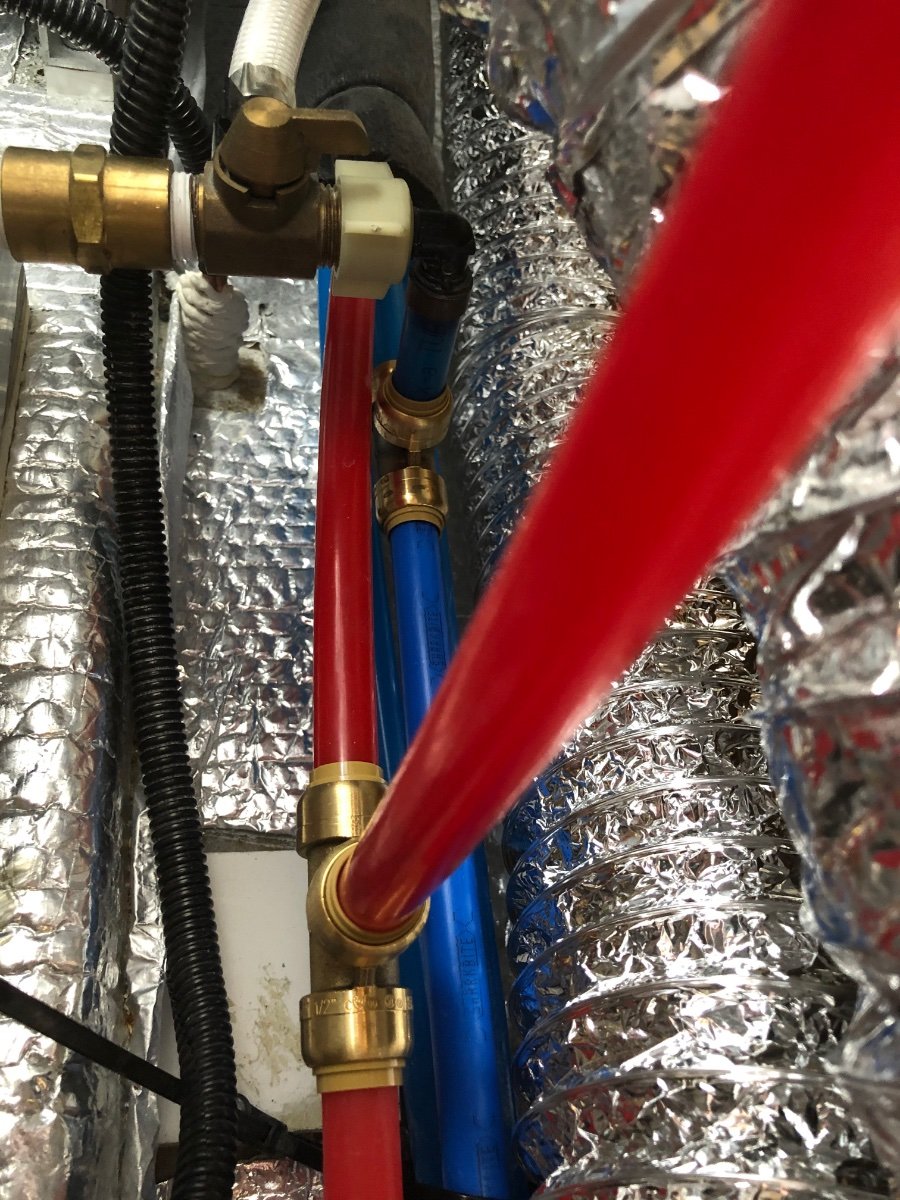
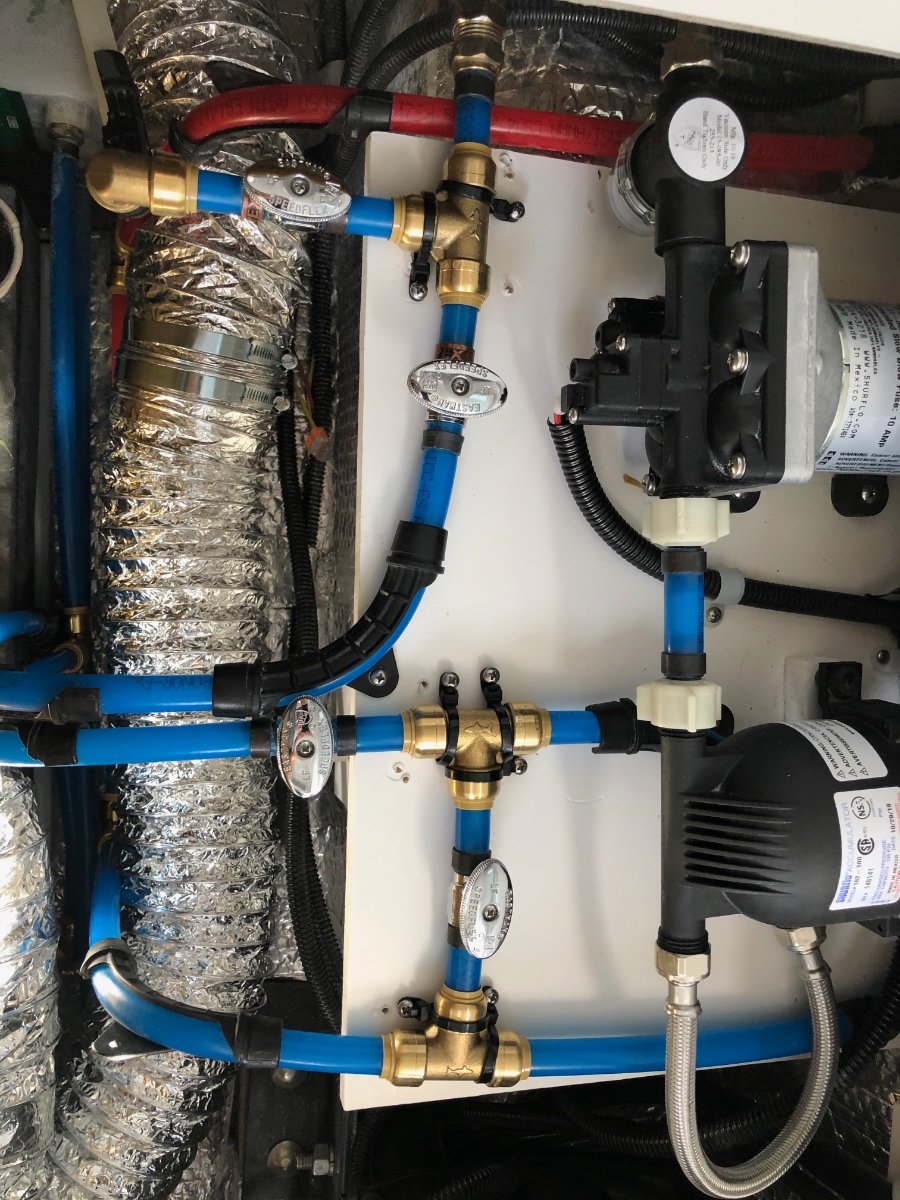
Hi everyone! I wanted to share a plumbing episode that I experienced in Albuquerque, NM last year (6/2020) after getting it serviced in TN. After two (2) days of driving, I hooked up my WPS (water/power/sewer) connections at a KOA and had a major plumbing issue, or so I thought... After shutting the water off and inspecting under my curbside bed, I found the culprit. It seems that, the offending hot water line to this tee fitting was cut about a half-inch too short when installed at the factory. Mind you, this happened after a few thousand miles on the road and after a few bad miles on I-40 in Oklahoma before this manifested. After understanding just exactly why this happened, I contacted our good friends in the service department and Jason was able to offer some very helpful assistance. Luckily, there was a Home Depot just a few miles down the road and I was able to purchase a longer length of the same hot water line installed on the Ollie and Jason recommended the "SharkBite" brass fittings as a permanent replacement for the plastic ones installed at the factory. This was a quick and easy fix and I have had no problems or worries since. The SharkBite fittings are the best and I decided I didn't ever want an episode like this to happen again, so I later replaced every elbow and tee fitting in my Ollie with the SharkBite brass fittings. The Team at Oliver was great and reimbursed me for all materials for the tee that caused this problem. I came out-of-pocket and did the rest on my own. I highly recommend these fittings and wish they would have used these in the first place. Below are photos of my experience... Nicky Ray
1 point
-
We live in San Antonio and it hasn't rained for a month. The power is completely off and the trailer hasn't moved in a couple of weeks. Every time I visit the trailer, it has this fresh spot of liquid (appears to be water) under the right front of the trailer (see photo below). The liquid seems to be coming from a drain (see photo below). Does anyone have an idea of what this drain drains? And is this a problem?
1 point
-
Either of those products is temporary, a permanent gelcoat repair should be done by a skilled fiberglass specialist, for example a local marine/ boat repair shop. OTH a small rock chip (crater) can be patched with a white epoxy like Marine Tex, but your crack must be ground away to see if there is any damage underneath. Where do you live, if you are near Tennessee the factory would be the very best choice for this. John Davies Spokane WA1 point
-
We've been running hot water into a couple of rubbermaid wash basins for washing and rinsing, which also helps ration a measured amount out for the task. Unless near a campground spigot, in which case we'll heat that water in a pot on the stove for washing dishes, though with the grey and fresh tanks the same size that only works repeatedly if some water goes elsewhere (we drink from separate containers).1 point
-
Personally, I would hope that Oliver would "uncouple" the water heater from the Truma package. Imo, the standard six gallon is easier for metering/saving water, if the owners like to boondock. We have a tankless water heater (Girard), and it's never given us a lick of problems, but the former 6 gallon suburban was easy to use, and you knew when the water started getting chilly that it was time to quit. We'd turn it on for 10 to 20 minutes or so, use the hot water side only for showers. (Avoids the cold water sandwich.) I heat (to this day) dishwashing water in a teakettle, to conserve water. Heat water in a teakettle for birdbaths, face wash, etc. Truma and other endless hot water heaters are great for those who routinely camp with full hookups, imo.1 point
-
Hi, @laTraylor. I have nothing to add since I have never used an Andersen, but I wanted to offer a warm welcome as I see this is your first post. So sorry about the deer. They're everywhere in many camping areas, and certainly a scary experience for you, I'm sure. Good luck with figuring it out. More knowledgeable people here will surely help.1 point
-
Just to give a little more data on water use... we have the composting toilet and carry separate drinking water containers to have good tasting water w/o needing to filter from the trailer tanks and wonder what isn't being filtered out. With the two of us taking parsimonious showers each day (somewhat trained from van camping with a 2 gallon hand pump sprayer type shower setup, where we tended to use less than the full 2 gallon tank capacity per shower even with hair washing) and similarly frugal dish washing (trained from backpacking and further assisted by use of Chinette paper plates...) we have gone seven days with at least some fresh water and grey water space left. I will probably replace the stock shower head with a high pressure/low flow head sometime soon as I'm sure this will further extend time possible between dump/fill visits. BTW we can go at least 3 weeks between dumping the contents of the composting tank (as others have noted we dump the pee every few days whether it's full or not as the contents get progressively funkier by the day which is something btw that you'll only notice while actully doing the dumping). And with breaks in-between trips it seems we can go for a decent bit more as the volume shrinks back down a surprising amount over time with periodic agitation and moistening. We put TP into the toilet btw - the only downside we've had is that it makes turning the crank a bit hard at times, but not so hard as to motivate us to come up with a separate TP disposal strategy.1 point
-
Thanks! Yep, the external propane connections are on the list. And, having played with various option combinations, it definitely adds up fast. Sue and Matt's trailer that wee looked at on Saturday had a lot of the options, yet their 2021 price was not much more than the base price today!! Here's where we're at right now: Elite II Twin Bed Upgraded Mattresses Fabric Upgrade - Undecided until we see the standard in person Hypervent Omnidirectional Antenna (local weather etc. if we don't have cell service) Street Side Awning Frosted Doors Convection Microwave - Undecided - More research needed 20 Gallon Propane (to keep tongue weight down) Front/Rear Propane Quick-Connects Toilet - Undecided Full Truma Package - AC, Furnace, Water Heater - Antifreeze kit undecided Lithium Backup Camera - Probably have Oliver install system of our cloosing Anderson Hitch - I see no reason to spend $350 more for the 2-5/16 version Aluminum Storage Basket - Undecided - I see using it the last miles for firewood or wet gear after a rainy night. Not for a generator or water storage Basement Door No Graphics Thanks for everyone's input!! We are heading out today for four days camping in our 5X8 squaredrop and it is in the high 80s with 80-90% humidity with some rain forecast each day. Right after we get home, we'll have one day to catch up, and then head south (motels) to go to Makers Mark and then Oliver on Friday. The recent memory of those conditions might have a lot to do with placing an order. 🙂1 point
-
Unless you specifically want accessories with the Oliver logo on them most of the things Oliver sells in their small store can be purchased elsewhere for less. Check out our blog, listed in my signature, for details and reviews about some of the items we purchased.1 point
-
We would love to build a similar Ollie Hangar (that set up is so beautiful in the photo)!!😍1 point
-
Hi Katjo I also gave this great thought last year before I picked up our trailer. I can't store it where I live so I keep it at a friend's property about three hours away. It's not covered. I consulted with SeaDawg who told me that they've never covered their trailer either and simply wash it and wax it twice a year with good quality marine products. I've done the same and so far so good. It cleans up very nicely. So, if your primary concern is about keeping the gelcoat clean and shiny, I think you'll be OK without a cover.1 point
-
We have a 2019 EII with the standard toilet. Tanks on 2019 were specified as : Fresh = 30gal - more like 28Gallons Grey = 30 Gal Black = 18 Gal (Now 15 Gallons reported in later models.) The NEWER Specs from 2023 data sheet are shown below: Fresh Water Tank Capacity Design Capacity 32 Gal. Grey Water Tank Capacity Design Capacity 32 Gal. Black Water Tank Capacity Design Capacity 15 Gal. Use Case: Boondocking sites...no restroom or pit toilets. We take very short (Navy) showers, wash hair outside or in a basin, and use wipes every other day. Black: Boondocking the black tank fills between 3-5 days. (If there are pit toilets or other facilities then we can get to 6 days.) Grey: Typically lasts 8 days. We've not typically had an issue with GREY filling up. For Boondocking, the toilet really is the limiting factor, and many have specifically chosen the compositing toilet for that reason if they plan to do a lot of boondocking. Craig Hull 5051 point
-
If you want to boondock, avoid the flush toilet, it absolute EATS your fresh water supply. ... https://www.doityourselfrv.com/how-much-water-does-an-rv-toilet-use-per-flush/ Buy the Natures Head, learn its quirks, and don't look back. Two people using it daily means a trip to a toilet or privy every two to three days to empty the pee tank, unless you buy a second one. The solids part of this equation has ben discussed at length, look here: ... https://olivertraveltrailers.com/forums/topic/1978-nature039s-head-composting-toilet-installation-in-an-oliver-big-thread/ I keep a little stainless flip top trash bin beside the toilet, with a liner, ALL paper goes in there. Fresh water is hard to quantify, when my wife is along we go through a tank in three days, including one navy shower each. I conserve a lot more than she, and smell more, and can go 8 to 10 days easily when I am solo. I carry an empty 6 gallon water jerry can (blue plastic) and have actually used it one time in five seasons. So usually finding a water source isn't that hard, unless you are dry camping for long periods. There are devices that allow you to get water from unauthorized sources, like a Water Bandit. Get one of those and you should be fine. If you can't connect the hose, your boondocking/ winterization port is your next step, just suck the water out of a can or bucket. Figure 3 quarts day in hot weather just in drinking water, that adds up fast! 1.5 gallons per day for a couple, over ten days, is half your tank volume. A navy shower is maybe 3 gallons, I use less than she because I have a lot less hair. Grey water can be carefully emptied with a sewer adapter and a 3/4" garden hose in SOME places, like the open desert, you can run it off to under a sagebrush and let it trickle out overnight. I dump mine at home in the gravel driveway... 😉 It would certainly be educational to rent a stick and staple trailer for a week, it will let you experience the systems, especially dumping, and the poor build quality, and the latter will make you appreciate the Ollie all that more. I will repeat myself, your LC200 will be "adequate" for towing an LE2 in the Eastern states, with the Andersen and airbags; you may find yourself wishing for the smaller LE when you travel out West, That would be a stellar combination for many reasons. I think yours is a Heritage edition? If so, good, you don't have to remove that pesky third row or buy proper LT tires.... do you know your payload? John Davies Spokane WA1 point
-
We have come to campers from a 30 year history of backpacking & water conservation, so YMMV. Our 2022 Elite II twin is our 4th camper since 2008. We spent 10 days in early July boondocking. Our biggest use of water is making 4-6 ginormous cups of good coffee daily. We have a composing toilet, which fits our wants and needs, so nothing goes into our black tank. We emptied the urine container about every 2 days, at about the 2 gallon level each time. After 10 days, the remaining fresh tank was 31% full, the gray tank 63% full, according to our SeeLevel II monitor…they aren’t dead-to-rights accurate.1 point
-
You will have an initial payment of $2,500 when you place the order; that will get you in the queue. We pick up our trailer in a couple of weeks so I don' have any water usage stats for you yet, but we did ordered the composting toilet. They are very popular according to Oliver and have a good amount of information concerning them on YouTube.1 point
-
As someone coming up on his 90-day limit to finalize my 2023 build, you can change anything on the build up till 90 days from the start of the build on your paperwork prepared in your initial order and deposit. At that same time you need to have the 2nd payment to them which is 50% of the remaining balance based on the pricing of that finalized build sheet.1 point
-
Dave and Kimberly, Absolutely beautiful! Thanks for posting!1 point
-
Albert & Terri, Hello, If you haven’t already downloaded the Xantrex app for FXC Control. That is the first thing to do, makes setting changes easy. With the apt open power up the inverter and on the remote panel press and how the top ESC button until you set two lines flashing on the screen. This will allow the Bluetooth to connect. They apt will search for your inverter. Then go to settings. To charge the batteries I change GRID Breaker settings from normal 25 amps to 15 amps for the (Honda EU2200I) CHARGER current settings from normal 50 amps to 15 amps To charge batteries at a low rate and run the AC I change GRID Breaker settings from normal 25 amps to 15 amps CHARGER current settings from normal 50 amps to 5 amps (lowest setting) you can make minor adjustments up and down to match you generator. Reference Oliver trailer service tab also for Xantrex Inverter normal settings. Everybody please join in if you do it differently thanks . Safe Travels1 point
-
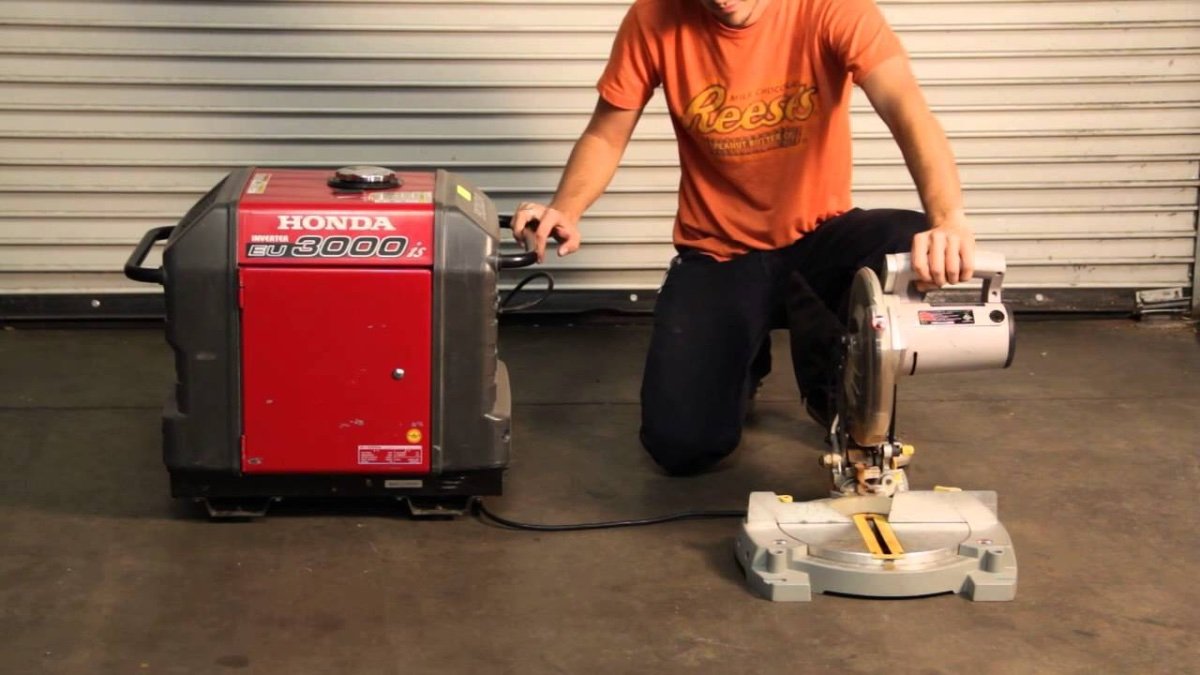
Wow, that's crazy that they've squeezed that much power into such a small package. And fuel injected to boot! We have the EU3000is, which has a slightly larger engine (160cc vs 130), but the whole package is huge by comparison. Here's a random photo I found with a person for scale. It looks like my old one is a tiny bit quieter at 49-58 dB vs 54-58, but I'd trade that for size. We ended up putting the wheel kit on ours, as it takes both of us to move it around when we need to use it. Ours does have the same engine as our snowblower, so that's good for service parts commonality. I added propane as an alternate fuel a couple of years ago using the Hatch Mountain kit. Much easier to maintain, as Honda's carburetors are notorious for clogging with old gas.
1 point
-
I purchased the Honda EU2200i to charge the batteries and run the AC when needed. Just need to select what is your priority and change the Xantrex setting. It just purrs away in eco mode with the AC running and is very quiet. So far so good. Definitely would wait some time per John’s recommendation before purchasing the EU 3200. Using the Honda app is nice to keep a eye on the generator load and shutting it down without leaving the trailer at night.1 point
-
Wow, that looks interesting, I have an older Yamaha 2400 which works great, but this is 15 pounds lighter, smaller, more fuel efficient, way more powerful and has nifty modern features like fuel injection. But double the cost 😳. I personally would wait a year for any new model bugs to surface and get corrected, and for some impartial reviews showing how much surge power they can truly produce, and how much continuous power. They are not the same for all generators. “Peak power” numbers can be very deceptive. And wait for that price to drop a LOT. I am not a Honda fan boy, I have been burned by poor quality control and numerous warranty issues on their other products in the past…. Maybe that has been corrected. Caveat emptor ! https://powerequipment.honda.com/generators/all-new-eu3200i BTW I have been very interested in a new Ryobi 30 inch zero turn mower, when the first test articles appeared it had an MSRP of $3999. It is sold exclusively through Home Depot. HD raised the price by $500, and shortly after raised it another $500😳. That mower is no longer on my honey-do list, for this mowing season at least. John Davies Spokane WA1 point
-
$3.49 today at the Costco gas stations in Pooler, GA (Savannah), Columbia and Spartanburg, SC. Nearby sams were similar. Murphy, higher. Yes, I use GasBuddy, and have for years. And, we have both sams and costco memberships. Gas savings pay for the cards, easily. Everything else is a bonus. 😃😃😃1 point
-
WooHoo! Costco $3.74 this morning in Wesley Chapel, FL. Mossey1 point
-
To my knowledge, GasBuddy is the reigning champ of apps to find the lowest price fuel. We have used it for many years and find it very easy to use. You can specify the type of fuel you required, including diesel. We search ahead when on road trips and plan our purchases to get near the lowest price without significant departure from our route. It is available for iPhone/iPad and Android devices, as well as a browser based website. GasBuddy relies on crowdsourcing for updates on prices.1 point
-
The tools needed to install SharkBite fittings and PEX pipe are a PEX pipe cutter and a SharkBite fitting. The tools needed to remove SharkBite fittings are Disconnect Clips or Disconnect Tongs, which are SharkBite products and are pipe size dependent. SharkBite makes 3 different types of fittings and those branded EvoPEX are not reusable. You just cut the pipe and throw the fitting away. SharkBite’s warranty specifically states that it applies to SharkBite pipe used with their fittings. Mossey1 point

















.thumb.JPG.dd838cdb3df463dab6a16861fa23a319.JPG)









-
Recent Achievements
-