Leaderboard



Popular Content
Showing content with the highest reputation on 02/27/2023 in all areas
-
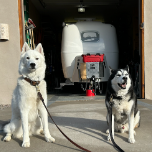
Hey, Ollies': Diane and I are long-time Airstreamers, however downsized in '21 to a Casita and just now dropped the hammer on Hull #225. We've been influence by our friends here in NM for several years about getting into an Oliver. We're planning on collecting our "new to us" rig early next month. We've been lurking around the Ollie Forums for over a year and look forward to meeting y'all either on the road or on the web! Stay safe out there - Best, A, D, and Magnus (Woof!)
 9 points
 -
Hi Everyone, This is a few weeks out of date as this pesky job keeps me busy. But I wanted to share my experience while it is still fresh in my mind and hopefully some of these comments will help, especially for 1st time travelers. I suspect a few of the veterans of the group will reflect fondly on these rookie mistakes. In no particular order: First Night: 1. Stay at the Oliver Travel Trailer campsite when picking up your Ollie. I suggest an AM pickup so staff is still around during daylight hours. The walk-through was awesome. After years of looking at YouTube, it is very much different to be in your trailer. It's actually YOURS! There is a very distinct "new-trailer" smell and it is even better than a "new-car" smell. Lots to go over, and much of it gets lost when you are on your own. I must have made the walk from my campsite to the office at least 10 to 12 times. All of my questions immediately answered. But some simple things that just needed to be fixed / corrected. And a few "what is that sounds" and "is this normal"? They were so patient and kind (especially Hannah). 2. It was COLD. There was still ice on the trees but the heater did it's job. The cabinets and closets stayed pretty cold, but overall I was comfortable. I do find in very cold temperatures the vents in the front of the trailer did not produce as much heat as the bed vents. And those vents don't rotate. I broke a blade and Hannah came out and replaced it in no time. 3. Get a sewer house wrench. One of those Camco ones. Perhaps it was the temperature, but I found it very hard to get the hoses on and off. 4. Practice dumping at the Oliver Campsite. But you have to make sure the Ollie is off the hitch so gravity could do its job. There was a fair amount of grey water still left when I got to the next campsite. Luckily it was grey. First Time Towing: 5. For some reason, I was worried about a Brake Controller. Never using one before, I used a Bluetooth one on my Armada and it was pretty simple to change and configure. Basically drive about 20-25 miles per hour, hit the button, and see how the trailer breaks slow down the truck. Adjust as needed. I did need to adjust this a bit throughout the trip - but it was easy once I got the hang of it. 6. With the Anderson hitch, It was a very comfortable tow. I took it easy and went down Natchez Trace Parkway. Not many cars on the road but it was perfect to ease me into the trip. I mostly just stayed at KOA's as I felt it was easier to get pull through sites initially. The second day I took State Roads to Texarkana, and by the 3rd Day I was comfortable on the Interstates. I do recommend easing into it if this is your first time. You'll get the feel and that nervousness wore off over the first few days. I did stop and torque the tires as directed. Made me feel like I knew what I was doing - even though I never owned a torque wrench in my life. 7. Yes - in freezing temperatures, don't hook up your hose. Fill your Fresh Water tank. The KOA host told me next time, I could also just open up my grey tank and key the water dripping all night. But that leads me to my next experience - everyone along the way was very kind and helpful. 8. OK - this was a BIG ONE, probably the biggest safety issue but having a checklist matters. When I arrived at my second campsite, I noticed the receiver pin was half-way out! Follow a checklist! How it got loose, I have no idea. But luckily I had a pin-lock and was able to put it on. First Time Getting the Look: 9. People LOVED asking me about my Oliver. Gas stations, rest stops. Wal-Mart (shopping, not camping). I stayed at this KOA Resort in Tuscan AZ with full-timers in these massive Diesel Pushers - they stopped to ask me about My Oliver!! You'll feel good towing this behind you. For those in the know, they know quality. Only issue ... my Stove Glass came loose. Seems there are tiny bolts that hold the screws on and it most likely was not tight during the install from Dometic. The road shook them off and I suspect they are somewhere in the bottom of the trailer. I did find one in the drawer. Overall, I was a bit nervous. But for you first timers, you can do it. The team at Oliver has your back. They want you to love your Ollie, they want you to enjoy it for years to come, and they want you to be safe. I felt very much supported through the entire process. Thanks again to all of you for your advise too. Much appreciated. Look forward to meeting some of you soon. Rich8 points
-
5 points
-
No camp host in the country will let you idle your diesel truck for hours to charge your trailer. Plus it is bad for your engine and it will piss off your camp neighbors. . Just forget about it. John Davies Spokane WA5 points
-
Two trucks back I had an F350 Diesel Crew Cab Dually 4x4. Unless I was planning on pulling an extremely heavy 5th wheel or hauling a full sized truck camper, I would not buy a dually for camping again. The dual wheel configuration will be of zero value pulling and LE2. They will get in the way a lot, they preclude you from most car washes, you won't be able to rotate tires without dismounting the tires from the rims, and the finders are always at risk when entering any tight space. My fenders got hit by other drivers while sitting in parking lots two times in five years. Also duallys are terrible in snowy conditions compared to single wheels. I've owned two 6.5' beds on full sized trucks in my two trucks since the dually. I've built a house, a 36x26 finished garage and remodeled another house from top to bottom and built a one car garage using the short bed trucks. Never once did I feel I needed a long bed for the many loads of materials I hauled to do those jobs. In other words the short beds were more than adequate. One truck back was a cab and a half configuration with the short bed. Often I wished I had gotten the crew cab, even though it was always just my wife and I. The back seat just wasn't very useful and the few times folks rode back there it was less than comfortable. The one caveat with it was it was the shortest of the last three trucks and was a joy do drive around. Leap forward to the current truck. F350 Crew Cab 4x4 with 6.5' bed. The first thing I got for this truck which was purchased with the LE2 in mind, was a fiberglass camper shell. There is more than enough secure storage in the bed under the cap. We even got a fitted "Airbedz" inflatable mattress that's the size of a queen bed. If we happen to have guests travel with us they could sleep comfortably in the back of the truck, plenty of room to stretch out. The new truck is still much more maneuverable than the old dually, is very easy to daily drive and the back seat is very spacious. I can't think of what I would do different if I had to get another new truck. I think you will really like the megacab and I think it's worth the other "sacrifices". I really doubt you'll feel like you have insufficient storage with the short bed, but you will have an easier driving truck. Regarding the 30 gallon tank, there are aftermarket companies that can fix you up with a larger replacement tank even with the short bed configuration. Now I'm going to go there. I was in love with diesels years ago. Nothing could convince me that a gas engine was worth even a consideration. Move forward a few generations and with the epa required "clean diesel" fuel and exhaust management systems, the only way I would buy a diesel would be if I was pulling more than 15000 pounds regularly. I like the power and fuel economy of a diesel, but I don't like the astronomical costs up front, which is mainly because of the additional epa equipment added to the trucks. But I also don't like the added maintenance requirements and expense that comes with the new diesels. You mentioned trying to save money by getting lower level trim packages, but you could also save 10 grand or more up front by skipping the diesel. And you would get a much simpler and easier to maintain truck with a standard gas engine. I don't blame you if you are in love with the diesel choice, I get it. But that's another "feature" that you really don't need at all if your main load is an Olliver LE2. Oh, did I mention diesel averages a dollar more a gallon. I know they get better mileage but there went a lot of the "advantage" until the fuel prices come down a lot closer the gasoline prices, if they ever do. With epa regs tightening up over the next decade the price spread will probably get bigger. There's my two and a half cents.4 points
-
Campground Reservations FYI for anyone planning to head to Canada. Canada National Parks is updating their reservation system. If you have ever had an account with them you will need to set up a new account starting March 3rd. The good news is for this year it is not too late to make reservations. The system is doing a staggered roll out. Reservations for this year open at different times based upon Provence and Park. For example Jasper National Park opens March 16th and Banff National Park March 23rd. Leave it to the Canadians to do it in a civilized fashion. Instead of midnight, the reservations open at 8 AM in the time zone of the park.3 points
-
The cable at the 7-Pin is 12 AWG. In practice anything over about 10 amps will badly char the black (12V Plus) wire. For my 2019 F-150 Super Crew, to run out and back between Ollie and truck batteries required a bit over 105 feet of stranded copper wire. BatteryCablesUSA indicates that for a 30 amp DC/DC charger setup at this distance, the wires should optimally be 4 AWG for a rig such as our Ollie that does not have solar. Be careful to not directly connect Lithiums to Lead Acid/AGM batteries. The much lower internal resistance of the Lithiums will flow current that likely will damage the wiring or your AGM and likely the alternator. Additionally the charge profiles between such a setup is very different. As such, the use of an Orion 12/12 - 30 amp or other brands of charge control between the truck and RV is essential. With the OTT Solar Packages, a quiet inverter generator is a good back-up plan. Something in the 2,000 to 2200 watt range would be what most OTT owners would opt for. The EU3200 would be overkill for the vast majority of the Solar Package owners. Without lithium and solar, if just running AGM or LA in the Ollie, having the Inverter EU3200 would be nice to have. Just my two cents as each owner's power needs are unique.3 points
-
Agree! I was so confused when we started considering buying a truck and camper a few years ago. We knew absolutely nothing about payload, cargo carrying capacity, tongue weight and what it all meant. We had never camped in our life! Overwhelming at first but I did know it was important to learn, I studied and researched diligently for months, until it became clear. It is not something to enter into blindly. I think these videos are so helpful for both new and a good refresher for pros.3 points
-
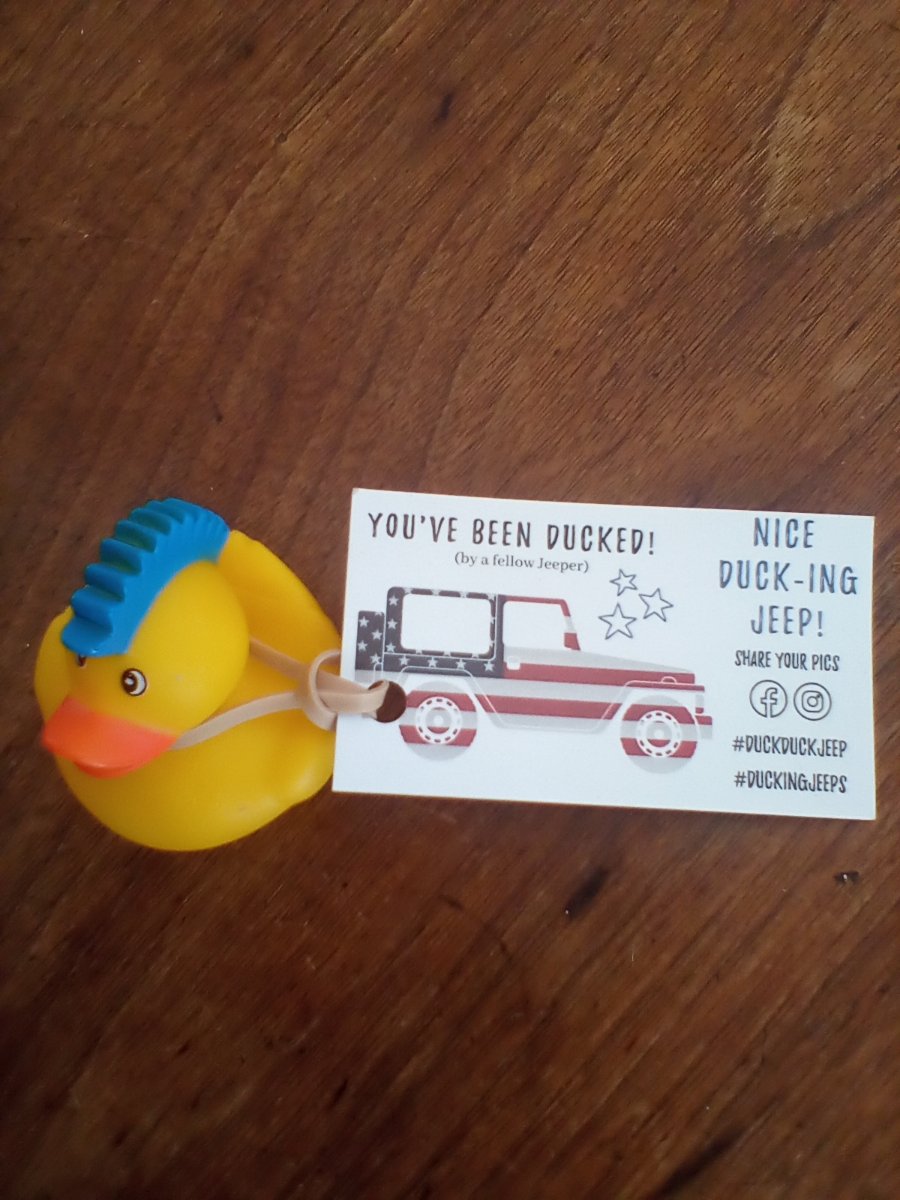
It seems that on one of the censored Facebook Oliver sites there is talk of recognizing meeting another Oliver. It would be similar to the Jeep Wrangler Ducked site. Any interest? O = Oliver T = Travel T = Trailer E = Elite r = ???? ( maybe rv?) Maybe when/if the Oliver Store ever becomes a reality they could have a kit. In the kit there could be 25 little Otters and cards? See an Oliver someplace and you could put a little Otter on their door handle. On the card you could put your name and hull #?? Of course at the Rally this could get out of hand???
3 points
-
Yep that was part of the discussion as well. The components on the 5K axles are more universally available and the brakes and hubs are a more standardized size than those on the 3.5K axles. Lug pattern matches more available wheels, etc. I was very surprised and happy when he told us about this change. All part of a push to streamline components, suppliers, inventory and parts management. He talked a lot about efforts to better organize the assembly process as it applies to component management. Obviously to improve everything and get more efficient in the process, reduce errors and probably increase throughput as well I'm sure. All positive.3 points
-
That's the reason I tend to think in terms of sizing for maximum trailer weight and then add in a good margin. It's easy for folks to get fixated on the trailer weight and what you will add into the trailer, but other gear loaded in the truck, passengers pets and misc. is significant in the overall load equation. I just like to have plenty of truck and not have to carry a calculator. With that I mean if you have say 3000 lbs of payload capacity on the truck and a tow capacity of say >12000 lbs, it's good to know how much you weigh total but your margins with and LE2 are substantial, and you don't have to worry about whether tanks are full or if you bought an item, say a grill or bike or something and have to worry about capacities. With plenty of truck you also know you are traveling with plenty of braking capacity, thinking mountains. For what it's worth BTW, it was explained to us on our last plant tour that Oliver is building the LE2 now with the same 5K axles as the LE1 uses. This is for cost and logistics/supplier streamlining. The LE2 still has the same load sticker on the side, but you do have increased actual axle capacity with two 5K axles under the trailer. Just a more robust and heavier undercarriage in this configuration. This works well with my thinking of having more than we need. Many RVs are built to be at axle capacity with full holding tanks and almost no margin for gear at all. Oliver is not doing this to say the least. With the trucks you are looking at you will have a lot of capacity beyond the Oliver. It's good to know where you stand but that will be the extent of your towing worries.3 points
-
And don't let anyone distract you. That includes spouses and dear friends. I have a rule: DON'T TALK TO ME WHILE I'M HITCHING UP/UNHITCHING. I've damaged campers by breaking that rule. Luckily, nothing serious and no injuries, but still... We were at a campground where a guy dropped his new fifth wheel on his head because his son came over and was talking to him while unhitching. He went out in a helicopter and the police rinsed the blood out of the back of his truck so his family wouldn't have to deal with it when they came back. (This was also an abject lesson on the importance of always chocking your trailer wheels before you unhitch.)3 points
-
Congrats on your new Ollie!! Checklists have saved me in just the few times we have been out, setting up and taking down, Our first multi-day stay was at a COE in the northern part of Mississippi and we got a spot right on the water. About 30 minutes after we get setup a nice man came paddling up in a kayak and asked us how we liked our Oliver. Turns out he used to work for Oliver a few years back, He even offered assistance if we needed any during that weekend.3 points
-
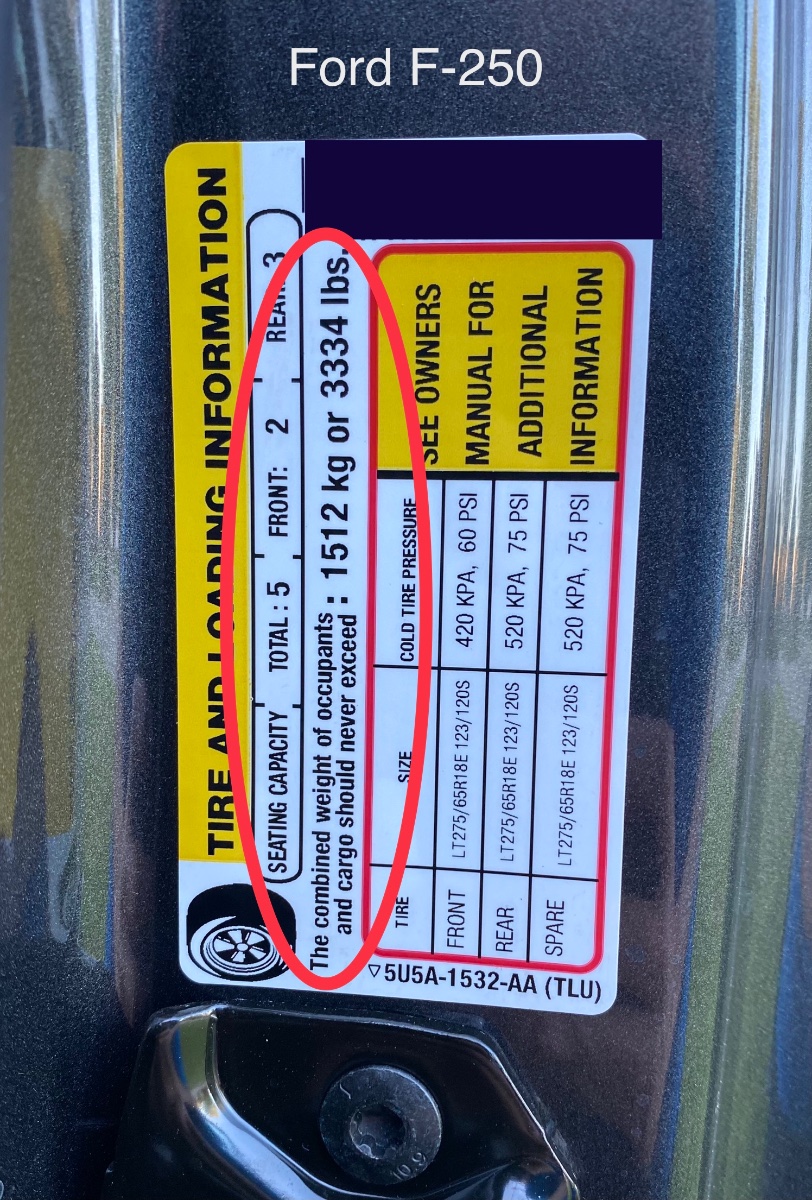
We have a 2020 F250 Lariat SRW with the 7.3L gas and 10-speed transmission. AFAIK, the trans is the same one used with the PowerStroke 6.7L diesel. The 7.3L was designed as a work truck engine with longevity in the mind of the designers. Ford is using it in just about all of their heavy duty vehicles. We have about 45K miles and no hiccups at all. Towing OEII we get about 10-11mpg, mostly highway, 70MPH maximum with cruise control in use. The truck gets about 17-18mpg highway with luggage not towing, and about 13mpg around town. These numbers are calculated on every tank as miles/gallons. The lie-o-meter reads about 0.8mpg high on average. The crew cab is quite large and comfortable, and we often use it for cargo in lieu of the bed. When camping on trips lasting 5 weeks or more, the 6'9" bed has been more than adequate. Regarding 3/4 vs 1 ton, I was enamored of the F350 for quite some time, but eventually decided that the F250 was more appropriate as its GVWR of 10K lbs (5T) passes lots of weight-limited roads. Cargo rating for my truck is just over 3,000lbs. We knew we would only be towing an OEII before we purchased so we were able to optimize. I eliminated the 1/2 ton class because of limited cargo weight capacity and the need to use the Andersen hitch. The combined length is just over 44'. We have had no problem fitting in all of the campgrounds we've been to. Little boon docking so far, and no problems there either. I use the truck as a daily driver and have accustomed myself to parking in less crowded spots. Fitting in lined parking spots width-wise is not an issue, but the truck is a bit long for most spots. This is our experience also. Turning radius is large. We also use a Diamondback cover and it makes front bed access possible. It was the 7.3L engine and the backup assist feature that ultimately caused me to decide for Ford vs RAM and GM. This is our first truck and trailer. After nearly 2 years and about 6500 miles towing on flats and over eastern mountains I have no regrets. TFLT tested a nearly identical 2020 F250 on the Ike Gauntlet and it did very well (ours and theirs had the 7.3L and 3.55 axle). I was also very interested in going diesel because of the power and added range. I decided against it because of more limited fueling places, more difficult to get serviced (requiring a shop that can handle diesels), added expense (both purchase and maintenance) and complexity, regeneration requirements and "limp" mode when late servicing emissions, DEF, potentially very expensive repair should the fuel system fail in certain ways, and higher fuel cost removing the MPG advantage. Had I gone diesel, I would probably own a Ram 2500. Good luck with your decision. I know it is a tough one, and even more so if you have more needs for your TV than just towing an OEII.3 points
-
Thank-you so much for taking the time to write that up. I know, I know, I did the analysis in 1990 on the Cummins Engine when I was looking for a truck, and even back then it was more than 100,000 miles before you broke even. So I never pulled the trigger. Now it is over double that, so you will never break even. But that engine, the sound, the torque, it is really something. You mentioned 10 grand, it's more like 12 grand for the HO and Aisin Trans. Believe me, I've been trying to talk myself out of the engine for 2 weeks, but I can't seem to do it.3 points
-
Welcome to the family and congratulations. Wishing you safe travels from Hull 901 in MD.3 points
-
John is correct. We don't generally stay in a campground but the ones that we have, had "No Vehicle Idling" signs posted. Even if you ignore the signs, your neighbors will likely call you out on it after a short time. On the other hand, it should be fine during "generator hours" if the campground has such an area. That reminds me of the old "smoking" sections that used to be in restaurants or other establishments.3 points
-
Will it be garaged? Will the truck with the 8' box+Crew or Mega Cab easily fit into your garage? FWIW, that extra 20" of wheelbase can also make a difference at many campsites. If usually camping with 2 adults, I would prefer the CrewCab with 6'4" box. I would sacrifice the 50-gallon fuel tank for the greater parkability, and probably slightly better gas mileage.3 points
-
THAT Oliver is going to look great in THAT Ollie house - especially with THAT pup keeping an eye on it. Welcome to the Family! BIll3 points
-
I finally got the new thermostat from Oliver about a week ago and today was my first chance to switch it out. To my surprise it has seemed to fix the problem. Its 35 degrees outside and I cranked the heat up to 62 degrees and it started and shut off without all the crazy clicking sound coming from the AC unit and stayed off for almost 15 minutes before coming back on. No more cycling off and on. Ran for about 10 minutes and shut off when the temperature was reached. It seems to be working like it should. Apparently it must have been defective from the beginning.👍3 points
-
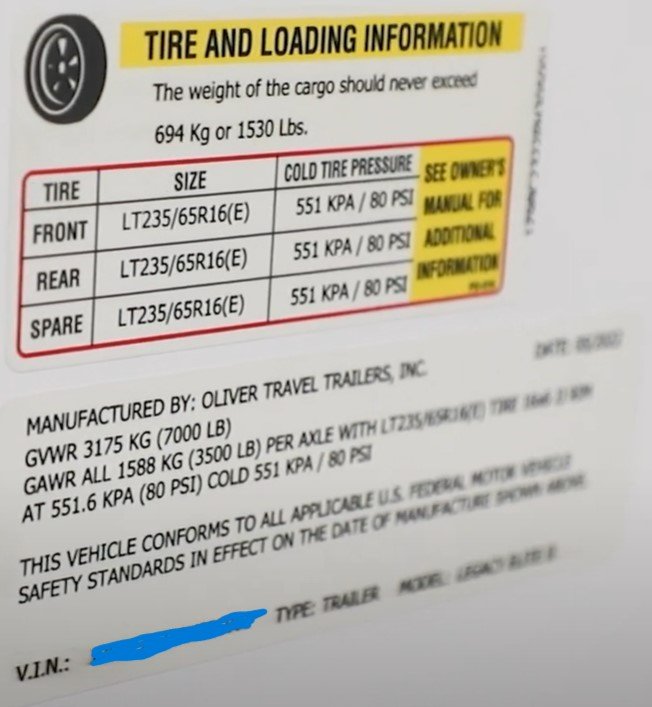
A couple of days ago Jason did a walkthrough of a 2023 trailer on YouTube, he did it live, and I happen to catch it Live. I only watched the beginning of it, because I was busy and was going to watch it later. It, however, never got posted. Since I am in the market for both a Tow Vehicle and a LEII, I am doing some sizing analysis. I did see enough of the trailer, to basically conclude it is loaded with all the Oliver options, this includes the Platinum Lithium package. During the video he showed the tire and loading information sticker on the side of the trailer. I screen grabbed it, because I want to use that information for my vehicle sizing. Hence this post, these trailers are gaining significant weight from the factory. I attached the screen grab, but since it contained the VIN number, for the future owner privacy, I decided to blank the VIN number out. On the website the LEII trailer weight (Dry) is listed as 4,900 lbs and 490 tongue weight (10%) This trailer is coming in at 7,000 lbs - 1,530 lbs = 5,470 lbs If we go with full tanks for sizing purposes: 32 gallons fresh water + 32 gallon gray + 15 gallon black = 79 gallons, 79 gallons * 8.34lbs/gal (fresh water weight) = 659 lbs Therefore with tanks full and the trailer completely empty the "loaded options" full wet trailer is sitting at 6,129 lbs. At 10% tongue weight that is 613 lbs, 12% 735 lbs. Realistically I think it would be easy to add 500 lbs of "things" into the trailer. That fattens things up to about 6,629 lbs, 10% tongue weight 663, 12% tongue 795 lbs. Add a generator and some gas in the aluminum basket at 75 lbs and with12% tongue weight you could be sitting at 870 lbs tongue weight. I wanted to post this because I've read many posts from experienced Oliver owners that talk about Oliver trailer weight gain. It really hits you, however, when you actually see the 2023 tire and loading information first hand.
2 points
-
Great video by Josh!2 points
-
I'm with you. And I too am baffled when people ask me questions like, "how do you know how to do that". I've always sought out knowledge about anything I endeavor to do, it used to be the library and how to magazines. Today it's the internet and YouTube primarily. I never was that good in school as a student of the established system of learning. But I've always been very good at finding answers to my questions and more so on the how to of things I've yet learned to do. When I get asked that question I just refer them to the internet. Often you get the "that's too much trouble" look in return. Oh well.2 points
-
I'm a big fan of YouTube "University" too. On those rainy days like today it is actually fun to jump down the rabbit hole of something I know very little about (actually that is most things 😆). Shame that it seems that a fair number of people don't either want to do the work and/or simply don't know to study what they don't know. Bill2 points
-
This is a good example of the kind of resources available to the novices, and even as a refresher for us experienced haulers. Anybody looking to get into towing for the first time or who are just unfamiliar with the governing factors of towing and tow vehicles need to dig into this kind of information before buying a tow vehicle.2 points
-
If you are talking about attaching and detaching the sewer hose from the trailer, there is no need. Leave it attached. Just cap it and put the hose in the bumper.2 points
-
You forgot the weight of the propane. We only added a couple hundred pounds of gear to the Ollie: mostly kitchen stuff, food and clothes. The truck carries most of the heavier gear, including the genny and Clam. We have traveled short distances with all tanks full. Generally, after dry camping and on the way to a dump station.2 points
-
I wanted a very capable but still somewhat compact truck as a tow vehicle so I went in the opposite direction of your thinking. I found an F-250 SuperCab (rear suicide doors) with short (6’-9”) bed. It’s only my wife and me when we travel, and this truck keeps the overall length a bit more reasonable for maneuvering around with the truck, but still has a lot of room in the cab and the bed, and huge towing and payload capacity. The SuperCab has no door pillar between the front and rear doors when the doors are open, so it’s very easy access to the rear seats. We do a lot of day trips with the truck after setting up the camper at the campground, so I wanted something at least a little more “compact” (a relative term when we are talking about a 3/4 ton truck 🙂) to make it easier to get around in downtown areas, parking lots, narrow roads, etc as we do our exploring during the day.
2 points
-
Are you assuming travel with all tanks full? Wouldn’t most just have full fresh or full grey/black?2 points
-
We have a GMC crew cab, long bed, dually. It's huge. It's my daily driver and, for the most part, it's OK for that. I just park a little farther out in lots, because it's longer than a standard space. No issues on the roads, but I have run over over a few curbs in various driveways. And, be real careful in drive-throughs! My turning radius is similar to the Queen Mary, but there's TONS of storage under the Diamondback bed cover. We can carry all kinds of camping gear in the truck. I actually need a hook to reach stuff at the front of the bed. Such a big truck kind of negates the compact size of the Ollie. We're almost 45' long end to end, so we still need reasonably large sites for camping. The dual wheels add considerable cost when it's time to replace tires and contribute to the aforementioned curb crawling. But they certainly give the truck a solid grip on the road when towing. No sense of sway when towing various trailers. Previously, we had a crew cab, short bed, dually Ford, which I thought was perfect for hauling our fifth wheel. Really liked that configuration. But, the fifth wheel had a lot more storage than our Ollie. In summary, I think if I was buying another truck as an Ollie hauler, I'd go with an extended cab, long bed, single rear wheel. The crew cab is overkill for the two of us, so an extended cab would help a bit with maneuverability. The long bed gives plenty of storage. And the dual rears aren't necessary for the relatively light and well-mannered Oliver.2 points
-
Welcome to the family. Will be interested in hearing your perceptions of your Oliver vs. your Casita.2 points
-
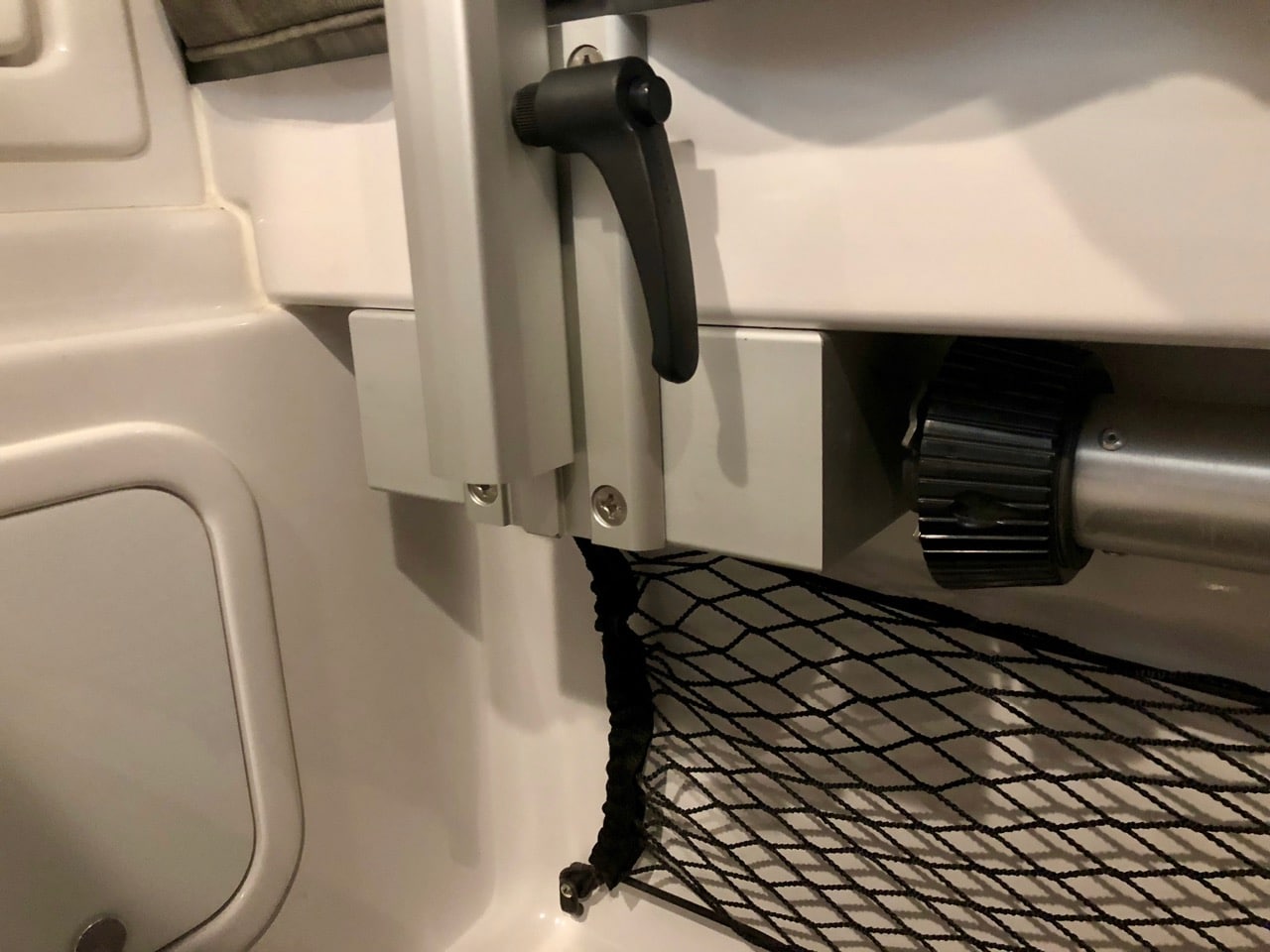
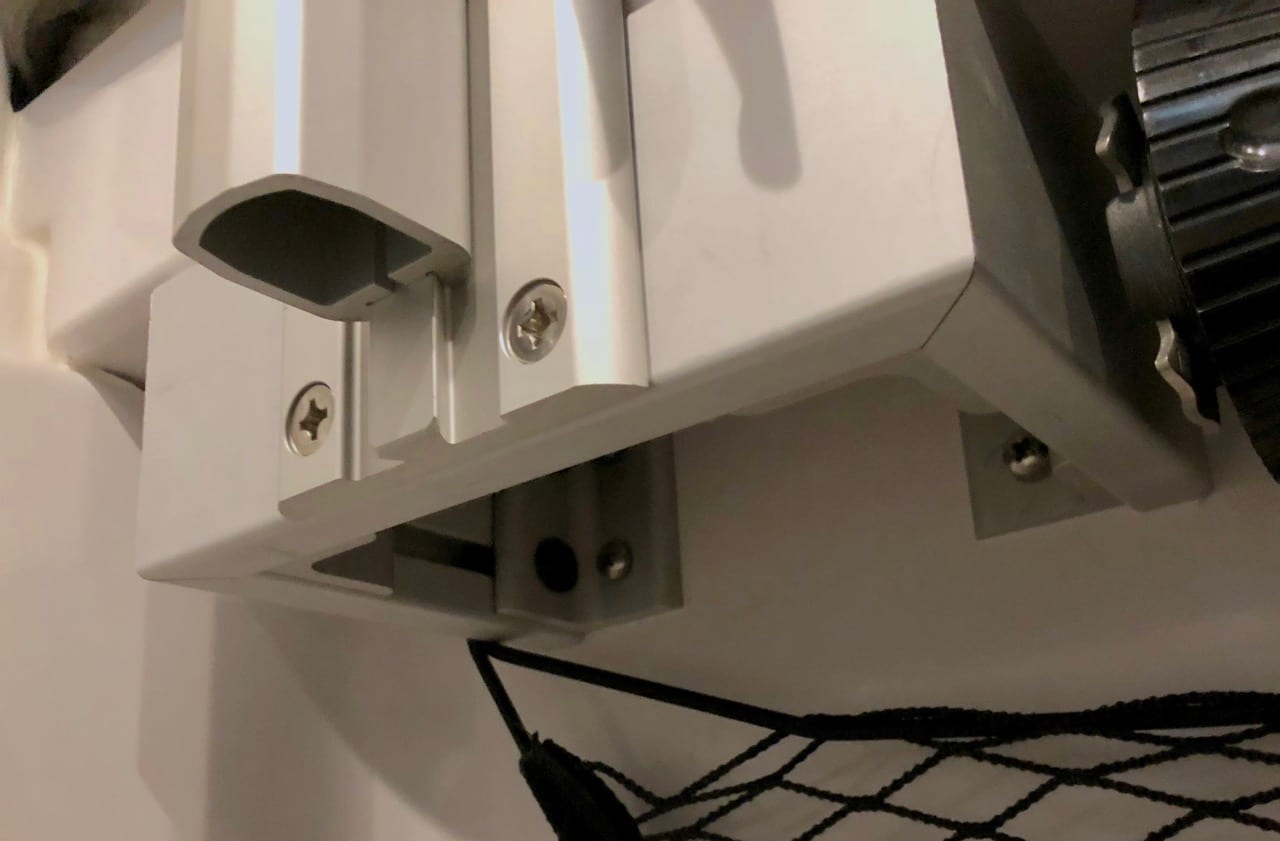
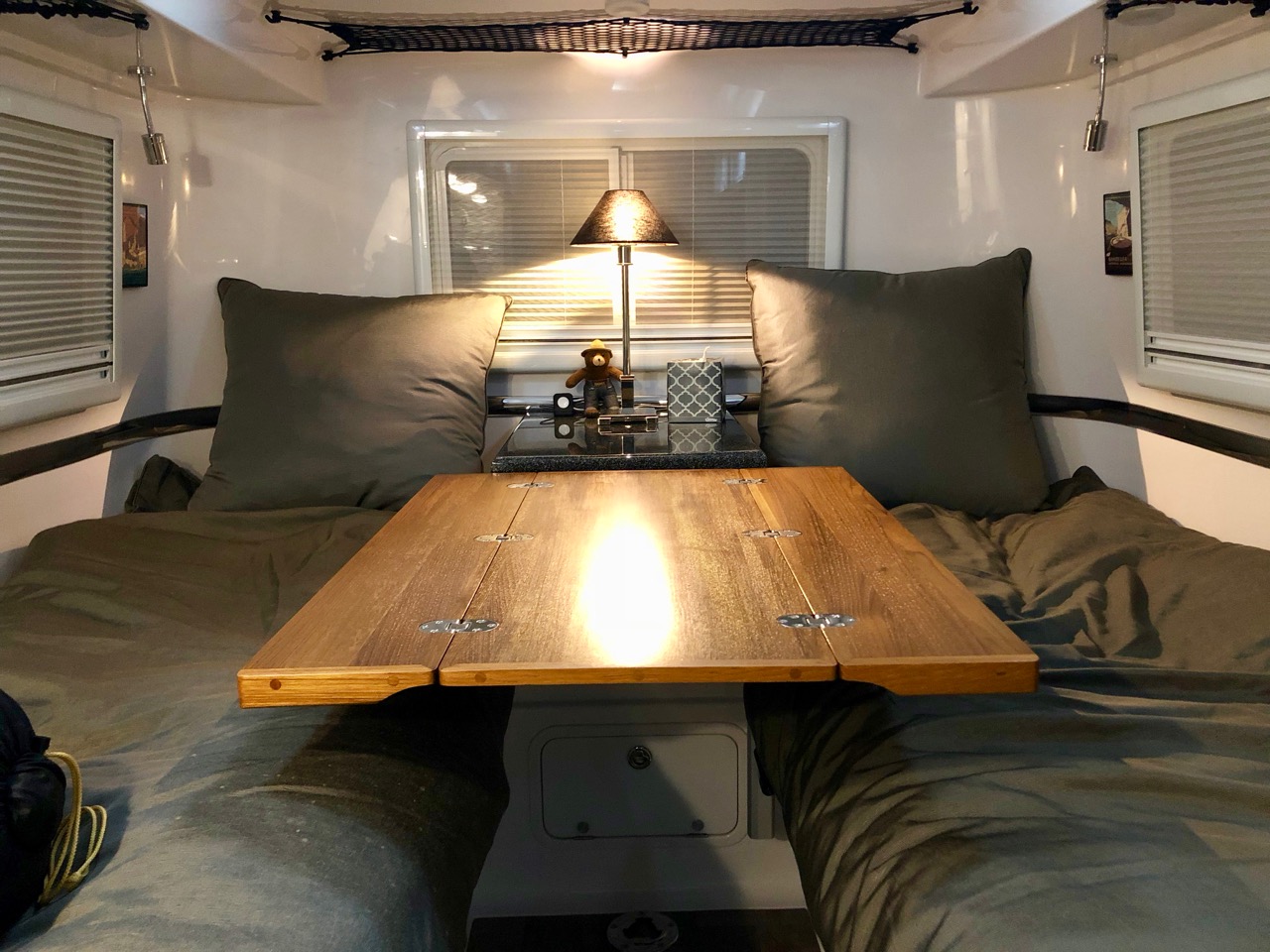
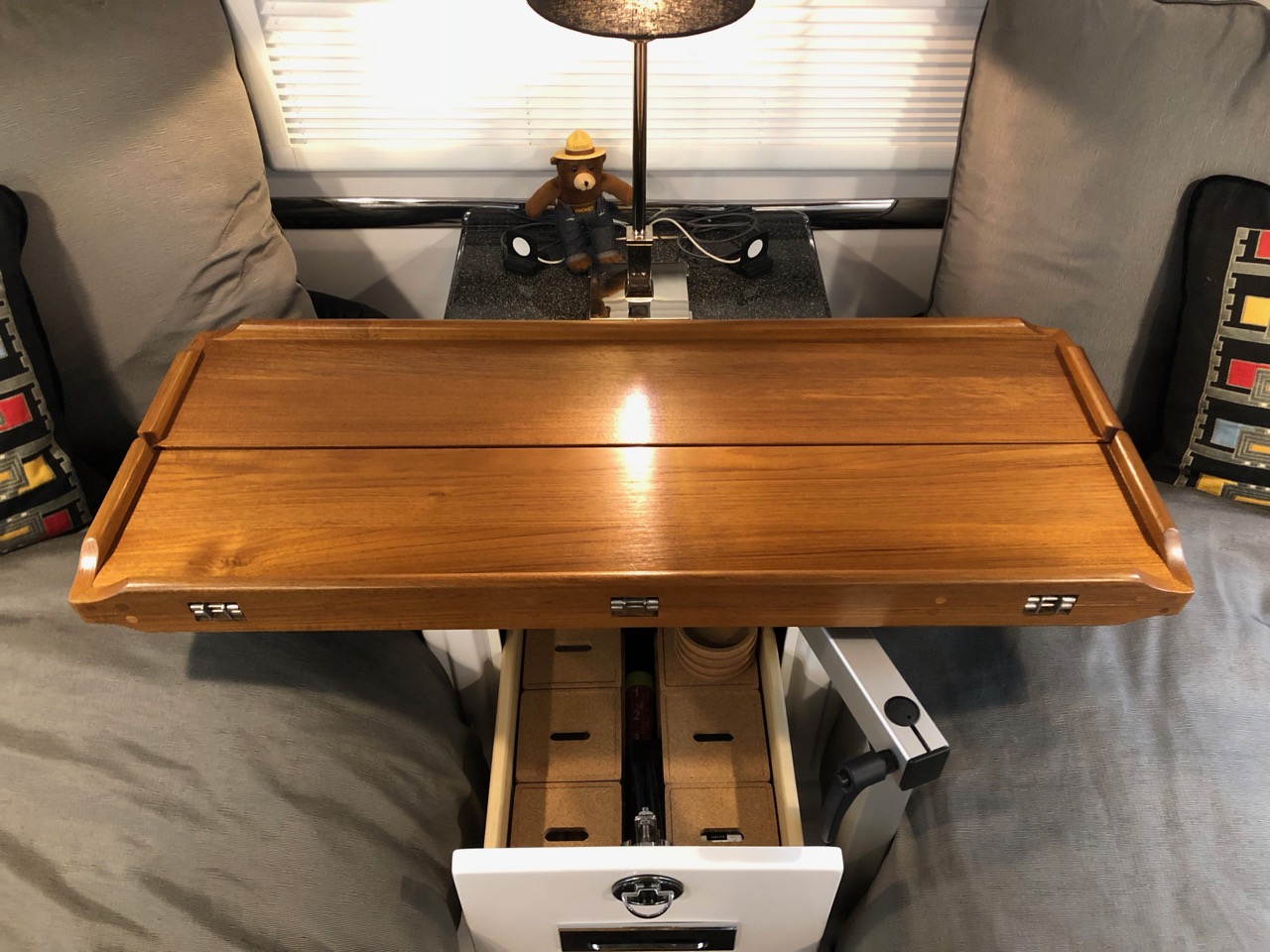
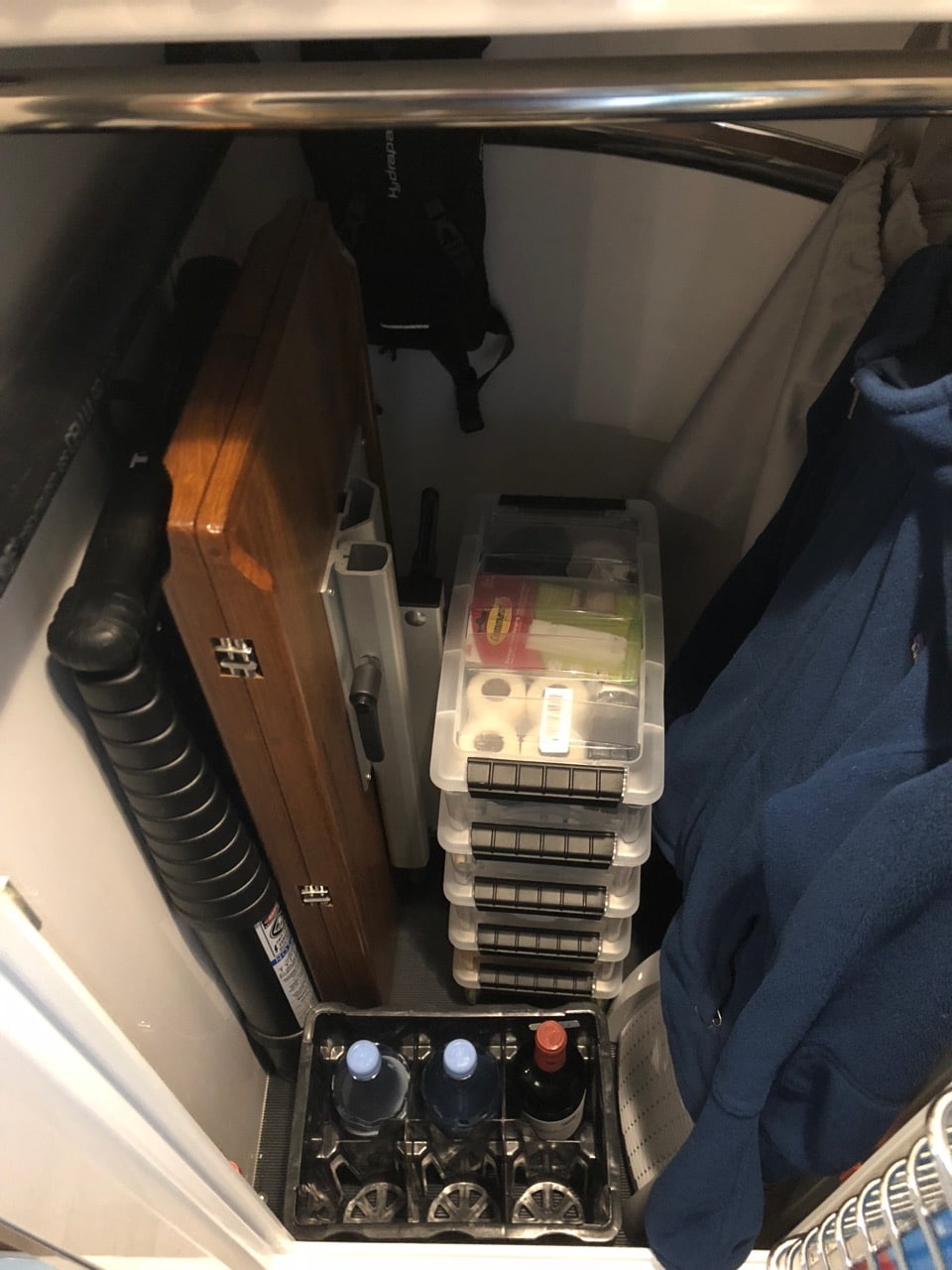
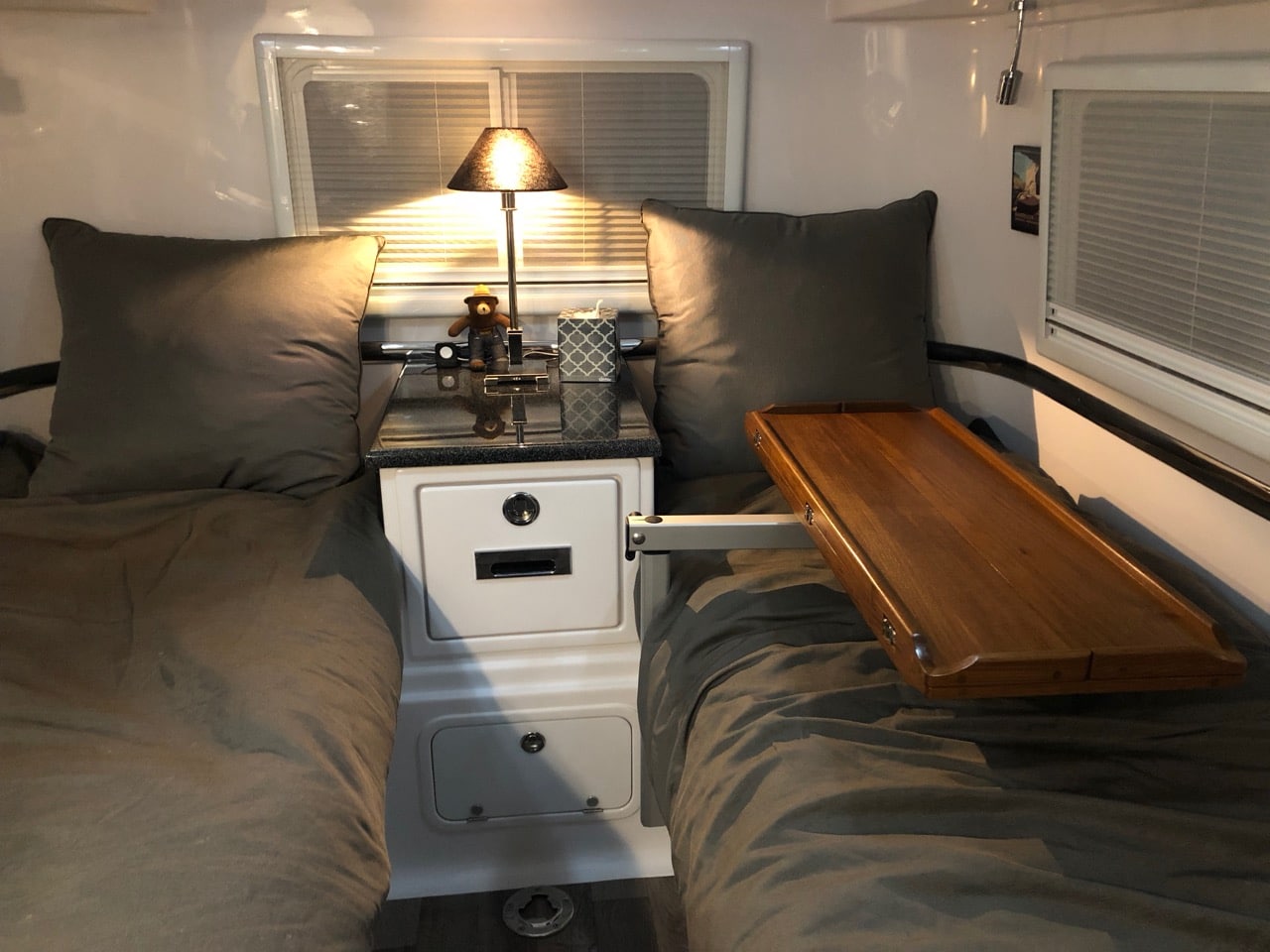
I think like a lot of Elite II buyers, we were torn between the twin beds vs the king. We chose the twin, but not so much for the size or comfort of the beds as it was the utility of nightstand and easy access to the overhead compartments. But we liked the idea of having a table and a large lounging area in the back, and so I set my mind on the idea of trying to have both. At first I designed a custom table for the back that would latch into the nightstand in the back with a pole in front, similar to how the dinette table works. I showed it to Oliver and they thought they'd give it a try, but as time went on and things got delayed or forgotten, I sort of gave up on that idea and asked if they would just sell me the standard table top and legs and I would figure it out. They did, and it was a big mistake since I could never figure it out. The table was just too heavy and bulky to put up and take down, and there was absolutely no place to store it. Plus the height with the standard legs was too short for the mattresses we had (another poor decision on my part). So on our first trip it was labeled the Albatross Table and it was just in the way the whole time. It didn't make another trip, just the two mounts screwed to the floor to remind me that not every problem has a solution. But the solution does exist in the Lagun table. I'd seen them before in the king bed model but I had sort of dismissed them as being too small to be of use. But that was before @rideadeuce started this topic about their upgraded table top. Their top was much larger, foldable, and just generally nicer looking than what I'd seen before; and so it clicked with me that with the Lagun mount, we could have a foldable table that could easily be stored or moved out of the way for access to the upper storage. Also the height could be whatever we wanted and unlike the table we had, could be quickly locked for travel. There were just two problems for us - the mount in it's normal location would block the nightstand drawer; and on top of that, we had opted for an access hatch to the basement right in that same spot where the Lagun is usually bolted to the hull. I needed a way to mount the table to the side somehow. So I made one of these - This contraption is made out of 15 Series extrusion from 80/20. I cut, mitered, and erector setted this little block and associated connectors to go beneath the bed overhang. The Lagun mounting plate (the vertical piece) bolts to the mount and then the whole thing gets bolted to the side wall under the bed in four places and to the bed overhang in four places. It looks complicated but if you have a miter saw and can play with Legos, you can build it. Here are some pics of the block in place so you can see how it mounts. The top two bolts on the Lagun plate bolt into the side of the bed extension, then there are two bolts on the block that secure vertically into the base of the extension, then another four bolts that go into the side wall of the base of the bed, opposite the basement. I marked and drilled for the two vertical holes first, then temporarily bolted it in place to mark all the other holes. You need to do this since not all of the surfaces are perpendicular to the trailer or one another. But the flat bottom of the bed extension runs parallel to the floor so if you use that as your starting point then the table top will end up parallel to the floor as well. The end result is extremely solid - The table top I chose is the 35" Nautic Sail top from Marine Teak. Look around on their site and you'll find a number of styles and sizes, any of which would be a great choice. (This is the same company as this one, btw, but they have more choices in table tops on their UK site.) I debated oiling it, but came to my senses and coated it in a couple layers of low gloss poly. Taking it apart to seal is no problem, but you do have to keep track of a number of shims that go under the hinges to make them flush to the wood. So here's the final result. I really like the versatility of the top. Use it folded, unfolded, bar height, table height, sideways, lengthways, stick it over the bed for travel or to get it out of the way, or...however. With the mounting plate where it is, we can raise the table hight enough to clear the nightstand and lower it enough that it sits on the bed locked in place for travel. As you can see, the drawer clears just fine. The table will work best once we have our cushions made to replace the mattresses, but we just did a quick weekend trip with it and it works well even as it is. And best of all, it fits in the closet -
1 point
-
I've had my heart set on a Ram 3500 Cummins HO with the Aisin transmission for a while now, but haven't pulled the trigger on the truck or the LEII yet. On the truck side I've been debating the following: Dually - Dual Axle (DA) vs Single Axle (SA) Crew Cab versus Mega Cab. 6'4" Box versus 8' Box There are three important caveats, You can only get the Mega Cab with the 6'4 box You can only get the 50 gallon Diesel tank with the 8' box. The 6'4" box comes with the standard 30 Gallon Tank. You can only get the Mega Cab starting with the Laramie trim, there are 2 lessor trim packages which could save $ Lengths: Crew 6'4"box- 19.75' wheelbase 149.5" Crew 8' box - 21.73' wheelbase 169.5" Mega 6'4" box - 20.82' wheelbase 160.5" I was leaning towards the single axle Mega Cab with the 6'4" box, but that requires at least the Laramie trim package, which I don't necessarily want. Also I really would like that 50 gallon tank, which puts me back to the Crew and 8' box which allows me to save some money and get back to the Tradesman trim. Having said all that, 90% of the time, there will only be 2 people in the truck and the Mega Cab really only benefits back seaters. Unless of course you put the seats down and use it as a flat space for storage. I wanted to see what you experienced Oliver haulers thought about these options. Any opinion on the wheelbase differences on towing or driving around town? Or is the 149.5" wheelbase already so long adding another 20" isn't going to make much difference in towing. DA vs SA, I am leaning toward SA mainly because of the rear width size during non-towing everyday driving. However, I would also appreciate any opinions on this as well. Any thoughts on the 6'4" box vs 8' box, in terms of running out of space? Everyday driving? U-turns, etc.1 point
-
The neat thing about the Jeep ducks is the randomness: see a Jeep in the grocery store parking lot, duck it, and drive away unseen. Harder to do with Ollies. If they're in a campground with you, you'll probably just say Hi. Other than that, probably not often you'll come across one unattended and ready for Ottering. That said, I think it's a cute idea, and I might keep a couple otters in the truck, just in case. Cheapest one I could find on Amazon: Schleich Wild Life New 2023, Marine and Ocean Wild Animal Toys for Kids and Toddlers, Otter Toy, Ages 3+ https://a.co/d/aPWt89i1 point
-
Thanks, Rich! Our new Oliver will be our first travel trailer with electric, plumbing, or gas. Maintenance on the square drop is pretty basic! Plus, this will be 12 feet longer than what I have now. We have two nights booked at Camp Oliver and two at David Crockett State Park before leaving the area. Good to know that there is a dump station at Oliver. I had visions of me trying to learn Sunday morning at DCSP with everyone in the campground lined up waiting on me!! 😬1 point
-
Seriously?!? That'll make a disk brake upgrade a simple option, then. Cool!1 point
-
We generally hit leave the house with 15 gallons of fresh water, 1/2 gallon of black and grey is empty. But we also carry at least 5 gallons of drinking water split between the Ollie and the tow vehicle. Mossey1 point
-
That's fantastic.1 point
-
Congratulations on your “new” Oliver! Look forward to meeting you out on the road - Mike1 point
-
The factory weighed it with two full 30 lb propane tanks but empty holding tanks. Options in 2015 were fewer than today. We did have solar, a 2K inverter and a cell booster plus a few small things like extra outlets. I haven’t looked at the option list lately, but I’m sure there’s quite a bit more.1 point
-
I agree 100% on having a checklist. It only takes 5 minutes to go through it, but it verifies everything is ready for travel.1 point
-
Ni, not me. I'm just a sailor/seadawg.. my husband is the veteran. Guessing you are USN. Thank you for your service.1 point
-
#225 is an EII, 2017. We're pumped! So - SeaDawg, USN Sailor?1 point
-
Our trailer was about 4,900 lbs when they pulled it out of the factory for delivery in May 2016. The Dexter suspension wasn’t available then. Other than that, we had most options available to include four AGM batteries. Mike1 point
-
In principle, this fact concerned me. Like many others accustomed to having lead/acid batteries recharged by the tow vehicle alternator, I was concerned that the three 130Ah Lithionics G31 batteries included with our 2022 Elite II would get discharged during long driving days (when we run the absorption fridge on DC power), even though we have 380 watts of solar on the roof. So, I determined to follow John Davies' excellent posts referenced above and install a Redarc DC to DC charger IF our lithium battery state of charge seems low after long driving days. In actual practice, I am not yet concerned enough to invest the time and $$$$ in a DC to DC charger. We drove our Hull #1291 from Hohenwald back to central Idaho in the middle of last November. Some days were overcast. The daytime temps were consistently above freezing, and all night time temps were below freezing. We ran our absorption fridge on DC power while on the road, but switched to propane at night. Our battery state of charge never got below 85%, even on cloudy days, and quickly recovered to 100% once reconnected to shore power at a campsite. But, the DC power draw from the fridge during those cold temps, with the trailer cabin unheated during the day, was doubtless minimal. I plan to gather more data as we travel with Hull #1291 this spring and summer. An uncooled cabin may get pretty warm when on the road on hot summer days, requiring much greater DC power draw to keep the fridge at set temps. That should better inform the DC to DC charger decision.1 point
-
I was concerned that there was no charge from our truck, especially since we run the fridge on 12v when traveling. However, we've found that the solar panels usually do a good job keeping up while on the road.1 point
-
On trailers built with lithium batteries, the charging wire from the truck is not attached. The alternator in the trucks do not produce the amperage needed to sufficiently supply the needs of the vehicle and have enough to charge the batteries at the same time. Attaching this wire will make the alternator run at full capacity all the time and would most likely cause the alternator to fail. Additionally, the wiring would need to be sized at 2/0 to carry 150 amps from the alternator to the batteries. The are other ways to accomplish this, but they have been covered previously.1 point
-
I posted a couple of the same songs I already posted last year....Guess I like them a lot 🙂1 point
-
I have found that it is not difficult to loosen the nuts to put slack in the chains when needed. I have done so without even using a ratchet handle on the socket to adjust the nuts. OTT supplies a large socket and I am usually able to tighten or loosen the nuts with with only my hand around the socket. Just use the front tongue jack to raise the trailer tongue while still attached to the tow vehicle until the chains start to slacken. Then loosen the nuts and lower the tongue back down and the chains should now remain slack. Be sure to count the threads showing before loosening the nuts which makes it easy to tighten them back to where they need to be when the time comes. Reverse the process to tighten them again. Jack up the tongue again (while still hooked to the ball) and tighten the nuts until the proper number of threads are showing. Then reverse the tongue jack to lower the tongue back down and you are good to go. I have found it only takes a few minutes to loosen or tighten both nuts if you raise the tongue to take pressure off the chains. OTT demonstrated this technique when I picked up our LE II. Raising the tongue while still attached to the tow vehicle also allows you to routinely hitch and unhitch the trailer (i.e., attach/detach the whale tail) without ever having to adjust the nuts. If the road is so terribly rough that loosening the chains will not provide for sufficient articulation, you are probably pushing the ability of the bulldog hitch to articulate sufficiently, even with the Anderson disconnected.1 point


























-
Recent Achievements
-